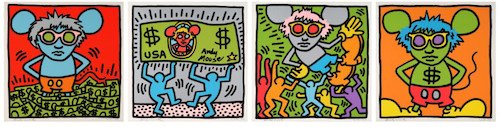
Andy Mouse

June 20, 2026
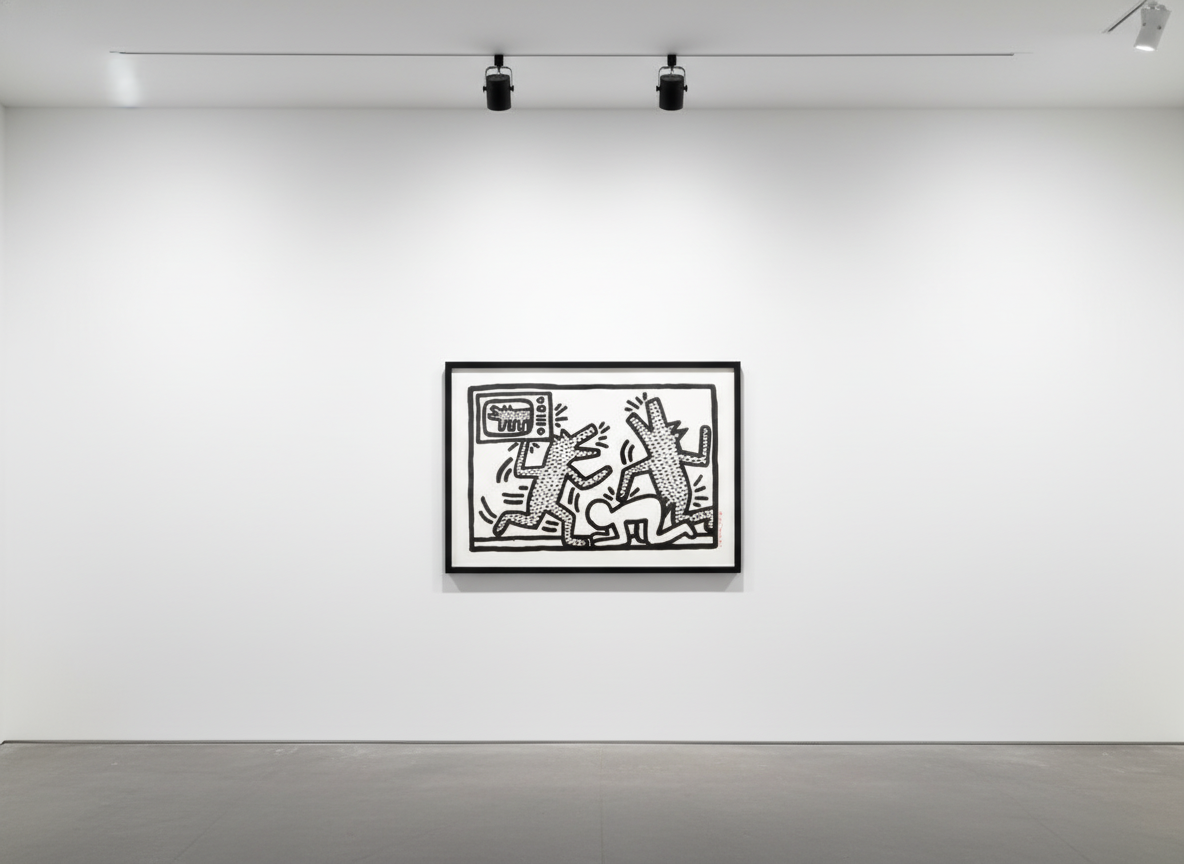
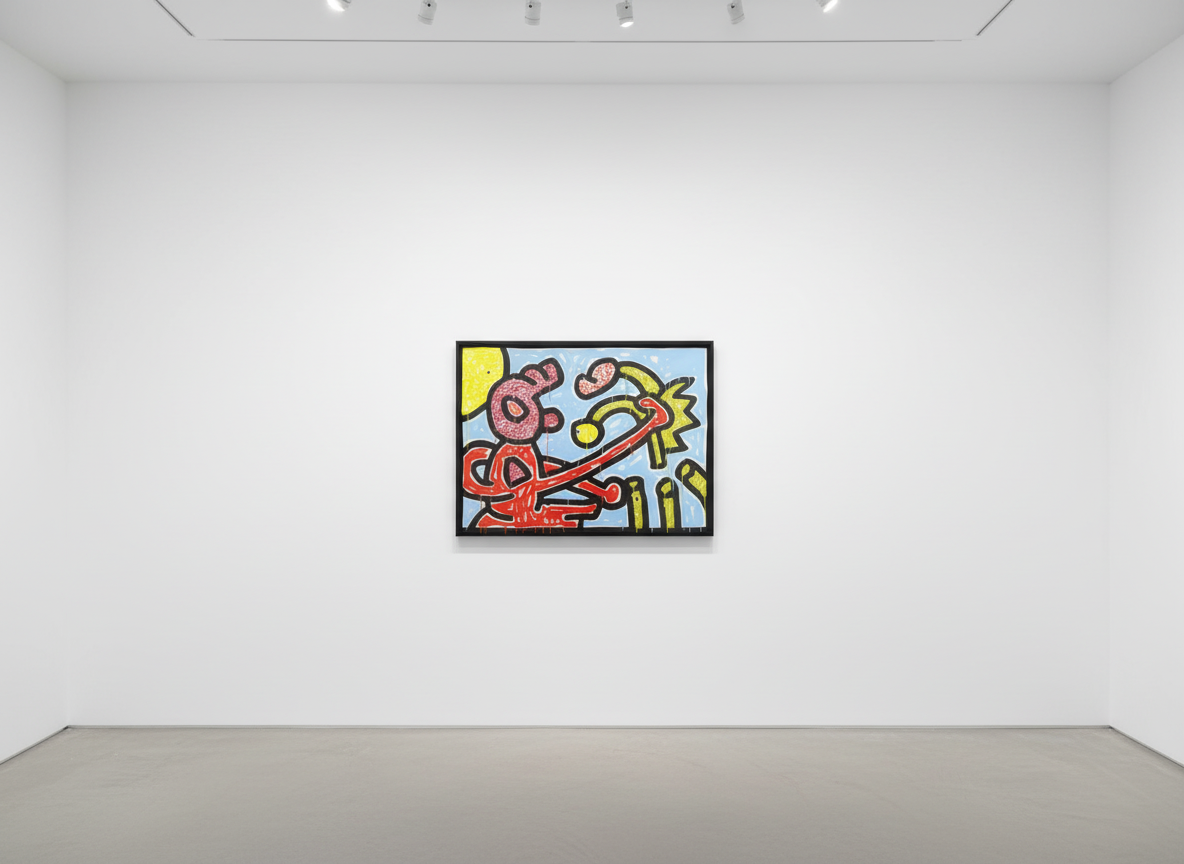
Keith Haring died in February 1990 at thirty-one years old. In the thirty-five years since, his market has done something unusual: it has grown steadily, surviving the cyclical corrections that periodically flatten the markets for his contemporaries, and continuing to attract new collectors from demographics that barely existed when he was alive. His figures — barking dogs, radiant babies, crawling figures, interlocked bodies — have achieved the kind of cultural saturation that is normally a sign of commercial dilution, yet at auction his work continues to set records.
Understanding why requires understanding how Haring approached printmaking: not as a secondary activity or a revenue stream, but as a direct expression of his democratic artistic philosophy. His prints were meant to be affordable, available, and immediate. That intention is now, paradoxically, reflected in market prices that would astonish him.
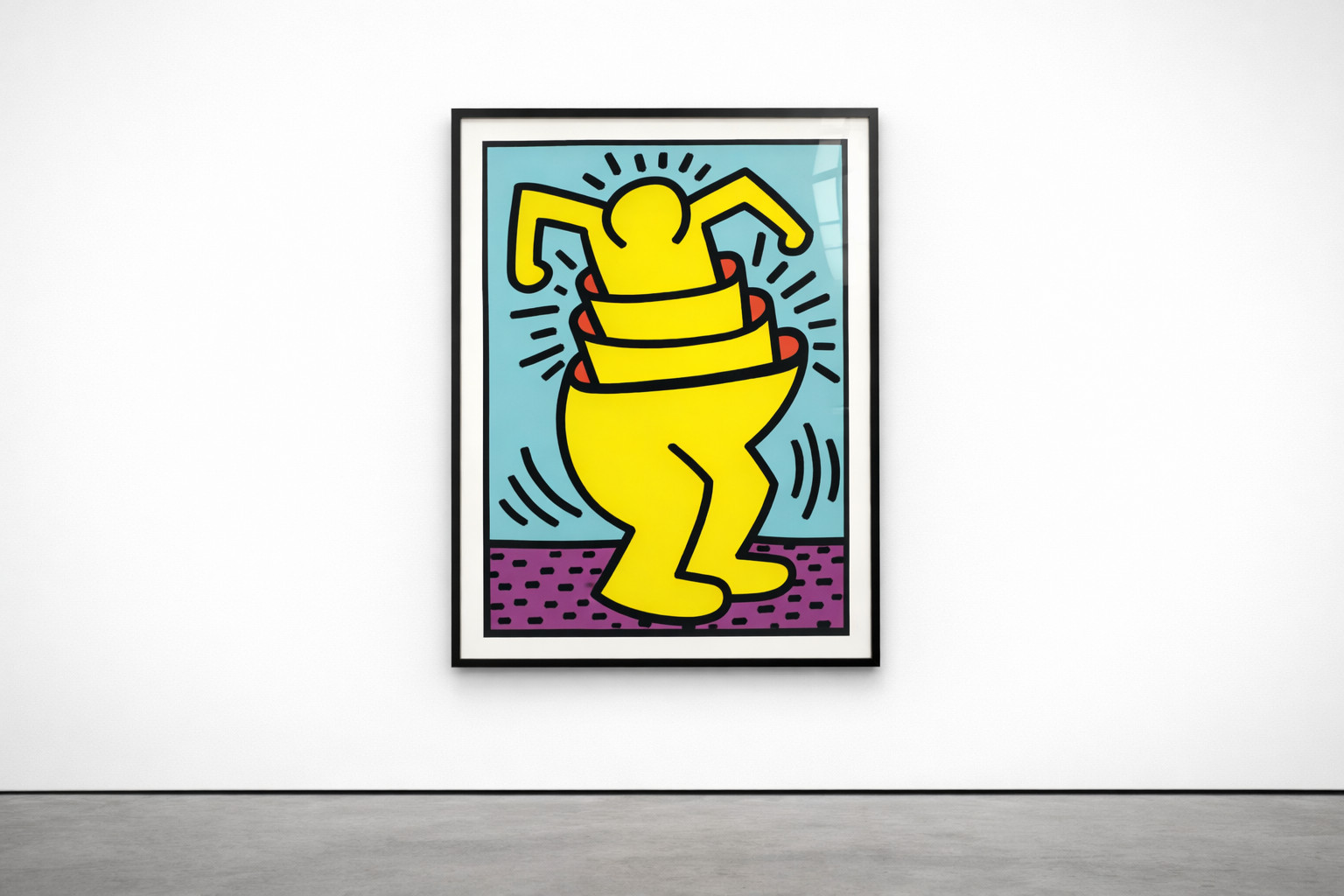
Untitled (Cup Man) — a characteristically kinetic Haring figure, rendered with his signature graphic confidence.
Haring emerged from the downtown New York scene of the late 1970s and early 1980s: subway chalk drawings, Club 57 performances, the Mudd Club. By the mid-1980s he was among the most recognisable artists in the world, exhibiting internationally and collaborating with figures from Andy Warhol to Grace Jones to William Burroughs. His Pop Shop — first in New York, later in Tokyo — sold posters, T-shirts, and multiples at prices deliberately within reach of young collectors.
The market trajectory since 1990 reflects both his cultural staying power and the structural shift in the blue-chip print market generally. At Christie's New York in 2019, his 1982 painting Untitled sold for $6.5 million. His prints — particularly signed, lifetime impressions from key series — have tracked this upward movement, with average auction prices for signed works rising markedly over the 2015–2026 period.
Visit Keith Haring at Guy Hepner to explore available works across multiple series and price points.
Haring produced prints throughout his career, working with publishers including George Mulder Fine Arts, Prestige Art, and his own Pop Shop imprint. The range of what exists in the market is wide: from large-format signed screenprints published in editions of 150, to small-format lithographs in editions of 30, to unique hand-annotated proofs.
That range creates complexity for buyers. Understanding what you are purchasing — and what distinguishes a lifetime impression from an estate print, a signed work from an unsigned one, a trial proof from a published edition — is essential before committing significant capital.
The Retrospect series — published in the final year of Haring's life — is one of the most significant bodies of work in his print output. The suite consists of colour and black-and-white screenprints that survey his thematic and formal vocabulary: the crawling figure, the barking dog, the radiating lines that signify motion and energy. These are not backward-looking works despite the title; they have the urgency of a artist who knows his time is short.
Signed Retrospect prints are among the most sought-after Haring editions. A signed colour example in fine condition can trade at $20,000–$60,000; black-and-white examples are somewhat lower. Edition sizes were relatively small.
The Blueprint Drawings are among Haring's final and most technically distinctive works. Produced on blueprint paper — the cyanotype material associated with architectural plans — they have an extraordinary quality: white figures against a deep Prussian blue ground, with a structural, almost architectural formality.
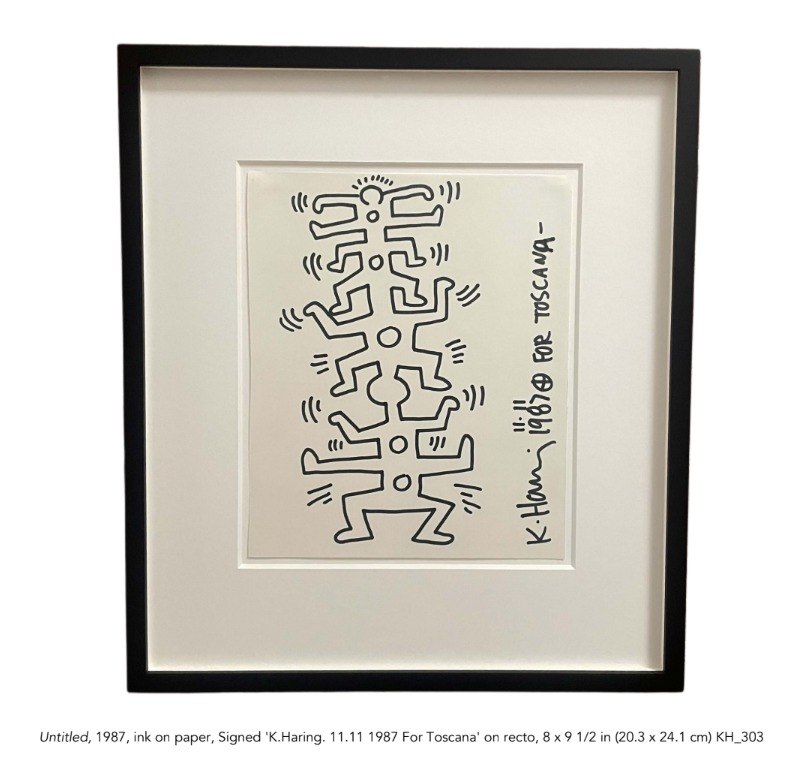
Untitled (For Toscana), 1987 — demonstrating Haring's sustained commitment to the graphic figure across media.
These works are produced in very small editions and are extremely rare on the secondary market. When they appear, competition is intense. Budget accordingly: $30,000–$100,000+ for signed examples.
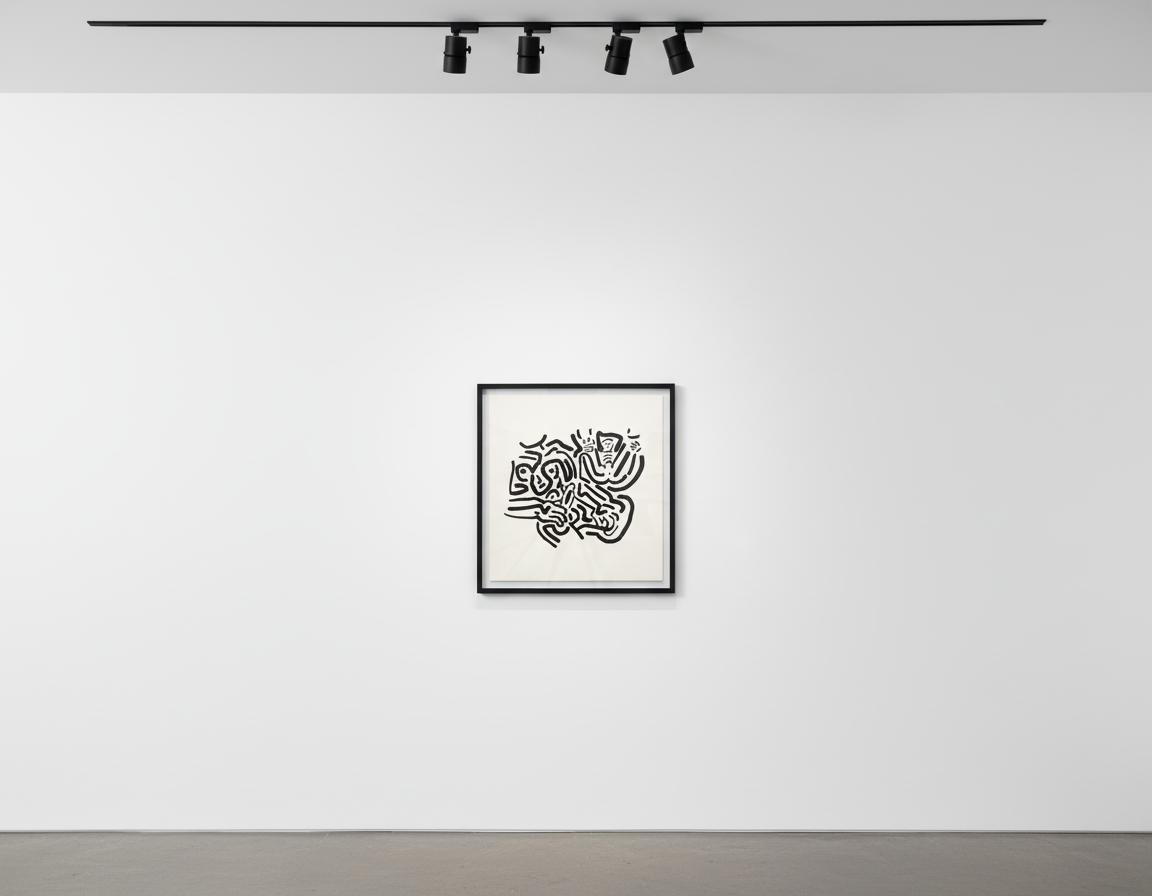
Bad Boys — six lithographs produced by George Mulder Fine Arts — are explicit erotic works depicting male figures in sexual situations. They represent Haring's most direct statement of queer sexuality and are, in context, courageous works: produced at the height of the AIDS crisis, when both gay sexuality and the epidemic were being systematically marginalised.
These prints have historically been undervalued relative to their artistic importance; market re-evaluation is ongoing. Signed examples currently trade at $10,000–$35,000.
The Story of Red and Blue — published in 1989 — translates Haring's subway drawing language into a book-length narrative in screenprint. The images have a free, calligraphic quality that connects directly to his original chalk subway works.
The Pop Shop editions — produced through Haring's own retail operation — were explicitly designed for broad accessibility. They are among the most affordable Haring prints in the secondary market, but that accessibility comes with complexity: edition sizes were large, and the range of unsigned and signed examples creates a wide quality spectrum.
For collectors, signed Pop Shop editions in fine condition represent a genuine entry point into the market at $2,000–$8,000.
The Safe Sex portfolio — seven screenprints — was produced in response to the AIDS crisis and reflects Haring's sustained commitment to public health advocacy through art. The images are explicit about safer sex practices while maintaining his characteristic graphic boldness.
These prints have significant historical importance beyond their artistic merit. They appear relatively rarely at auction; when they do, expect strong institutional and private competition.
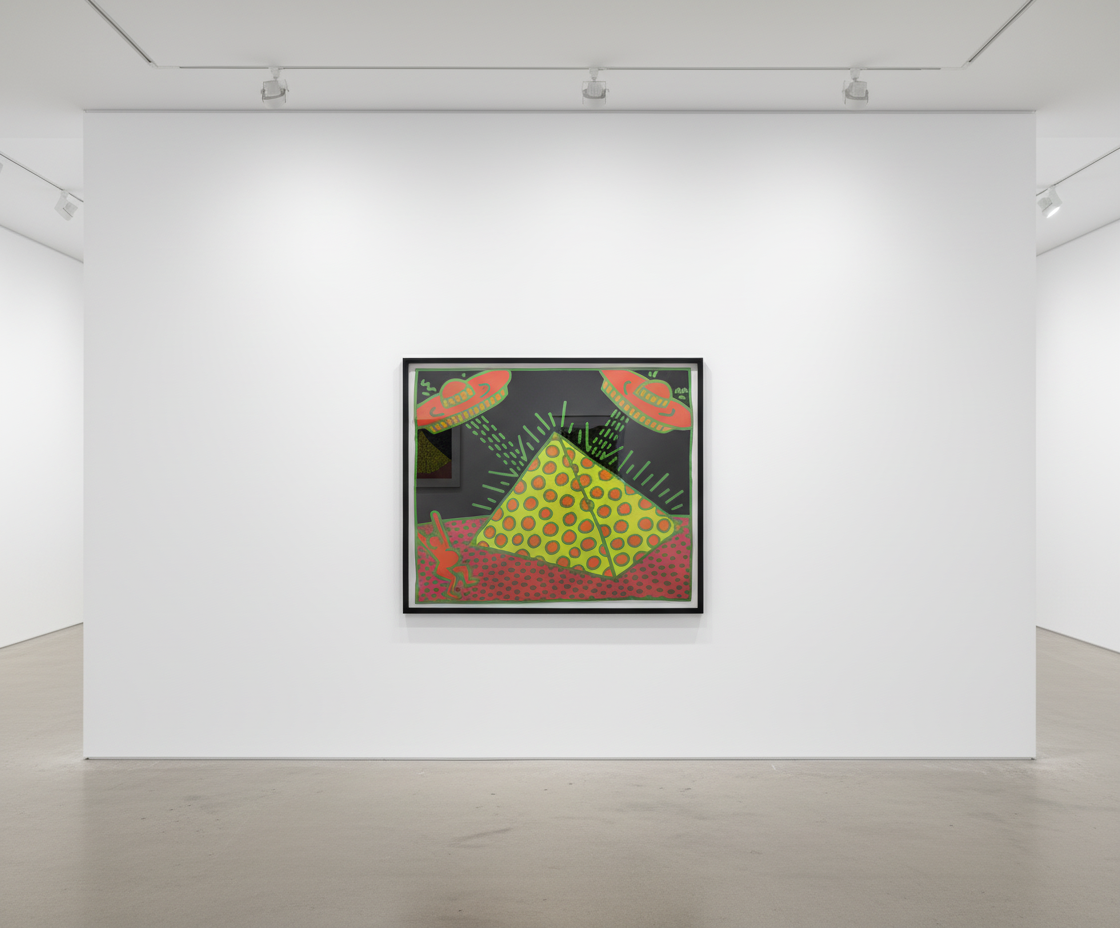
Six screenprints depicting interlocked figures in a cycle of birth, growth, and transformation. These are among Haring's most formally resolved prints, with a compositional balance that distinguishes them from his more frenetic works.
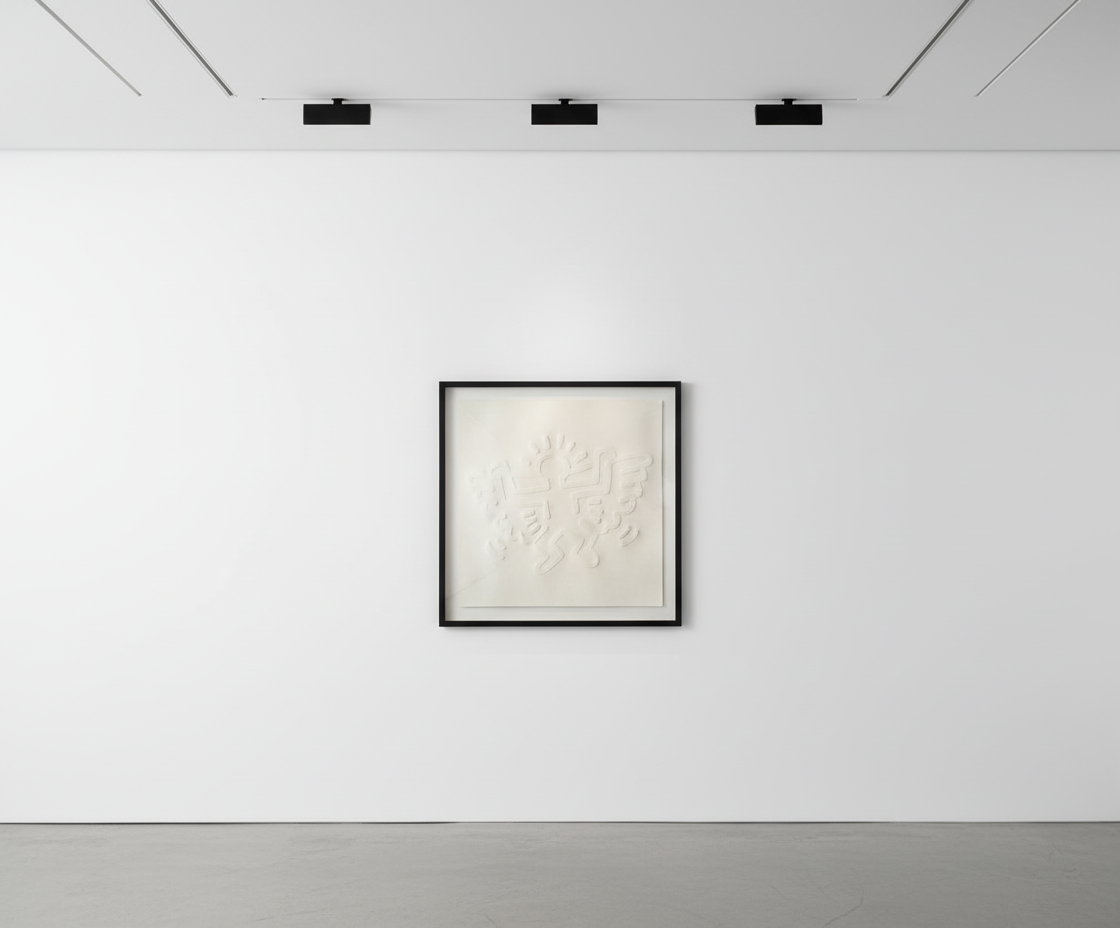 White Icons, Keith Haring" style="max-width:100%;height:auto;">
Angel, from White Icons — Haring's spiritual iconography rendered in his characteristically bold graphic style.
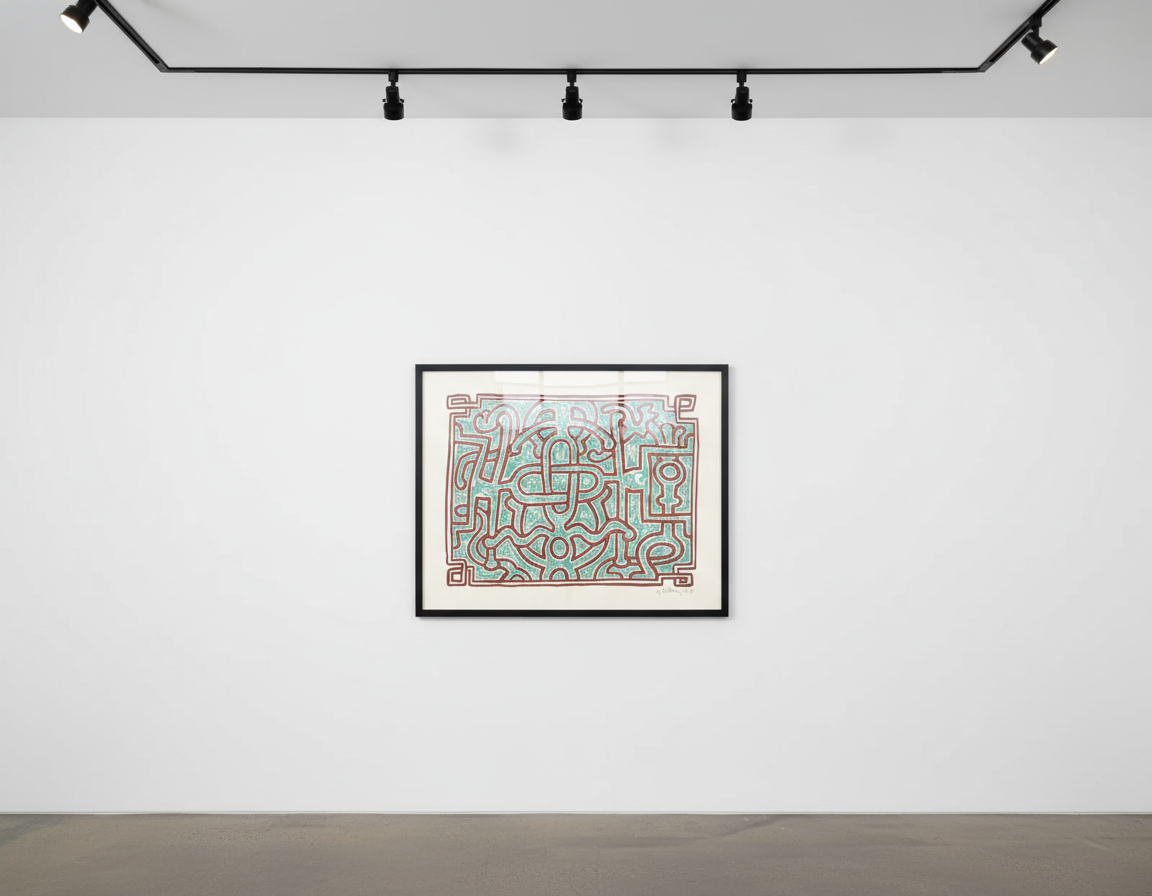
The Chocolate Buddha series — produced in collaboration with the Museum of Contemporary Art in Chicago — depicts Haring's signature figures in the posture of the Buddha. The works synthesise his interest in non-Western spiritual traditions with his graphic vocabulary.
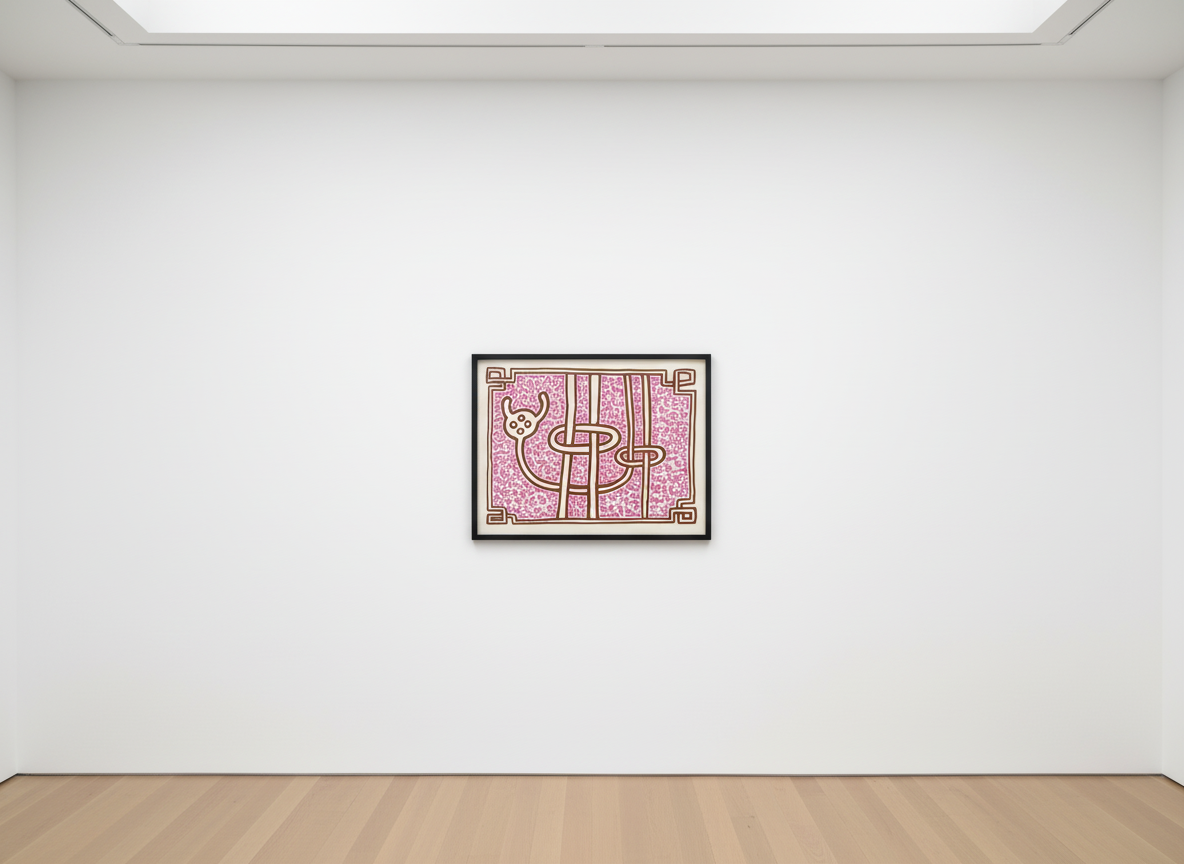
Chocolate Buddha 3 — one of Haring's most spiritually inflected and formally composed late works.
Signed Chocolate Buddha prints are relatively rare and have appreciated substantially over the past decade. Current market: $15,000–$50,000 for signed examples.
The Lucky Strike series — eight screenprints referencing the Lucky Strike cigarette pack, initially inspired by Andy Warhol's earlier Lucky Strike paintings — demonstrates Haring's sustained dialogue with Pop art conventions. These works are bold, graphic, and clearly positioned in the Pop tradition.
This is perhaps the single most important distinction for Haring collectors. Lifetime prints — works produced and (usually) signed by the artist before his death in February 1990 — carry a significant premium over estate prints issued after his death by the Keith Haring Foundation.
Estate prints are legitimate editions, authorised by the Foundation, and often produced from Haring's original designs or printing materials. They are not fakes. But they are not lifetime impressions, and the price differential reflects this: a lifetime signed impression will typically command 3–5x the price of an equivalent estate impression.
When purchasing, always establish explicitly:
Haring signed prolifically during his lifetime — he was generous with his signature and understood its commercial significance. But not all editions were signed, and not all purported signatures are genuine.
A genuine Haring hand-signature — typically in black felt-tip marker on the lower right of the sheet, with an edition number — adds 100–300% to the value of an unsigned example of the same work. The signature should be confident, fluid, and consistent with documented examples. Hesitant or shaky signatures, unusual placement, and signatures in materials inconsistent with the period are all red flags.
Beyond the published edition, Haring prints sometimes exist as trial proofs (TPs) — impressions pulled during the printing process to test colour and registration — or artist's proofs (APs), which are impressions retained outside the numbered edition, typically annotated "AP" and signed.
APs are generally considered more desirable than numbered edition impressions. Trial proofs vary in quality and desirability depending on their state; some show fascinating variants from the final published work.
The primary authentication reference for Haring prints is Alexandra Littmann's catalogue raisonné, Keith Haring: The Editions, which documents all known published editions with full technical descriptions, edition sizes, and publication details. Any print you are considering should be traceable to a Littmann entry.
The Keith Haring Foundation maintains records of the artist's work and can assist with authentication queries, though they do not offer a commercial authentication service. For major purchases, a written inquiry to the Foundation — supported by high-resolution photographs and technical documentation — is advisable.
Third-party print specialists with Haring expertise can conduct physical examination: paper type, ink chemistry, screen texture, and other technical markers help distinguish genuine lifetime impressions from later works or outright fakes.
The period 2020–2026 has seen sustained appreciation in the Haring print market, with some specific observations:
| Category | Recent Auction Range | Notes |
|---|---|---|
| Minor signed editions (White Icons etc.) | $5,000– | — |
| Unsigned Pop Shop editions | $800–$3,000 | Entry level, condition matters |
| Signed Pop Shop editions | $2,000–$8,000 | Accessible entry point |
| Signed minor series (lifetime) | $5,000–$20,000 | Edition-dependent |
| Fertility Suite (signed) | $8,000–$25,000 | Consistent demand |
| Bad Boys (signed) | $10,000–$35,000 | Art-historically significant |
| Chocolate Buddha (signed) | $15,000–$50,000 | Rising strongly |
| Retrospect series (signed) | $20,000–$60,000 | Flagship series |
| Blueprint Drawings (signed) | $30,000–$100,000+ | Extremely rare |
| Chocolate Buddha — individual | $2,000 | Bonhams 2018–19 |
| Blueprint Drawings (suite) | $2,000–$20,000 | Christie's 2024 |
| Valley — individual print | $25,000–$33,000 | Phillips/Sotheby's 2020–24 |
| Blueprint Drawings — individual | ~$30,000 | Individual signed sheets |
| Pop Shop Quad — individual | $60,000– | — |
| Retrospect — individual | $27,000 | Sotheby's/Christie's 2022–25 |
| Fertility Suite — complete | ~$318,000 | Sotheby's 2025 |
| Retrospect series (complete) | ~$300,000 | Per market |
Indicative ranges based on auction and gallery data 2022–2026.
Before completing any Haring print purchase, establish answers to these questions:
A reputable seller will answer all of these questions promptly and in writing. Hesitation or evasion on any point should be treated as a warning sign.
Keith Haring's prints remain one of the most compelling collecting propositions in the post-war and contemporary market. They are works of genuine artistic merit — not simply cultural artefacts — by an artist whose historical importance continues to be recognised and extended by new scholarship and exhibition. The market infrastructure is strong: the Littmann catalogue, the Foundation records, the active secondary market.
The key to collecting well is knowledge: understanding the critical distinctions between lifetime and estate impressions, signed and unsigned, key series and secondary works. Invest in that knowledge before investing in the art.
Explore available Keith Haring works at Guy Hepner, including works from Retrospect and Blueprint Drawings alongside pieces from across his print career.
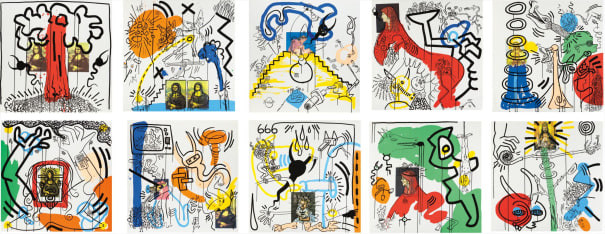
Explore Keith Haring prints for sale at Guy Hepner: Andy Mouse, Apocalypse, Bad Boys, Chocolate Buddha, Fertility.
Related Series