Andy Mouse

May 19, 2026
Keith Haring died on 16 February 1990, aged thirty-one. In the decade between his arrival in New York and his death from AIDS-related complications, he built one of the most recognisable visual languages in the history of twentieth-century art. His prints — produced with the same democratic instinct that drove him to draw in subway stations rather than galleries — are now among the most actively traded works in the post-war edition market, with complete portfolios regularly selling into six figures at the major houses. This guide covers the principal series, their auction records, and everything a collector needs to know before acquiring.
Keith Haring prints for sale at Guy Hepner span the complete range of his print output, from the early lithographs through the iconic screen-printed portfolios of his final years. Browse available works using the link below.
Inquire About Available Keith Haring Prints
Browse Keith Haring prints available through Guy Hepner, New York.
In December 1980, a twenty-two-year-old art student from Kutztown, Pennsylvania began drawing in chalk on the unused black advertising panels of New York City's subway stations. He worked quickly and without authorisation, completing each drawing before transit police could intervene. Within two years, commuters across the city recognised his vocabulary of crawling babies, barking dogs, dancing figures, and radiating lines without knowing the artist's name. That vocabulary became one of the most powerful graphic systems of the late twentieth century.
Haring had arrived in New York in 1978 to study at the School of Visual Arts. The East Village art scene of the early 1980s — raw, urgent, and largely ignored by the established art world — became his context. Jean-Michel Basquiat and Kenny Scharf were close contemporaries; Andy Warhol, who befriended Haring as his reputation grew, became a mentor and influence. From Warhol, Haring absorbed the logic of serialisation and the power of the repeated image. From the subway, he learned to work with speed and directness, addressing an audience measured in the millions rather than the hundreds.
His formal print output began in the mid-1980s and accelerated as his gallery career, public mural commissions, and the Pop Shop — opened on Lafayette Street in April 1986 — expanded his reach. The key portfolios were produced between 1983 and 1990. Several were published posthumously from work completed in his final year; the Icons suite, his most commercially significant print series, was published in 1990 from editions finalised shortly before his death.
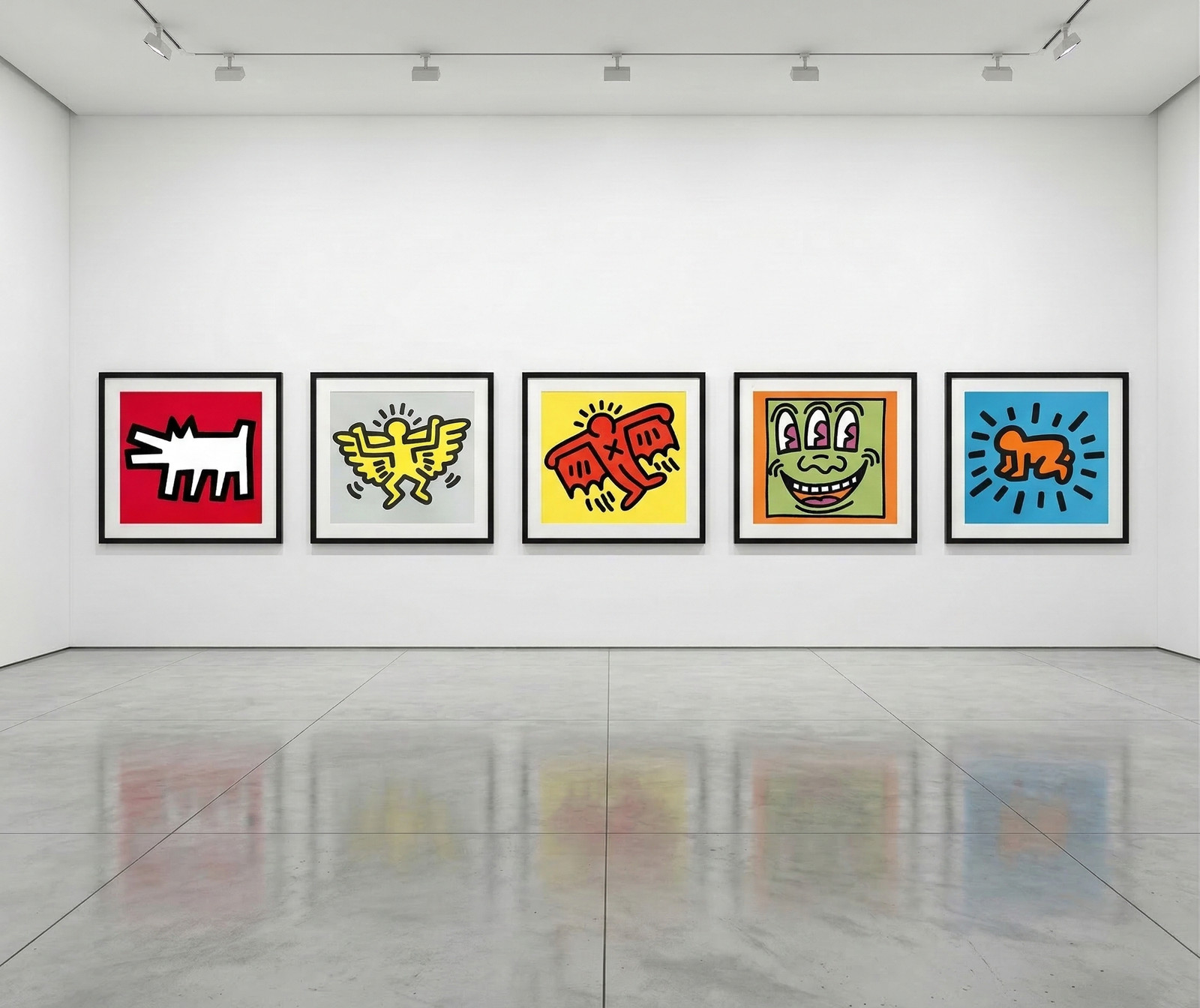
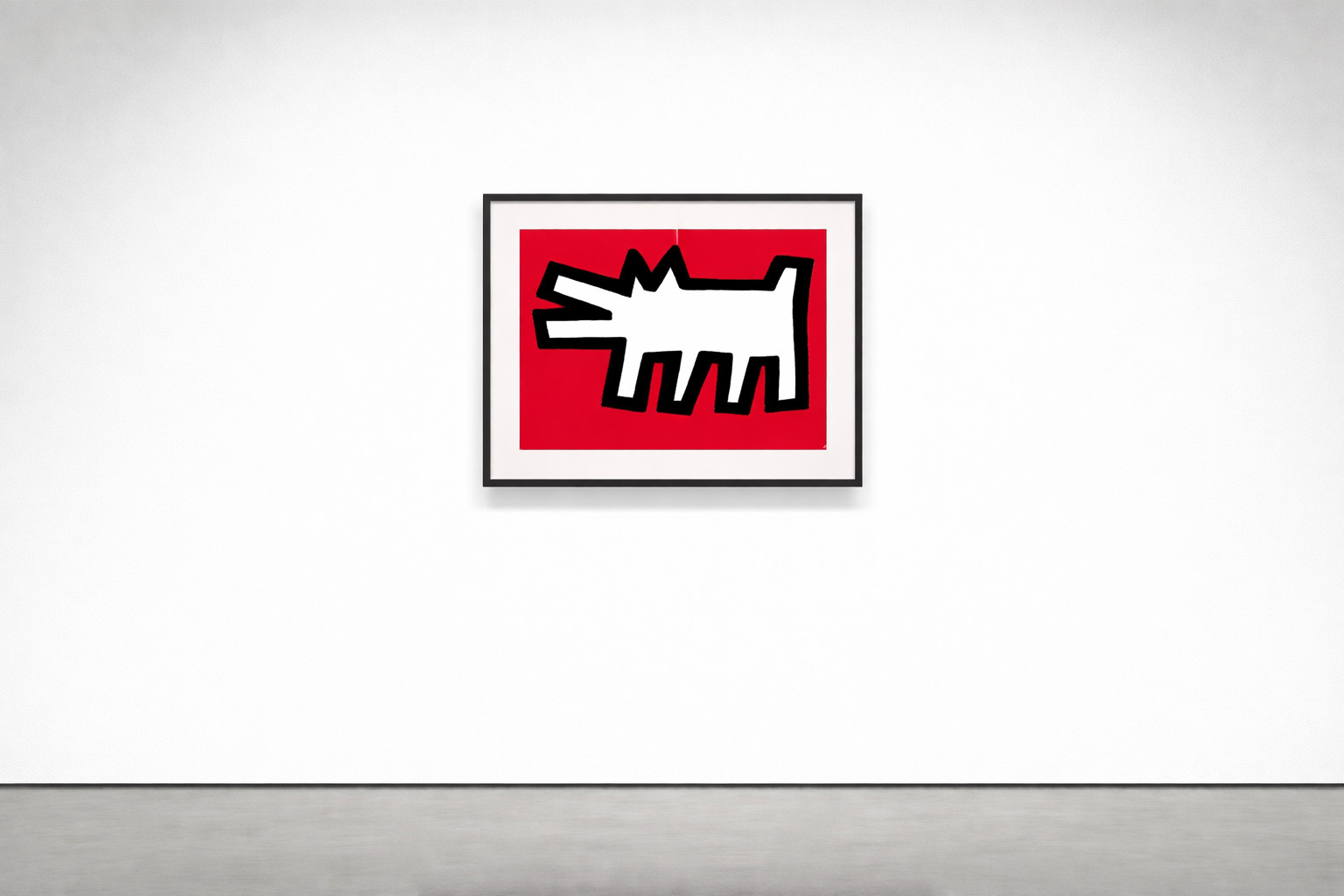
The Icons portfolio is the single most important edition in Keith Haring's print catalogue. Published by Tony Shafrazi Editions, Inc., New York, in 1990, it comprises five screenprints in colours with embossing on Arches Cover paper, each measuring 21 x 25 in (53.3 x 63.5 cm). The edition size is 250, plus 25 artist's proofs.
Each print in the series presents a single symbol from Haring's established lexicon in deliberate isolation — a formal choice that acknowledges the fame these images had achieved in the ten years since they first appeared in the subway. The five subjects are:
Authentication on Icons prints is provided by a stamped certificate signed by Julia Gruen, executor of the Keith Haring Estate, along with the Tony Shafrazi Editions blindstamp on each sheet. The complete portfolio carries an estimate of £60,000–£80,000 (complete set, all five signed).
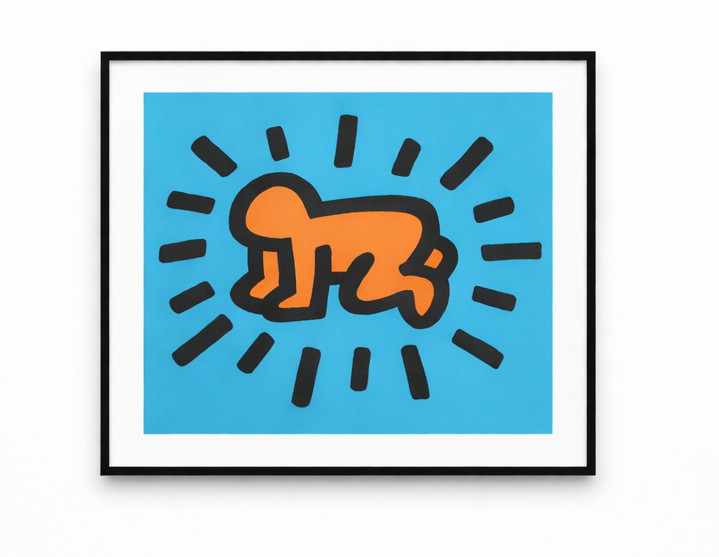
The Icons suite has appeared consistently at auction over the past decade, with the most recent results confirming sustained demand across individual prints and the complete set.
Lempertz, Cologne, December 5, 2025: The complete Icons portfolio of five signed prints sold for a hammer price of £60,000, reaching £80,000 with buyer's premium. This result sits at the top of the current £60,000–£80,000 estimate range, indicating firm demand for the assembled set.
Sotheby's, May 16, 2025: A complete Icons portfolio achieved $165,100, demonstrating healthy dollar-denominated demand and confirming that the series performs consistently across both the European and American markets.
Radiant Baby, Tate Ward Auctions, September 18, 2025: Hammer £16,150 (£25,000 with premium). Within the current estimate range.
Barking Dog, Freeman's, September 26, 2024: Hammer £11,900 (£19,000 with premium). The Barking Dog's strong collector following is reflected in this result and in its position as the highest-estimated individual print in the suite.
Angel, Bonhams New Bond Street, May 1, 2024: Hammer £5,100 (£7,500 with premium).
Flying Devil, Sotheby's Online, March 4, 2024: Hammer £6,800 (£10,000 with premium).
Three-Eyed Monster, Sotheby's Online, March 15, 2023: Hammer £8,925 (£14,000 with premium). This result exceeded the high estimate at time of sale, reflecting unexpectedly strong demand for a print that carries the lowest estimate in the set.
The Icons series has recorded 63 auction appearances to date, with an average annual growth rate of approximately 9.4% tracked across the five-year period. The most commercially important observation is the valuation inversion: buying the complete set at £60,000–£80,000 delivers significantly lower cost-per-print than assembling the five separately — where the total of individual estimates reaches approximately £65,000–£97,500 at current levels.
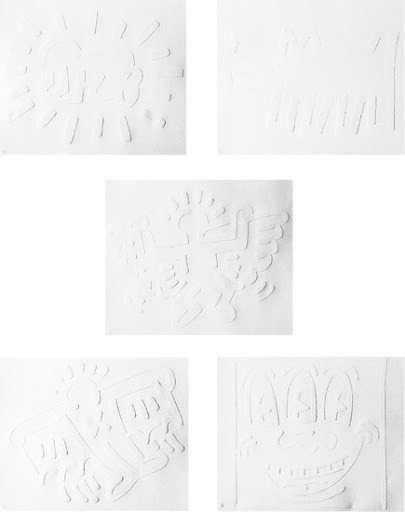
Produced alongside the Icons suite, White Icons (Littmann PP. 172–173) presents the same five motifs — Radiant Baby, Angel, Three-Eyed Monster, X-Man, and Barking Dog — in a contrasting colour scheme. The White Icons are rarer than their counterpart, with a smaller edition of 90 plus 10 AP, and command a premium on secondary market for that reason. A complete White Icons set sold at Sotheby's in May 2025 for $38,100, reflecting the suite's smaller footprint at auction relative to the standard Icons. Collectors seeking depth in Haring's print output often pair both series as a deliberate statement about the artist's engagement with positive and negative visual space.
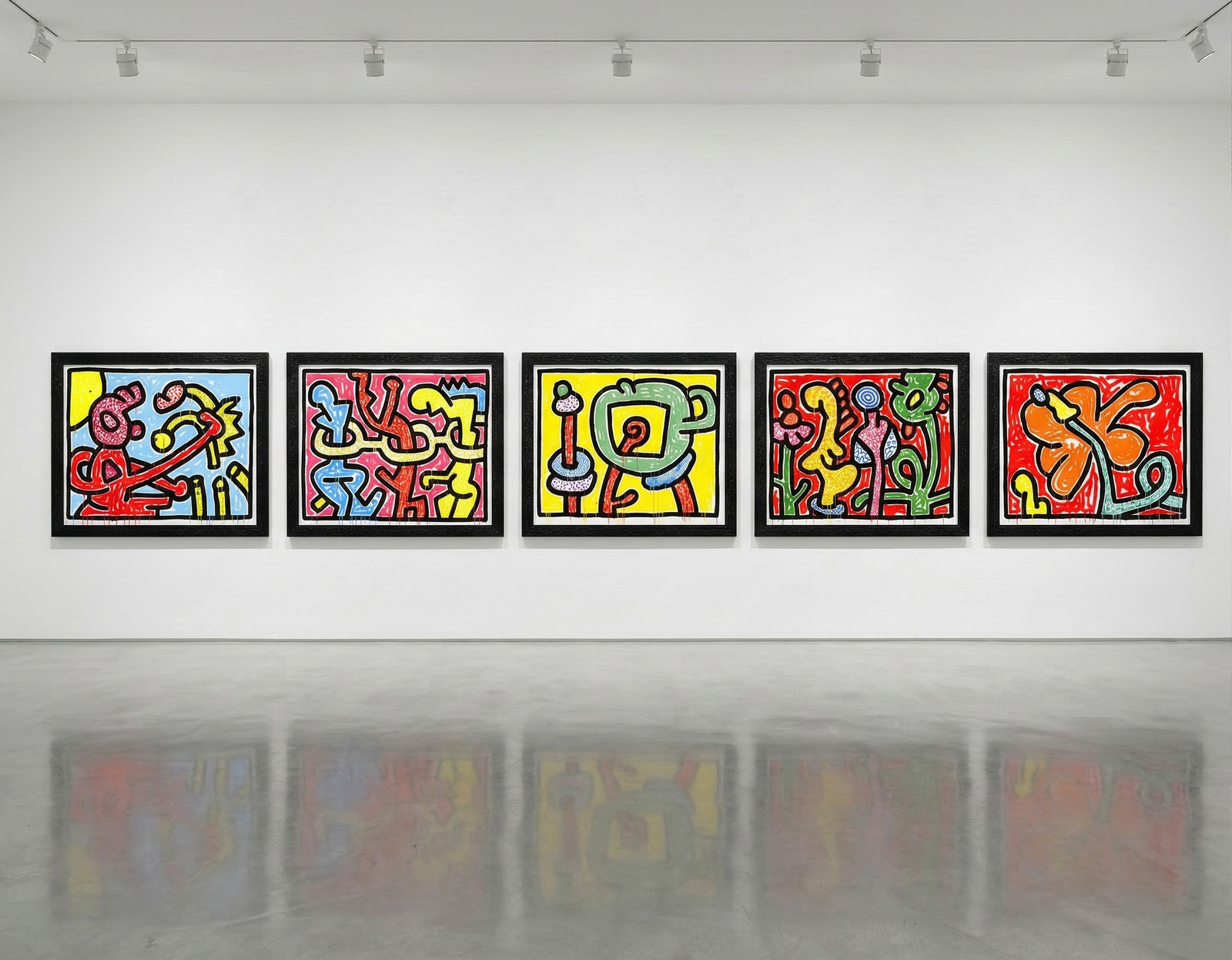
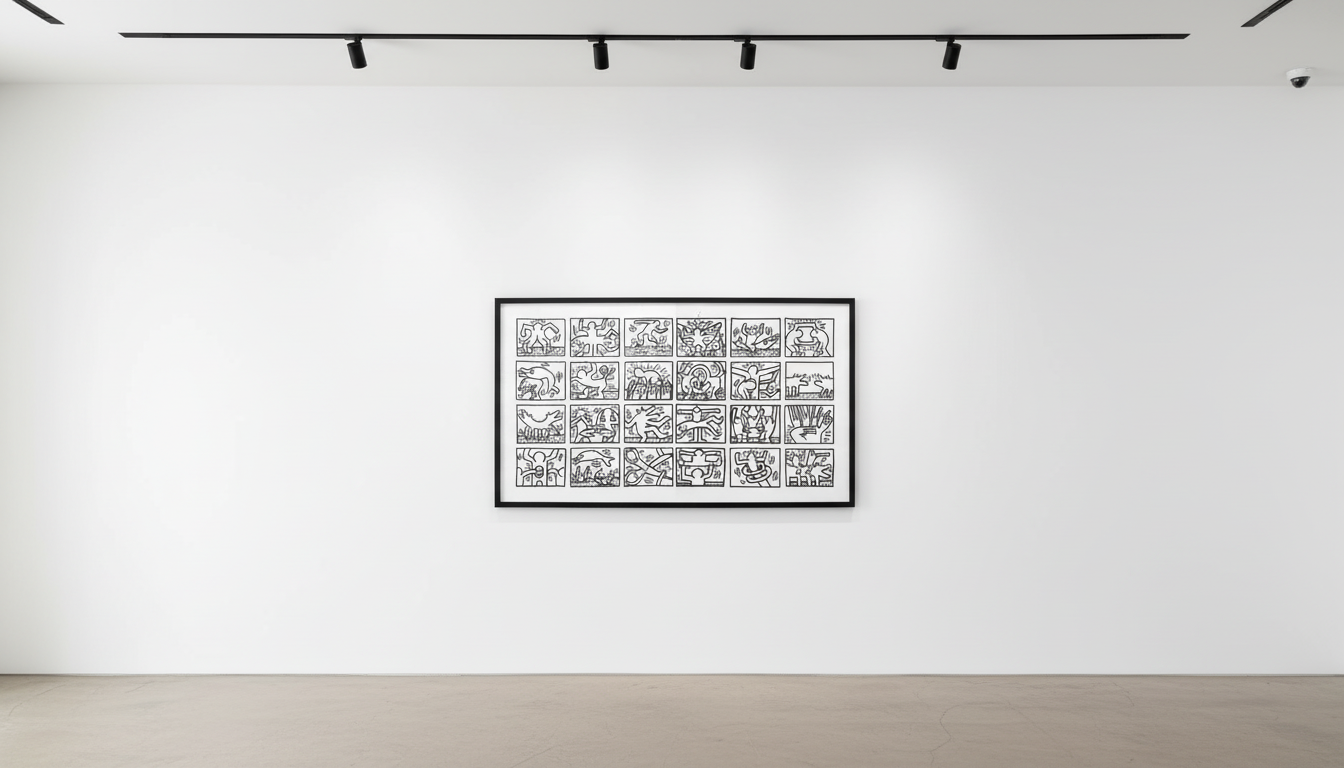
Published by Prestel Verlag as the companion to the landmark monograph on Haring's work, Retrospect (Littmann PP. 118–121) is among the most art-historically significant prints in the catalogue. Comprising two large-format screenprints that compress Haring's full iconographic vocabulary into densely populated compositions, the series demands comparison with Warhol's Flowers or Lichtenstein's Brushstroke as an artist's definitive statement about their own output. The edition of 75 produces genuine secondary market scarcity. Christie's, September 2019: £180,000 for a signed example from the edition — a result that still defines the benchmark for this series. Collectors should note that Retrospect unsigned proofs and poster editions circulate in the market; the signed, stamped edition of 75 is the one that commands the premium.
The five-print Growing suite (Littmann PP. 88–91) is among the most ambitious of Haring's later edition projects. Each print in the series documents a different stage of development — figures emerging, evolving, and multiplying — in a sequential narrative that is rare in his print output. Sotheby's, May 2025: $762,000 for the complete set of five prints. This result places the complete Growing portfolio in a different commercial category from the Icons: it is a gallery-level acquisition rather than an entry-tier purchase, and its rarity reflects an edition size significantly smaller than the Icons suite.
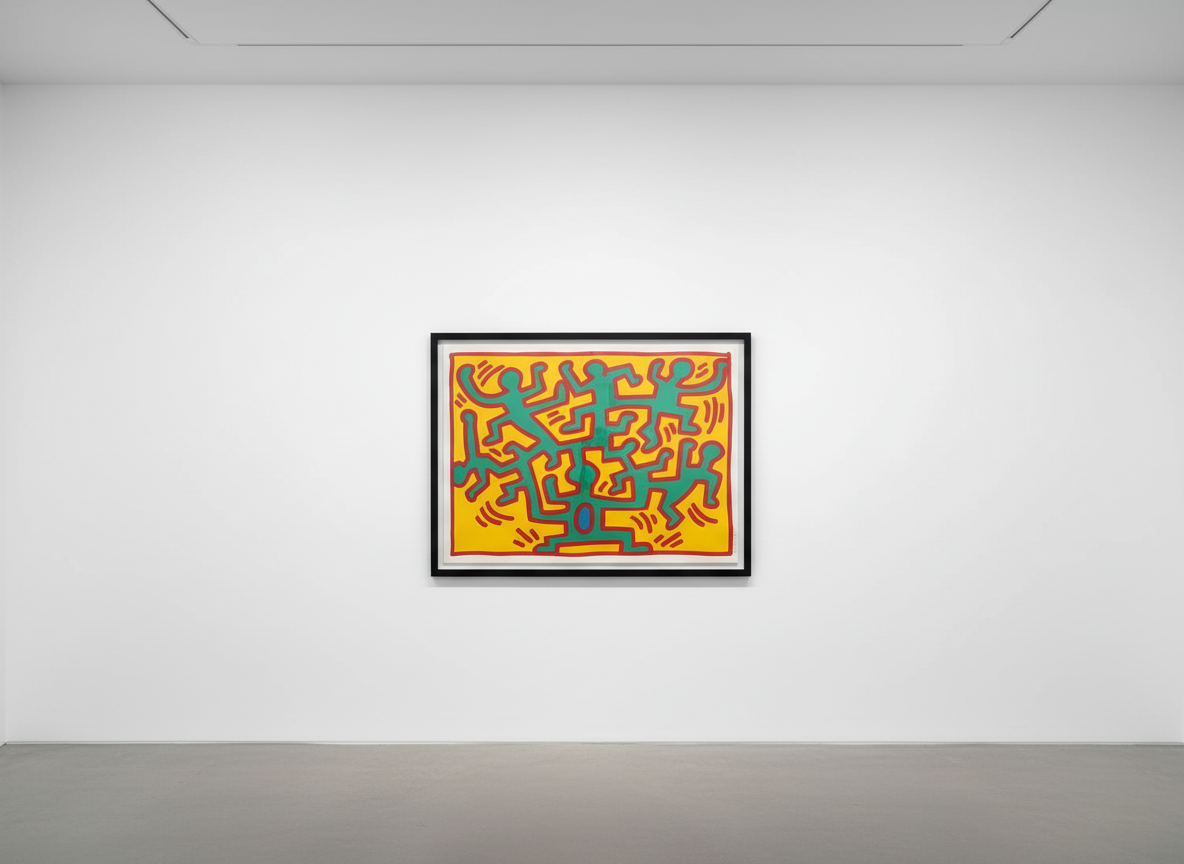
The Blueprint Drawings (Littmann PP. 174–183) are the last substantial print project of Haring's career, comprising seventeen individual prints on blueprint-toned paper. The series carries the particular weight of work completed in the knowledge of approaching death: the imagery is dense, urgent, and among the most complex Haring produced on paper. Phillips, April 2022: $554,400 for the complete set of seventeen. Individual Blueprint prints appear at auction less frequently than Icons, but when they do, they tend to perform above estimate — reflecting a demand-supply imbalance that collectors who track the market closely have noted.
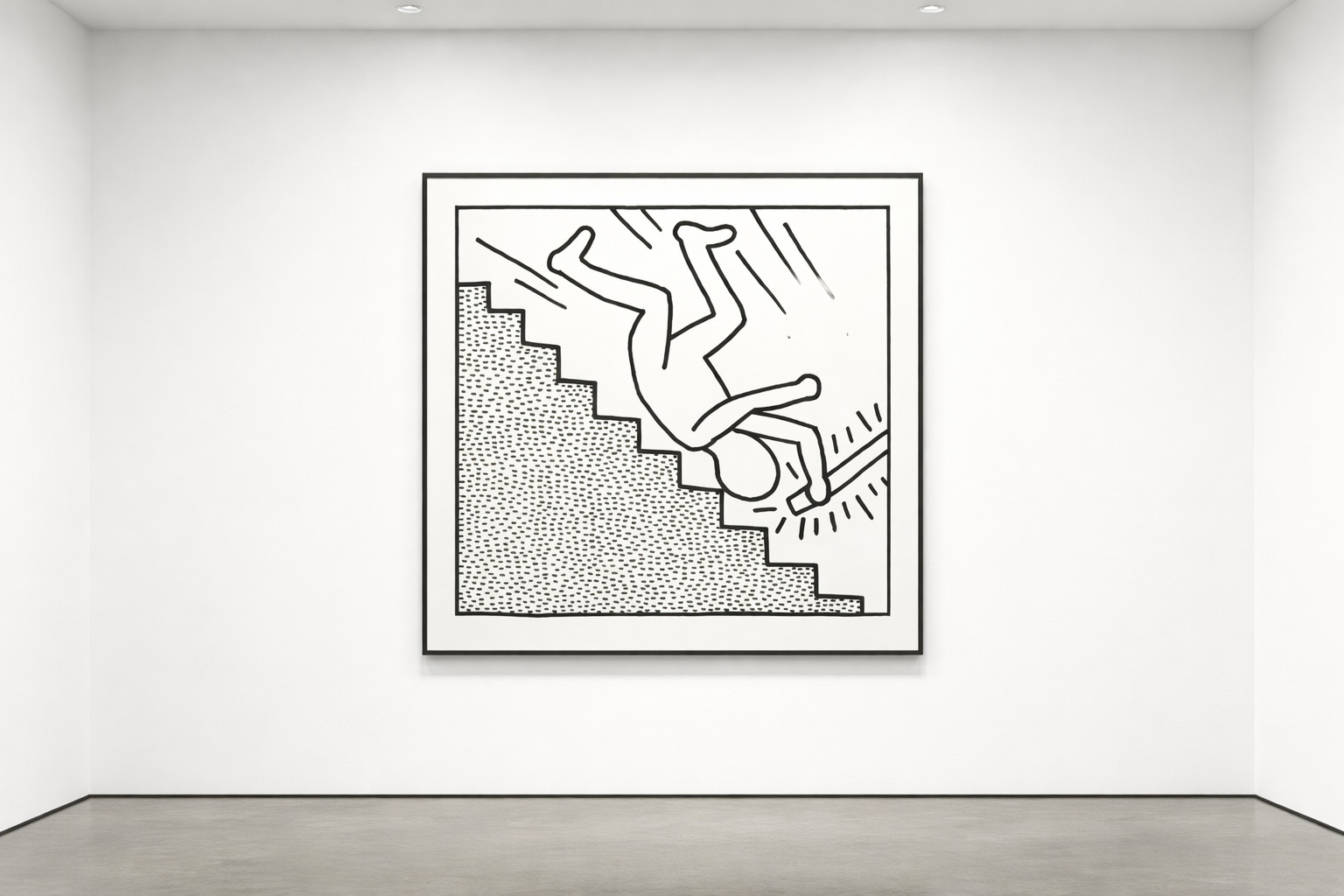
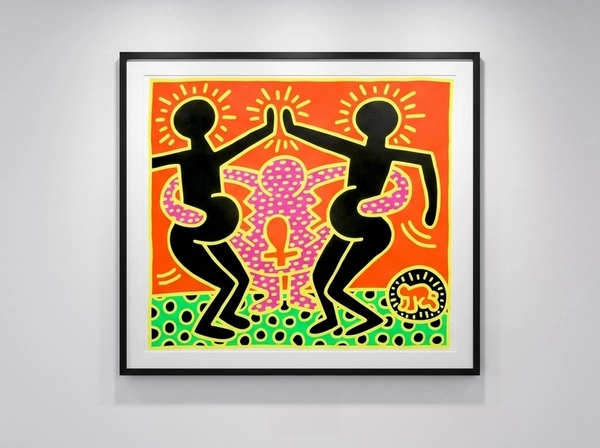
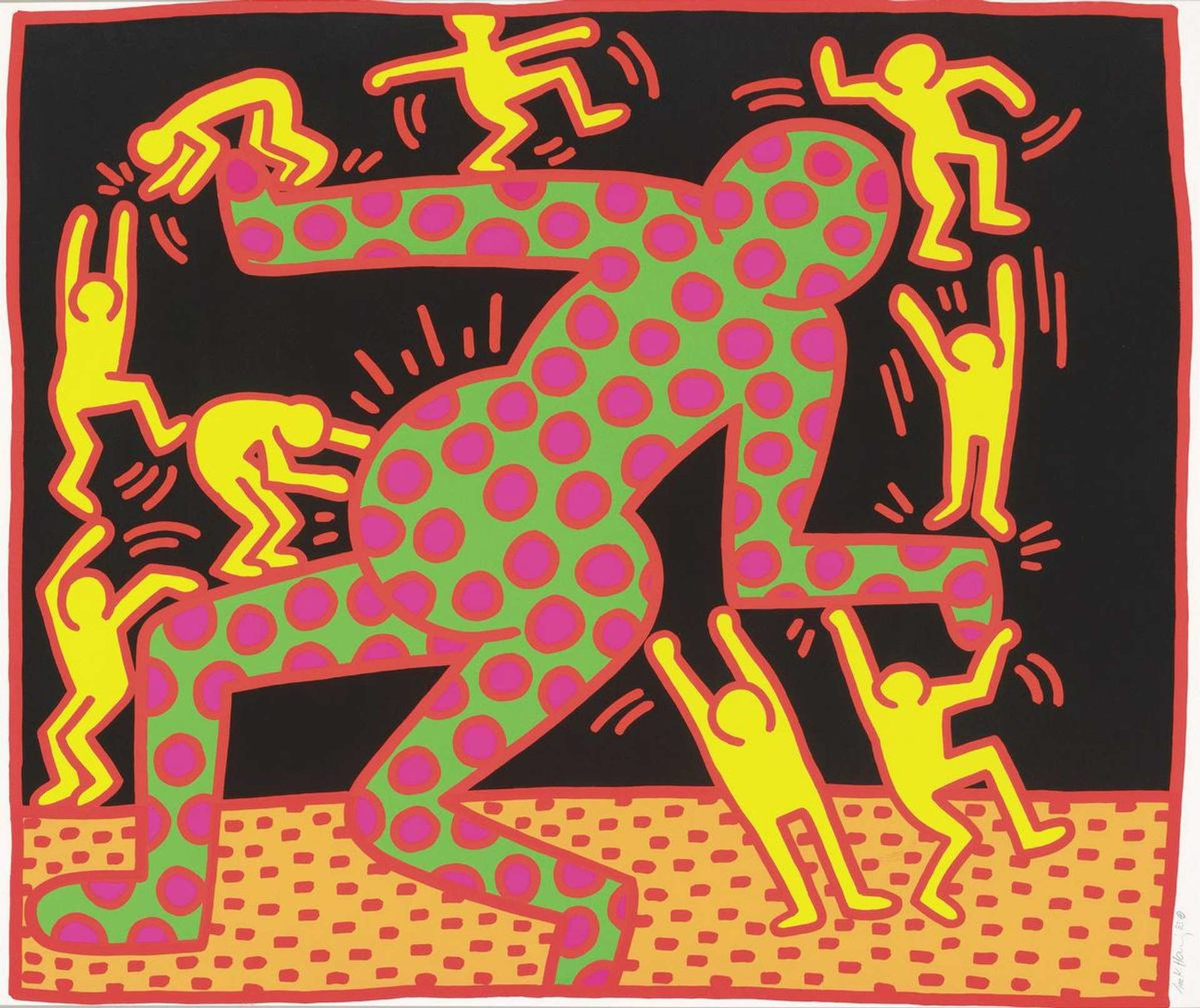
Among Haring's earliest major edition projects, the five-print Fertility suite (Littmann PP. 30–33) offers an entry point to his work from the period immediately following the subway drawings — when his vocabulary was fresh and his lines still carried the urgency of work produced against the clock in a public space. Sotheby's, May 2025: $317,500 for the complete set. Individual prints from this series trade in the $40,000–$80,000 range depending on condition and whether they carry the artist's signature.
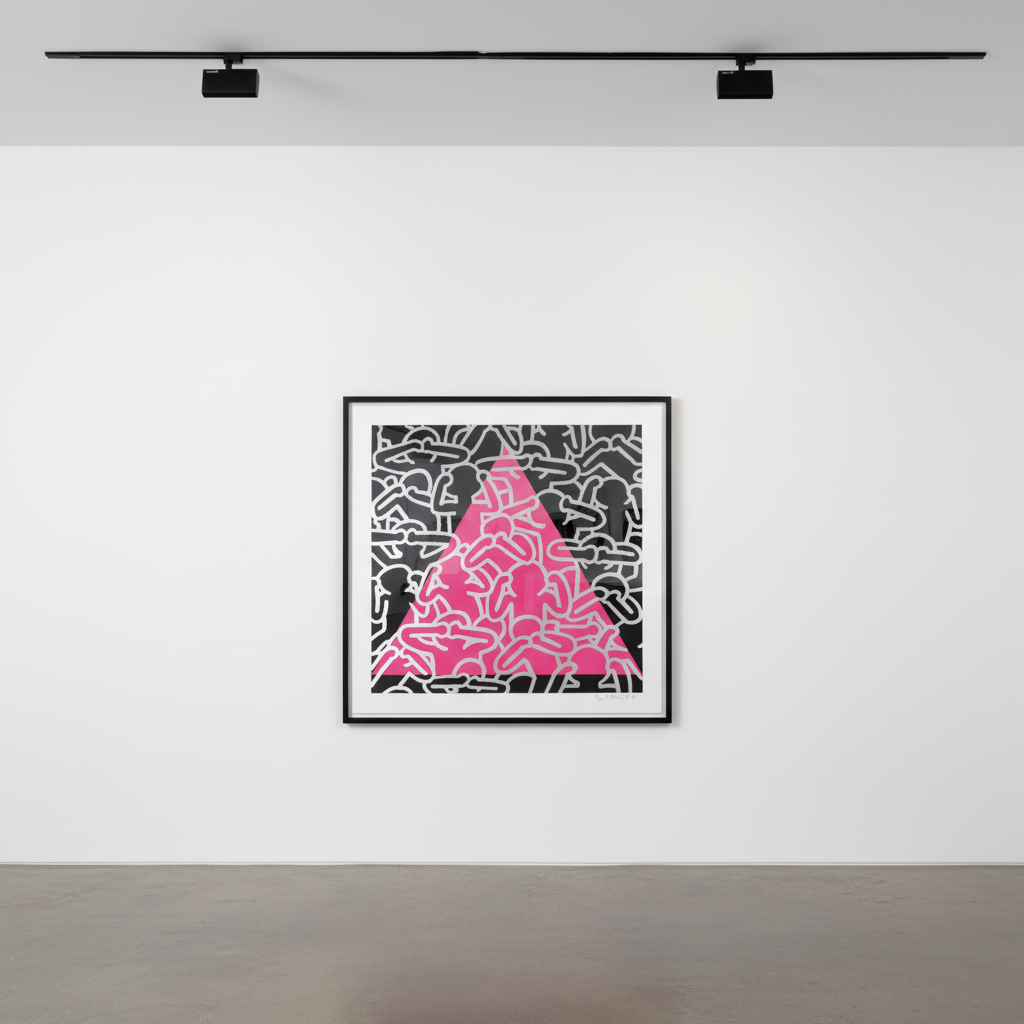
Produced as part of Haring's AIDS activism in the final year of his life, Silence = Death (Littmann PP. 152) borrows the pink triangle reclaimed by the LGBTQ+ community during the AIDS crisis and overlays three figures covering their eyes, ears, and mouth — a direct critique of the Reagan administration's refusal to acknowledge the epidemic. It is simultaneously one of the most important political prints of the twentieth century and a commercially active work on secondary market. Bonhams, March 2024: $76,700. Its cultural significance makes it one of the most sought-after single prints in Haring's output regardless of size or edition.
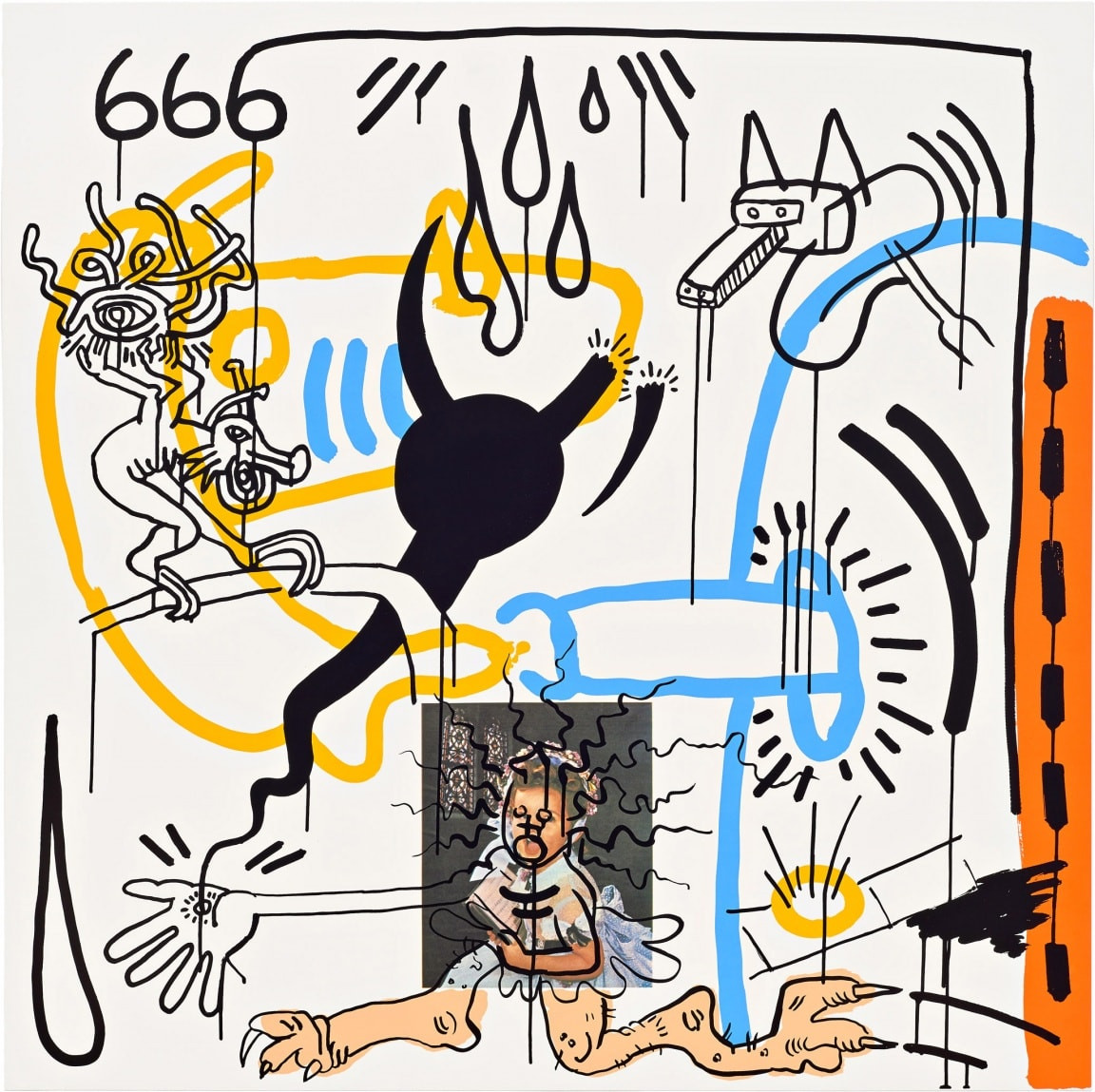
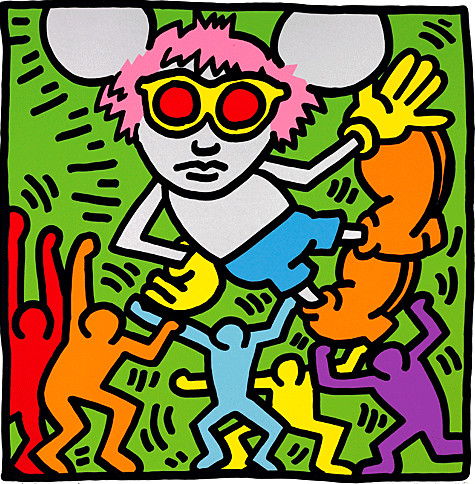
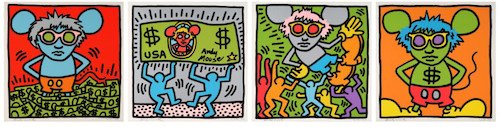
Created as an homage to — and affectionate commentary on — Andy Warhol, the four-print Andy Mouse portfolio fuses Warhol's Mickey Mouse ears with dollar signs and Haring's radiant baby energy lines. It is among the most instantly legible art-historical jokes in printmaking history, and among the most collectable. Christie's, April 2026: $355,600 for the complete set — a result that places the complete Andy Mouse portfolio among the highest-performing Haring print series at current market. The cultural crossover between the Haring and Warhol collector bases drives strong competition for the best examples.
There is no equivalent to the Andy Warhol Authentication Board for Keith Haring. The Keith Haring Foundation (now operating as Keith Haring Studio LLC) manages the artist's legacy, but does not issue retroactive certificates of authenticity for unsigned works. Authentication of Haring prints depends on a combination of provenance documentation, catalogue raisonné reference (the Littmann catalogue remains the primary scholarly resource), and — where relevant — the original estate-authenticated certificates issued at the time of publication.
For Icons and White Icons prints: each signed, numbered print came with a stamped certificate of authenticity bearing the signature of Julia Gruen, executor of the Keith Haring Estate, at the time of publication. These certificates should accompany the work; their absence is not automatically disqualifying, but it requires stronger substitute provenance to satisfy institutional-grade authentication standards.
For earlier series (Three Lithographs, Fertility, Ludo, International Youth Year): these were produced during Haring's lifetime and typically carry the artist's signature and the publisher's stamp or blindstamp. Works from reputable publishers — Prestel, Tony Shafrazi Editions, and the Pop Shop editions — carry an established provenance chain. Collectors purchasing from primary dealers or major auction houses have the advantage of house-issued certificates covering the lot's authenticity and condition.
Unsigned poster editions and open-edition reproductions circulate widely and should not be confused with the limited signed editions. A collector purchasing a signed Haring print should verify: (1) the edition stamp is present and consistent with published records; (2) the signature is confirmed by a specialist, ideally with comparison to authenticated examples; (3) the provenance chain is documented back at least two prior ownership steps. The Littmann catalogue reference should be verifiable against the catalogued dimensions and paper.
Complete portfolios vs individual prints. As the Icons auction data demonstrates, the complete set of five typically sells at or near the combined value of assembling five individual examples — meaning buying a complete portfolio offers no meaningful discount. However, the complete portfolio is easier to sell as a single lot to a major house, and institutional collectors prefer the assembled set. For private collectors buying for long-term holding, individual prints offer more flexible future liquidity.
Signed vs unsigned. Signed examples command a premium of 30–70% over unsigned proofs from the same edition across most Haring series. Artist's Proofs (AP), as is standard in the print market, typically command a premium over numbered examples for their relative scarcity.
Series and iconography. Works featuring the Radiant Baby and Barking Dog outperform comparable prints from the same series featuring less-recognised motifs. Within the Icons suite, Barking Dog and Radiant Baby carry the highest individual estimates; Angel and Three-Eyed Monster the lowest — purely a function of recognisability and collector demand for specific symbols.
Condition. Haring prints on paper are susceptible to fading, toning, and foxing. The screenprint-on-Arches-Cover editions from the 1990 portfolios are relatively robust, but works on lighter-weight or more acidic papers from the mid-1980s require attention. Condition is a significant price driver: a print graded "very good" versus "good" at the same house can represent a 20–40% variance in hammer result.
Edition size. The scarcest signed editions in Haring's output are the Retrospect prints (edition of 75) and the White Icons (edition of 90). These drive stronger competition among serious collectors than the larger Icons edition (250). The Blueprint Drawings — seventeen individual prints but from a small edition — represent a different kind of scarcity: breadth of iconographic range.
Entry tier ($10,000–$30,000): Individual Icons prints — Angel, Three-Eyed Monster, or Flying Devil — represent the clearest entry point into serious Haring collecting. They are commercially liquid, well-documented, and carry the authentication infrastructure of the Tony Shafrazi Editions publication. A collector at this level is buying access to one of the five most important motifs in Haring's visual vocabulary with a work that has demonstrated consistent secondary market performance.
Mid tier ($30,000–$100,000): Radiant Baby or Barking Dog from Icons (the higher-valued single prints), a complete Icons set at £60,000–£80,000, or an important single print such as Silence = Death ($76,700 at Bonhams, March 2024) or Statue of Liberty ($76,200 at Sotheby's, April 2025). At this tier, collectors are acquiring works with genuine cultural weight beyond their print-market standing.
Upper tier ($100,000+): Complete Growing portfolio ($762,000 at Sotheby's, May 2025), complete Blueprint Drawings ($554,400 at Phillips, April 2022), complete Andy Mouse portfolio ($355,600 at Christie's, April 2026), or Retrospect (£180,000 at Christie's, September 2019). These are gallery-level acquisitions appropriate for collectors building a serious Haring holding or seeking works with institutional exhibition potential.
For all tiers: Condition, provenance, and authenticity documentation are non-negotiable prerequisites at every level. The Haring print market is deep enough that compromised examples circulate; a collector who pays a premium for a well-documented example with clean condition will recover that premium on resale. The demand demonstrated across 2024–2025 auction results confirms that the market for strong Haring prints remains robust.
Values vary significantly by series, edition size, and condition. Individual prints from the 1990 Icons suite currently estimate at £5,500–£30,000 depending on which of the five motifs; the complete Icons portfolio estimates at £60,000–£80,000. Earlier series such as Fertility and Ludo trade between $30,000–$100,000 for individual prints; complete late portfolios such as Growing and Blueprint Drawings have achieved $500,000–$800,000 at auction. Works on paper from the early 1980s can range from $20,000 for less significant subjects to several hundred thousand for exceptional examples.
The Icons series has demonstrated an average annual growth rate of approximately 9.4% over five years, and the overall print market has performed with stability through 2024–2025 even as the broader contemporary sector has been more selective. Haring's finite career output, rigorous Foundation documentation, and multi-generational collector appeal all support the investment thesis. That said, condition and authenticity are critical price variables — an improperly stored or dubiously provenanced print can underperform the market significantly. Investment-grade Haring collecting means paying attention to condition first and iconography second.
For Icons and White Icons prints, look for the stamped certificate of authenticity signed by Julia Gruen (estate executor), the Tony Shafrazi Editions blindstamp on the sheet, and the artist's pencil signature with edition number. For earlier series, verify the publisher's stamp, signature, and Littmann catalogue reference for consistency with published records. The Keith Haring Foundation does not issue retroactive authentication for unsigned or undocumented works. For any acquisition above $10,000, engage a specialist in post-war American prints to review the work in person before purchase.
Among signed edition prints, the Retrospect from the edition of 75 holds the highest individual print record, with examples selling at Christie's for £180,000. The complete Growing portfolio achieved $762,000 at Sotheby's in May 2025 — the highest result for a complete Haring print suite in recent auction history. The Andy Mouse complete portfolio achieved $355,600 at Christie's in April 2026. These results are for print editions only; Haring paintings occupy an entirely separate market tier.
Keith Haring prints are offered through specialist print dealers, major auction houses (Christie's, Sotheby's, Phillips, Bonhams), and galleries with a specific focus on post-war American editions. Guy Hepner gallery maintains a consistent inventory of Haring prints across all series and price points, including the Icons suite, Retrospect, Flowers, Blueprint Drawings, and multiple other portfolios. Works can be viewed and enquired about directly through the gallery.
Both series were published in 1990 by Tony Shafrazi Editions and feature the same five Haring motifs (Radiant Baby, Angel, Flying Devil, Three-Eyed Monster, Barking Dog). The key differences are colour scheme and edition size: Icons is the standard colour version with an edition of 250 plus 25 AP; White Icons reverses the colour palette to white figures on dark ground and has a smaller edition of 90 plus 10 AP. White Icons carry a premium due to their relative scarcity, and they represent a sophisticated pairing purchase for collectors who already hold Icons examples.
There is no single comprehensive catalogue raisonné for Haring's print output equivalent to the Feldman & Schellmann for Warhol. The most authoritative reference for editions is Alexander Braun's Keith Haring: The Political Line and the catalogue compiled by Hans Werner Holzwarth and Littmann (the "Littmann catalogue"), which covers the majority of significant editions with catalogue numbers used by auction houses and dealers globally. Individual print references in this guide use Littmann page numbers (PP.) as the standard citation format.
View Available Keith Haring Prints
Inquire About Keith Haring Icons
Inquire About Keith Haring Retrospect
Guy Hepner | 529 West 20th Street, New York
---Explore Keith Haring prints for sale at Guy Hepner: Andy Mouse, Apocalypse, Bad Boys, Chocolate Buddha, Fertility.
Related Series