Paintings

May 28, 2026
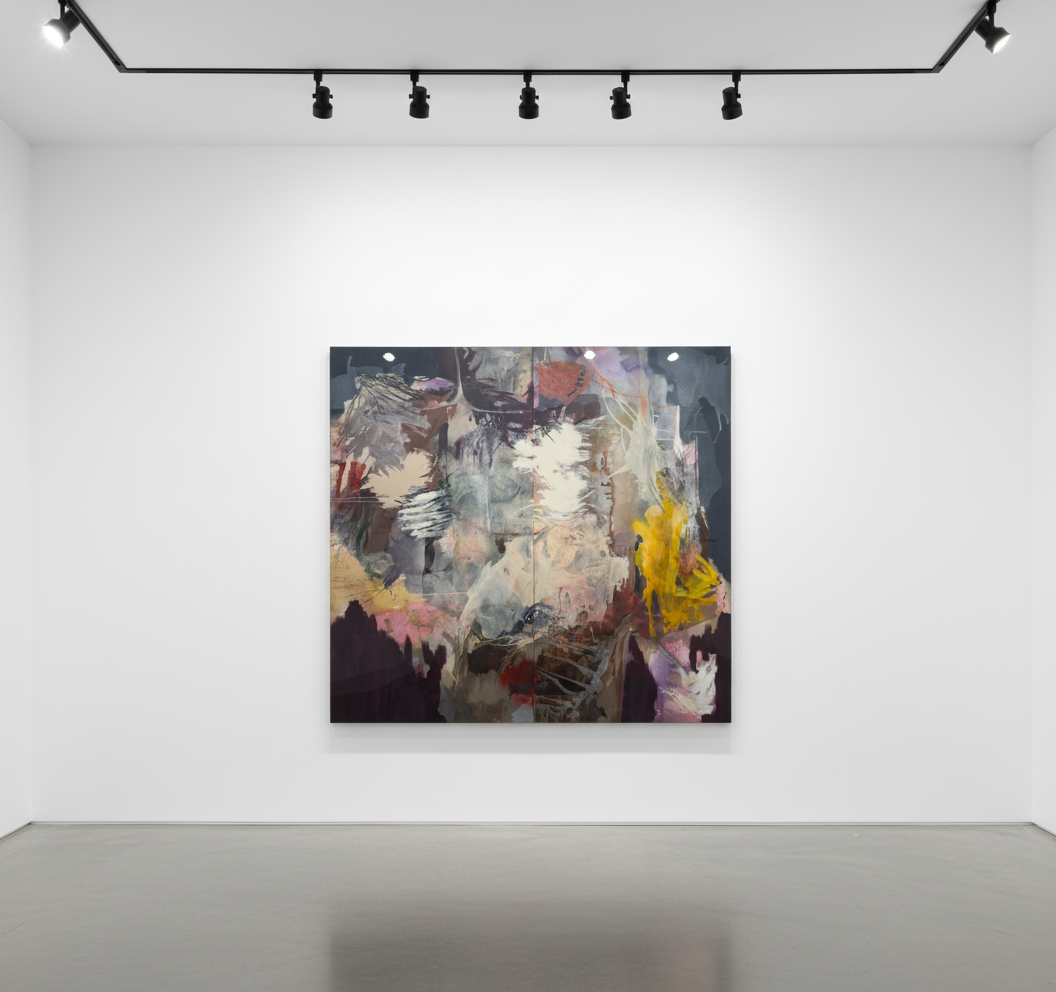
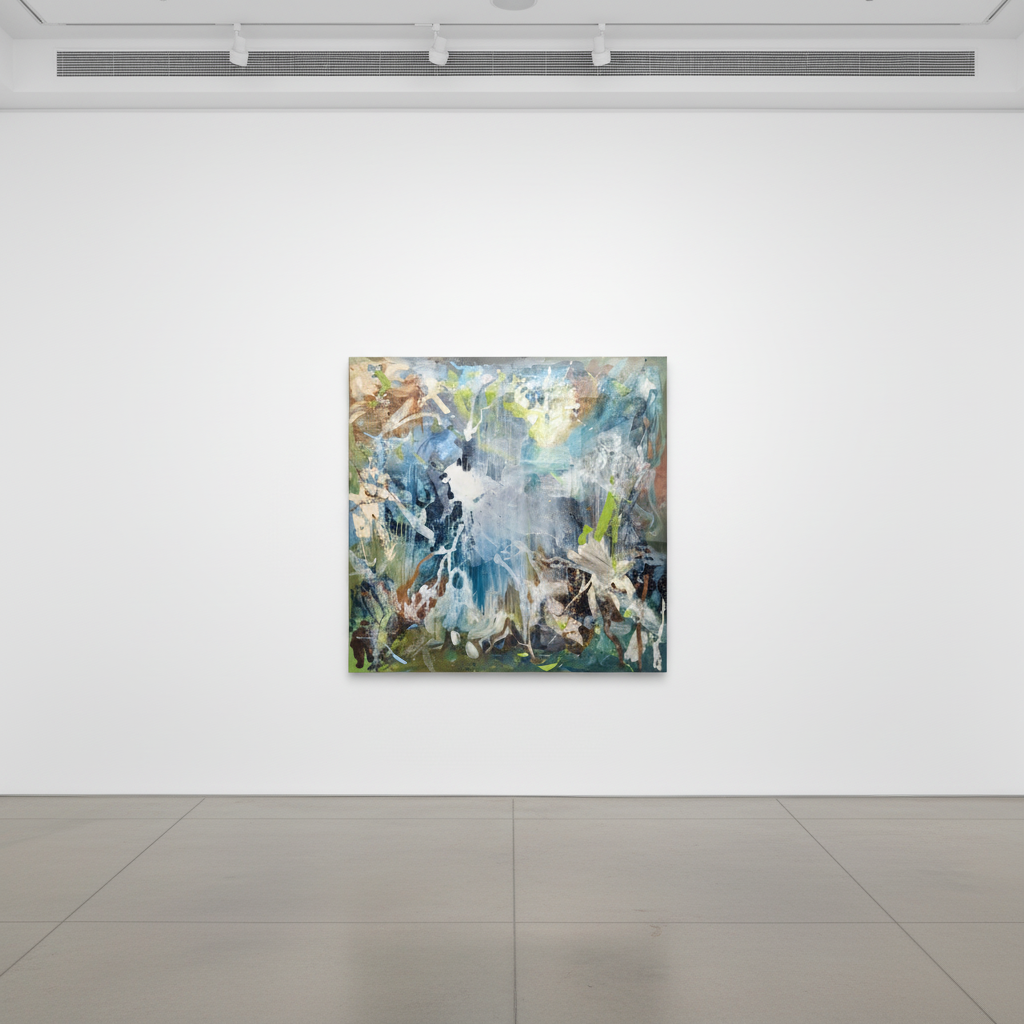
Fontaine Scarelli — available now through Guy Hepner Gallery, New York. Scarelli is a Chicago-born abstract expressionist painter whose large-scale canvases have entered corporate and private collections across four continents, earned institutional exhibition at Art Basel Miami Beach, and been licensed by Netflix for feature film use. Fourteen paintings are currently available, ranging in scale from 138 × 180 cm to 267 × 279 cm — genuinely monumental works made for spaces that can hold them.
What follows is a collector's introduction to Scarelli's practice, his trajectory, and why his paintings are attracting sustained attention from designers, architects, and collectors building long-term holdings in contemporary abstraction.
Fontaine Scarelli was born in 1987 and raised in Chicago. He initially pursued fashion design — a discipline defined by surface, gesture, proportion, and material intuition. That background didn't disappear when he shifted to painting. It metabolised into something more charged: an instinct for how visual elements carry psychological weight, how a surface communicates before content resolves.
The pivot from fashion to painting was, by his own description, unconventional. Chicago's art ecosystem gave him room to develop without the pressure of a major market context; the city's particular quality of light and a solitude he describes as formative are all legible in the work. Raised as an only child, he spent sustained periods alone, his imagination shaped by the existential atmosphere of science fiction anthologies — The Twilight Zone, The Outer Limits — programmes preoccupied with perception, time distortion, and the unknown. That aesthetic inheritance is not superficial. It gives Scarelli's abstract surfaces their distinctive psychological register: these are paintings that feel like they're coming from somewhere, not just composed.
He works from a studio in Chicago, primarily in oil, with regular use of cold wax, acrylic, and charcoal across canvas and Belgian linen. His process is physical and layered — building up surfaces, resisting them, allowing earlier marks to remain partially visible as evidence of accumulated decision. The results carry what he describes as the sensation of "erosion, collision, or fragmented thought." Not decorative abstraction. Something closer to a record of pressure.
The scale of Scarelli's paintings is not incidental. Works like Standing Ruin (2026) at 267 × 279 cm and Field Condition (2026) at 239 × 177 cm are not designed to be seen across a room — they are designed to be entered. At these dimensions, the viewer's peripheral vision is engaged; the surface becomes environmental rather than pictorial. This is the distinction that separates Scarelli's output from smaller-format abstract painting and connects it to the tradition of post-war American scale: the canvases of Kline, de Kooning, early Frankenthaler — works understood to function architecturally, not decoratively.
For collectors acquiring work for residential or corporate environments, this matters. A 267 × 279 cm painting does not hang on a wall so much as it claims it. The acquisition of a Scarelli is an environmental decision as much as an aesthetic one. This is precisely why Perkins&Will — one of the world's leading architecture and design firms — has acquired his work. The paintings perform at the scale that serious architectural spaces demand.
Current available works span three scale tiers. The largest group — Standing Ruin, Field Condition, Chatter in the Distance, The Waiting Place — exceed 220 cm in at least one dimension. A second group including Faction, Klingon — Fire Before Memory, and Romulan — Shadows Within Shadows sits between 200 and 225 cm. A third group from 138 to 183 cm — including Vulcan Marble, Betazoid, and Assumption in Space — remains monumental in presence despite the comparatively contained footprint.
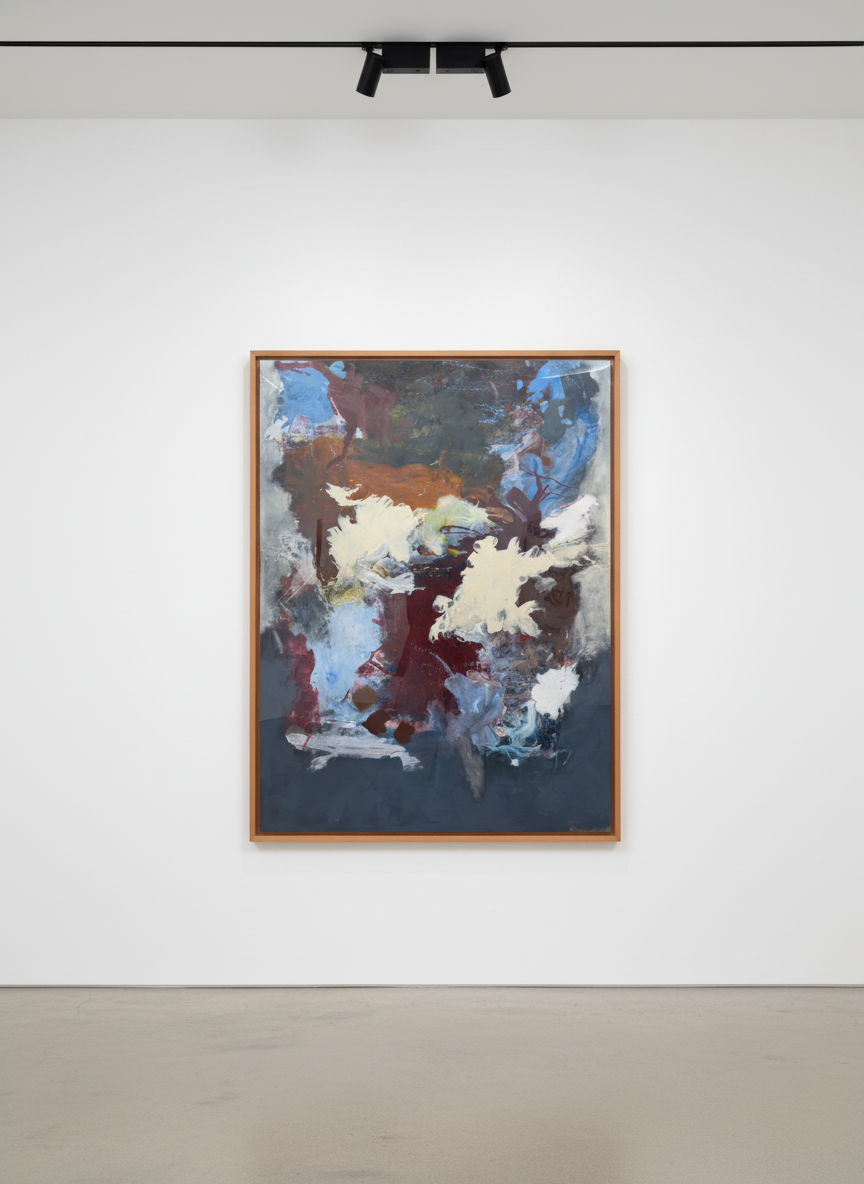
Several works in the current body carry titles drawn from science fiction mythology — Romulan — Shadows Within Shadows, Vulcan Marble, Klingon — Fire Before Memory, Betazoid — The Heart That Hears Everything. This is not pastiche or irony. Scarelli's formative visual and psychological language was built through science fiction, and he deploys it seriously: these titles function as emotional coordinates, not cultural references. The Betazoid — empaths in Star Trek lore who receive the emotions of others without filter — becomes a framework for a painting about overwhelming psychological input. The Romulan's defining characteristic is concealment, the shadow within the shadow. These are titles that describe internal states through external mythologies.
The approach connects Scarelli to a lineage of painters who used external symbolism as structural support for purely abstract expression — Rothko's early mythological titles, Pollock's Jungian nomenclature. The science fiction register is distinctly Scarelli's own, and it gives the work a coherent conceptual dimension without compromising its formal ambition. Collectors who engage with the work find the titles illuminating rather than limiting: they offer a way in without prescribing what to feel.
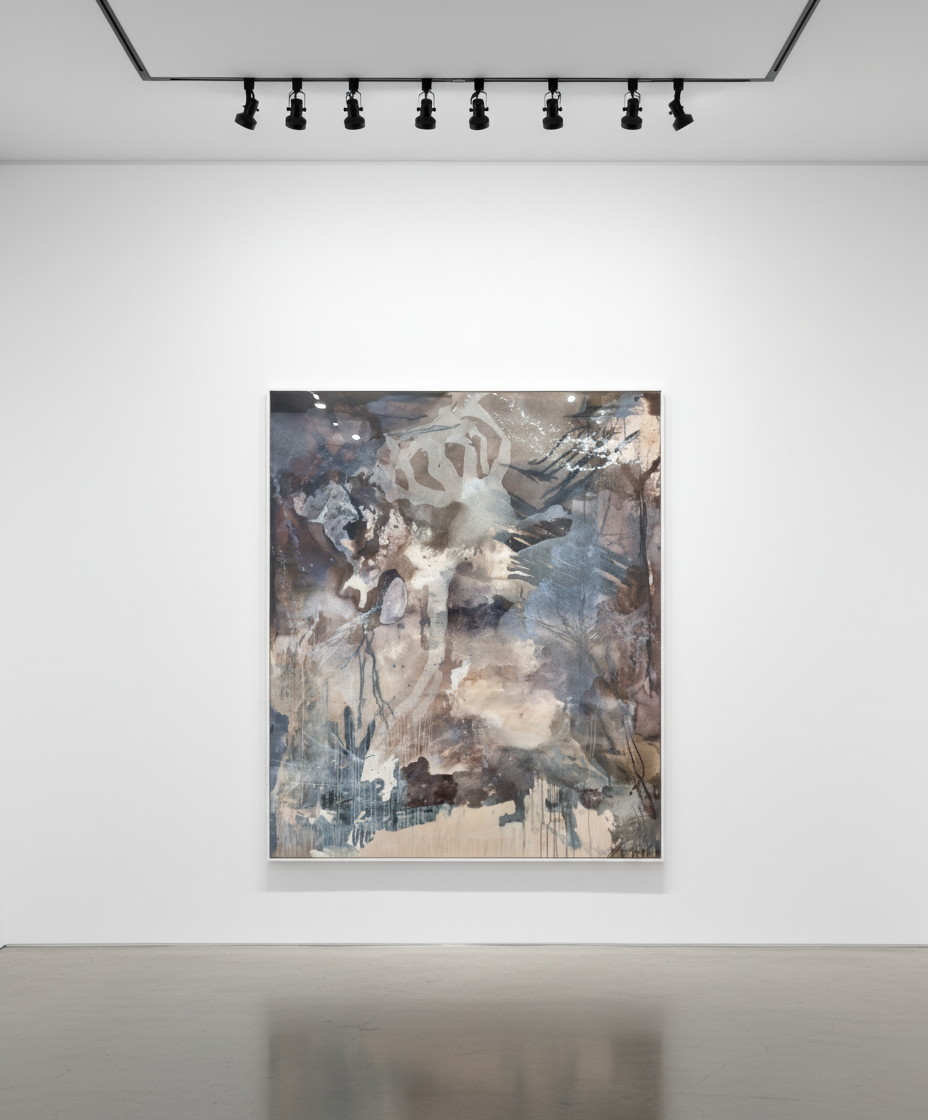
For collectors evaluating emerging abstract painters to collect, institutional track record is the primary differentiator between genuine market traction and gallery positioning. Scarelli's record is substantive for an artist at this stage of career.
Netflix. His work was licensed for the feature film 72 Hours — an event that requires significant institutional due diligence. Film licensing of fine art involves legal review of provenance, rights clearance, and the judgment of a production design team that the work is visually and tonally credible at that level. It is a different kind of validation from gallery representation, and a meaningful one.
Perkins&Will. The Chicago-headquartered architecture firm is among the most prolific corporate art acquirers operating at the intersection of architectural and artistic practice. Their acquisition of Scarelli's work signals that his paintings function at the level demanded by serious interior environments — not as decoration, but as formal counterparts to considered spatial design.
Art Basel Miami Beach. In 2025, Scarelli exhibited through Luminaire at Art Basel Miami Beach — the most commercially significant art fair in the Americas and a primary context for high-net-worth collector engagement.
Hong Kong Solo Debut. The 2025 solo exhibition 11:11 On Another Planet in Hong Kong generated press coverage in Milk X Hong Kong and ZTYLEZ Hong Kong. His work now sits in private collections in Barcelona, Germany, and Hong Kong alongside domestic holdings in Chicago, Boston, and California.
Fairmont Chicago. Scarelli's two-month solo exhibition and live painting installation at Fairmont Chicago, Millennium Park — one of the city's flagship luxury hotel properties — placed his practice in front of a sustained high-net-worth residential and hospitality audience throughout 2025 into 2026.
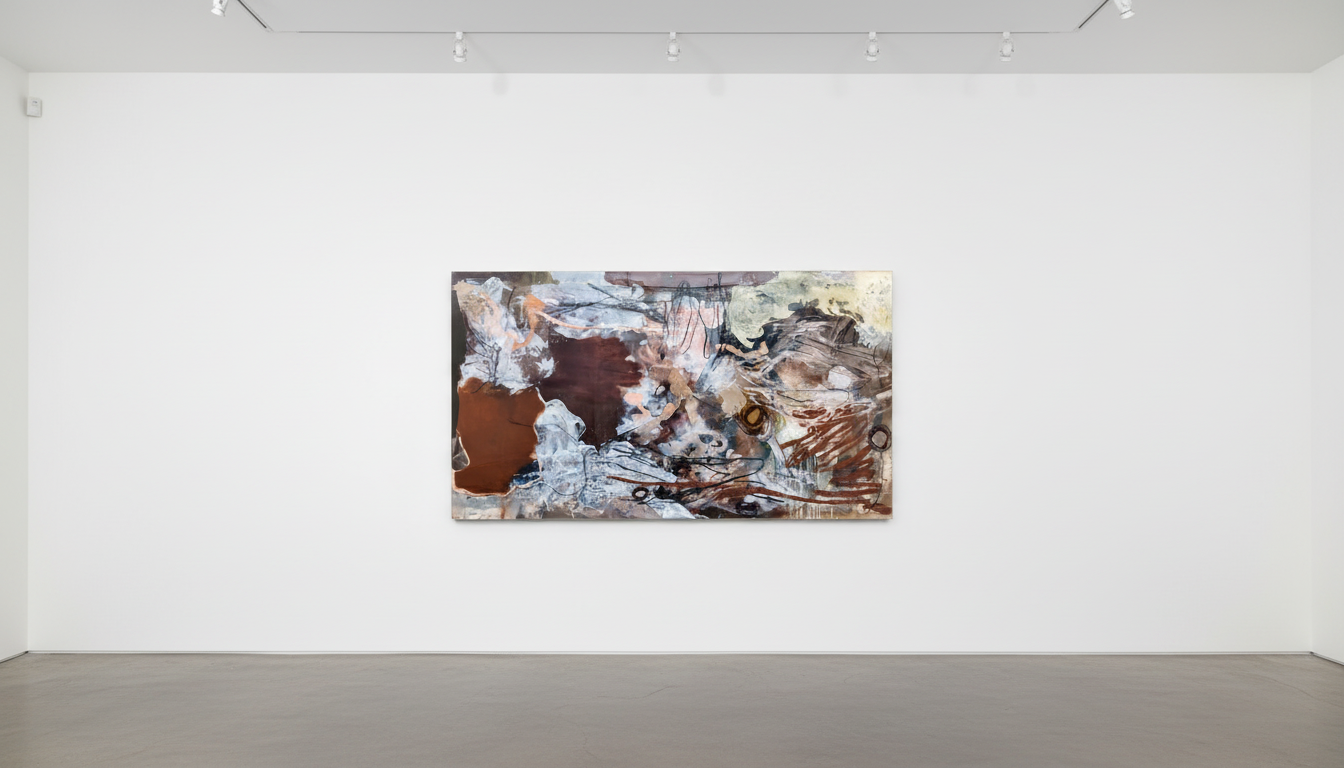
Scarelli's works in oil and cold wax represent his most technically considered output. Cold wax mixed with oil slows the drying time, creates matte passages that contrast against the sheen of undiluted oil, and enables a scraping and layering process that produces the geological quality visible in works like Terrestrial Debris and Field Condition. The surface reads as sedimentary — built up over time, partially erased, partially preserved.
His paintings on Belgian linen — including Romulan — Shadows Within Shadows — have a different character. Belgian linen's tighter weave and more stable surface allows for finer surface manipulation; it is the substrate of choice for many significant European abstract painters working with extended oil processes. Scarelli's use of it signals a material seriousness that collectors evaluating mixed media abstract paintings for long-term acquisition should note: these are works made with durability and handling in mind.
Charcoal appears in several works as a drawing medium incorporated into the painted surface — not as underdrawing but as a visible element in the final image. In Assumption in Space, charcoal marks create a counterpoint to the transparent oil passages above them, producing a palimpsest that rewards sustained looking. These are paintings that change as you move in front of them.
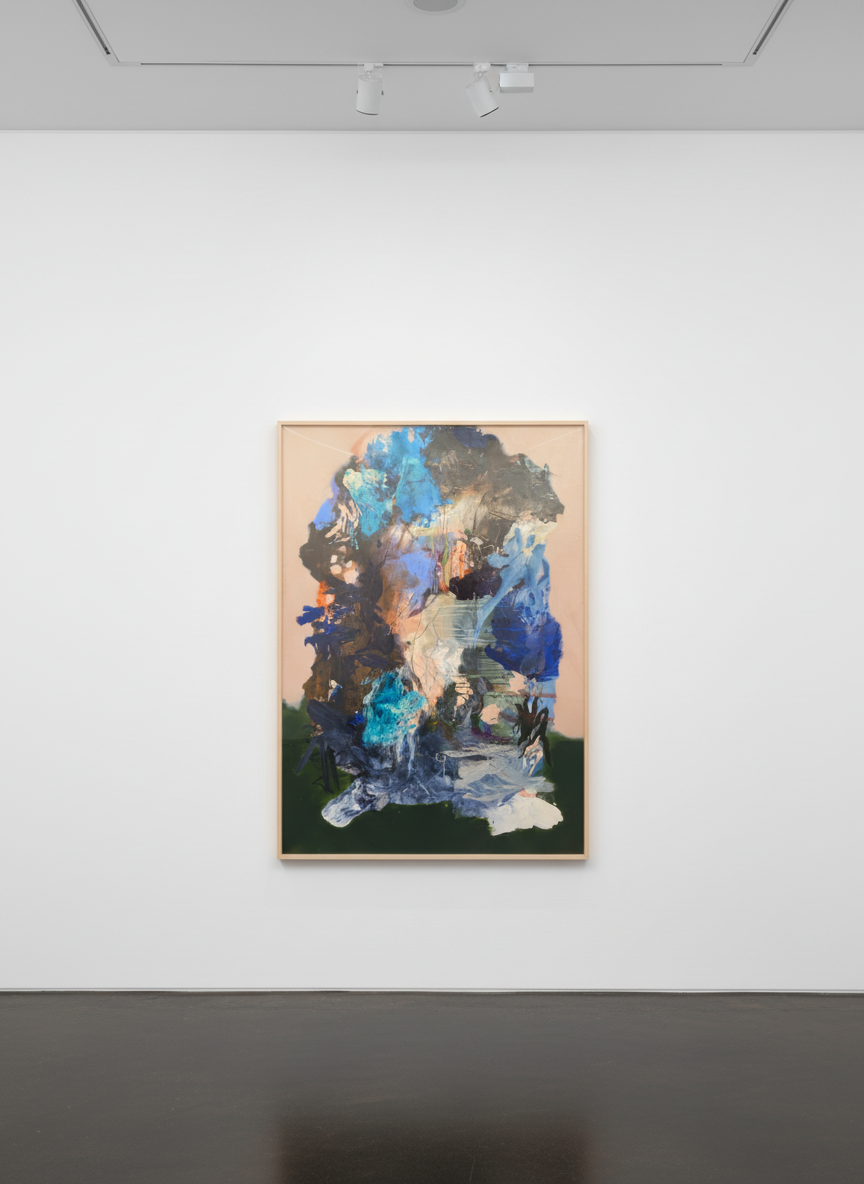
Scarelli's palette — deep blacks and charcoal registers broken by ochre, warm grey, and occasional passages of cool blue — sits with the material language of high-end residential and hospitality interiors. These are not paintings that compete with furniture; they provide the tonal foundation that everything else is arranged around. His work has been placed in luxury residential commissions across the United States, and the Fairmont Chicago installation demonstrated his ambition at hospitality scale.
For collectors working with interior designers or architects, Scarelli represents an unusual alignment: the visual authority of the work, the institutional endorsement, and a scale that few living abstract painters working at this price level can match. The Perkins&Will acquisition speaks directly to this — it is the kind of endorsement that circulates within design and architecture communities without needing explanation.
The works also commission well. Scarelli has an established record of large-scale residential and corporate commissions and can work with collectors and their architects on scale, palette, and atmospheric register. For spaces where an existing work doesn't quite fit, a direct commission is a practical option.
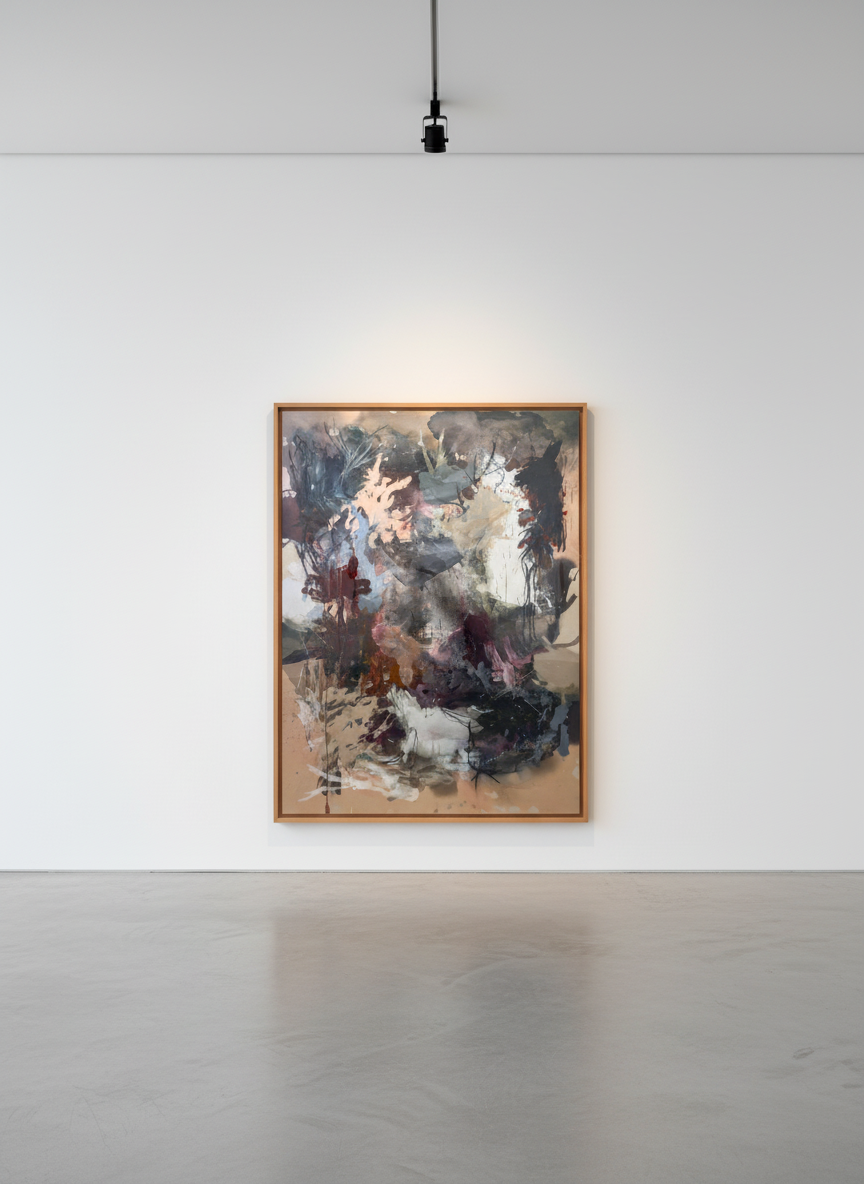
The argument for collecting contemporary abstract artists in 2025 and 2026 at this level is essentially an argument about positioning: the moment before an artist's secondary market develops is the moment when primary market access carries the most upside. Scarelli's institutional credentials — Netflix, Art Basel, Perkins&Will, international solo exhibitions — represent the kind of record that typically precedes secondary market activity, not the kind that follows it. Works are currently priced between $13,000 and $24,000.
Multiple gallery representation across distinct markets. Guy Hepner in New York, Virgil Catherine Gallery, Gallery 1871 in Chicago, and Moberg Gallery collectively represent different collector communities. Multi-gallery representation at this career stage is unusual and indicates genuine demand across multiple contexts rather than reliance on a single gallery relationship.
International collection geography. Private holdings in Barcelona, Germany, Hong Kong, and multiple American cities indicate that demand for the work is not regionally constrained. This breadth matters for secondary market development: a work's resale viability is directly related to the depth of the potential buyer pool.
Scale and rarity. Monumental paintings of this quality and credential at this price point are genuinely scarce. The works currently available at Guy Hepner represent most of what is accessible for acquisition; as Scarelli's practice develops and institutional engagement continues, the current positioning will be difficult to replicate.
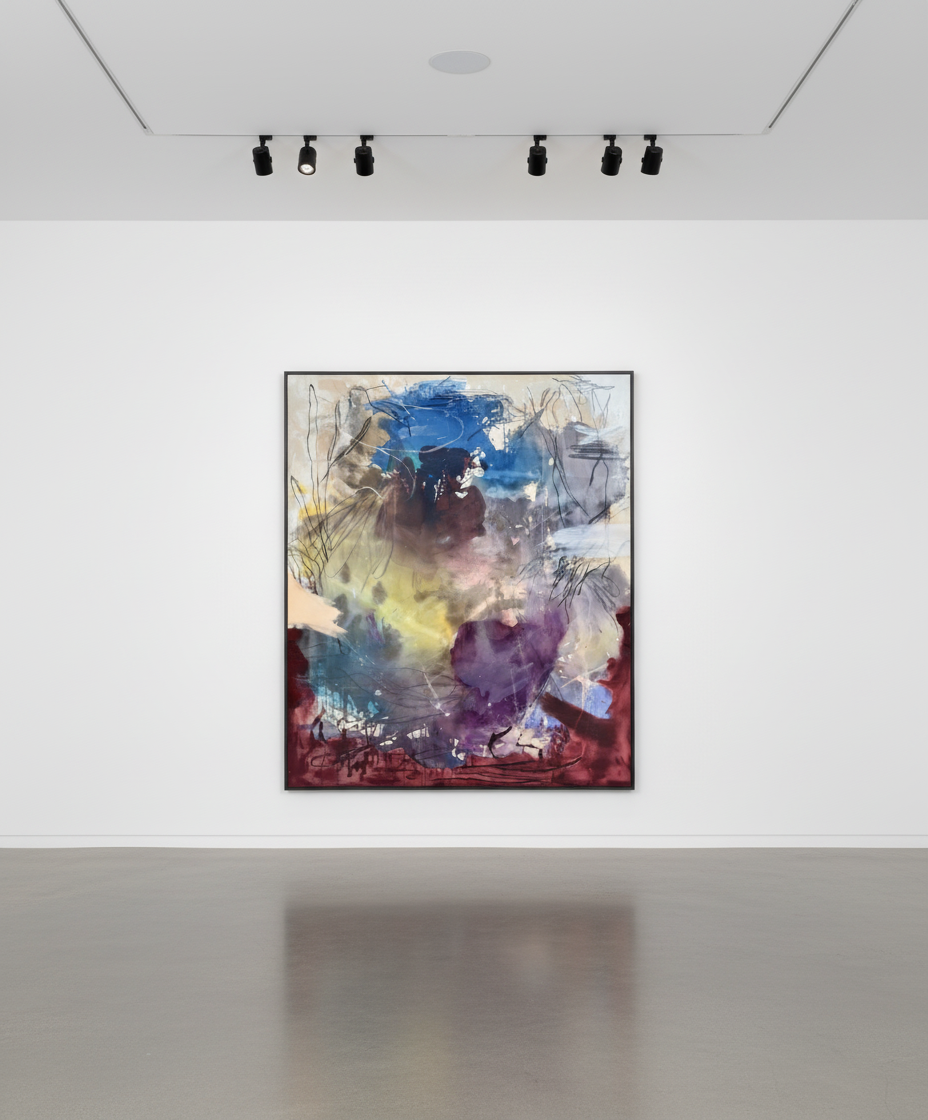
The following paintings are currently available through Guy Hepner Gallery. All works are oil on canvas or oil on Belgian linen unless noted.
Fontaine Scarelli paintings are available through Guy Hepner Gallery in New York, where fourteen original works are currently on offer. Scarelli is also represented by Virgil Catherine Gallery, Gallery 1871, and Moberg Gallery. To inquire about specific works or arrange a viewing, contact Guy Hepner at 177 Tenth Avenue, New York.
Scarelli works primarily at monumental scale. Current available works range from 138 × 180 cm at the smaller end to 267 × 279 cm at the largest, with several works exceeding 220 cm in at least one dimension. The scale is intentional: the paintings are designed for significant architectural spaces — large residential rooms, corporate lobbies, hospitality interiors — where smaller-format work would fail to register with the same presence.
Yes. Perkins&Will, one of the world's largest architecture and design firms, has acquired Scarelli's work — a form of institutional validation that carries particular weight for collectors placing work in designed environments. His paintings have also been exhibited at Art Basel Miami Beach and have entered private collections in Chicago, Boston, California, Barcelona, Hong Kong, and Germany.
Several factors distinguish Scarelli in the current abstract market. His scale is genuinely monumental. His material practice — oil, cold wax, Belgian linen, charcoal — produces surfaces that respond to changing light in ways that smaller, more conventional canvases do not. His conceptual framework, rooted in science fiction and psychological solitude, gives the work a coherent internal logic that abstract painting frequently lacks. And his institutional record, at this career stage, is unusual in its breadth and quality.
Scarelli occupies the category that serious collectors know as the most strategically interesting: accomplished, institutionally validated, and still priced on primary market terms. Netflix licensing, Art Basel participation, and corporate acquisition place him well beyond emerging in any meaningful sense — but he has not yet transitioned to secondary market pricing. That window will not remain open indefinitely.
Yes. Scarelli accepts commissions for large-scale works through Guy Hepner. He has an established record of residential and corporate commissions and can work with collectors and their architects or interior designers on scale, palette, and atmospheric register. Contact the gallery to discuss availability and timelines.
Guy Hepner Gallery has represented Fontaine Scarelli's work since 2000, presenting his paintings to collectors alongside an established programme of post-war and contemporary art. For those interested in acquiring work or discussing a commission, contact the gallery at 177 Tenth Avenue, New York.
Related Series