Paintings

July 21, 2026
In an art world that often prizes conceptual distance and cool detachment, Eric Stefanski art stands apart through its radical commitment to emotional honesty. His large-scale text-based paintings transform handwritten phrases into visceral visual experiences, speaking directly to the human conditions of longing, doubt, humor, and connection that define contemporary existence. For collectors seeking work that resonates on a deeply personal level while maintaining serious formal sophistication, Stefanski represents one of the most compelling acquisition opportunities among living artists working today.
Born in 1987, Stefanski is a Chicago-based artist who studied at the School of the Art Institute of Chicago and received his MFA from the School of the Museum of Fine Arts, Boston. His practice occupies a singular position within contemporary text-based painting, drawing from graffiti and street art traditions while translating that raw energy into sustained, carefully constructed studio work. The immediate recognition factor of his canvases—bold phrases scrawled across richly textured surfaces—has made him increasingly sought after by collectors who understand that accessibility and depth are not mutually exclusive qualities.
What makes Stefanski particularly relevant now is the growing collector appetite for emotionally direct figurative and text-based painting. In an era of digital communication where language has become simultaneously ubiquitous and hollow, his paintings restore weight and presence to words. They function as painted confessions, as moments of vulnerability made permanent, as statements that say what most people leave unsaid. This combination of visual impact and emotional authenticity has driven steady collector demand, with his work entering private collections internationally and building growing presence in the secondary market.
To understand Stefanski's position in contemporary art, one must first consider the rich tradition of text-based painting from which his work emerges. The incorporation of language into visual art has been a defining feature of modern and contemporary practice, from Cubist collage through Pop Art to Conceptualism and beyond. Each generation of text artists has approached the relationship between word and image differently, and Stefanski's contribution represents a distinctive synthesis of multiple traditions.
Ed Ruscha pioneered the use of text as the primary subject of painting in the 1960s, rendering words and phrases with the cool precision of commercial signage. His deadpan presentation of language—words like "OOF" or "BOSS" isolated on monochromatic backgrounds—established text painting as a legitimate fine art practice. Jenny Holzer extended this tradition into public space through her Truisms series, placing provocative statements on LED signs, plaques, and building projections. Christopher Wool brought text into the realm of abstract expressionism, stenciling fragmented phrases across white canvases with an industrial brutality that reflected urban alienation.
Barbara Kruger weaponized text as social critique, combining found imagery with accusatory phrases that challenged consumer culture and patriarchal power structures. Tracey Emin, by contrast, brought confessional intimacy to text-based work, her neon signs and embroidered blankets revealing personal histories of love, loss, and survival. More recently, artists like Johan Deckmann have used language to explore psychological states, often with ironic humor that masks deeper emotional truths.
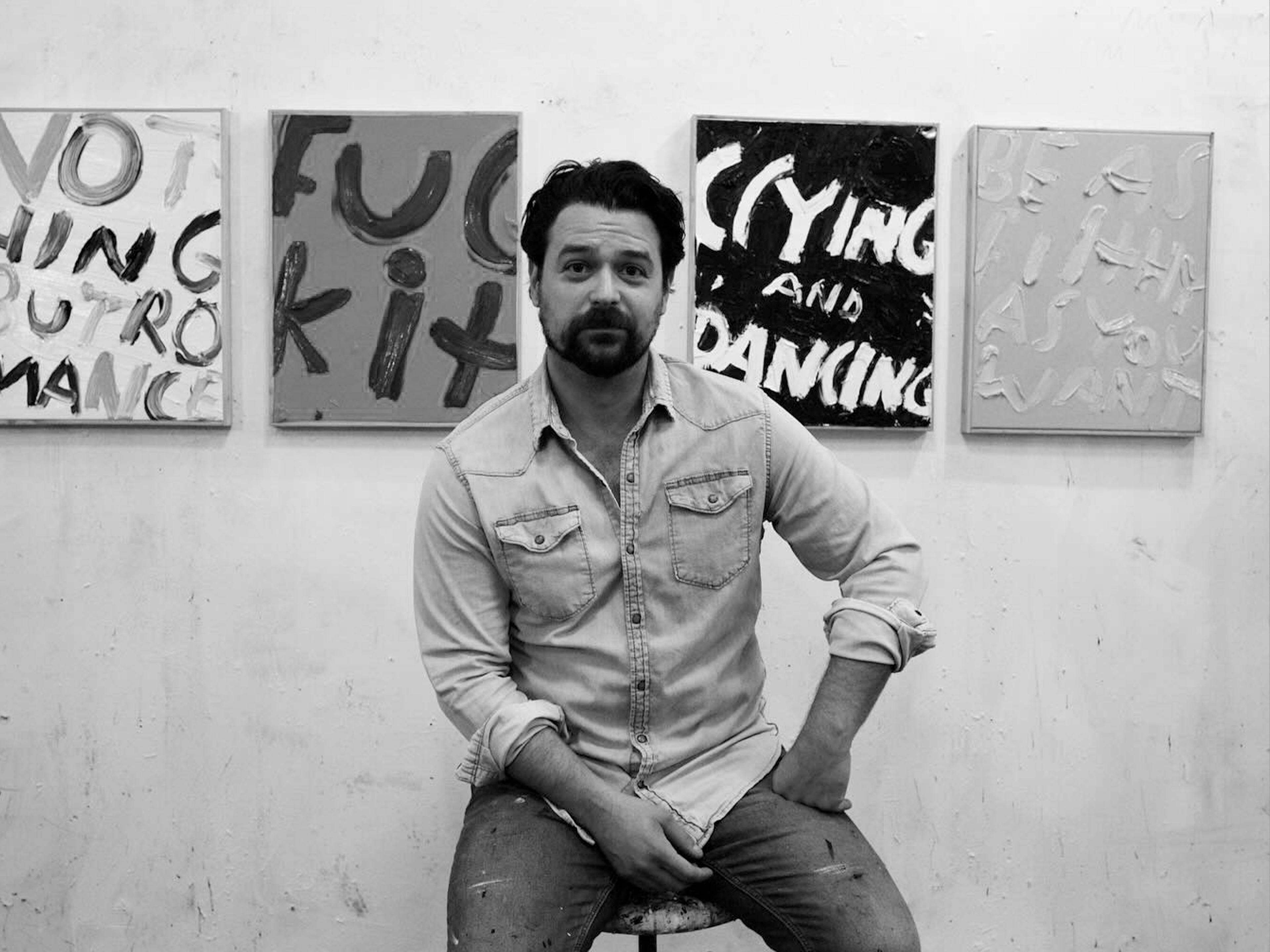
Eric Stefanski
Stefanski's work synthesizes elements from across this lineage while remaining distinctly his own. He shares Ruscha's interest in the visual power of language but rejects the older artist's studied detachment. He echoes Emin's confessional impulse but works on a larger scale with more formal complexity. His canvases bear the energetic mark-making associated with Wool but infuse it with warmth and humanity rather than alienation. This unique position—emotionally direct but formally sophisticated, accessible but deeply layered—explains why collectors are increasingly drawn to his paintings as both aesthetically rewarding and personally meaningful acquisitions.
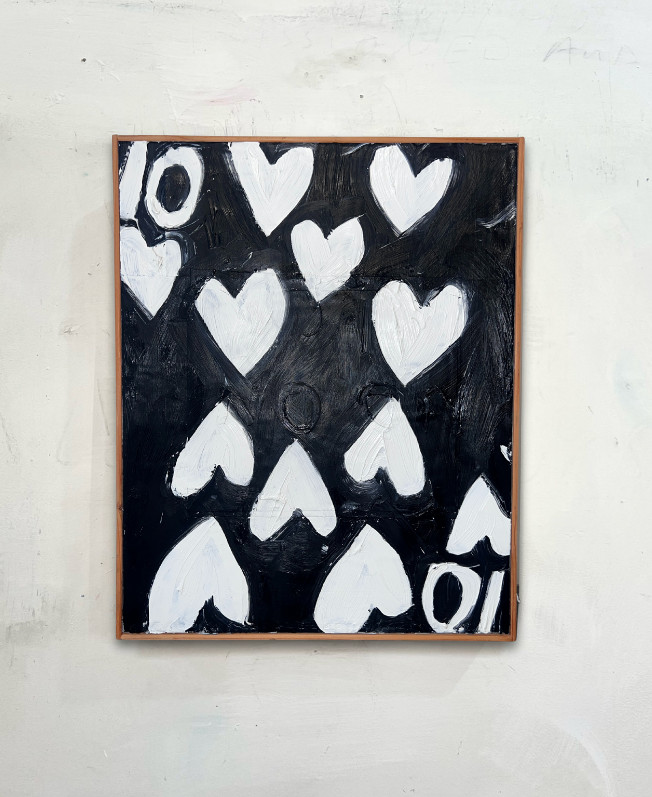
Stefanski's most recognized body of work, the Painted Confessions series, places raw personal statements at the center of the canvas. These phrases—often looping, repeating, catching in the mind like lines from a song—transform interior monologue into visual experience. The text functions not as conceptual gesture but as emotional material that has, in Stefanski's words, "passed through the body and emerged onto the surface bearing the physical evidence of that transit."
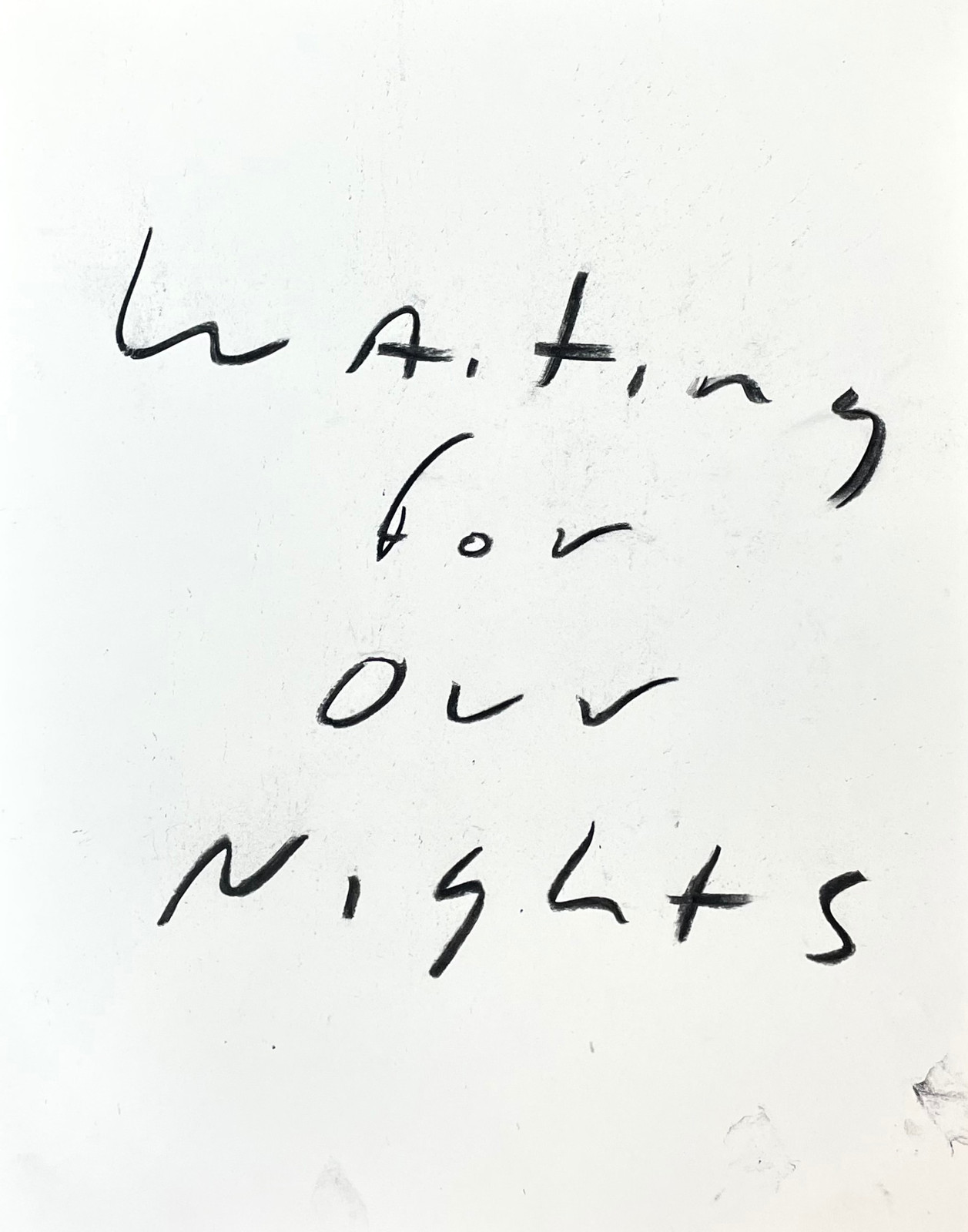
The formal execution of these paintings rewards sustained attention despite their apparent spontaneity. Visible brushstrokes, paint drips, and the accumulated texture of repeated gesture build surfaces of considerable complexity. Stefanski typically works in acrylic on large-format canvas, allowing the quick-drying medium to preserve the urgency of his marks while enabling the layered construction that gives his paintings their depth. The handwritten quality of his text—imperfect, human, bearing the evidence of the hand that made it—stands in deliberate contrast to the mechanical precision of printed language.
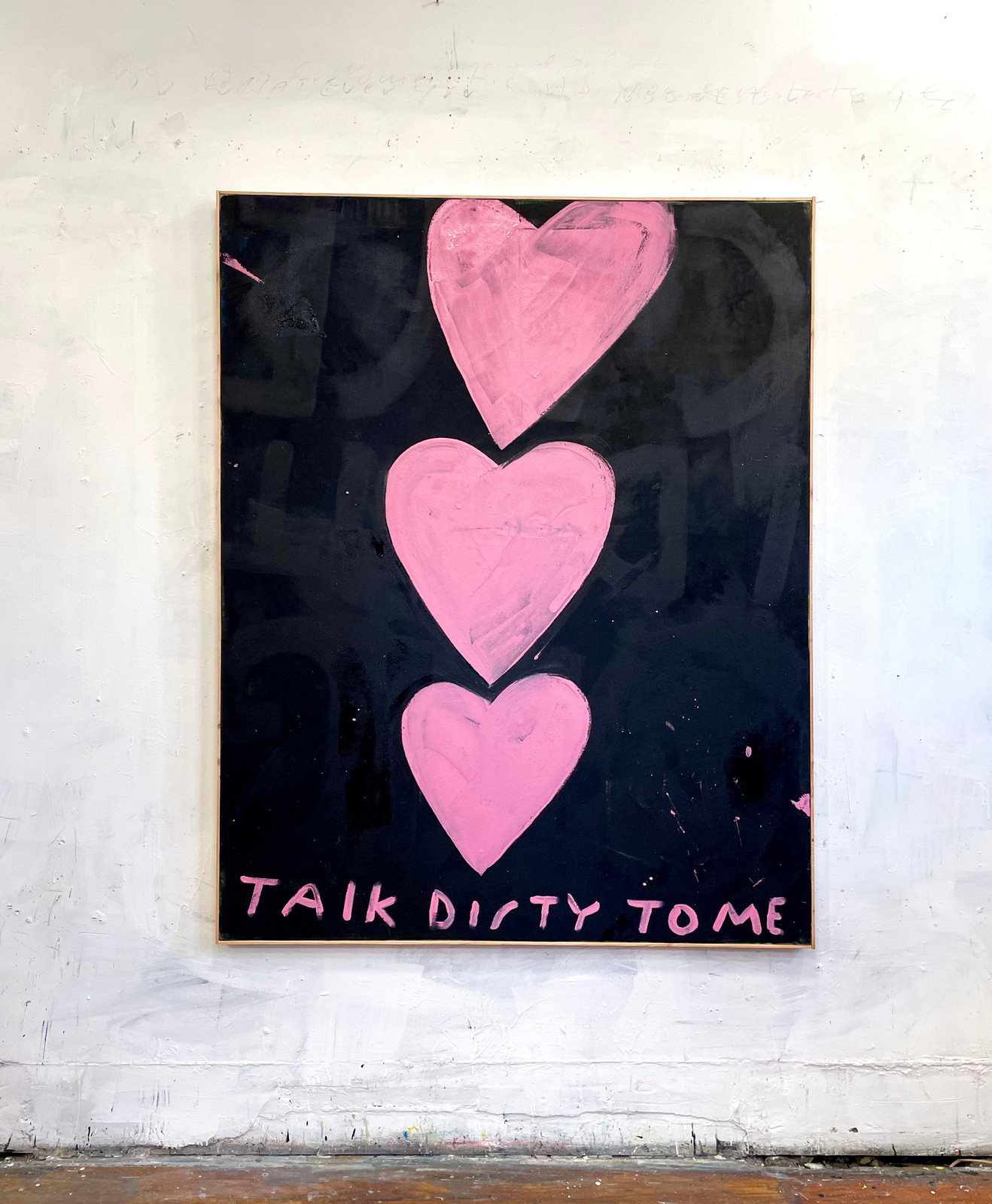
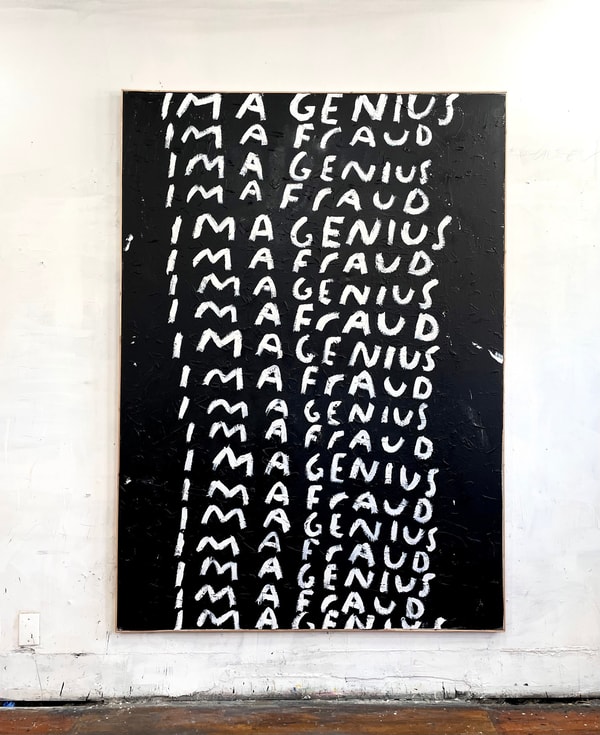
Thematic content across Stefanski's practice spans from dark humor to emotional confession to pointed cultural critique. Some paintings capture the internal oscillation between confidence and doubt: phrases like "I'm a Genius" alternating with "I'm a Fraud" on a single canvas, visualizing the imposter syndrome that afflicts creative people and high achievers alike. Others address love and longing with disarming directness, stating what the viewer might have thought but never spoken aloud. Still others offer imperative statements that function as both personal mantras and universal advice—exhortations to presence, to enjoyment, to living fully despite the absurdities of contemporary existence.
The Skull Series brings this same directness to bear on mortality and the absurdity of modern life. Here Stefanski combines his text-based approach with imagery that recalls both classical vanitas traditions and the skull motifs of Jean-Michel Basquiat. The juxtaposition of playful color, energetic brushwork, and memento mori subject matter creates work that balances humor with gravity, inviting viewers to confront difficult subjects through accessible visual language.
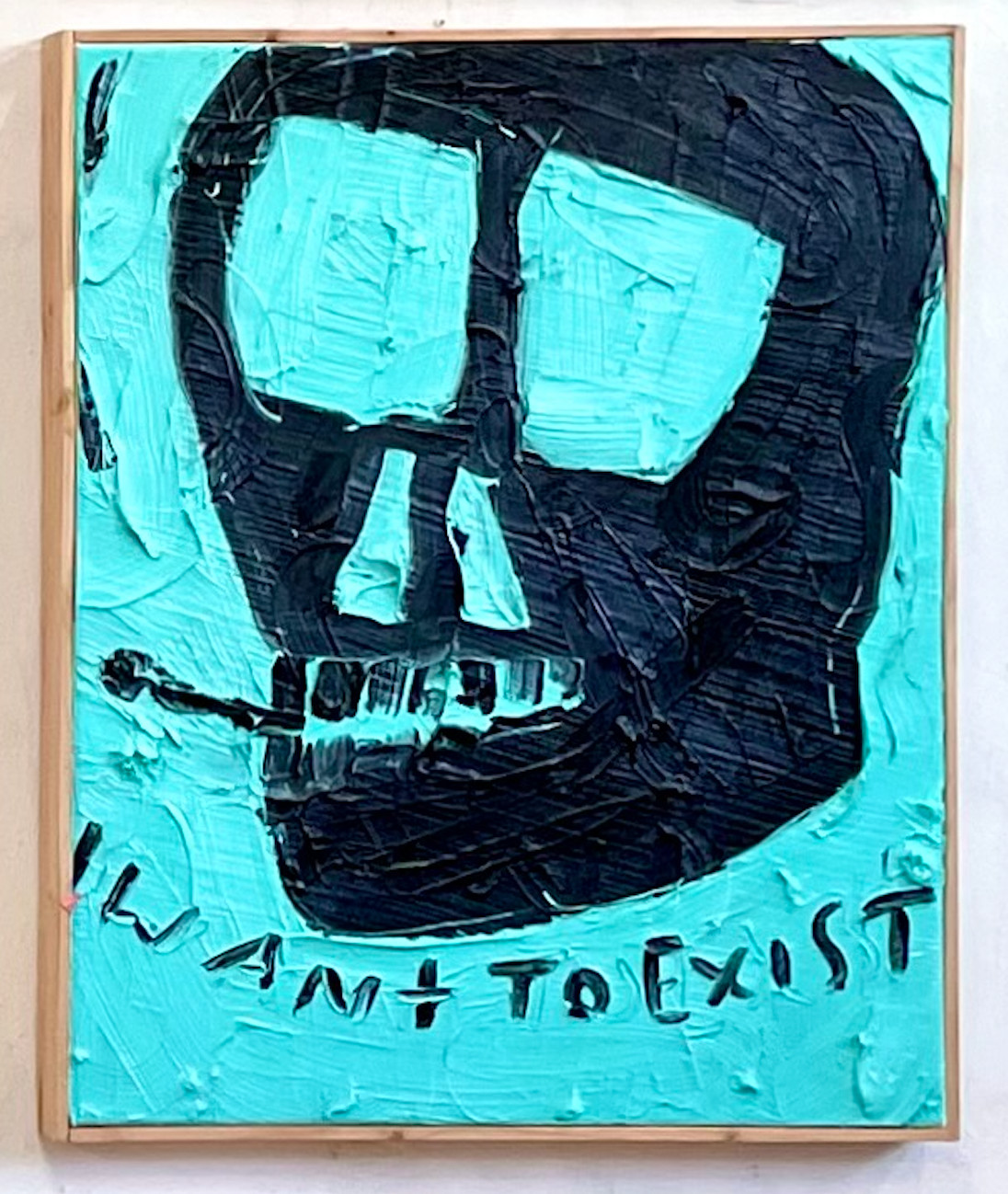
Eric Stefanski, I Want To Exist, Acrylic on Canvas. Available at Guy Hepner, New York.
Beyond these established series, Stefanski continues to expand his practice through Works on Paper and smaller format canvases that offer collectors more accessible entry points into his oeuvre. These intimate works maintain the emotional directness and formal quality of his larger paintings while functioning effectively in residential settings where scale considerations may be paramount.
Collectors considering Eric Stefanski paintings should understand the specific qualities that distinguish his strongest work. While all of his pieces share the direct emotional language that defines his practice, certain characteristics mark the most desirable examples. Learning to recognize these qualities will help ensure that any acquisition represents the artist at his best.
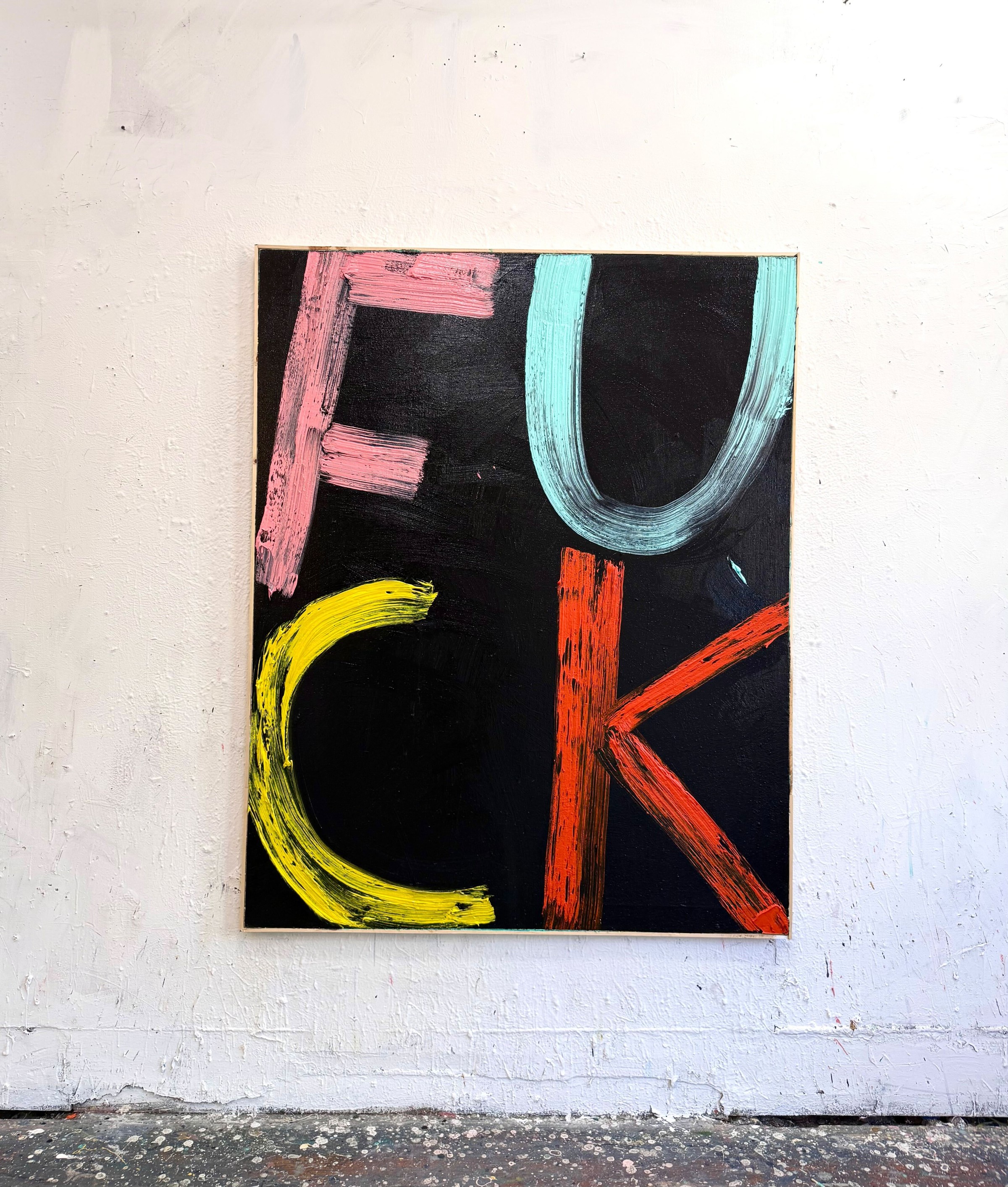
Eric Stefanski, FU, Acrylic on canvas. Available at Guy Hepner, New York.
Collectors should also consider scale in relation to intended placement. Stefanski works across a range of sizes from 12x12 inches to 48x60 inches, with larger works typically commanding stronger visual presence and correspondingly higher prices. However, his smaller canvases offer genuine quality at more accessible price points and can work beautifully in domestic settings where large-scale work might overwhelm.
As with any contemporary artist building market presence, authentication and provenance documentation become increasingly important for collectors. Working with a reputable gallery that maintains direct relationships with the artist provides the most reliable path to acquiring properly documented work. Fortunately, the current market for Stefanski's paintings remains primarily based on direct sales rather than secondary market transactions, making authentication relatively straightforward.
When acquiring work directly from an authorized gallery like Guy Hepner, collectors receive complete documentation including certificates of authenticity, detailed condition reports, and provenance records establishing the chain of ownership. This documentation becomes part of the work's permanent record and will be essential for any future sale or insurance purposes. The gallery maintains ongoing communication with the artist, enabling verification of any work's authenticity and providing collectors with confidence in their acquisitions.
For any work encountered outside authorized gallery channels, collectors should exercise appropriate caution. The informal, apparently spontaneous quality of Stefanski's text-based paintings might seem easy to replicate, but experienced eyes can readily distinguish authentic work through the formal qualities discussed above. Any secondary market acquisition should include complete provenance documentation and ideally verification through the artist's gallery representatives.
Condition assessment for contemporary paintings on canvas follows standard protocols. Collectors should examine the canvas tension, surface integrity, and frame condition. Acrylic and oil paintings on canvas are generally stable mediums that require minimal conservation intervention when properly cared for. Avoiding direct sunlight, maintaining stable temperature and humidity, and using appropriate mounting hardware will preserve the work for generations.
Eric Stefanski's primary production consists of unique paintings on canvas rather than editioned prints, meaning each work exists as a singular object. This distinguishes his market from artists who produce significant print editions, as every acquisition represents an unrepeatable original. The result is a collector base focused on unique works rather than edition speculation, which typically correlates with more stable long-term value development.
Current availability through Guy Hepner includes over forty-five works spanning Stefanski's primary series and scale ranges. This substantial inventory offers collectors genuine selection across mediums, sizes, and thematic content. Works span from intimate canvases suitable for residential installation to large-scale paintings with institutional presence. The range encompasses both his signature text-based compositions and his explorations of symbol and image.
Mediums currently available include:
Sizes range from 12x12 inches—ideal for residential settings or as entry points to the artist's work—through medium formats around 16x20 inches to large-scale canvases reaching 48x60 inches that command attention in any setting. Scale choice should be guided by both installation considerations and the visual impact appropriate to the specific work's content.
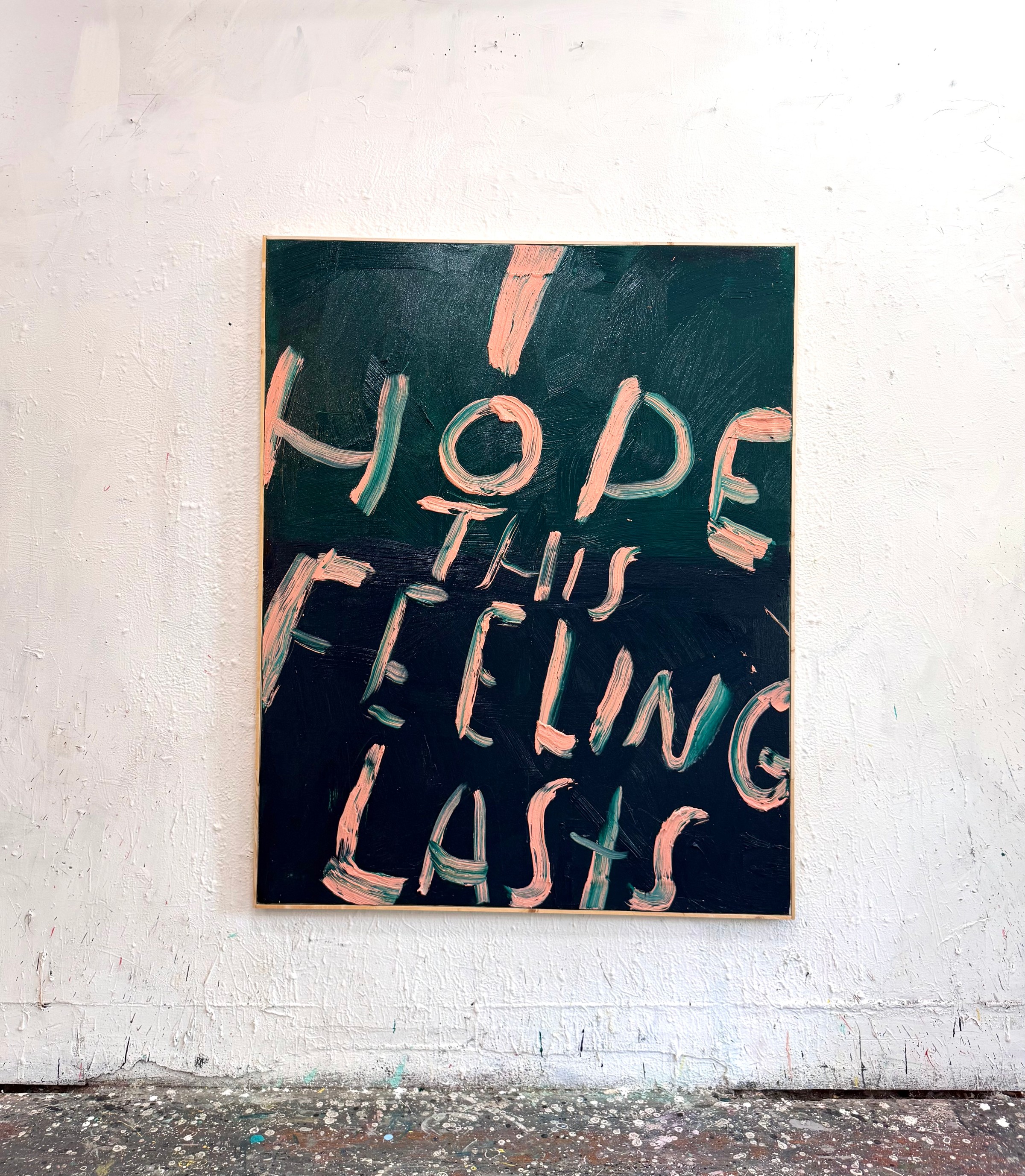
Eric Stefanski, I Hope This Feeling Lasts, Acrylic on canvas. Available at Guy Hepner, New York.
Notably, Stefanski accepts commissions for custom text paintings, offering collectors the opportunity to realize specific phrases or concepts through his distinctive visual language. This commission program has proven popular with collectors seeking deeply personal works, with the gallery's top collector having invested over $41,000 across multiple acquisitions including commissioned pieces. Commission inquiries are handled directly through the gallery, with pricing dependent on scale and complexity.
The current market for Eric Stefanski paintings represents an accessible entry point to a rapidly developing career. Pricing ranges from $3,900 for smaller format works to approximately $14,000 for large-scale canvases, with entry-level acquisitions available around $3,900 and mid-range works clustering near $10,500. This positioning places Stefanski firmly in the category of collectible emerging artists—established enough to have proven market presence while remaining accessible to collectors who cannot compete for blue-chip contemporary work.
Several factors suggest the potential for continued value development in Stefanski's market. His educational credentials—including an MFA from one of the country's top programs—provide institutional validation. His exhibition history continues to expand, with showings across the United States and international gallery representation. Critical writing on his practice has been positive, noting his ability to hold humor and vulnerability in productive tension. And most importantly, his work resonates emotionally with collectors in ways that create the sustained demand essential to long-term market strength.
Compared to comparable text-based artists with longer exhibition histories, Stefanski's current pricing offers collectors significant potential value. Ed Ruscha's text paintings now command seven and eight figure prices at auction, though direct comparison between an established master and an emerging artist requires appropriate caution. More relevantly, artists of similar generation and practice who have achieved broader recognition often see their markets appreciate substantially once institutional exhibitions and major collection placements accumulate.
The collector base for Stefanski's work already demonstrates the depth of engagement that supports market development. Multiple acquisitions by individual collectors, commission requests, and international placement all indicate that his audience is building genuine relationships with the work rather than merely speculating on value. This pattern of committed collecting typically proves more sustainable than markets driven primarily by investment motivation.
The case for acquiring Eric Stefanski's work at this moment in his career rests on several converging factors. First and most fundamentally, his paintings offer genuine aesthetic and emotional reward. These are works that change the spaces they occupy, that spark conversation, that visitors remember and ask about. The direct address of his text—speaking not around the viewer but to them—creates an intimacy unusual in contemporary painting.
Second, the current market represents an accessible entry point that may not remain available as his career develops. Artists at Stefanski's career stage who achieve significant exhibition opportunities, institutional collection placements, or critical attention typically see substantial price appreciation. Collectors who recognize quality early benefit from both the pleasure of living with strong work and the potential for value development over time.
Third, the availability of commissions offers a collecting opportunity that becomes increasingly rare as artists' careers advance. The ability to work with Stefanski on a custom text piece—to realize a personal phrase or concept through his visual language—represents an intimate form of collecting that established artists rarely provide. Collectors seeking deeply personal work should consider this opportunity while it remains accessible.
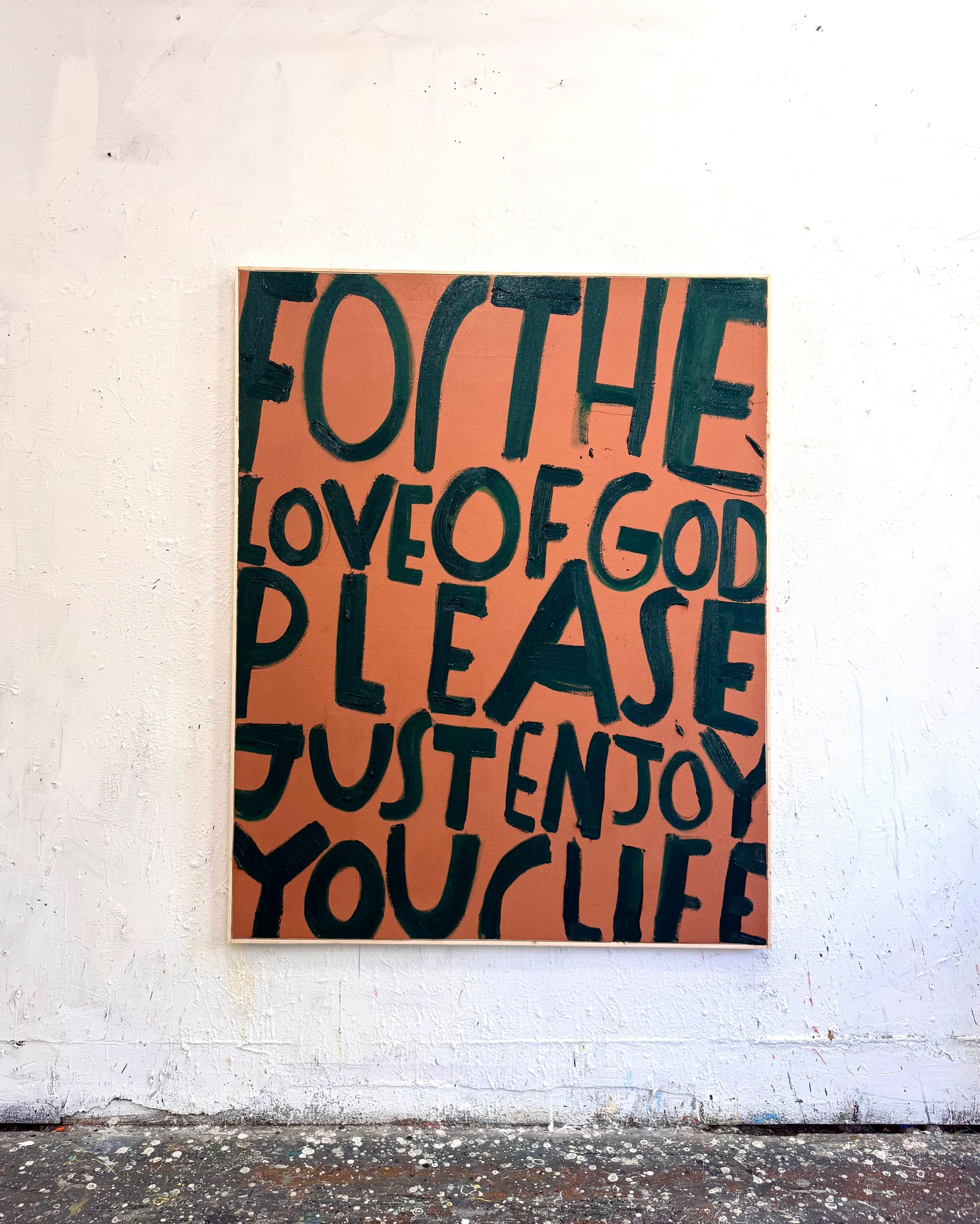
Eric Stefanski, Enjoy Your Life, Oil on canvas. Available at Guy Hepner, New York.
Finally, there is the simple fact that Stefanski's work addresses what it means to be human in this particular moment. His paintings capture the oscillation between confidence and doubt, the persistence of longing, the dark humor that helps us survive, and the imperative to find meaning despite absurdity. These themes will not date. The human conditions his work explores are permanent, even as the specific phrases through which he addresses them feel distinctly contemporary.
Collectors approaching Eric Stefanski's work for the first time have several potential strategies depending on their goals and resources. Understanding these approaches can help clarify priorities and enable more confident acquisition decisions.
Whichever strategy appeals, working with an established gallery offers significant advantages including expert guidance on specific works, complete documentation, and ongoing relationship as both the collection and the artist's career develop.
Guy Hepner is pleased to represent Eric Stefanski's paintings and works on paper in New York, offering collectors direct access to one of the most compelling voices in his generation of painters. Located at 529 West 20th Street in the heart of Chelsea, the gallery maintains an extensive inventory of Stefanski's work spanning his primary series and full scale range, enabling collectors to experience multiple pieces and make informed acquisition decisions.
The gallery's relationship with Stefanski extends beyond simple representation to encompass ongoing collaboration on exhibitions, commissions, and collection development. This direct connection enables the authentication services, documentation, and ongoing support that serious collectors require. Whether you are considering your first acquisition or building a deeper collection, Guy Hepner provides the expertise and inventory to realize your goals.
Collectors interested in viewing available Eric Stefanski paintings are encouraged to contact the gallery directly to arrange a private viewing or to receive detailed information on current inventory. Commission inquiries are likewise welcome, with the gallery facilitating all communication with the artist regarding custom work. In an art world that can feel intimidating or opaque, Guy Hepner maintains the direct, personal approach to collector service that enables confident acquisition of work that will provide lasting reward.
For those ready to explore what Eric Stefanski's paintings might bring to your collection and your life, the invitation is open. These are works that speak directly, that refuse distance, that transform the relationship between viewer and canvas into something approaching conversation. They ask us to recognize ourselves in their confessions, their humor, their longing. And in that recognition, they offer something increasingly rare in contemporary art: genuine human connection.
Explore Eric Stefanski prints for sale at Guy Hepner: Small Canvases, Works on Paper.
Related Series