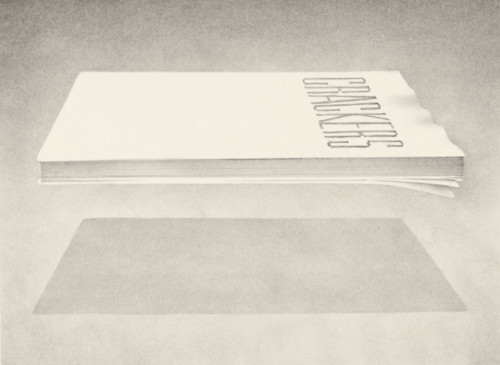
Archi-Props

June 19, 2026
Few artists have shaped the visual identity of American culture as completely as Ed Ruscha. Born in Omaha in 1937 and transplanted to Los Angeles at eighteen, Ruscha spent seven decades building one of the most distinctive bodies of work in postwar art — an oeuvre rooted in the vernacular of the American West: gas stations, highways, sunsets, and, above all, words. His prints are among the most coveted multiples produced by any living artist, simultaneously accessible to the emerging collector and commanding of six-figure sums at the major auction houses. This guide provides everything a serious collector needs to know about acquiring Ed Ruscha prints in 2026: the key series, edition structures, pricing realities, authentication, and the case for investing in work that has secured its place at the centre of the American art canon.
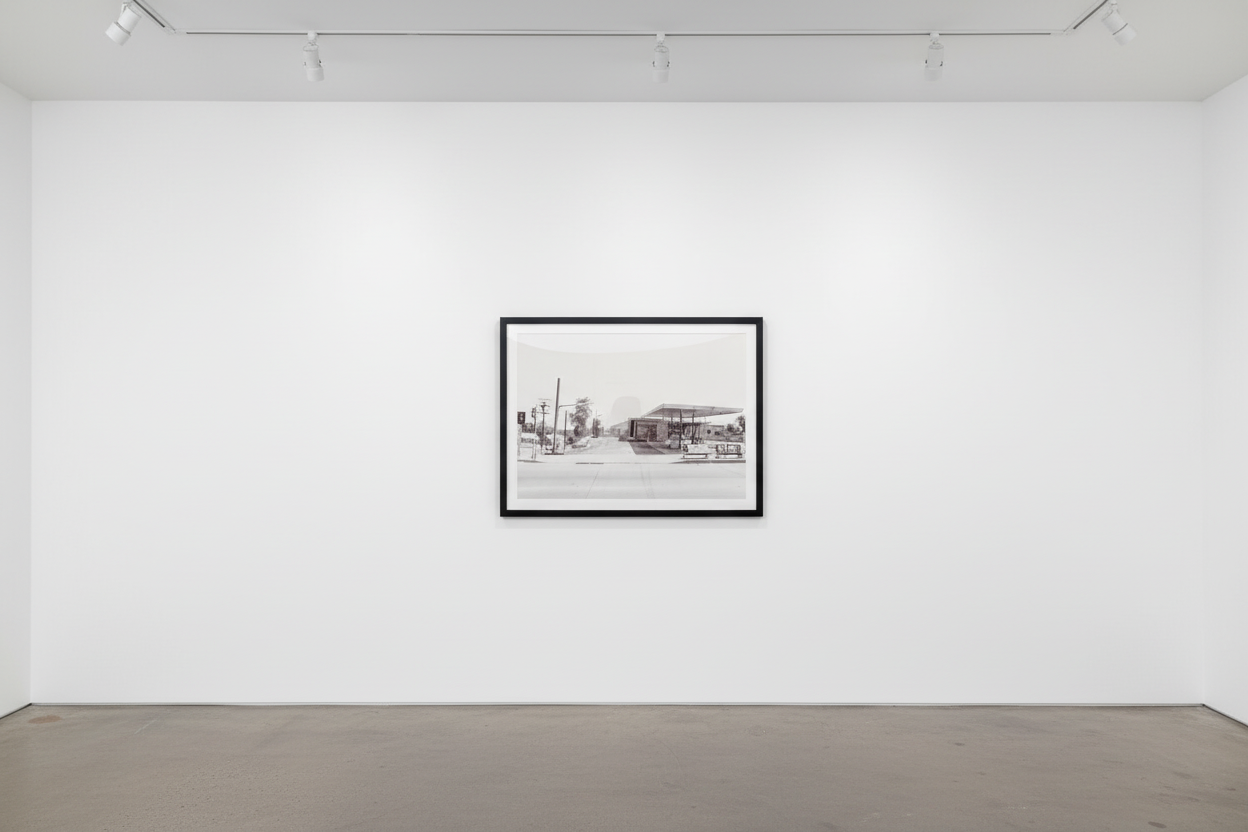
8900 Sunset Blvd — Ed Ruscha. Available at Guy Hepner, New York.
Edward Joseph Ruscha IV arrived in Los Angeles in 1956, enrolled at the Chouinard Art Institute (now CalArts), and immediately absorbed the city around him — not as landscape painters had done before him, but as a graphic designer might absorb it: as text, signage, and compressed symbol. His early influences were Robert Rauschenberg and Jasper Johns, but what Ruscha drew from those encounters was singular: the idea that language could be treated as pure image, stripped of conventional meaning and reloaded with uncanny visual force.
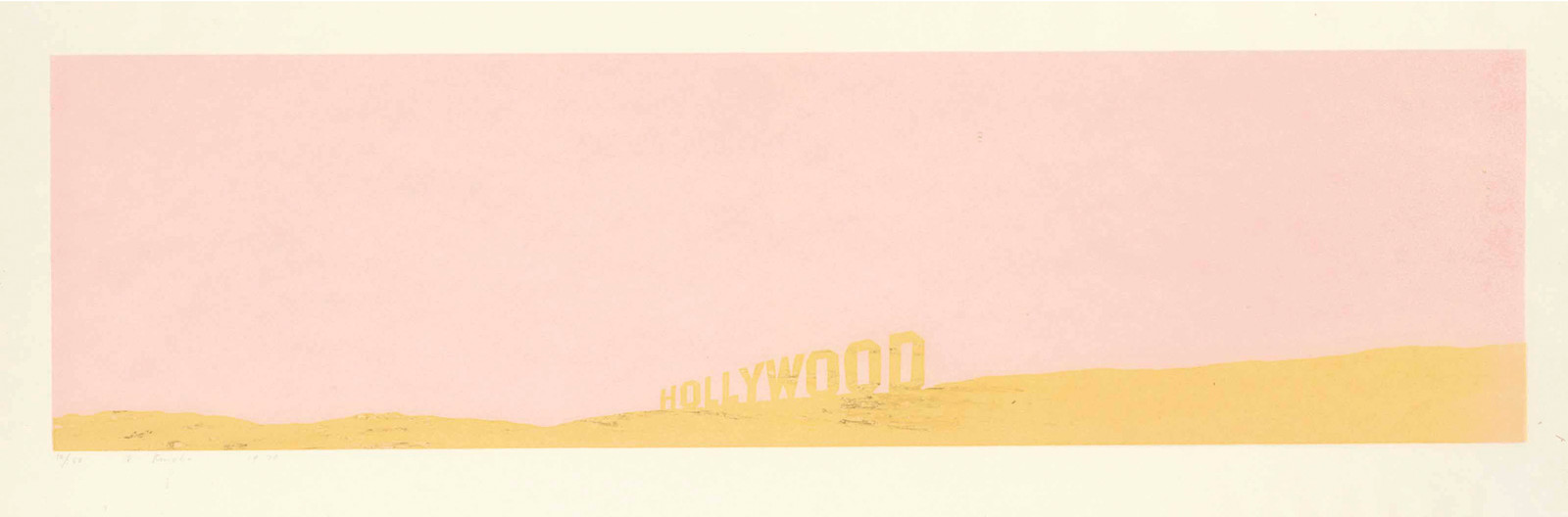
By the early 1960s Ruscha had developed the vocabulary that would define the next sixty years of his practice. Words appeared against blank grounds — or gradated skies, or fields of organic matter — rendered in a typeface so clean, so cinematically lit, that they seemed to float between painting and billboard. Works like Oof (1962–1963), Hollywood (1968), and Spam (1961) became touchstones of American Pop, but Ruscha always resisted straightforward categorisation. The words he chose were deliberately flat, generic, evacuated of hierarchy — yet through his handling they accreted layers of melancholy, wit, and metaphysical unease that no purely ironic Pop gesture could contain.
Parallel to his paintings, Ruscha developed one of the most radical book practices in contemporary art history. Twentysix Gasoline Stations (1963), Every Building on the Sunset Strip (1966), and Thirtyfour Parking Lots in Los Angeles (1967) treated the artist's book as a democratic multiple — something that existed entirely outside gallery walls and could be bought for a few dollars. These books, now extremely scarce and highly collectible, established the principles that would govern his printmaking: serial logic, democratic distribution, and a refusal of preciousness that paradoxically generated enormous cultural prestige.
To understand why Ruscha's prints command the prices they do, it is worth pausing on what makes his use of language so distinctive. Other artists have painted words — Jean-Michel Basquiat, Christopher Wool, Barbara Kruger — but Ruscha's relationship to text is categorically different. Where Basquiat's words erupt and bleed, where Kruger's are polemical, Ruscha's language hovers in a state of suspended animation. The words are neither commentary nor slogan; they are things, as physical and self-contained as the roadside objects he photographed in his books.
The geographical imagination of Ruscha's work is inseparable from Los Angeles. Hollywood Boulevard, Sunset Strip, the Standard Oil station — these are not merely subjects but conceptual coordinates, the grammar of a city built on spectacle and amnesia. When Ruscha renders a word like "Lisp" or "Desire" or "Begin Anywhere" against a vast blank ground, the viewer feels the scale of the Western sky, the silence of the freeway at four in the morning. His prints carry a kind of widescreen loneliness that is peculiarly Californian — expansive but melancholic, declarative but enigmatic.
This quality is why Ruscha's work has endured beyond its original Pop context. Collectors who came of age with street art, who were drawn to post-internet conceptualism, who collect Blue Chip Modernism — all of them find something essential in Ruscha. He is one of the very few artists capable of bridging those constituencies simultaneously.
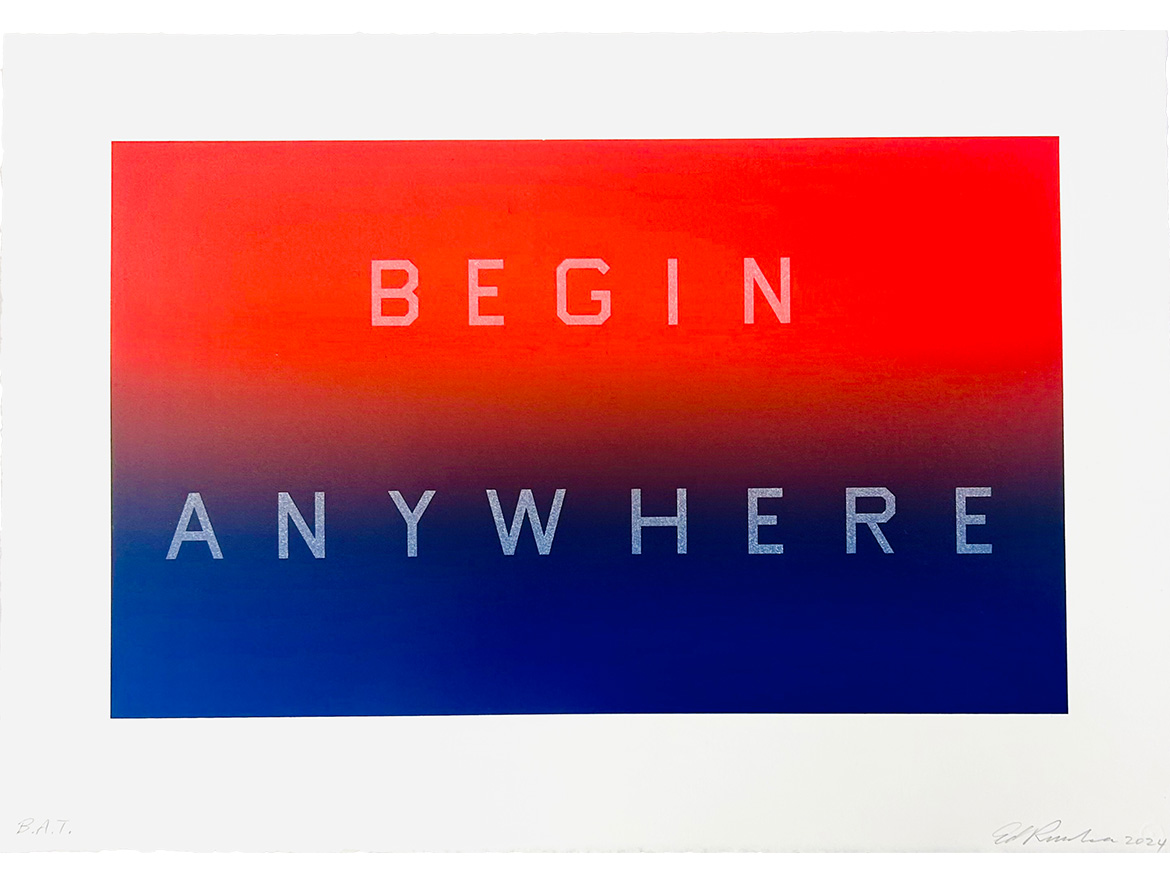
Begin Anywhere (2024) — Ed Ruscha. Available at Guy Hepner, New York.
Ruscha's printmaking output is substantial — more than three hundred distinct editions spanning sixty years — but certain series represent the essential touchstones for any serious collection.
The Standard Station prints are among the most iconic images in American postwar art. Based on the 1966 painting Standard Station, Amarillo, Texas, the various printed iterations — including the 1966 screenprint Standard Station and the 1969 Standard Station with Ten-Cent Western Being Torn in Half — distil Ruscha's formal brilliance to its essence: a lone roadside station, rendered at a dramatic vanishing-point angle, flooded with hot Western light. The composition is simultaneously photographic and graphic, documentary and dreamlike. Standard Station prints regularly appear at Christie's, Sotheby's, and Phillips, where they achieve prices ranging from $80,000 to over $200,000 depending on condition and edition. They represent Ruscha at his most immediately legible — a work you can hang anywhere and it will reorganise the room around it.
Ruscha's artist books occupy a peculiar position in the market — they are technically multiples, printed in editions of thousands, yet original copies have become extraordinarily rare and desirable. Every Building on the Sunset Strip (1966), with its accordion-fold format documenting both sides of 1.5 miles of Sunset Boulevard, is perhaps the most celebrated. Fine copies sell for $15,000–$40,000 at auction. Later books — Real Estate Opportunities (1970), Records (1971) — are rarer still. These books established a conceptual framework for Ruscha's entire practice and remain essential acquisitions for the serious Ruscha collection.
The most direct route into Ruscha's printmaking is his word-based screen prints and lithographs. Works like Oof, Hollywood, Spam, and Lisp — each presenting a single word against a coloured or gradated ground — are available in edition sizes ranging from twelve to one hundred. These are the works that introduced Ruscha's visual language to the broadest audience, and they remain the most actively traded segment of his market. Recent editions produced through leading international galleries and specialist G.E.L. have introduced new word works that extend the series into the twenty-first century; the 2024 print Begin Anywhere exemplifies Ruscha's continuing authority over this language, the typography as assured and the spatial tension as taut as anything produced in 1965.
Produced between 1969 and 1970, the Stains series represents Ruscha's most radical experiment with printmaking as both concept and object. Seventy-five sheets, each stained with a different organic substance — axle grease, Pepto-Bismol, pickle juice, DDT — were presented as a boxed set of 70 copies. The Stains are not prints in any conventional sense; they are records of process, documents of a conceptual gesture. Complete sets are extremely rare and have sold for over $500,000 at major auction houses. Individual sheets occasionally appear on the secondary market and represent both a historical document of late-1960s conceptualism and a deeply physical encounter with Ruscha's interest in material language.
Ruscha's printmaking has continued with undiminished energy into the 2020s. Working with specialist G.E.L. and leading international galleries, he has produced editions that extend his signature concerns — word, ground, space, light — while reflecting the accumulated weight of a seven-decade practice. Prints like At a Clip and the recent address and location works demonstrate that the formal problem Ruscha set himself in the early 1960s remains generative. These newer editions are priced at the accessible end of the market ($5,000–$25,000) while offering confirmed institutional provenance and the full catalogue documentation that underpins long-term value.
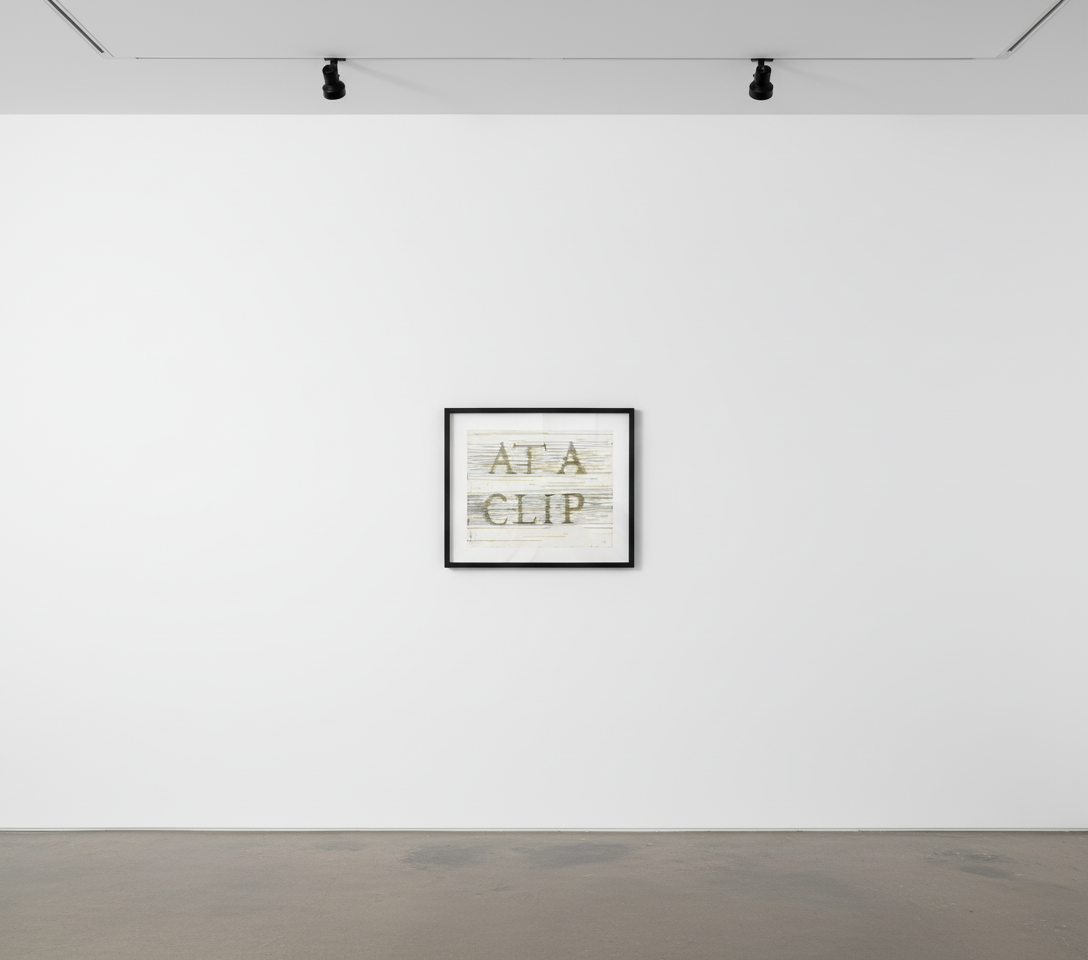
At a Clip — Ed Ruscha. Available at Guy Hepner, New York.
Ruscha has worked in several distinct print media across his career, and understanding the technical distinctions matters both aesthetically and for valuation purposes.
Screenprints are the medium most associated with Ruscha's word-based works. The flat, graphic quality of screen printing aligns naturally with the typographic clarity of his language paintings, and the vibrant colour fields achievable through the medium suit his gradated skies and saturated grounds. Major early screenprints — particularly those produced with Tamarind Lithography Workshop in the late 1960s — are historically significant and command premium prices.
Lithographs offer a softer, more painterly surface quality and are associated with several of Ruscha's most nuanced text works. The autographic mark of the stone or plate can be detected in the slight variations of ink density that distinguish fine impressions from lesser ones — a distinction that matters considerably at auction.
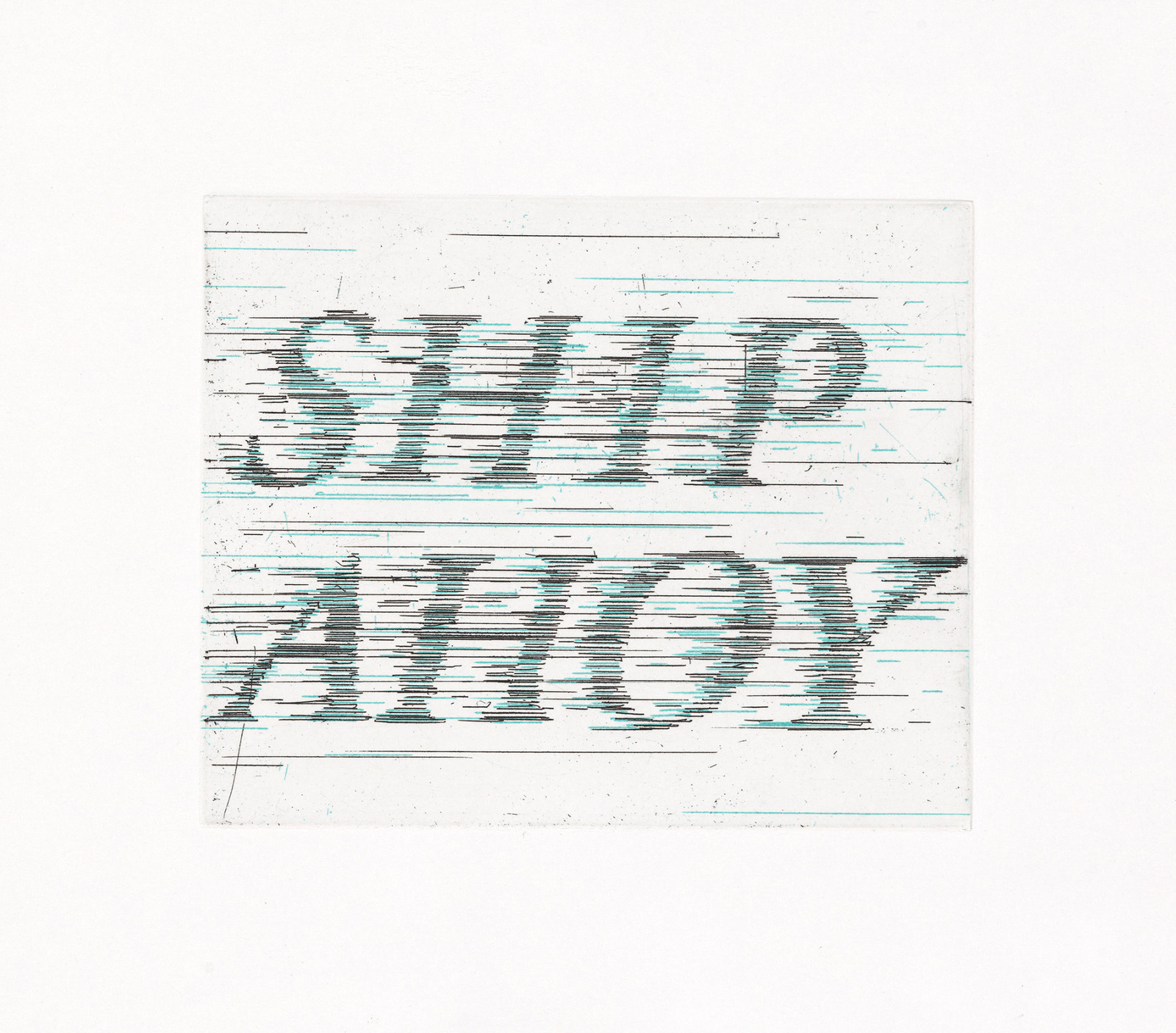
Etchings and aquatints represent a smaller but important segment of Ruscha's print output. Their tonal subtlety and physical presence — the platemarks pressed into the paper — give them a different register from the screenprints, more intimate and less graphic. Collectors who have lived with the larger word screenprints often find that an etching offers a quiet counterpoint.
Artist's books as multiples occupy their own category. Though printed in large editions, the scarcity of surviving copies in fine condition means that Ruscha's books operate commercially as unique or near-unique objects. They are typically acquired through specialist dealers, auction house private sales, or occasionally at the major houses' prints and multiples sales.
specialist G.E.L. (Graphics Editions Limited), the Los Angeles print workshop founded in 1966, has been Ruscha's primary print collaborator and is the single most important institutional mark of authentication for his post-1966 editions. Gemini maintains meticulous records of all works produced at the workshop, and impressions bearing the Gemini chop — the embossed workshop seal — carry the highest provenance confidence. leading international galleries, which has represented Ruscha since the 1990s, is the other primary channel for authenticated editions; works published through leading international galleries Editions carry the full documentation expected by institutional collections.
The Ed Ruscha print market is stratified but consistent, and understanding its tiers enables collectors at every level to participate meaningfully.
At the entry level ($5,000–$25,000), collectors can acquire recent editions from established workshops — text works produced in the last decade with full provenance, often in editions of fifty to one hundred. These are not secondary-market purchases; they are gallery acquisitions at primary or near-primary pricing, and they offer direct participation in a market whose long-term trajectory is well established.
The mid-market ($25,000–$100,000) encompasses a wide range of secondary-market works: earlier word screenprints from the 1970s and 1980s, book objects in fine condition, and single-word prints that occupy significant positions in the artist's historical narrative. At this level, condition and provenance documentation become critical variables, and buyers should expect to engage with specialists who can assess impression quality against published catalogue entries.
The premium tier ($100,000–$500,000+) is dominated by the Standard Station prints, the Stains series (in whole or in part), and the earliest and rarest Word Editions from the 1960s. These are institutional-grade acquisitions — works that appear in museum collections worldwide and that represent Ruscha's most historically significant contributions to printmaking. Competition at auction for fine examples is consistent, and record prices for individual impressions regularly exceed estimates.
Across all tiers, Ruscha's market has demonstrated remarkable resilience. The artist's institutional standing — represented in the permanent collections of MoMA, the Tate, LACMA, the Whitney, the Pompidou, and the Guggenheim — provides the kind of museum validation that underpins long-term value. Post-pandemic auction results have consistently outperformed pre-pandemic benchmarks, and demand from both established collectors and a younger generation of buyers entering the market through their familiarity with Ruscha's visual language continues to compress supply.
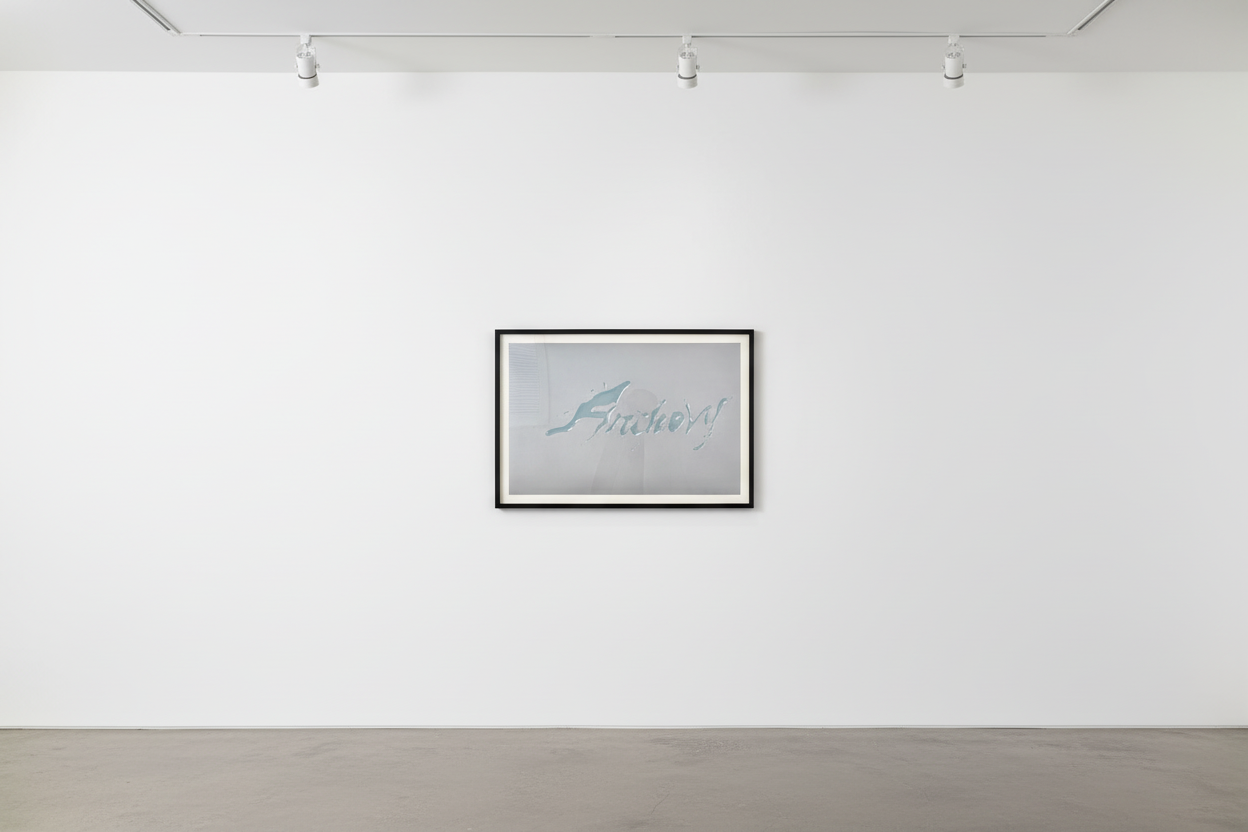
Anchovy — Ed Ruscha. Available at Guy Hepner, New York.
Authentication in the Ruscha print market is relatively straightforward compared to some sectors, owing to the artist's meticulous record-keeping and the institutional rigour of his primary print publishers.
The definitive scholarly resource is the catalogue raisonné of prints, published in multiple volumes and maintained with ongoing updates. Any print acquired at serious price points should be cross-referenced against the catalogue entry, which records edition size, paper type, ink colours, dimensions, and the unique characteristics of fine impressions. Discrepancies between a physical impression and its catalogue entry are significant red flags.
specialist G.E.L. documentation is the gold standard for works produced at that workshop. Gemini maintains a public archive and can provide confirmation of individual impressions on request. The embossed Gemini chop, present on works produced at the workshop, is not easily forged and provides immediate visual authentication. Collectors acquiring Gemini-published works should request copies of any available workshop documentation as part of the sale process.
leading international galleries provenance — for works published or sold through the gallery — provides a clear institutional chain of custody. Major auction house specialist departments (Christie's, Sotheby's, Phillips) all employ staff with specific expertise in Ruscha prints and multiples, and their condition reports and provenance research, while not a substitute for independent due diligence, provide a useful additional layer of authentication for secondary-market purchases.
For Ruscha's artist books, the situation is more complex. Multiple printings of some titles exist, and distinguishing first editions from later printings requires familiarity with the bibliographic literature. The standard reference is Ruscha's own documented production records, supplemented by the scholarship of curators at institutions with significant holdings. Buyers of books at significant prices should consult a specialist with demonstrable expertise in this specific area of the market.
One practical note: Ruscha's signature varies across decades and contexts, and forged signatures on genuine but unsigned impressions represent a known problem in the market. Signatures should always be verified against documented examples, and works with signatures that cannot be attributed to a consistent documented period in the artist's hand should be treated with caution.
The case for collecting Ruscha now rests on several converging factors that distinguish this moment from any earlier point in the market's history.
Institutional canonisation is complete. The LACMA retrospective Ed Ruscha / Now Then, which originated at MoMA in New York in 2023 before travelling to Paris, Houston, and Los Angeles through 2024, represented the definitive institutional statement on Ruscha's importance to American art of the twentieth and twenty-first centuries. Museum retrospectives of this scale — with accompanying scholarship, catalogue, and global media coverage — reliably consolidate market position for an artist's prints, as new audiences are introduced to the work and existing collectors reassess their holdings. The retrospective confirmed what the market had already established: Ruscha is a figure of the same historical magnitude as Rauschenberg, Johns, and Warhol.
Venice Biennale 2024 affirmed his global standing. Ruscha's presence at Venice — and the critical attention given to his late work in that context — demonstrated that his practice remains vitally engaged with the present rather than merely venerated as historical. Artists whose late work is seen as continuous with rather than parasitic on their earlier reputation sustain collector interest across all market tiers; Ruscha clearly belongs to this category.
The word-as-image tradition has never been more culturally central. From street typography to post-internet text art, the visual language Ruscha pioneered in the early 1960s has become one of the defining idioms of contemporary visual culture. Collectors in their thirties and forties who have grown up surrounded by that influence are now returning to the source, driving demand at a level that shows no sign of abating.
Supply is finite and declining. Ruscha is eighty-seven years old. The period of active new production will, at some point, close, and the market will shift entirely to secondary supply. Collectors who acquire now — particularly from galleries with direct access to authenticated editions — are doing so at a moment when the full range of the market remains navigable. The experience of comparable artists' markets suggests that this navigability narrows sharply after the artist's death, with prices rising across all tiers as supply tightens and institutional demand increases.
Guy Hepner gallery maintains one of the most comprehensive selections of authenticated Ed Ruscha prints available on the primary and secondary markets. Our holdings span the full range of Ruscha's printmaking practice — from recent Gemini and leading international galleries editions priced for the emerging collector to historically significant works at the premium end of the market.
Every work we offer comes with complete provenance documentation, and our specialists can assist with catalogue cross-referencing, condition assessment, and acquisition strategy. We work with collectors at every stage — whether you are acquiring your first Ruscha or adding a museum-quality impression to an established collection — and we are committed to a transparent process that prioritises long-term value over short-term transaction.
We offer global shipping with full insurance, and we can arrange secure storage through institutional-grade facilities for collectors who require it. Our team is available to discuss any work in our inventory, provide condition reports and high-resolution photography on request, and facilitate private viewings at our New York gallery.
Ed Ruscha made work about the places and words that define American experience — the gas station at the edge of the desert, the sign that says everything and nothing, the word that floats free of meaning and becomes, simply, light. Collecting his prints is not only an investment in an artist whose market has demonstrated consistent long-term appreciation. It is an investment in a vision of America — wide, strange, beautiful, and entirely itself — that has never been more necessary or more enduring.
Browse the full Ed Ruscha collection at Guy Hepner.
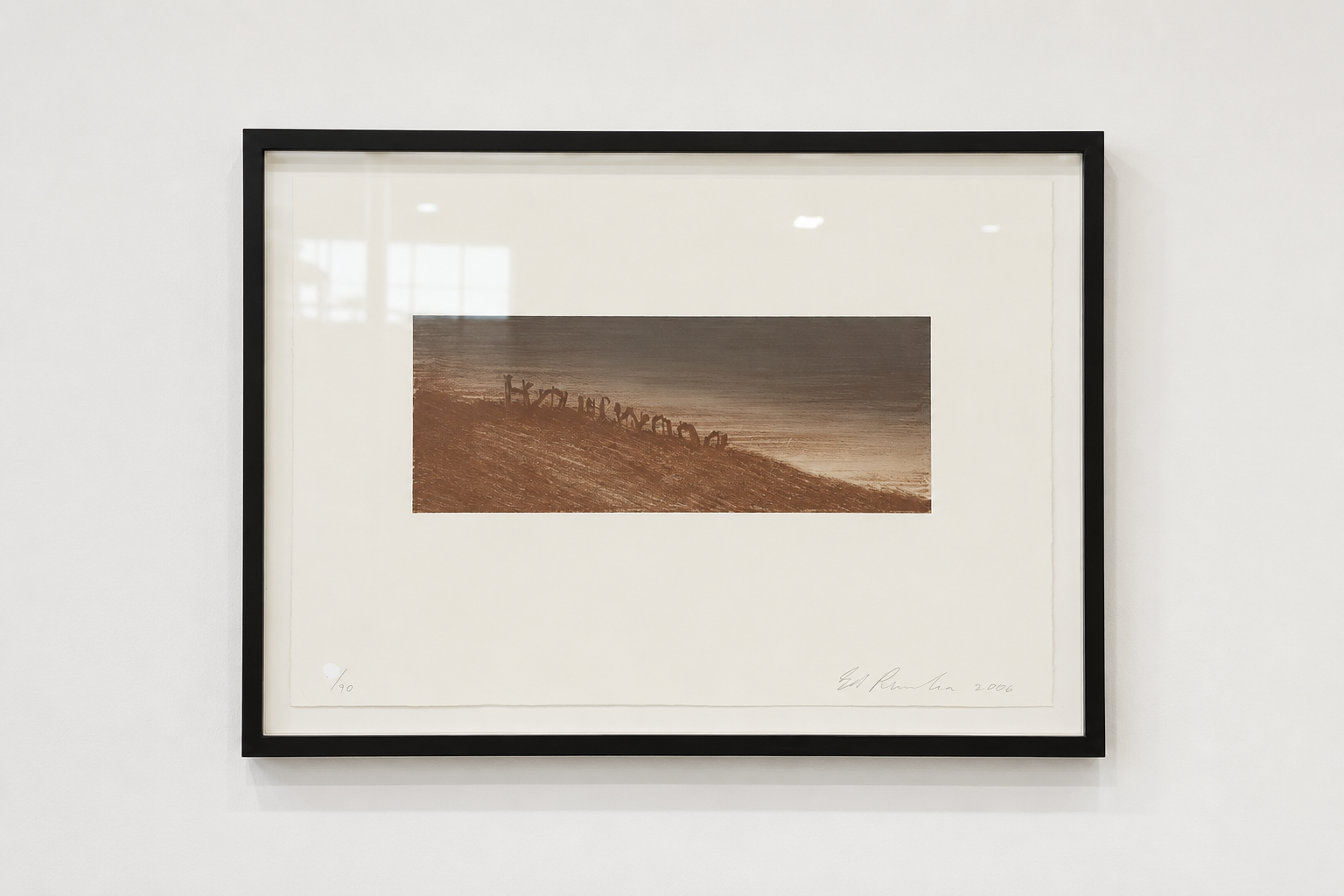
Explore Ed Ruscha prints for sale at Guy Hepner: Archi-Props, Book Covers, Bow-Tie Landscapes, Etchings, Hollywood.
Related Series