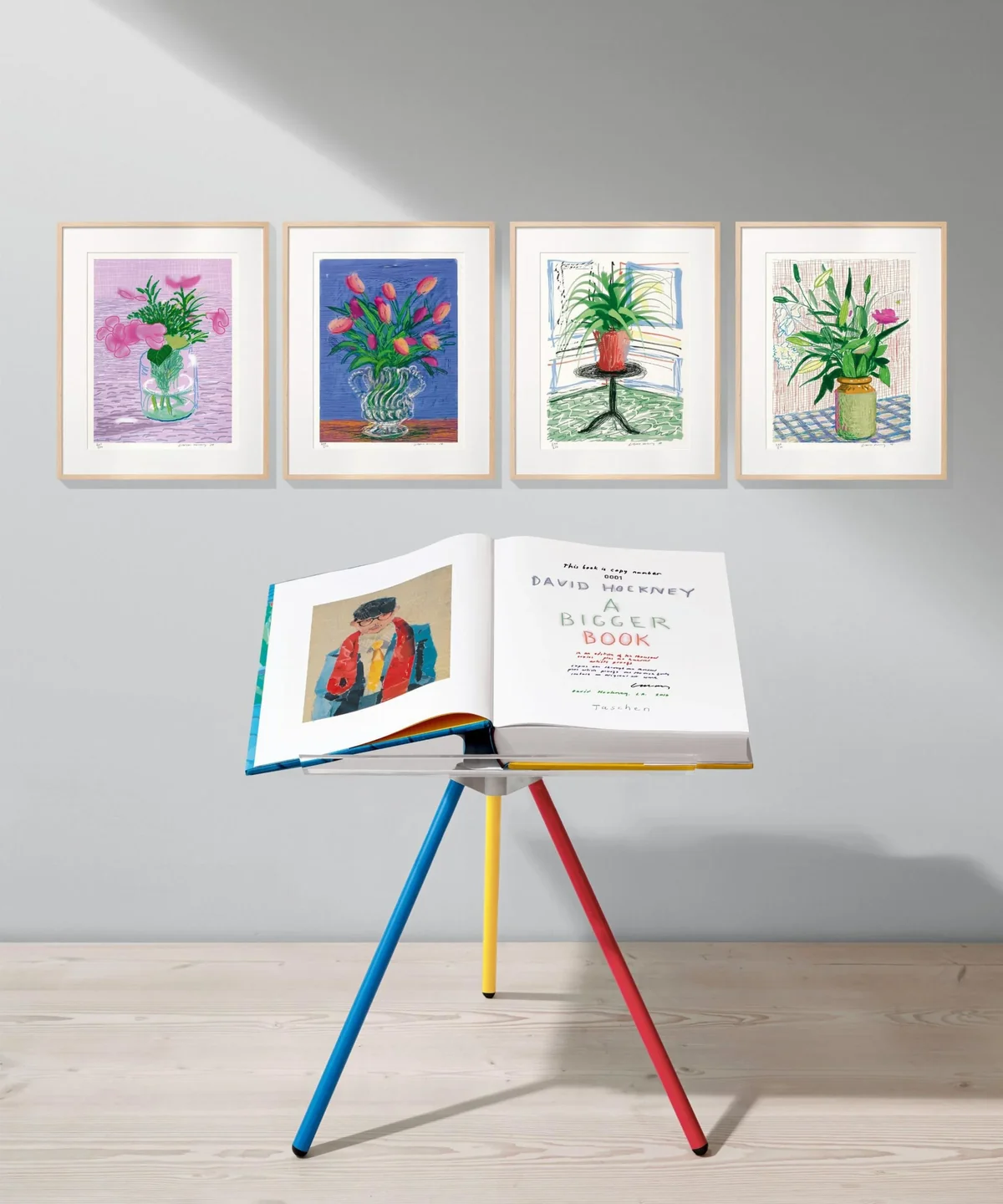
20 Flowers

June 12, 2026
David Hockney, the Bradford-born artist whose paintings of swimming Pools, Yorkshire seasons, and the people he loved defined a particular vision of the modern world, died peacefully at home on 11 June 2026. He was 88 years old — one month short of his 89th birthday. He is survived by his long-time partner Jean-Pierre Goncalves de Lima, his brothers Philip and John, his great-nephew Richard, and numerous nieces, nephews, great-nieces, and great-nephews.
His publicist, Erica Bolton, issued a statement describing him as "one of the most important figures in contemporary art in both the 20th and 21st centuries." The statement ended with the phrase Hockney had made his own: Love Life.
David Hockney was born on 9 July 1937 in Bradford, Yorkshire, the fourth of five children in a working-class family. His father Kenneth was an accountant's clerk who hand-painted protest banners for local peace marches; his mother Laura was a Methodist and strict vegetarian. At eleven, Hockney decided he wanted to be an artist — a decision his teachers at Bradford Grammar School did not encourage but his parents quietly supported.
He enrolled at Bradford College of Art and then, in 1959, won a place at the Royal College of Art in London. There, he encountered a paradox that would define his career: the dominant mode of serious painting was abstraction, yet Hockney refused to paint abstractly. He painted figures. He painted with colour. He painted from life. The Royal College threatened to withhold his diploma because he had not completed a required essay; he responded by producing Life Painting for a Diploma — a male nude copied from an American bodybuilding magazine beside an anatomical skeleton — and submitted that instead. The college backed down, awarding him the gold medal for painting, which he collected dressed in a gold lamé suit.
His early work attracted immediate attention. He appeared in the celebrated Young Contemporaries exhibition of 1961 alongside Peter Blake and other artists who would come to define British Pop Art. But Hockney was never quite a Pop artist. Where his contemporaries took their imagery from advertising and mass culture, his came from his own life — his desires, his friends, his travels, his interior world. It was personal rather than systematic, warm rather than cool.
In 1964, Hockney arrived in Los Angeles, and the shock of the place transformed him. Everything was different: the light, the architecture, the air, the fact that homosexuality — still illegal in England — was, here, simply lived. He began painting swimming pools.
The pools were, on the surface, studies in light and water and the geometry of pleasure. But they were also something more: a declaration of freedom. Hockney painted these works — A Bigger Splash, Portrait of an Artist (Pool with Two Figures), The Splash, Two Boys in a Pool, Hollywood — with an intensity that still radiates across the room. The shimmering, stippled water; the flat, bleached concrete; the absent or barely present human figure: these paintings caught something about California, about desire, about the relationship between surface and depth, that no one had captured before.
Portrait of an Artist (Pool with Two Figures), painted in a legendary 48-hour sprint in 1972, would eventually sell at Christie's New York in November 2018 for $90.3 million — a world auction record for a living artist at the time. But in the late 1960s it was simply a painting he cared about so much that he drove himself to the edge of collapse to finish it.
Hockney came out as gay at 23, at a time when homosexuality was still a criminal offence in England. He later said he felt he "should do it" — that his sexuality was "a part of me" that deserved to be treated with seriousness and humour rather than concealed. His early paintings — naked men, figures in beds and pools, images drawn from physique magazines — were, as he described them, "homosexual propaganda" produced at a moment when almost no visible gay imagery existed in fine art.
He spoke and wrote about this aspect of his life with consistent frankness across the decades, and was long recognised as one of the most significant openly gay public figures in British cultural life. His long-term partner, Jean-Pierre Goncalves de Lima, was at his side when he died.
Through the 1970s, Hockney became one of the foremost portrait painters of his era. His double portraits — Mr and Mrs Clark and Percy (1970–71), My Parents (1977), Christopher Isherwood and Don Bachardy (1968) — are large, ambitious, psychologically acute works that place figures in interior spaces with a stillness that borders on the uncanny. They are paintings about attention: what it means to look at someone, and what it means to be looked at.
He was also, throughout his life, obsessed with how images are made — with perspective, with optics, with the history of seeing. He produced extensive photo collages using Polaroid prints, which he called "joiners," exploring what it means to represent three dimensions in two, and time in a static image. He wrote a scholarly book, Secret Knowledge (2001), arguing that Old Masters including Jan van Eyck and Ingres had used optical devices — camera obscura, camera lucida — as drawing aids. The theory was controversial. The argument, characteristically, was made with energy and conviction.
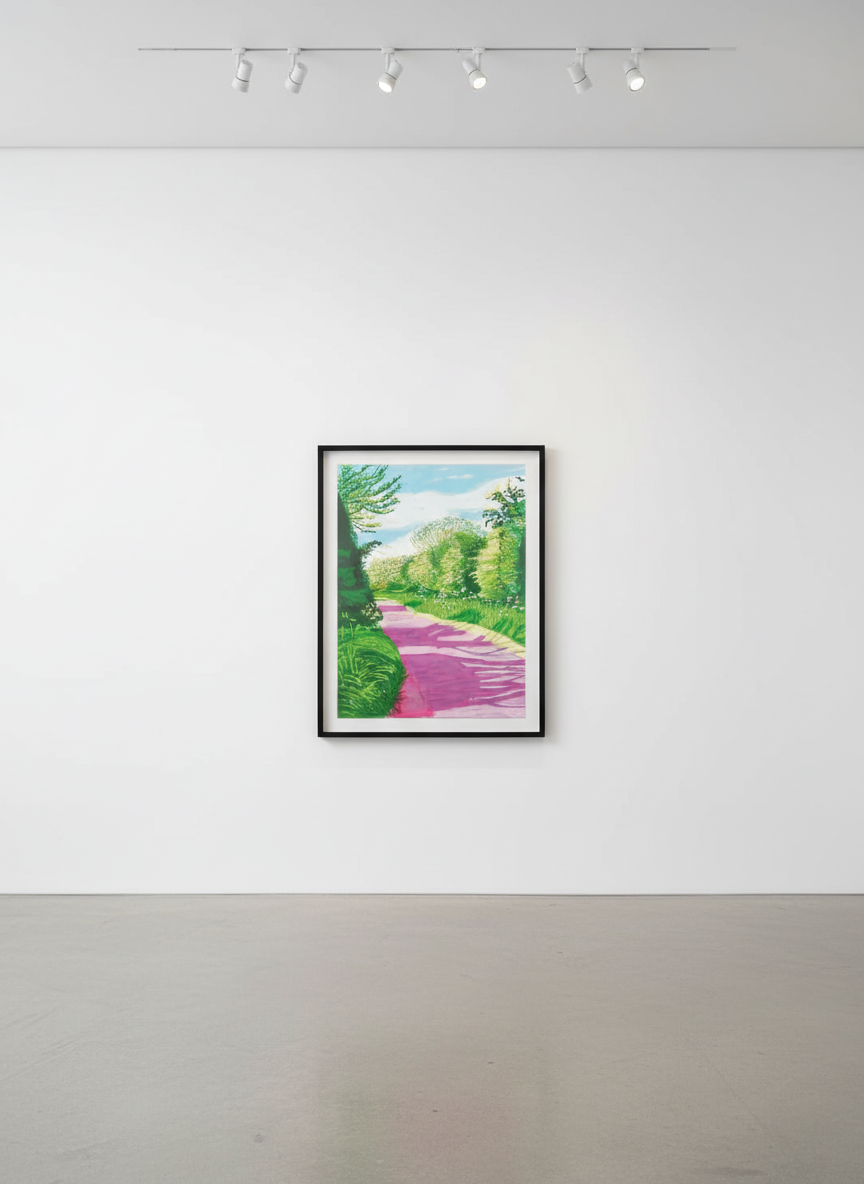
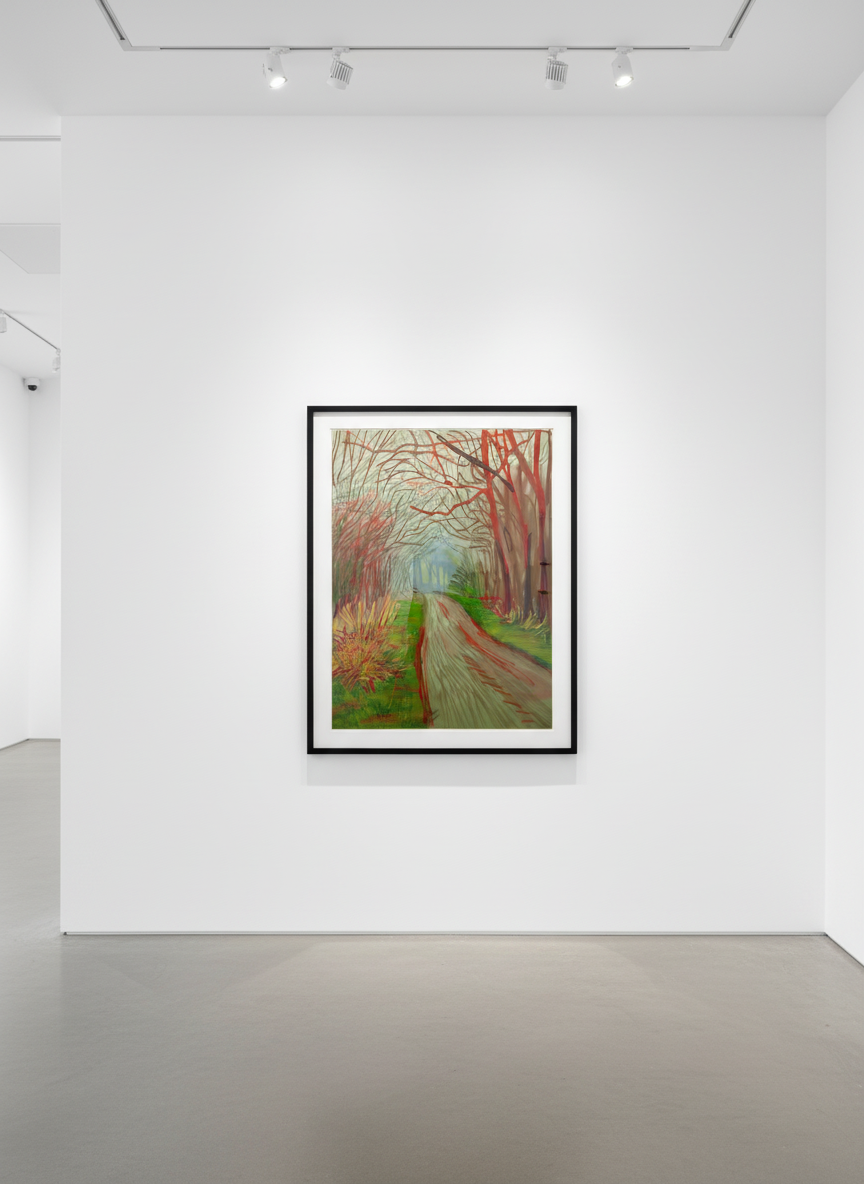
In the late 1990s and early 2000s, Hockney returned to the landscape he had grown up in: the East Yorkshire Wolds. He began painting the lanes and hedgerows around Bridlington on a scale no one had attempted for decades — multi-canvas panoramas, sometimes composed of nine or twelve joined panels, depicting the arrival of spring in explicit, day-by-day detail. The resulting exhibition, A Bigger Picture, opened at the Royal Academy of Arts in 2012 to huge popular and critical success. Here was an artist in his seventies, working with undiminished energy, producing some of the largest and most ambitious landscape paintings in British art history.
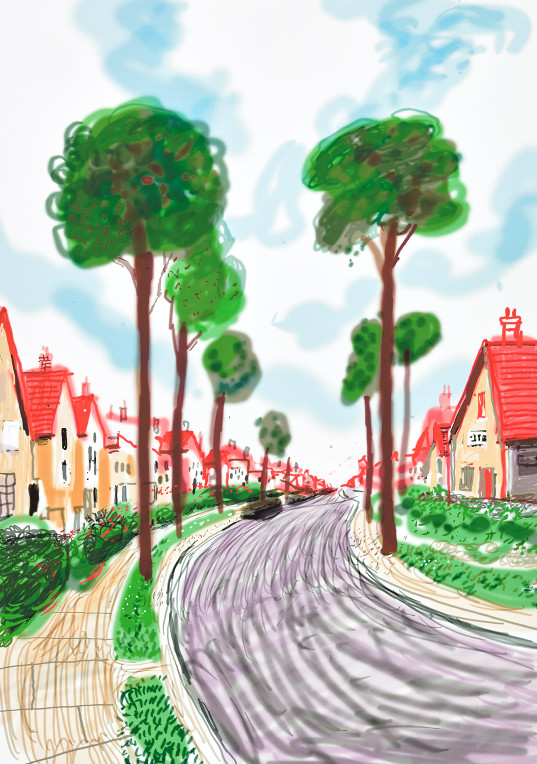
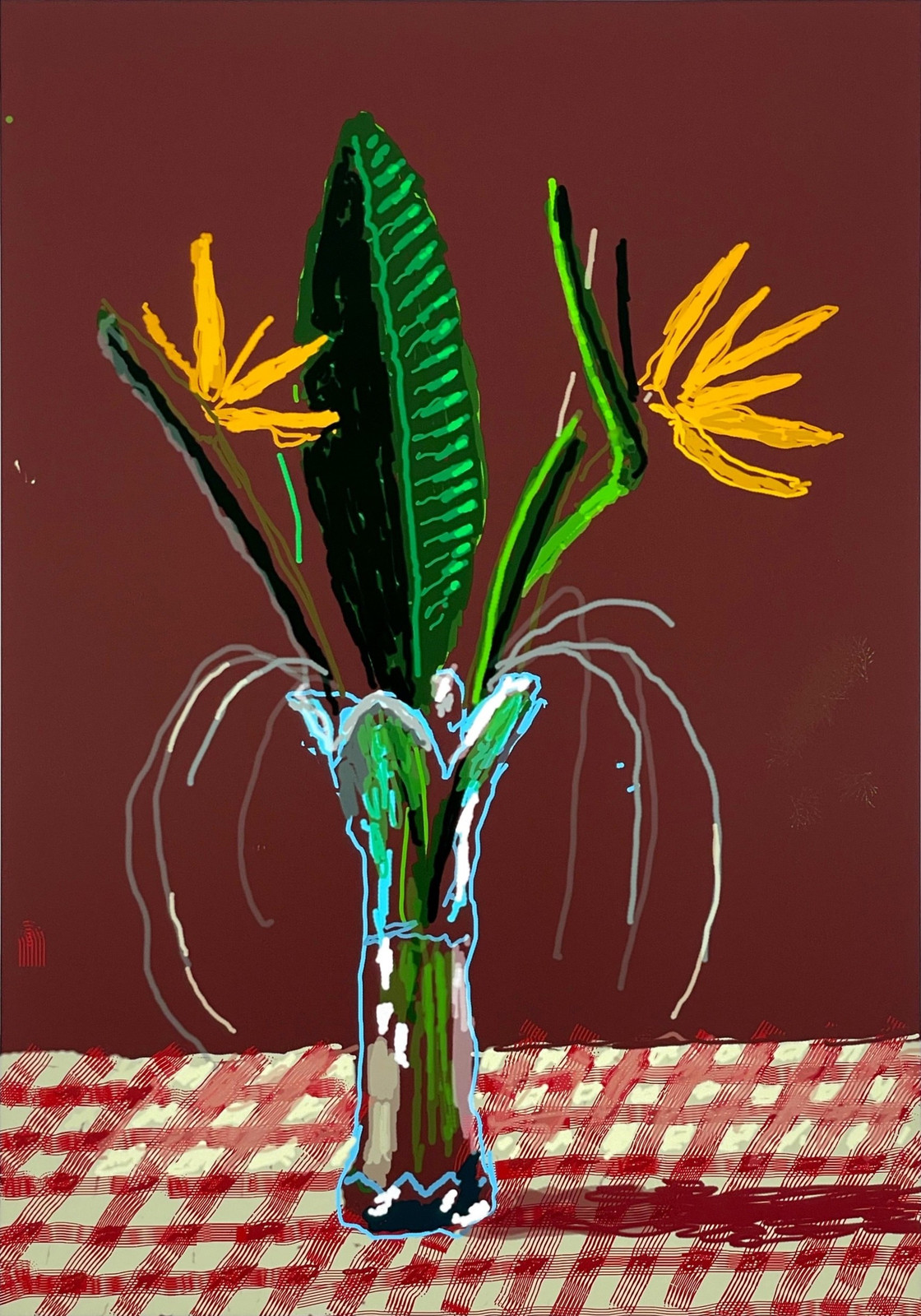
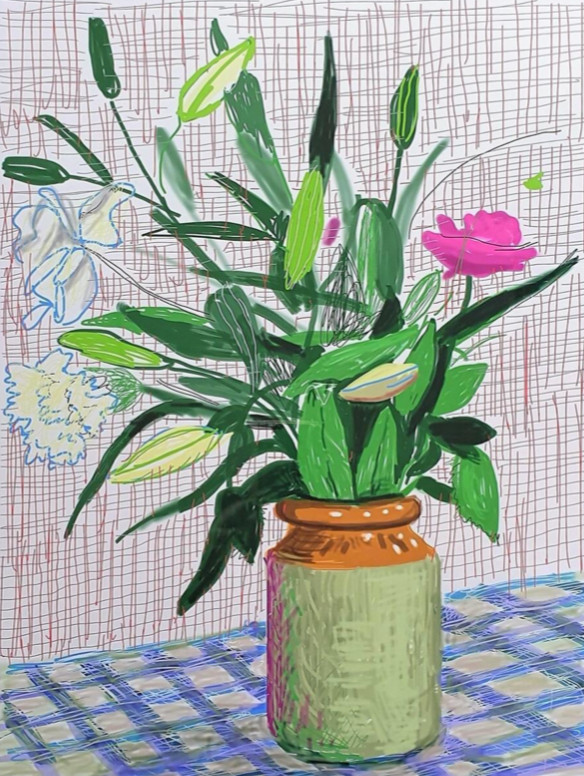
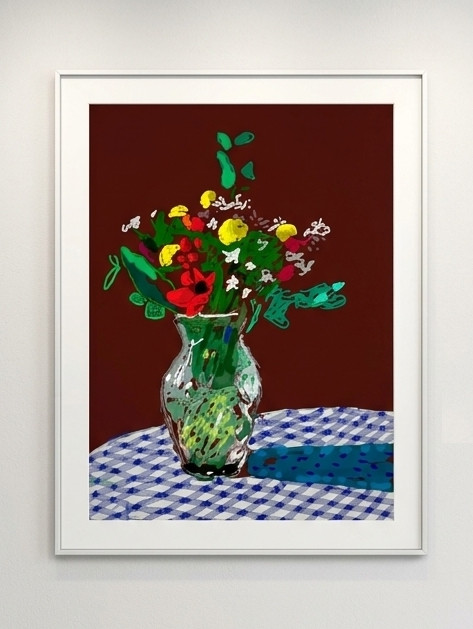
In 2009, Hockney discovered the Brushes app on his iPhone, and then the iPad. He took to it with the excitement of a student. He drew flowers from his garden every morning and sent them to friends by email — hundreds of images across years, vivid and intimate, made for no audience except the recipient. Later he produced the enormous Arrival of Spring in Normandy (2020), a 116-part iPad work made during lockdown, recorded on video so that viewers could watch each mark being placed in real time.
He moved to Normandy, France, in 2019, and despite suffering a minor stroke in 2013, and spending his final years in a wheelchair with full-time carers, he continued to paint every day. His final exhibited works included portraits of Thomas Mupfupi, one of his carers, and Jack Ransome, the craftsman who made his glasses. He painted the people immediately around him with the same care and curiosity he had brought to Ossie Clark, Peter Schlesinger, and Christopher Isherwood fifty years earlier.
David Hockney received the Order of Merit from Queen Elizabeth II in 2012. He turned down a knighthood — twice. He was made a Companion of Honour in 1997. His paintings hang in the Tate, the National Portrait Gallery, the Metropolitan Museum of Art, the Los Angeles County Museum of Art, and every other major institution with a claim to representing modern British art. He produced approximately 600 paintings, 3,000 prints and drawings, and hundreds of works in digital media.
He was a figure defined by stubbornness — by the refusal to paint what fashion required, to give up figuration when abstraction was king, to give up landscape when it seemed retrograde, to give up painting when the market wanted sculpture or installation. He said repeatedly that he didn't give a damn what critics thought. This was not posturing. He genuinely didn't. What he gave a damn about was looking — at trees, at friends, at water, at light, at the faces of the people around him. He kept doing it until the end.
Details of memorials will follow in due course.
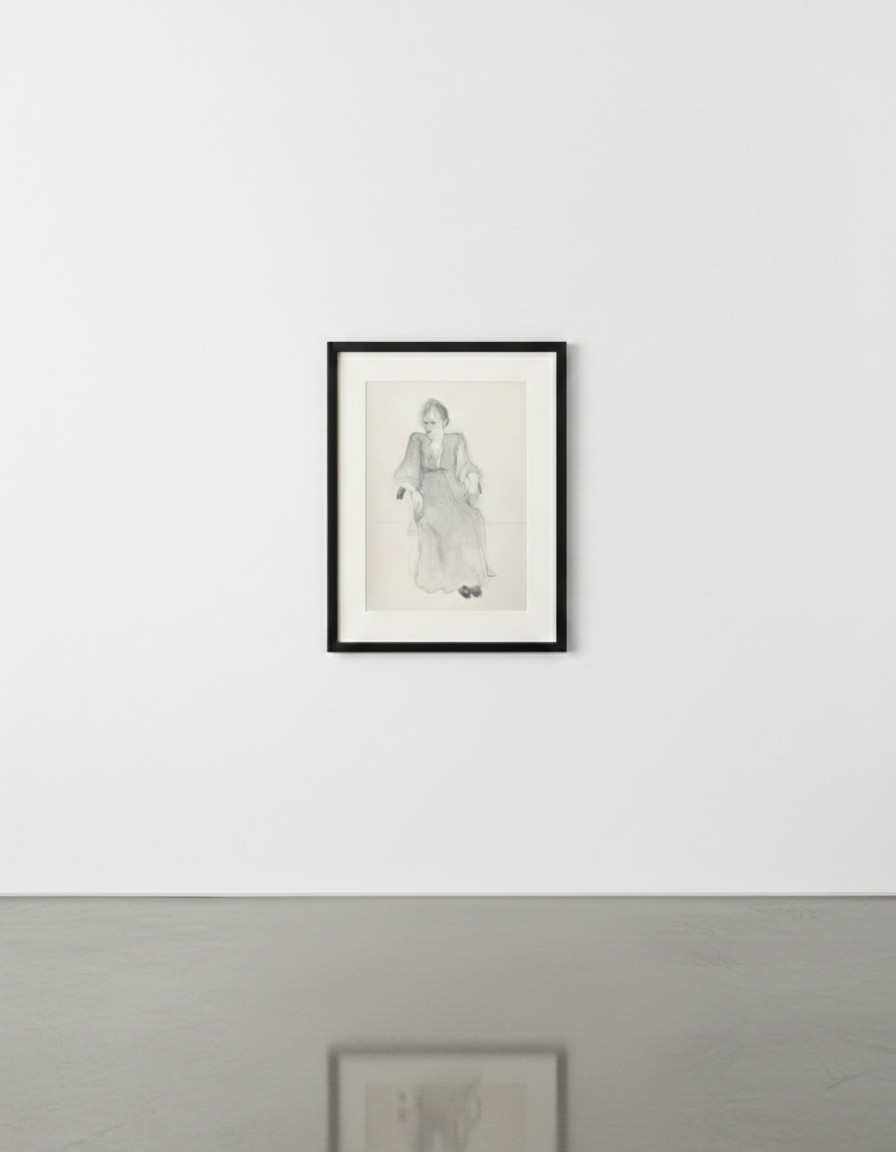
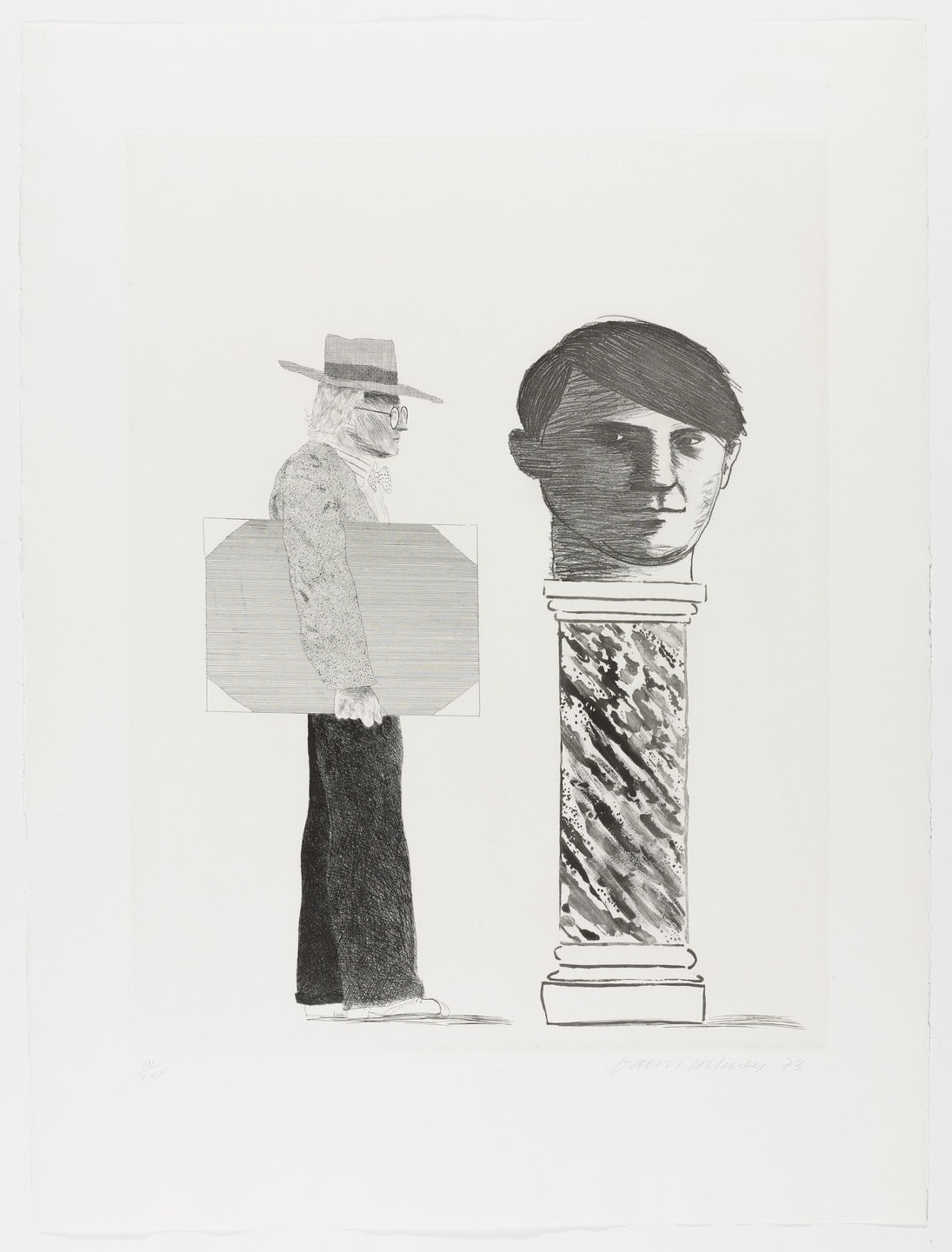
Explore David Hockney prints for sale at Guy Hepner: 20 Flowers, A Bigger Book & My Window, Celia, Computer Drawings, Homage to Picasso.
Related Series