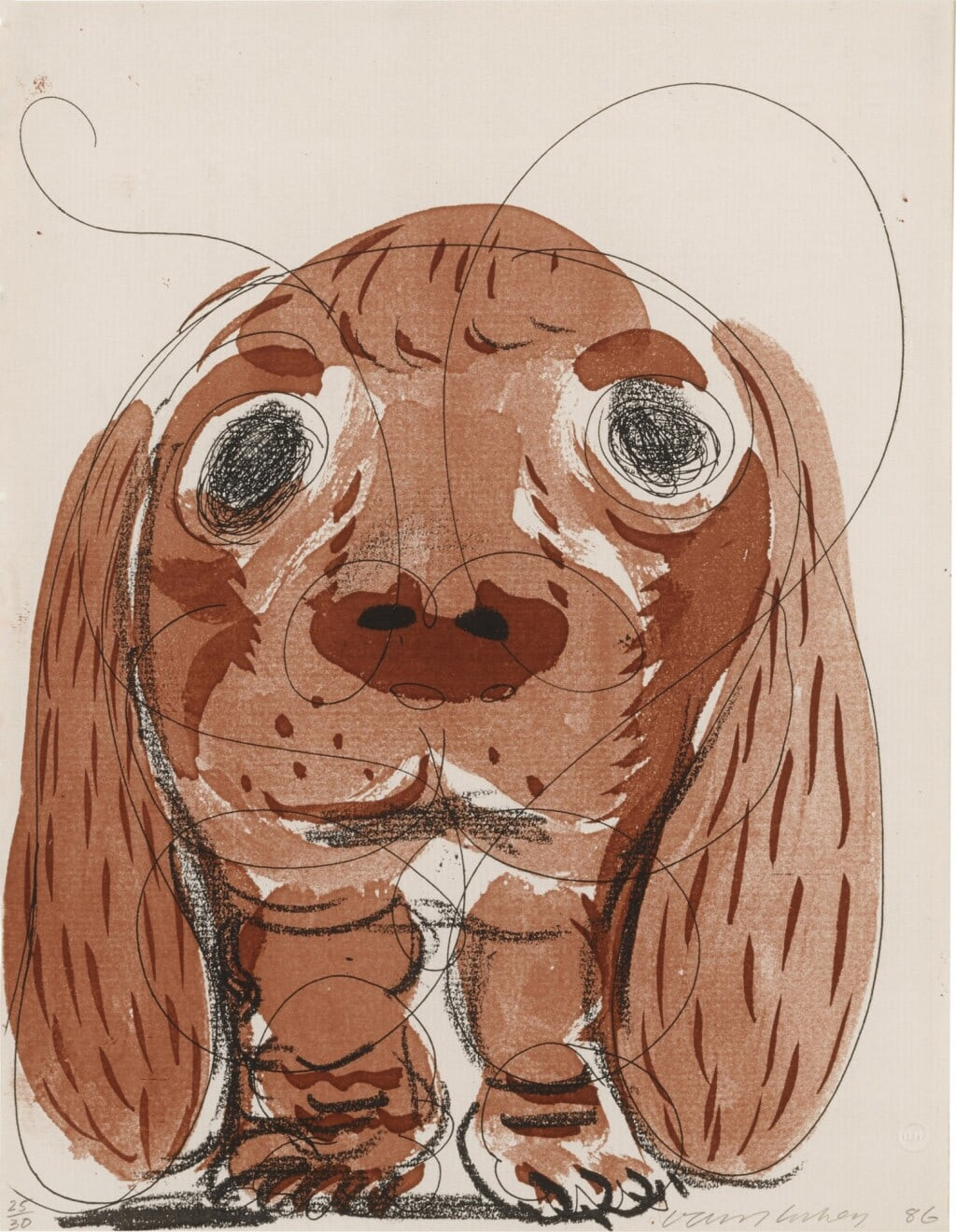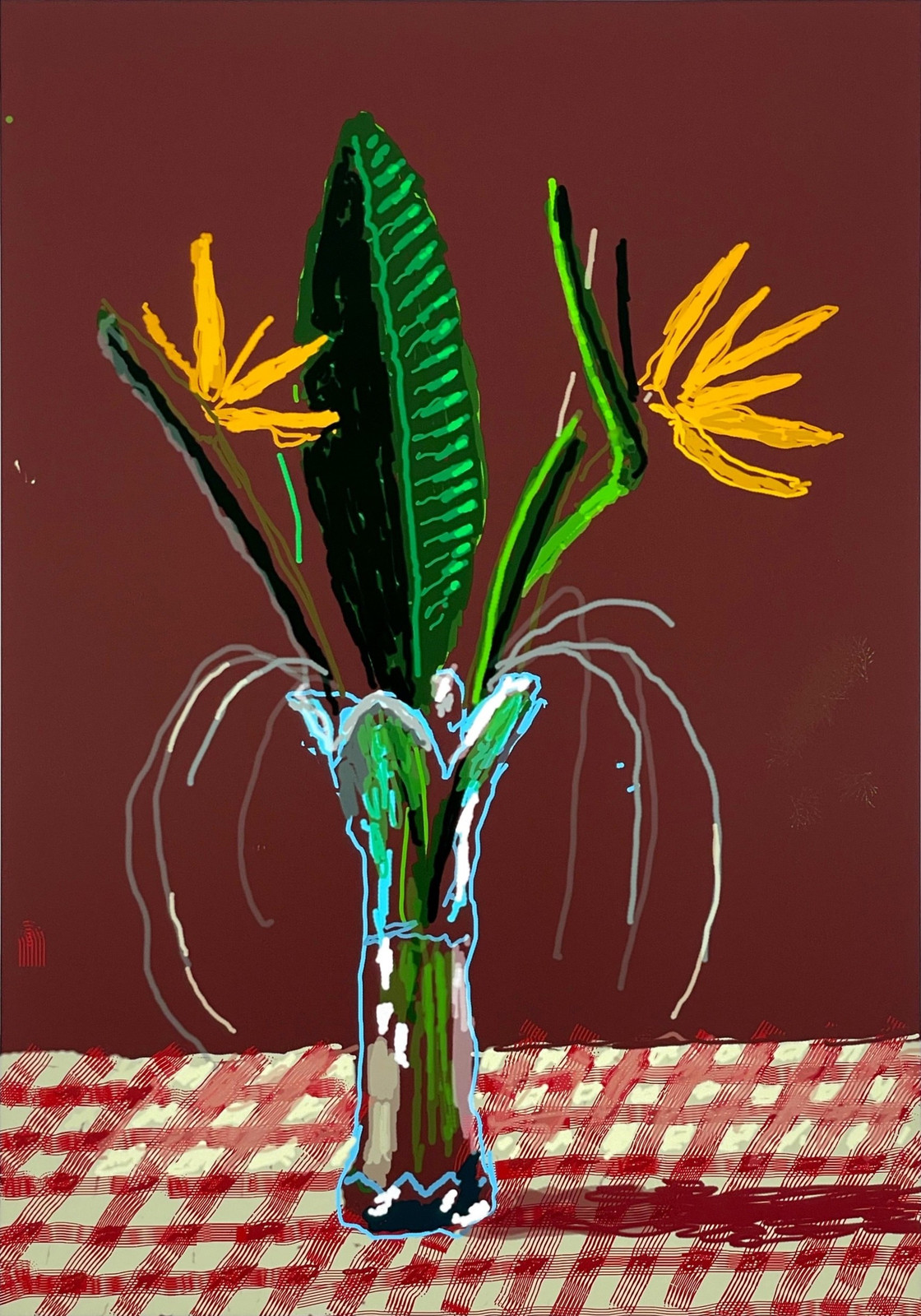
20 Flowers

July 20, 2026
When David Hockney passed away in January 2026 at the age of eighty-eight, the art world lost one of its most luminous figures—an artist whose vision had shaped how we see California light, English landscapes, and the very nature of pictorial space itself. Yet for collectors, something remarkable happened in the weeks that followed: rather than triggering panic or speculation, the market responded with a kind of quiet reverence, as institutions and private collectors alike sought to secure works by Britain's most beloved artist. At Guy Hepner, the David Hockney gallery New York collectors have trusted for over a decade, we witnessed this phenomenon firsthand—inquiries arriving from Tokyo, London, São Paulo, and across the United States, all seeking guidance on building or completing Hockney collections. As a Hockney specialist NYC has come to rely upon, our Chelsea art gallery at 177 Tenth Avenue has long maintained one of the most significant inventories of Hockney prints and editions available anywhere in the secondary market.
The appetite for Hockney's work reflects something deeper than market dynamics. His art speaks to fundamental human experiences—intimacy, pleasure, the passage of time, the way light falls across water or a loved one's face. For collectors considering where to buy David Hockney New York offers several options, but few dealers possess the depth of expertise, inventory, and collector relationships that define a true specialist. This guide explores the full scope of Hockney's remarkable career, from his Bradford beginnings to his final Normandy paintings, while offering practical insight into collecting his work at every price point.
David Hockney was born on July 9, 1937, in Bradford, a working-class wool town in the industrial north of England. The fourth of five children in a family that valued education and self-improvement, young David showed artistic talent early, winning a scholarship to the Bradford School of Art at age sixteen. His father, a conscientious objector and eccentric dresser who painted his bicycle different colors each week, instilled in him both a questioning nature and an appreciation for visual boldness. His mother, devoutly Methodist, provided the emotional stability that allowed her son's creativity to flourish without constraint.
The Bradford School of Art offered rigorous traditional training—life drawing, landscape painting, portraiture—that would remain foundational throughout Hockney's career, even as he pushed against academic conventions. After completing his National Service as a hospital orderly (a role he chose as a conscientious objector, like his father), Hockney enrolled at the Royal College of Art in London in 1959. There, he encountered the ferment of ideas that would help define British Pop Art, studying under Roger de Grey and Ceri Richards while absorbing influences from visiting artists including Francis Bacon and Richard Hamilton.
The young Hockney proved precocious in both talent and ambition. By the time he graduated in 1962—receiving the college's gold medal—he had already participated in seven group exhibitions, including the landmark Young Contemporaries shows that announced British Pop Art's arrival. More remarkably, he had sold enough work to fund a trip to New York, where he met William S. Lieberman at the Museum of Modern Art, which promptly acquired two of his prints. At twenty-four, Hockney was already an artist of international consequence.
Hockney's first visit to Los Angeles in 1964 changed everything. Coming from grey, rainy England, he experienced the Southern California light as a revelation—flat, bright, seemingly without shadow, rendering the world in the saturated hues of magazine advertisements and swimming pool catalogues. He moved there within a year, beginning a love affair with the city that would produce some of the twentieth century's most recognizable images.
The swimming pool became Hockney's signature motif almost immediately. Works like "A Bigger Splash" (1967) and "Portrait of an Artist (Pool with Two Figures)" (1972) captured something essential about California living—its casual hedonism, its architecture of glass and concrete opening onto private oases, its suggestion of bodies in motion and at rest. The Pools weren't merely subjects; they were opportunities to explore how paint could represent water, transparency, reflection, and the human figure simultaneously.
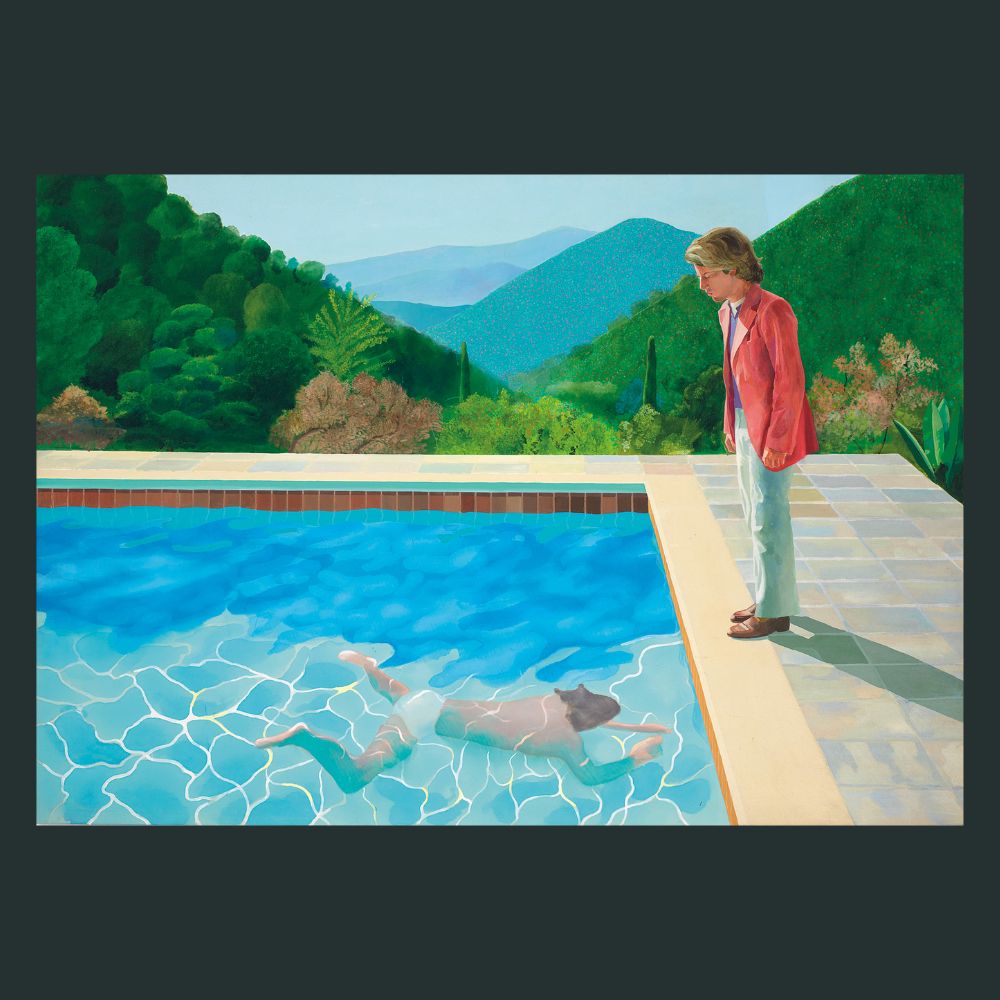
David Hockney, Pool Scene with Figure, Acrylic on canvas. Available at Guy Hepner, New York.
For collectors seeking Hockney swimming pools, the print editions offer exceptional access to this iconic imagery. Works like "Pool Made with Paper and Blue Ink for Book" translate the luminosity of his paintings into the more intimate medium of printmaking, allowing collectors to own pieces directly connected to his most celebrated subjects. At Guy Hepner, Hockney for sale NYC collectors seek often begins with these pool-related prints, which range from accessible entry points around $25,000 to significant works exceeding $175,000.
The California period also established Hockney's approach to portraiture, which would occupy him for the rest of his career. His double portraits—two figures in domestic interiors, their relationship implied through posture, gaze, and spatial arrangement—drew on art-historical precedents from Jan van Eyck to Thomas Gainsborough while remaining utterly contemporary. Works like "Mr and Mrs Clark and Percy" (1970-71) and "American Collectors (Fred and Marcia Weisman)" (1968) created a new genre of portrait painting, simultaneously intimate and sociological.
While Hockney's paintings command headlines and auction records—"Portrait of an Artist (Pool with Two Figures)" achieved $90.3 million at Christie's in 2018, then the highest price for a living artist—his printmaking represents perhaps the most consistent and innovative strand of his practice. From his earliest etchings at the Royal College to his final iPad compositions, Hockney treated printmaking not as a secondary medium but as a parallel arena for experimentation.
His early print portfolios established him as a master of the medium. "A Rake's Progress" (1961-63), inspired by Hogarth and chronicling Hockney's own adventures in New York, demonstrated his ability to sustain narrative across multiple images while exploring etching's tonal possibilities. The "Illustrations for Six Fairy Tales from the Brothers Grimm" (1969) pushed further into linear delicacy and psychological suggestion. These early suites remain highly sought by collectors, though their relative scarcity means prices typically fall in the higher end of the market.
The lithographs of the 1970s and 80s expanded Hockney's chromatic range while maintaining his signature clarity. The "Weather Series" (1973) explored atmospheric effects through pure abstraction—rain, mist, sun, wind rendered in geometric bands of color. These works, averaging between $50,000 and $100,000 depending on condition and provenance, represent some of the finest examples of Hockney prints New York collectors can acquire, balancing accessibility with genuine rarity.
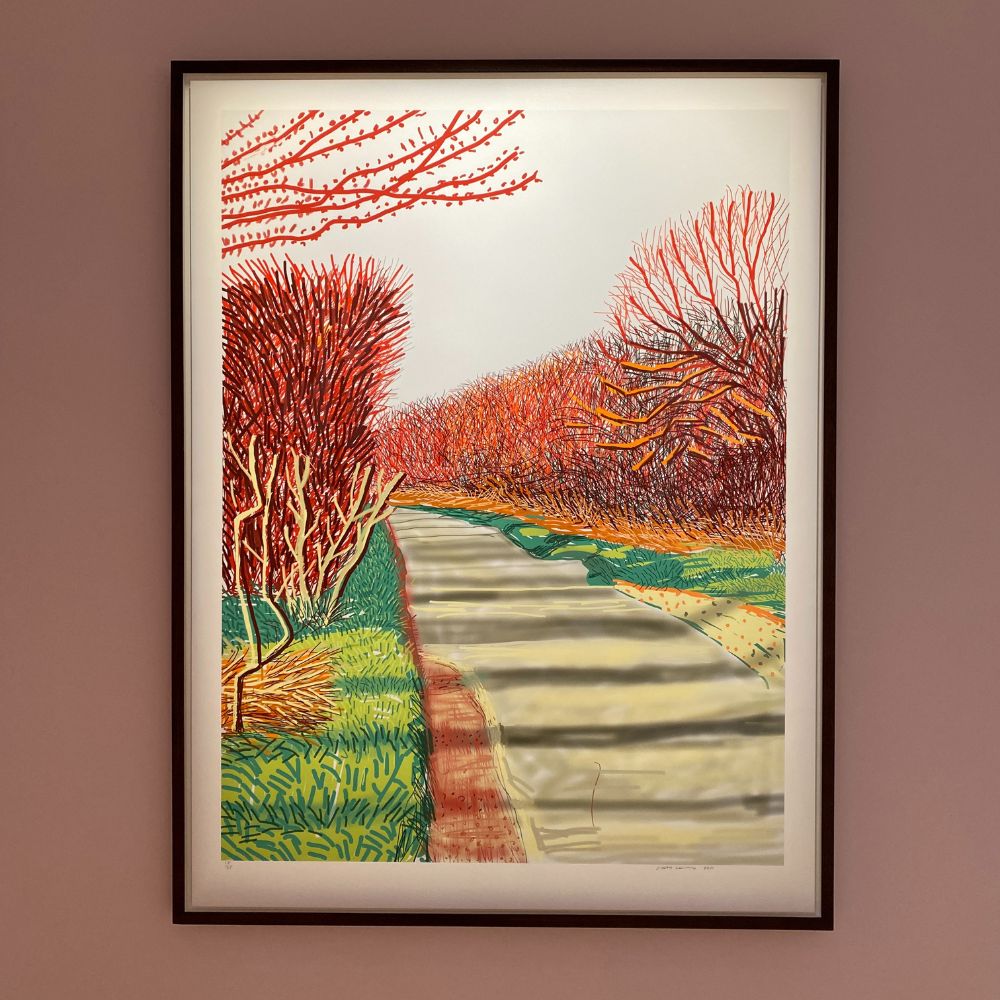
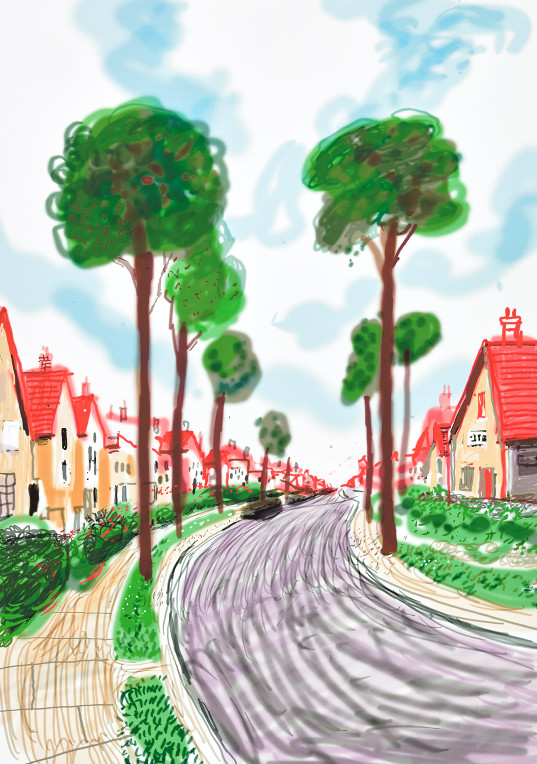
David Hockney, Landscape with Trees, Hand-colored print. Available at Guy Hepner, New York.
For collectors new to Hockney's prints, understanding edition structures proves essential:
Condition matters enormously in the print market. Hockney's works, particularly those printed on delicate papers or using fugitive inks, require careful storage and framing. At Guy Hepner, every print undergoes thorough condition assessment before acquisition, and we provide detailed condition reports to collectors, ensuring complete transparency.
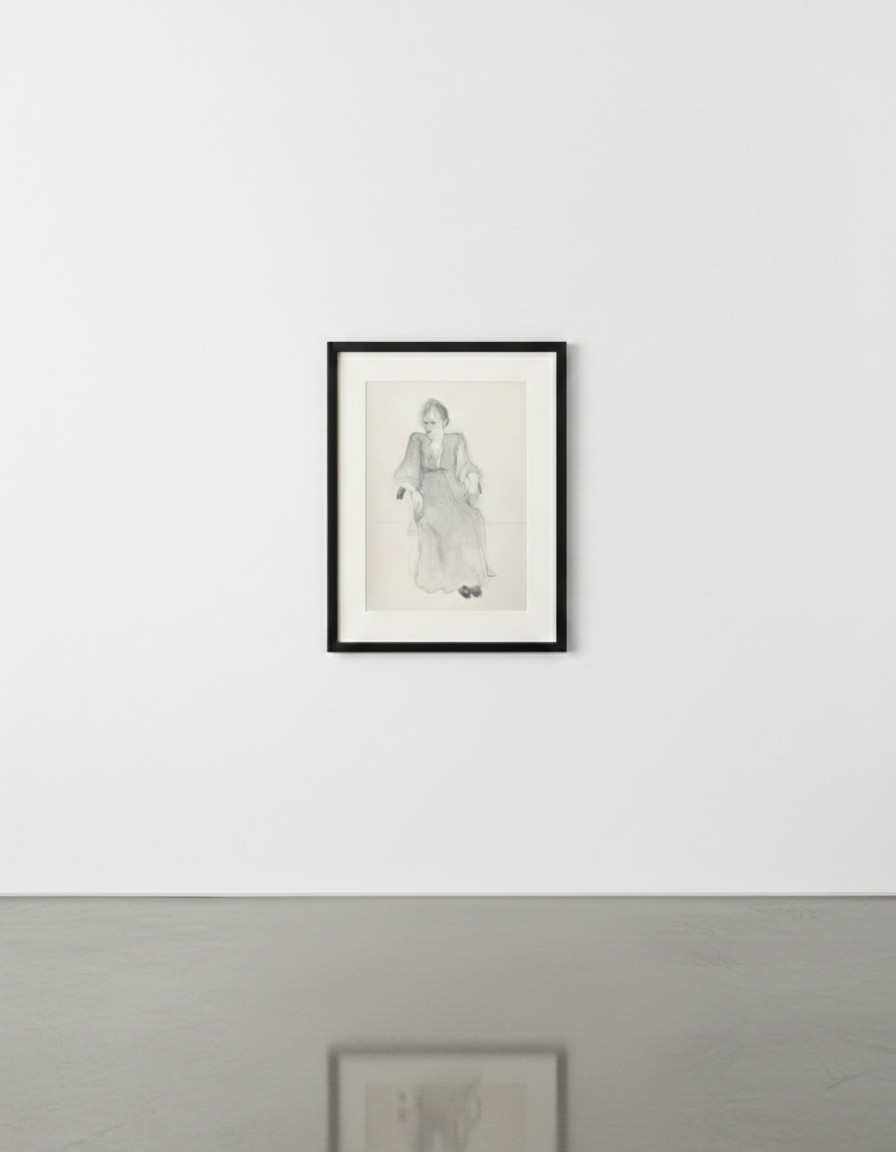
No discussion of Hockney's portraiture can omit Celia Birtwell and Gregory Evans, the two figures who appear most frequently across his oeuvre. Celia, a textile designer of extraordinary talent, became Hockney's closest female friend following their introduction in the late 1960s. Her features—sharp, intelligent, framed by dark hair—recur throughout his work in paintings, drawings, and prints. The "Celia" prints, depicting her in various moods and settings, remain among the most desirable works in his graphic oeuvre, combining technical mastery with genuine emotional intimacy.
Gregory Evans, Hockney's former partner who became his studio manager and remained a close companion until the artist's death, appears equally frequently. The portraits of Gregory trace both an artistic relationship and a personal one, documenting the evolution of two men's lives over decades. For collectors interested in Hockney portraits, works depicting these central figures offer direct connection to the artist's inner circle.
In the early 1980s, Hockney's dissatisfaction with the limitations of photography—its single viewpoint, its frozen moment—led him to develop what he called "joiners." These photographic collages assembled multiple Polaroid or 35mm photographs into composite images that mimicked the eye's actual movement through space and time. Rather than accepting the camera's monocular perspective, Hockney created images that unfolded across the picture plane, requiring the viewer to travel through them as one travels through physical space.
The Moving Focus series represents this investigation at its most sophisticated. These works, which range from intimate portrait studies to expansive landscape panoramas, influenced a generation of artists working at the intersection of photography and painting. They also demonstrated Hockney's restless intelligence, his refusal to accept technical limitations as given rather than as problems to be solved.
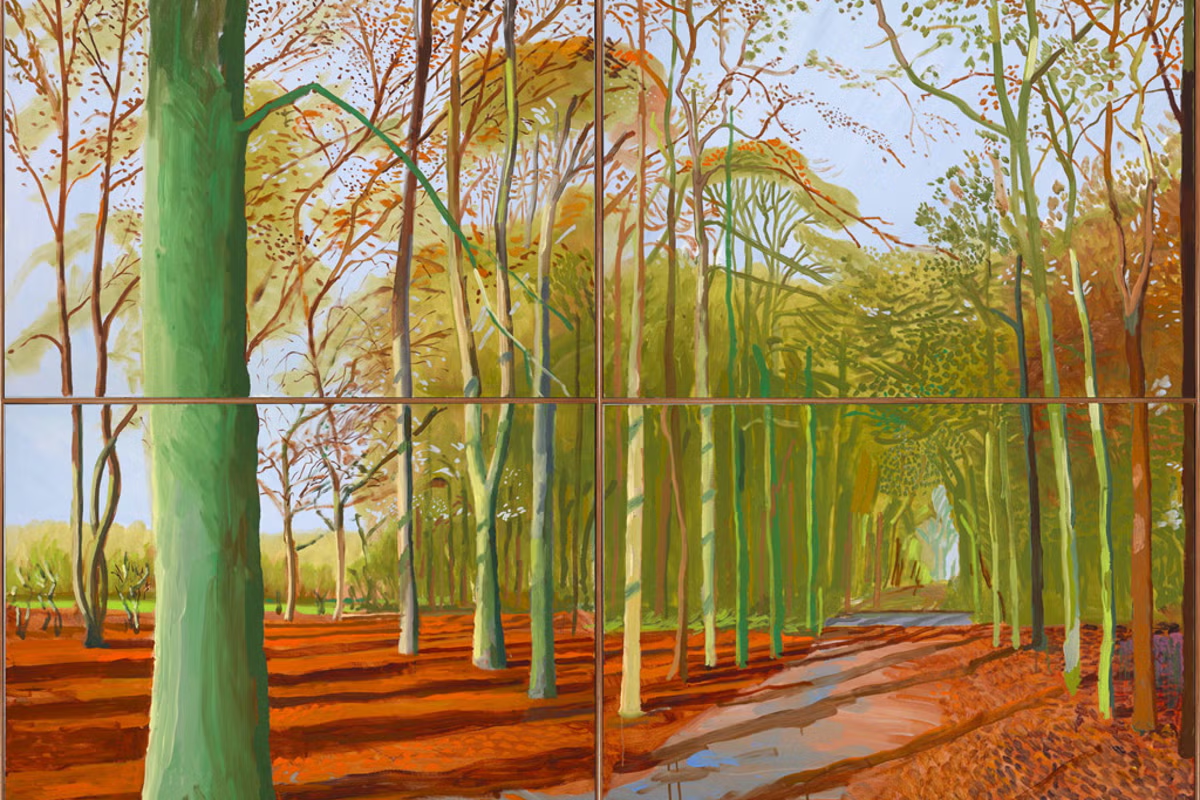
David Hockney, Moving Focus composition, Multiple-image work. Available at Guy Hepner, New York.
After decades in California, Hockney began spending extended periods in his native Yorkshire in the 2000s, drawn back by the death of a close friend and a desire to paint the English landscape. The result was an extraordinary body of work depicting the fields, forests, and roads around Bridlington on the Yorkshire coast. These paintings, executed on multiple canvases that joined to form panoramic views, captured the changing seasons with an intensity that surprised even longtime admirers.
"The Arrival of Spring in Woldgate, East Yorkshire" (2011) marked the culmination of this period—a series depicting the same rural road as winter gave way to spring, the bare branches gradually filling with green. The prints derived from this series have become among the most sought-after works in Hockney's graphic oeuvre, their vibrant colors and emotional immediacy connecting with collectors worldwide. At Guy Hepner, these Yorkshire landscapes regularly appear in our inventory, priced from approximately $35,000 for smaller works to well over $100,000 for larger, more significant pieces.
The Yorkshire period also saw Hockney embrace new technologies. He began drawing on his iPhone, then on the newly released iPad, producing works of surprising fluidity and color. Far from the gimmick it might have seemed, the iPad became a serious tool in Hockney's practice, allowing him to draw in bed, in the car, at any moment inspiration struck. The resulting Ipad Drawings—printed as high-resolution inkjet prints on paper—opened a new chapter in his printmaking.
Hockney's iPad drawings, beginning around 2010 and continuing until his death, represent British Pop Art New York collectors have embraced with particular enthusiasm. These works combine the immediacy of drawing with the luminosity of a backlit screen, creating images that glow with an inner light impossible to achieve through traditional means. Subjects range from still lifes of flowers to Yorkshire landscapes to interiors of his studios in Los Angeles and Normandy.
The technology suited Hockney's working methods perfectly. He could make dozens of drawings in a single session, experimenting with color and composition without the constraints of physical materials. The best of these works possess all the vitality of his oils while offering something genuinely new—a sense of light emanating from within the image rather than falling upon it.
For collectors, iPad drawings represent an accessible entry into Hockney's late work, with prices typically ranging from $25,000 to $75,000 depending on subject, size, and edition. At Guy Hepner, we maintain a strong selection of these works, recognizing their importance within the artist's oeuvre and their appeal to both established collectors and those building their first significant holdings.
Hockney's final major body of work emerged from Normandy, where he had purchased a house and studio in 2019. Confined there during the pandemic, he produced an astonishing sequence of paintings documenting the arrival of spring in the French countryside—works that recalled both the Yorkshire landscapes and his earliest student exercises in observation. The "Normandy" paintings, completed in his mid-eighties, demonstrated that his creative powers remained undiminished, his eye as keen as ever for the play of light across landscape.
These late works have attracted significant collector interest, particularly as the art world assesses Hockney's complete legacy. The prints and editions derived from the Normandy period represent some of the final statements by one of the twentieth century's defining artists.
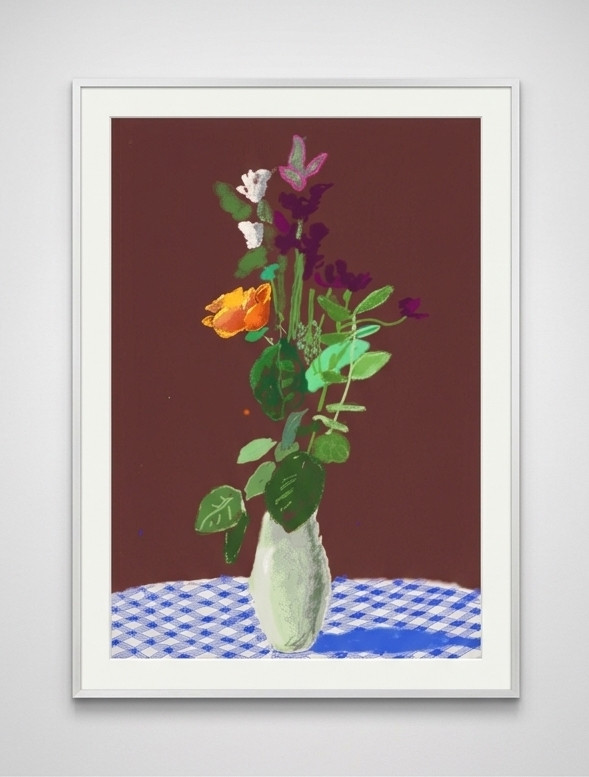
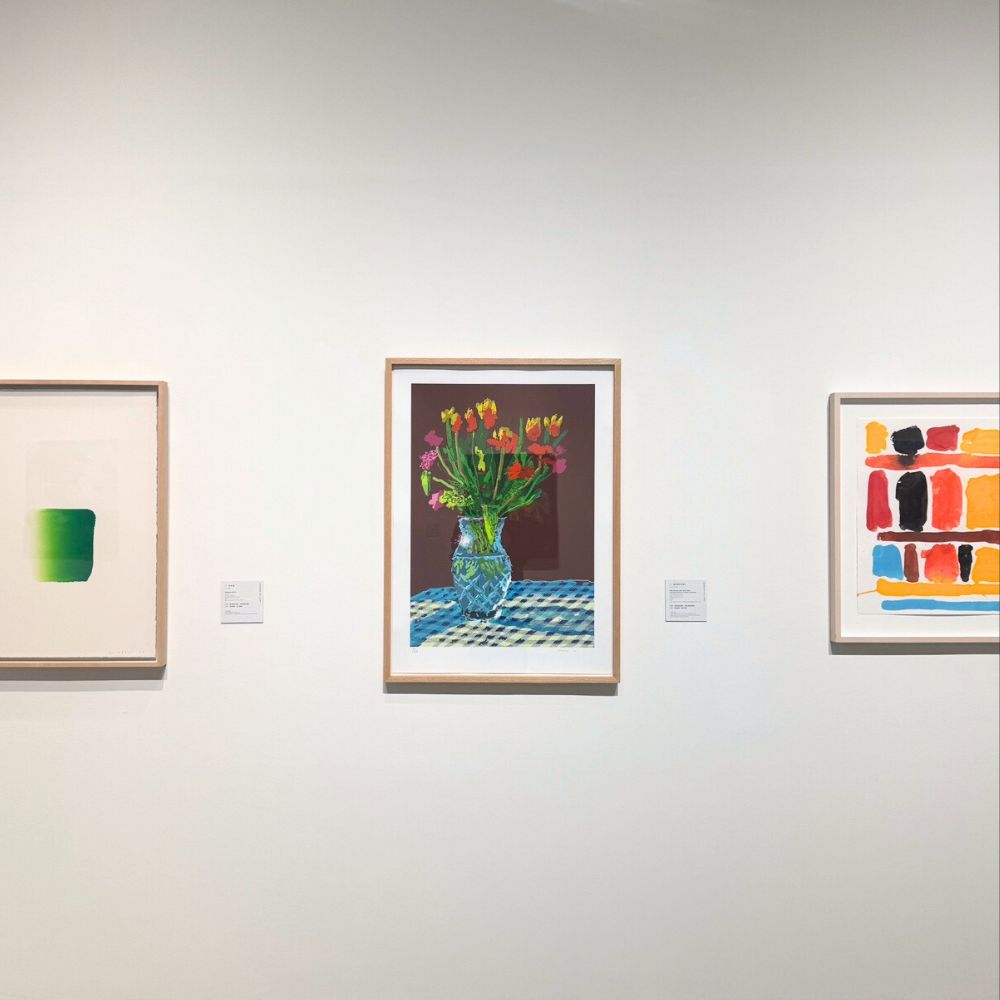
David Hockney displayed at Guy Hepner Gallery, New York.
The market for Hockney's work spans an extraordinary range, from prints accessible to emerging collectors to paintings that compete with Old Masters for top auction billing. For those looking to buy David Hockney New York offers the deepest concentration of quality works, with Guy Hepner positioned as the city's premier David Hockney art dealer specializing in prints and editions.
The current market breaks down into several broad categories:
Recent sales at Guy Hepner have included works across all these tiers, from iPad drawings placed with first-time buyers to significant pool-related prints acquired by established collections in Europe and Asia. Our global collector base—spanning the United States, Europe, and Asia—reflects Hockney's universal appeal.
Several factors determine value and desirability in the Hockney print market:
No work captures Hockney's California vision more completely than "A Bigger Splash" (1967), the painting now in the Tate collection that depicts a splash in a swimming pool with the diver invisible, already submerged. The image—with its flat, geometric architecture, its single frozen moment of water exploding against a bright blue sky—has become one of the most reproduced artworks of the twentieth century.
While the original painting cannot be acquired, print works related to the pool series offer collectors direct connection to this defining imagery. At Guy Hepner, A Bigger Splash and related pool imagery regularly features in our inventory, connecting collectors with the subject matter that established Hockney's international reputation.
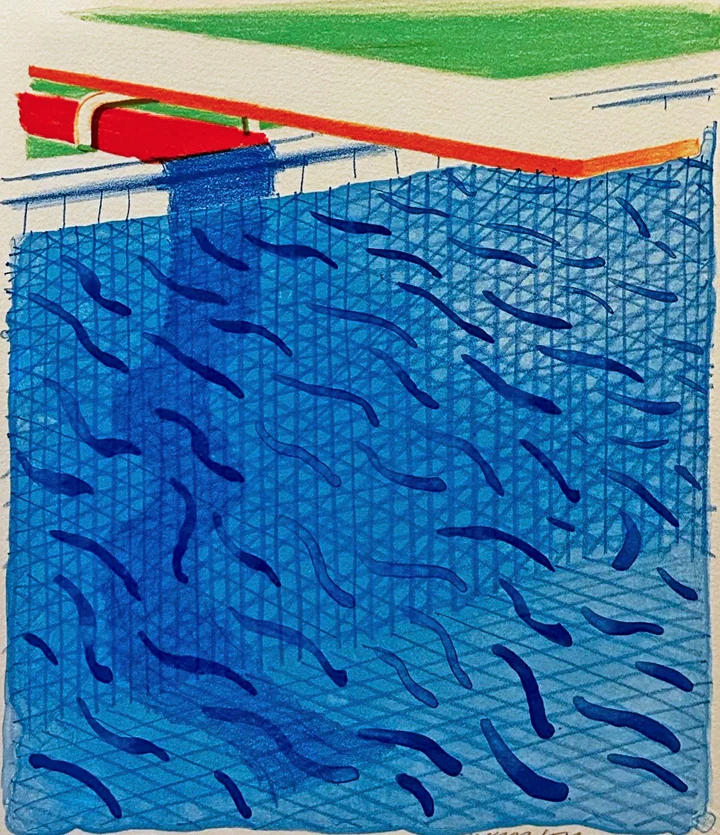
David Hockney, Architectural composition with pool, Print. Available at Guy Hepner, New York.
Hockney's reputation evolved throughout his career. In the 1960s and 70s, he was celebrated as a leading figure of British Pop Art, his work connecting with broader cultural movements toward accessibility and pleasure. The critical establishment, however, sometimes viewed his popularity with suspicion—as if commercial success necessarily implied artistic compromise.
By the 1990s and 2000s, as postmodern ironies gave way to renewed interest in painting and representation, Hockney's stature only grew. His theoretical investigations—particularly his book "Secret Knowledge" (2001), which argued that Old Masters had used optical devices in their work—demonstrated intellectual seriousness alongside visual pleasure. Major retrospectives at the Royal Academy (2012) and the Metropolitan Museum of Art (2017) confirmed his place among the most significant artists of his generation.
Since his death, assessments have only strengthened. Hockney is now understood as an artist who worked across media with equal facility, who pursued technical innovation without sacrificing emotional connection, and who maintained creative vitality into his ninth decade. His influence on contemporary painting, photography, and digital art continues to unfold.
As a blue-chip art dealer NYC has trusted for over fifteen years, Guy Hepner brings particular expertise to the Hockney market. Our Chelsea art gallery at 177 Tenth Avenue maintains one of the most significant Hockney inventories available, with works spanning his entire career—from early etchings to final iPad drawings. Our relationships with major collectors worldwide ensure access to exceptional works as they become available, while our expertise in authentication, condition assessment, and provenance research provides collectors with complete confidence in their acquisitions.
For those seeking to buy David Hockney New York presents no more knowledgeable or better-connected option than Guy Hepner. Whether you're acquiring your first significant work or adding to an established collection, we offer the expertise, inventory, and discretion that serious collecting demands.
We invite collectors to visit our Chelsea gallery, explore our current Hockney holdings, or contact our specialists to discuss specific collecting goals. The market for Hockney's work has never been stronger, and the opportunity to build meaningful holdings has never been clearer. At Guy Hepner, we stand ready to help you navigate this extraordinary artist's legacy—one work at a time.
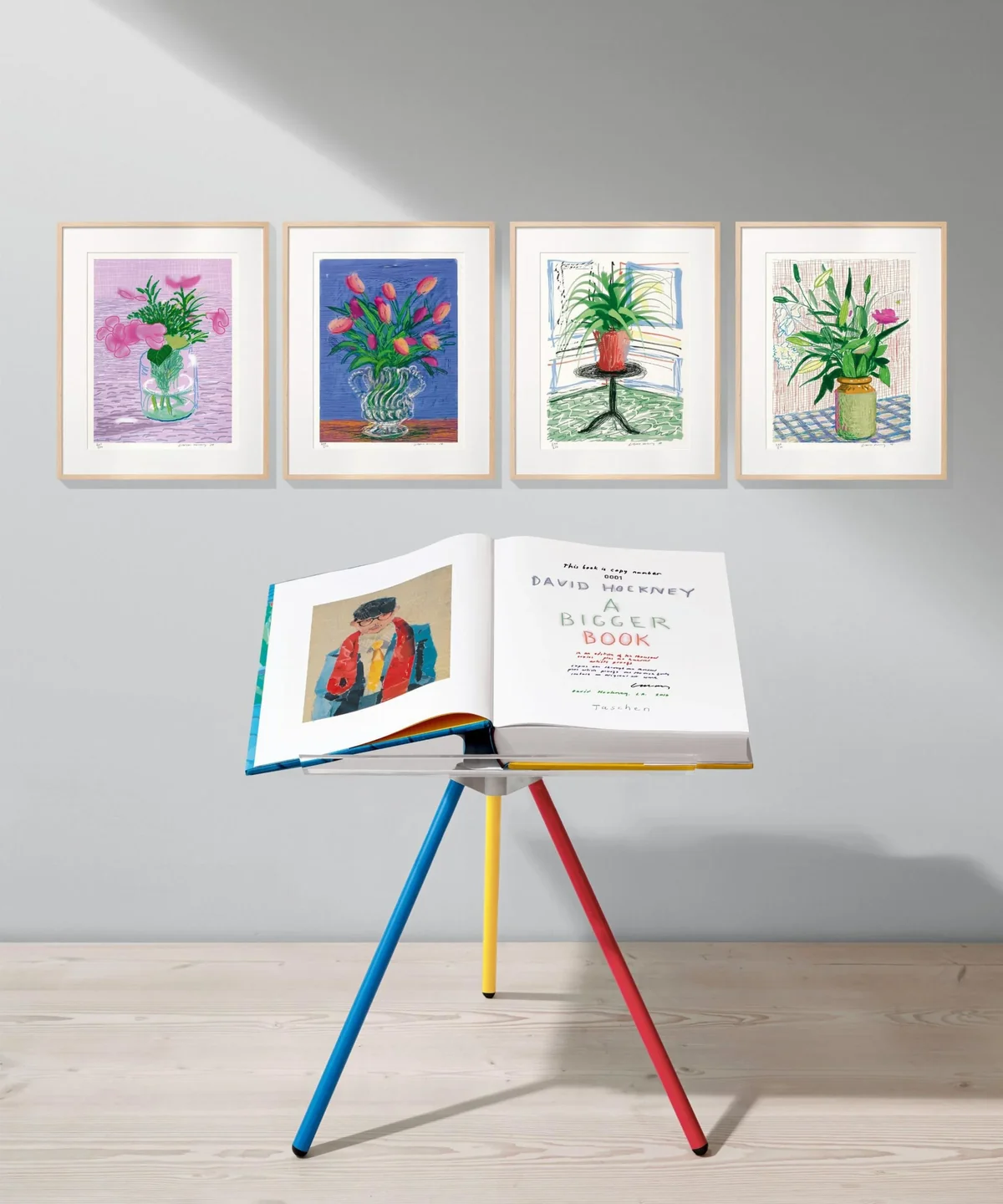
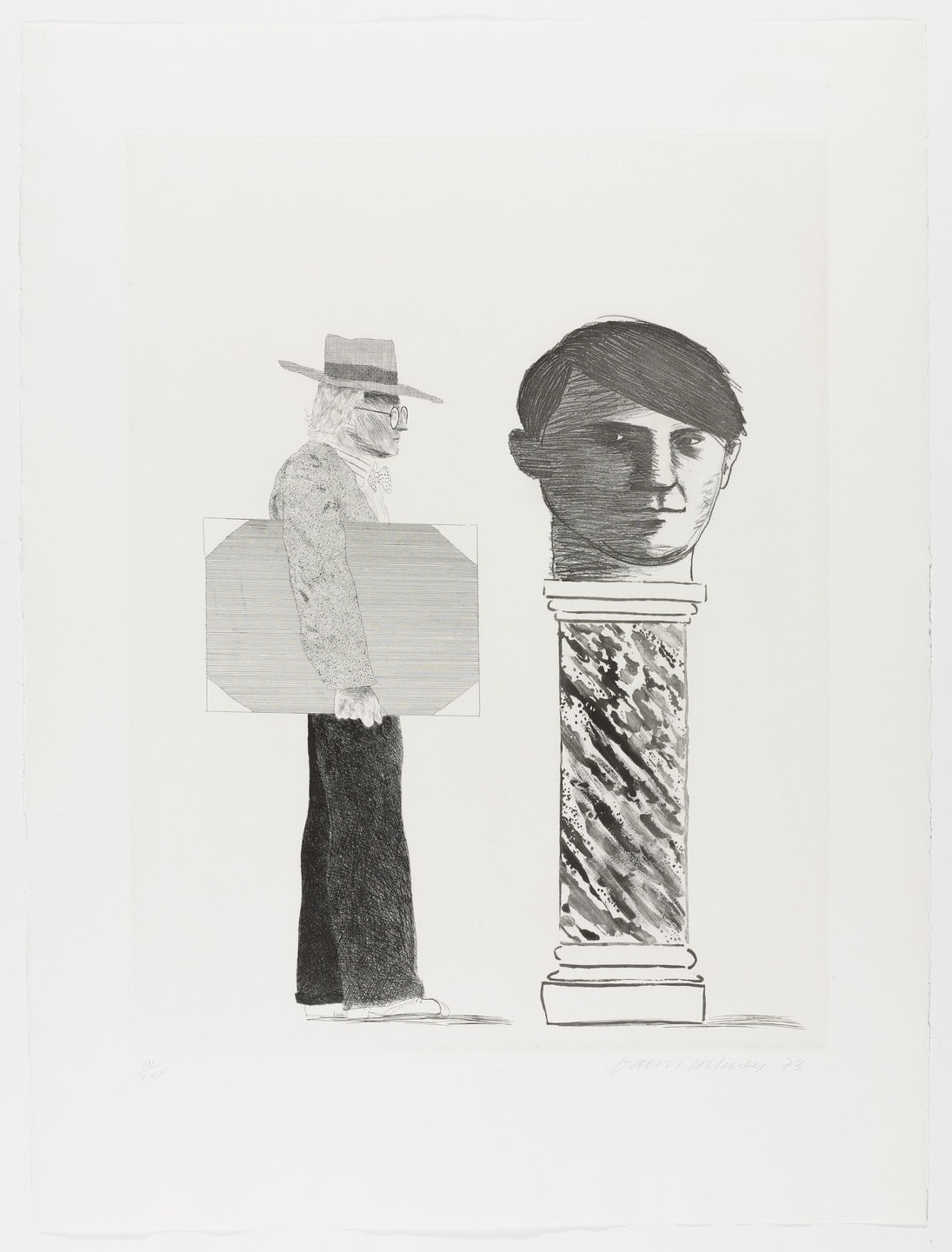
Explore David Hockney prints for sale at Guy Hepner: 20 Flowers, A Bigger Book & My Window, Celia, Computer Drawings, Homage to Picasso.
Related Series