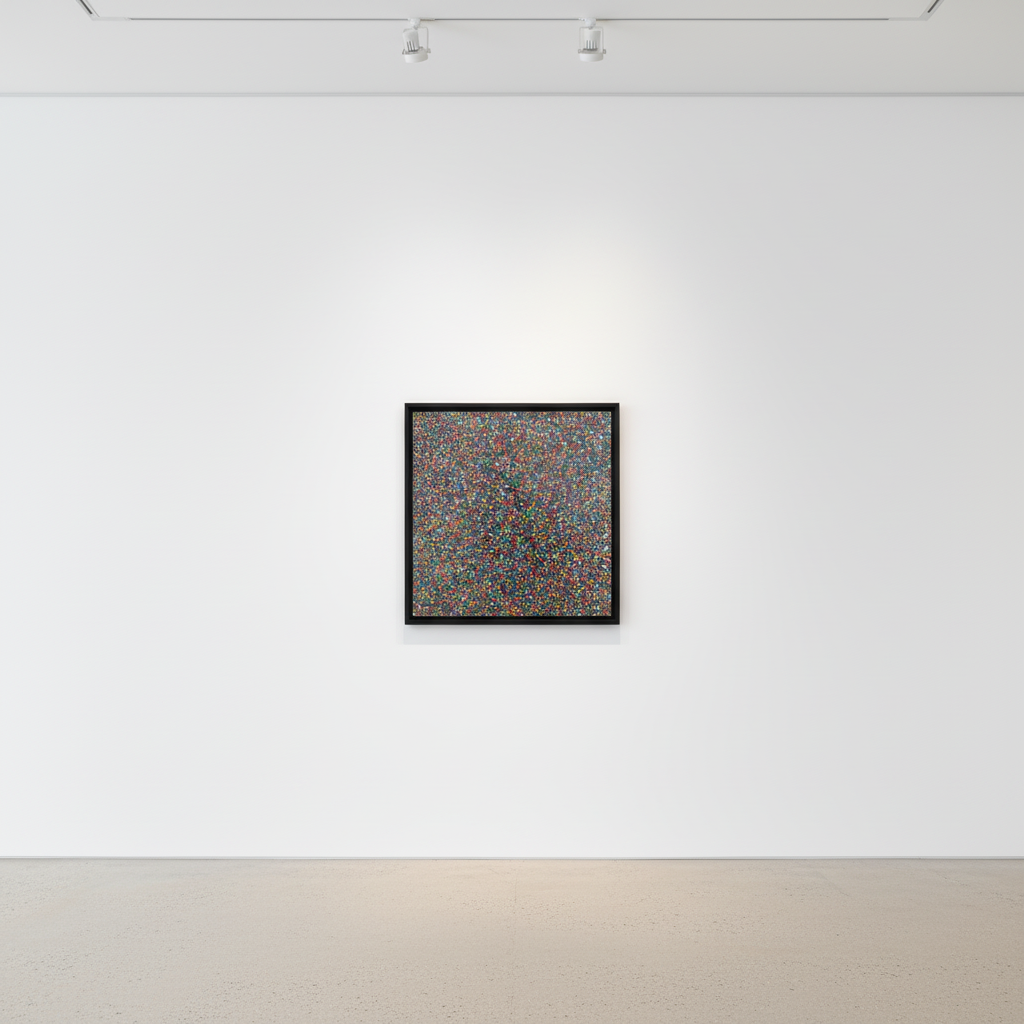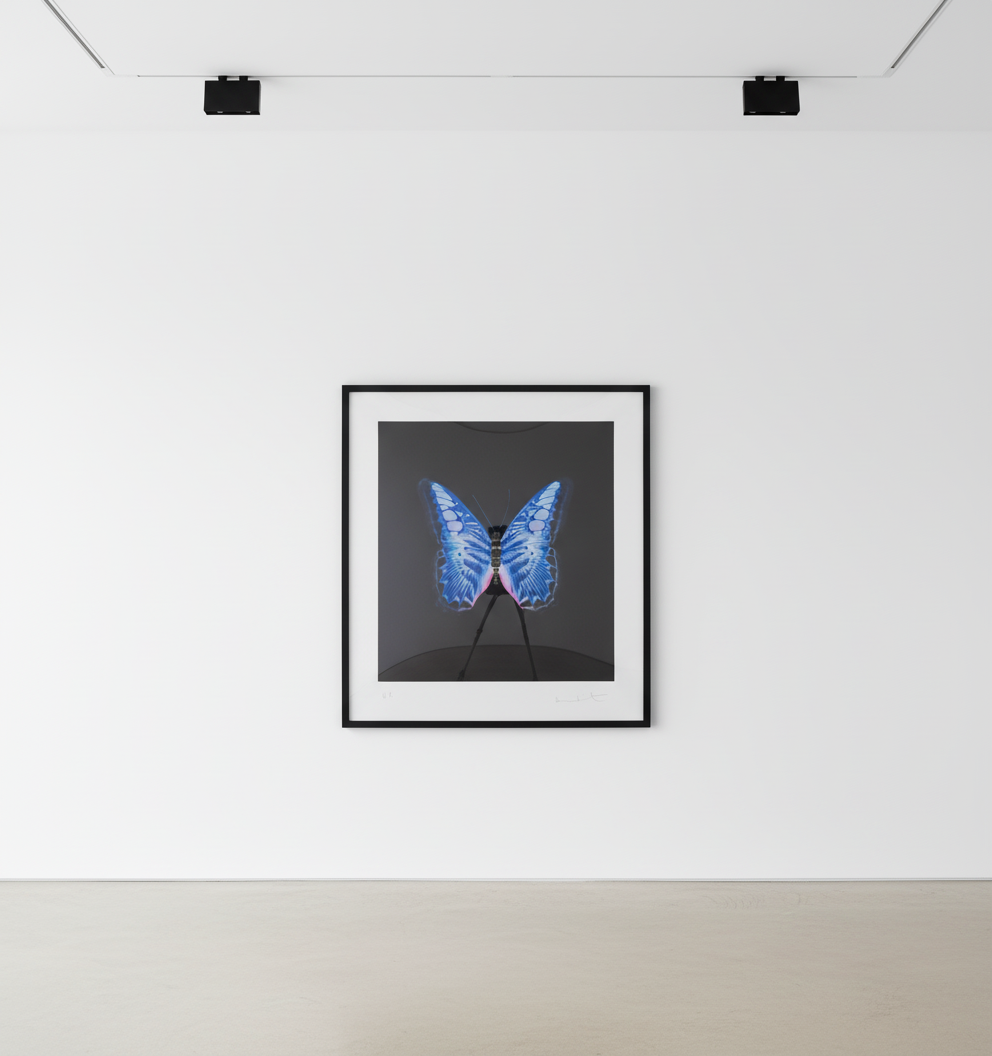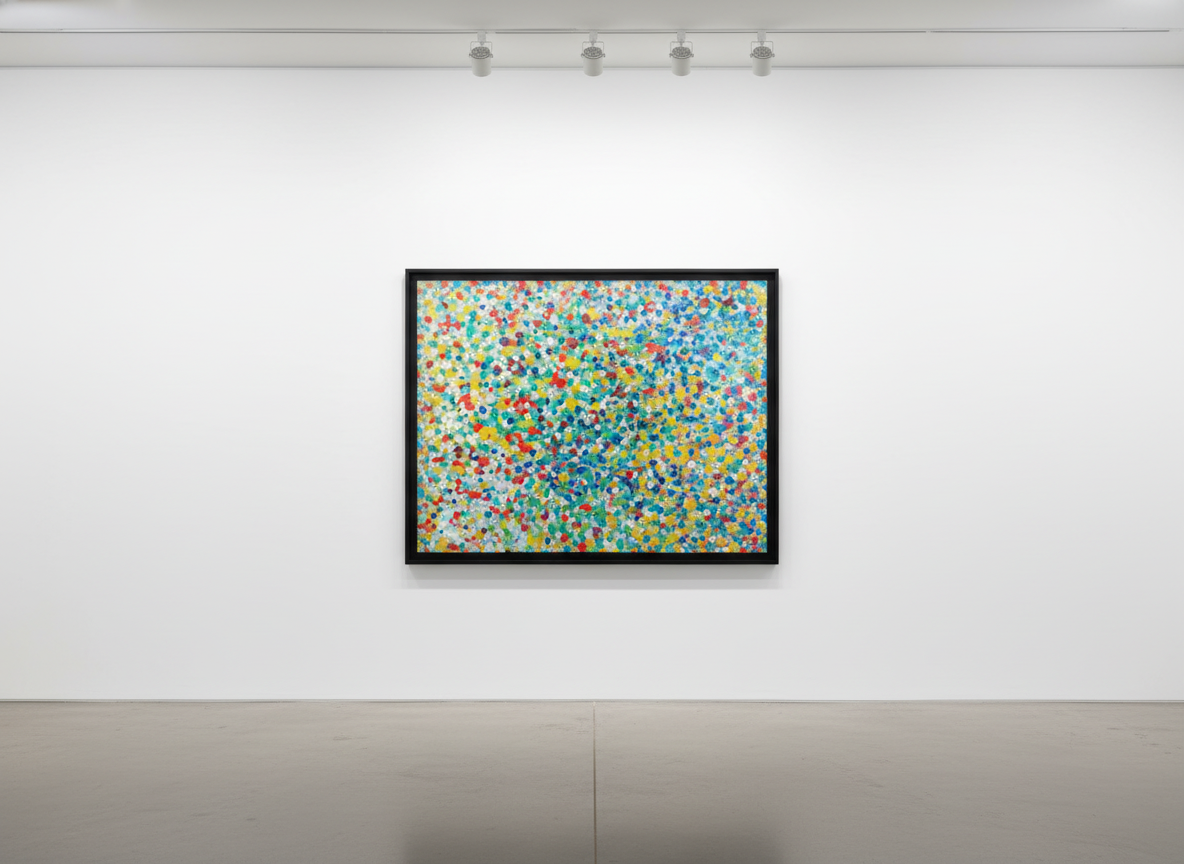
H4 - Veil Spots

August 3, 2026
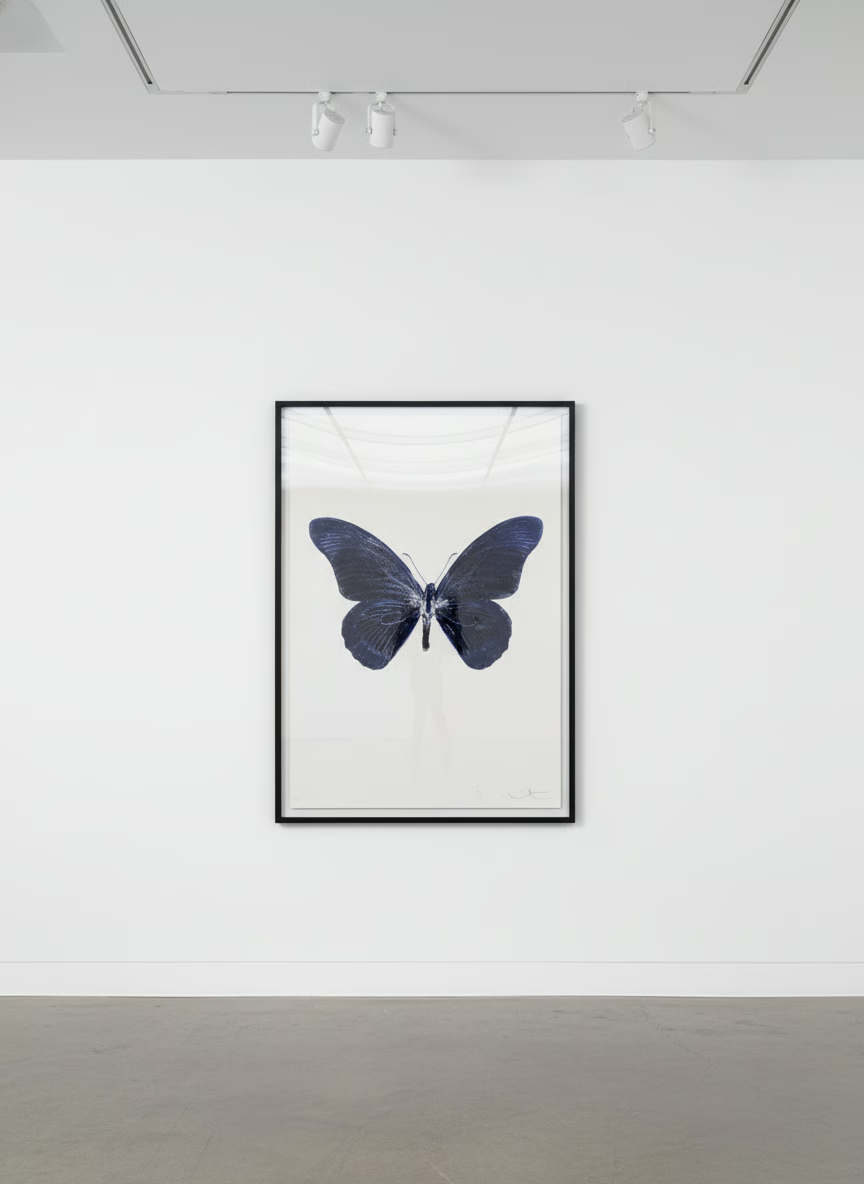
For collectors seeking to acquire work by one of the most significant contemporary artists of our time, Damien Hirst butterfly prints for sale represent an exceptional entry point into a body of work that spans three decades of sustained inquiry into mortality, beauty, and transformation. These editions distill the conceptual weight of Hirst's monumental butterfly paintings into formats accessible to serious collectors while retaining the visual impact and philosophical resonance that made the originals so compelling. Whether you are building a focused collection around a single series or seeking a statement work that embodies the artist's central preoccupations, understanding the landscape of Hirst's butterfly editions is essential to making an informed acquisition.
The butterfly has served as Damien Hirst's most enduring symbol since he first emerged as the leading figure of the Young British Artists in the early 1990s. Unlike his formaldehyde tanks or spin paintings, the butterfly motif has proven infinitely adaptable, appearing across paintings, installations, sculptures, and an extensive print program that continues to evolve. For collectors, this means navigating a complex market with significant variation in quality, scarcity, and investment potential. This guide provides the knowledge necessary to evaluate, authenticate, and acquire the finest examples of Hirst's butterfly editions with confidence.
Damien Hirst's fascination with butterflies predates his international fame and represents one of the most consistent threads running through his entire artistic output. As a young artist in Leeds, Hirst kept butterflies in his bedroom, constructing elaborate mesh enclosures to breed specimens and study their brief, brilliant lifecycles. This early obsession crystallized into artistic practice with his breakthrough 1991 installation "In & Out of Love," which featured live butterflies emerging from pupae, living briefly among visitors, and dying on monochrome canvases. The work established the conceptual framework that would inform all his subsequent butterfly art: beauty inseparable from death, transformation as both beginning and ending, the fragility of existence rendered visible.
The butterfly's symbolic weight in Hirst's practice cannot be overstated. Unlike the shark preserved in formaldehyde or the diamond-encrusted skull, the butterfly operates through seduction rather than confrontation. Its iridescent wings draw viewers close before the darker implications register—thousands of these creatures died to create each work, their brief lives sacrificed to produce objects of contemplation. This tension between aesthetic pleasure and ethical unease generates the conceptual charge that distinguishes Hirst's butterfly works from mere decoration. Collectors who understand this dynamic recognize that they are acquiring not simply beautiful objects but provocations that continue to unfold in meaning over time.
The evolution from Hirst's monumental butterfly paintings to his extensive print editions represents a democratization of this symbolism without dilution of its power. His largest butterfly painting, "I Am Become Death, Shatterer of Worlds" from 2006, measures over seventeen feet wide and incorporates thousands of butterfly wings arranged in radiating patterns that reference everything from Gothic rose windows to atomic explosions. The print editions translate this visual language into more intimate formats while preserving the essential interplay of beauty and mortality. For collectors unable to house or afford paintings that sell for millions at auction, the prints offer genuine engagement with Hirst's core artistic concerns.
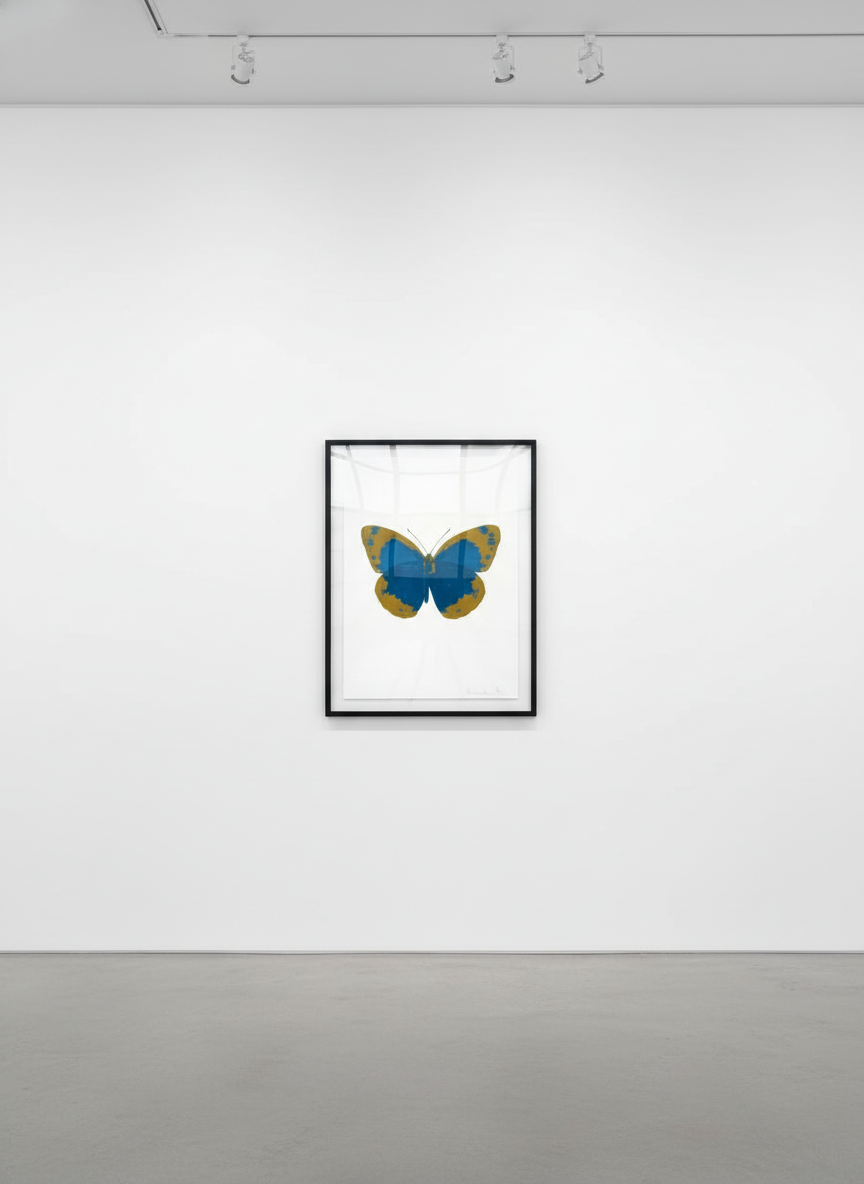
The Souls series represents the most significant body of Damien Hirst butterfly prints available to collectors and warrants careful study before any acquisition. Released in multiple iterations beginning in 2010, these works present single butterfly specimens rendered through sophisticated printing techniques that capture the iridescent qualities of actual wings. The series has been issued in four primary releases—The Souls I, II, III, and IV—each comprising multiple color variations that explore the full chromatic potential of the butterfly form.
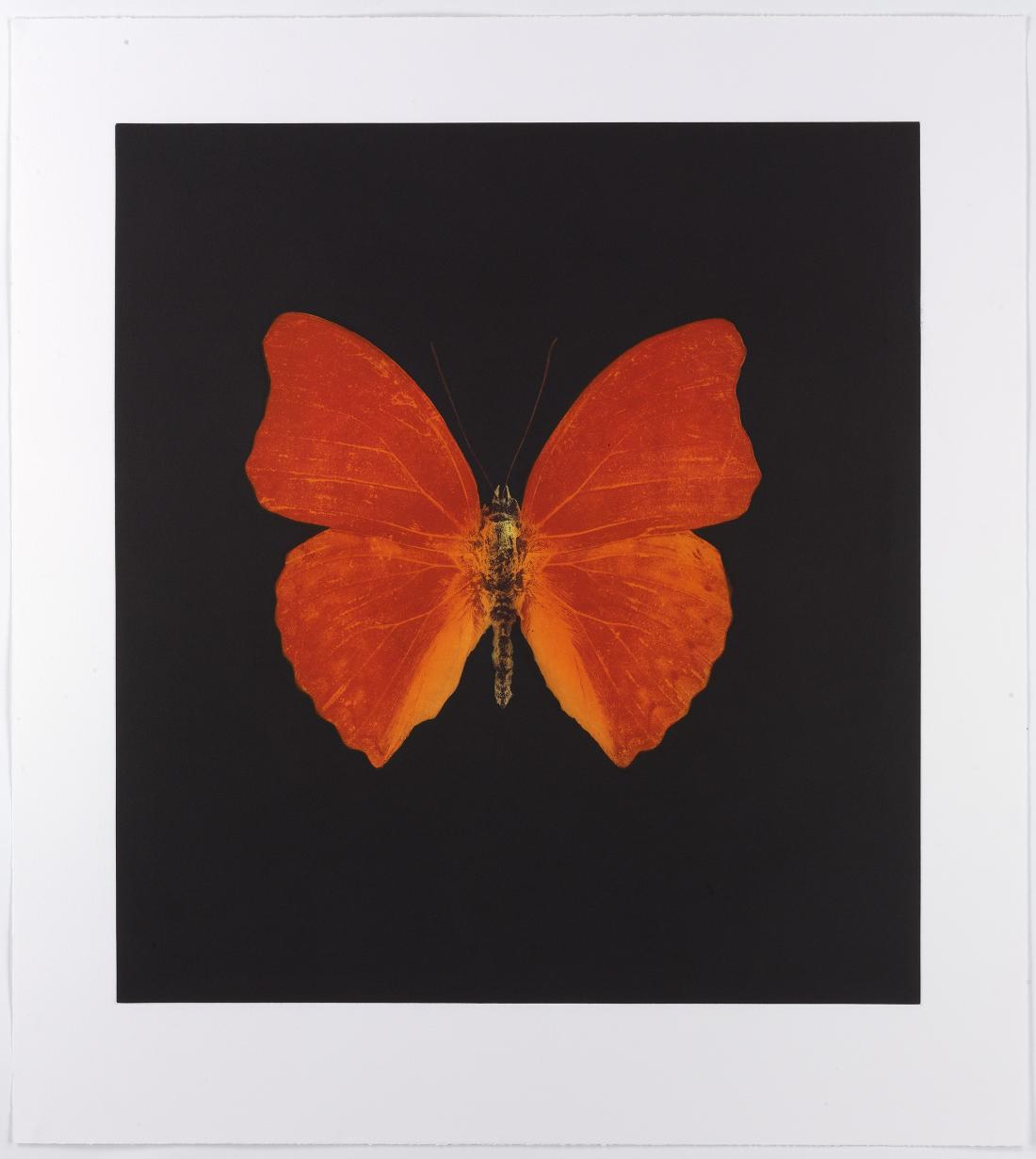
Technically, The Souls prints employ a combination of etching and aquatint with foil block printing, creating surfaces that shift and shimmer as viewing angles change. This technical achievement matters significantly for collectors because it distinguishes these editions from simpler reproductive prints—the foil elements introduce an element of genuine optical complexity that rewards sustained attention. When evaluating Damien Hirst butterfly foil prints, collectors should examine how the metallic elements interact with ambient light, as the finest impressions demonstrate consistent registration and full coverage across all foiled areas.
The Souls I through IV editions each explore distinct palettes and butterfly species, creating opportunities for focused collecting within the broader series. The Souls I tends toward more naturalistic colorations, while subsequent releases introduced increasingly bold combinations that depart from observed reality. This progression mirrors Hirst's broader artistic evolution toward heightened chromatic intensity, and collectors should consider whether they prefer the relative restraint of early releases or the more assertive color statements of later editions. Both approaches have found support in the secondary market, though complete sets consistently command premiums over individual works.
While The Souls series presents single butterfly specimens, The Souls on Jacob's Ladder takes a fundamentally different compositional approach that many collectors consider Hirst's most ambitious butterfly print achievement. These works arrange multiple butterflies in vertical configurations that reference the biblical ladder connecting earth and heaven, creating visual rhythms that suggest ascent, transformation, and spiritual aspiration. The compositional complexity distinguishes these editions from the meditative simplicity of the single-butterfly Souls prints.
Damien Hirst Jacob's Ladder butterfly editions typically feature butterflies of varying sizes arranged along a central axis, their wings overlapping or interacting to create layered effects of depth and movement. The larger format of many Jacob's Ladder prints allows these compositional relationships to unfold with greater impact than would be possible at smaller scales. Collectors should note that the Jacob's Ladder editions often command higher prices than comparable single-butterfly works, reflecting both their increased complexity and their stronger presence in collection contexts.
The religious resonance of the Jacob's Ladder title connects these prints to Hirst's broader engagement with spiritual themes, which runs throughout his career from the early medicine cabinet works referencing pharmaceutical faith to his more recent ventures into religious painting. For collectors interested in this dimension of Hirst's practice, the Jacob's Ladder butterflies offer entry into a conceptual framework that extends well beyond aesthetic appreciation. The butterflies become souls in transit, their ascent along the compositional ladder suggesting transformation from earthly existence to something beyond—a reading that enriches the works without exhausting their interpretive possibilities.
Beyond The Souls and Jacob's Ladder editions, Hirst has produced numerous butterfly-themed print series that collectors should understand when surveying the market. The Butterfly Heart works arrange specimens in heart-shaped compositions that emphasize the romantic and vulnerable aspects of the butterfly symbol, offering a more accessible emotional register than the contemplative Souls prints. Damien Hirst Butterfly Heart editions have proven particularly popular with collectors seeking works that communicate immediately while retaining conceptual depth.
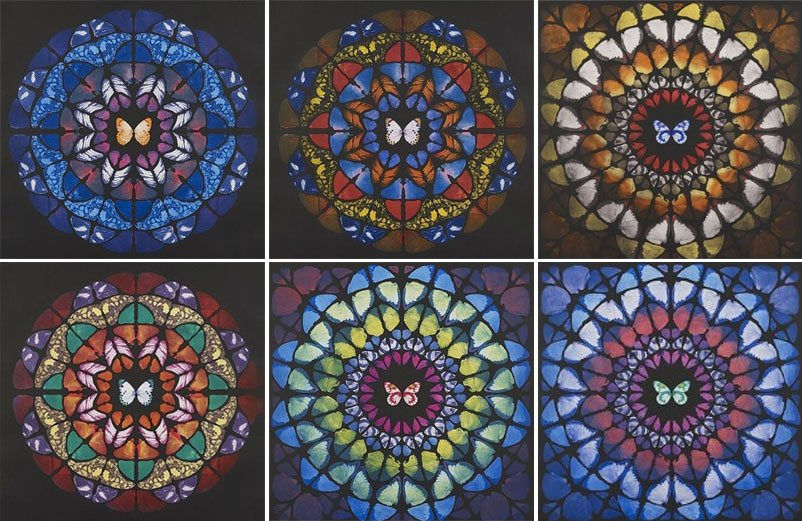
The Butterfly Rainbow series extends this compositional diversity by arranging specimens across the full color spectrum, creating works that function as both natural history surveys and celebrations of chromatic possibility. Damien Hirst Butterfly Rainbow prints demonstrate the artist's systematic approach to color organization, with each work presenting a carefully calibrated progression through hues. These editions appeal to collectors who appreciate Hirst's conceptual rigor alongside his visual impact, as the rainbow structure imposes an ordering principle that distinguishes these works from more intuitive arrangements.
Hirst has also produced circular butterfly mandala compositions that reference both Eastern spiritual traditions and Western stained glass traditions. These works arrange butterfly wings in radial symmetry, creating kaleidoscopic effects that shift between organic form and abstract pattern. The mandala format connects to Hirst's interest in systems of belief and the human need for ordering structures, while the butterfly material maintains the mortality theme central to his practice. Collectors encountering these works should note that the circular format presents particular framing challenges, and original frames in good condition significantly enhance value.
Successful collecting requires the ability to distinguish exceptional impressions from merely acceptable ones, and Damien Hirst butterfly art presents specific evaluation criteria that every serious buyer should master. The technical sophistication of Hirst's printing processes means that condition and execution quality vary more than many collectors initially assume, and these variations translate directly into value differentials that compound over time.
When examining Damien Hirst butterfly editions, collectors should assess the following factors systematically:
Beyond these technical factors, collectors should consider the visual impact of specific color combinations within each series. Not all colorways in The Souls editions have achieved equal market success, and rarer combinations or particularly striking pairings often outperform more common variants. Research secondary market results for specific colorways before acquiring, and note which combinations have demonstrated consistent demand over time.
The question of where to buy authentic Damien Hirst butterfly prints cannot be separated from understanding how these works are authenticated and documented. Unlike some artists who work with single publishers throughout their careers, Hirst has produced editions through various channels that have evolved over time, creating a somewhat complex authentication landscape that collectors must navigate carefully.
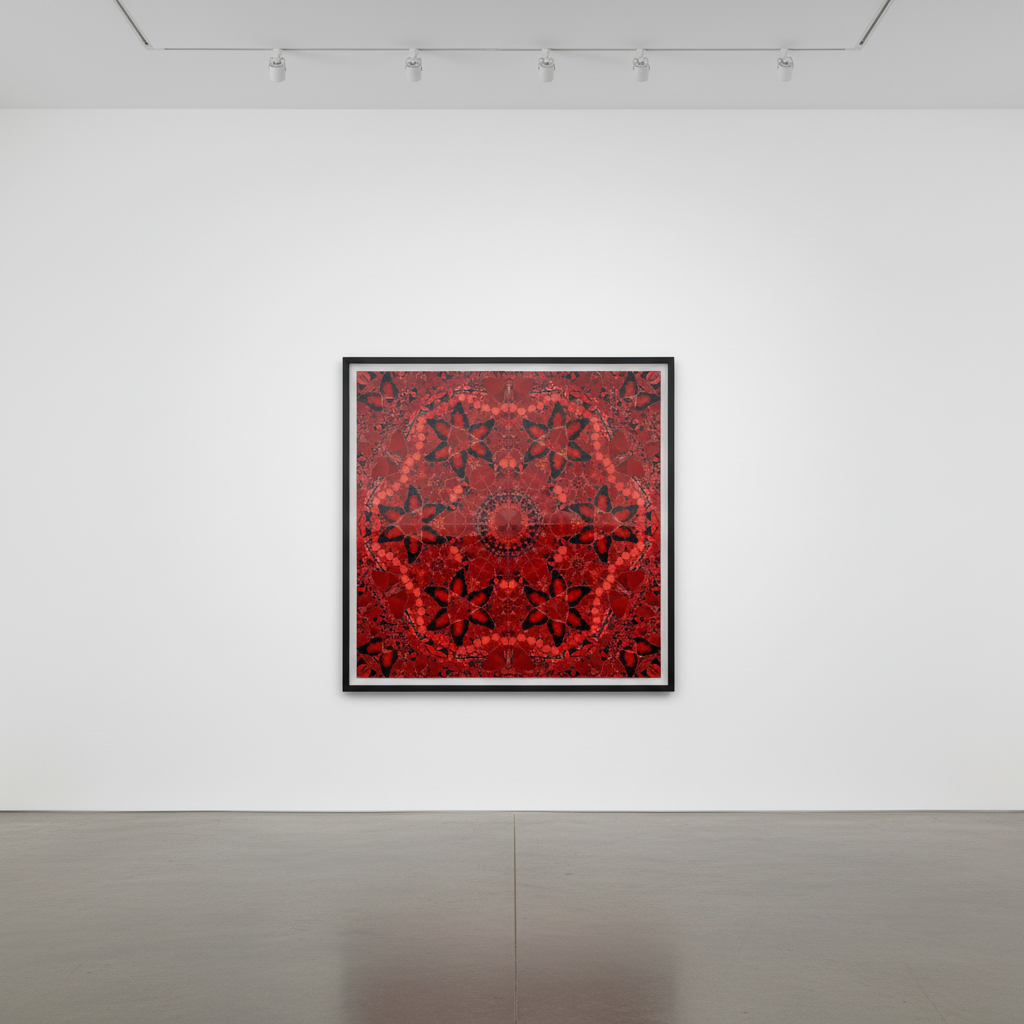
Damien Hirst, The Empresses (H10-1 Wu Zetian), Print. Available at Guy Hepner, New York.
Earlier butterfly editions typically came with certificates of authenticity from their original publishers, and these documents remain important for establishing provenance. However, HENI editions—which constitute a significant portion of Hirst's recent print output—follow a different model. HENI prints do not include traditional certificates of authenticity; instead, authentication relies on the hand-signed edition number, the HENI label affixed to the reverse of the work, and the provenance chain from original purchase. Collectors should understand this distinction when evaluating works from different periods of Hirst's print production.
Provenance documentation matters particularly for higher-value works where the investment stakes justify additional verification. The ideal provenance chain runs from original gallery purchase through any subsequent owners, with documentation at each stage. For works acquired at auction, the auction house lot receipt provides important authentication support. When evaluating Damien Hirst Souls prints or other significant butterfly editions, request whatever documentation exists and be wary of sellers unable or unwilling to provide provenance information.
Science Ltd, Hirst's studio organization, does not operate a formal authentication service comparable to those maintained by some artist estates. This places greater responsibility on collectors to conduct due diligence before acquiring. Working with established galleries that specialize in Hirst's work and maintain relationships with the primary market provides the most reliable path to authentic works with sound provenance.
Understanding how Damien Hirst butterfly editions are structured helps collectors make informed decisions about scarcity, value, and long-term market potential. Hirst's print editions vary considerably in their size, structure, and current availability, and these factors should inform acquisition strategy.
The Souls series editions typically number in the range of 15 to 75 impressions per colorway, with artist's proofs and other variants adding to total circulation. While these numbers may seem substantial compared to extremely limited editions by some artists, they remain modest for a figure of Hirst's international profile, and absorption into permanent collections steadily reduces market availability. Collectors should note that complete sets of The Souls in any given series (I through IV) have become increasingly difficult to assemble as individual works disperse into collections.
Damien Hirst Souls I II III IV prices reflect both the intrinsic qualities of individual works and their role within the larger series structure. Collectors pursuing complete sets should expect to pay premiums over the sum of individual work prices, as the market recognizes the additional value of unified sets. This premium has increased over time as complete sets become rarer, suggesting that collectors with long-term horizons should consider whether set acquisition aligns with their goals.
More recent HENI editions have generally featured larger run sizes, which affects their investment profile differently than earlier, more limited releases. These editions provide accessible entry points into Hirst's work but may face different secondary market dynamics than scarcer earlier prints. Collectors should evaluate their priorities—immediate visual impact versus long-term scarcity value—when choosing between vintage and contemporary editions.
The question of how much is a Damien Hirst butterfly print worth requires contextual understanding rather than simple answers, as pricing varies dramatically across series, colorways, condition grades, and market conditions. However, several benchmarks help collectors orient themselves within the current market.
Individual Souls series prints in standard editions typically trade in ranges from approximately £3,000 to £15,000 depending on colorway desirability, condition, and market timing. Particularly sought-after color combinations can exceed these ranges, while less popular variants may trade below. Collectors should research recent comparable sales rather than relying on asking prices, which may not reflect actual market clearing levels.
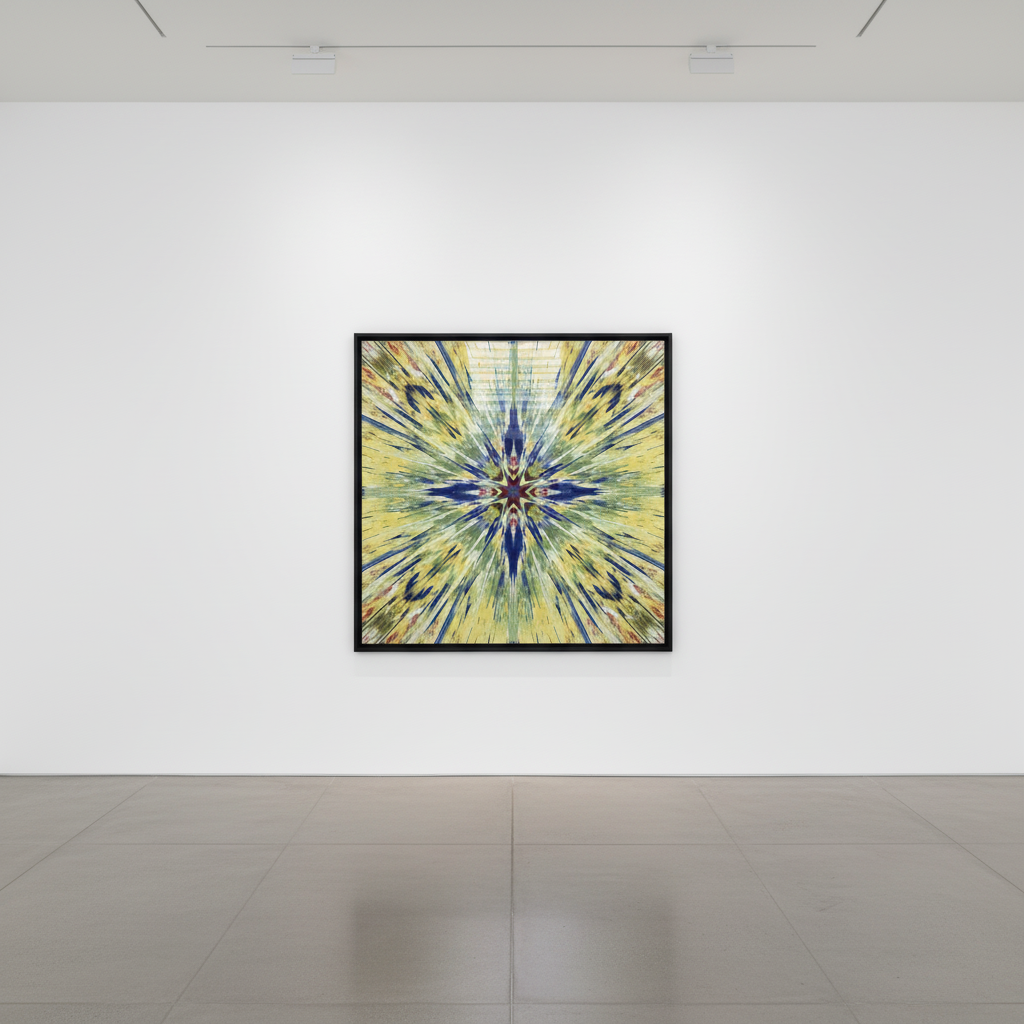
Damien Hirst, Enter the Infinite (Ecstasy), Print. Available at Guy Hepner, New York.
Complete sets of The Souls series have reached hammer prices up to £80,000 at auction, reflecting the premium collectors place on unified groups. The Jacob's Ladder editions generally command higher prices than single-butterfly Souls prints of comparable vintage and condition, reflecting their increased compositional complexity and visual presence. Butterfly Heart and Butterfly Rainbow editions occupy middle ranges that vary with specific market conditions.
Damien Hirst butterfly print investment considerations should acknowledge both strengths and uncertainties. Hirst remains among the most consistently traded contemporary printmakers, with deep collector interest spanning multiple decades. His butterfly editions have demonstrated relatively stable pricing compared to works by artists with less established secondary markets. However, the large total number of Hirst editions in circulation means that investment returns depend significantly on acquiring works with genuine scarcity advantages—whether through limited edition sizes, exceptional condition, or desirable colorways. Collectors should approach these works as cultural assets with investment characteristics rather than pure financial instruments.
Once acquired, Damien Hirst butterfly prints require appropriate care to preserve their condition and value. The foil elements that give many butterfly editions their distinctive optical qualities are particularly vulnerable to damage, making proper handling and display essential.
Key preservation considerations include:
Collectors who acquire works in original gallery frames should note that these frames often contribute to value and should be preserved even if the work is reframed for display. Original frames document provenance and demonstrate that works have remained in collector contexts rather than passing through less careful hands.
For collectors who wish to develop substantial holdings in Damien Hirst butterfly art, several strategies can guide acquisition decisions and create collections with coherent identities. The breadth of Hirst's butterfly editions means that focused approaches typically yield more satisfying results than scattered acquisitions across unrelated series.
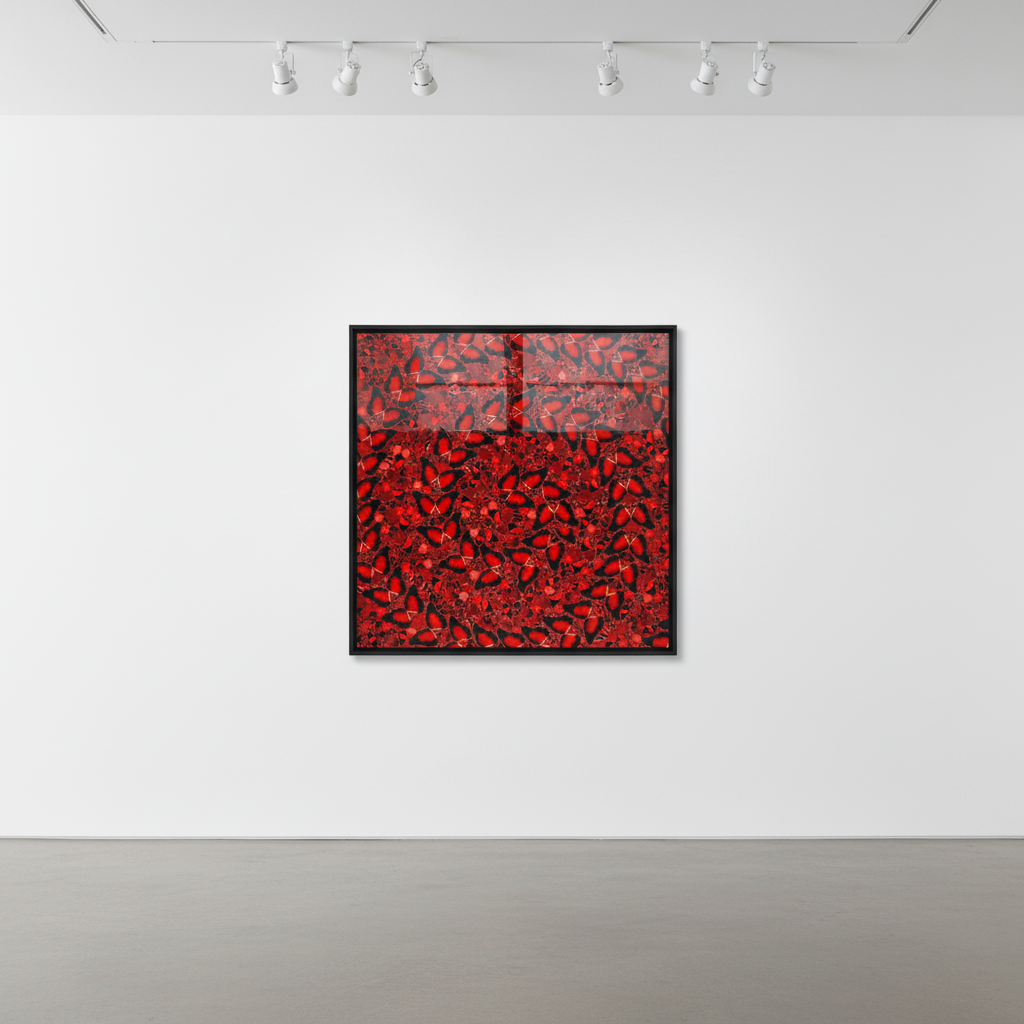
Damien Hirst, The Empresses (H10-5 Taytu Betul), Print. Available at Guy Hepner, New York.
One approach concentrates on a single series—whether The Souls I through IV, the Jacob's Ladder editions, or another defined group—with the goal of assembling a complete or near-complete set. This strategy maximizes coherence and creates collections that tell unified stories about Hirst's exploration of the butterfly motif. Complete sets also offer enhanced value as noted earlier, and the discipline required to assemble them typically results in consistently high condition standards across holdings.
An alternative approach collects across series while maintaining thematic or chromatic unity. A collector might focus on blue-palette butterfly works from various series, for example, or concentrate on editions that emphasize the spiritual symbolism present in titles like Jacob's Ladder. This strategy allows greater flexibility in acquisition while still producing collections with discernible identities.
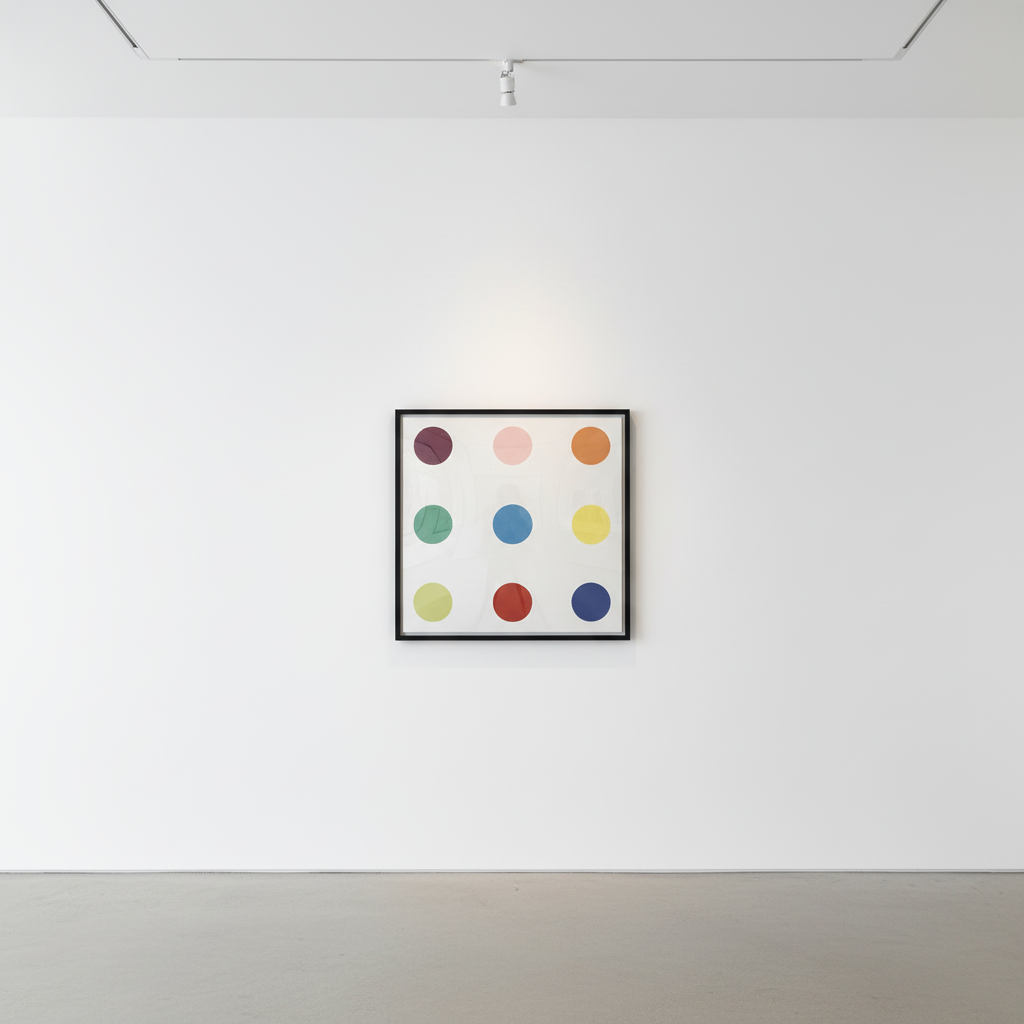
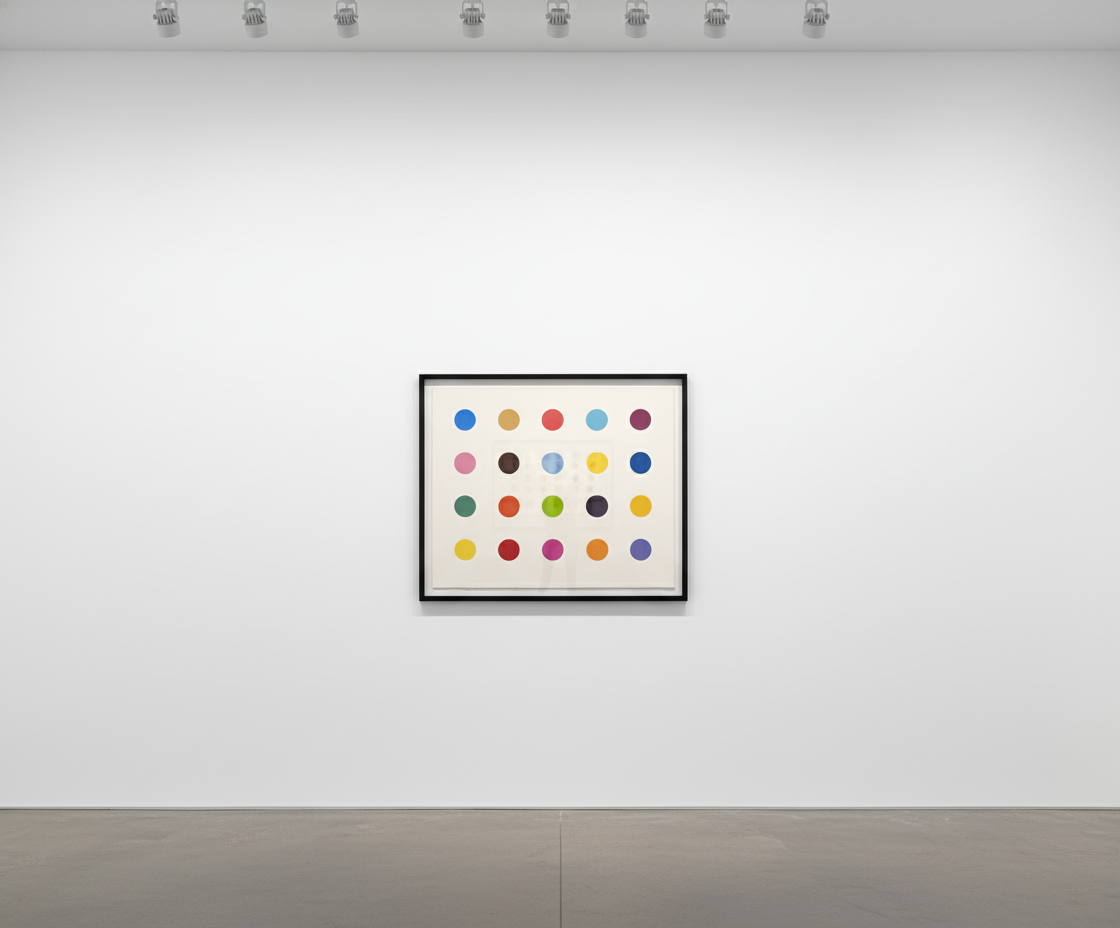
Collectors should also consider how butterfly editions relate to other aspects of Hirst's work. The Souls prints share conceptual DNA with the Spot Prints through their systematic exploration of color, while the butterfly motif connects to Hirst's broader interest in natural history and mortality evident in his pharmaceutical works. A collection that places butterfly editions in dialogue with other Hirst series creates richer interpretive possibilities than one that treats butterflies in isolation.
For collectors ready to acquire Damien Hirst butterfly prints, working with an established gallery that maintains expertise in Hirst's editions and relationships with the primary market provides significant advantages. Guy Hepner Gallery, located at 177 Tenth Avenue in New York, specializes in contemporary editions and maintains carefully curated inventory of Hirst's butterfly works alongside his other print series.
Gallery acquisition offers authentication confidence that independent transactions cannot match—works are examined by specialists, provenance is verified, and condition is professionally assessed before inventory acceptance. For collectors new to the Damien Hirst market, this expertise proves invaluable in navigating the complexities of edition structures, colorway desirability, and fair market pricing. For experienced collectors, gallery relationships provide access to works as they become available and the opportunity to source specific pieces through the gallery's network.
The gallery's holdings typically span The Souls series, Jacob's Ladder editions, and other significant butterfly works, allowing collectors to compare options and make informed selections. Whether you are seeking a single statement piece or building toward a comprehensive collection, the team at Guy Hepner can provide guidance tailored to your collecting goals and budget parameters. Contact the gallery to discuss current availability and begin the process of acquiring works that embody one of contemporary art's most powerful and enduring symbols.
Explore Damien Hirst prints for sale at Guy Hepner: H4 - Veil Spots, H5 - Colour Space Spots, Souls, Spot Paintings, Spot Prints.
Related Series