Marilyn

April 30, 2026
No image in the history of twentieth-century art has generated more sustained market demand than Andy Warhol's Marilyn Monroe. For collectors seeking Andy Warhol Marilyn Monroe prints for sale, or seeking to understand the value of Andy Warhol Marilyn Monroe screenprints, this guide covers the full picture: the origins of the imagery in 1962, the technical construction of the 1967 portfolio published by Factory Additions, the authentication standards required by the Feldman & Schellmann catalogue raisonné, and the market performance data from Christie's and Sotheby's through April 2026. Whether you are considering a first acquisition or adding to an established collection, the depth of the Marilyn market and the range of available formats make this series one of the most navigable entry points in the Warhol canon.
Inquire About Available Marilyn Monroe Prints
Browse current Marilyn Monroe screenprints and works on paper available through Guy Hepner, New York.
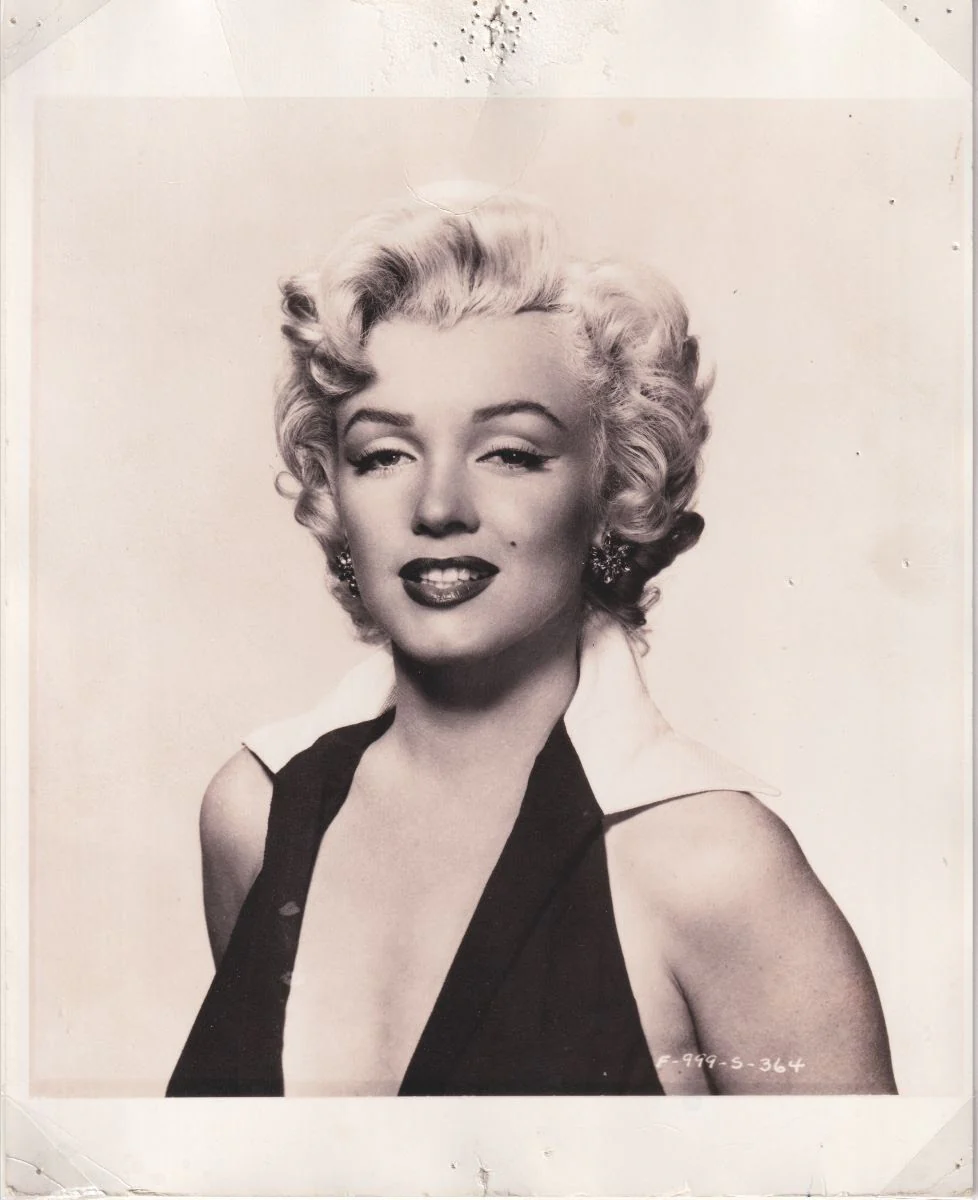
Warhol's engagement with Marilyn Monroe began within weeks of her death. Monroe died on 4th August 1962, and by September of that year, Warhol was producing silkscreen paintings based on a publicity photograph taken for the 1953 film Niagara. The photograph, a standard studio portrait, showed Monroe in three-quarter view, lips slightly parted, with the controlled illumination and retouched surface characteristic of Hollywood promotional imagery. It was, on its face, an unremarkable commercial image — which was precisely the point.
Warhol's technical intervention was straightforward and radical simultaneously. He had the photograph converted into a silkscreen, which he then printed onto canvas in single-color fields, applying paint by hand for the hair, lips, eye shadow, and skin tone. The result collapsed the distance between the hand-painted and the mechanically reproduced, between the unique artwork and the infinitely repeatable image, between the living celebrity and the cultural commodity she had already become. Monroe's death transformed what might have been a study in contemporary portraiture into something more charged: a meditation on fame, reproduction, and the way mass media converts people into icons.
The timing ensured that the first Marilyn paintings were exhibited at the Eleanor Ward Gallery, New York, in November 1962, still within months of Monroe's death. The critical response recognized immediately that something new was happening — not just in terms of subject matter, but in terms of what painting could mean when its primary source material was a photographic image already in mass circulation.
The 1962 canvases established the image; the 1964 works codified it into an iconic format. Warhol produced a substantial group of Marilyn paintings in 1964, including the multi-panel Marilyn Diptych (1962, Tate Modern) and the series of single-panel works in varying color combinations that would become the template for the 1967 screenprint portfolio. These paintings are now among the most valuable works on the secondary market: a significant 1964 Marilyn canvas achieved $195,040,000 at Christie's in May 2022, establishing the highest price ever realized for any twentieth-century work of art at auction. That record has held through 2026 and continues to define price expectations across all Marilyn formats.
The 1964 paintings belong to an entirely separate market from the editioned prints — they are unique works, and their results are cited here only to establish the cultural and commercial weight of the imagery. Collectors acquiring screenprints from the 1967 portfolio are participating in a different tier of the market, but one that has demonstrated consistent appreciation over time.
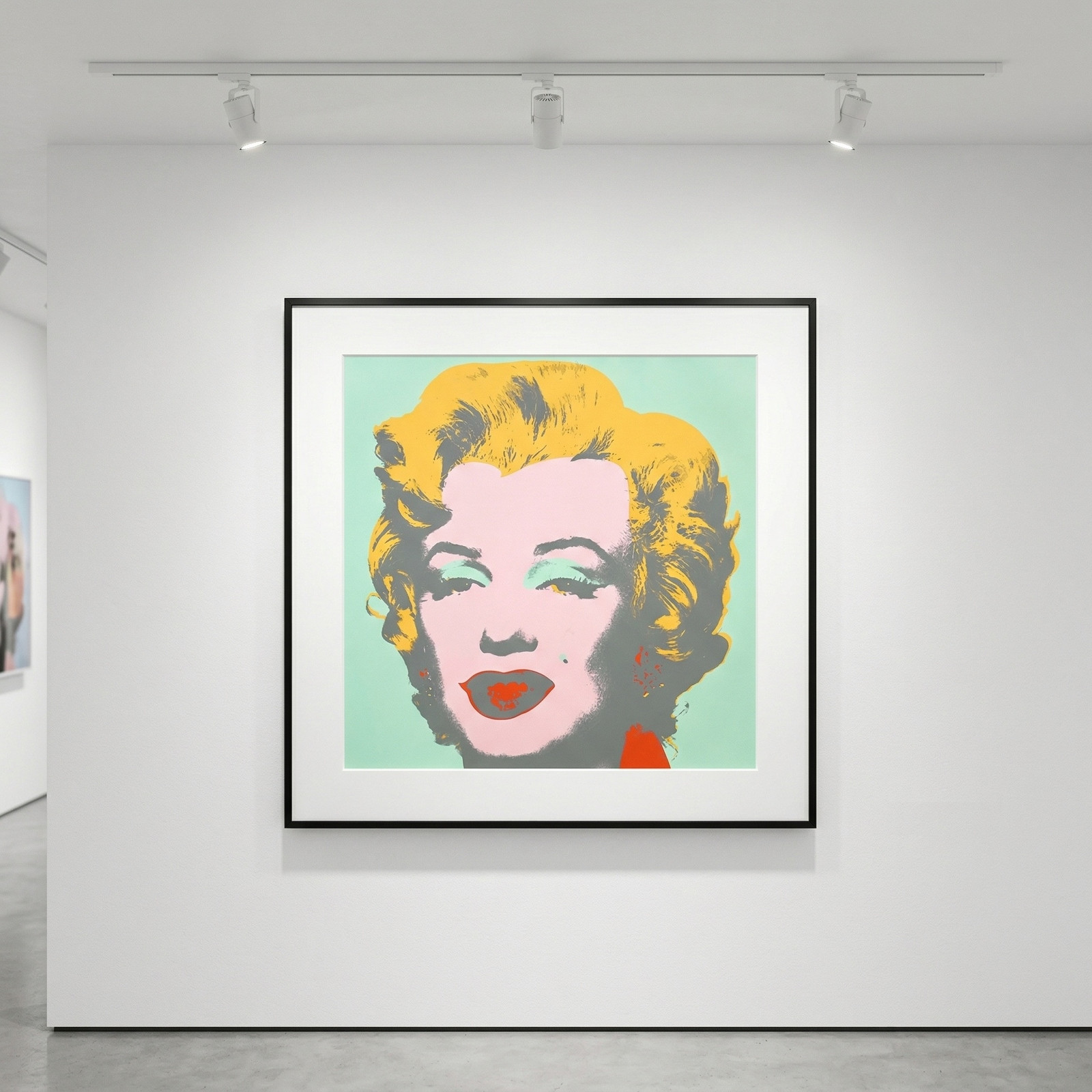
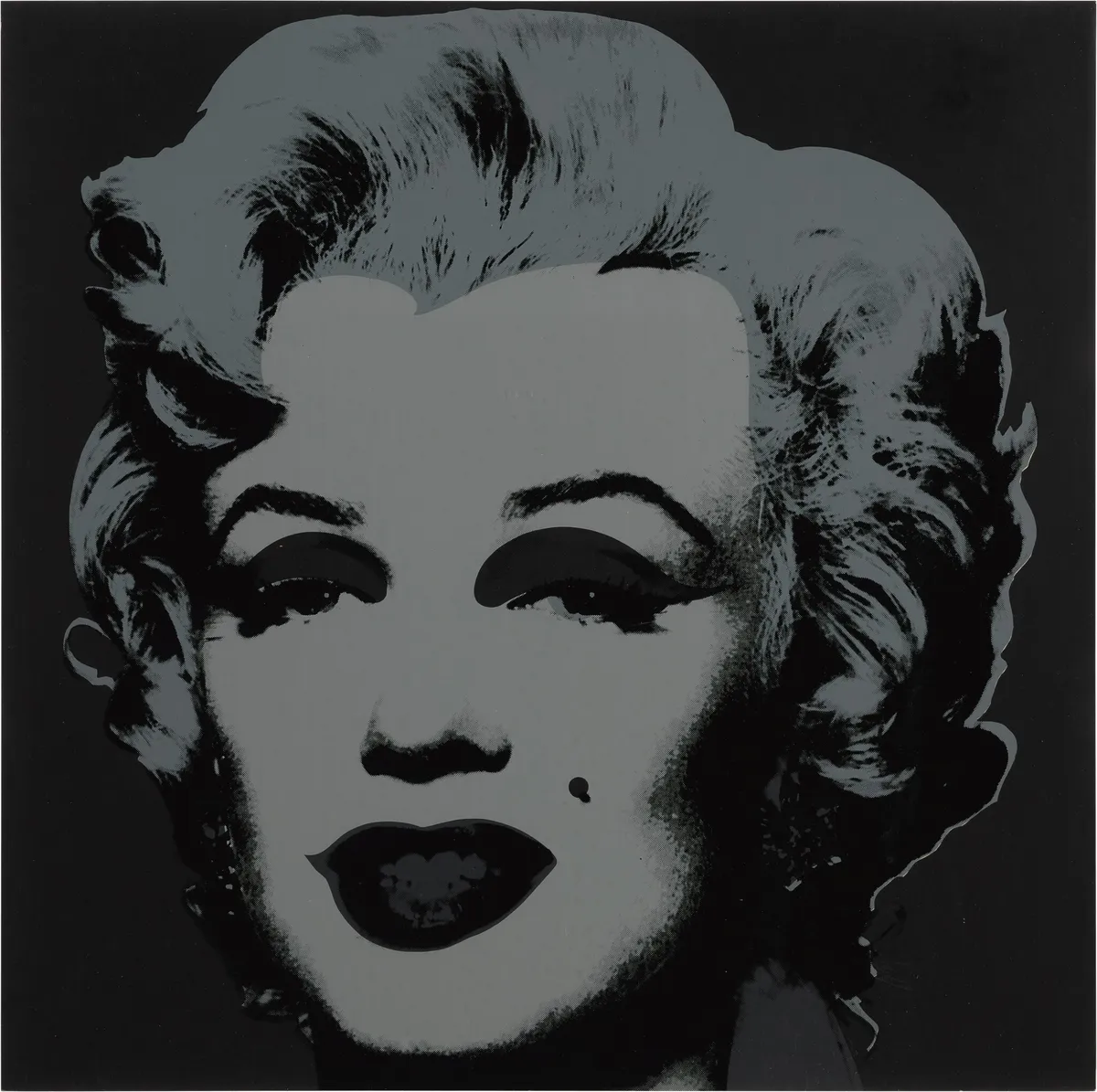
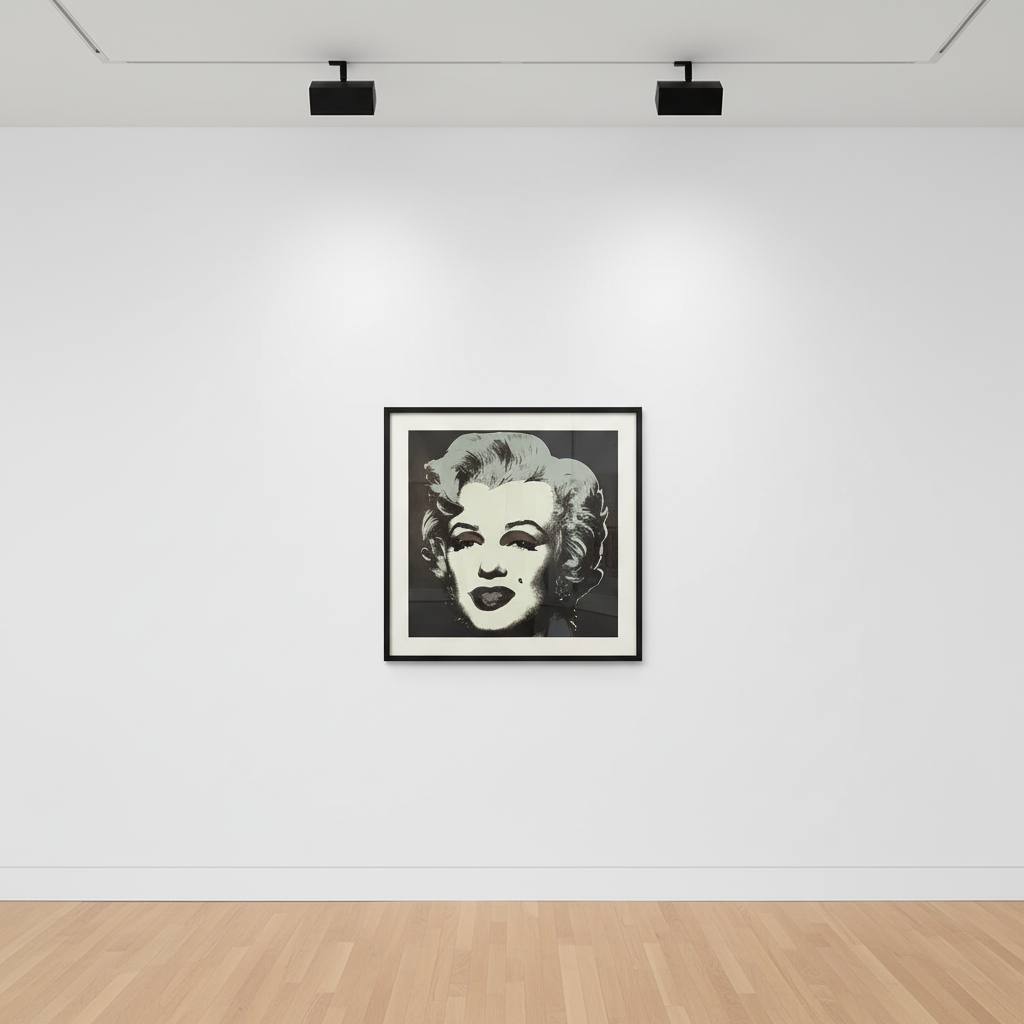
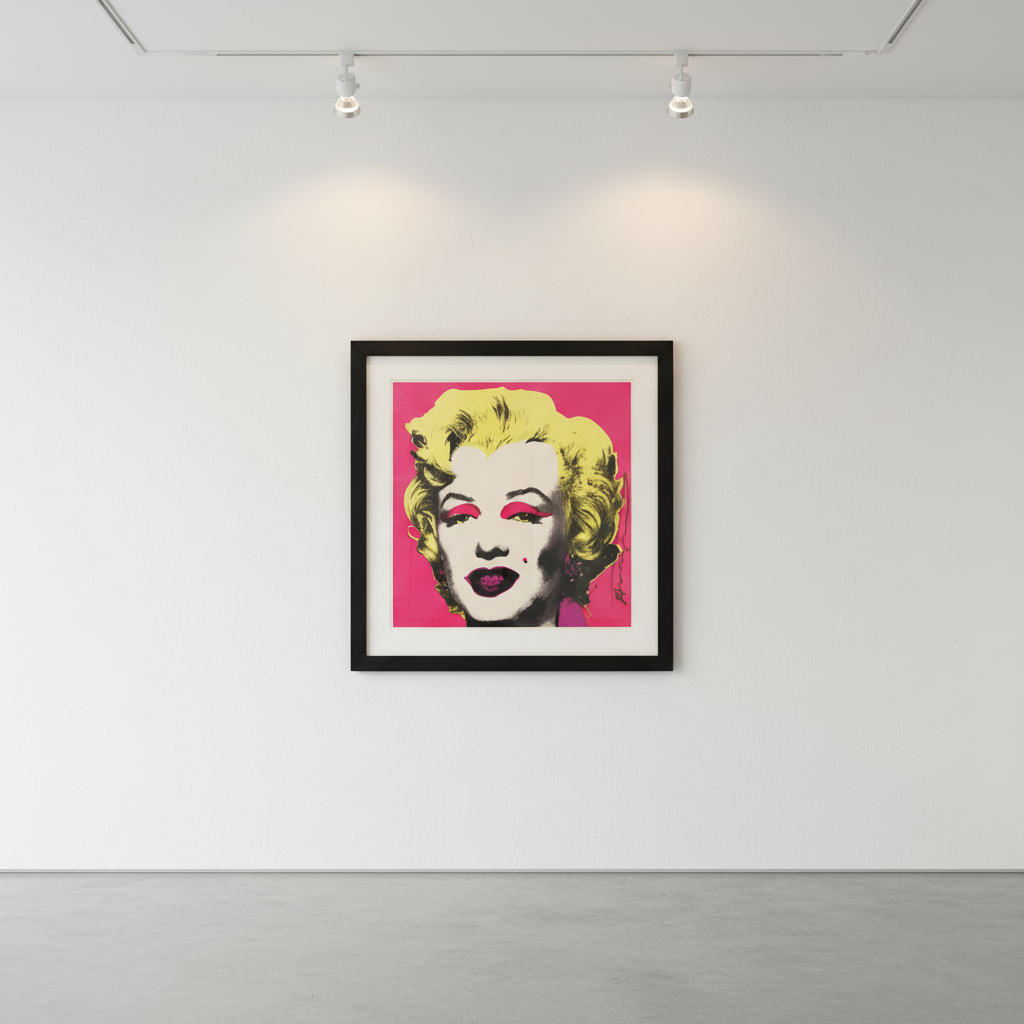
The definitive editioned Marilyn works are the ten screenprints published in 1967 by Factory Additions, New York, catalogued as Feldman & Schellmann F.S. II.22–31. The portfolio was produced in an edition of 250, with an additional 26 artist's proofs lettered A through Z. Each print measures 36 × 36 inches (914 × 914 mm), printed in colors on wove paper, with the full sheet retained. Signed impressions bear Warhol's pencil signature; some examples are initialed rather than fully signed.
The ten prints share the same compositional structure — Monroe's face fills the square format, cropped at the shoulders — but each is individuated by its color relationships. Background hues range from sage blue to orange to turquoise to hot pink; lip color varies from deep red to pale coral; eye shadow shifts from teal to lavender to yellow. The variation is systematic rather than expressive: Warhol was investigating how color functions as information, how the same image can be simultaneously identical and completely different depending on the palette applied to it.
The technical execution required precise screen registration across multiple passes. The flesh tone, hair, and background color each had to align within fractions of a millimeter across an edition of 250 impressions, and the results vary accordingly. Premium impressions show crisp alignment between color layers with no bleeding, softness, or overprinting. This condition variation within the edition creates meaningful price differentiation even between prints of the same subject.
The standard reference for the 1967 portfolio is Andy Warhol: Prints, A Catalogue Raisonné 1962–1987, compiled by Frayda Feldman and Jörg Schellmann, published by Abbeville Press. The Marilyn Monroe screenprints appear as F.S. II.22 through F.S. II.31. Each entry records the edition size, publisher, paper specification, and known impression details. Collectors should verify any offered impression against the catalogue entry, confirm the Factory Additions publisher documentation, and review the edition numbering.
Preceding the 1967 portfolio is Marilyn Monroe I Love Your Kiss Forever Forever (F.S. II.5), a lithograph produced in 1964 and published by Racolin Press. This work predates the major screenprint series and carries distinct historical significance as an early exploration of the subject in print format. Its double-page format and lithographic medium differentiate it technically and aesthetically from the 1967 portfolio.
The most current market data comes from Christie's Live Auction 24335, Prints and Multiples, held on 15th April 2026. Five Marilyn Monroe screenprints from the 1967 portfolio were offered, all artist's proofs aside from the standard edition of 250:
The April 2026 results confirm that strong impressions in verifiable condition continue to trade well above high estimate, with signed artist's proofs achieving premiums consistent with the past three years of results. The $406,400 result for Lot 11 represents a significant premium over its $300,000 high estimate, indicating active bidder competition for top-condition impressions.
In September 2025, F.S. II.23 and F.S. II.24 each traded at GBP 381,000 ($514,350) at London auction, demonstrating sustained demand for the strongest colour combinations within the portfolio. These results are consistent with the trajectory established across the 2024-2025 auction cycle, in which signed and artist-proofed impressions in strong condition have consistently traded at or above high estimate.
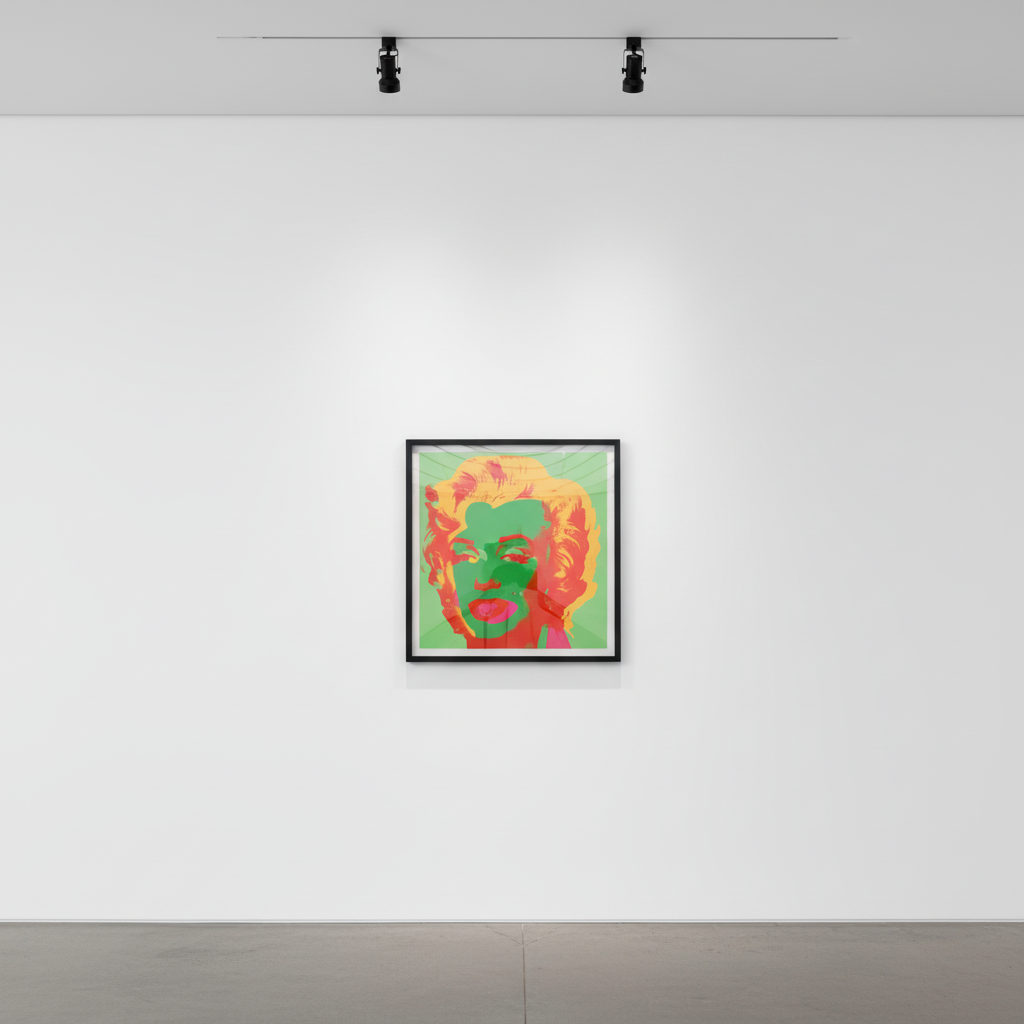
The ten screenprints from the Factory Additions portfolio form the core of collector acquisitions. F.S. II.23 and F.S. II.24 have established the strongest recent auction benchmarks, but all ten prints carry demand from collectors building comprehensive holdings of the series. Collectors who have acquired individual prints frequently return to acquire additional impressions from the same portfolio, treating the complete set as a long-term accumulation strategy.
Individual prints are available in varying condition grades, from museum-quality impressions in original folder condition to good-condition prints suitable for display. Guy Hepner sources across the full spectrum and can assist collectors in identifying impressions that meet specific condition and budget requirements.
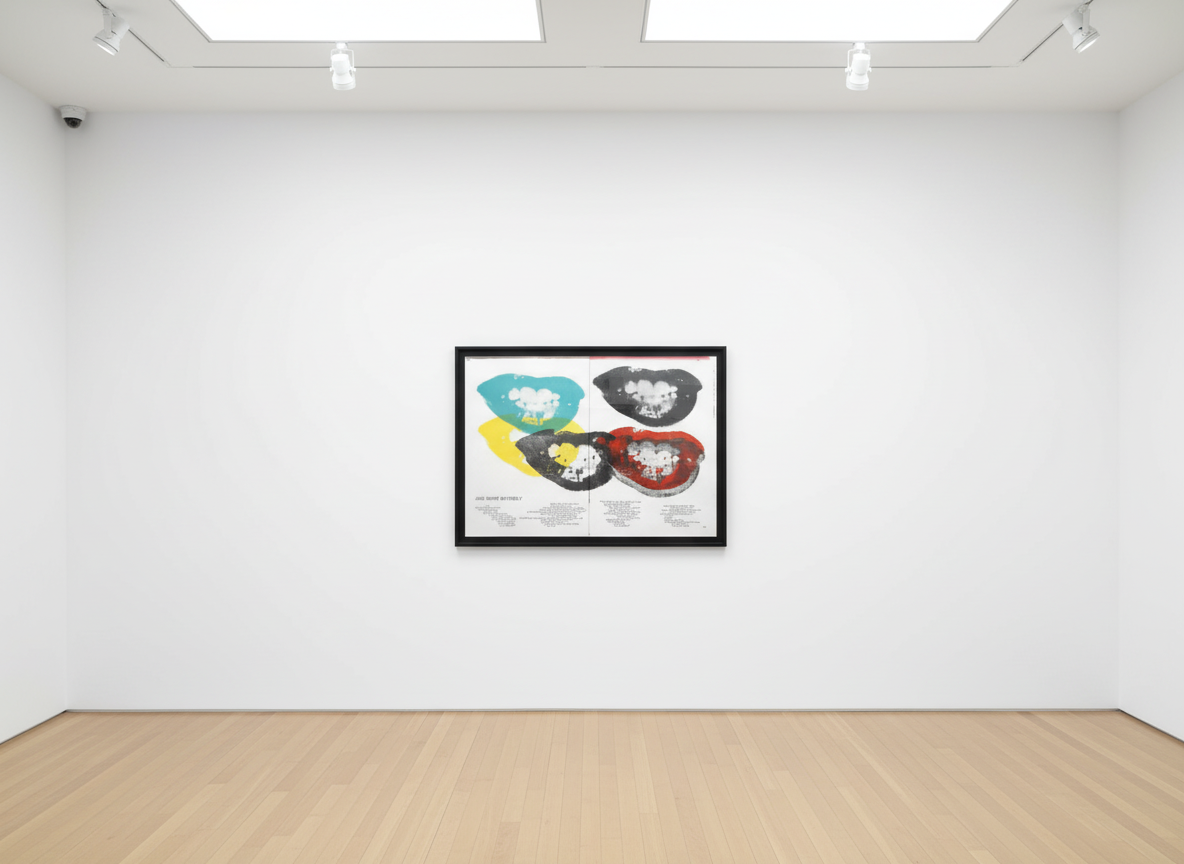
The 1964 lithograph predates the major portfolio and occupies a distinct position in the Marilyn chronology. For collectors interested in the earliest phase of Warhol's engagement with the Monroe image, and in the lithographic rather than screenprint medium, F.S. II.5 provides a historically significant point of entry.
Produced as a Castelli Graphics publication, the 1981 Marilyn Invitation is an offset lithograph printed on cardstock. Its intimate scale and distinct production context set it apart from the major screenprint portfolio. The Castelli Graphics provenance is well documented, and the work has attracted collectors interested in building holdings that trace Warhol's continuing engagement with the Monroe image across two decades.
Authentication for the 1967 portfolio prints requires verification against the Feldman & Schellmann catalogue raisonné. Genuine impressions should bear the Factory Additions publisher documentation, and where present, Warhol's pencil signature should be compared against known authenticated examples. Artist's proofs carry the same authentication requirements as edition impressions, with the additional notation of their lettered designation (A–Z).
Guy Hepner works with specialists in Warhol authentication and can provide full documentation for all offered works. Where independent authentication review is requested, we can coordinate with the relevant bodies prior to any transaction.
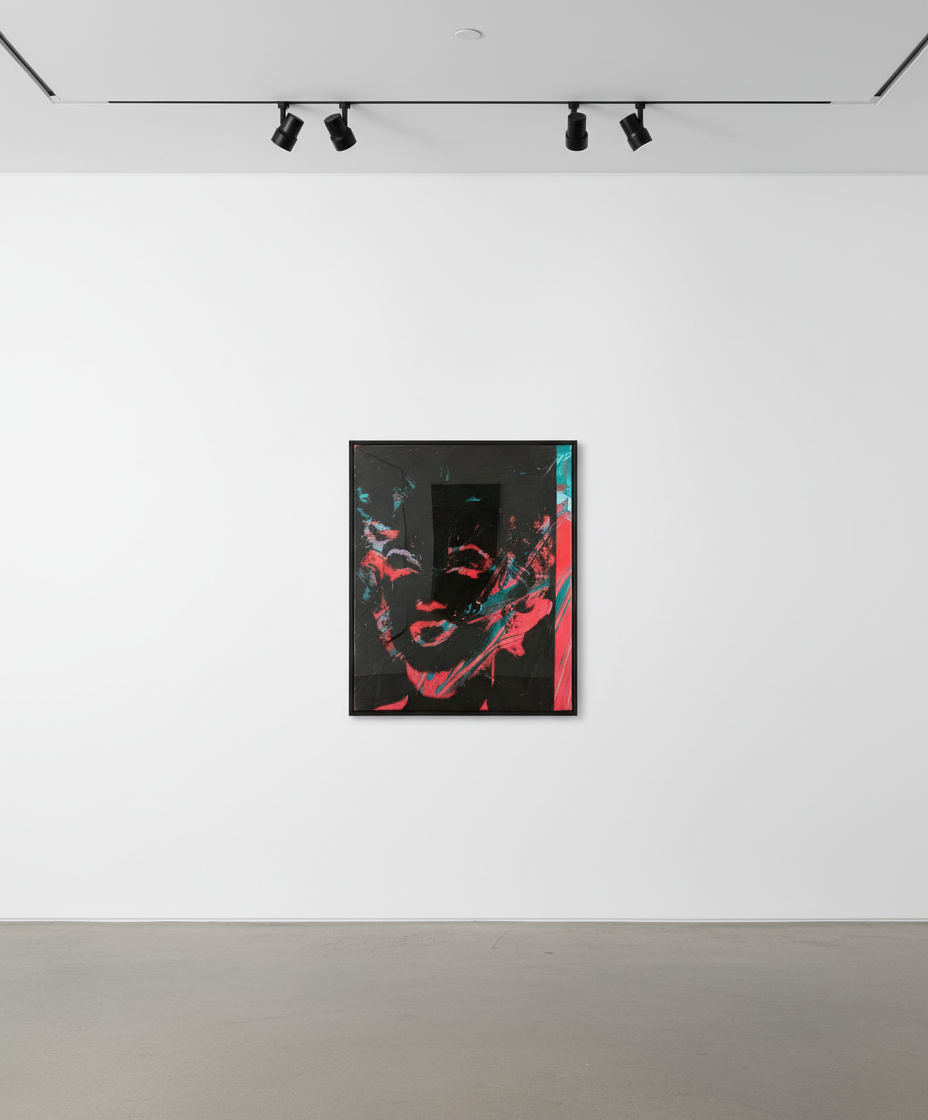
The 36 × 36 inch format means that most impressions have been framed, and handling history varies accordingly. The primary condition concerns for the 1967 portfolio are:
Color stability. The screenprint inks are generally stable, but extended exposure to UV light will cause fading, particularly in the flesh tones and more saturated background fields. Impressions that have been consistently framed under UV-protective glazing maintain their color saturation.
Registration quality. As noted above, registration varies across the edition. Premium impressions show clean separation between color fields; lower-grade examples may show soft edges or slight overprinting between layers.
Paper condition. Handling creases, mat burn, and foxing all affect market value. Impressions in original folder condition or with clean paper throughout command meaningful premiums.
Frame condition. Many collectors acquire impressions still in their original or period frames. While the frame condition does not affect the print, it does affect the overall presentation and can indicate handling history.
Guy Hepner provides condition reports prepared by conservators specializing in post-war American works on paper. Every acquisition includes a complete condition assessment prior to delivery.
The Marilyn prints have demonstrated consistent secondary market appreciation over every measured period. The April 2026 Christie's results — with multiple lots exceeding high estimate — indicate that demand remains active in the current market environment. The combination of cultural recognition, established auction benchmarks, and limited supply of condition-grade impressions provides a foundation for long-term value.
Within the context of Warhol's print output, the Marilyn series occupies the position of greatest cultural penetration and broadest buyer recognition. This matters in terms of liquidity: works that are immediately recognizable to buyers outside the specialist art market tend to carry lower holding risk than more esoteric subjects. The Monroe image requires no explanation, no contextual knowledge, and no collector education — a factor that consistently broadens the competitive bidding pool when strong impressions come to market.
For collectors building toward major acquisitions, individual prints from the 1967 portfolio represent a proven entry point at price levels that have supported appreciation across decades of market cycles. The demonstrated results at Christie's and Sotheby's provide reliable benchmarks for acquisition pricing, and the depth of the auction record — spanning multiple decades and dozens of sales — means that market comparables exist for virtually any impression a collector might consider.
Speak With a Specialist
Contact Guy Hepner, New York to discuss available Marilyn Monroe prints, condition reports, and acquisition strategy.
Browse All Available Andy Warhol Works
Guy Hepner maintains active inventory across Warhol's major print series, with direct access to private collections and the institutional market.
Guy Hepner, 529 West 20th Street, New York
--- Browse Andy Warhol prints at Guy Hepner: Andy Warhol art for sale | Sell your WarholExplore Andy Warhol prints for sale at Guy Hepner: Marilyn, 25 Cats Named Sam, A Gold Book, A La Recherche Du Shoe Perdu, Alexander the Great.
Related Series