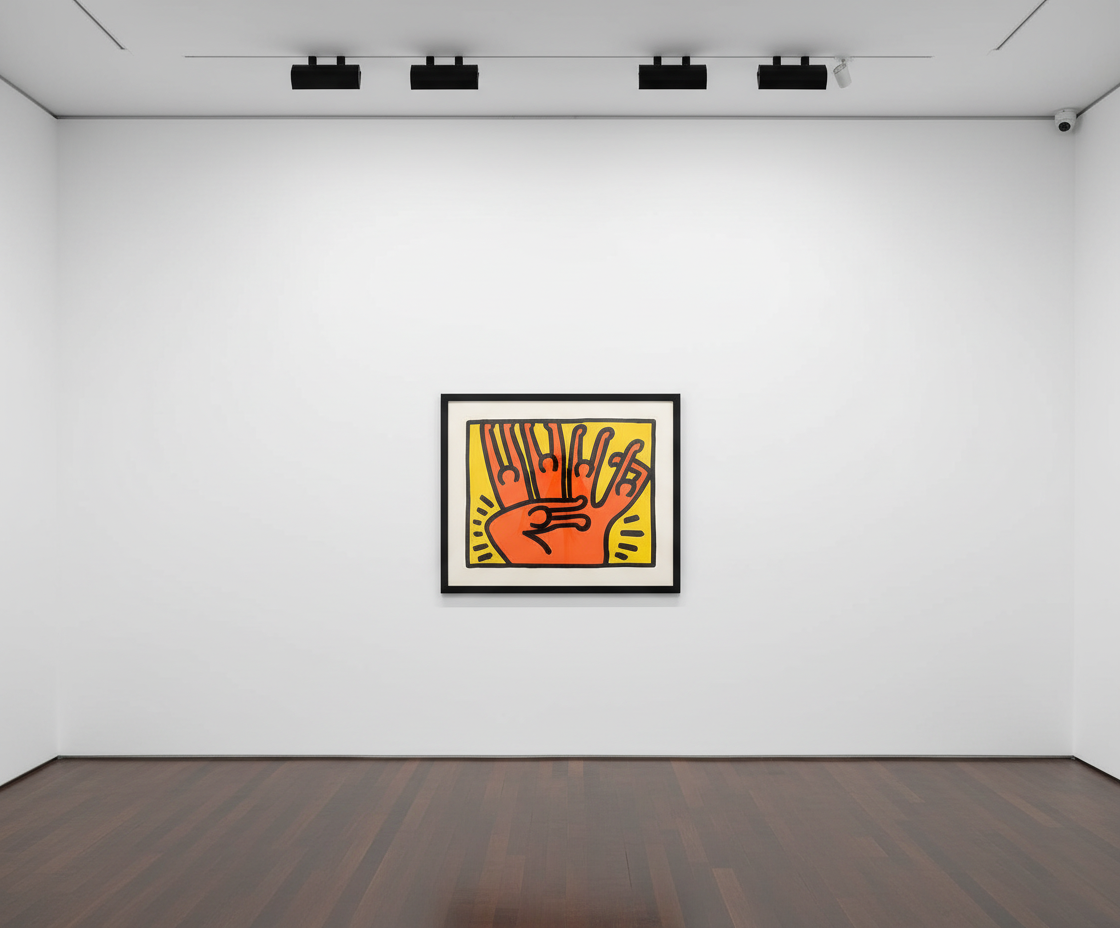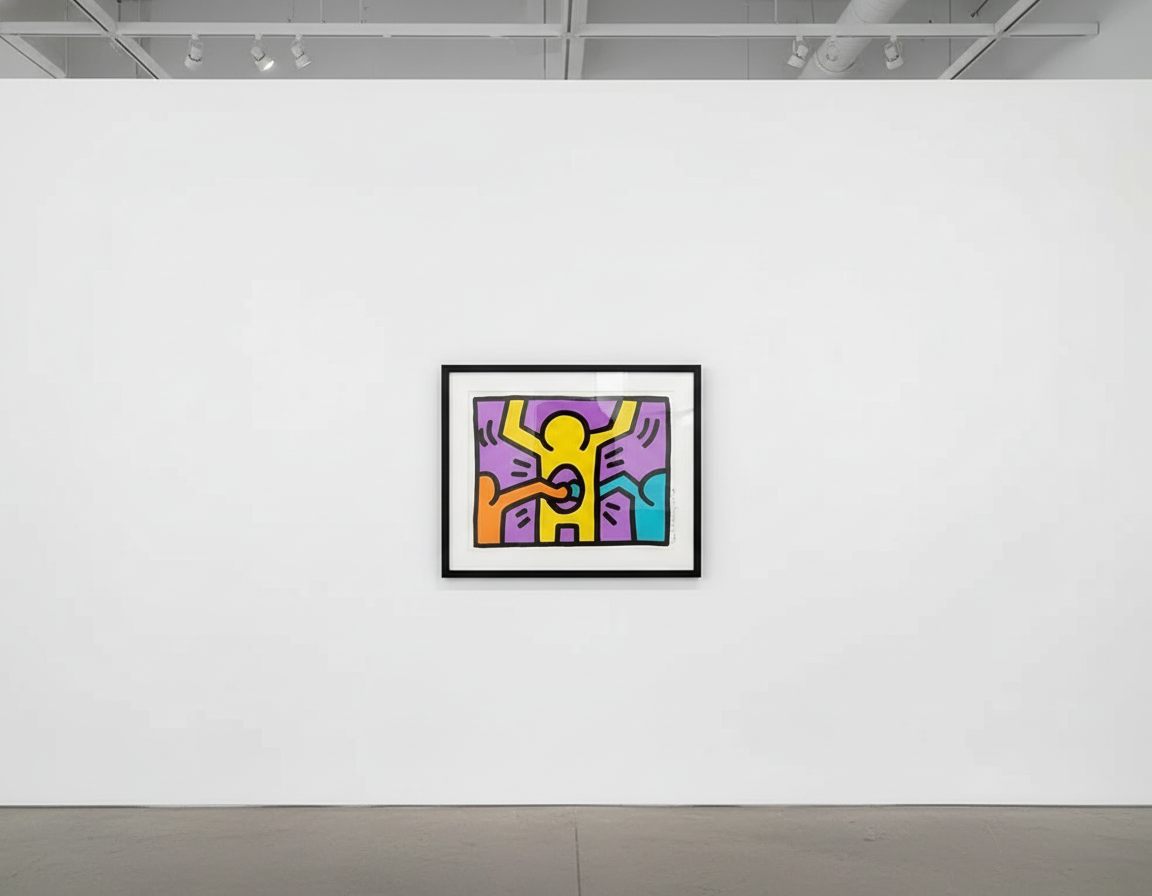
Pop Shop I

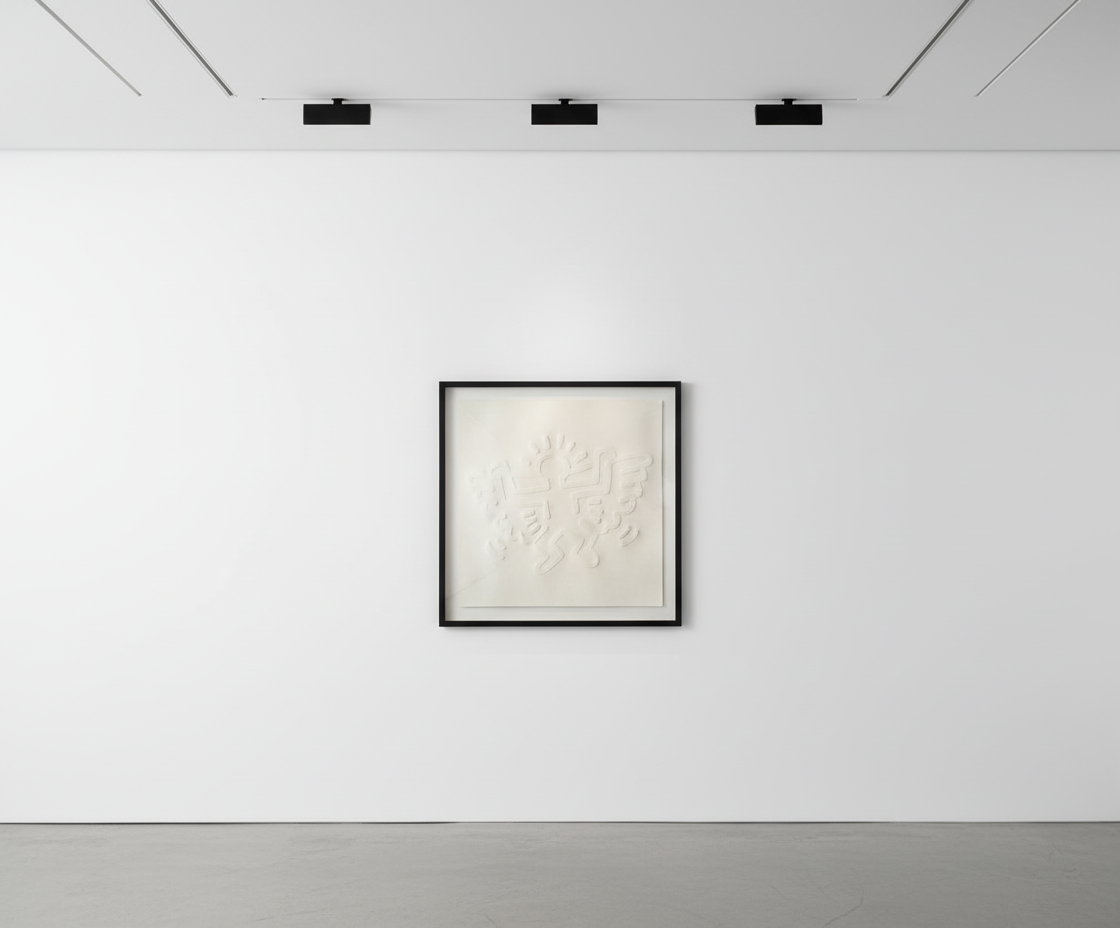
Keith Haring stands as one of the most influential artists to emerge from the vibrant creative landscape of 1980s New York City. His distinctive visual vocabulary - characterized by bold outlines, radiant babies, barking dogs, and dancing figures - transcended the boundaries between fine art and popular culture in ways that continue to resonate with collectors worldwide. The establishment of his Pop Shops represents a revolutionary moment in art history, democratizing access to original artwork while simultaneously creating some of the most recognizable and collectible icons in contemporary art.
Emerging from the dynamic graffiti scene that defined New York City during the late 1970s and early 1980s, Keith Haring developed an artistic practice that was both deeply personal and universally accessible. His early work began appearing in the most democratic of canvases - the empty black advertising panels found throughout the New York subway system. Using white chalk, Haring created thousands of drawings that commuters encountered during their daily routines, effectively transforming public transit into an ever-changing gallery space.
These Subway Drawings established the foundational elements of Haring's iconic visual language. The radiant baby, the barking dog, the flying saucer, and the crawling figure became instantly recognizable symbols that communicated complex ideas through deceptively simple imagery. Haring's genius lay in his ability to address weighty subjects - nuclear proliferation, apartheid, AIDS awareness, and social inequality - through compositions that maintained an almost childlike accessibility. His precise contours and energetic lines created a visual syntax that required no art historical knowledge to appreciate, yet rewarded deeper contemplation with layers of meaning.
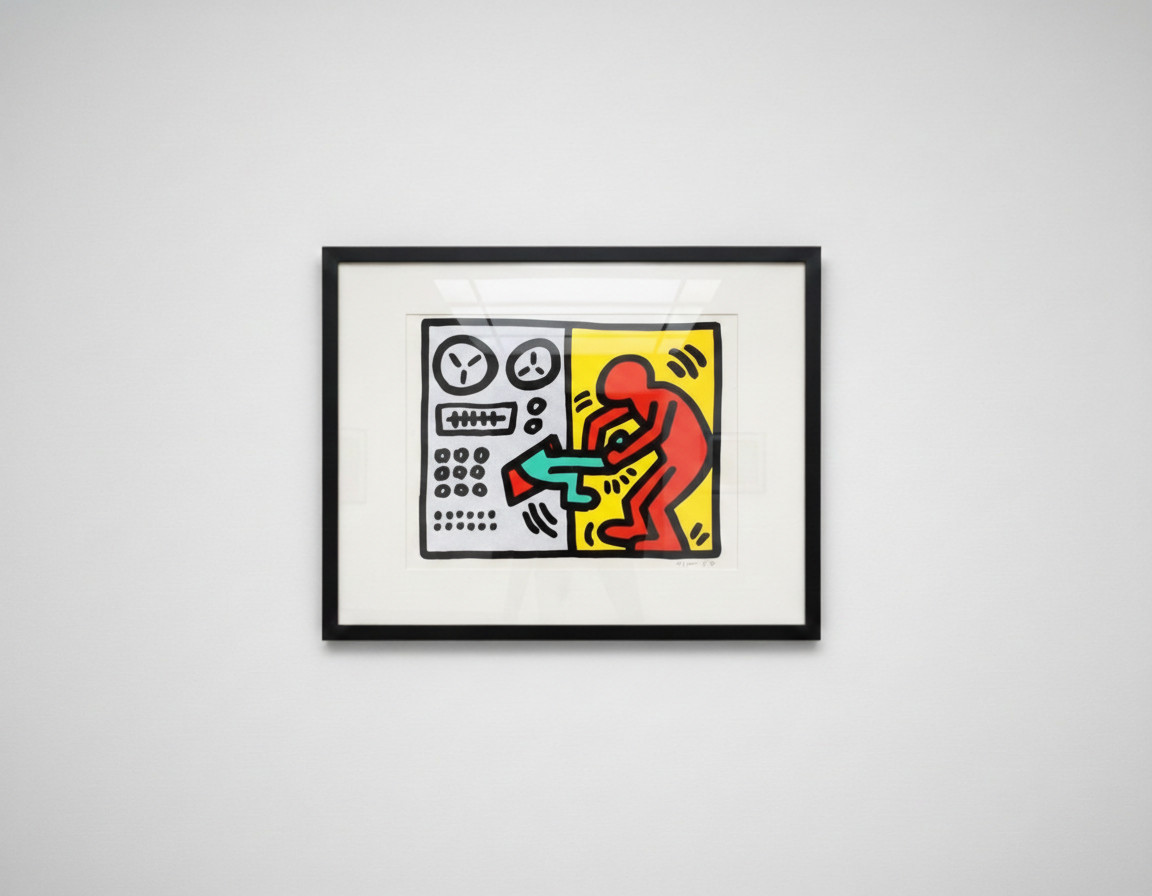
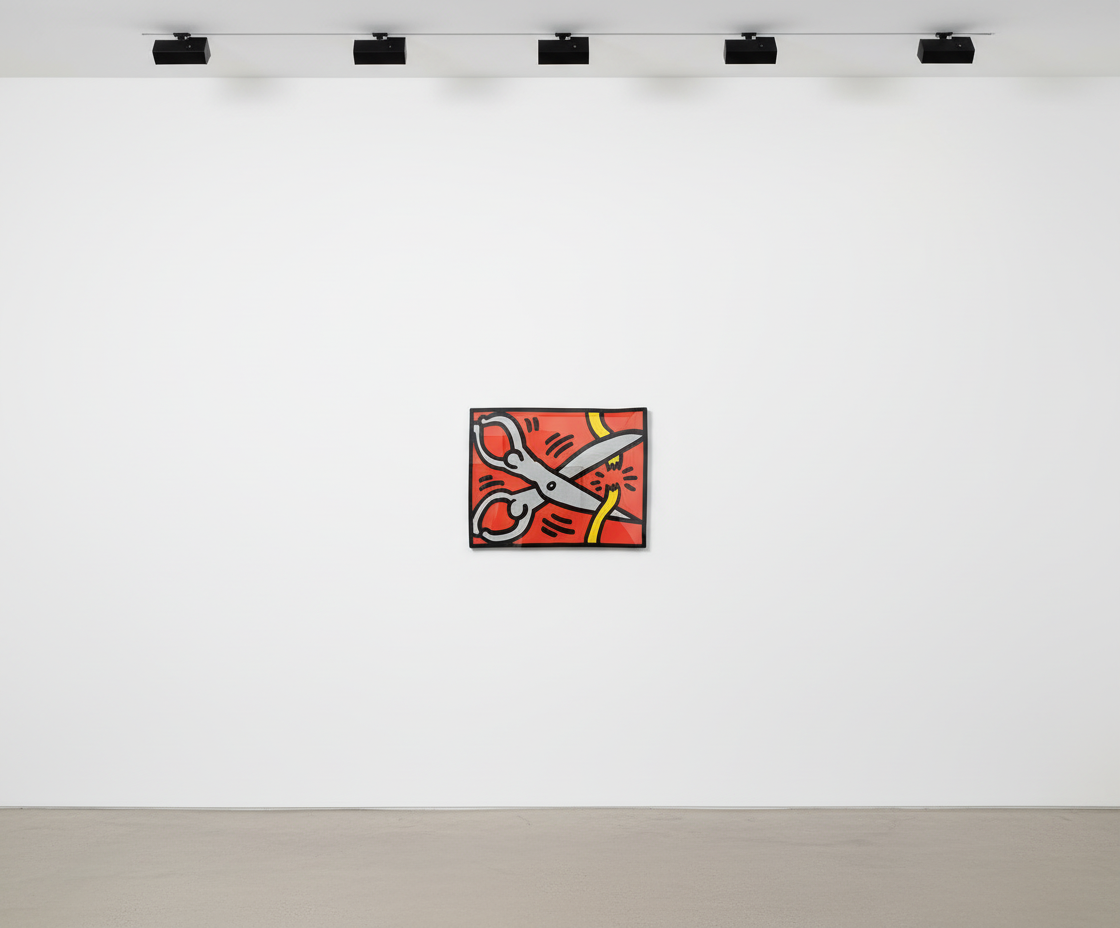
Untitled III (Littmann PP. 20) — Keith Haring. Available at Guy Hepner, New York.
The fusion of street art sensibilities with Pop Art principles positioned Haring at the intersection of multiple artistic movements. Like Andy Warhol, whom he counted among his closest friends and collaborators, Haring understood the power of repetition, mass production, and popular imagery. However, where Warhol often maintained an ironic distance from his subjects, Haring's work pulsed with genuine emotional urgency and activist commitment.
In 1986, Keith Haring opened the first Pop Shop at 292 Lafayette Street in New York City's SoHo neighborhood, fundamentally challenging the established hierarchy of the art world. A second location followed in Tokyo in 1987, extending his democratic vision across continents. These retail spaces represented far more than commercial ventures - they embodied Haring's philosophical commitment to making art accessible to everyone, regardless of economic status.
The Pop Shop concept was revolutionary in its directness. Rather than operating through galleries that added significant markups and cultivated an atmosphere of exclusivity, Haring sold his work directly to the public. T-shirts, posters, buttons, magnets, and inflatable sculptures bearing his iconic imagery became available at price points that students and young collectors could afford. This approach was both celebrated as democratizing and criticized by art world purists who questioned whether such accessibility diminished artistic value.
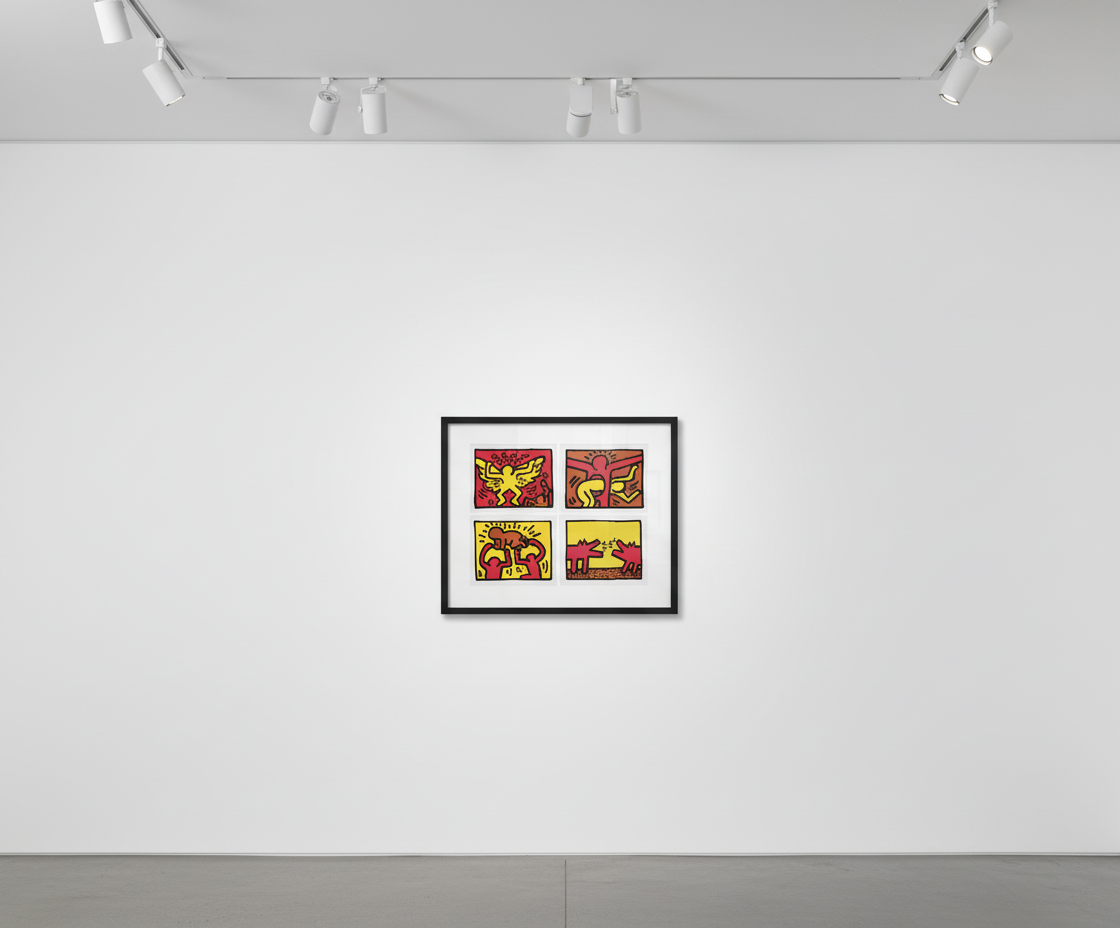
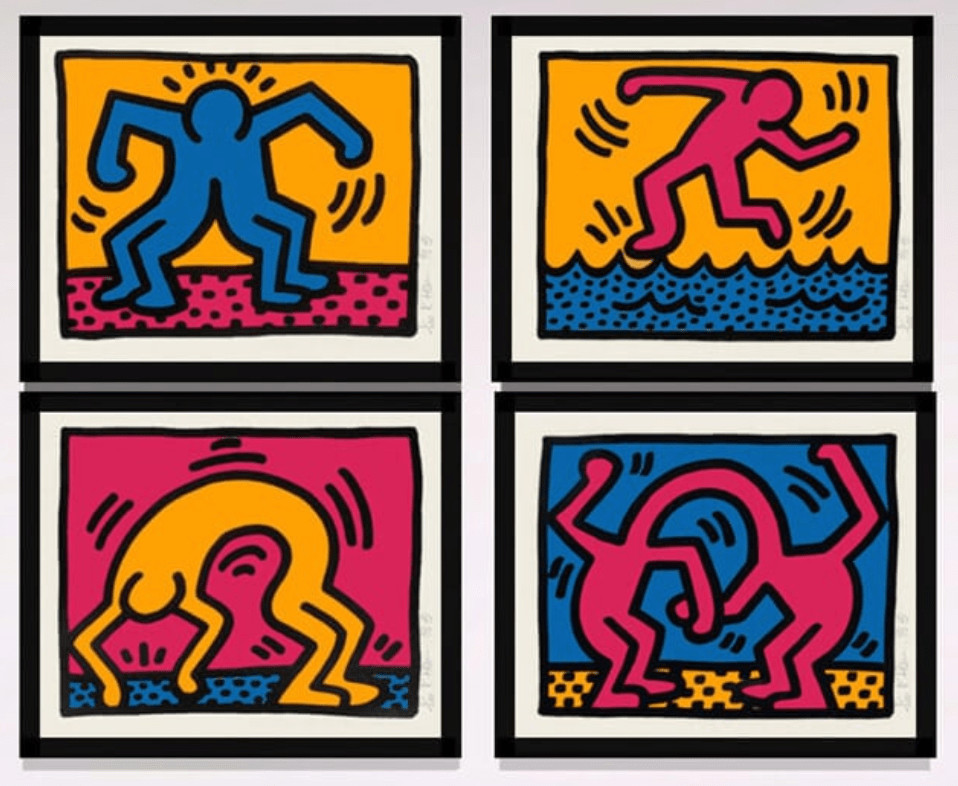
The Story of Red and Blue 9 (Littmann PP. 131) — Keith Haring. Available at Guy Hepner, New York.
History has decisively answered that question. The Pop Shop prints and merchandise have become some of the most sought-after collectibles in the contemporary art market. Works from the Pop Shop print series, including the vibrant Pop Shop Vi editions, demonstrate how Haring translated his visual vocabulary into the silkscreen medium with remarkable sophistication. These prints retain all the energy and immediacy of his subway drawings while achieving the technical precision that serious collectors demand.
The Pop Shop editions also reveal Haring's masterful understanding of color relationships. His palette - dominated by primary colors but punctuated with unexpected combinations of pink, purple, and green - creates visual harmonies that remain fresh and contemporary decades after their creation. Series such as The Story of Red and Blue demonstrate his ability to create narrative sequences that unfold across multiple compositions, inviting prolonged engagement from viewers.
Keith Haring's position in the contemporary art market has strengthened considerably in recent years, with auction results confirming sustained institutional and private collector interest. According to data analyzed by Art Basel and UBS in their annual art market reports, works by artists associated with 1980s New York street art movements have demonstrated remarkable resilience across market cycles. Haring's prints, in particular, have shown consistent appreciation, offering collectors entry points across various price ranges while maintaining strong secondary market liquidity.
Major auction houses including Christie's and Sotheby's regularly feature Haring works in their contemporary art sales, with Pop Shop prints and iconic motif editions generating competitive bidding. The close of 2023 saw particularly strong results for Haring's print market, affirming his enduring appeal among both established collectors and newcomers to art acquisition. His ability to attract diverse collector demographics - from those drawn to his activism and cultural significance to those responding purely to his aesthetic power - creates robust demand across market segments.
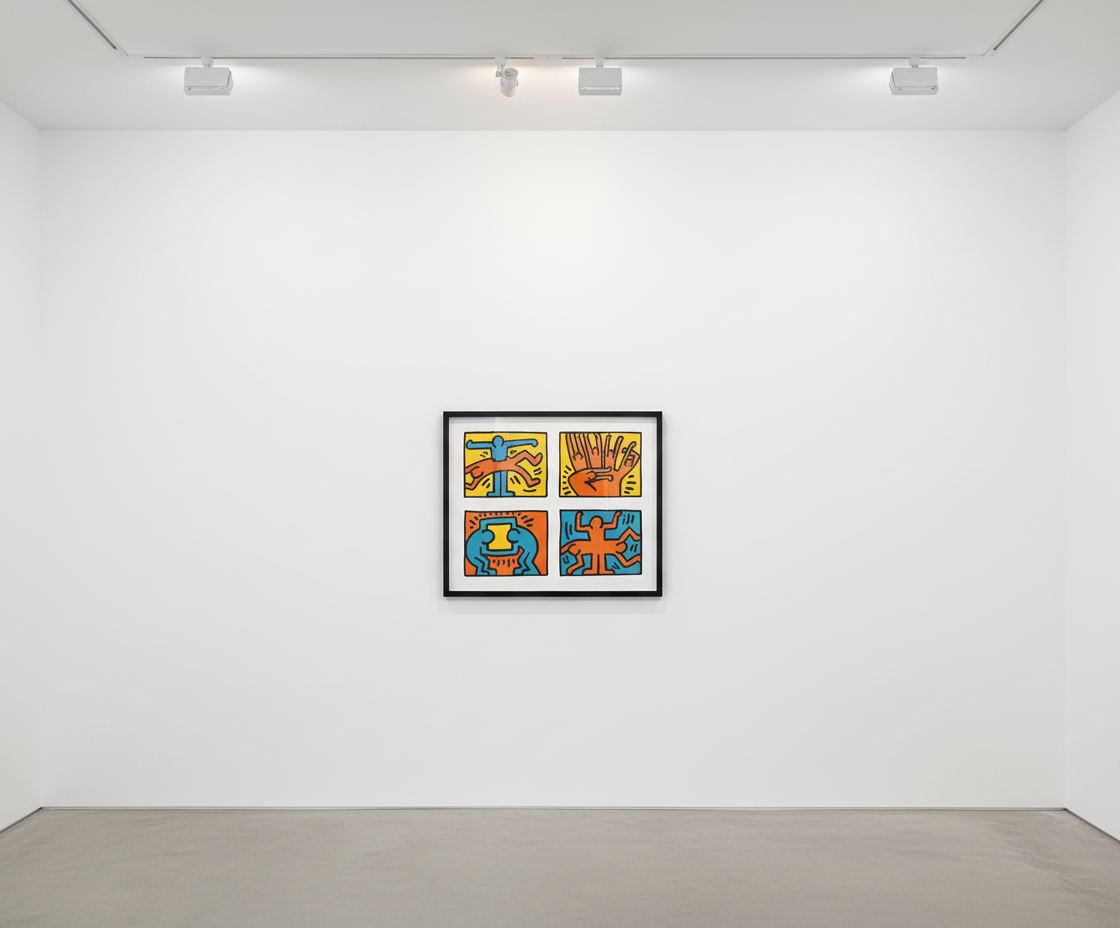
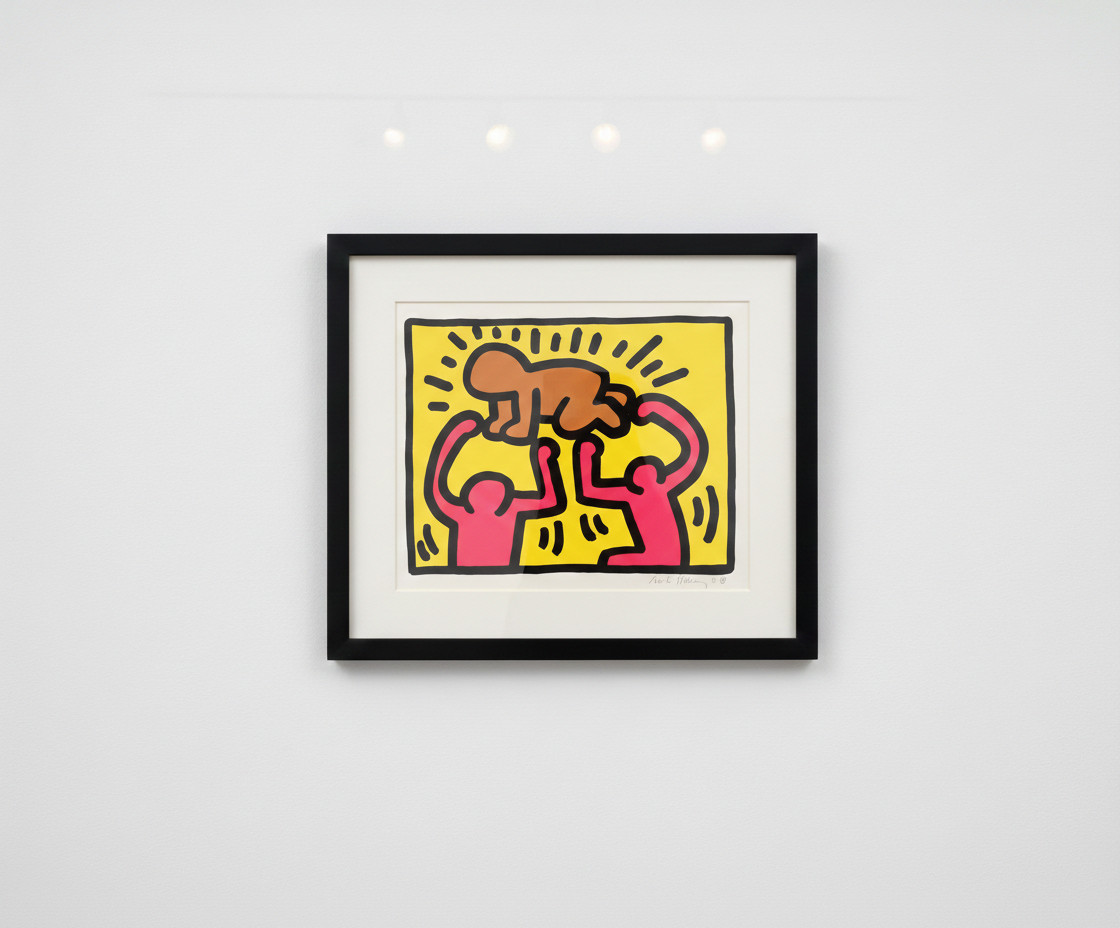
Dog — Keith Haring. Available at Guy Hepner, New York.
The investment case for Haring extends beyond market mechanics to cultural permanence. His imagery has become embedded in the visual consciousness of multiple generations, appearing in museum retrospectives, fashion collaborations, and public installations worldwide. Works such as the Growing series and the endlessly energetic Dog imagery represent instantly recognizable components of late twentieth-century visual culture. This cultural ubiquity, combined with the finite supply of original prints and editions, creates the fundamental conditions for long-term value appreciation.
For collectors seeking to acquire significant examples of Keith Haring's Pop Shop prints and iconic imagery, careful attention to condition, provenance, and edition information remains essential. Haring's print production was substantial during his lifetime, but authenticated works with clear provenance chains command premium positioning in the market. The Littmann catalogue raisonné serves as the definitive reference for his printed works, providing collectors with the documentation necessary for confident acquisition.
Guy Hepner maintains an exceptional collection of Keith Haring Pop Shop prints and iconic works, offering collectors the opportunity to acquire significant examples of this pivotal artist's output. With deep expertise in the contemporary art market and established relationships with collectors worldwide, Guy Hepner provides comprehensive guidance for those seeking to add Haring's transformative vision to their collections. Contact the gallery to inquire about current availability and to discuss acquisition opportunities for these historically important works.
Explore Keith Haring prints for sale at Guy Hepner: Pop Shop I, Pop Shop Ii, Pop Shop Iii, Pop Shop Iv, Pop Shop V.
Related Series