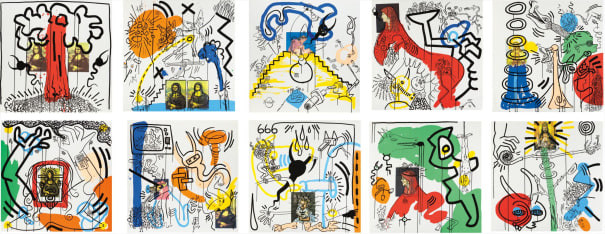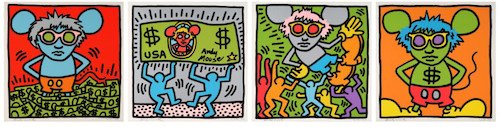
Andy Mouse

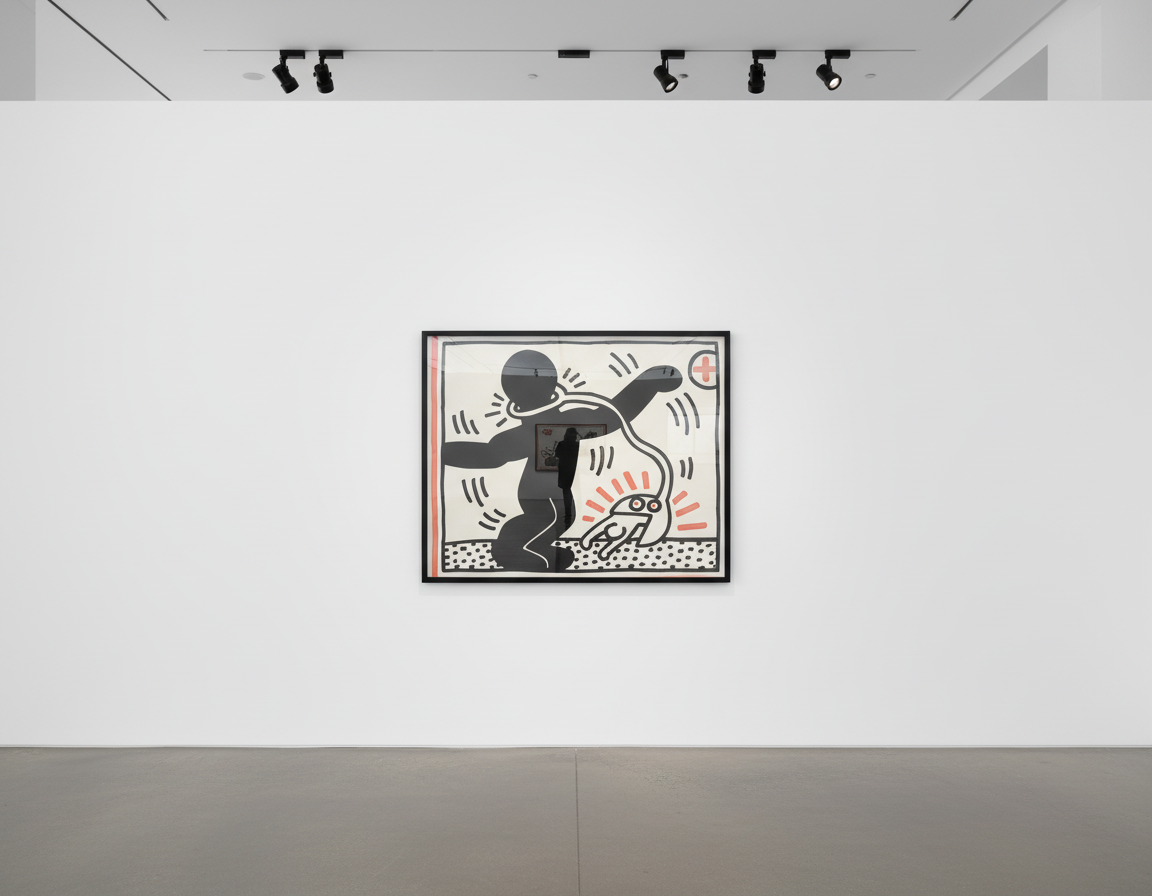
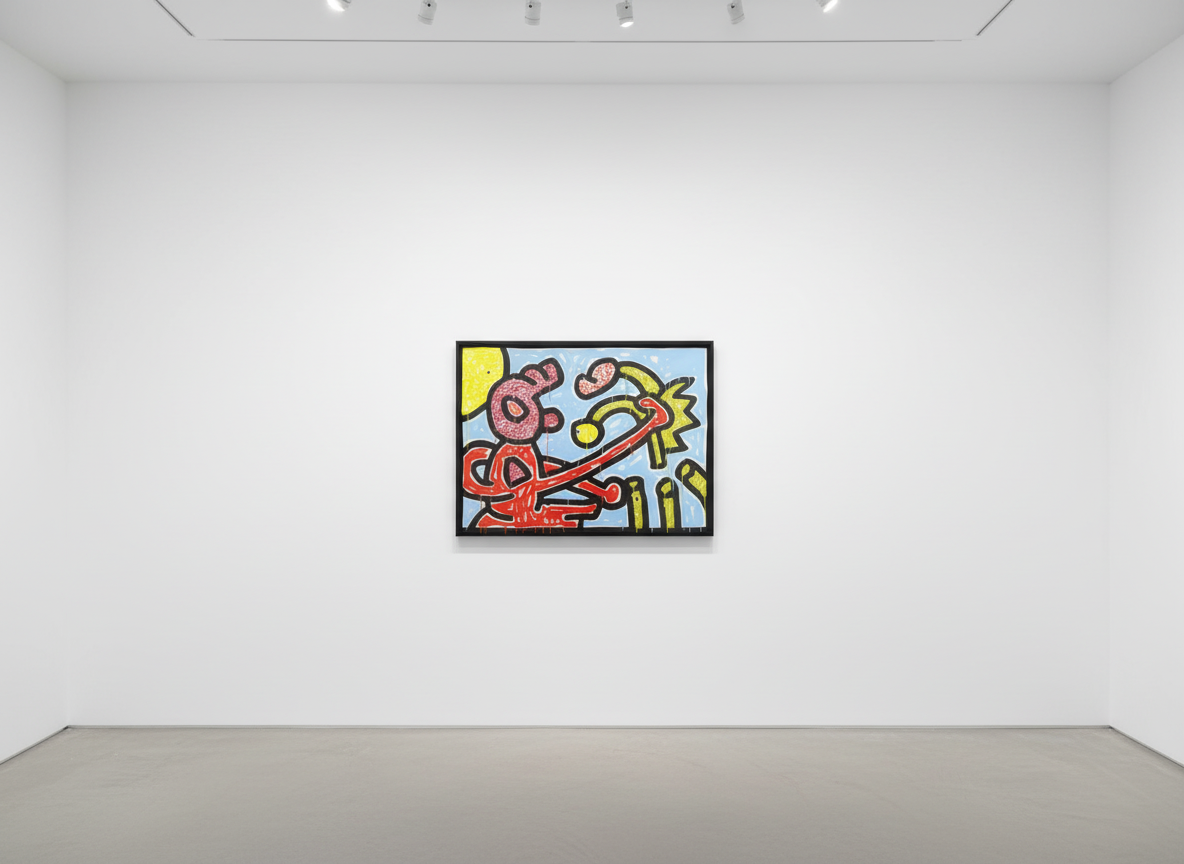
Keith Haring remains one of the most iconic artists of the late twentieth century. His bold lines, vivid colors, and instantly recognizable symbols brought unprecedented energy to contemporary art. Emerging from the street culture of New York City in the early 1980s, Haring bridged the worlds of graffiti, fine art, and commercial culture in ways few artists had achieved before or since. His imagery - radiant babies, barking dogs, flying saucers, and dancing figures - pulsated with energy, humor, and pointed political commentary. Yet beneath the playful immediacy of his visual language lay a profound engagement with social issues including consumerism, racism, nuclear threat, and most significantly, the HIV/AIDS epidemic that would ultimately claim his life.
Tragically, Keith Haring's life and career were cut short when he died on February 16, 1990, at the age of just thirty-one. His death sent shockwaves through the art world and became a pivotal moment in raising awareness about AIDS and the devastating toll it was taking on an entire generation of creative voices. To fully understand the impact of Keith Haring's death, one must examine the circumstances surrounding his final years, the cultural reverberations his passing created, and the enduring legacy he left behind.
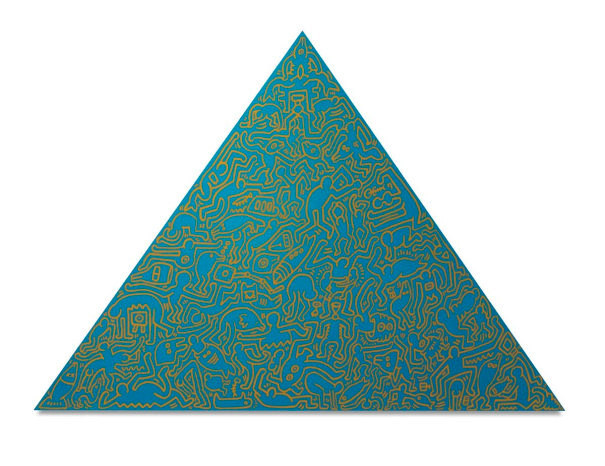
Pyramid Teal — Keith Haring. Available at Guy Hepner, New York.
In 1988, Keith Haring received the diagnosis that would define his remaining time - he was HIV-positive. Rather than retreating from public life, Haring responded with characteristic determination and transparency. He established the Keith Haring Foundation in 1989, dedicating its mission to providing funding and imagery to AIDS organizations and children's programs. This decision reflected his lifelong commitment to accessibility and social activism, ensuring his work would continue serving causes he believed in long after his death.
During his final two years, Haring worked with remarkable intensity. Understanding that his time was limited, he channeled his energy into creating works that addressed mortality, spirituality, and the AIDS crisis with unprecedented directness. Pieces from this period carry a weight and urgency that distinguishes them from his earlier, more exuberant output. The dancing figures that once celebrated life now seemed to acknowledge its fragility. His iconic imagery took on new dimensions of meaning as viewers understood the personal stakes behind each brushstroke.
Haring spoke openly about his diagnosis in interviews, becoming one of the first major artists to publicly address living with AIDS. This transparency was revolutionary at a time when stigma and misinformation surrounded the disease. His willingness to discuss his condition helped humanize the epidemic and challenged the discrimination faced by those affected.
Keith Haring's death on February 16, 1990, from AIDS-related complications marked the loss of one of contemporary art's most vital voices. The news reverberated throughout New York's artistic community and beyond, serving as a stark reminder of the epidemic's devastating reach into creative circles. Haring joined a tragic roster of artists, musicians, and performers whose lives were claimed by the disease during this period.
The response to his passing was immediate and profound. Memorial services drew hundreds of mourners, and tributes appeared on walls throughout New York City - fitting homages to an artist who had first gained recognition through his Subway Drawings. Museums and galleries worldwide organized retrospectives, and his work took on new significance as viewers contemplated the full arc of his abbreviated career.
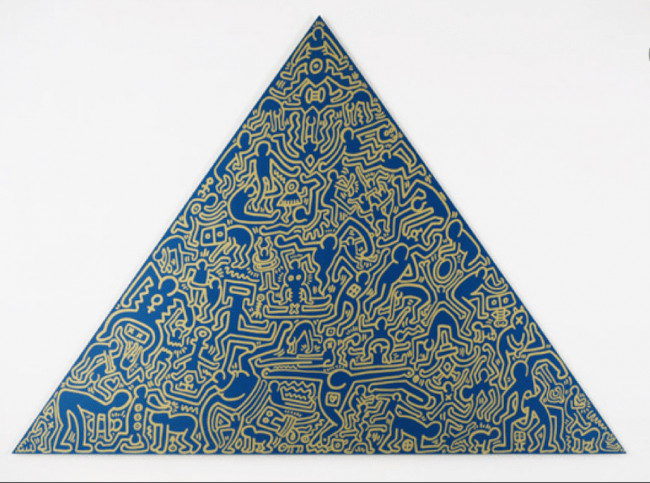
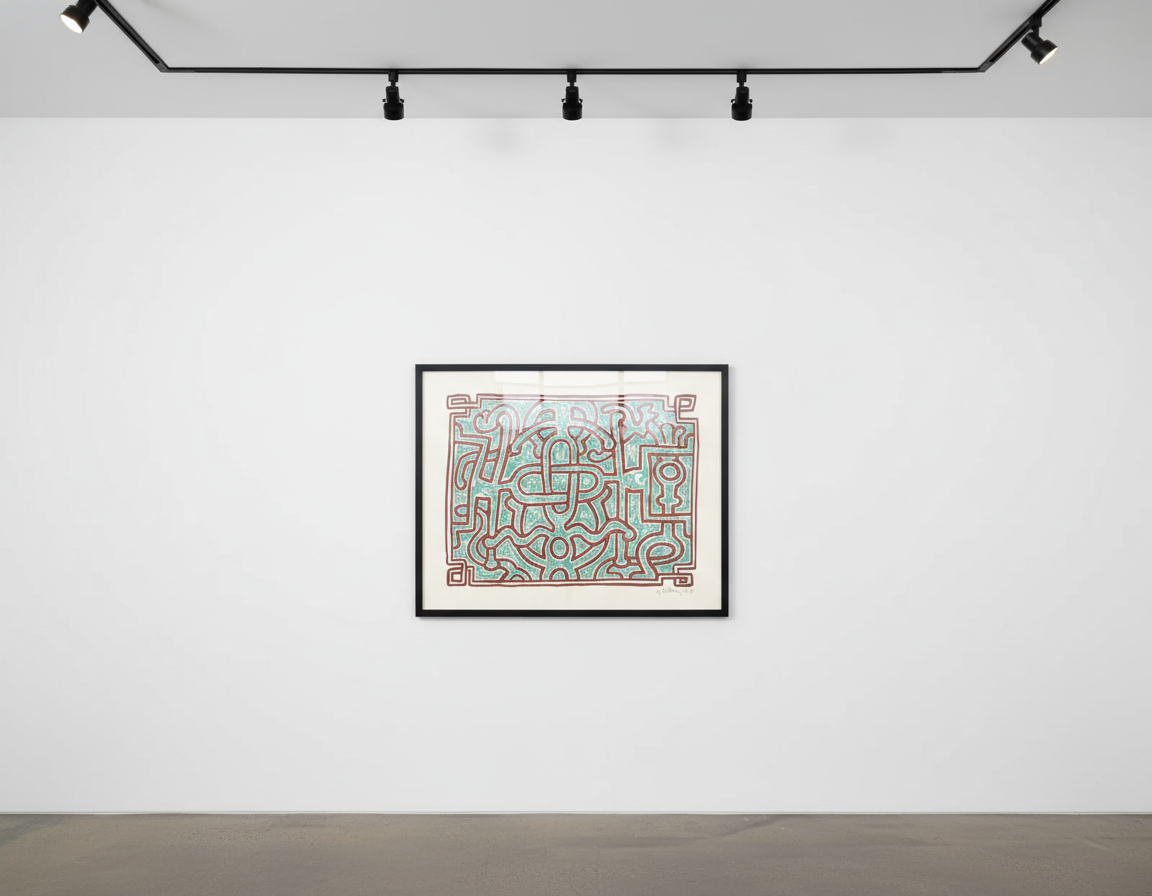
Pyramid Blue — Keith Haring. Available at Guy Hepner, New York.
Beyond the immediate mourning, Keith Haring's death catalyzed important conversations about AIDS awareness, arts funding, and the responsibility of the art world to address social crises. His foundation continued his activist legacy, distributing millions of dollars to AIDS research and children's charities. The visibility of his passing - and his courageous openness about his diagnosis - contributed meaningfully to shifting public perception of the disease.
In the decades since Keith Haring's death, the market for his work has demonstrated remarkable strength and consistent growth. According to data tracked by major auction houses including Christie's and Sotheby's, Haring's pieces regularly achieve significant results at sale, with major works commanding prices in the millions. The Art Basel and UBS Global Art Market Report has consistently identified Haring as among the most sought-after post-war and contemporary artists, with particularly strong demand from collectors across generations.
Several factors contribute to sustained collector interest in Haring's oeuvre. The finite nature of his output - constrained by his tragically short career - creates inherent scarcity. His immediately recognizable visual vocabulary ensures enduring cultural relevance, while his work's historical significance within both street art movements and the broader contemporary canon provides institutional validation. Additionally, younger collectors drawn to socially engaged art find particular resonance in Haring's activist messages.
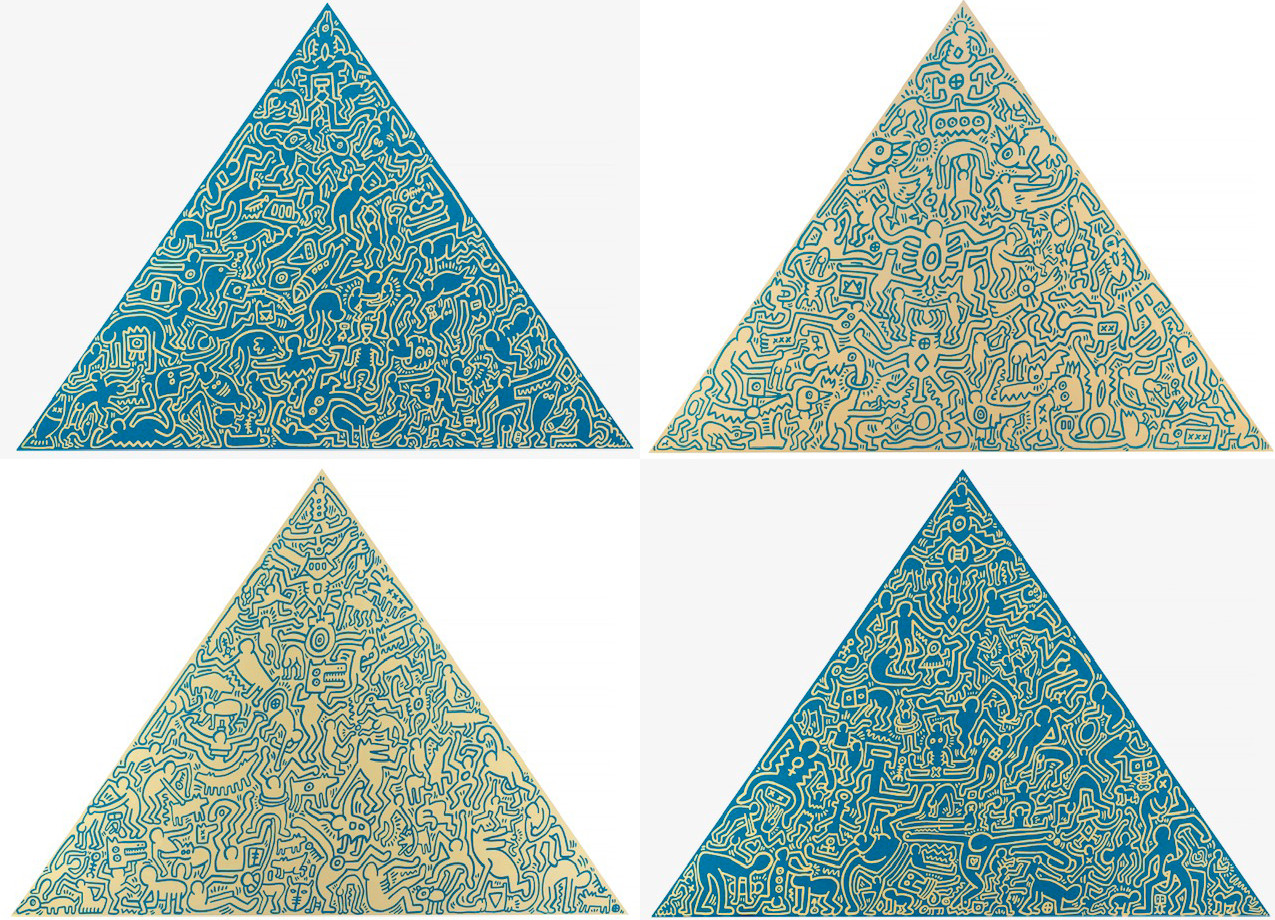
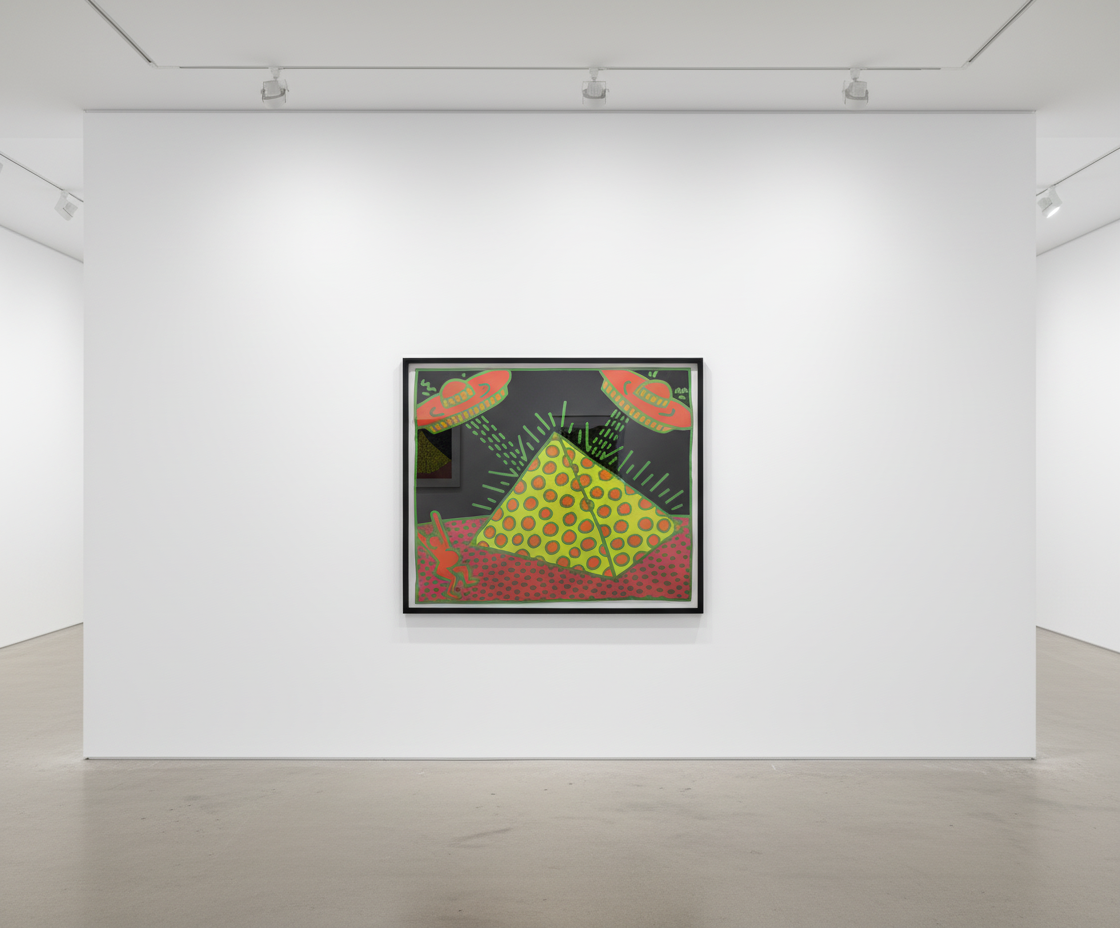
Pyramids — Keith Haring. Available at Guy Hepner, New York.
Works from Haring's final years, created with the knowledge of his diagnosis, hold special significance for many collectors. These pieces represent not only artistic achievement but also profound personal expression in the face of mortality. The pyramid imagery that appears throughout his work - symbolizing endurance, spiritual transcendence, and timeless human achievement - takes on particular poignancy when viewed through the lens of Keith Haring's death and his determination to create meaning that would outlast his physical presence.
Guy Hepner is proud to offer exceptional works by Keith Haring, including striking examples from his celebrated pyramid series. These pieces exemplify the bold graphic power and symbolic depth that define Haring's most compelling work. Our gallery specialists possess extensive expertise in Haring's market and can guide collectors toward acquisitions that align with their aesthetic vision and investment objectives. Whether you are establishing a new collection or seeking to add significant works to an existing portfolio, Guy Hepner provides the knowledge, discretion, and access that discerning collectors require. We invite you to contact our team to discuss available Keith Haring works and explore the opportunity to own pieces by this legendary artist whose influence continues to shape contemporary art.
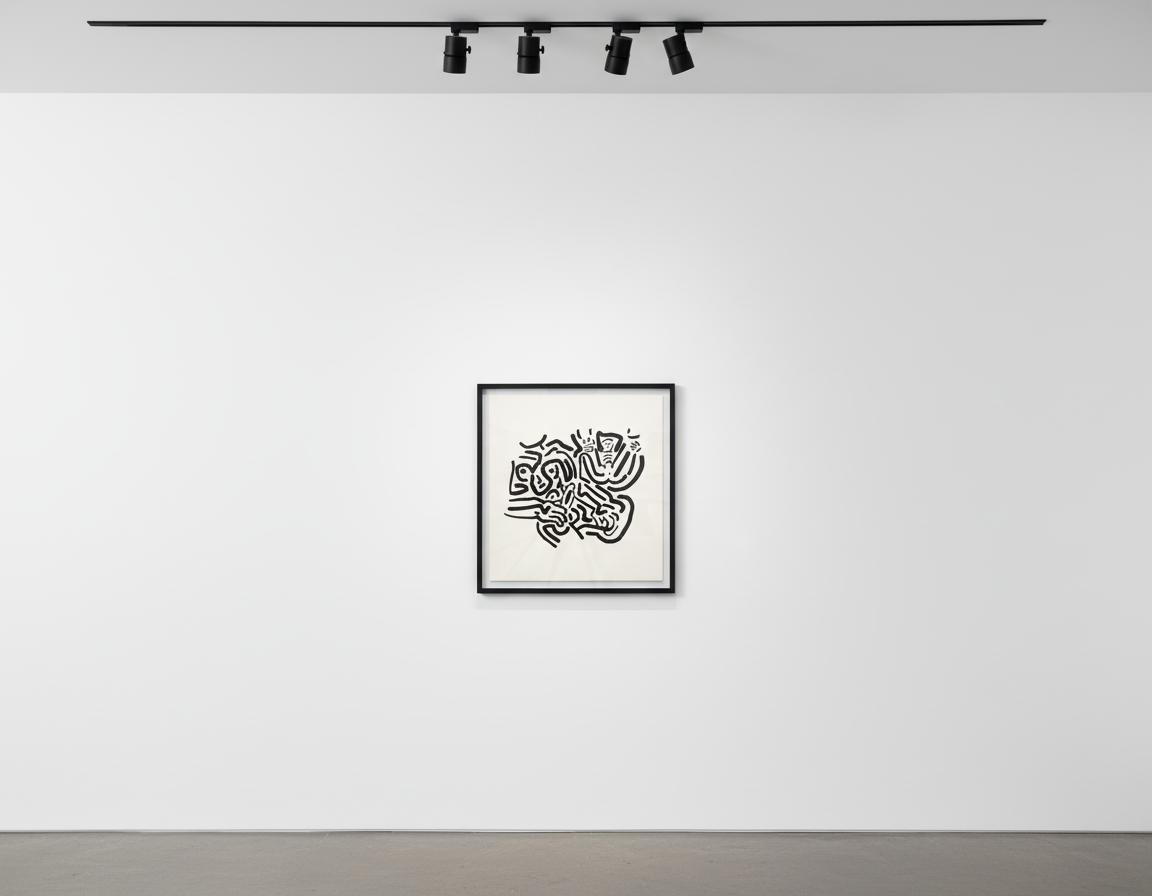
Explore Keith Haring prints for sale at Guy Hepner: Andy Mouse, Apocalypse, Bad Boys, Chocolate Buddha, Fertility.
Related Series