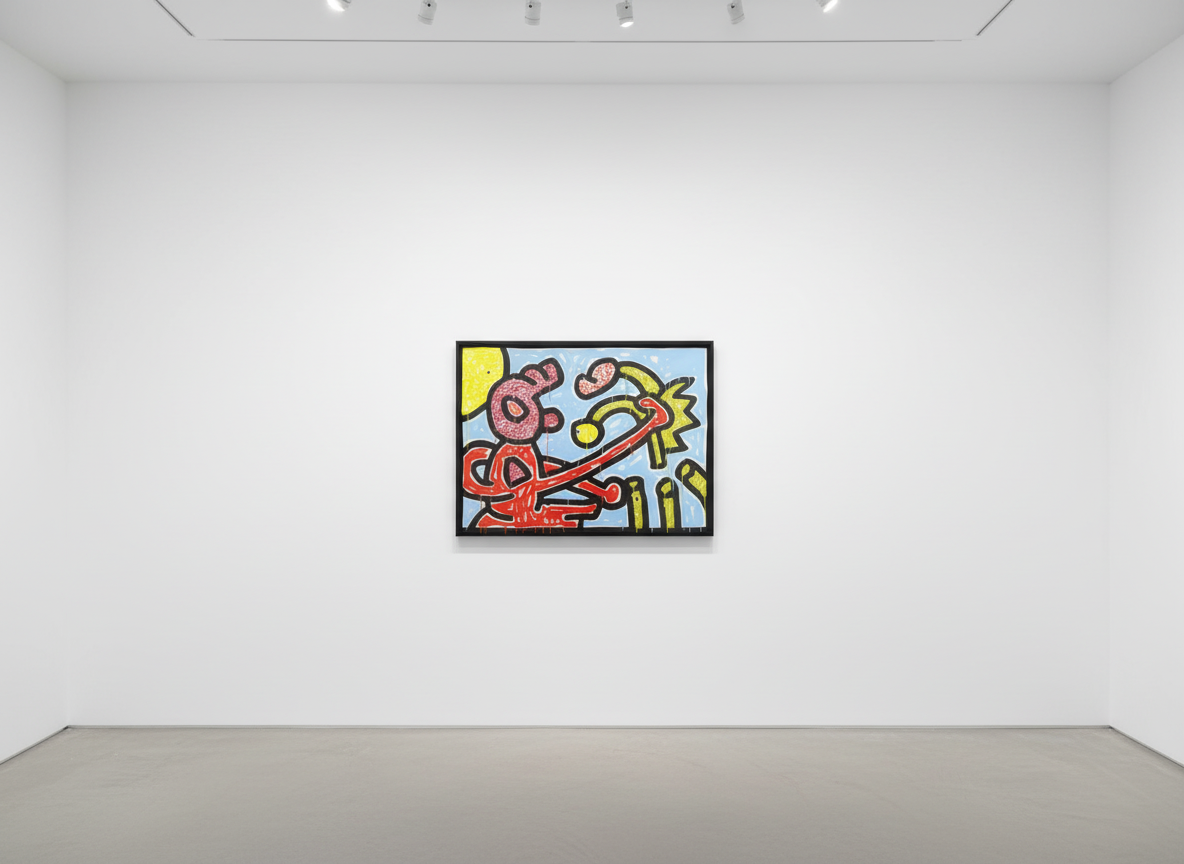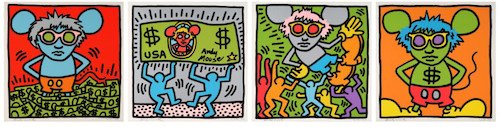
Andy Mouse

May 23, 2026
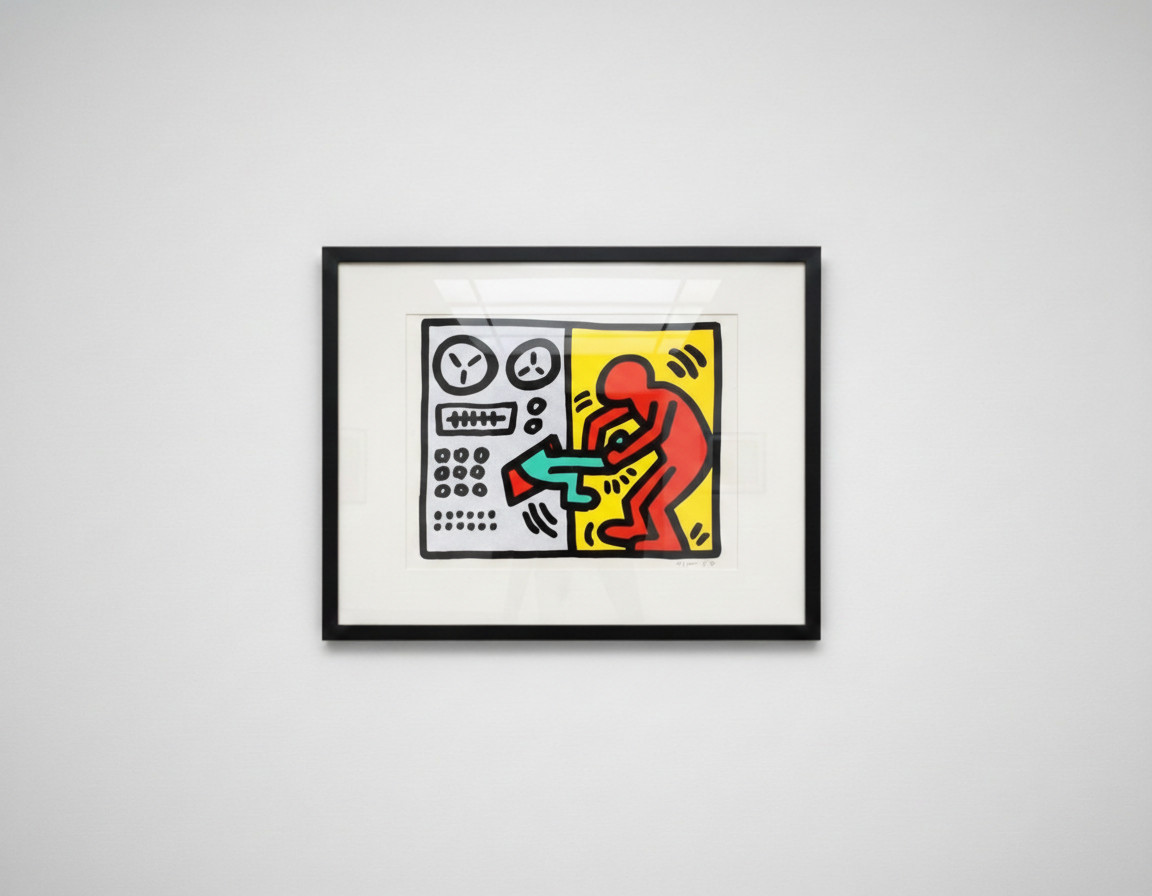
Inquire About Available Keith Haring Works Browse current Keith Haring prints and editions available through Guy Hepner, New York.
The question of Keith Haring authentication sits at the centre of every serious purchase decision in this market. Haring's visual language — the radiant baby, the barking dog, the dancing figure — is among the most replicated in post-war art. His symbols are simple enough that counterfeits are common, and his prints regularly command prices from $15,000 to over $300,000. Knowing how to verify what you're looking at before money changes hands is not optional. This guide covers the current state of Keith Haring authentication, what the Foundation's 2012 decision means in practice, how to read a genuine signature, what the Littmann catalogue raisonné tells you, and where the auction market currently sits for verified works.
Keith Haring was born on 4 May 1958 in Reading, Pennsylvania. He came to New York in 1978, initially to study at the School of Visual Arts, and quickly became absorbed into the downtown art scene — the same milieu that produced Jean-Michel Basquiat, Kenny Scharf, and a generation of artists who believed that art belonged on the street rather than only in galleries.
From 1980 to 1985, Haring produced his now-famous Subway Drawings: chalk drawings on the black paper used to cover expired advertisement panels in New York's subway stations. These ephemeral works — featuring crawling babies, barking dogs, figures outlined in radiant energy, flying saucers — were seen by millions before Haring had shown in a single gallery. They established both his visual vocabulary and his reputation.
Haring died on February 16, 1990, of AIDS-related complications. He was 31. In his eight active years as a professional artist, he produced an extraordinary body of work: large-scale paintings, public murals on five continents, and a substantial print catalogue spanning 1982 to 1990. The Keith Haring Foundation was established under the terms of his will to continue his philanthropic legacy, concentrating on children's education and AIDS awareness.
The combination of an extraordinarily compressed career, a large and accessible print catalogue, instantly recognisable imagery, and strong sustained collector demand has made Haring's market unusually susceptible to forgery and misrepresentation. Understanding how to check if a Keith Haring work is real is therefore one of the most practically important pieces of knowledge a collector in this market can have.
The most important fact in this entire guide: the Keith Haring Foundation disbanded its authentication committee on 1 September 2012 and no longer accepts applications for review.
Julia Gruen, then executive director of the Foundation, made this announcement following a unanimous decision by the Foundation's trustees. The stated reason was that the resources required to operate the authentication committee would be better redirected toward the Foundation's charitable mission. The announcement also noted that the Foundation was "exploring the development of a catalogue raisonné" — a project that as of 2025 remains in progress but unpublished.
This has significant practical implications:
The Foundation does continue to maintain archives facilitating historical research, to support exhibitions and publications, and to manage the artist's licensing. It is not defunct. But it is not in the business of telling individual collectors whether their specific work is genuine.
 Retrospect" loading="lazy" />
Without a complete, published catalogue raisonné from the Foundation, the market relies primarily on one published reference: Elisabeth Littmann's catalogue of Keith Haring's prints and multiples, commonly cited as "Littmann PP." followed by a page number.
This is the standard reference used by auction houses, dealers, and serious collectors when describing Haring's graphic work. When you see a Haring print described as "Littmann PP. 144" or "Littmann PP. 118-119," the reference is to the specific page in Littmann's catalogue where that work is documented and illustrated.
The catalogue is out of print but can be found secondhand for under £100-150. For any serious collector, it is essential reading. It documents dimensions, printing details, edition sizes, publishers, and dates for each work in Haring's print catalogue.
What the Littmann catalogue confirms:
What it cannot do: It cannot authenticate an individual work presented to it. That requires physical examination. The catalogue is a reference, not a verdict.
Haring's signature is one of the most forged elements in the market. Here is what collectors need to know:
For signed and numbered prints (the majority of his commercial editions):
14/200 Haring 87For unsigned works (posters, offset prints, reproductions):
Key red flag: If a dealer cannot clearly identify whether a work is a fine art print (screenprint, lithograph, limited edition) or a commercial poster or reproduction, walk away. A serious Haring specialist will know this distinction immediately.
Understanding Haring's visual vocabulary is not just art-historical context — it is directly relevant to authentication, because forgeries often get the symbols slightly wrong or use them in compositional combinations that Haring never made.
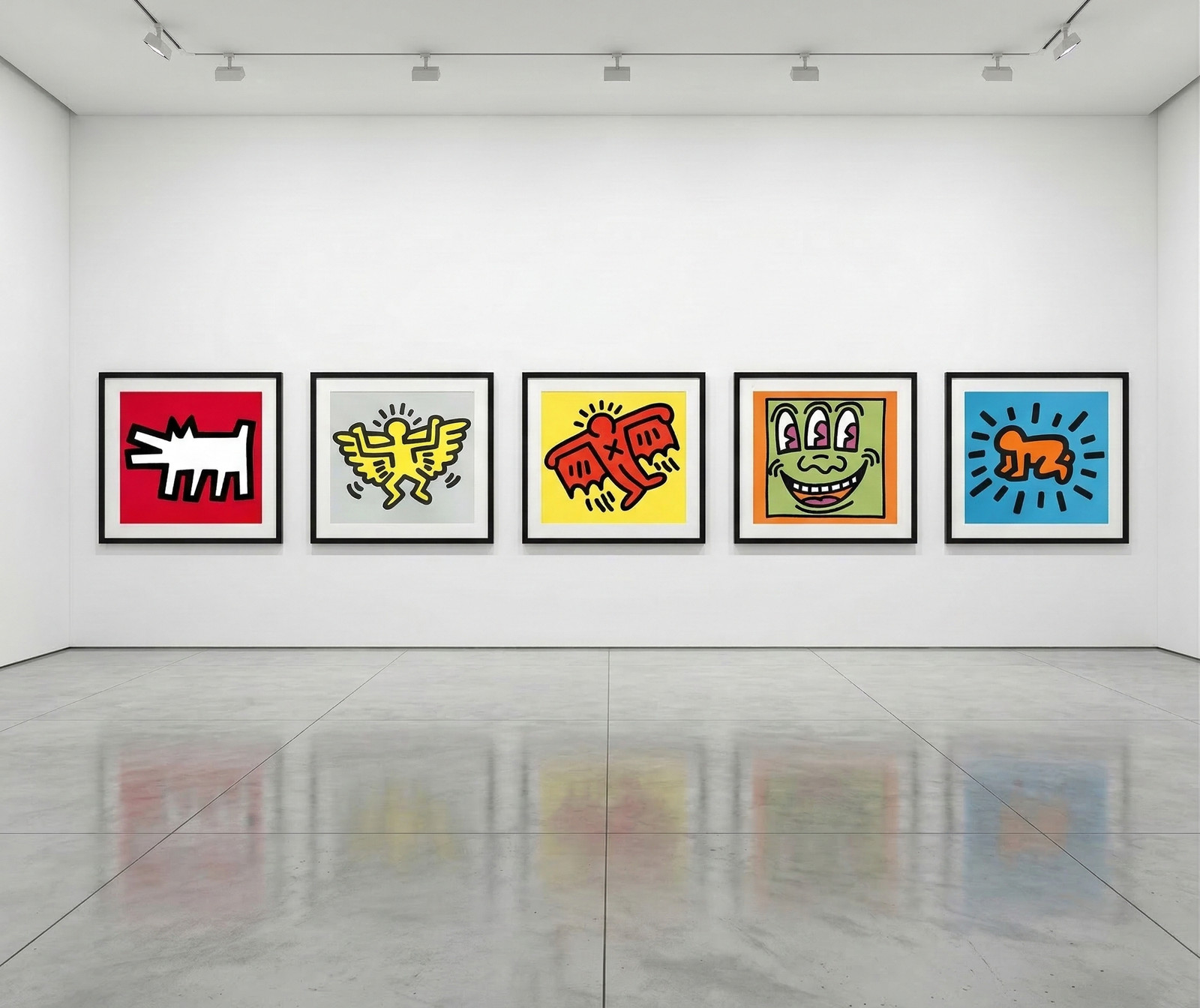
The Radiant Baby: Haring's most recognised motif and his self-described "tag" in the subway drawings. A crawling infant emitting radiating lines of energy. For Haring, it represented "the purest and most positive experience of human existence." It appears extensively in the Icons portfolio (1990) and throughout his print catalogue.
The Barking Dog: First appearing in the subway series from 1980-85, the barking dog was Haring's symbol of oppression and aggression — a warning about abuses of power. In his print work, it appears in the Dog screenprint (1986), in Icons, and in multiple Pop Shop series compositions.
Dancing Figures: Interlocked, energetic human figures in motion. Rooted in Haring's interest in Semiotics and his study at the New School, these figures represent connectivity, movement, and communal joy. They appear in nearly every major print series.
The Heart: A symbol of love and human connection throughout Haring's work. The heart frequently appears in his charitable prints (including the Fight AIDS Worldwide series) and is one of his most consistent positive symbols.
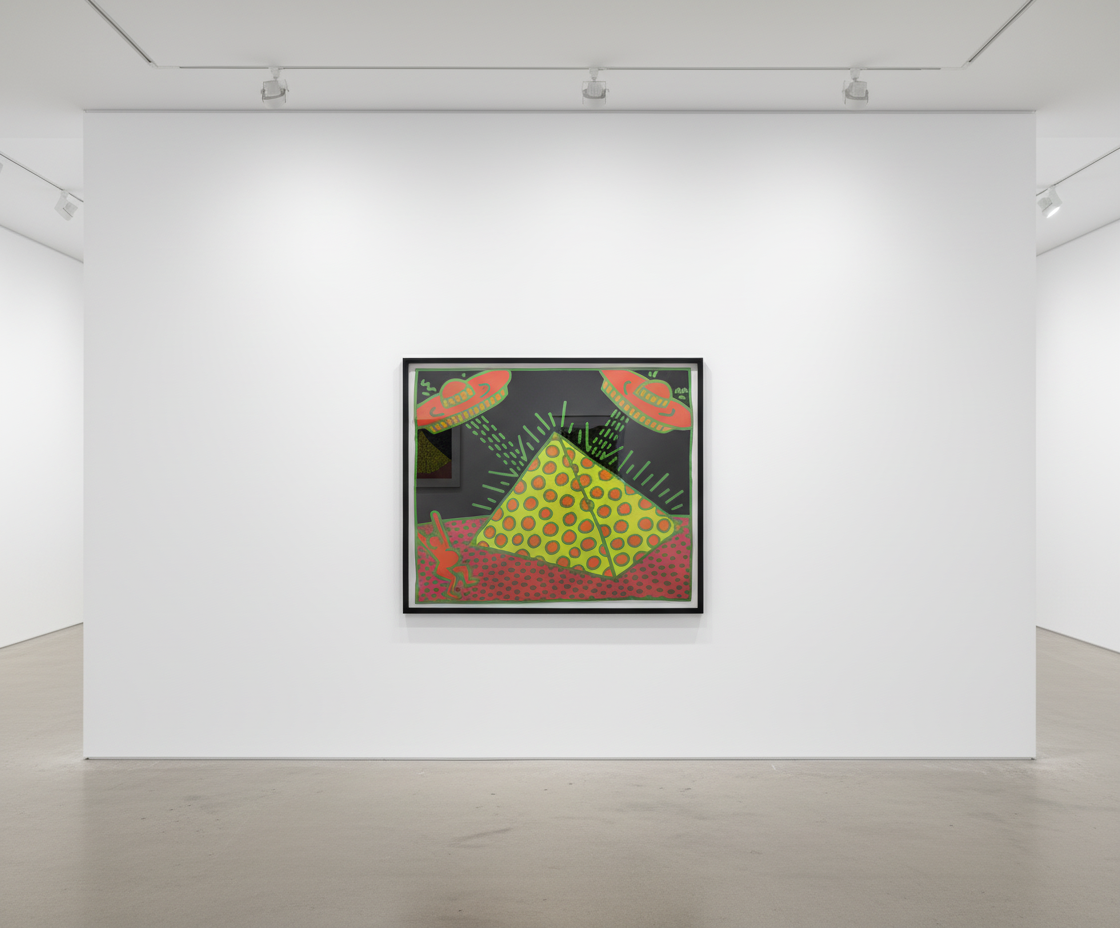
Flying Saucers and UFOs: Haring's interest in science fiction and in the unknown. These appear throughout his subway drawings and early print work.
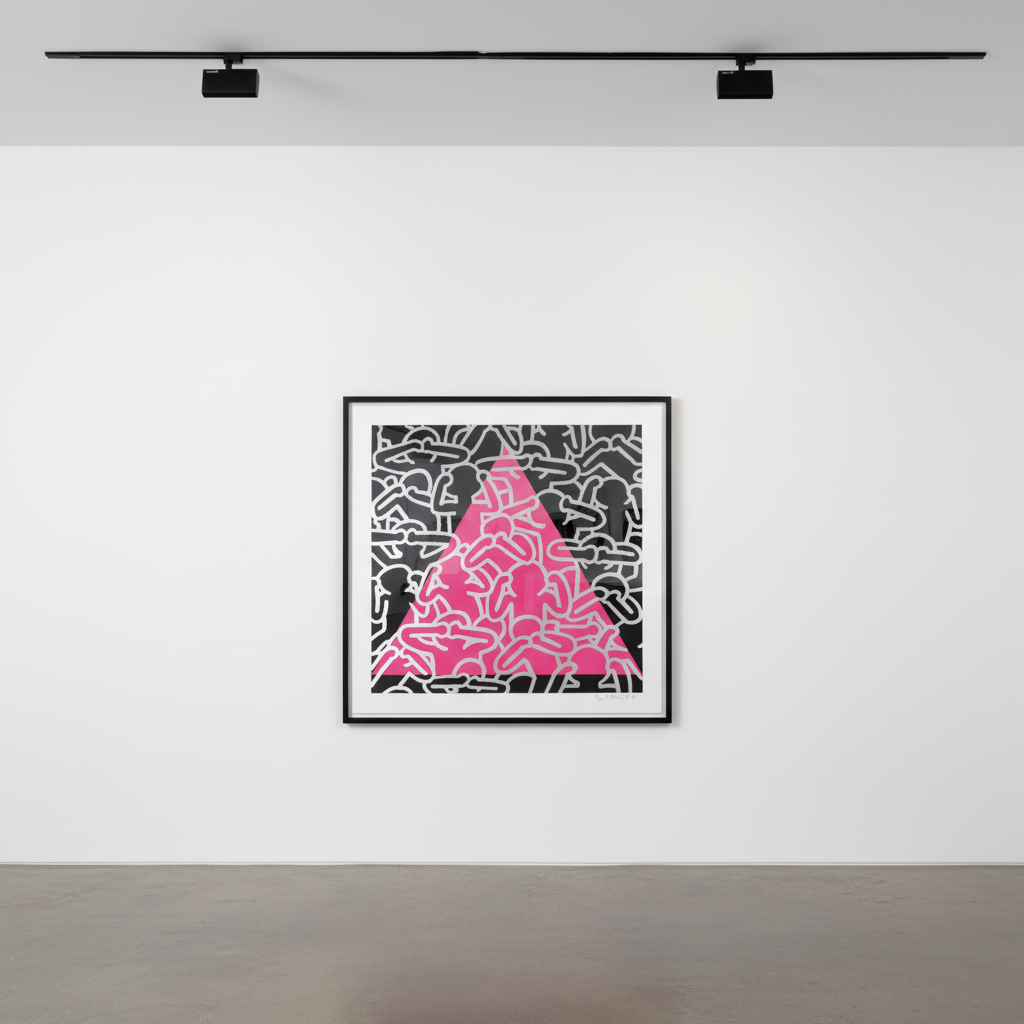
Silence = Death symbol: The pink triangle with the words "Silence = Death" was one of the most powerful symbols of AIDS activism in the 1980s. Haring's 1989 print (Littmann PP. 152) uses this image in a print that is both a work of fine art and a document of a specific historical moment. It remains one of his most sought-after prints by institutional collectors.
When examining a Haring work for purchase, work through this systematically:
Step 1: Identify the work type Is this a screenprint? Lithograph? Offset print? Poster? The distinction between a signed, numbered fine art print and a commercial poster is not always obvious to the non-specialist eye. Use a loupe: a genuine screenprint will show the ink sitting on the surface with a texture distinct from offset printing.
Step 2: Check against Littmann Look up the work in the Littmann catalogue. Verify:
Step 3: Examine the signature Compare to documented genuine signatures from major auction house records. Christie's, Sotheby's, and Phillips all publish high-resolution lot images that include signature details. Note the hand, the format, the placement. Does the signature on your work match?
Step 4: Examine the paper and ink Genuine Haring screenprints from his primary print publisher (from the Pop Shop years onward) are on good-quality, acid-free paper. The colours should be saturated and consistent. Cheap reproductions on thin paper are immediately distinguishable.
Step 5: Request provenance documentation A well-documented Haring print will have a purchase receipt from the original point of sale (his Pop Shop, a gallery, or a publisher), exhibition labels on the verso, or documented auction history. The longer and cleaner the provenance chain, the more confident you can be.
Step 6: Consult an independent specialist Post-2012, the most reliable route for authenticating a Haring work — particularly for significant purchases — is consultation with an independent expert who specialises in post-war prints and multiples with specific knowledge of Haring's catalogue. Major auction house specialists (Christie's prints department, Sotheby's prints department, Phillips) can provide initial assessments even outside of sale contexts.
The print market for Haring is active and well-documented. Below are specific, verified auction results for his print editions — note that these are print market results only and should not be confused with results for unique paintings or large-scale works on tarpaulin.
Print Auction Records:
Market context from 2024–2025:
The painting market for comparison only: Haring's unique paintings and large-scale works on tarpaulin sell in a completely separate price category and are not comparable to print editions. The current painting auction record is £5.0 million ($6.5M USD) for Untitled (1982) at Sotheby's in May 2017. A painting result at $6.5M does not imply that a Pop Shop print from the edition of 200 is worth a fraction of that. The print market has its own independent, well-documented price history.
While the Foundation no longer authenticates individual works, it continues to play a significant role in preserving and contextualising Haring's legacy:
The Foundation's FAQ page states clearly that it does not offer authentication services. This is not a bureaucratic technicality — it reflects the trustees' considered decision that the Foundation's charitable resources are better deployed elsewhere.
What this means for the collector: you are buying on the strength of the physical work, its documentation, and expert opinion. The absence of a Foundation letter does not make a work less authentic; equally, the presence of a pre-2012 Foundation letter does not make a work automatically worth a premium over documented auction results.
Understanding what moves price in the Haring print market helps collectors assess whether a given work is correctly valued:
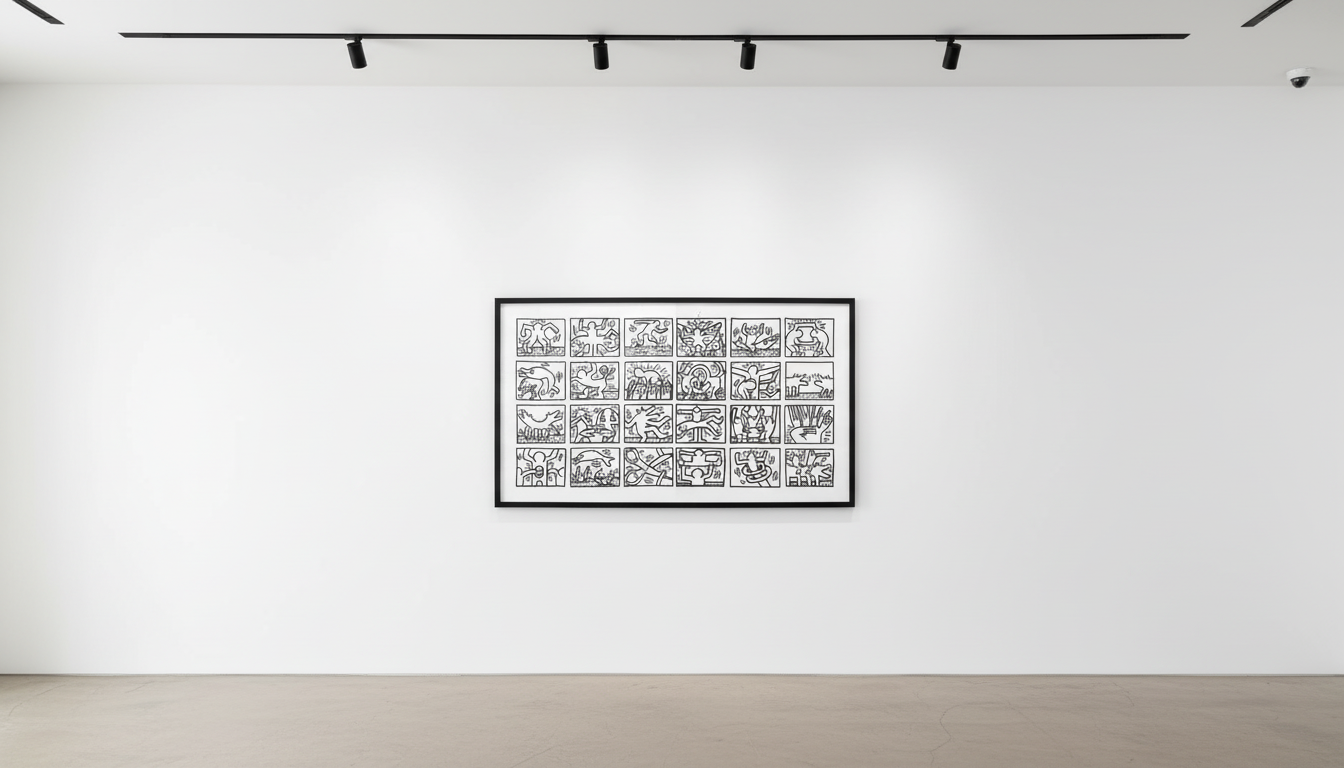
Edition size: Smaller editions command higher prices. The Retrospect print (edition of 75) consistently outperforms Pop Shop series prints (edition of 200) at auction even when the Pop Shop works are more widely recognised. The Dog lithograph (edition of 10) achieved over £280,000 at Sotheby's in 2023.
Imagery: Works featuring Haring's most iconic motifs — the radiant baby, barking dogs, dancing figures — in their most direct and recognisable presentations tend to outperform more complex or less familiar compositions among general collector populations. Specialist and institutional buyers often seek the opposite: works that demonstrate Haring's range and his political engagement.
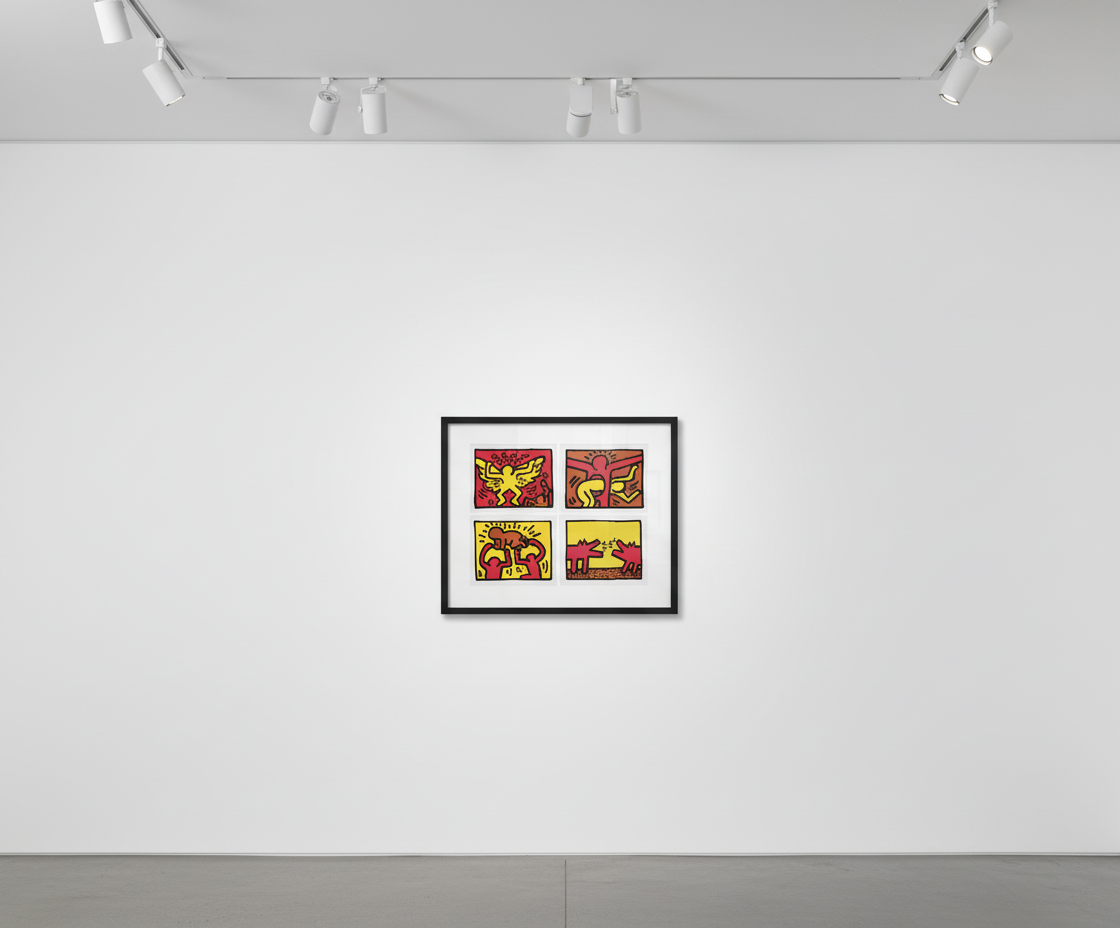
Complete portfolios vs. individual prints: Complete portfolios (all plates present, matching edition numbers, with original documentation) command meaningful premiums over individual plates separated from their suites. The Pop Shop I complete portfolio (four plates) consistently sells at a significant premium over individual plates.
Condition: Haring prints on paper are susceptible to fading, foxing, and damage. Mint condition — no fading, no foxing, no damage to edges or image area — carries a substantial premium over works with condition issues. Always request a condition report.
Provenance: Works with clean, traceable provenance from their original point of sale command premiums. Gallery purchase receipts, Pop Shop sales receipts, and auction house provenance are all meaningful.
The Pop Shop legacy: Haring opened his Pop Shop in SoHo in 1986, deliberately offering affordable editions to make his art accessible to everyone. This philosophy is embedded in his print catalogue: his editions were intended to be owned, not just admired. This cultural positioning contributes to sustained collector demand across price levels.
Entry level ($5,000–$25,000): Individual plates from the Pop Shop series (II, III, IV, V, VI) in good condition from the edition of 200. Well-documented, plentiful provenance available at this level. Good starting point for building familiarity with Haring's print market.
Mid-market ($25,000–$100,000): Complete Pop Shop portfolios, individual plates from major series in excellent condition, the Silence = Death print (Littmann PP. 152, edition of 200), Dog (Littmann PP. 49, edition of 10). At this level, provenance becomes more important and condition scrutiny more critical.
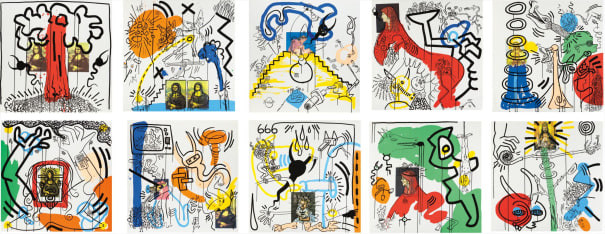
Major works ($100,000+): Retrospect (edition of 75), Andy Mouse (edition of 30, signed by both Haring and Warhol), large-scale unique works on paper, and paintings. These transactions require full specialist support, independent expert opinion, and complete provenance documentation.
What a serious collector should know:
No. The Keith Haring Foundation disbanded its authentication committee and stopped accepting applications for review effective September 1, 2012. Any claim of new Foundation authentication for an individual work after that date should be treated with extreme scepticism. The Foundation continues to operate as a grant-making and archival body, but no longer issues authentication letters for specific works.
Among unique paintings, Untitled (1982) holds the current auction record at £5 million ($6.5M) at Sotheby's in May 2017. Among prints and editions, the most culturally significant works include: the Radiant Baby (from the Icons series, 1990), the Retrospect print (1989), Silence = Death (1989), the Dog screenprint (1986), and the Andy Mouse portfolio (1986). The Radiant Baby is generally considered his most iconic symbol.
Haring developed a pictorial language through his study of Semiotics. Key symbols: the Radiant Baby represents innocence and human potential; the Barking Dog represents oppression, aggression, and abuse of power; Dancing Figures represent human connectivity and joy; the Heart represents love and connection; the Pink Triangle in Silence = Death references the symbol of gay pride and AIDS activism. These symbols recur across virtually all of his print editions.
With the Foundation committee dissolved, authentication now depends on: (1) comparison with the Littmann catalogue raisonné for edition details and dimensions; (2) physical examination of paper, ink, and medium by a specialist; (3) examination of the signature against documented genuine signatures from major auction records; (4) review of provenance documentation; and (5) independent specialist opinion from a post-war prints expert. Major auction houses (Christie's, Sotheby's, Phillips) can provide specialist assessments.
Keith Haring died on February 16, 1990, of AIDS-related complications. He was 31 years old. He had been diagnosed with AIDS in 1988. In the final two years of his life, his AIDS diagnosis directly influenced some of his most politically charged work, including Silence = Death (1989) and his Fight AIDS Worldwide prints. He established the Keith Haring Foundation in 1989 before his death to continue his philanthropic work.
On signed and numbered prints, Haring typically signed in pencil on the lower right or lower edge of the work. The format is: edition number / total edition size, then "Haring" followed by the two-digit year (e.g., 14/200 Haring 87). The signature is relatively simple — a fluid "Haring" without ornamental flourishes. Works from 1989-1990 may show a more laboured hand due to his declining health. Compare to verified auction house lot images for reference.
Yes, but it has not yet been published. The Foundation's 2012 statement noted they were "exploring the development of a catalogue raisonné." As of 2025, the Littmann catalogue remains the primary published reference for Haring prints. A complete Foundation-published catalogue raisonné, if and when published, would become the definitive reference.
Guy Hepner maintains one of the most substantial inventories of Keith Haring prints and editions in the United States, with particular depth in his Pop Shop series, Icons, Retrospect, and unique works on paper.
Inquire About Available Keith Haring Works Speak with a specialist about Keith Haring works held in inventory or available for private acquisition.
Guy Hepner | 177 Tenth Avenue, New York
Guy Hepner Gallery represents an extensive inventory of authenticated Keith Haring paintings for sale, original works on paper, and screen print editions. Our collection spans the Icons series, Pop Shop editions, Blueprint Drawings, Lucky Strike, Andy Mouse, Retrospect, and major unique works.
Browse Keith Haring original art for sale → | Keith Haring prints for sale → | Sell your Keith Haring →
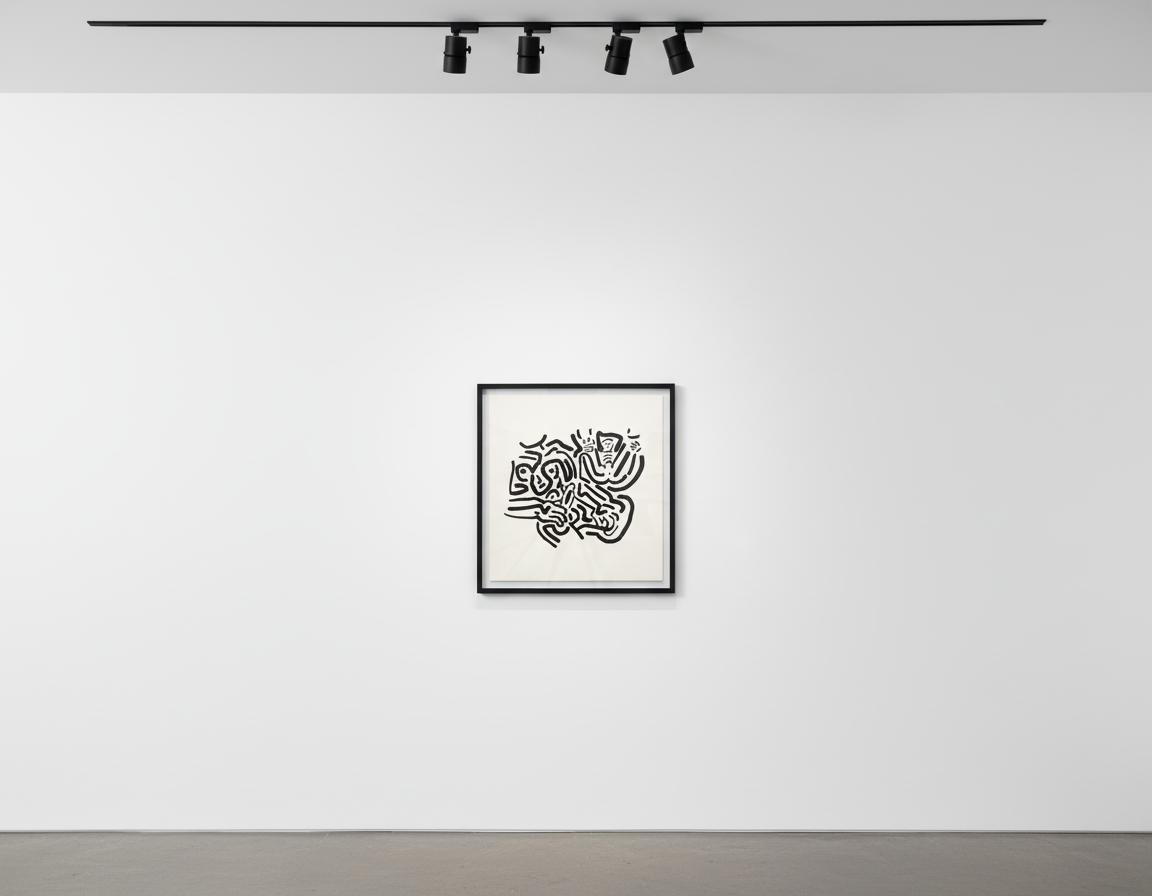
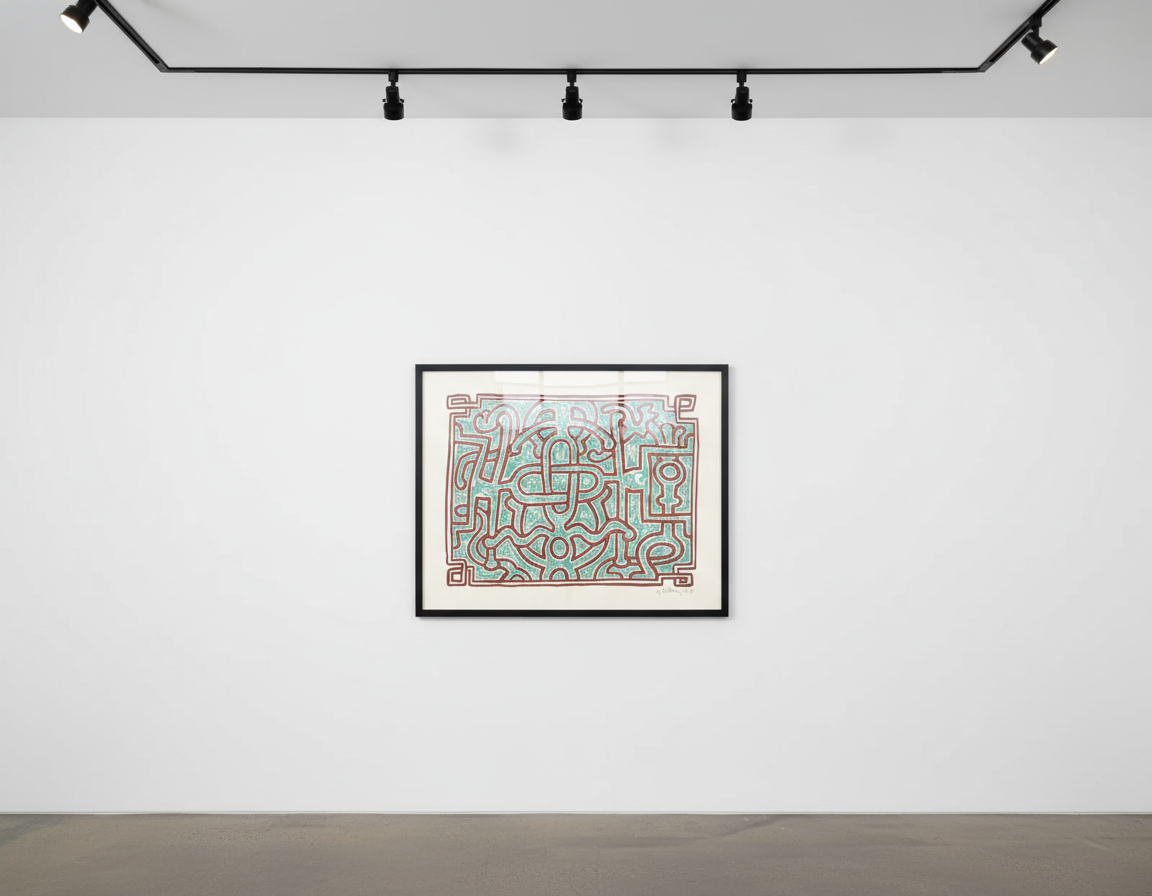
Explore Keith Haring prints for sale at Guy Hepner: Andy Mouse, Apocalypse, Bad Boys, Chocolate Buddha, Fertility.
Related Series