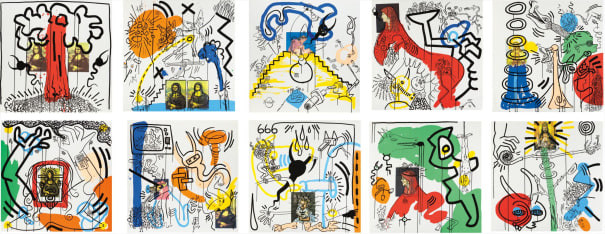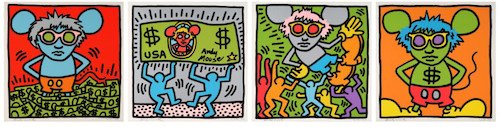
Andy Mouse

Keith Haring occupies a singular position in the history of contemporary art. Emerging from the vibrant cultural landscape of 1980s New York, his practice fused graffiti aesthetics, Pop Art sensibilities, and an unwavering commitment to art's capacity for social transformation. His instantly recognizable visual language - characterized by bold contour lines, simplified figurative forms, and pulsating color - established him not merely as a beloved cultural icon but as a profoundly serious artist whose work continues to shape critical discourses around accessibility, activism, and democratic visual communication.
To understand Haring's enduring impact on both contemporary art and the collector market, it is essential to consider five key facts about his life and artistic practice. These observations transcend simple biography: they illuminate the intellectual, political, and aesthetic dimensions of his career while demonstrating why his work commands increasingly significant attention from institutions and private collectors more than three decades after his untimely death in 1990.
One of the most defining features of Keith Haring's career was his revolutionary use of the New York City subway system as studio, gallery, and laboratory for visual experimentation. Beginning in 1980, he identified unused advertising panels covered with matte black paper as ideal surfaces for his white chalk drawings. These ephemeral works - created rapidly and in full public view - became his signature contribution to the democratization of art in urban space.
The Subway Drawings established Haring's core iconography: the radiant baby, the barking dog, crawling figures, flying saucers, and dancing human forms that would define his mature practice. Working quickly to avoid arrest, he developed a remarkably fluid linear style that communicated universal themes of birth, death, love, and social consciousness without relying on text or cultural specificity. This accessibility was intentional. Haring believed that art should speak to everyone regardless of education, economic status, or institutional access.
By 1985, Haring had created hundreds of these unauthorized public works, gaining recognition from both the downtown art establishment and ordinary New Yorkers who encountered his imagery during their daily commutes. This dual audience - the art world cognoscenti and the general public - would remain central to his practice and philosophy throughout his career.
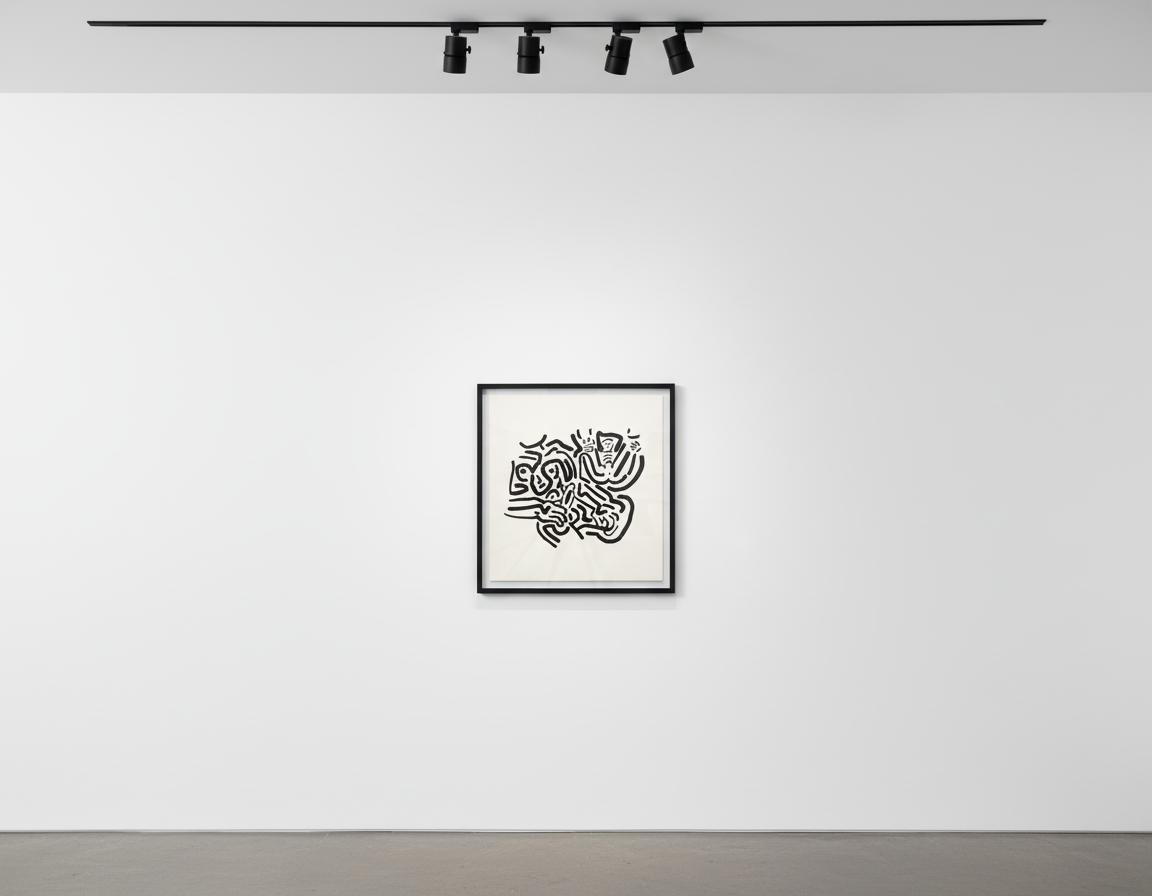
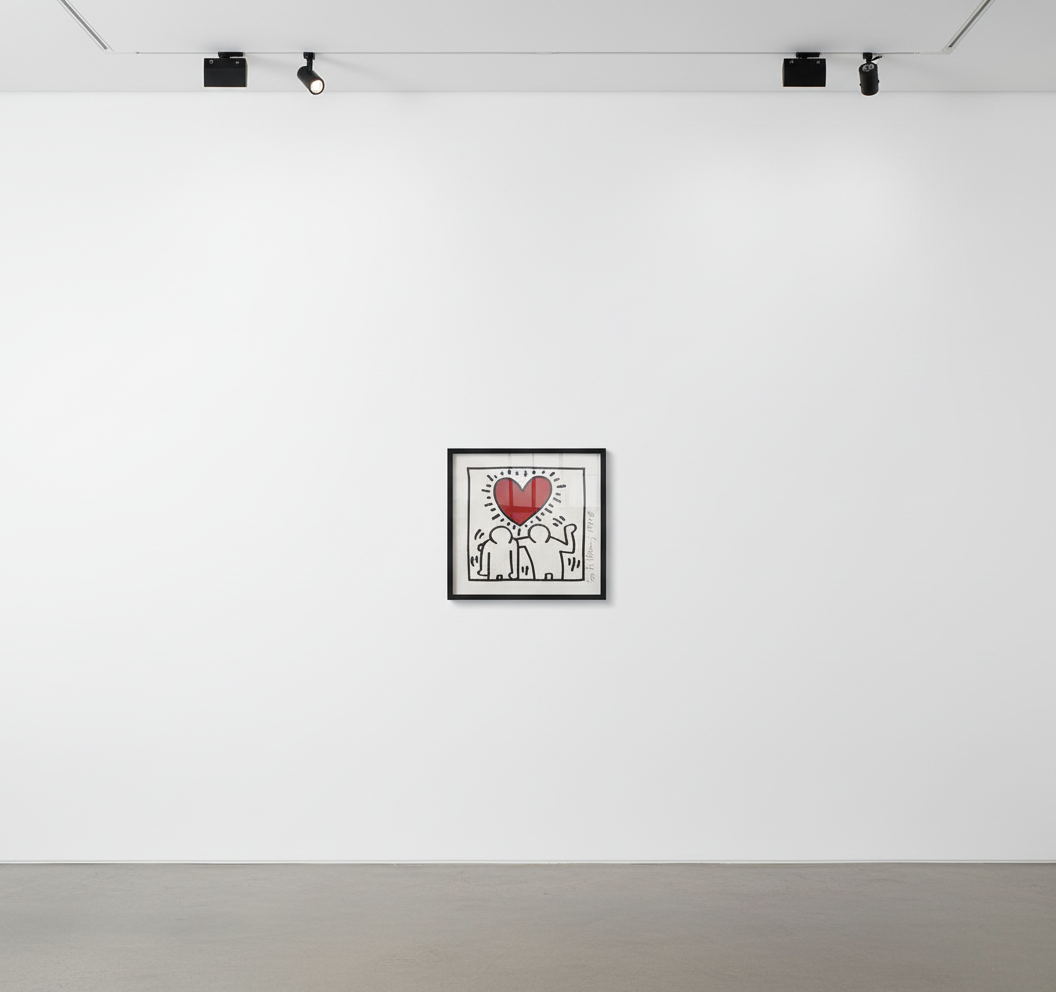
Pop Shop I (A) (Littmann PP. 82) — Keith Haring. Available at Guy Hepner, New York.
In 1986, Keith Haring opened the Pop Shop at 292 Lafayette Street in Manhattan, a retail space selling affordable merchandise featuring his imagery. This venture proved controversial within the art establishment, with critics questioning whether commercial reproduction diminished the integrity of his artistic project. Haring's response was characteristically direct: he argued that expensive gallery prices and institutional gatekeeping created artificial barriers between art and its potential audiences.
The Pop Shop represented Haring's most sustained attempt to challenge the economics of art consumption. T-shirts, buttons, magnets, and posters bearing his iconic figures allowed anyone to own and display his work. Far from diluting his artistic significance, this strategy anticipated contemporary debates about art's relationship to commerce, reproduction, and mass culture that continue to animate critical discourse.
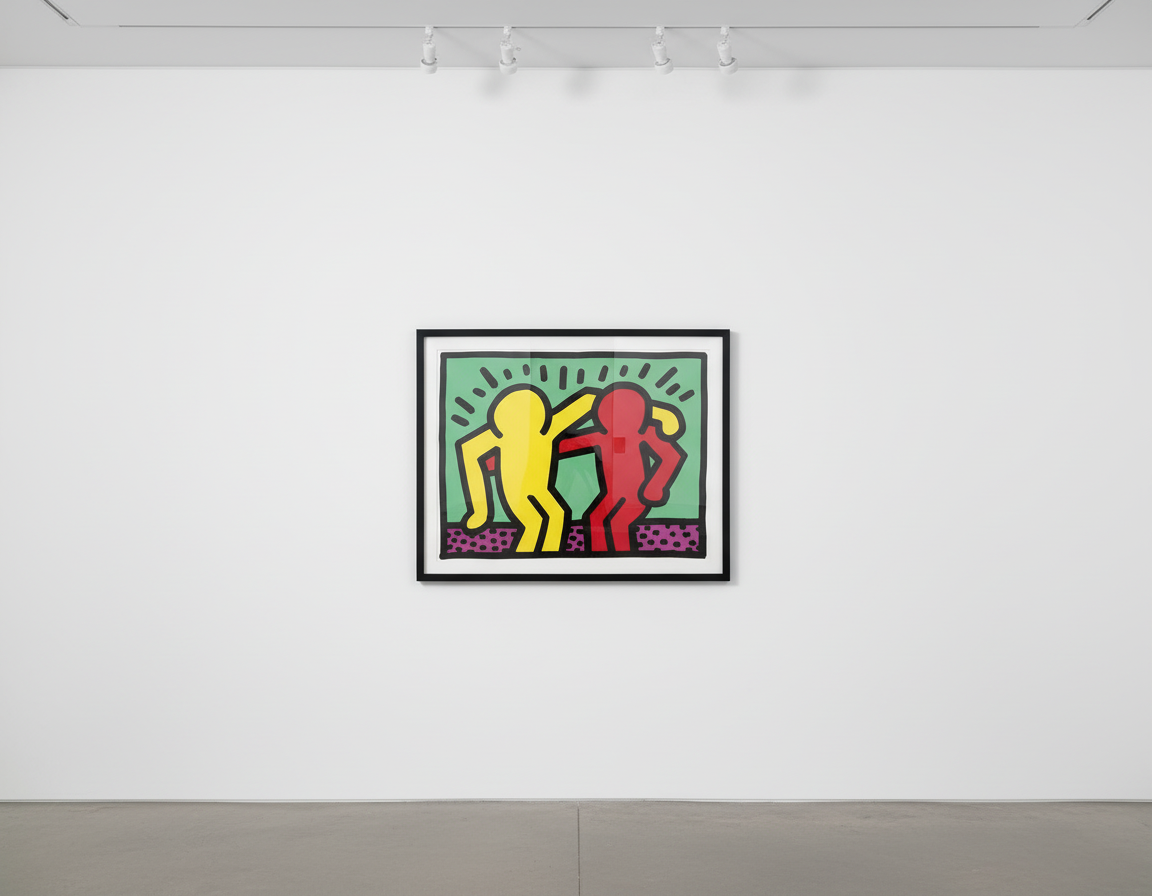
The print editions Haring created during this period - including the celebrated Pop Shop series - demonstrate his sophisticated understanding of multiple production as an artistic medium. These screenprints maintain the energy and immediacy of his drawing practice while exploiting the democratic potential of the editioned artwork. Today, these works represent some of the most sought-after examples of late twentieth-century printmaking.
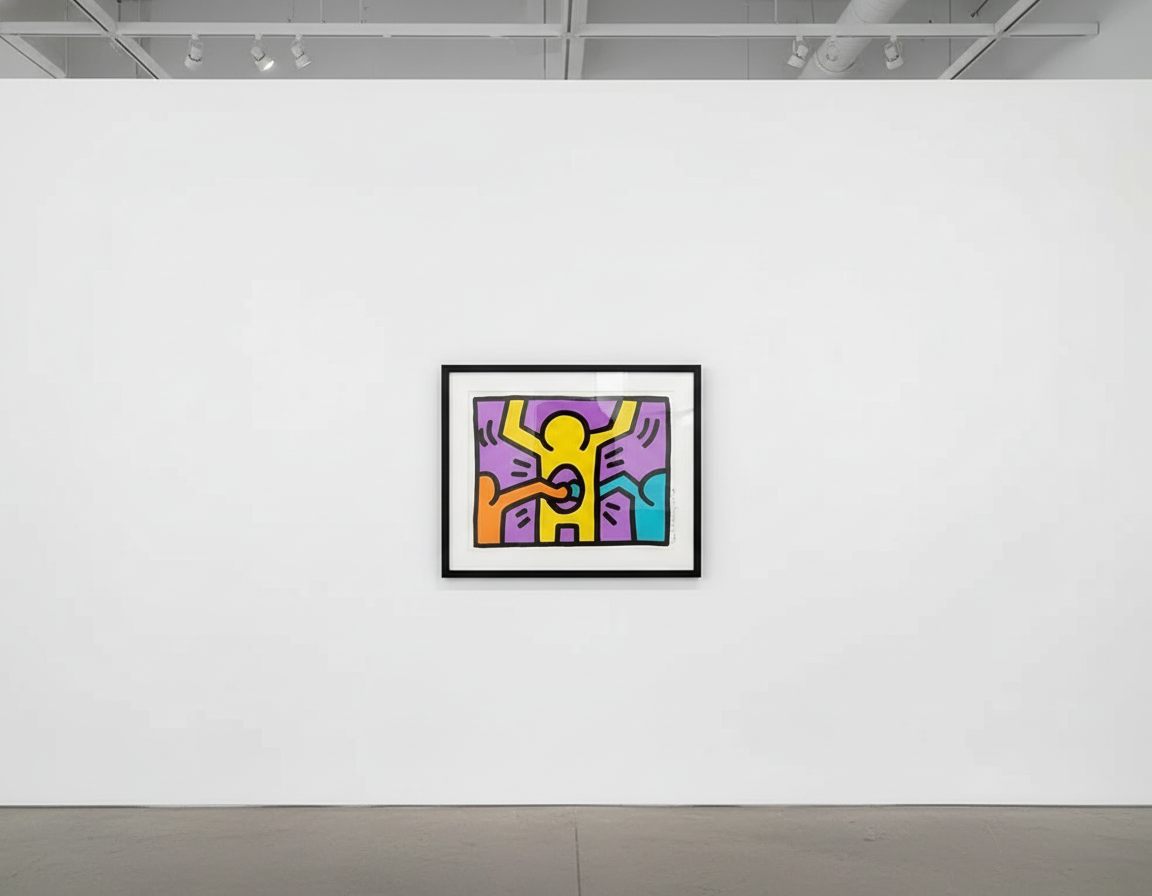
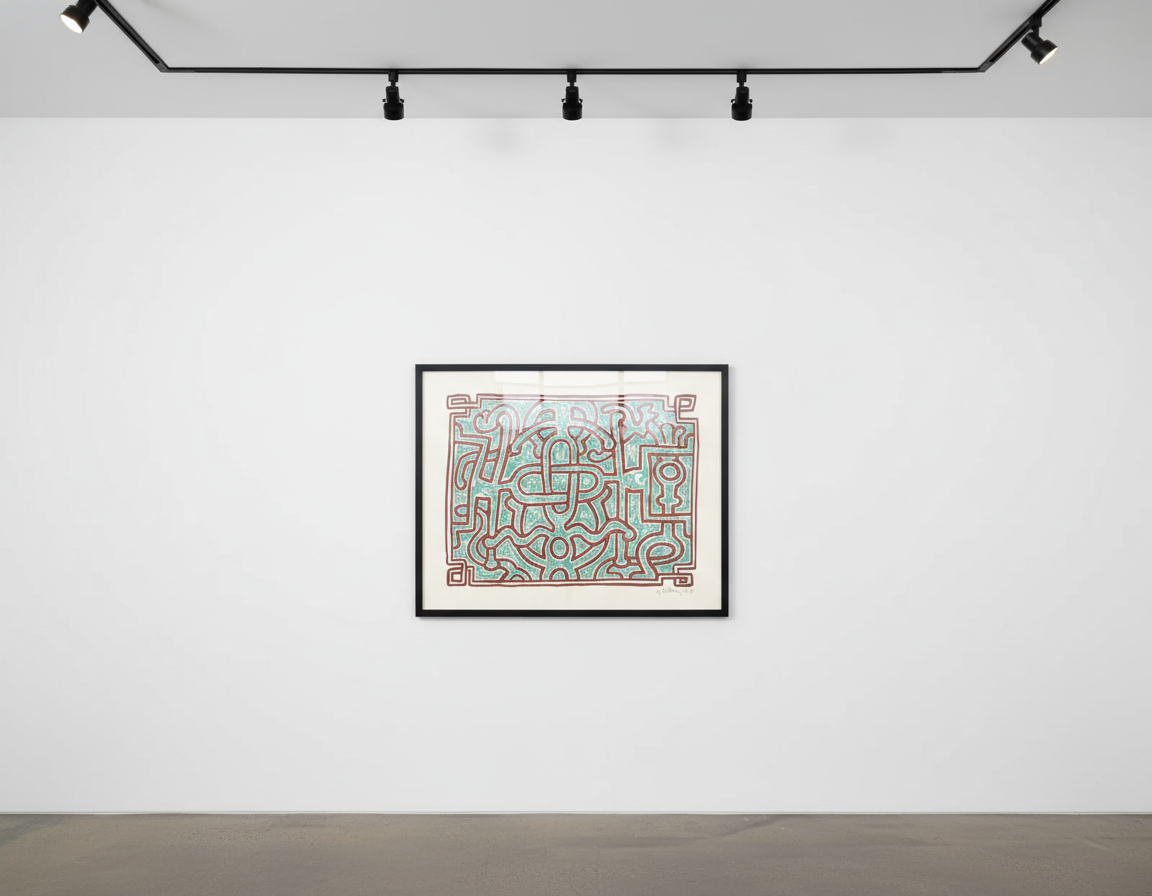
Pop Shop I (C) (Littmann PP. 83) — Keith Haring. Available at Guy Hepner, New York.
Keith Haring's artistic production cannot be separated from his commitment to social and political causes. Throughout the 1980s, he created works addressing apartheid in South Africa, nuclear proliferation, environmental destruction, and the crack cocaine epidemic devastating American urban communities. However, it was the AIDS crisis - and his own diagnosis in 1988 - that most profoundly shaped his final years of production.
Following his diagnosis, Haring channeled extraordinary creative energy into works addressing the epidemic and its social dimensions. He established the Keith Haring Foundation in 1989 to support AIDS organizations and children's programs while ensuring his artistic legacy would serve humanitarian purposes. Works from this period carry particular historical weight, documenting both personal confrontation with mortality and broader collective trauma.
Haring's activist practice anticipated the socially engaged art that would become increasingly prominent in subsequent decades. His integration of aesthetic ambition with political commitment - refusing the separation between artistic quality and social purpose - established a model that contemporary artists continue to explore and expand.
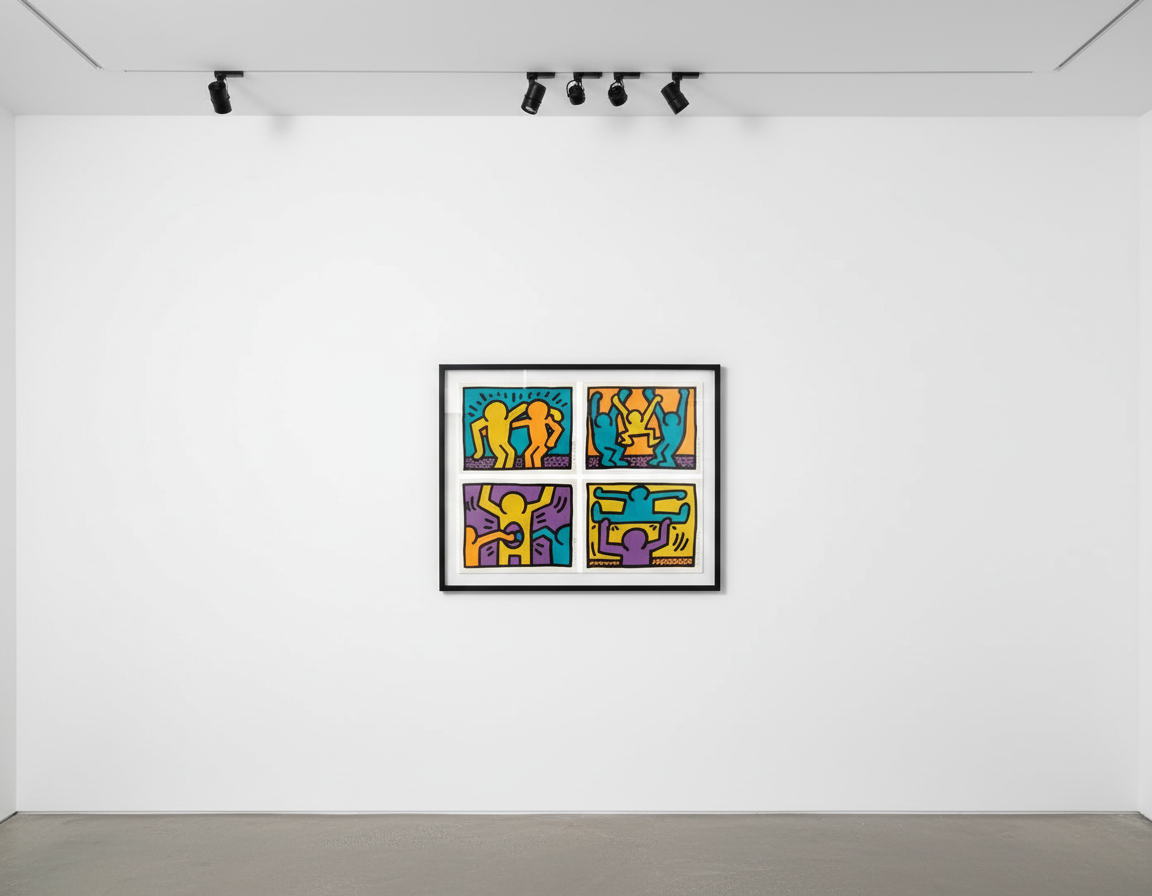
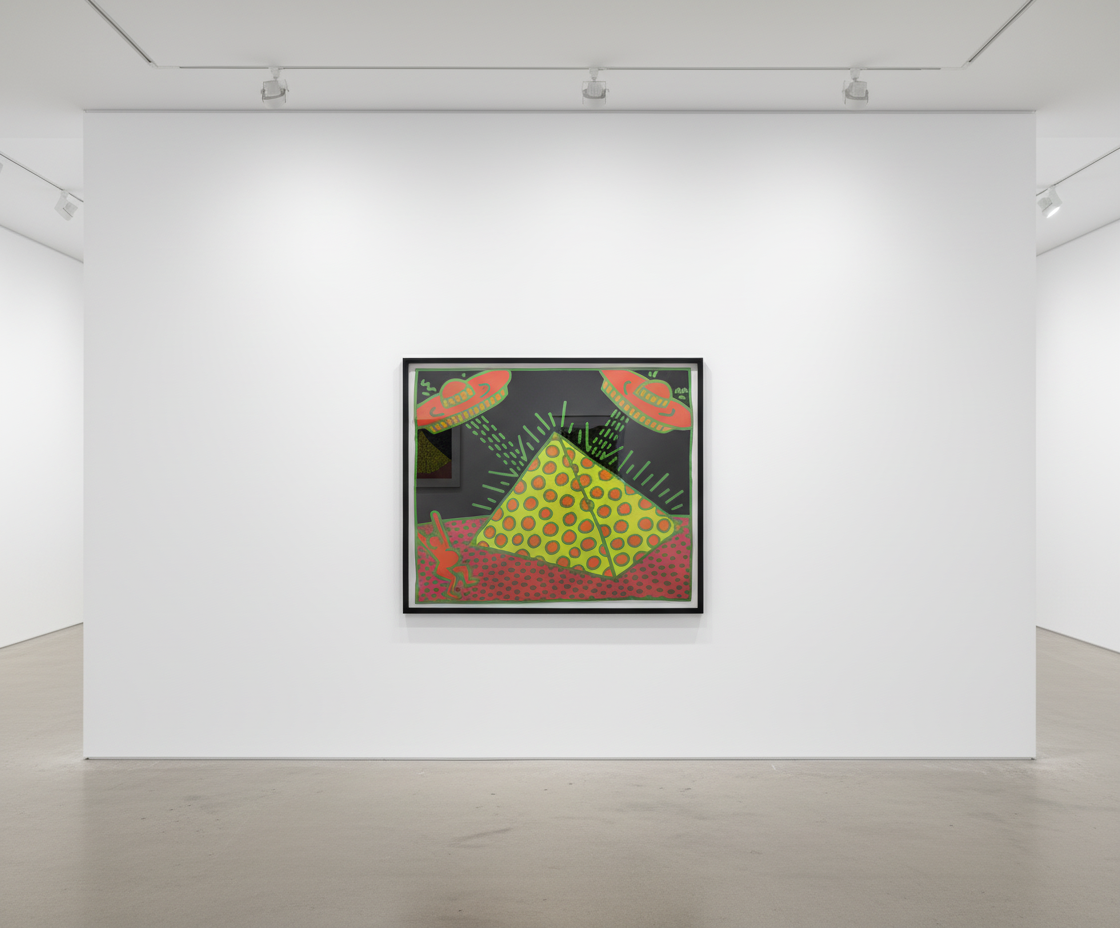
Pop Shop I (Littmann PP. 82 - 83) — Keith Haring. Available at Guy Hepner, New York.
The secondary market for Keith Haring's work has demonstrated remarkable strength and consistency. According to data compiled by Art Basel and UBS in their annual art market reports, post-war and contemporary works by artists who successfully bridged popular culture and fine art practice have shown sustained collector demand across economic cycles. Haring's position within this category remains exceptionally secure.
Major auction results at Christie's and Sotheby's confirm this institutional confidence. His paintings, sculptures, and works on paper regularly achieve prices reflecting both art historical significance and continued cultural relevance. The Pop Shop editions, in particular, offer collectors entry points into Haring's oeuvre at various price levels while maintaining strong appreciation potential.
Collectors are drawn to Haring's work for multiple reasons: its immediate visual impact, its art historical importance within the trajectory of Pop Art and street art movements, its connection to the extraordinary cultural moment of 1980s New York, and its embodiment of values - accessibility, social consciousness, joyful resistance - that resonate powerfully with contemporary sensibilities. For those building collections that balance aesthetic distinction with historical significance, Haring remains essential.
Guy Hepner is pleased to offer exceptional works by Keith Haring, including important examples from the Pop Shop print editions. Our gallery specializes in museum-quality contemporary art and maintains access to significant works by this pivotal figure in late twentieth-century art. Collectors interested in acquiring pieces by Keith Haring are invited to contact our team for availability, pricing, and detailed condition information. We provide comprehensive provenance documentation and offer guidance to both emerging and established collectors seeking to add this essential artist to their holdings.
Explore Keith Haring prints for sale at Guy Hepner: Andy Mouse, Apocalypse, Bad Boys, Chocolate Buddha, Fertility.
Related Series