Retrospect

Keith Haring remains one of the most influential and universally recognized artists of the twentieth century. His bold graphic language - characterized by radiant babies, barking dogs, dancing figures, and pulsating lines - transcended the boundaries of the art world to become embedded in global visual culture. Before his untimely death in 1990 at the age of thirty-one, Haring created a body of work that spoke to themes of life, death, love, activism, and collective humanity. Among his most ambitious achievements stands Retrospect, a monumental print series that serves as both a visual autobiography and a definitive statement of his artistic philosophy.
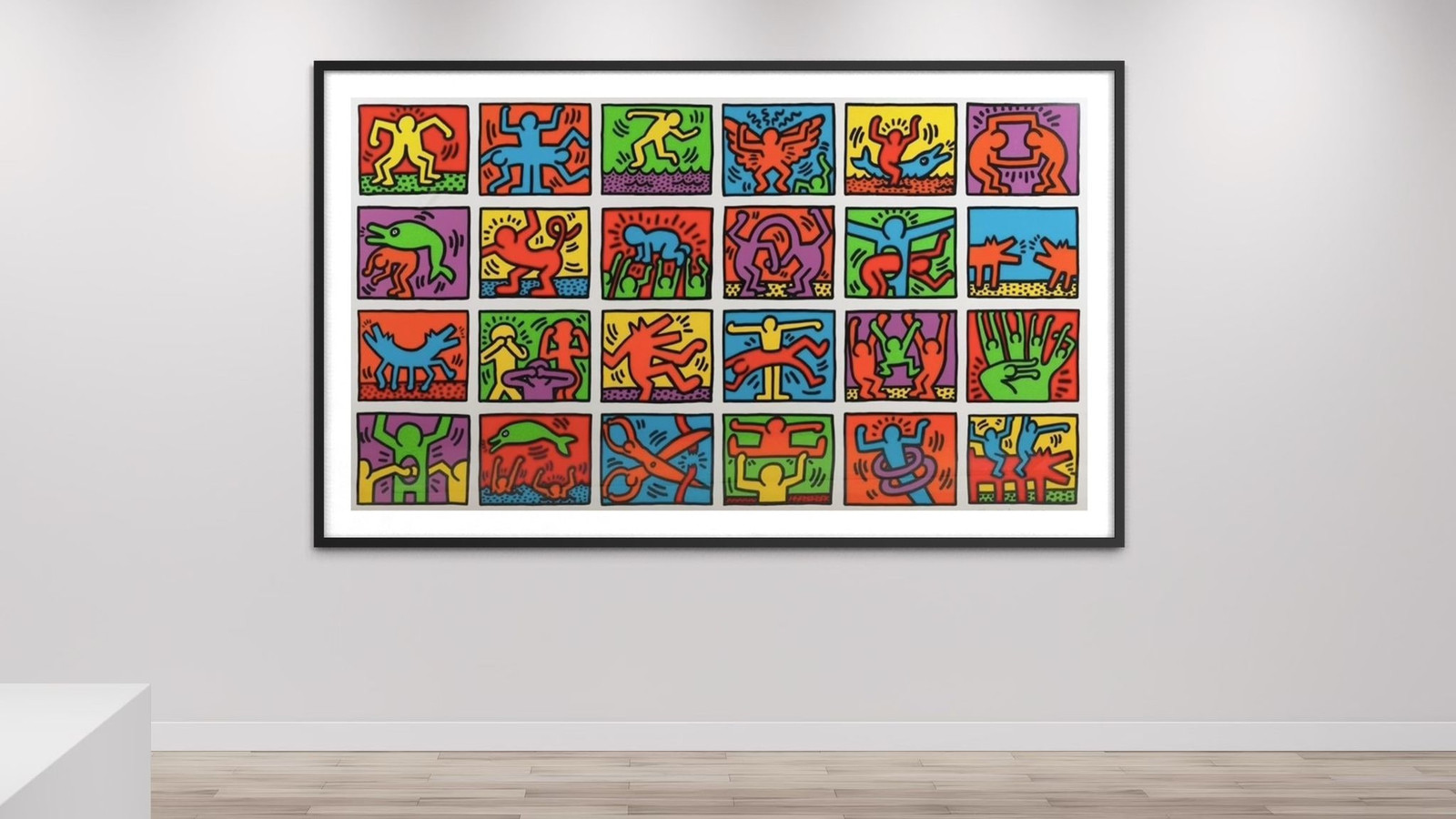
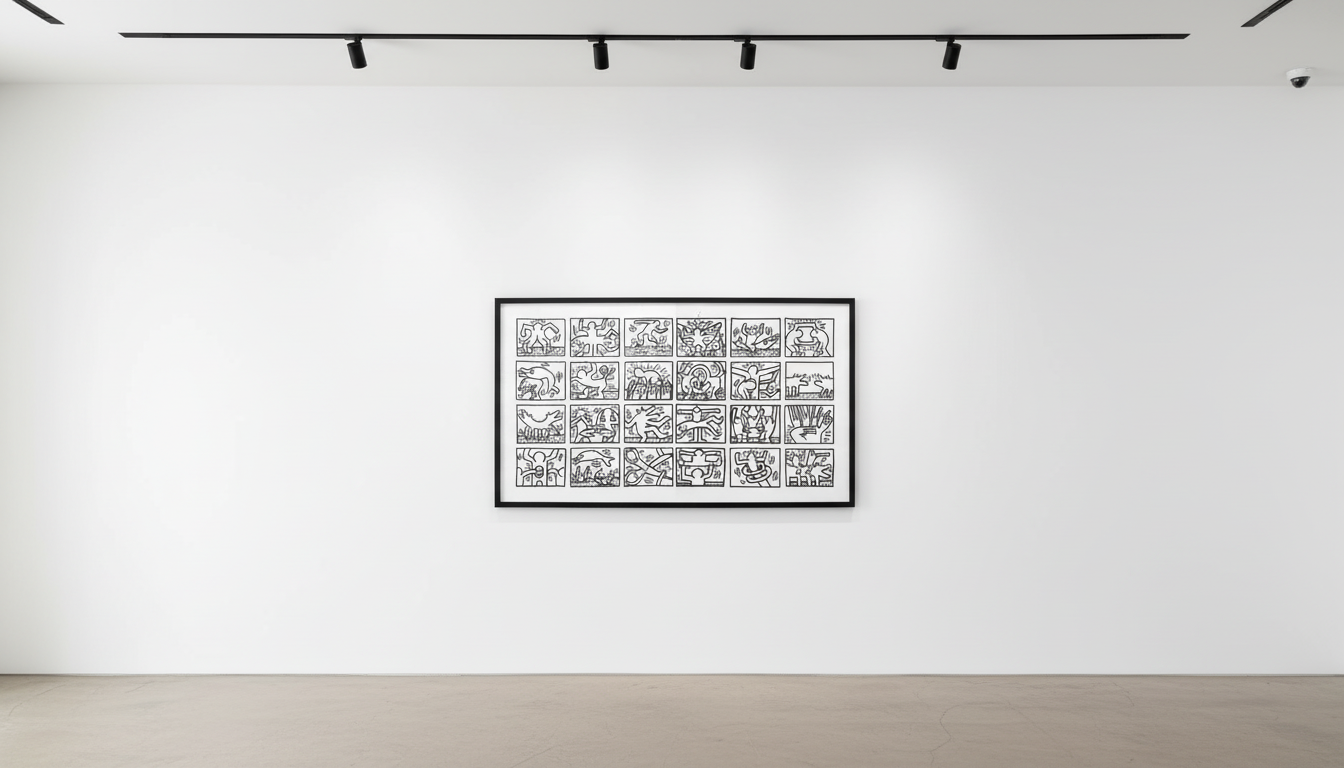
Keith Haring's Retrospect is among the most ambitious and visually striking works in the artist's print oeuvre. Issued in both color and black-and-white versions in 1989 - just a year before his death - the work serves as a sweeping summation of Haring's iconographic universe. Retrospect is not simply a print; it is a visual manifesto encompassing joy, urgency, resistance, and rhythm. It stands as a culmination of Haring's practice, combining his most recognizable motifs across an extraordinary scale, reaffirming his belief that art is a universal language capable of reaching every viewer regardless of background or education.
The Retrospect series consists of a single massive print, operating at a scale more commonly associated with murals than screenprints. Its colossal dimensions allow for forty individually framed square panels, arranged in a meticulously structured grid that recalls both ancient hieroglyphic tablets and contemporary comic strips. Each panel features a self-contained artwork rendered in Haring's trademark graphic language - instantly legible yet endlessly complex in its accumulated meaning. The color version bursts with Haring's signature neon palette: electric pinks, bold reds, acid greens, and bright oranges outlined in deep, assertive black. The black-and-white version, in contrast, uses only Haring's linework, stripping his symbols to their most essential form and revealing the extraordinary confidence and economy of his draftsmanship.
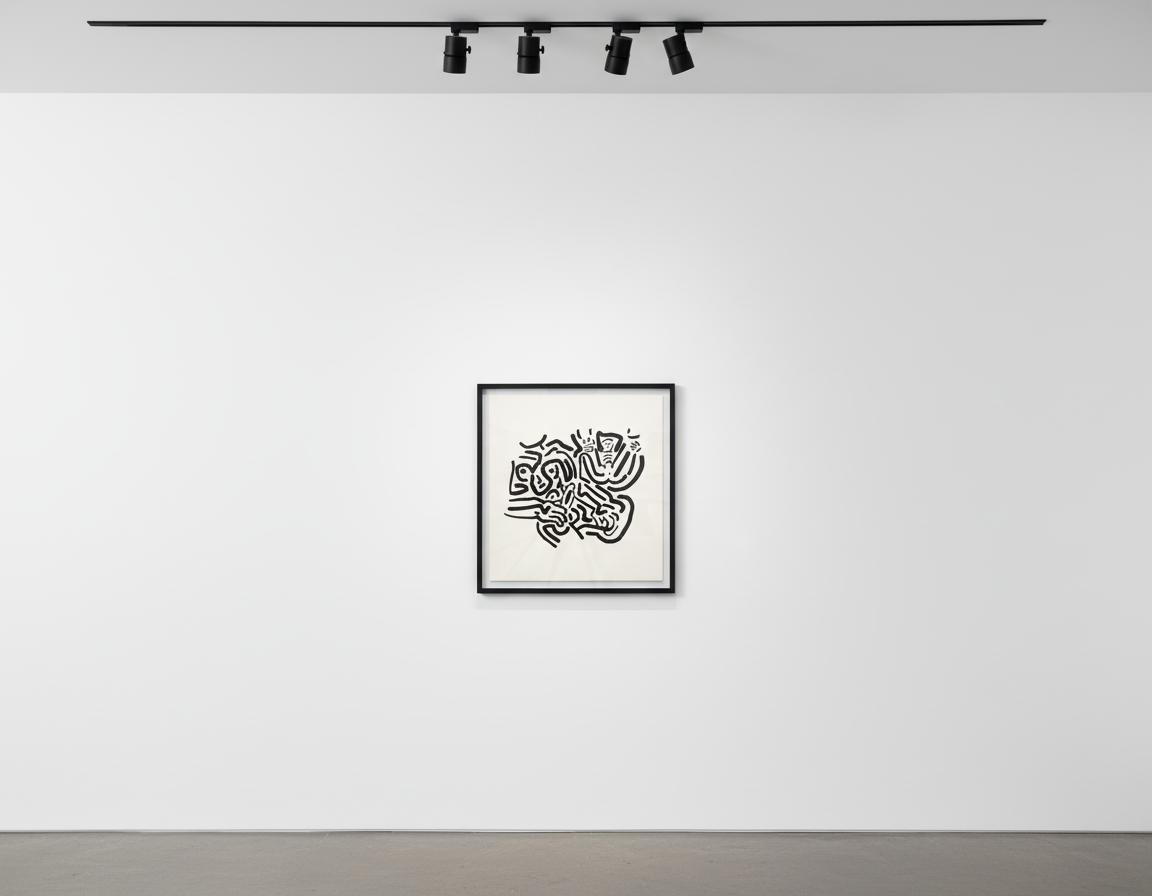
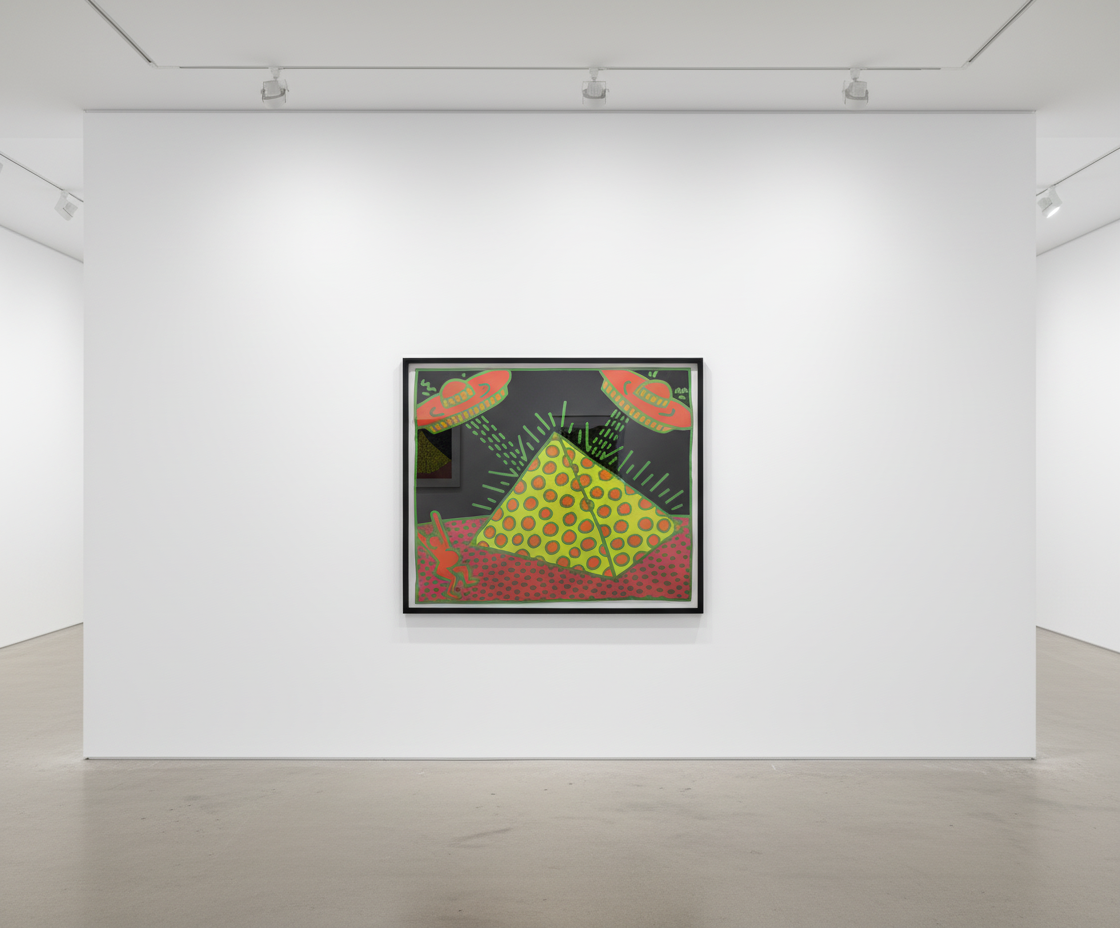
Untitled III (Littmann PP. 20) — Keith Haring. Available at Guy Hepner, New York.
What distinguishes Retrospect from other works in Haring's extensive print catalog is its encyclopedic nature. The forty panels function as a comprehensive dictionary of the artist's visual vocabulary, assembled at a moment when Haring was acutely aware of his own mortality following his AIDS diagnosis in 1988. The radiant baby - perhaps his most famous symbol, representing purity and the potential of human life - appears alongside the barking dog, the flying saucer, the serpent, and the three-eyed face. Dancing figures interlock and multiply, suggesting both celebration and solidarity. Figures raise their arms in gestures that oscillate between ecstasy and protest.
Haring's iconography emerged from his early experiences in the New York subway system, where he created hundreds of chalk drawings on unused advertising panels. These works were democratic by nature - free, public, and accessible to anyone passing through the station. This commitment to accessibility remained central to his practice throughout his career, informing his decision to open the Pop Shop in SoHo in 1986 and to create prints that could reach audiences beyond the gallery system. Retrospect embodies this philosophy while simultaneously operating at the highest level of artistic ambition, demonstrating that popular appeal and aesthetic sophistication need not be mutually exclusive.
The grid format itself carries conceptual weight. By organizing his symbols into a uniform structure, Haring suggests equivalence among his motifs while also inviting viewers to create their own narratives by reading across rows or down columns. The work becomes participatory - a puzzle, a poem, a map of consciousness. This approach aligned Haring with other artists working in seriality and repetition, from Andy Warhol to Sol LeWitt, while remaining distinctly his own.
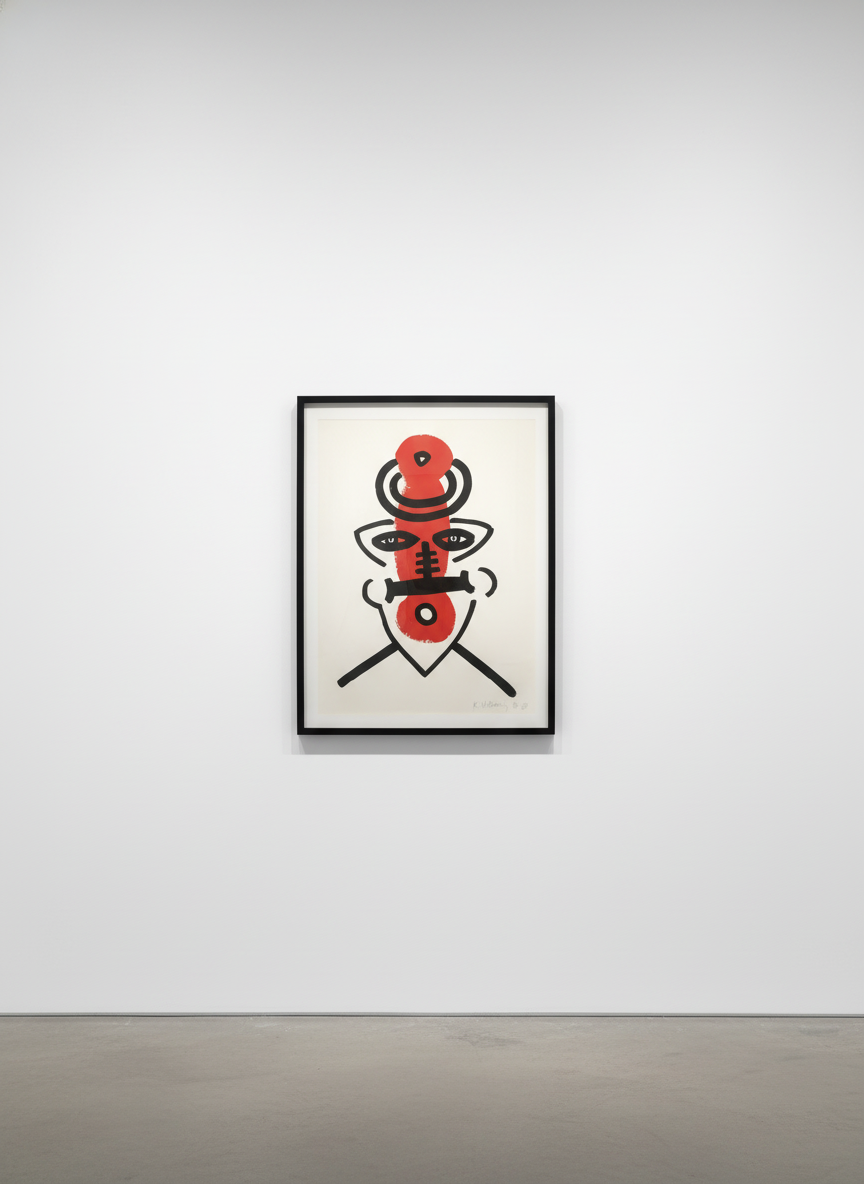
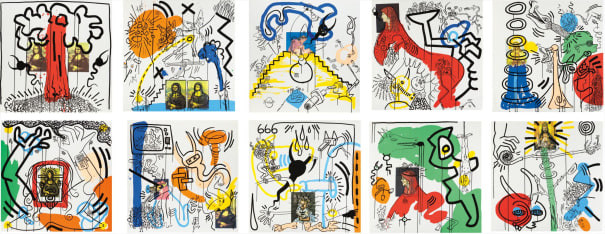
The Story of Red and Blue 9 (Littmann PP. 131) — Keith Haring. Available at Guy Hepner, New York.
Keith Haring's position in the contemporary art market has strengthened considerably over the past decade, with major auction results confirming his status as a blue-chip artist of enduring significance. According to data from Christie's and Sotheby's, Haring's works have achieved record prices across categories, from unique paintings to editioned prints. The Art Basel and UBS Global Art Market Report has consistently noted strong demand for post-war and contemporary American artists, with Haring representing a particularly compelling intersection of art historical importance and broad cultural recognition.
Retrospect occupies a unique position within this market context. Its monumental scale, comprehensive iconography, and biographical significance - created in the final full year of the artist's life - make it exceptionally desirable to collectors seeking museum-quality works. The series appeals to institutions building representative collections of twentieth-century American art as well as private collectors who recognize its potential as a centerpiece acquisition. Both the color and black-and-white versions carry distinct appeals: the former celebrates Haring's exuberant palette and its connection to 1980s visual culture, while the latter emphasizes the formal rigor underlying his seemingly spontaneous style.
The limited availability of Retrospect further enhances its collectibility. Unlike smaller editioned prints that appear regularly at auction, complete examples of this monumental work rarely come to market, creating significant demand when they do become available. For collectors attuned to both aesthetic quality and investment potential, Retrospect represents an opportunity to acquire a definitive statement from one of the late twentieth century's most important artists.
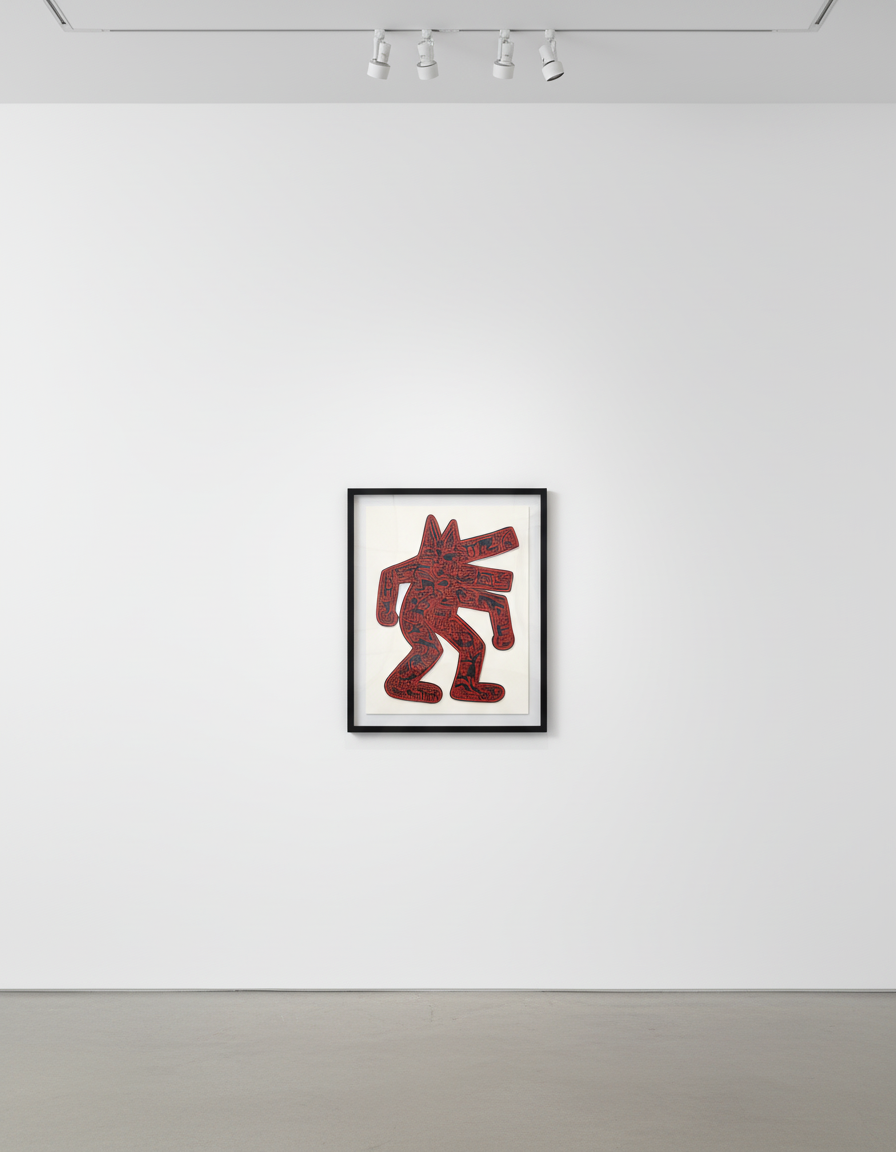
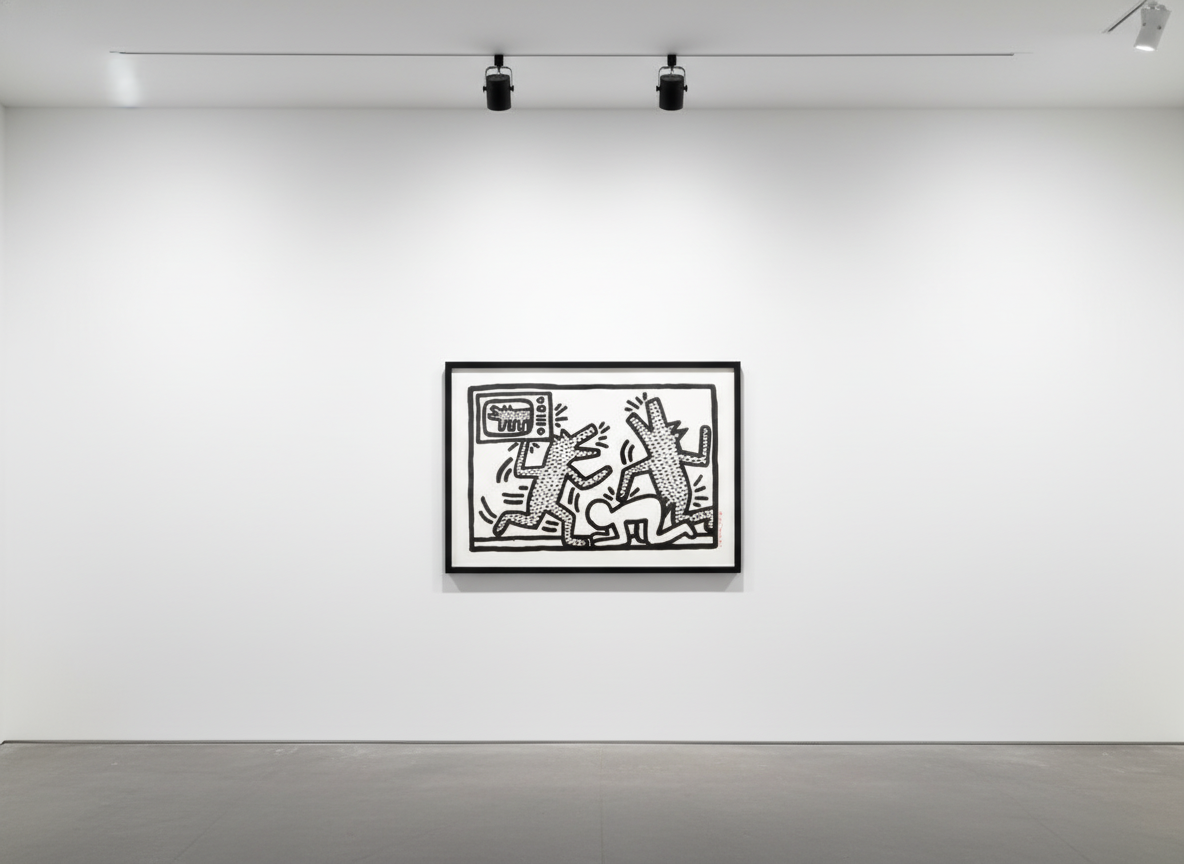
Dog — Keith Haring. Available at Guy Hepner, New York.
Keith Haring's influence extends far beyond the art market. His imagery has been embraced by subsequent generations of artists, designers, and activists, while his commitment to social causes - including AIDS awareness, anti-apartheid efforts, and children's literacy - established a model for engaged artistic practice that remains relevant today. Retrospect encapsulates this legacy, presenting Haring's visual language in its fullest expression while reminding viewers of the urgency that drove his prolific output.
The work also speaks to contemporary concerns about accessibility and democratization in the art world. Haring believed that art should belong to everyone, and Retrospect - despite its monumental ambitions - retains the clarity and directness that made his Subway Drawings so powerful. Each symbol can be understood immediately, yet the accumulated effect rewards sustained attention and repeated viewing. In this sense, Retrospect functions as both a celebration and a challenge, inviting collectors and institutions to engage with Haring's vision in its most complete form.
Guy Hepner is pleased to offer works by Keith Haring, including prints from his most celebrated series. Our gallery specializes in sourcing exceptional examples of post-war and contemporary art for discerning collectors worldwide. To inquire about availability, pricing, and acquisition of Keith Haring's Retrospect or other works by the artist, please contact our team directly. We provide comprehensive collecting guidance and art advisory services to ensure each acquisition meets the highest standards of quality and provenance.
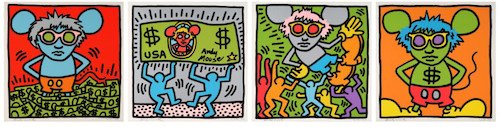
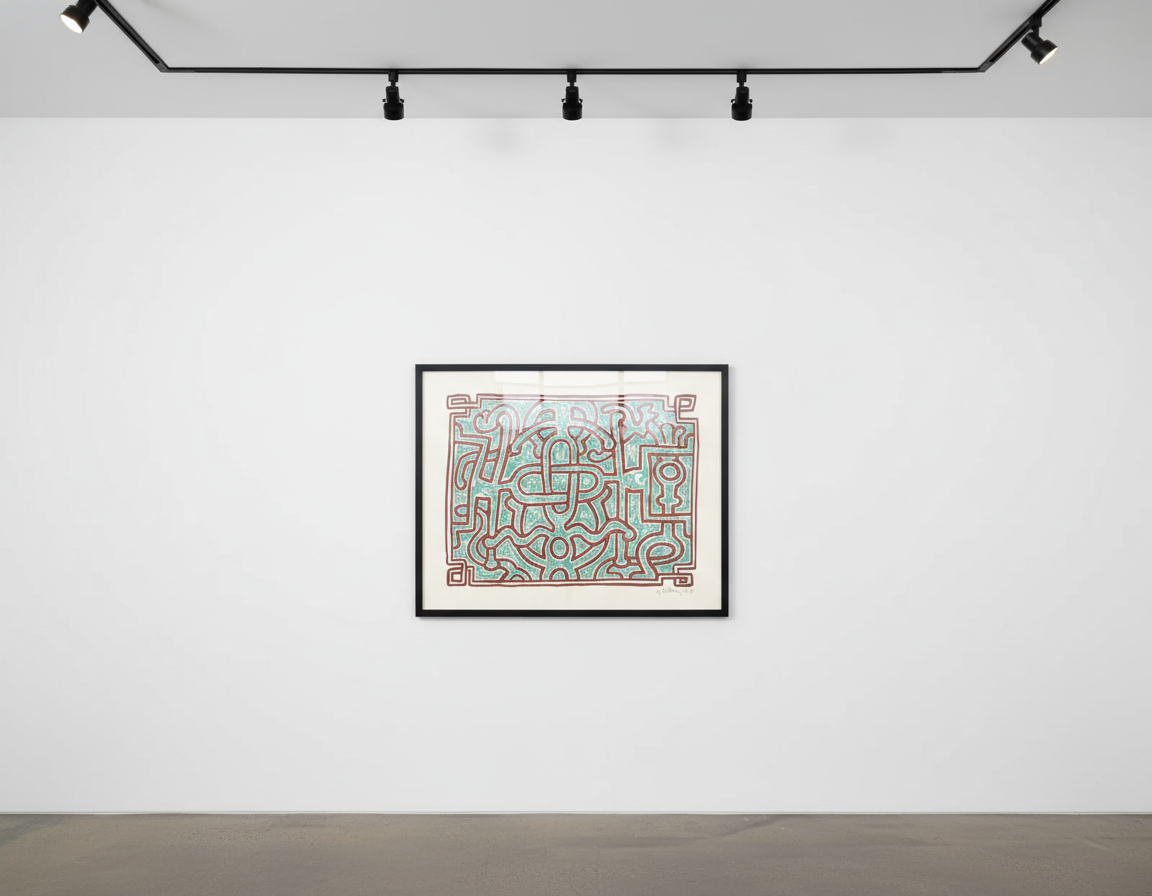
--- **Browse Keith Haring prints and editions** available at Guy Hepner: [Keith Haring art for sale](/keith-haring) **Thinking of selling your Keith Haring?** [Get a free valuation](/sell/keith-haring)Explore Keith Haring prints for sale at Guy Hepner: Retrospect, Andy Mouse, Apocalypse, Bad Boys, Chocolate Buddha.
Related Series