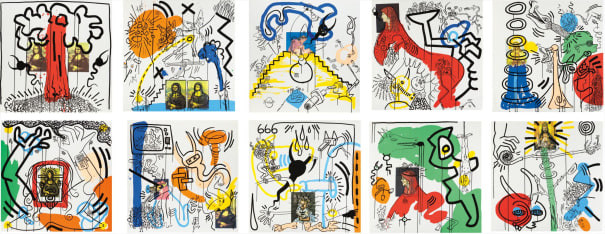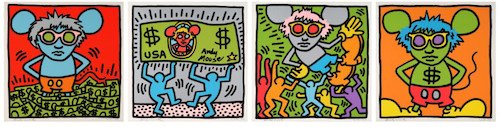
Andy Mouse

In the electric chaos of 1980s New York, three young artists emerged from the same cultural cauldron yet took sharply distinct paths to fame and legacy: Kenny Scharf, Keith Haring, and Jean-Michel Basquiat. Each contributed to the visual language of the era, marrying street art, pop culture, and personal mythology in ways that reshaped contemporary art. Though often grouped together as icons of the downtown art scene, their approaches, intentions, and eventual reputations reflect both shared roots and marked divergence. Understanding Keith Haring within this triumvirate reveals not only his singular genius but also the broader cultural forces that elevated street art into the institutional canon.
The Lower East Side of Manhattan in the early 1980s served as an unlikely incubator for what would become some of the most significant artistic voices of the twentieth century. Kenny Scharf, Keith Haring, and Jean-Michel Basquiat found themselves drawn to this neighborhood's raw energy - a melting pot of punk rock, hip-hop, queer culture, and underground club scenes that rejected the polished aesthetics of uptown galleries. Their early work appeared in the same subway tunnels, on the same crumbling walls, and in the same makeshift exhibition spaces that defined the era's guerrilla art movement.
Scharf, known for his psychedelic, sci-fi-infused imagery and cartoonish exuberance, stood apart from his peers by leaning more heavily into optimism and cosmic satire. His Jetsons-meets-dystopia visual language offered a notably more playful counterpoint to the work of his contemporaries. Basquiat's frenetic symbols, crown motifs, and text-heavy canvases carried the weight of racial identity, systemic critique, and raw emotional intensity. Between these two poles, Keith Haring carved out territory that was at once accessible and politically charged - his iconic radiant babies, barking dogs, and dancing figures speaking simultaneously to children and critics alike.
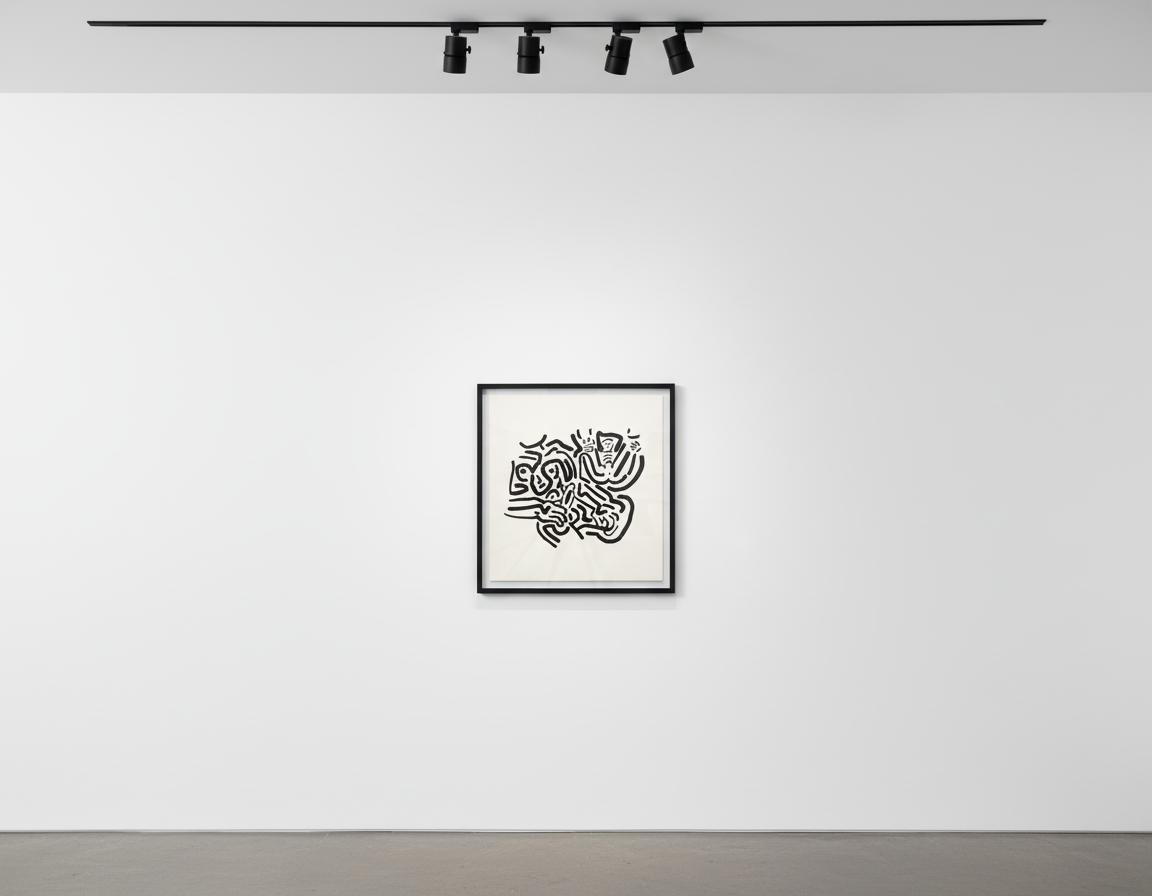
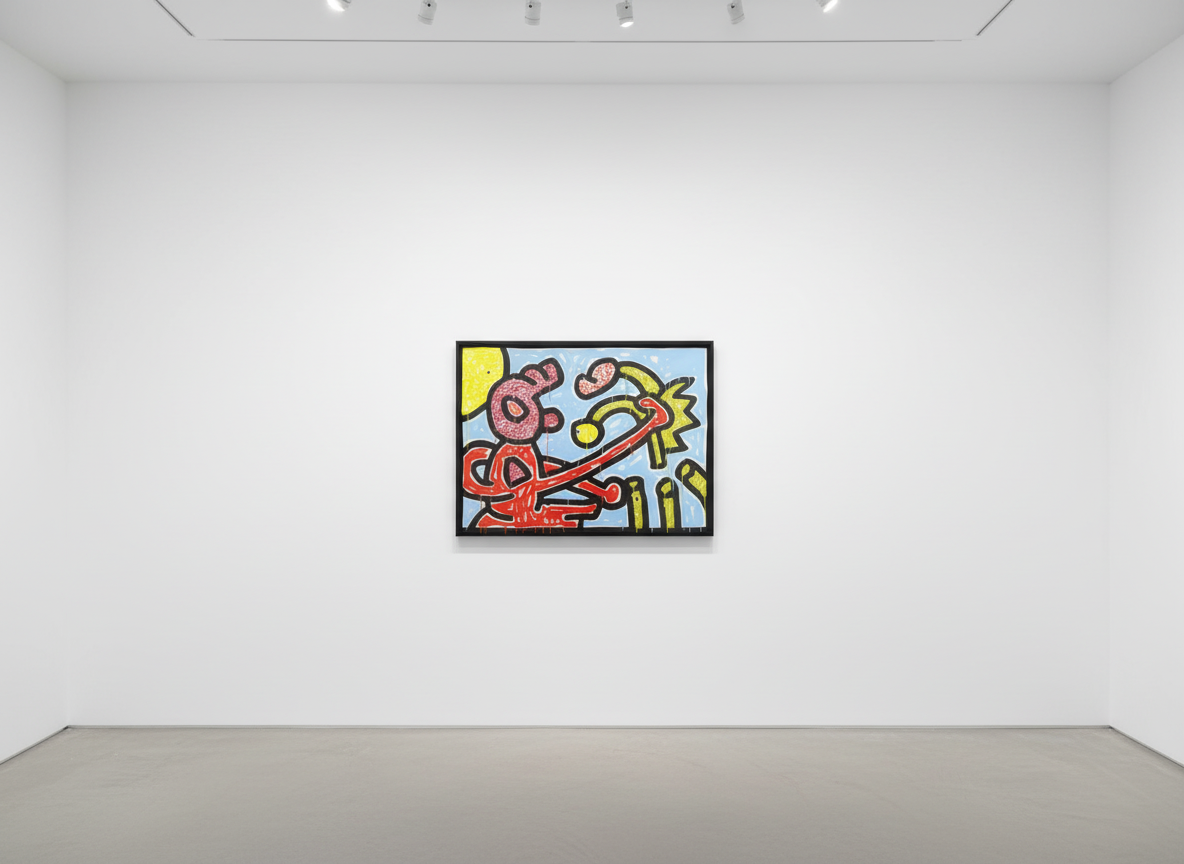
Untitled III (Littmann PP. 20) — Keith Haring. Available at Guy Hepner, New York.
They met at the School of Visual Arts and through the club scene at venues like Club 57, where creative boundaries dissolved nightly. This environment fostered collaboration and cross-pollination, with each artist absorbing elements from the others while developing fiercely individual voices. Yet it was Haring who most successfully bridged the gap between street credibility and institutional acceptance, creating a visual vocabulary that transcended the underground without abandoning it.
Among this celebrated trio, Keith Haring distinguished himself through an unwavering commitment to accessibility. While Basquiat's work demanded art historical knowledge and Scharf's imagery rewarded those versed in pop culture references, Haring developed a symbolic language that communicated instantly across boundaries of age, education, and cultural background. His chalk drawings in New York subway stations - executed on the black paper covering expired advertisements - transformed the daily commute into an encounter with living art.
Haring's figures possess an almost hieroglyphic quality, reducing human forms to their essential elements while retaining remarkable expressive power. The crawling baby surrounded by radiating lines, the barking dog, the figures in perpetual motion - these images became a visual shorthand for energy, joy, danger, and human connection. This apparent simplicity, however, belied sophisticated engagement with serious subjects. Throughout his career, Haring addressed nuclear proliferation, apartheid, AIDS awareness, and LGBTQ+ rights with the same bold lines he used to celebrate dance and community.
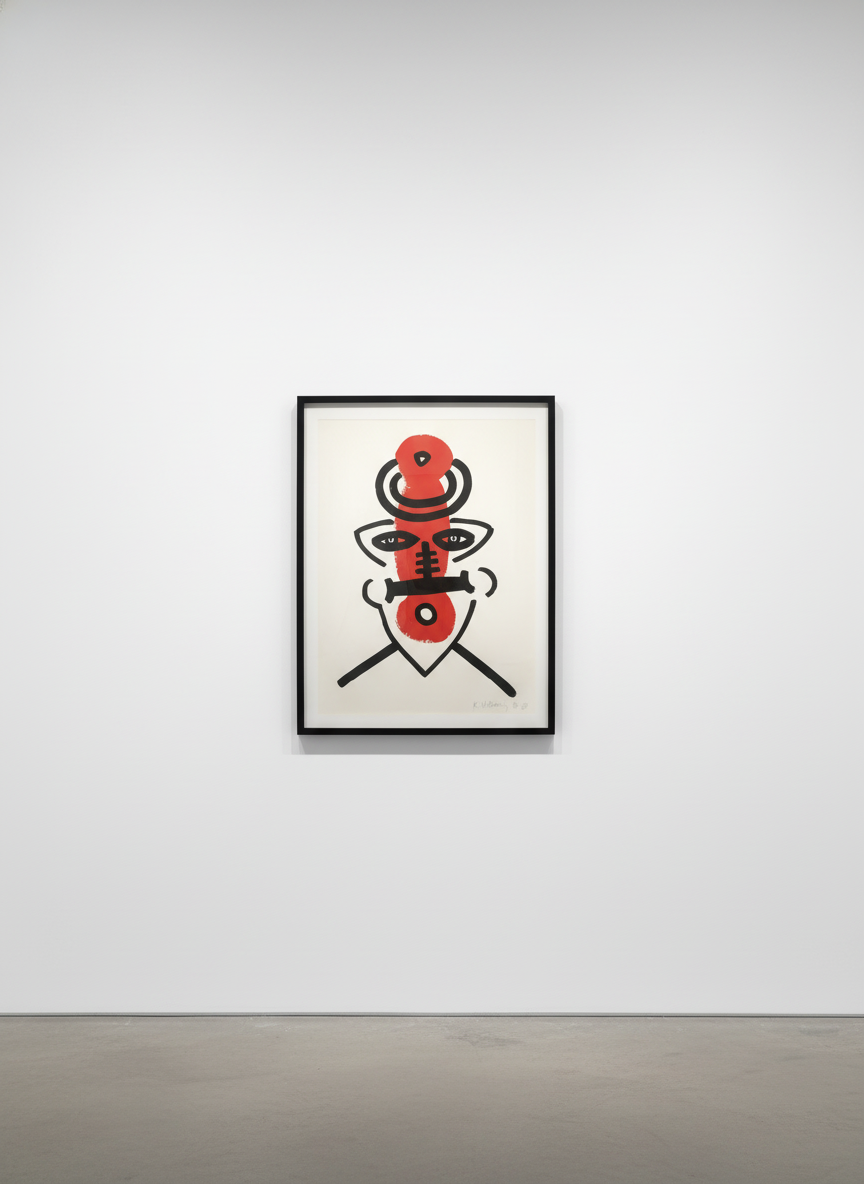
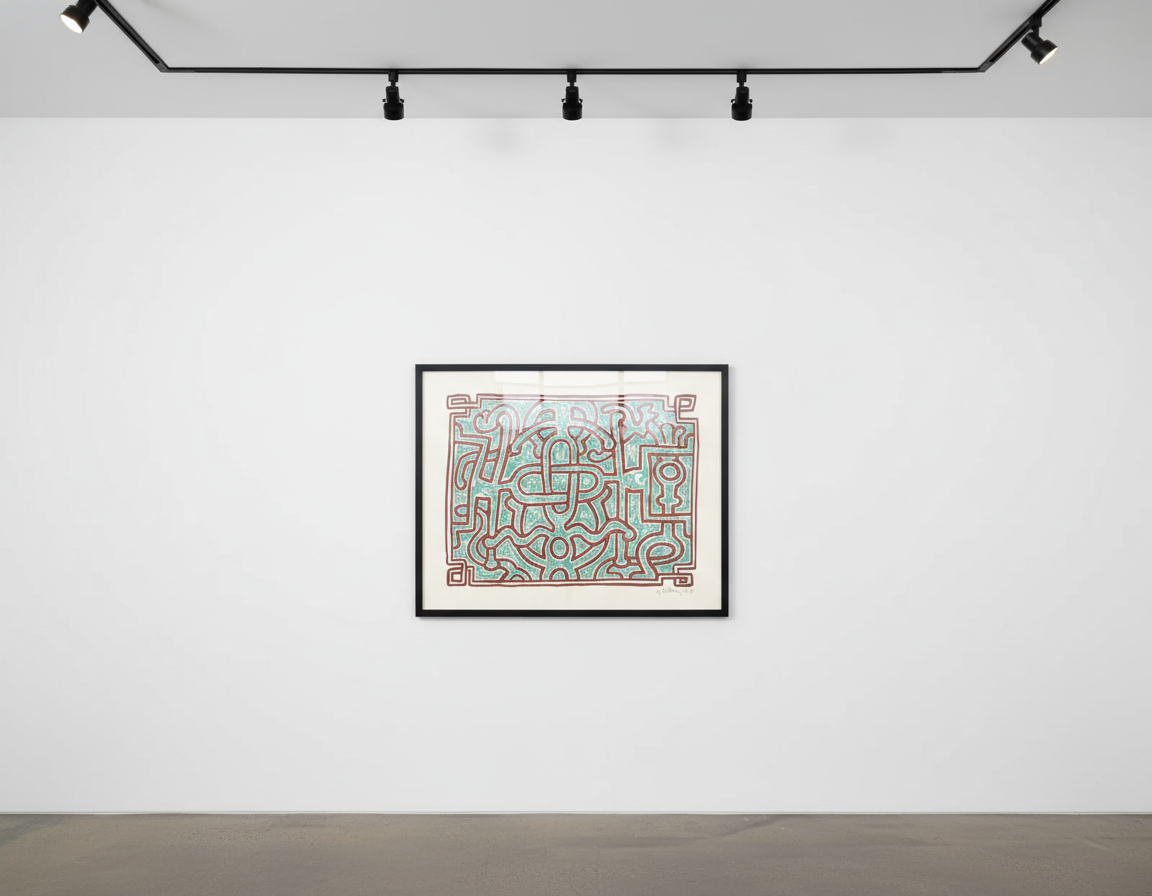
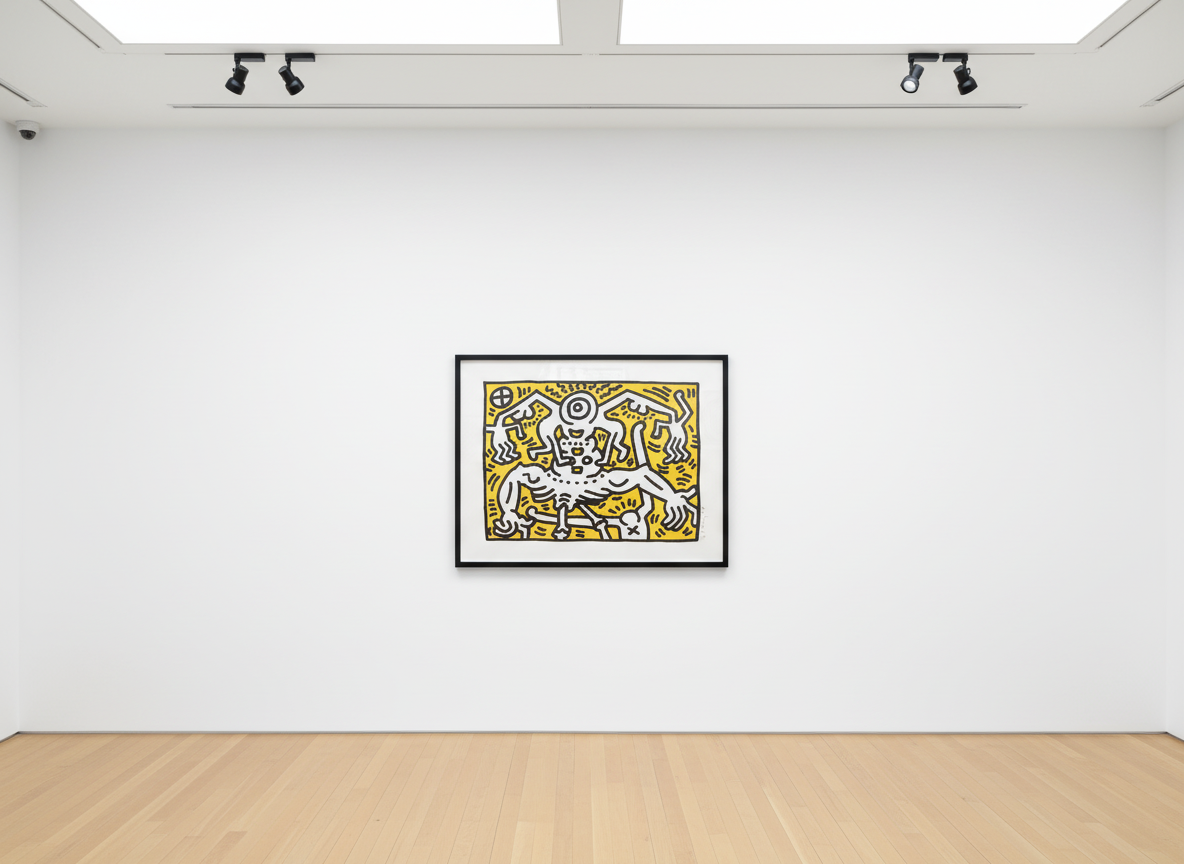
The Story of Red and Blue 9 (Littmann PP. 131) — Keith Haring. Available at Guy Hepner, New York.
The Pop Shop, which Haring opened in SoHo in 1986, represented a radical democratization of art ownership. By selling affordable merchandise featuring his designs, Haring challenged the exclusivity of the art market while simultaneously building a brand that would ensure his imagery's survival. This entrepreneurial approach drew criticism from purists but aligned perfectly with the artist's belief that art should be available to everyone - not sequestered in institutions accessible only to the privileged few.
The Art Basel and UBS Global Art Market Report consistently identifies works by Keith Haring as among the most sought-after pieces from the 1980s downtown movement. Major auction houses have recorded remarkable results for the artist's work, with Christie's and Sotheby's regularly featuring Haring pieces in their contemporary art evening sales. The market for Haring has demonstrated notable resilience, with demand spanning blue-chip collectors and emerging buyers drawn to the artist's cultural significance and visual immediacy.
Collectors are particularly drawn to Haring's prints and works on paper, which offer entry points into an oeuvre that includes museum-held masterworks. The artist's prolific print production during his lifetime means that authenticated editions remain available, though prime examples increasingly command premium prices. His collaborations with other artists, including those within his immediate circle of Scharf and Basquiat, hold special historical significance as documents of a transformative moment in art history.
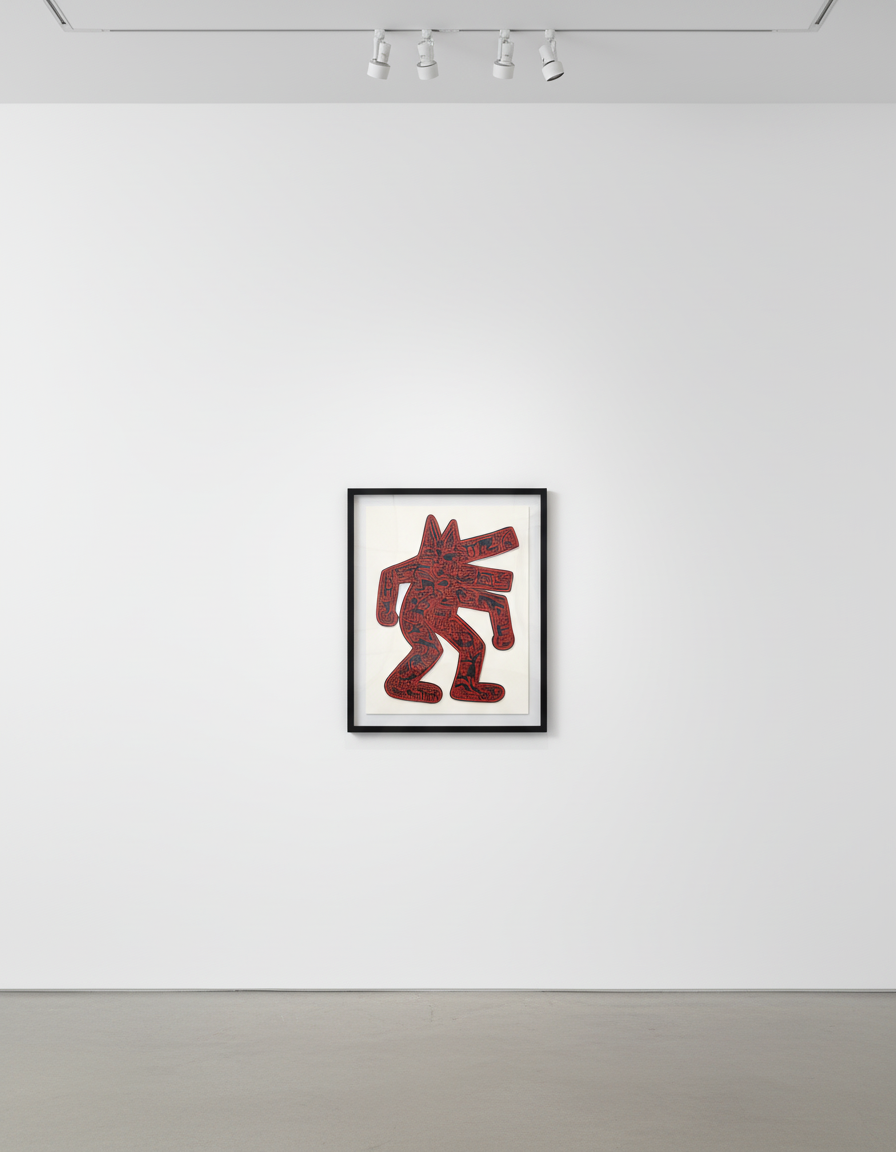
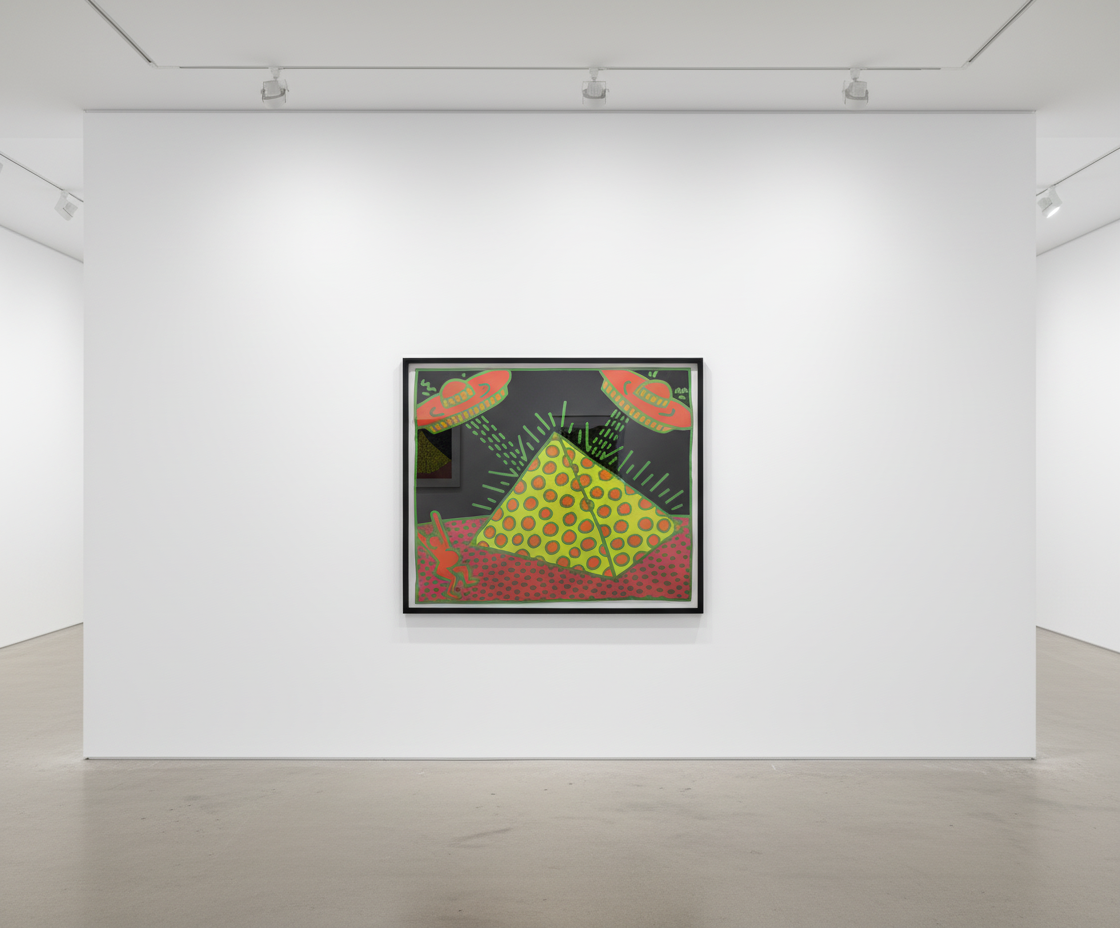
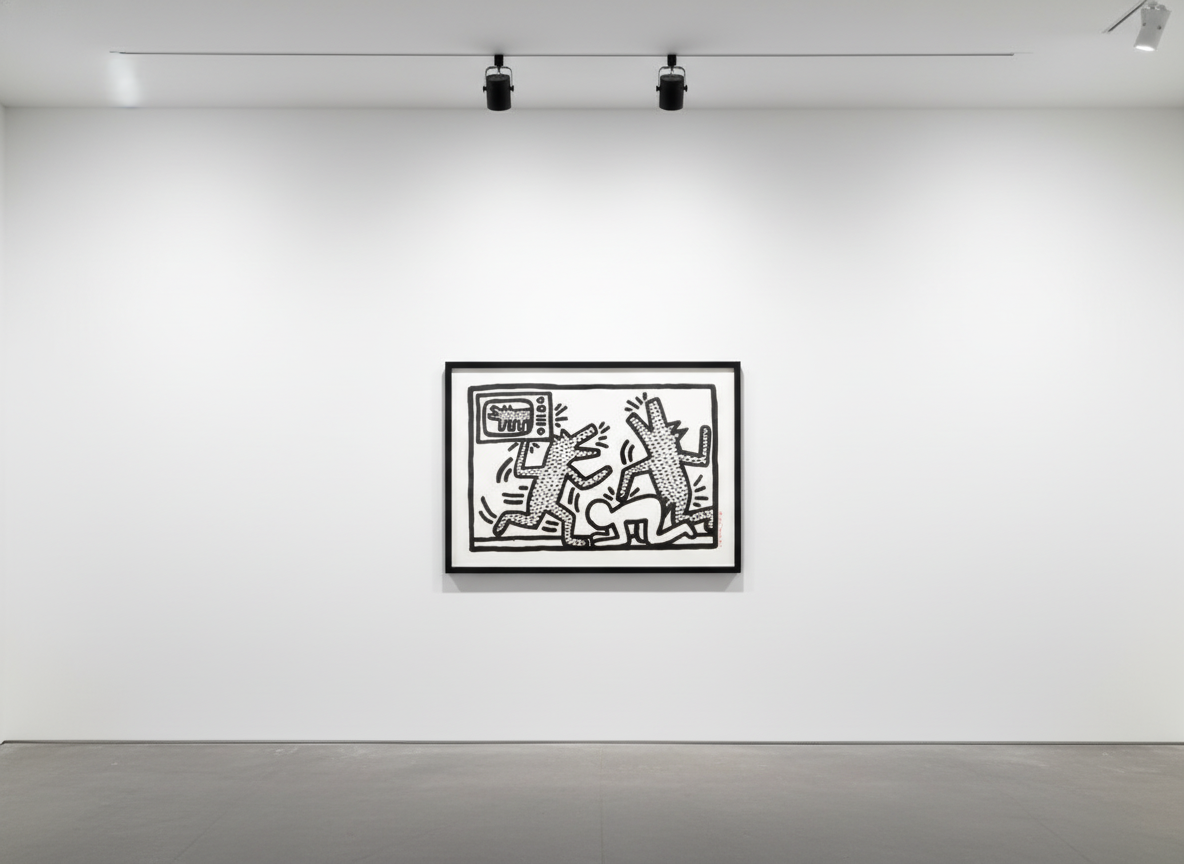
Dog — Keith Haring. Available at Guy Hepner, New York.
What distinguishes Haring in the current market is the intersection of art historical importance, cultural relevance, and visual accessibility. His imagery continues to resonate with contemporary audiences, appearing in fashion collaborations and public art initiatives that introduce new generations to his work. This ongoing cultural presence supports sustained collector interest while positioning Haring as a foundational figure whose influence extends well beyond the 1980s downtown scene.
The relationship between Kenny Scharf, Keith Haring, and Jean-Michel Basquiat represents more than biographical coincidence. Their collective emergence challenged institutional gatekeeping and expanded definitions of what contemporary art could be and where it could appear. Each artist brought distinct gifts - Scharf's cosmic playfulness, Basquiat's intellectual ferocity, and Haring's democratic accessibility - that together redefined the visual culture of their era.
Keith Haring's untimely death from AIDS-related complications in 1990, at age thirty-one, cut short a career of extraordinary productivity and promise. Yet the work he left behind continues to speak with urgency to contemporary concerns. His imagery adorns public murals worldwide, his foundation supports arts education and AIDS research, and his influence permeates contemporary visual culture in ways both obvious and subtle.
Guy Hepner is proud to offer authenticated works by Keith Haring, providing collectors with access to pieces that represent the pinnacle of 1980s artistic innovation. Our specialists maintain deep expertise in Haring's print editions and works on paper, guiding clients through provenance verification, condition assessment, and strategic acquisition. We invite collectors to contact Guy Hepner to discuss available works by Keith Haring and explore how these iconic pieces might enhance distinguished collections.
--- **Browse Keith Haring prints and editions** at Guy Hepner: [Keith Haring art for sale](/keith-haring) | [Sell your Keith Haring](/sell/keith-haring)Explore Keith Haring prints for sale at Guy Hepner: Andy Mouse, Apocalypse, Bad Boys, Chocolate Buddha, Fertility.
Related Series