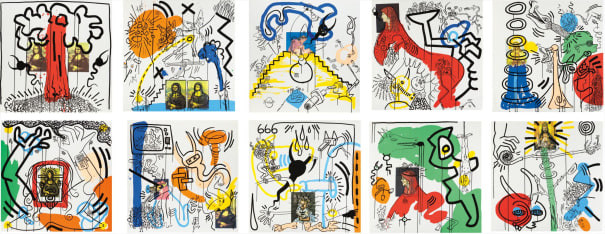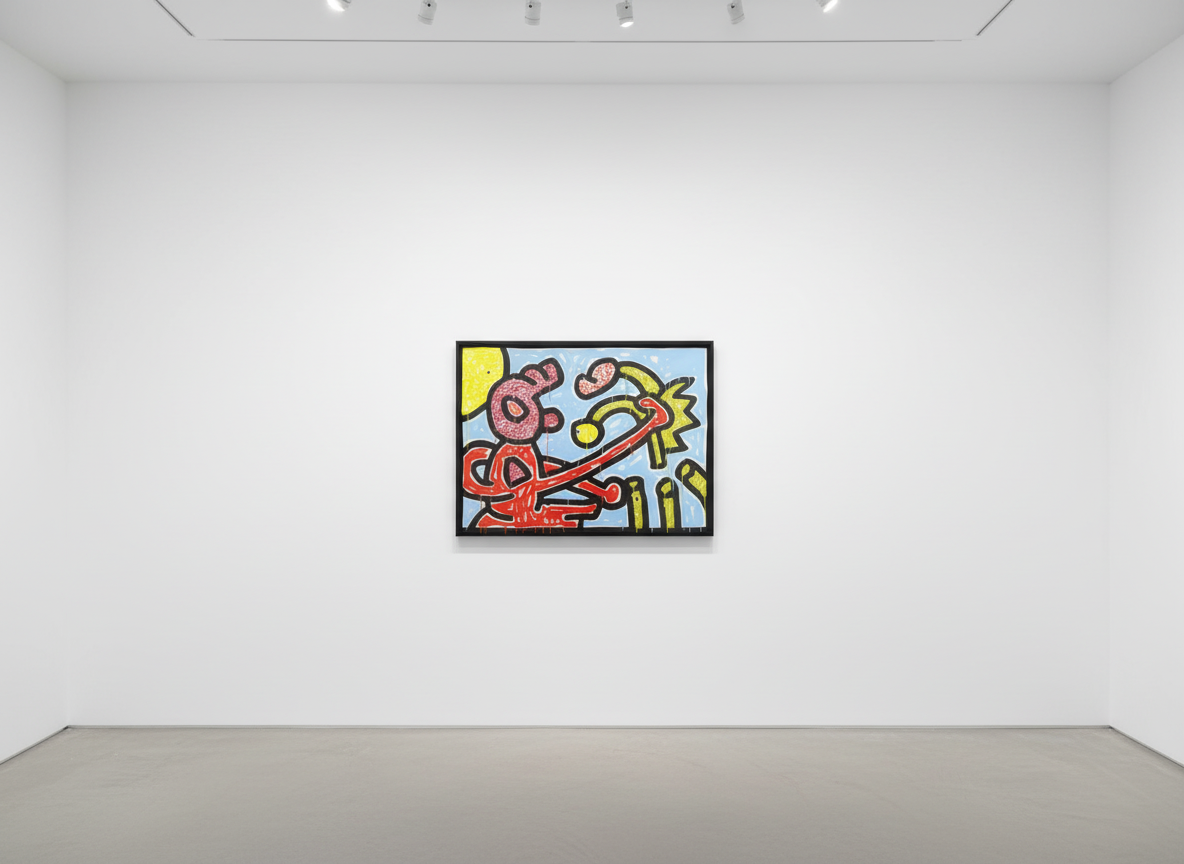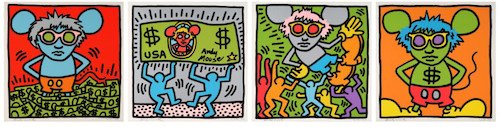
Andy Mouse

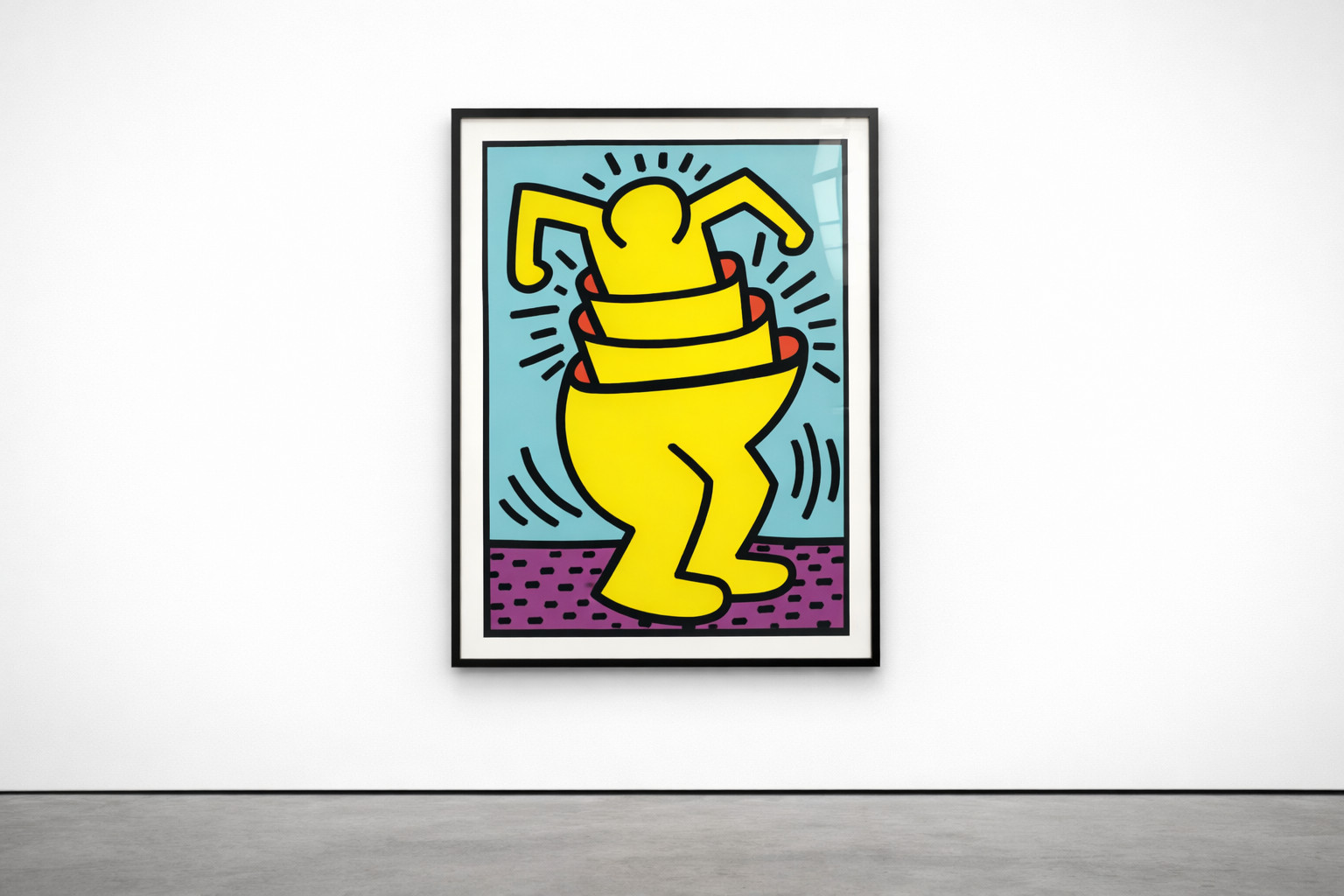
Keith Haring's iconic imagery—radiant babies, barking dogs, dancing figures, and energetic lines—feels as alive today as it did when it first appeared on New York City subway platforms and gallery walls. While Haring is widely recognized for his bold, graphic aesthetic and tireless activism, less commonly explored is the profound influence of music and dance on his artistic practice. For Haring, sound and movement were not peripheral inspirations—they were foundational. Music and dance did not just accompany his creative process; they animated his world, shaped his visual language, and infused his work with an unmistakable rhythm and energy that continues to captivate collectors and institutions worldwide.
In the late 1970s and early 1980s, New York City was a hotbed of cultural fusion. Hip-hop was rising from the Bronx, disco was peaking in legendary nightclubs, and punk rock throbbed through the East Village. Keith Haring, who moved to New York in 1978 to attend the School of Visual Arts, was immediately drawn to this kaleidoscope of sound and movement. He immersed himself in downtown club culture and became a regular at venues that blurred the lines between nightlife, performance art, and activism.
One of the most formative spaces for Haring was Paradise Garage. More than just a nightclub, Paradise Garage was a sanctuary where music, art, and community converged under the masterful direction of DJ Larry Levan. The venue's legendary sound system and marathon dance sessions created an environment of collective euphoria—a space where the body became an instrument of expression. Haring absorbed these experiences deeply, translating the pulsating basslines and communal energy into visual form. His figures do not merely exist on the picture plane; they move, vibrate, and dance with an urgency that mirrors the club floors where he spent countless nights.
This immersion in club culture was inseparable from Haring's artistic identity. He understood that music was a universal language capable of transcending barriers of class, race, and education—the same democratic principles he sought to embed in his public art. The Subway Drawings, the murals, the paintings all carry this musical DNA, inviting viewers not just to observe but to feel the beat.
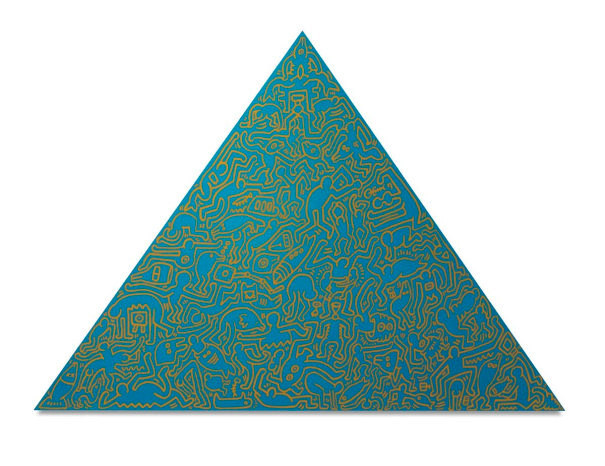
Pyramid Teal — Keith Haring. Available at Guy Hepner, New York.
The musicality in Keith Haring's work manifests most powerfully through his treatment of the human figure. His dancing men, often depicted in clusters of interlocking forms, embody the concept of visual syncopation—a rhythmic irregularity that creates dynamic tension and release. Like jazz improvisation or the layered beats of early hip-hop, Haring's compositions build momentum through repetition and variation.
Haring's line work itself functions as a kind of musical notation. His strokes are confident and continuous, rarely hesitating or correcting. This fluidity emerged from his practice of drawing rapidly, often in public, allowing the energy of the moment to guide his hand. He described his process as almost meditative, a state of flow where conscious thought gave way to intuitive gesture. This approach parallels the improvisational traditions of jazz and the spontaneous creativity of breakdancing—art forms that demand presence, responsiveness, and an intimate relationship with rhythm.
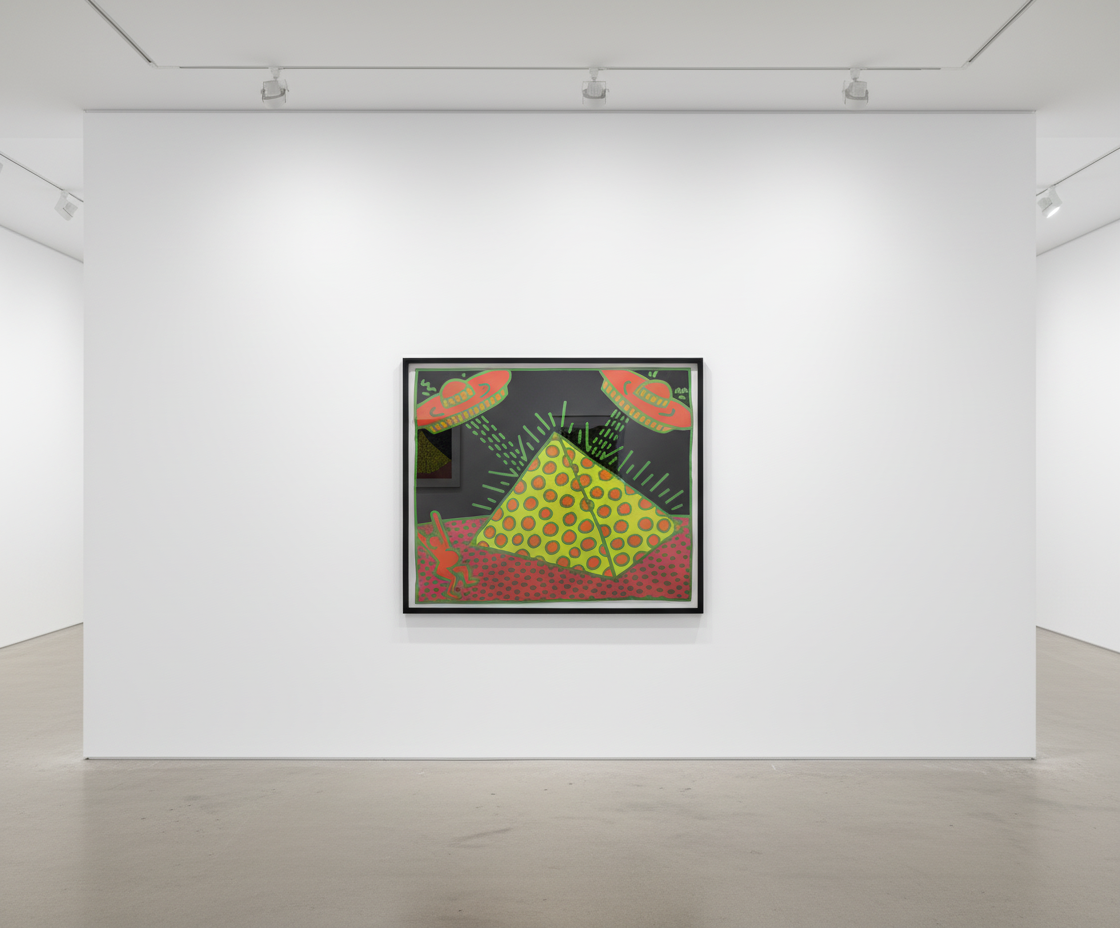
The pyramid motif, which appears throughout Haring's oeuvre, exemplifies this musical sensibility. These geometric structures often serve as stages or platforms for his animated figures, creating compositions that feel both ancient and urgently contemporary. The pyramids ground the frenetic energy of Haring's dancing forms while simultaneously elevating them, much like a bassline anchors a melody while propelling it forward. In works such as Pyramid Teal, Pyramid Blue, and Pyramid Gold, we see Haring exploring this dynamic through vibrant color relationships that amplify the sense of movement and celebration inherent in his visual vocabulary.
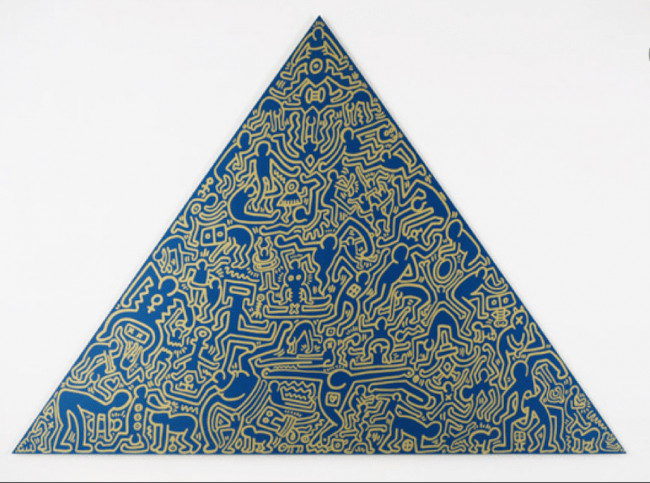
Pyramid Blue — Keith Haring. Available at Guy Hepner, New York.
The Art Basel and UBS Global Art Market Report consistently identifies Keith Haring as one of the most significant figures in the post-war and contemporary art market. His work appeals to a remarkably broad collector base, from seasoned institutional buyers to younger collectors drawn to his cultural relevance and graphic immediacy. Christie's and Sotheby's regularly feature Haring's paintings, sculptures, and works on paper in their marquee evening sales, where competitive bidding reflects sustained international demand.
What distinguishes Haring in the secondary market is the emotional accessibility of his work combined with its art-historical importance. The musicality embedded in his practice—the sense of joy, movement, and communal celebration—resonates with collectors on a visceral level. These are not works that require extensive art-historical knowledge to appreciate; they communicate directly, much like the music that inspired them. Yet they also reward deeper engagement, revealing layers of social commentary, formal innovation, and cultural documentation.
The pyramid works hold particular significance within Haring's catalogue. They represent his engagement with universal symbols, connecting contemporary urban culture to ancient civilizations while maintaining his signature accessibility. For collectors, these pieces offer entry into Haring's visual philosophy at various price points, with editions and unique works available to suit different collecting strategies.
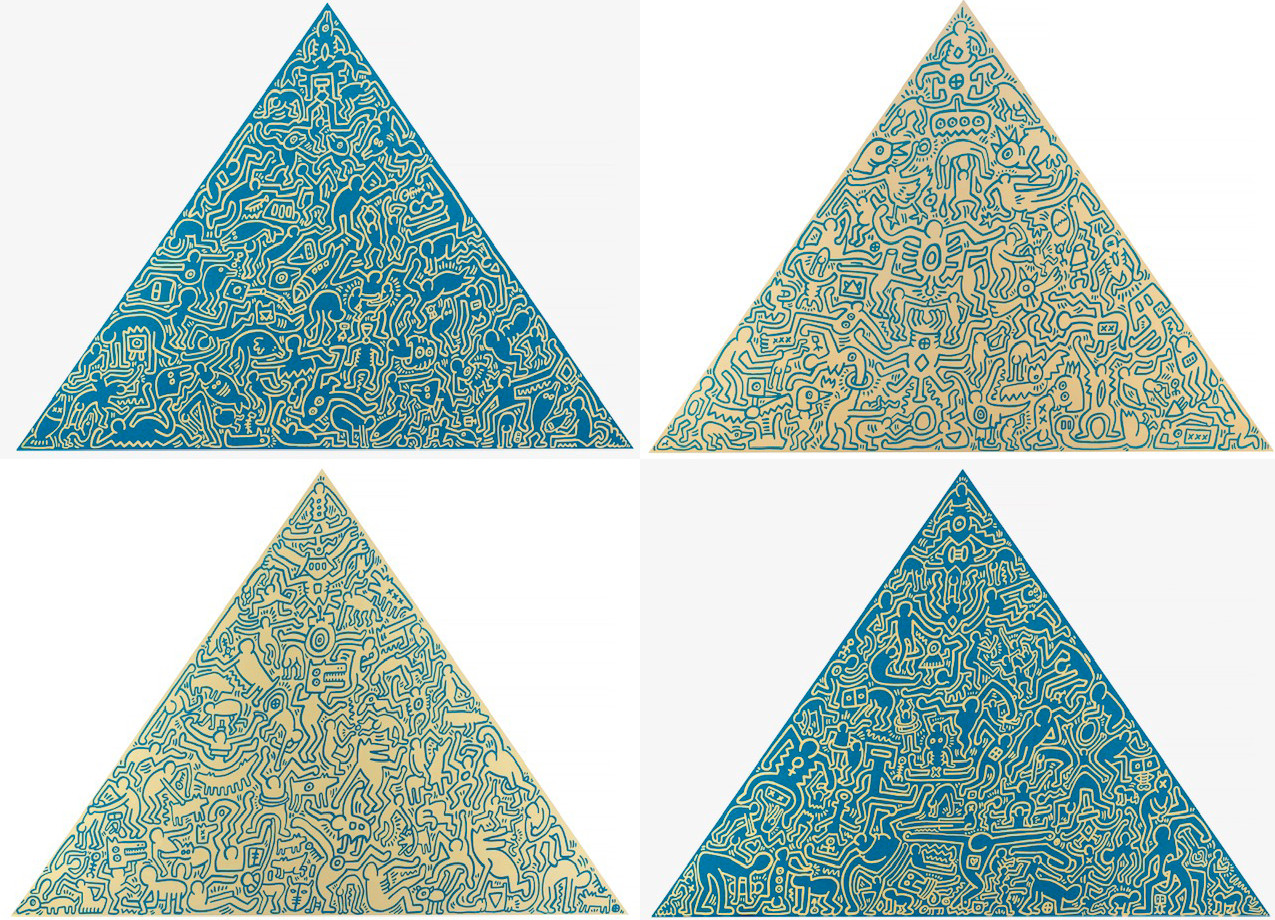
Pyramids — Keith Haring. Available at Guy Hepner, New York.
Keith Haring's legacy extends far beyond his tragically brief career. His work anticipated the convergence of art, music, fashion, and activism that defines contemporary visual culture. The musicality of his practice—his understanding that art could move bodies and spirits simultaneously—positions him as a precursor to today's most dynamic creative expressions. Collectors recognize this forward-thinking vision, understanding that Haring's market strength reflects genuine cultural staying power rather than speculative enthusiasm.
Moreover, Haring's commitment to public accessibility and social engagement aligns with evolving collector values. Contemporary buyers increasingly seek artists whose practices demonstrate ethical consistency and cultural impact. Haring's work satisfies these criteria while delivering the formal sophistication and visual pleasure that define enduring collectibility.
Guy Hepner is pleased to offer exceptional works by Keith Haring, including striking examples from his celebrated pyramid series. Our gallery provides collectors with access to rigorously vetted pieces accompanied by comprehensive provenance documentation and expert guidance. To inquire about available Keith Haring works or to discuss building a collection that reflects your aesthetic vision, please contact our advisory team.
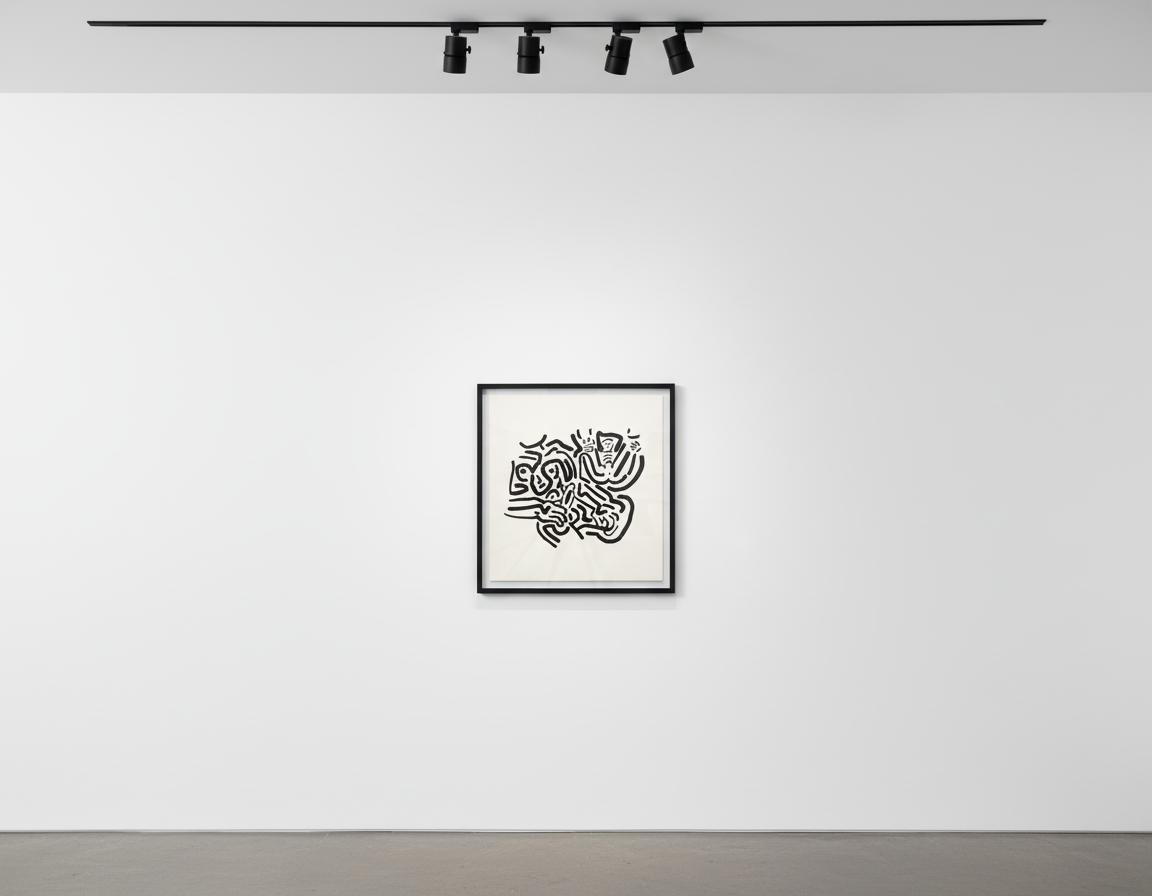
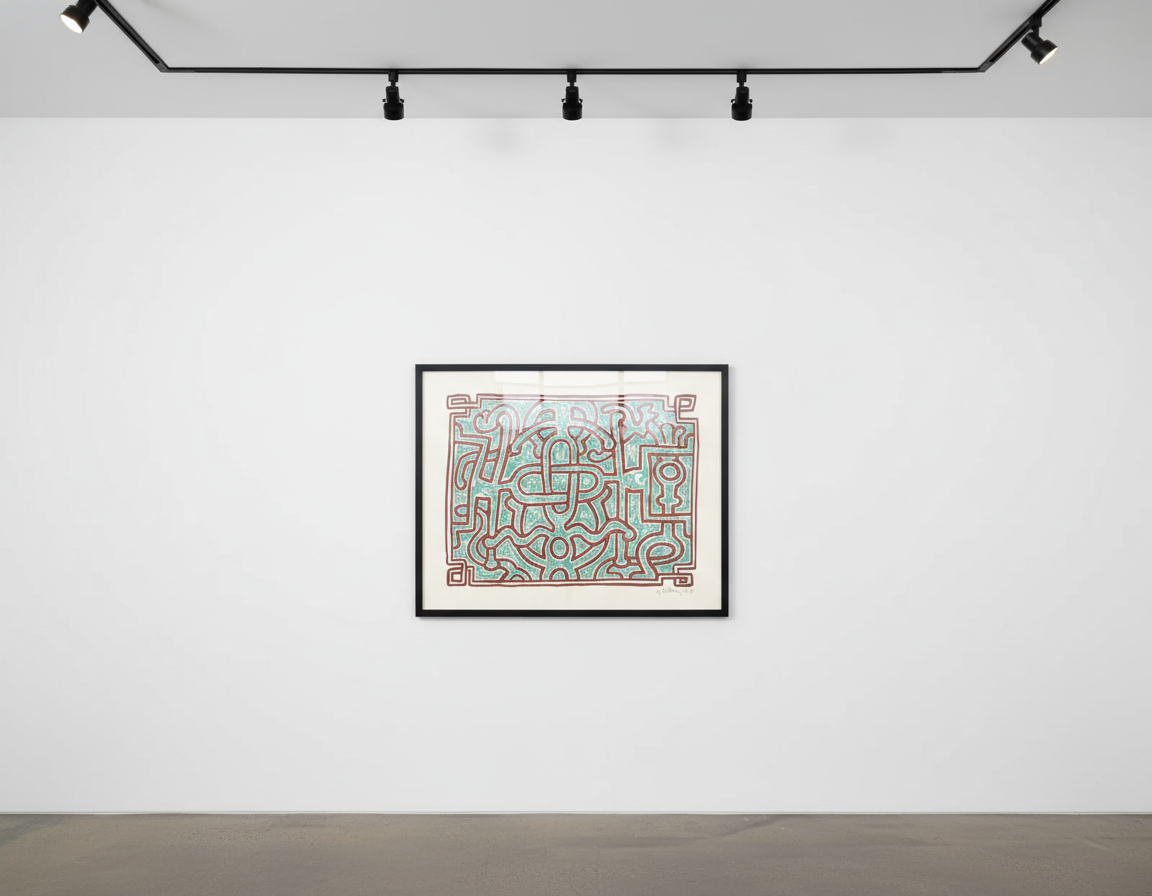
Explore Keith Haring prints for sale at Guy Hepner: Andy Mouse, Apocalypse, Bad Boys, Chocolate Buddha, Fertility.
Related Series