Blossoms

July 5, 2023
In June 1991, a disused travel agent's office on Woodstock Street in central London became the most talked-about space in British contemporary art. Damien Hirst butterflies — real, living ones — hatched from pupae affixed to white painted canvases in a humid upstairs room, fed on sugar water and flowers, mated, laid eggs, and died. Downstairs, their dead counterparts were pressed into monochrome gloss paintings, surrounded by overflowing ashtrays. The show was called In and Out of Love. It was Hirst's first solo exhibition in London, and it established butterflies as the central motif of one of the most sustained inquiries in contemporary art: into death, beauty, the passage of time, and the uncomfortable space where all three converge.
Thirty-five years on, Damien Hirst butterfly paintings remain among the most actively collected works in his output — from the large-scale Kaleidoscope canvases that command seven figures at auction to the Butterfly Rainbow and Butterfly Heart editions available to collectors today. This guide covers every major series, the auction record for each, the authentication landscape, and what a serious collector needs to understand before acquiring.
Inquire About Available Damien Hirst Butterfly Works Browse current Damien Hirst butterfly editions available through Guy Hepner, New York.
Hirst conceived In and Out of Love at a moment when the Young British Artists were finding their footing — just two years after Freeze, the legendary student show he co-organised in a London docklands warehouse in 1988. The two-floor installation at 37 Woodstock Street (a defunct Sterns travel agency, June 21 – July 26, 1991) set up a dialogue the artist has returned to ever since.
Upstairs: the living. Butterflies emerging from pupae, feeding, breeding, dying — unsupervised by the artist, indifferent to the gallery context. Downstairs: The Dead. Butterfly wings pressed into household gloss paint, arranged into monochromes around a table of spent ashtrays — the debris of a private view, with the conversation now permanently over. Hirst described it as "one of my most conceptually complicated works to date" and later explained the logic plainly: "I tried to make a comparison between art and life in the upstairs and downstairs installations, a crazy thing to do when in the end it's all art."
The butterfly had been a consistent presence in European painting since at least the Dutch Golden Age, where it appeared in vanitas compositions alongside Skulls, hourglasses, and guttering candles — symbols of mortality and the brevity of earthly beauty. In Christian iconography, the butterfly's three-stage lifecycle (caterpillar chrysalis flight) maps directly onto death, burial, and resurrection. Hirst knew this. He was exploiting a symbol with centuries of accumulated meaning, not inventing one from scratch.
What In and Out of Love added was the element of actual death, happening live. This was not representation but event — the butterfly's lifespan compressed into the exhibition's run, the audience complicit in its conclusion.
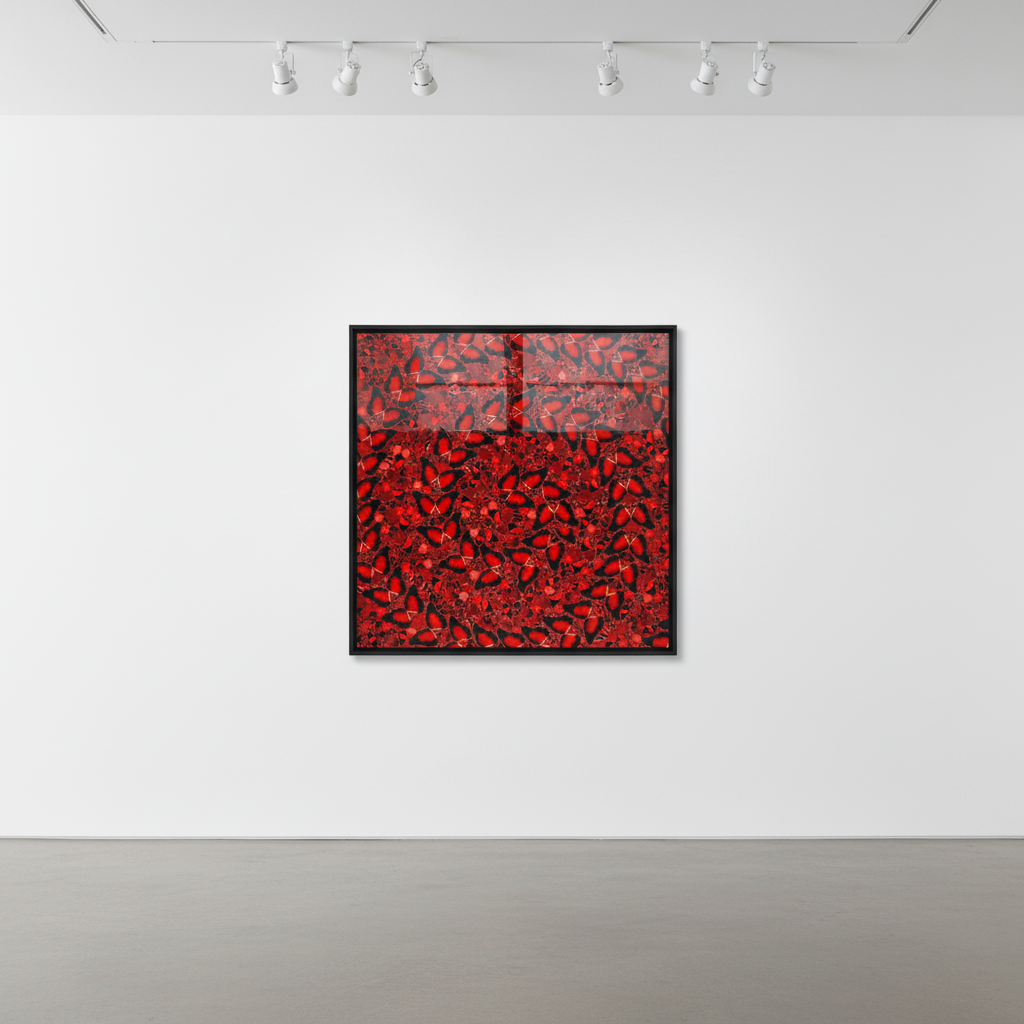
The large-scale paintings that define Hirst's butterfly output at auction — those enormous circular canvases composed entirely of real butterfly wings pressed into household gloss — began in earnest around 2001 and have continued in various iterations since.
The process is specific: Hirst and his studio use only the iridescent wings of butterflies (not whole bodies), arranged into concentric, mandala-like patterns in wet household paint. The wing-only approach is deliberate. As Hirst explained in his 2005 monograph I Want to Spend the Rest of My Life Everywhere, with Everyone, One to One, Always, Forever, Now: the separation of wings from bodies distances the work from the visceral reality of dead insects, leaving only what he called "the real thing" — the colour, the geometry, the light.
The effect is extraordinary: from any distance beyond two metres, these works read as pure abstract painting, alive with iridescent colour. Close up, the individual butterfly shapes become legible, and the mortality encoded in each one becomes impossible to ignore. The tension between those two experiences — beauty and death, simultaneously and inescapably — is precisely what has given these paintings their lasting power.
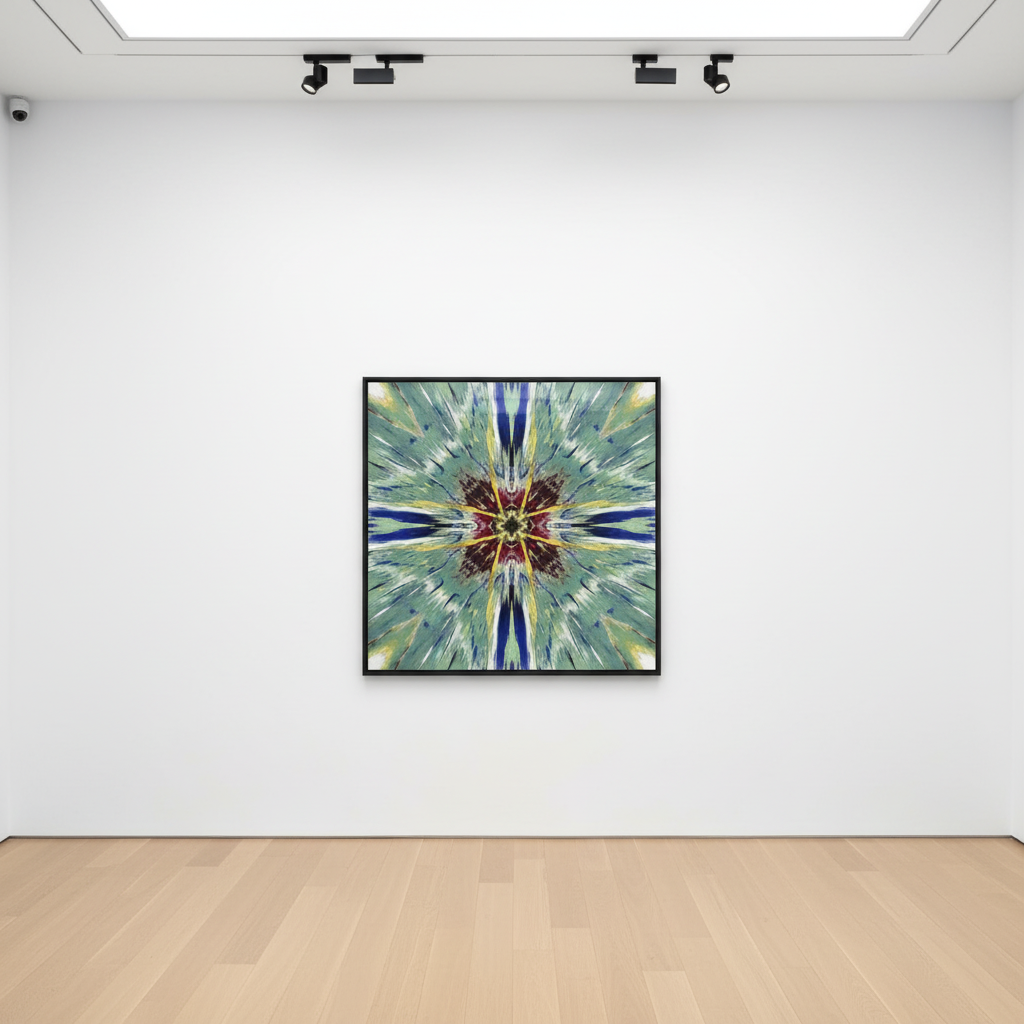
The Kaleidoscope paintings range from modest (24 × 24 inches) to enormous (132 × 132 inches and beyond). Titles reflect their spiritual resonance: Eternity, Covenant, Beneficence, Pardon, Miracle, Deific. These are not decorative choices — they locate the work in a tradition of religious painting where beauty was understood to be inseparable from the divine.
In September 2019, White Cube Mason's Yard in London presented Mandalas, a body of new butterfly paintings that pushed the Kaleidoscope logic further. Where the earlier Kaleidoscopes were primarily circular but varied in composition, the Mandala works took their explicit structure from Hindu, Buddhist, Jain, and Shinto mandala traditions — highly patterned religious images representing the cosmos.
Each Mandala painting resolves at its centre with a single complete butterfly, a point of visual stillness that functions, as White Cube's press material noted, as "a spiritual or energy nexus." The concentric patterns radiate outward from that fixed point with extraordinary precision, the butterfly wings arranged to create transitions in colour that recall both stained glass and the structure of a kaleidoscope viewed through a microscope.
The Mandalas represent the most formally resolved expression of the butterfly series to date. They are also, practically speaking, among the most technically demanding works Hirst has made: the placement of each individual wing is irreversible once the paint begins to set, and the symmetry required across canvases that can exceed 60 × 60 inches demands sustained precision over weeks of production.
Alongside the Kaleidoscopes and Mandalas, Hirst has consistently produced Spin Paintings incorporating butterflies — works made by placing paint and butterfly wings on a rotating canvas, allowing centrifugal force to produce radial patterns that no hand-guided tool could replicate. These exist as both unique paintings and as editions.
The Spin Paintings occupy a distinct market position from the Kaleidoscopes. Where the Kaleidoscopes are painstakingly constructed by hand over extended periods, the Spin Paintings carry the element of chance — the outcome of any given spin is not entirely under the artist's control. Both traditions are well documented within Hirst's studio practice. Hirst first began making Spin Paintings as a student at Goldsmith's in the late 1980s, using a child's toy as the rotating mechanism.
At Rago Auctions in September 2025, a Damien Hirst Butterfly Spin Painting (2009, acrylic on paper, 21 × 25¼ in.) bearing the artist's signature stamp sold for $2,413 against a $2,000–$3,000 estimate. The work carried a note that it was "made to celebrate the opening of Damien [Hirst's studio]."
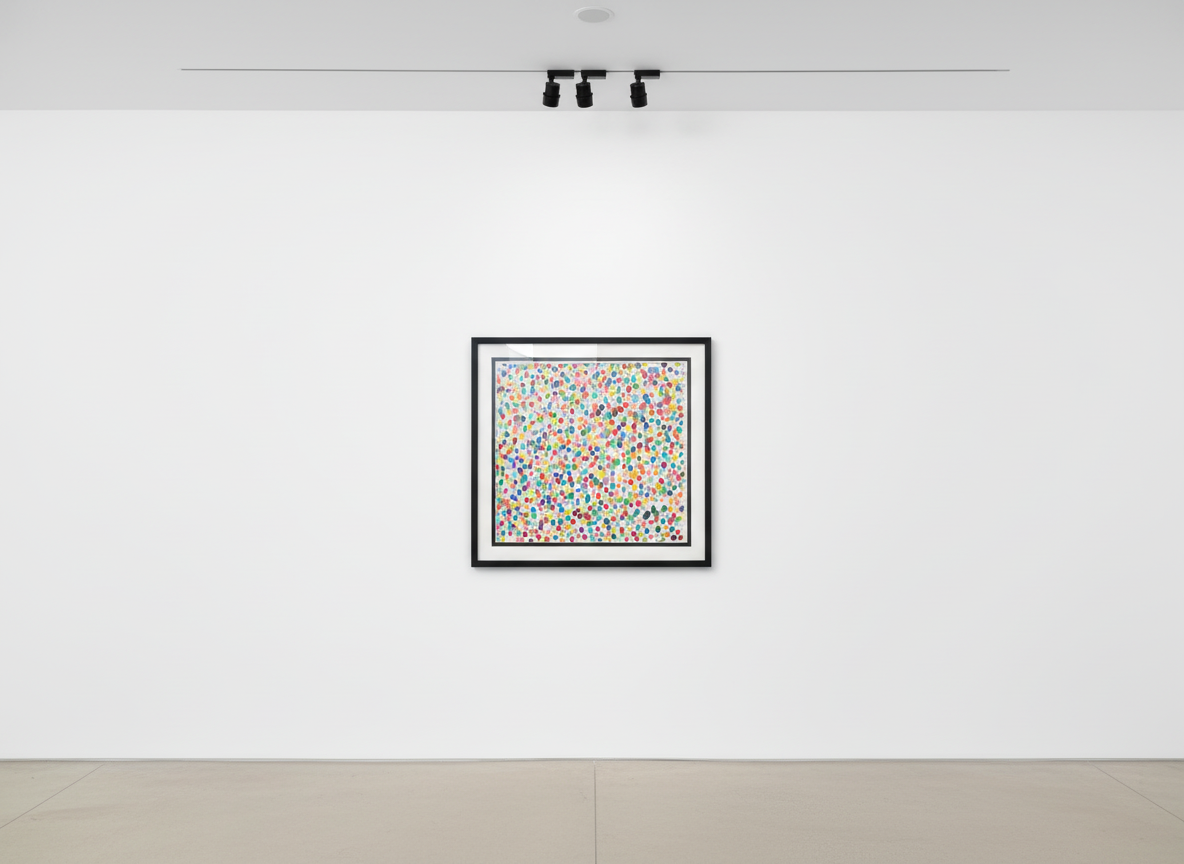
No discussion of Hirst's butterfly works is complete without acknowledging the spot paintings — the series that has defined his relationship with collectors at the entry tier. First produced in 1986 while Hirst was still an undergraduate, the spots are hand-painted, uniformly sized circles in pharmaceutical colours, arranged in grids on white backgrounds. No colour is ever repeated within a single painting. The titles are chemical compound names.
It is important to separate the spot painting market from the butterfly painting market. These are distinct series with distinct price levels, distinct collector bases, and distinct critical histories. A collector acquiring a butterfly work is making a different bet — aesthetically, financially, and historically — than a collector acquiring a spot painting. The butterfly works are less numerous, more technically demanding, and (in the case of the large Kaleidoscopes) more explicitly ambitious as statements about mortality and beauty.
The spot paintings remain significant context because they established Hirst's core collector base through the 1990s and 2000s — and many of those collectors have subsequently moved into butterfly works as the primary category of serious Hirst acquisition.
It is essential to separate the major painting results from the edition market. The figures below cover distinct categories and should not be conflated.
Phillips, New York — November 2023 Covenant, 2007. Butterflies and household gloss on canvas. 84 × 84 in. (213.4 × 213.4 cm.) Sold: $952,500 (estimate: $700,000–$1,000,000) This large-scale Kaleidoscope work came with a letter from Science Ltd (the artist's studio) confirming no endangered species per the CITES database — the standard authentication document for Hirst butterfly paintings.
Phillips, London — October 2007 Eternity, 2007. Butterflies and household gloss on canvas. Sold: £4,700,000 — the star lot of the evening, representing the auction record for a Hirst butterfly painting at the time.
Sotheby's — November 2016 Butterfly work (large-scale Kaleidoscope canvas). Sold: £629,000 against an estimate of £350,000–£450,000. (Artsy, January 2017)
Sotheby's, New York — May 2022 [FACT NEEDED: specific butterfly painting title/result from May 2022 Sotheby's NY] — A major Hirst diptych achieved £4.5 million at the Sotheby's Now Evening Auction, though this was not a butterfly-specific work.
Rago Auctions — September 2025 Butterfly Spin Painting, 2009. Acrylic on paper. 21 × 25¼ in. Sold: $2,413 (estimate: $2,000–$3,000)
Market Pricing for Kaleidoscope Editions (Current) According to MyArtBroker (updated January 2026), secondary market values for signed Kaleidoscope print editions currently range:
HENI 2024 Kaleidoscope Editions In 2024, Hirst released a new set of Kaleidoscope butterfly editions through HENI Publishing, priced at $5,000 each. Limited to 180 copies with 20 additional artist's proofs (APs). Each print is individually numbered and hand-signed on the verso.
Overall market context: Hirst's total auction sales across all categories reached approximately $26.6 million in 2024, moving him from 16th to 12th in the Hiscox Artist Top 100 rankings (Observer, June 2025).
There is no formal catalogue raisonné for Damien Hirst, and no authentication board analogous to the Andy Warhol Authentication Board (which closed in 2012) or Pest Control (Banksy's authentication arm). Authentication for Hirst works is handled by Science Ltd — the artist's production company, which also functions as the record-keeping and authentication resource for his output.
For butterfly paintings specifically, there is an additional authentication dimension that has no parallel in any other major artist's output: CITES compliance. The Convention on International Trade in Endangered Species regulates the commercial sale and transport of protected butterfly species, and a significant number of the species Hirst has used in his paintings are subject to CITES restrictions.
In practice, this means that a collector purchasing a Hirst butterfly painting — particularly at auction — should verify the following:
Works that lack a Science Ltd letter are not necessarily inauthentic, but the authentication burden falls entirely on provenance and connoisseurship in the absence of studio documentation. This is an area where working with an informed gallery — one with established relationships with Hirst's studio — is particularly valuable.
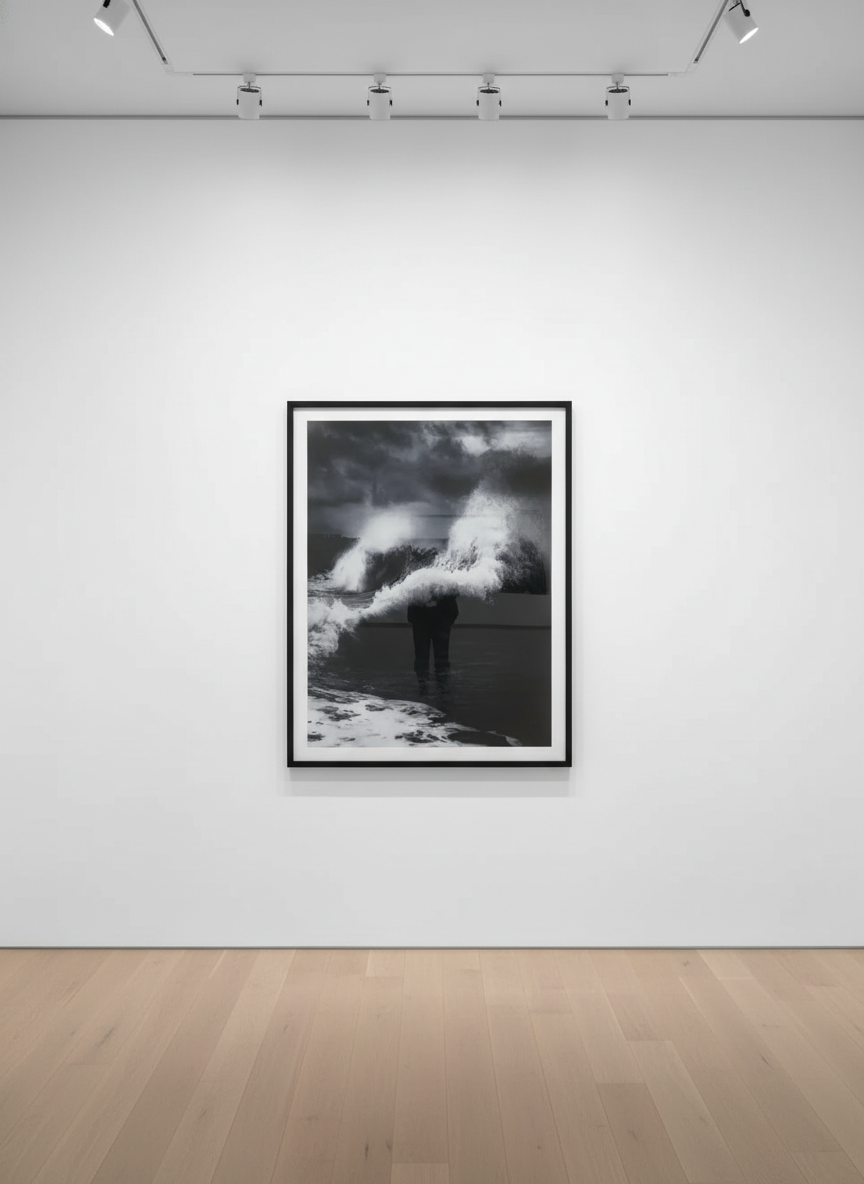
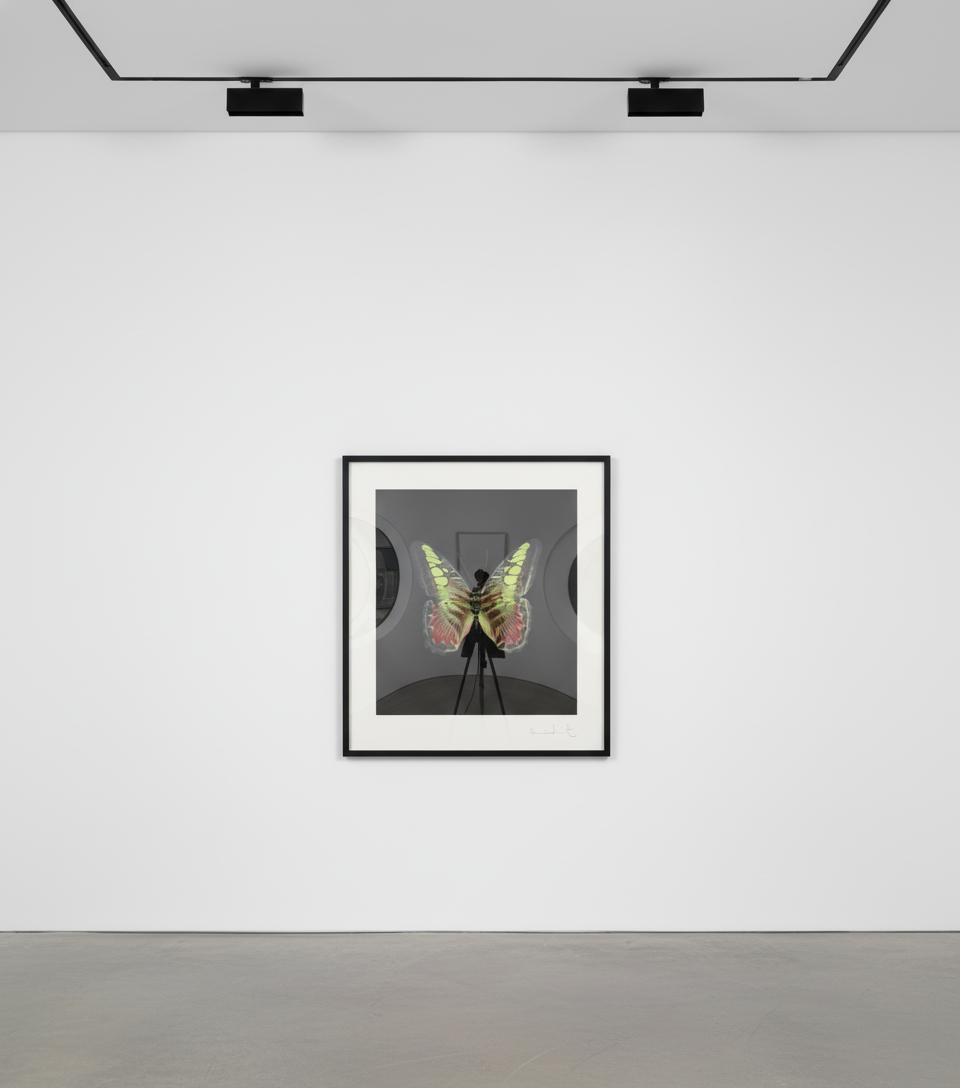 Souls, 2007. Hand-inked photogravure on 400 gsm Velin d'Arches paper, 47 1/8 x 42 5/8 in. Available at Guy Hepner, New York." loading="lazy" />
To understand damien hirst butterfly art fully, it is necessary to understand its relationship to the skull — specifically, to For the Love of God (2007), the platinum cast of a 17th-century human skull encrusted with 8,601 diamonds, including a 52.4-carat pear-shaped diamond at its forehead.
The butterfly and the skull are not opposing symbols in Hirst's vocabulary — they are the same statement, differently expressed. Both are memento mori: reminders of mortality. Both exploit beautiful surfaces to make an argument about death. Where the skull covers death in diamonds, the butterfly paintings cover death (the wings are real, the butterflies are dead) in colour and geometry so beautiful that most viewers initially register only the beauty. The mortality is embedded, not absent.
Art historian Rudi Fuchs wrote of For the Love of God in January 2007: "Covered by diamonds as by mail, it became an object of eternal life in death, blazing with light, resistant and heroic — yet still unspeakably ambiguous, as Damien Hirst always uncannily succeeds in making ambiguity itself into a seductive, axiomatic image."
The same description applies to the large Kaleidoscope butterfly paintings. The experience of standing in front of a 132-inch circular canvas dense with iridescent wings, knowing that each wing was once part of a living creature, is not comfortable. It is designed not to be. Hirst's comment on the butterfly series — "The death of an insect... still has this really optimistic beauty" — is the key to the entire body of work: the optimism and the death are inseparable, and neither is a lie.
The butterfly series spans a wide range of price points and production methods. Understanding what drives value requires separating several distinct categories:
Scale is the primary driver for unique and semi-unique works. The Kaleidoscope paintings that achieve six and seven figures at auction are, without exception, large — typically 48 × 48 inches and above. The relationship between scale and price is not linear but exponential: a 132 × 132-inch Kaleidoscope is not twice as valuable as a 66 × 66-inch one.
Species rarity matters. Works incorporating rarer butterfly species — particularly those with CITES protection — are more complex to sell and transport internationally, but they also represent a more constrained supply. Collectors who can navigate the compliance requirements have access to works that many buyers cannot.
Edition status significantly affects pricing for print/multiple works. Hand-signed editions with low edition numbers or AP status command premiums over standard numbered editions. The HENI 2024 editions (180 + 20AP at $5,000) are entry-tier. The older Kaleidoscope signed prints from Science Ltd — particularly large-format examples — trade at multiples of that.
Provenance from major gallery shows adds premium. Works exhibited at White Cube, Gagosian, or in major museum shows (the MUCA Munich 2023 retrospective; the Museo Jumex Vienna 2025 show; the current MMCA Seoul 2026 exhibition) carry institutional endorsement that supports secondary market pricing.
Condition is critical in a way specific to butterfly works. The wings are fragile, photosensitive, and irreplaceable. Fading, cracking, or loss of individual wings cannot be restored without material from the same or equivalent species — which may no longer be available. Works maintained in controlled lighting and stable humidity are substantively more valuable than comparable works with visible deterioration.
The institutional reception of Hirst's butterfly works has been extensive and consistent. Key moments:
The 2026 Seoul exhibition is particularly significant as a market signal: Asian institutional endorsement of this scale — 50+ works, many previously unshown in the region — typically precedes meaningful secondary market activity in Asian collector communities.
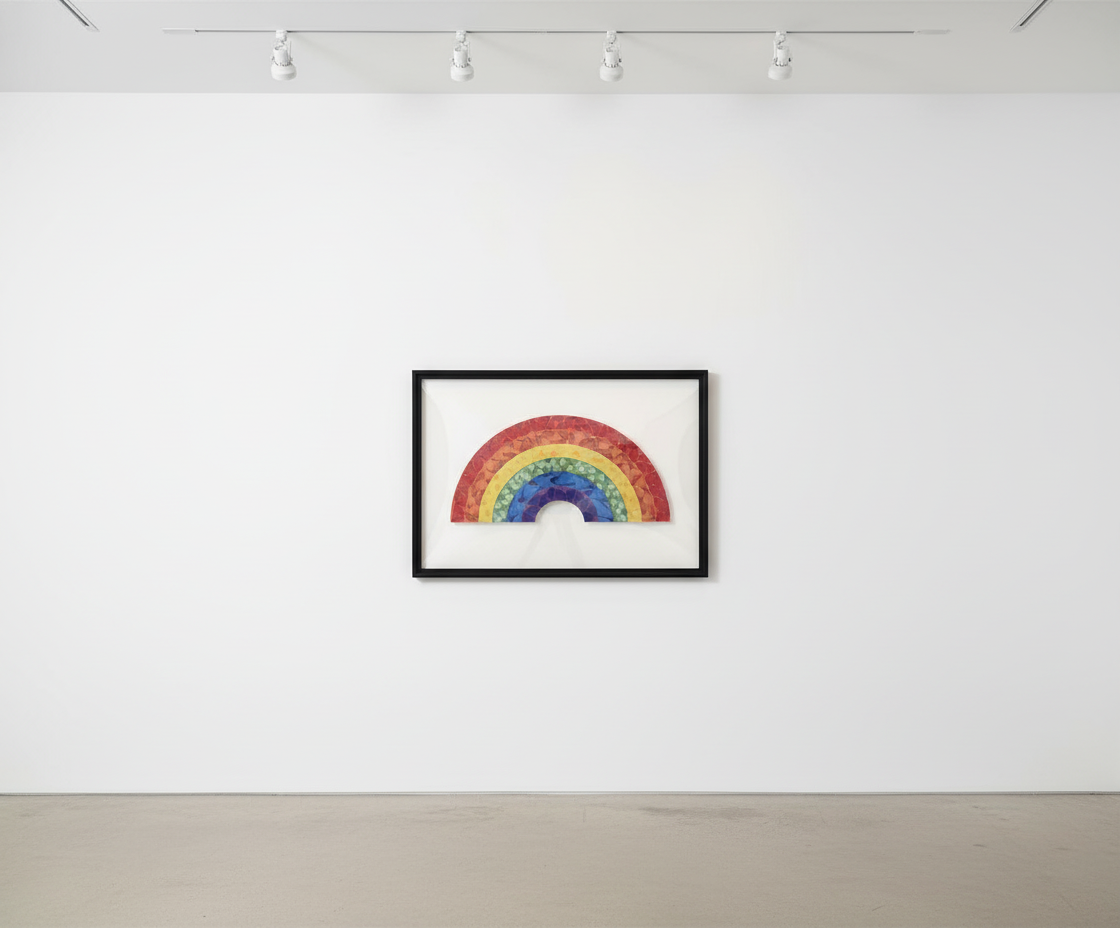
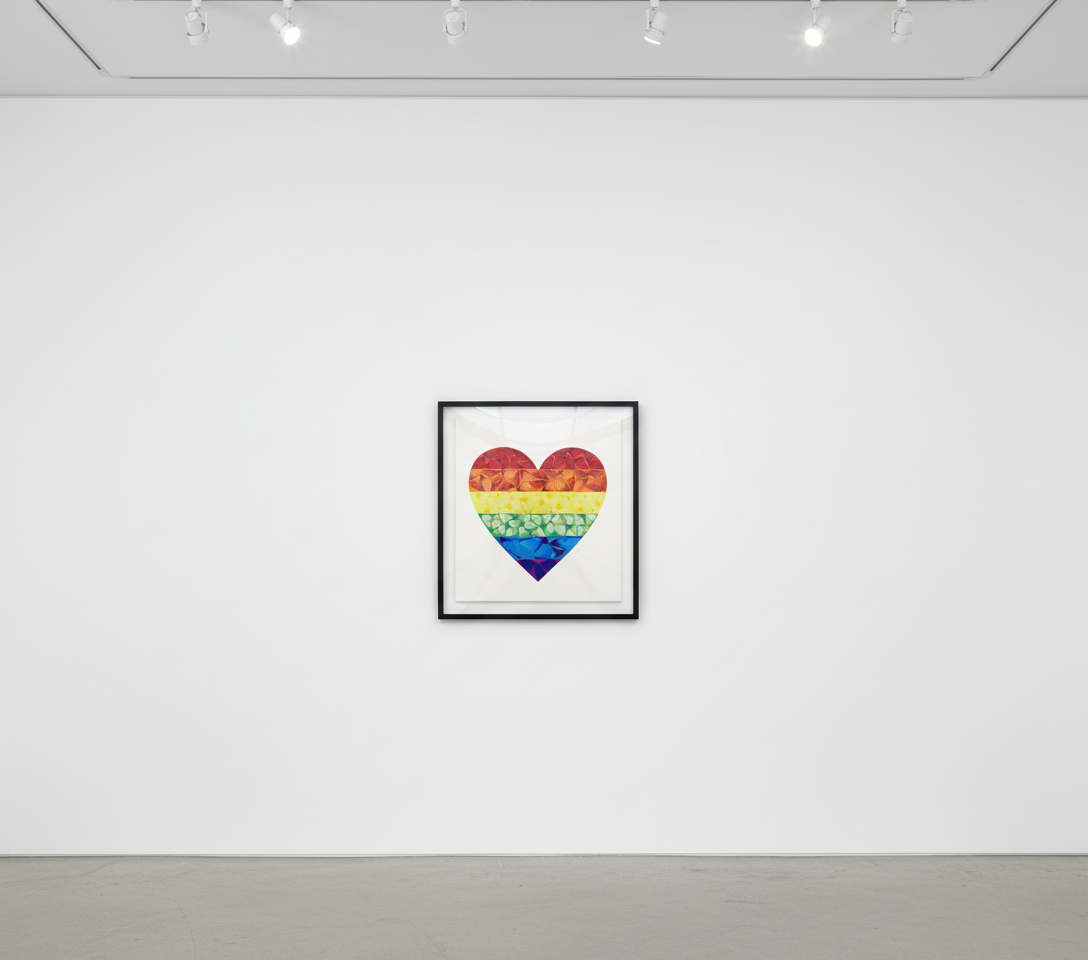
Entry tier ($3,000–$25,000): The 2020 Butterfly Rainbow and Butterfly Heart editions (laminated giclée prints on aluminium composite panels) provide access to the butterfly motif at a manageable price point. These are editions with documented production and consistent quality. The format — laminated giclée on aluminium — is durable and presentable without glazing. A starting point, not a destination.
Mid tier ($25,000–$150,000): Signed Kaleidoscope prints from Science Ltd, particularly the larger-format examples (Covenant, Deific, Pardon). These are limited in supply, well-documented in the secondary market, and carry the design complexity of the major paintings at a fraction of the price. The MyArtBroker valuation range for Covenant (non-diamond dust signed print) at £15,000–£23,000 provides a reliable secondary market floor.
Collector tier ($150,000+): The unique or semi-unique Kaleidoscope paintings on canvas. At this level, the acquisition strategy becomes specific: provenance from a major gallery (ideally Gagosian or White Cube), a Science Ltd letter confirming CITES compliance, and a condition report from a specialist in works on gloss paint. Scale, species quality, and title matter. Eternity and Covenant are the benchmark names — works at this tier should be assessed against their auction histories before any purchase.
What to avoid: Butterfly works offered without Science Ltd documentation and without clear gallery provenance. The combination of fragility, CITES complexity, and Hirst's extended and varied production history makes provenance more important here than in almost any other corner of the secondary market.
The following Damien Hirst butterfly works are currently available through Guy Hepner, New York. All are documented editions with confirmed provenance.
Butterfly Rainbow (large) H7-1, 2020 Laminated giclée print on aluminium composite panel 19 x 39 3/8 in (48.2 x 100 cm)
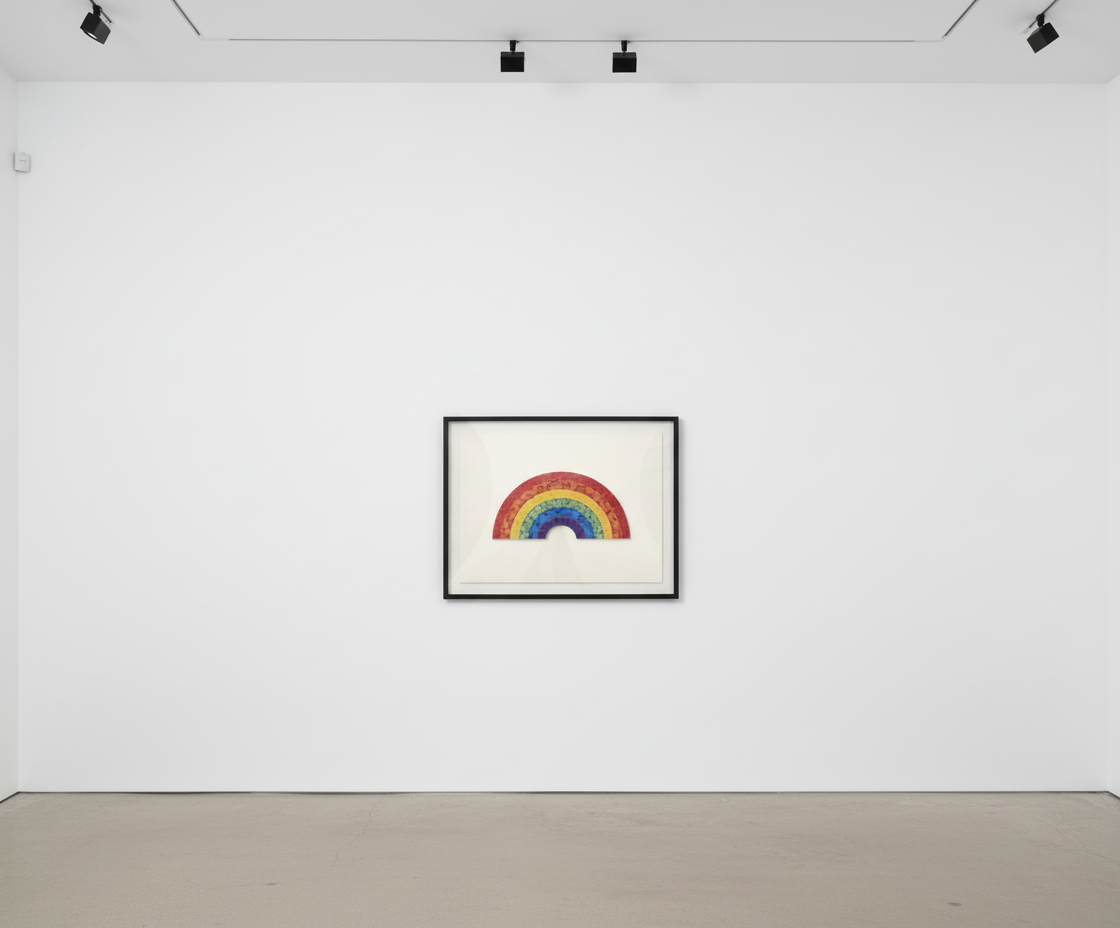
Butterfly Rainbow (small) H7-2, 2020 Laminated giclée print on aluminium composite panel 9 1/2 x 19 3/4 in (24.1 x 50 cm)
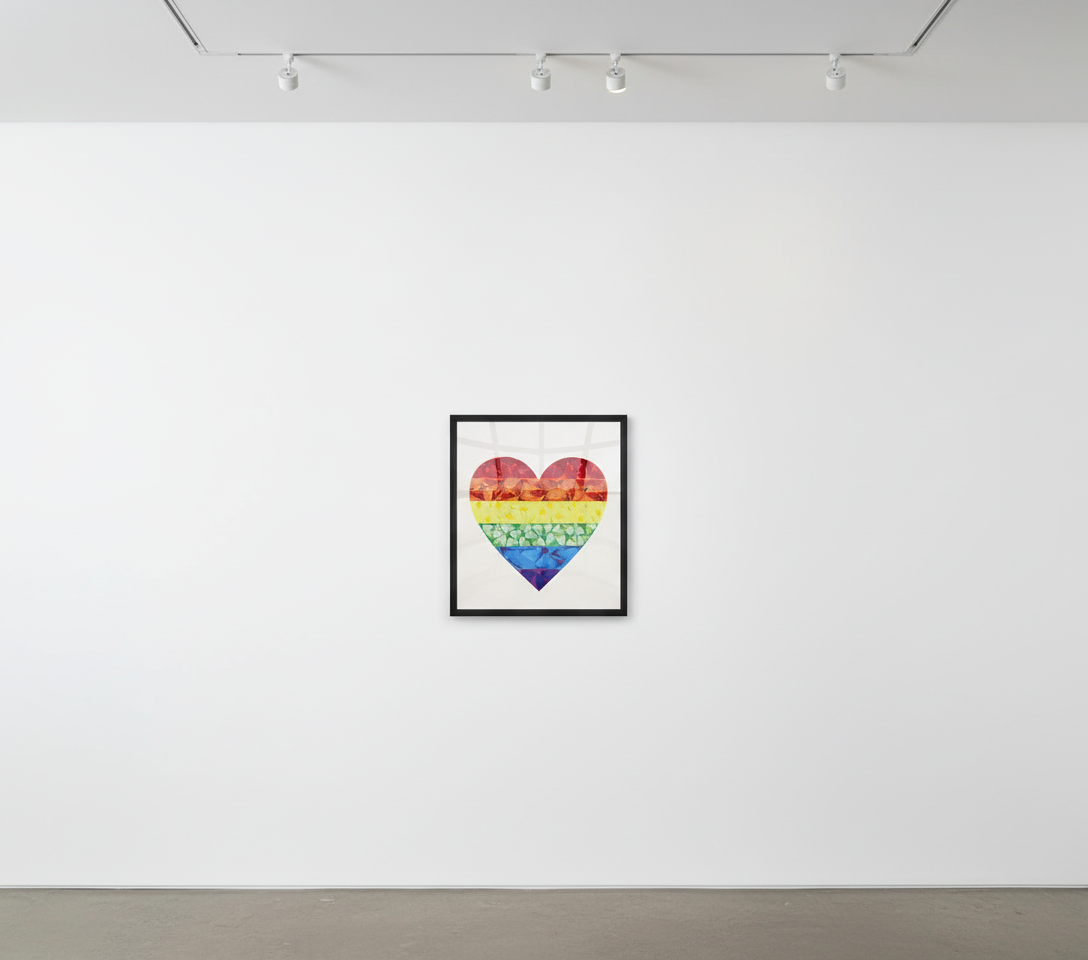
Butterfly Heart (Large) H7-3, 2020 Laminated giclée print on aluminum composite panel 27 x 28 in (68.6 x 71.1 cm)
The Souls on Jacob's Ladder Take Their Flight (Large Red / Green Butterfly), 2007 Hand-inked photogravure on 400 gsm Velin d'Arches paper 47 1/8 x 42 5/8 in (119.7 x 108.3 cm)
Inquire About Available Damien Hirst Butterfly Works Speak With a Specialist
The large Kaleidoscope paintings are made with real butterfly wings pressed into wet household gloss paint on canvas. Hirst uses only the wings — not full bodies — arranged into concentric, mandala-like patterns. The result is a painting that reads as pure abstract colour from a distance and as a composition of thousands of individual insect wings up close. The Mandala series (2019) follows the same technique with structures derived from Hindu and Buddhist mandala traditions. Editions like the Butterfly Rainbow and Butterfly Heart series (2020) are produced as laminated giclée prints on aluminium composite panels — a different medium, but derived from the same motif.
Value varies significantly by category. Large-scale unique Kaleidoscope paintings on canvas have sold at auction for £629,000 (Sotheby's, 2016), $952,500 (Phillips, November 2023), and £4.7 million (Eternity, Phillips, October 2007). Signed Kaleidoscope prints trade in the £3,200–£23,000 range depending on size and title, according to MyArtBroker (January 2026). Newer editions released through HENI (2024) were priced at $5,000. Spin Paintings with butterfly elements sell for $2,000–$5,000 at mid-level auction houses. The total Hirst auction market across all categories reached $26.6 million in 2024.
These are distinct series with distinct histories, price levels, and collector bases. The spot paintings (first made 1986) are hand-painted grids of uniformly sized coloured circles in pharmaceutical colours on white backgrounds — the titles are chemical compound names. They are among Hirst's earliest and most widely distributed works. The butterfly paintings (from 1991 onwards) are technically more demanding, less numerous, and more explicitly concerned with mortality and beauty. At comparable sizes, butterfly paintings typically command higher prices than spot paintings in the secondary market.
The primary authentication resource is Science Ltd, Hirst's production company in the UK. For butterfly paintings specifically, Science Ltd issues a letter confirming (in the studio's opinion) that the work does not contain endangered species per the CITES database — this is the standard authentication document for these works and was cited in the Phillips November 2023 auction notes for Covenant. Works with clear provenance from a major gallery (White Cube, Gagosian, Other Criteria) and a Science Ltd letter are well-documented. Works without studio documentation require specialist assessment of provenance and condition. There is no catalogue raisonné for Hirst's butterfly works.
The Convention on International Trade in Endangered Species (CITES) regulates the commercial movement of many butterfly species that Hirst has used in his paintings. This has practical consequences: international import/export of certain works may require official permits, and some works cannot legally cross certain borders without documentation. A Science Ltd letter confirming CITES compliance is the standard document provided with authenticated works, but collectors planning to transport a butterfly painting across international borders should take specific legal advice. Domestic sales within a single country are generally less complex.
The large-scale Kaleidoscope paintings have demonstrated sustained auction demand over nearly two decades, with the record for Eternity (£4.7M, Phillips 2007) representing one of Hirst's landmark auction moments. Mid-tier Kaleidoscope prints have maintained consistent secondary market values of £3,000–£23,000 according to current market data. The artist's 2026 MMCA Seoul exhibition — his first Asian institutional show — is a positive institutional signal for the market. Hirst's overall auction market reached $26.6 million in 2024, representing a recovery from the market correction of 2008–2015. Entry-tier editions provide access to the motif at low risk; serious investment positioning requires acquisition of documented, gallery-provenance works at mid and collector tiers. As with any single-artist investment, position sizing and portfolio context matter.
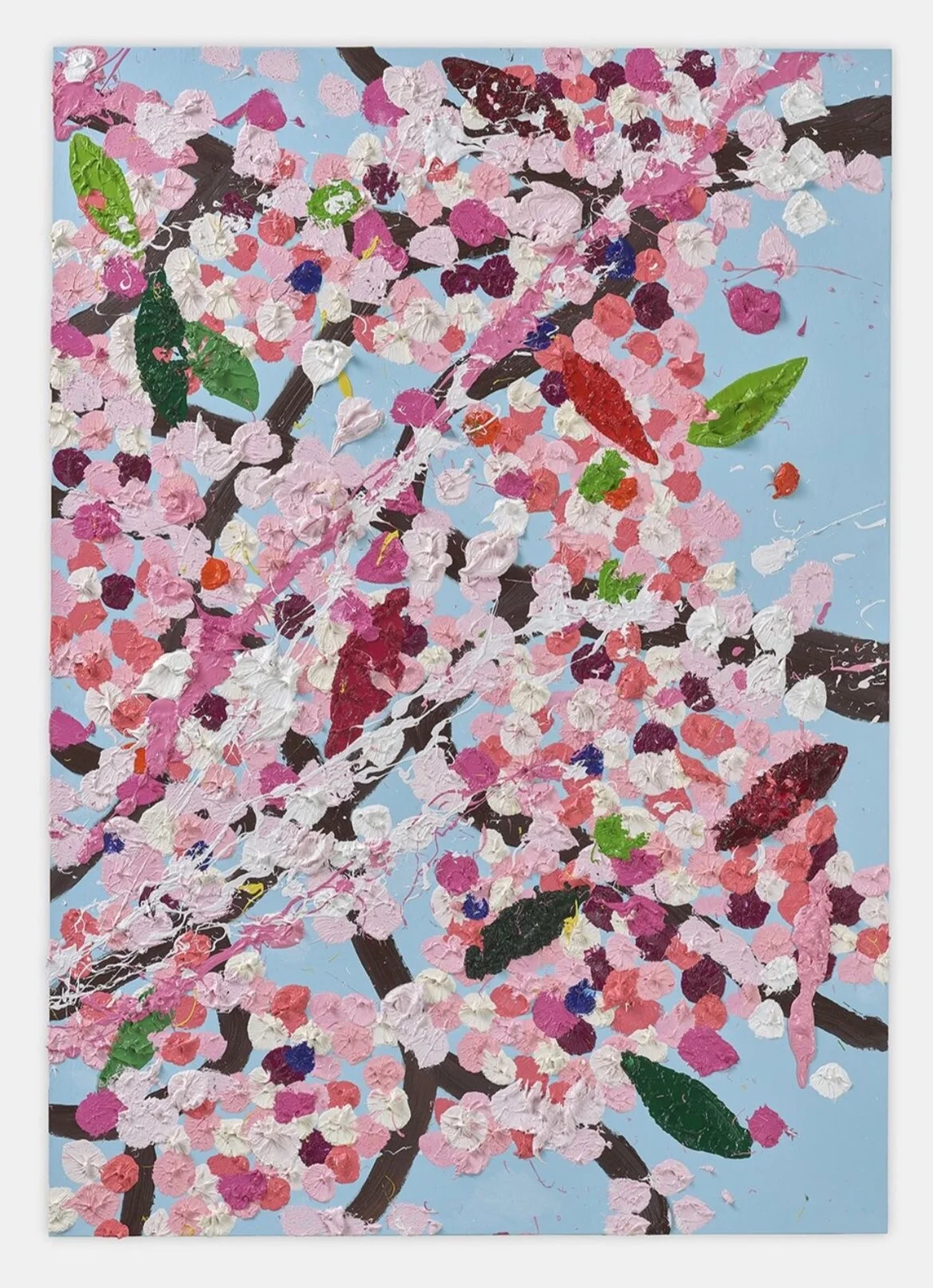
Guy Hepner, 177 Tenth Avenue, New York, maintains a curated selection of Damien Hirst butterfly works including the Butterfly Rainbow and Butterfly Heart series (2020) and the Souls on Jacob's Ladder photogravures (2007). The gallery's transaction history with Hirst spans over a decade and includes works from the Spot, Butterfly, Spin, Cherry Blossom, and pharmaceutical series. Enquiries for specific works — including sourced Kaleidoscope paintings not listed online — are welcome.
Inquire About Available Damien Hirst Butterfly Works Browse All Damien Hirst at Guy Hepner
Guy Hepner | 177 Tenth Avenue, New York
Browse Damien Hirst prints and editions at Guy Hepner: Damien Hirst art for sale | Sell your Damien Hirst
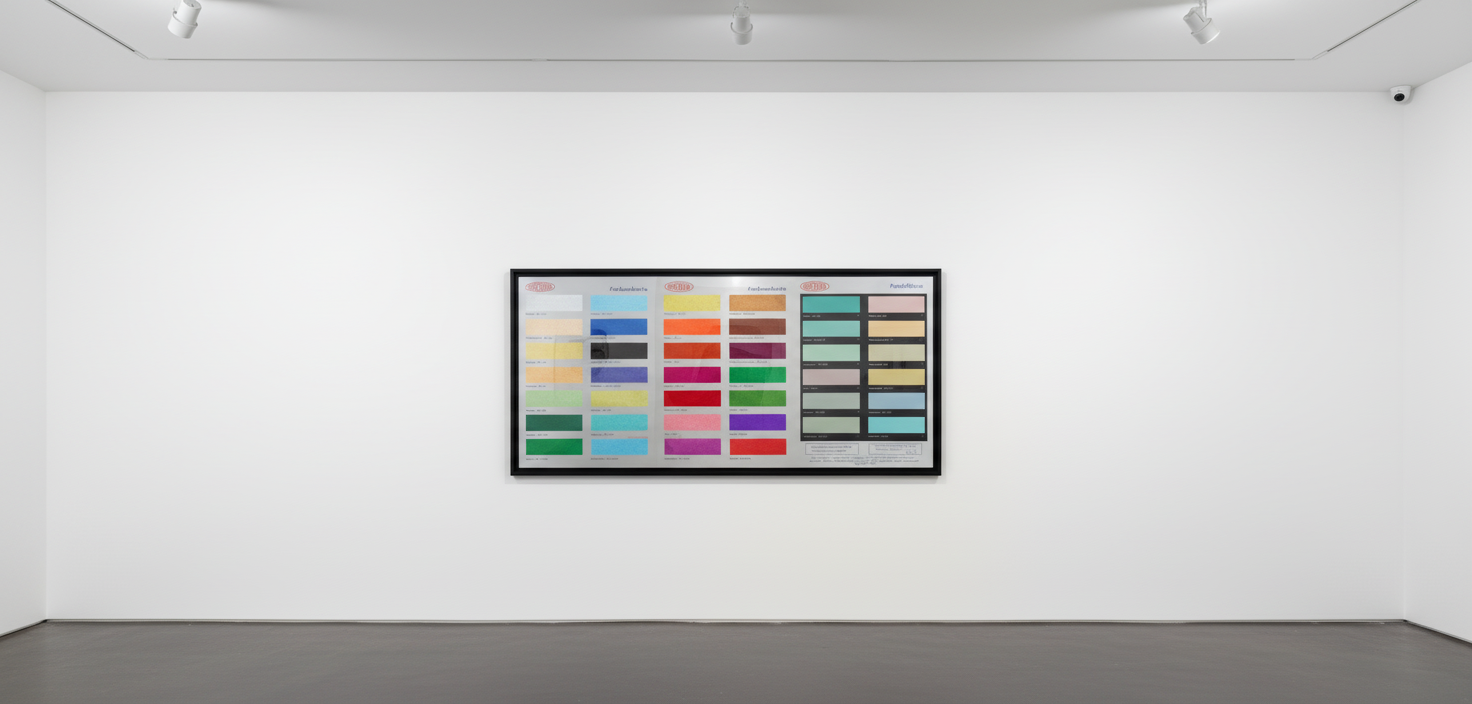
Explore Damien Hirst prints for sale at Guy Hepner: Blossoms, Colour Chart, H1 - Enter the Infinite, H10 - the Empresses, H11 - the Currency.
Related Series