(Fr)agile

Banksy remains one of the most consequential artists of the 21st century, a figure whose anonymity has only amplified the cultural resonance of his work. Operating at the intersection of street art, political commentary, and art historical dialogue, Banksy has transformed urban surfaces into sites of critical inquiry while simultaneously commanding record prices at the world's most prestigious auction houses. His brilliance lies not merely in his stenciled wit or guerrilla tactics but in how he weaves the DNA of past artistic giants into his own subversive visual language. As an artist rooted in street culture yet deeply conversant with art history, Banksy frequently references his predecessors - repurposing their iconic motifs to critique contemporary social and political issues with precision and provocation.
Understanding Banksy's practice requires acknowledging his sophisticated engagement with 20th-century art history. Unlike artists who merely appropriate, Banksy transforms - taking recognizable visual codes and recontextualizing them to speak to present-day concerns. This methodology positions him within a lineage that includes Andy Warhol's commentary on consumer culture, Keith Haring's democratization of art through accessible imagery, and Jean-Michel Basquiat's raw interrogation of race, class, and power structures.
Four works in particular demonstrate this approach with remarkable clarity: Choose Your Weapon, Tesco Value Soup, Banksquiat, and Boy and Dog in Stop and Search. Each piece subtly reinterprets the visual language of a major artistic figure while sharpening Banksy's own political edge. These are not simple homages or derivative exercises but rather critical conversations across time - the artist using historical reference as a weapon in his ongoing commentary on authority, capitalism, and social justice.
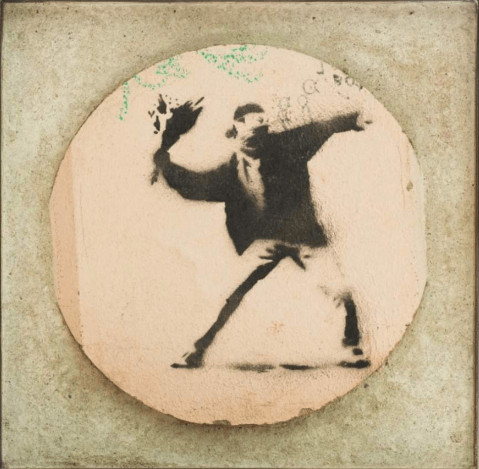
Flower Thrower Wall — Banksy. Available at Guy Hepner, New York.
In Choose Your Weapon, Banksy introduces a hoodie-clad youth walking a dog on a leash. But the dog is not realistic - instead, it is a near-identical rendering of Keith Haring's Barking Dog, one of the most iconic motifs of 1980s street art. Haring's dog symbolized raw energy, aggression, and the potential for communication through visual code. By placing this graphic symbol in a gritty urban context and pairing it with a figure coded as marginalized youth, Banksy creates a pointed commentary on how society perceives certain populations as inherently dangerous. The weapon referenced in the title is not a gun or knife but the dog itself - and by extension, the stereotypes and prejudices that transform ordinary people into perceived threats.
Banksy's engagement with Andy Warhol manifests most directly in Tesco Value Soup, a work that reimagines Warhol's celebrated Campbell's Soup Cans through a distinctly British and class-conscious lens. Where Warhol elevated mass-produced consumer goods to the status of fine art, commenting on American abundance and the flattening of value in capitalist society, Banksy substitutes the iconic American brand with Tesco Value - the budget supermarket line associated with economic necessity rather than consumer choice. This substitution transforms Warhol's ambiguous celebration of commerce into an explicit critique of austerity, class disparity, and the commodification of basic human needs.
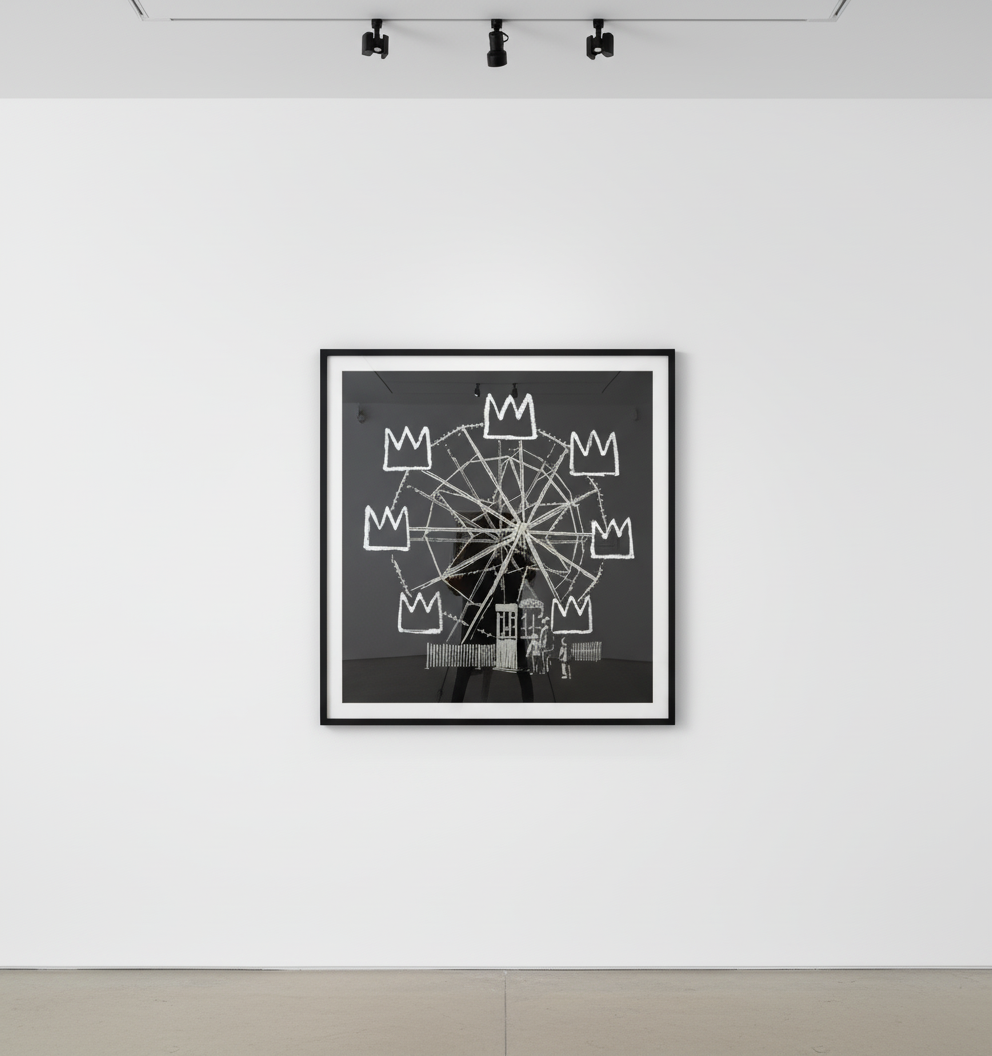
Banksquiat Black — Banksy. Available at Guy Hepner, New York.
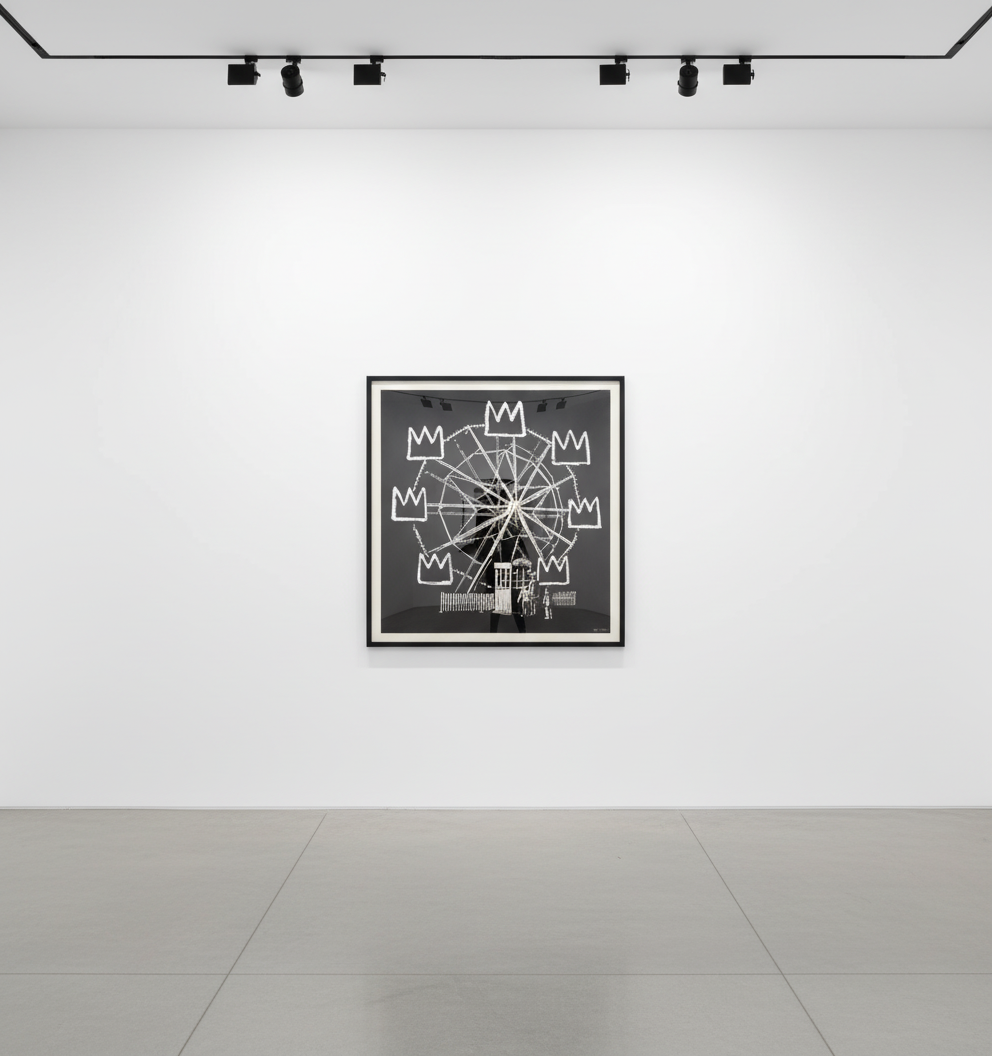
The Banksquiat series represents perhaps Banksy's most direct artistic dialogue, merging his signature style with the aesthetic vocabulary of Jean-Michel Basquiat. Available in both black and grey variations, these works feature Basquiat's characteristic crown motif - a symbol the Brooklyn-born artist used to signify Black excellence and to challenge the historical erasure of African American achievement. By incorporating this loaded symbol into his own visual framework, Banksy acknowledges Basquiat's ongoing relevance while extending conversations about race, power, and institutional critique into the present moment. The collaboration across time speaks to shared concerns about outsider status, the commercialization of rebellion, and art's capacity to challenge dominant narratives.
Boy and Dog in Stop and Search continues this dialogue with Haring's visual language while introducing an explicitly political dimension absent from the original work. Here, Haring's energetic, joyful dog submits to a search by authorities - a jarring juxtaposition that transforms playful iconography into a statement on surveillance, racial profiling, and the erosion of civil liberties. The innocence associated with Haring's imagery makes the violation depicted all the more disturbing, demonstrating Banksy's ability to weaponize nostalgia in service of contemporary critique.
The auction market has consistently validated Banksy's position as a leading figure in contemporary art. According to data from Christie's and Sotheby's, works by the artist regularly achieve prices in the seven and eight-figure range, with iconic pieces generating intense competition among international collectors. The Art Basel and UBS Global Art Market Report has repeatedly identified Banksy as among the most sought-after living artists, with demand spanning established collectors, institutions, and new market entrants drawn to his cultural relevance and investment potential.
Banksquiat Grey — Banksy. Available at Guy Hepner, New York.
Works that engage directly with art historical predecessors hold particular appeal for sophisticated collectors, as they demonstrate the intellectual depth underlying Banksy's populist accessibility. These pieces function simultaneously as standalone statements and as chapters in an ongoing conversation about artistic lineage, influence, and the responsibility of artists to engage with both past and present. The Choose Your Weapon series, the Banksquiat editions, and related works represent opportunities to acquire pieces that will only grow in significance as Banksy's place in art history becomes further cemented.
Guy Hepner maintains an exceptional selection of authenticated Banksy works, including pieces from the series discussed above. As a gallery with deep expertise in contemporary art and street art movements, Guy Hepner offers collectors access to museum-quality works accompanied by comprehensive provenance documentation and expert guidance. Whether acquiring a first Banksy piece or expanding an established collection, clients benefit from the gallery's relationships with leading collectors worldwide and its commitment to discretion and excellence. To inquire about available Banksy works or to discuss acquisition opportunities, contact Guy Hepner directly for a private consultation.
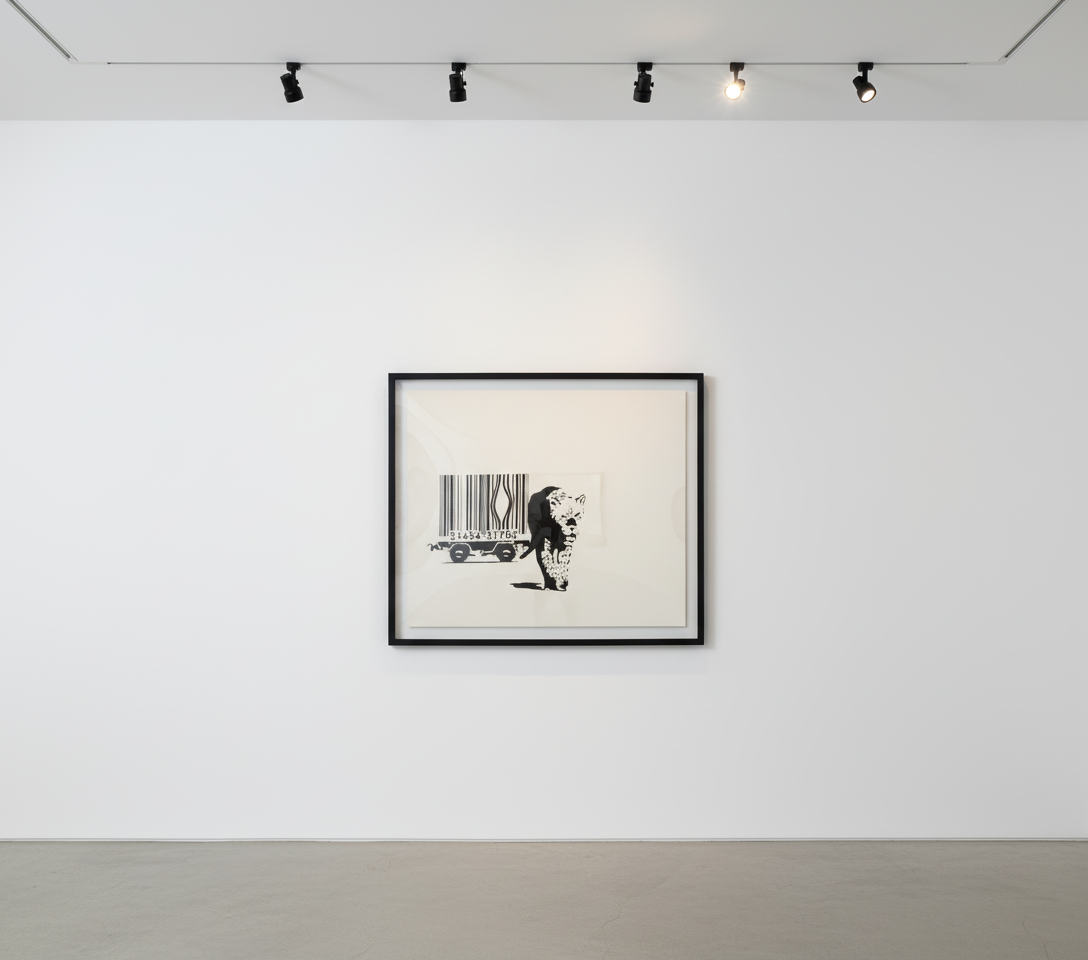
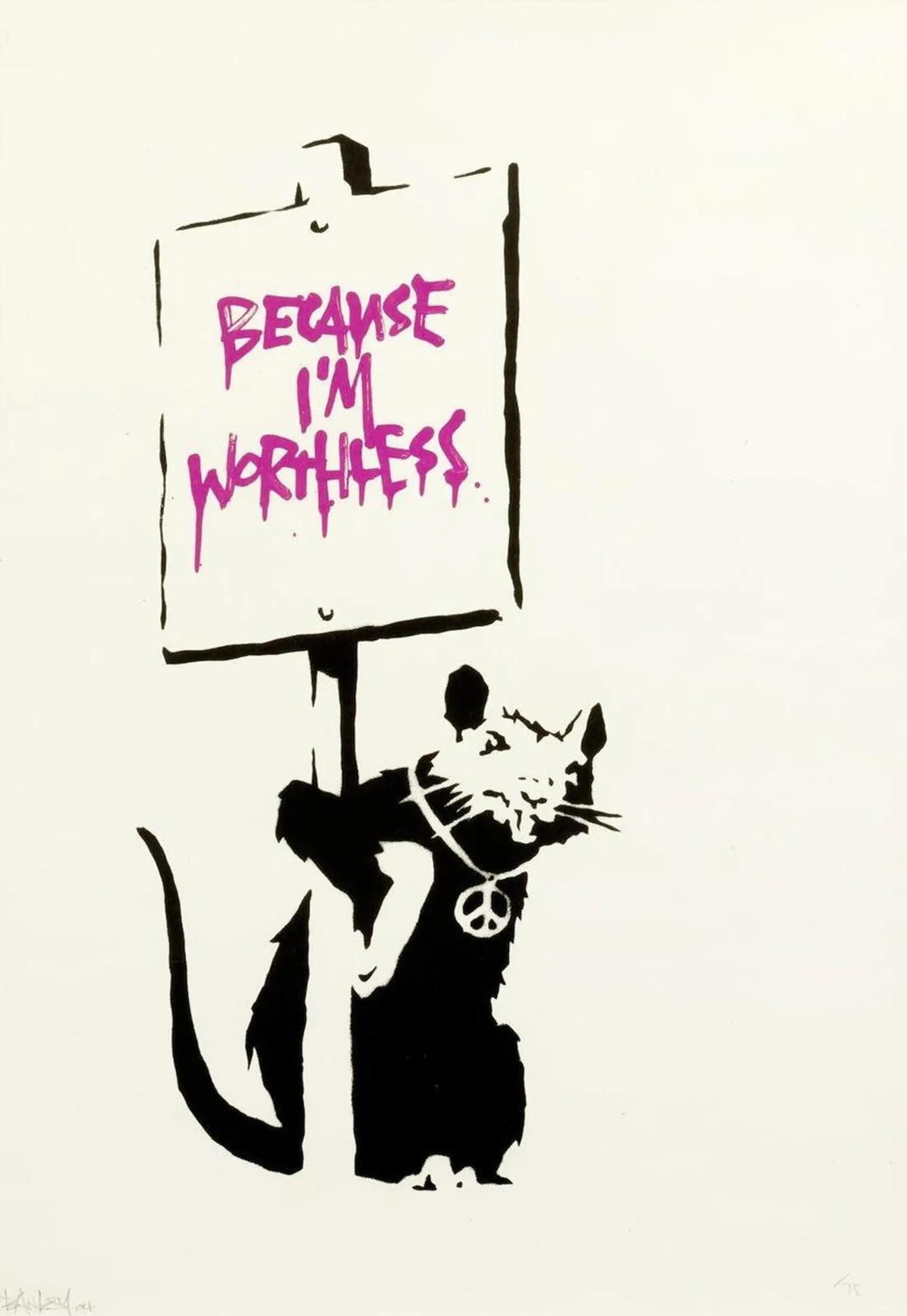
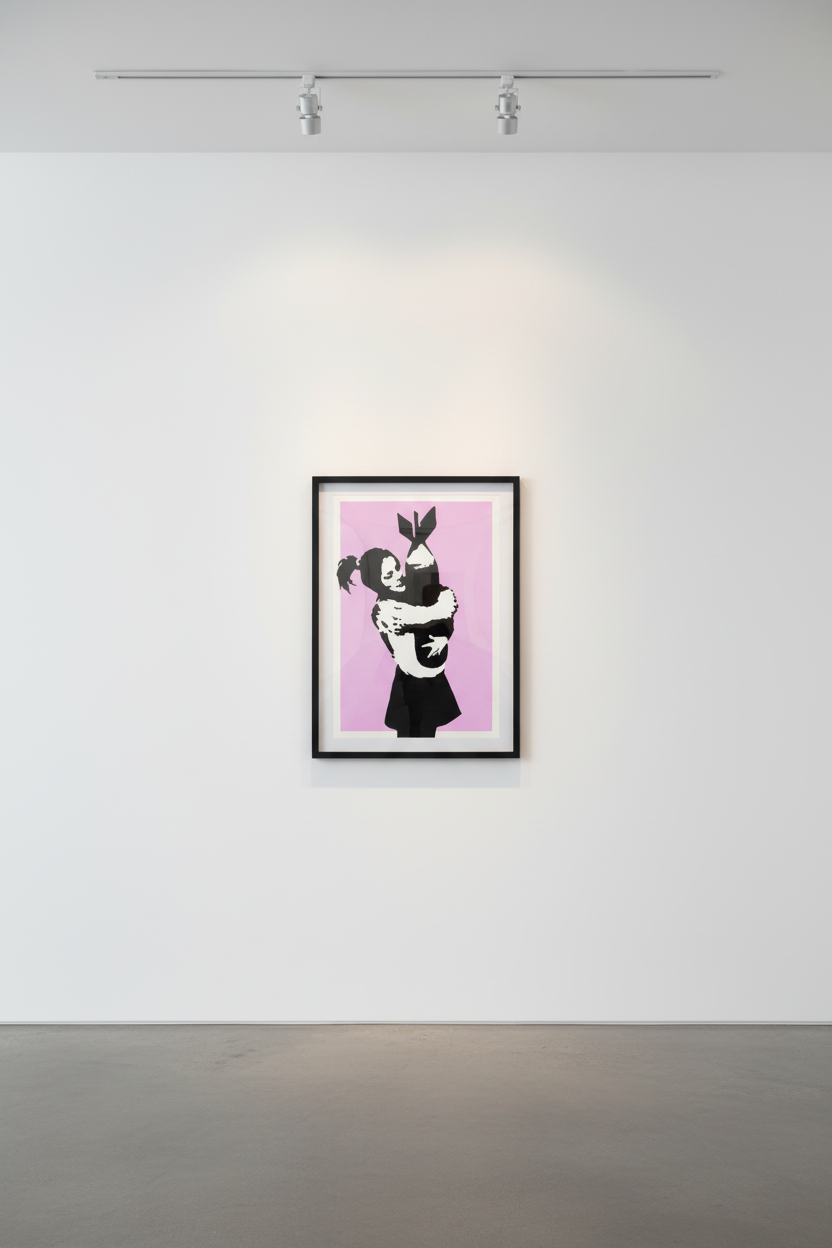
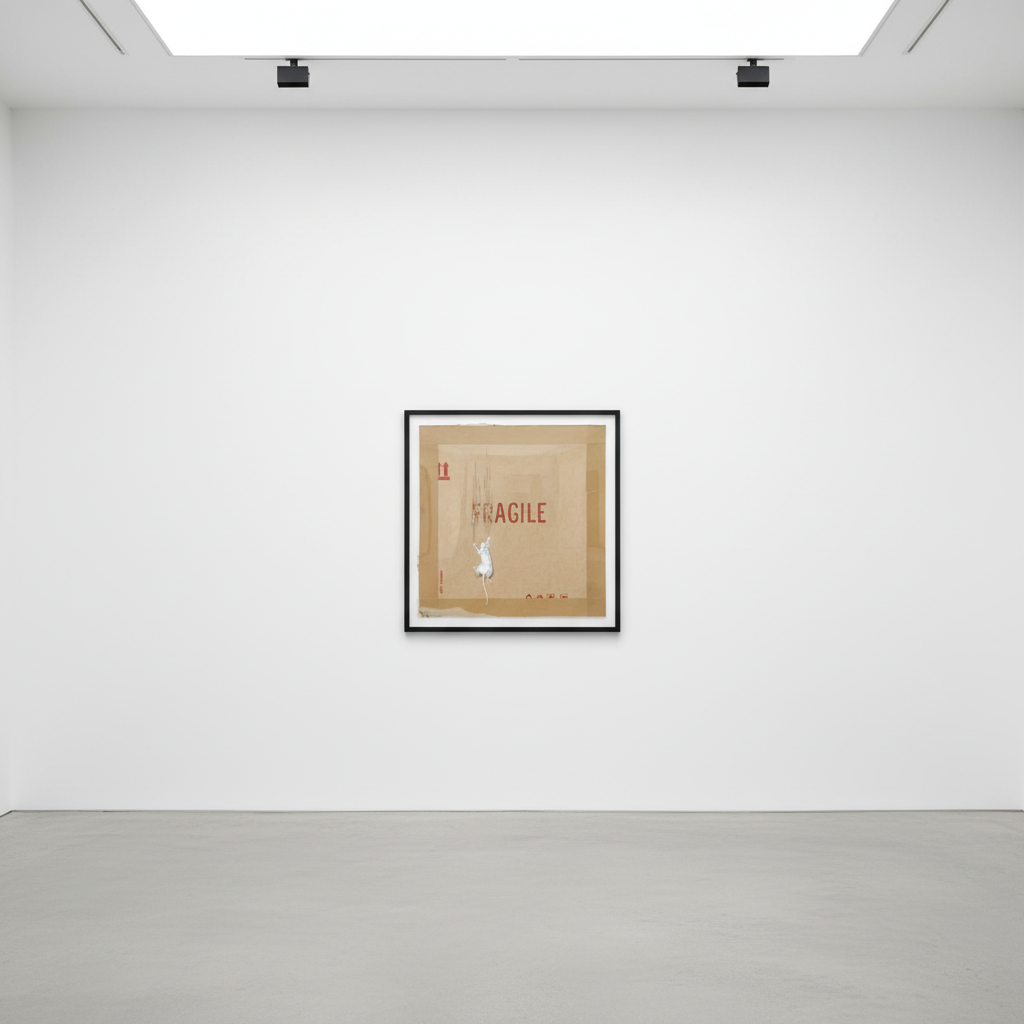
Explore Banksy prints for sale at Guy Hepner: (Fr)agile, Applause, Banksquiat, Barcode, Because I'm Worthless.
Related Series