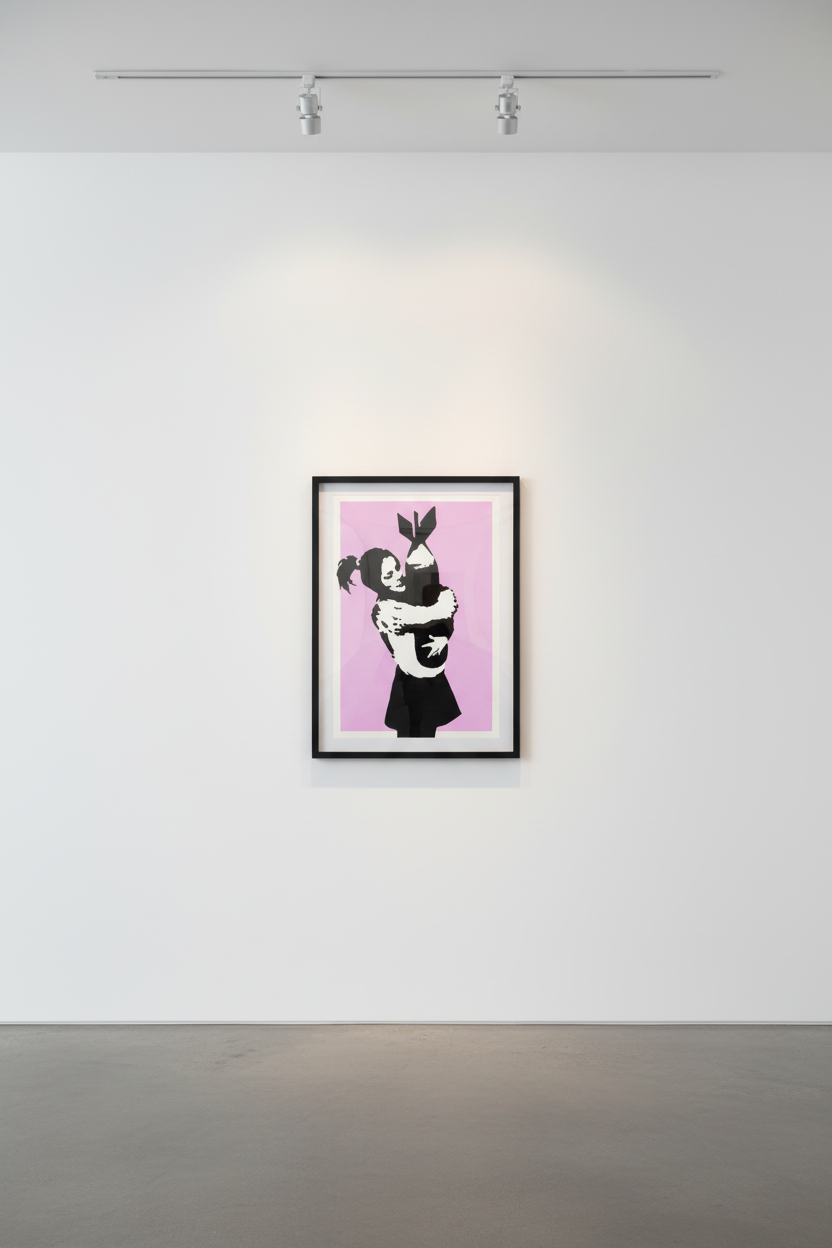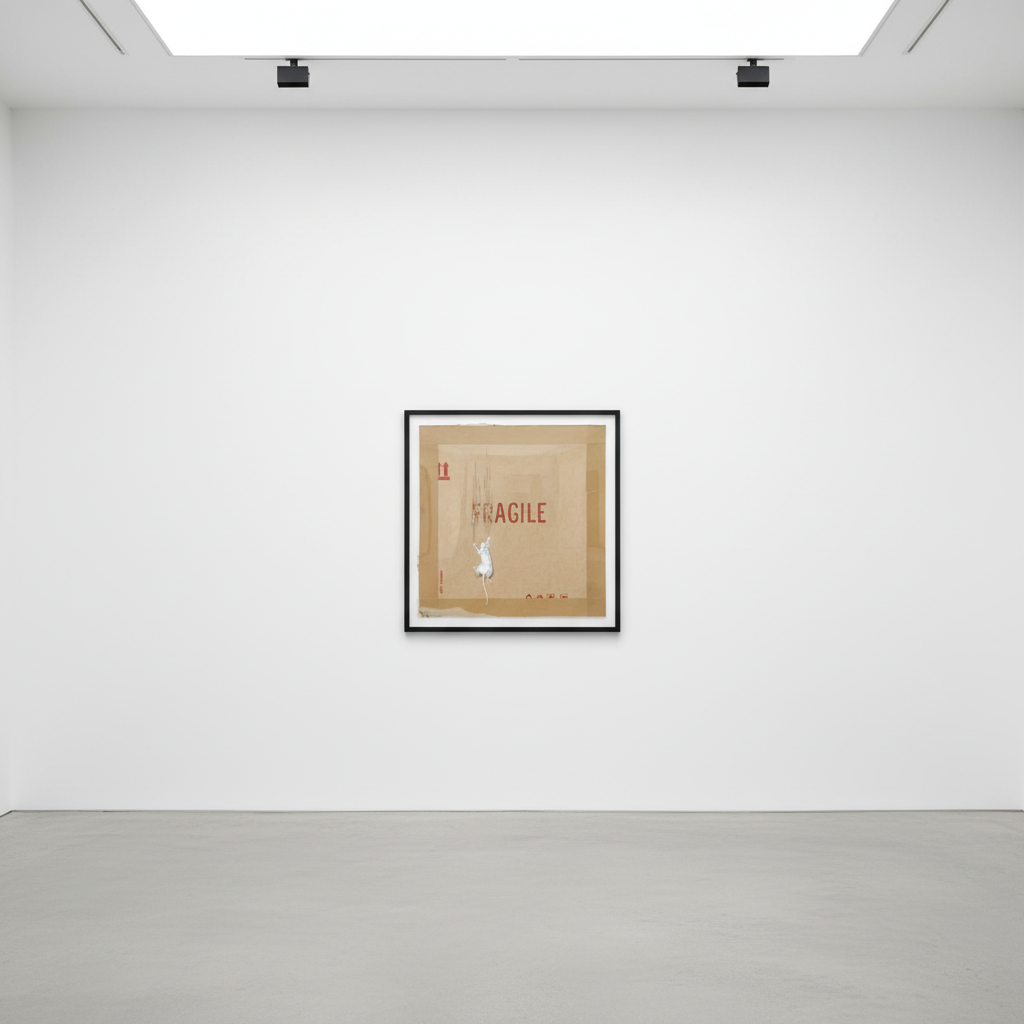
(Fr)agile

May 23, 2026
Banksy stands as one of the most consequential artists of the twenty-first century, a figure whose anonymity has only amplified the cultural resonance of his work. Known for politically charged stencils, anti-establishment themes, and incisive dark humour, Banksy has captivated a global audience while maintaining an enigmatic presence that defies conventional art world norms. According to the Art Basel and UBS Global Art Market Report, works by Banksy consistently rank among the most sought-after contemporary pieces at auction, with collectors drawn to both the artistic merit and cultural significance of his output. While his originality is undeniable, Banksy's art is deeply rooted in a rich tapestry of artistic traditions and influences that merit careful examination. From the rebellious legacy of street graffiti to the conceptual provocations of Dadaism, his distinctive visual language draws from a wide range of precedents both ideological and aesthetic.
At its core, Banksy's art emerges directly from the graffiti movement that exploded across urban landscapes in the 1970s and 1980s, particularly in New York City. This was a period when spray paint became a tool of radical self-expression, and the city's subway cars and building facades transformed into canvases for marginalised voices. Pioneers such as Jean-Michel Basquiat, Keith Haring, and Richard Hambleton elevated graffiti from subcultural tagging into powerful visual narratives that demanded recognition from the established art world.
Keith Haring's influence on Banksy proves particularly significant. Haring's use of bold outlines, repeating symbols, and accessible imagery demonstrated that contemporary art could communicate directly with the public without requiring institutional mediation. His iconic subway chalk drawings - executed quickly in the liminal spaces of New York's transit system - established a precedent for Banksy's own interventions on walls, bridges, and abandoned buildings throughout Bristol, London, and eventually cities worldwide. Both artists share a commitment to democratising art, believing that meaningful visual expression should exist outside the confines of galleries and auction houses.
Jean-Michel Basquiat offered a different but equally vital model. His cryptic symbolism, layered cultural references, and unflinching engagement with race, class, and power demonstrated how street-derived aesthetics could address profound social concerns. Basquiat's trajectory from graffiti artist to international phenomenon - his works now regularly achieving eight-figure sums at Christie's and Sotheby's - prefigured Banksy's own complicated relationship with the commercial art market. Both artists emerged from outsider traditions yet ultimately reshaped the mainstream conversation about what constitutes significant contemporary art.
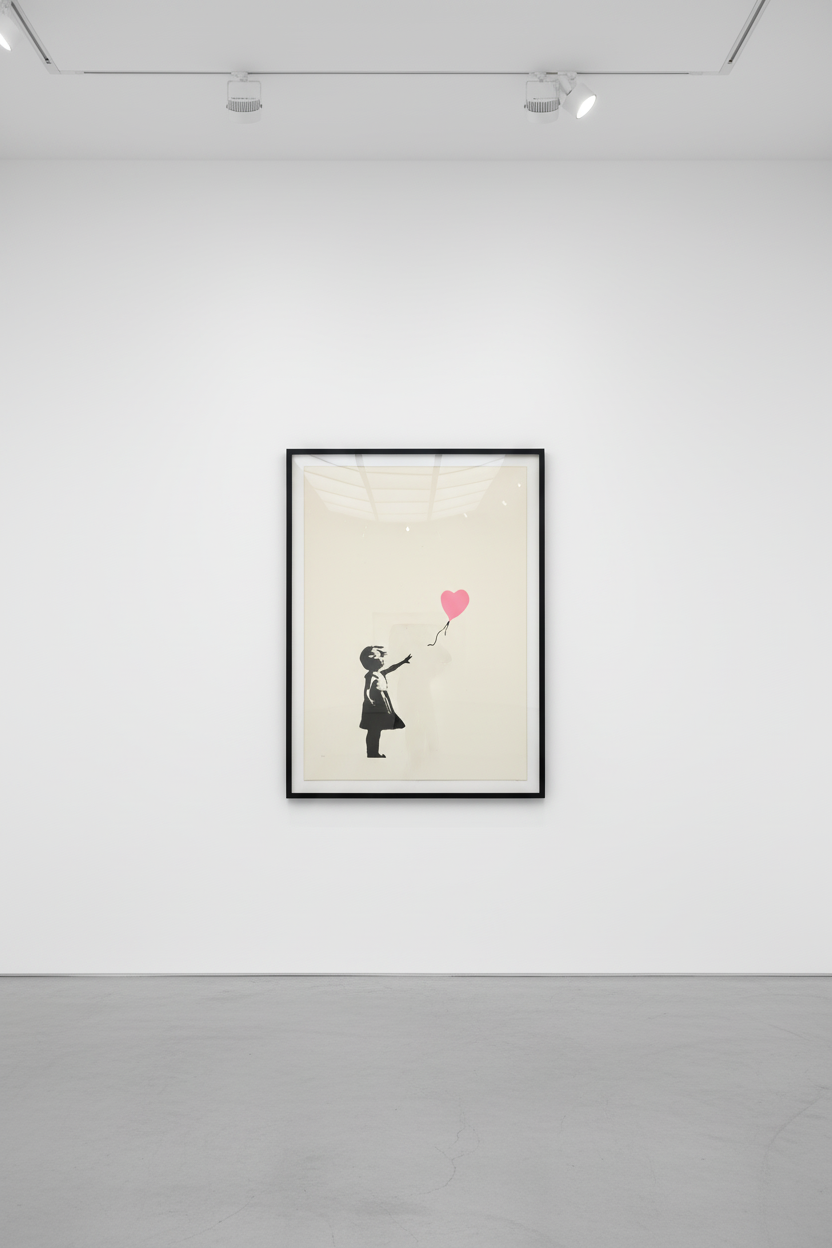
Girl with Balloon Pink AP — Banksy. Available at Guy Hepner, New York.
While freehand graffiti informed Banksy's early development, his mature style owes an enormous debt to the stencil tradition that flourished in France during the 1960s and gained renewed prominence through artists like Blek le Rat in the 1980s. Blek le Rat, often called the father of stencil graffiti, pioneered the technique of cutting intricate designs into cardboard or acetate, allowing for rapid reproduction of images across urban environments. This methodology proved transformative for Banksy, enabling the speed necessary to avoid detection while maintaining the precision that distinguishes his compositions.
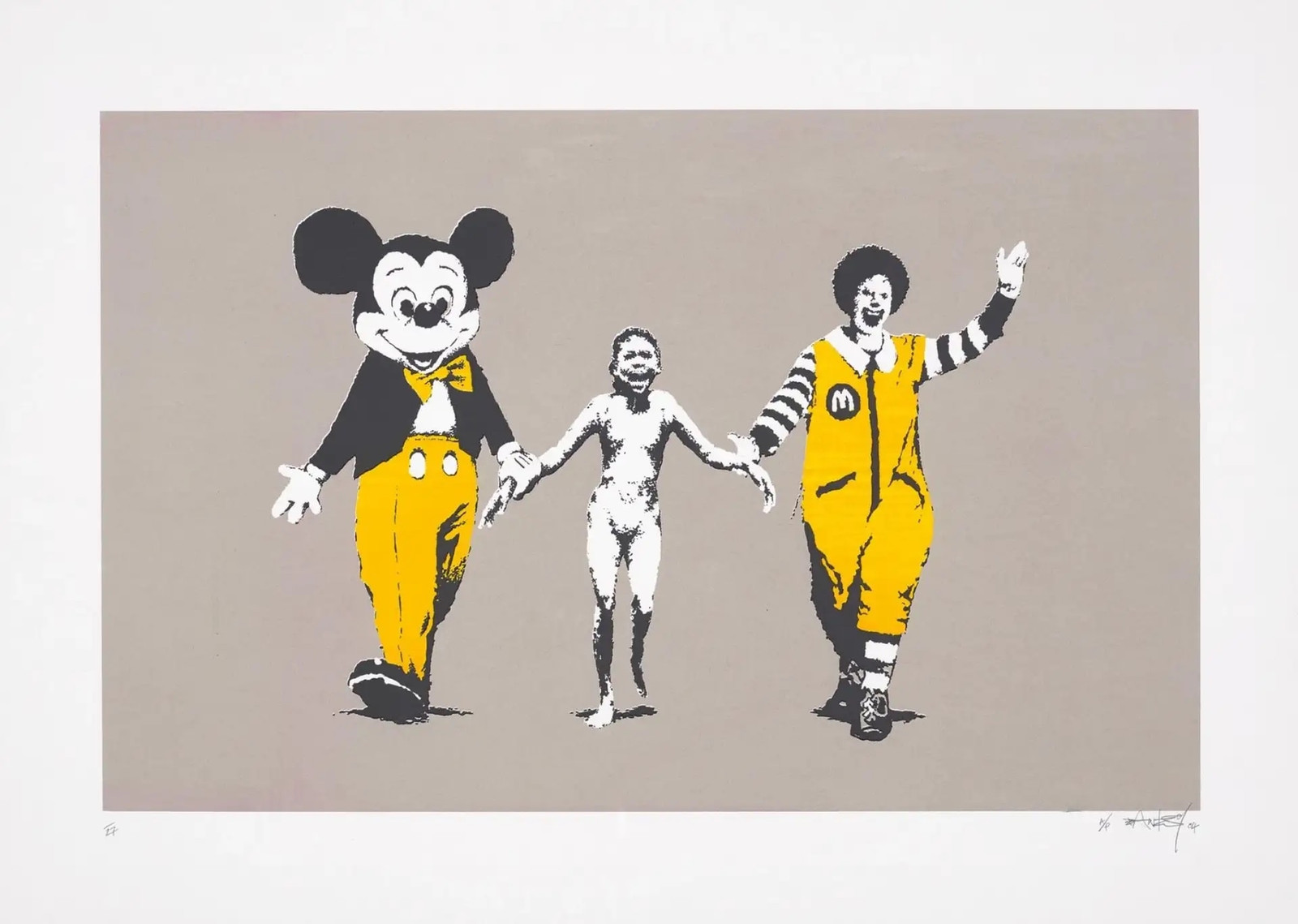
The political dimensions of Banksy's work connect him to a longer history of art as social commentary. The Situationist International - a revolutionary collective active in post-war France - advocated for détournement, the subversive repurposing of mainstream imagery to expose ideological contradictions. Banksy's appropriation of recognisable symbols, from the McDonald's logo to Disney characters, follows directly in this tradition. His rats, police officers, and children function as recurring motifs that accumulate meaning through repetition, much as advertising imagery saturates public consciousness.
Dadaism and its successor movements also inform Banksy's conceptual approach. The Dadaists' rejection of bourgeois values, their embrace of absurdity, and their questioning of what constitutes art itself find clear echoes in works like the shredded Girl With Balloon at Sotheby's in 2018. That spectacular act of auto-destruction - in which a canvas partially shredded itself moments after the hammer fell - represented perhaps the most audacious Dadaist gesture of the contemporary era, simultaneously critiquing and participating in the mechanisms of the art market.
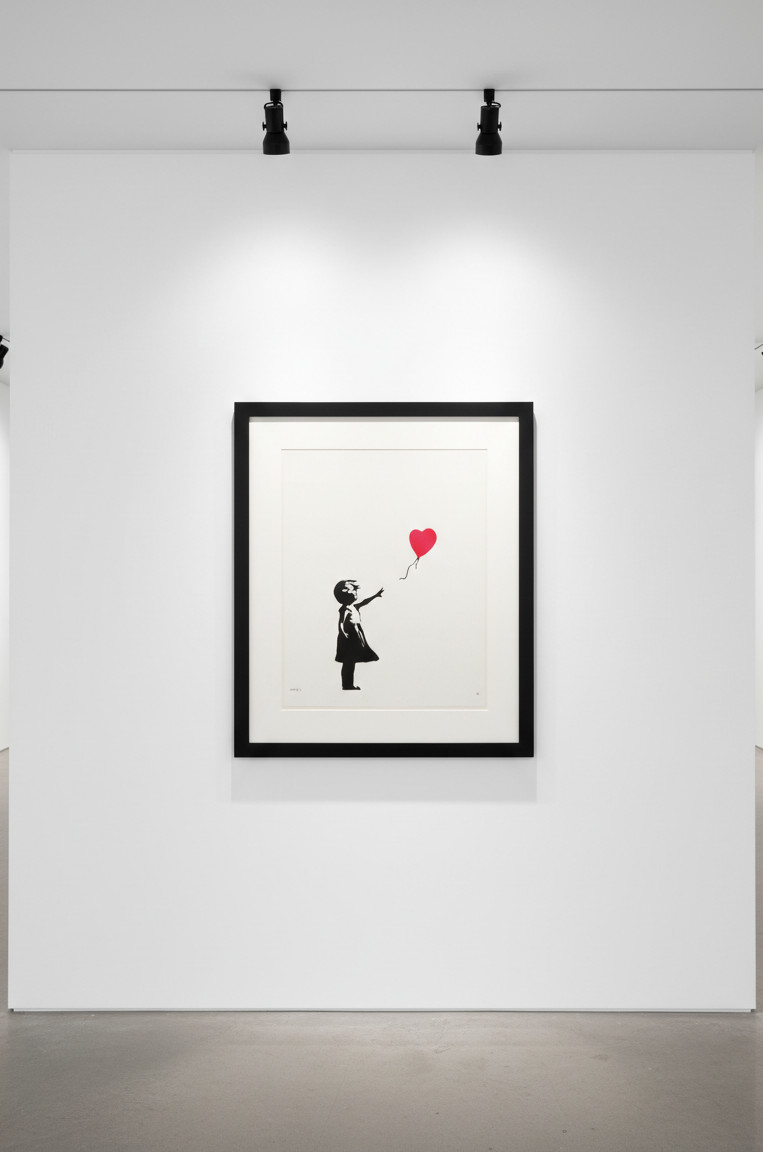
Girl With Balloon (Signed) — Banksy. Available at Guy Hepner, New York.
Andy Warhol's influence permeates Banksy's engagement with celebrity, reproduction, and commercial imagery. Warhol demonstrated that appropriating mass media iconography could constitute serious artistic practice, and his silkscreen technique - enabling endless replication of images - anticipated Banksy's own use of stencils to create multiple versions of signature works. Both artists blur boundaries between high and low culture, finding profound content in seemingly superficial subjects.
Yet where Warhol maintained studied neutrality toward consumer culture, Banksy adopts an explicitly critical stance. His works interrogate militarism, surveillance capitalism, environmental destruction, and social inequality with pointed clarity. The figure of the child appears repeatedly in Banksy's oeuvre - reaching for a heart-shaped balloon, facing riot police, or playing amid ruins - representing innocence endangered by systemic forces. This iconography resonates powerfully with collectors who recognise art's capacity to articulate dissent while retaining aesthetic sophistication.
The market for Banksy's work reflects this cultural significance. Christie's and Sotheby's have witnessed extraordinary results for major pieces, with auction records demonstrating sustained collector demand across economic cycles. The Art Basel and UBS report notes that Banksy occupies a unique position, appealing simultaneously to established collectors and younger buyers entering the market. His works function as both aesthetic objects and cultural statements, a duality that ensures continued relevance.
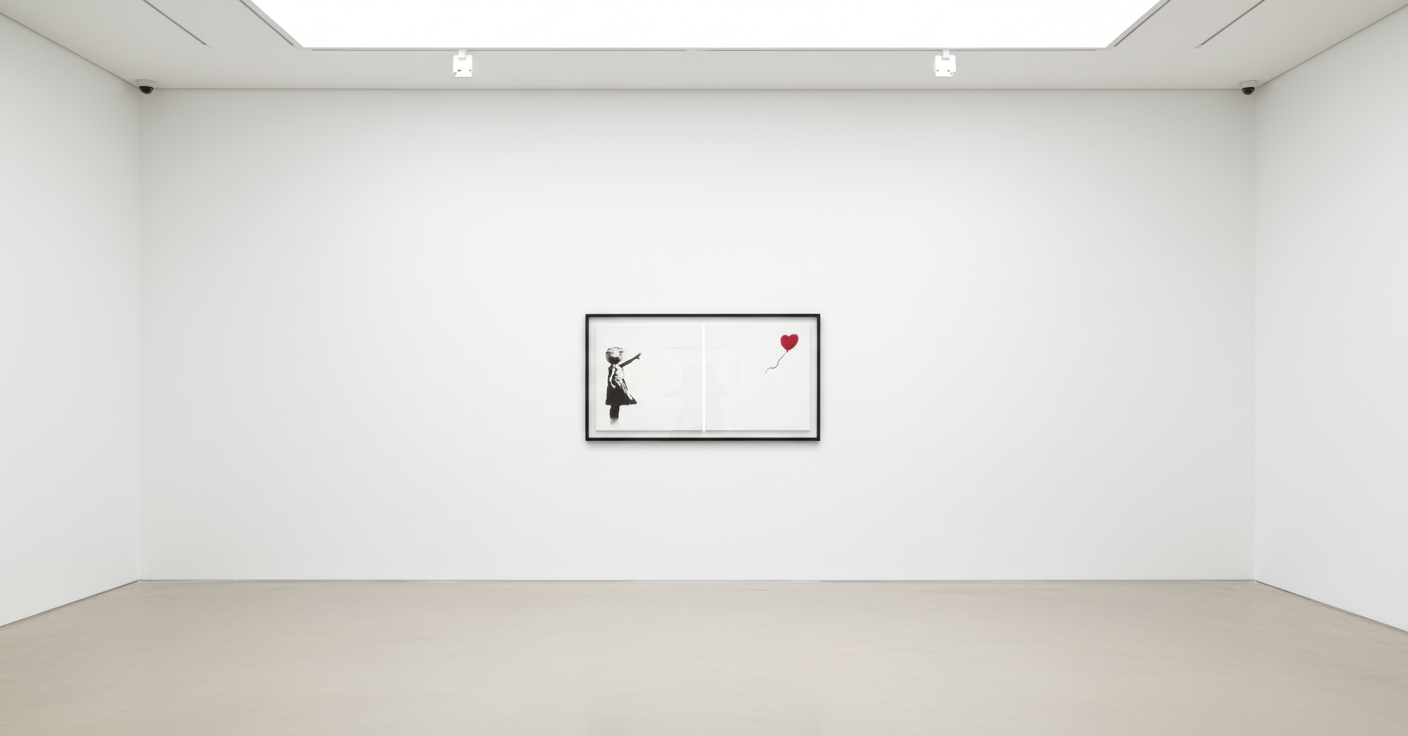
Girl With Balloon Diptych — Banksy. Available at Guy Hepner, New York.
Guy Hepner maintains an exceptional collection of authenticated Banksy works, including editions from the artist's most celebrated series. The gallery's holdings of Girl With Balloon - available in signed and unsigned editions, diptych formats, and special colourways - represent an opportunity to acquire works that have become defining images of contemporary art. Our specialists provide comprehensive guidance on provenance, condition, and market positioning for collectors seeking to add Banksy to their portfolios. To enquire about available works or arrange a private viewing, contact Guy Hepner directly.
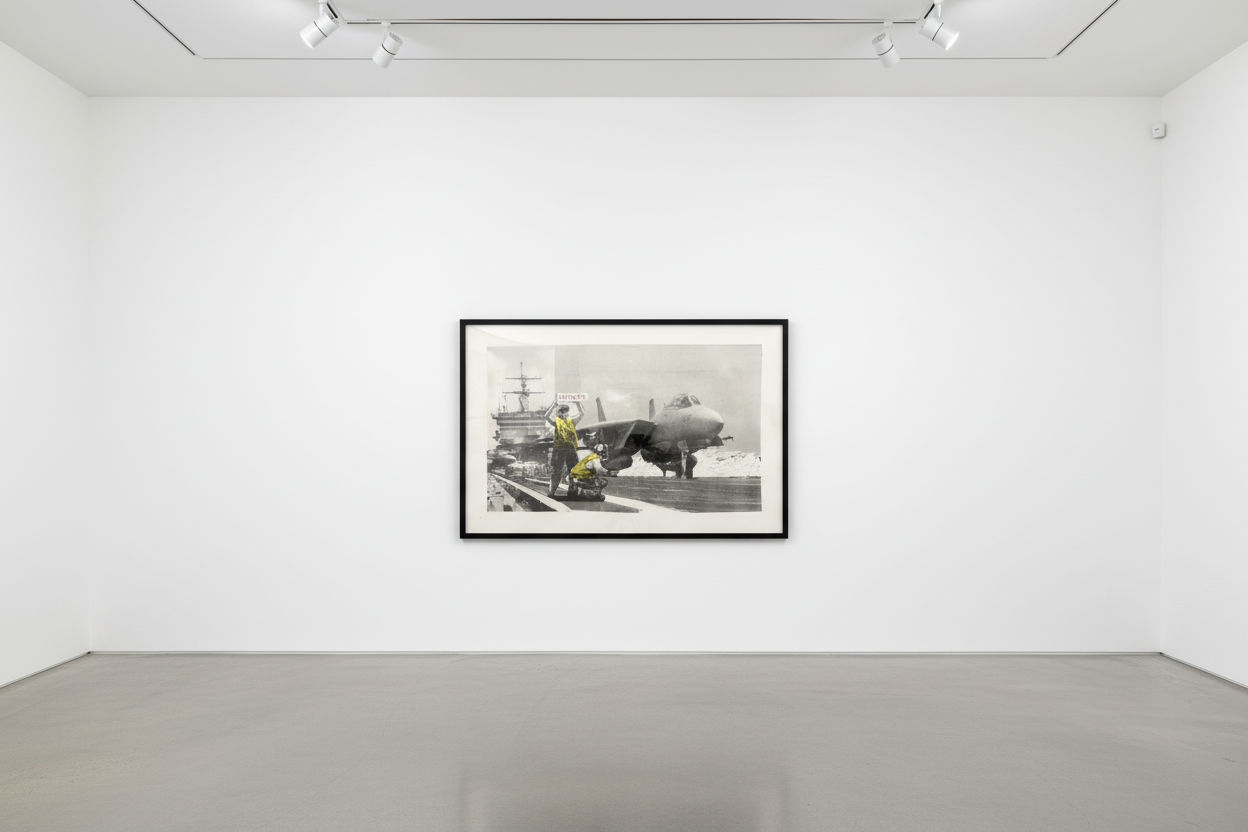
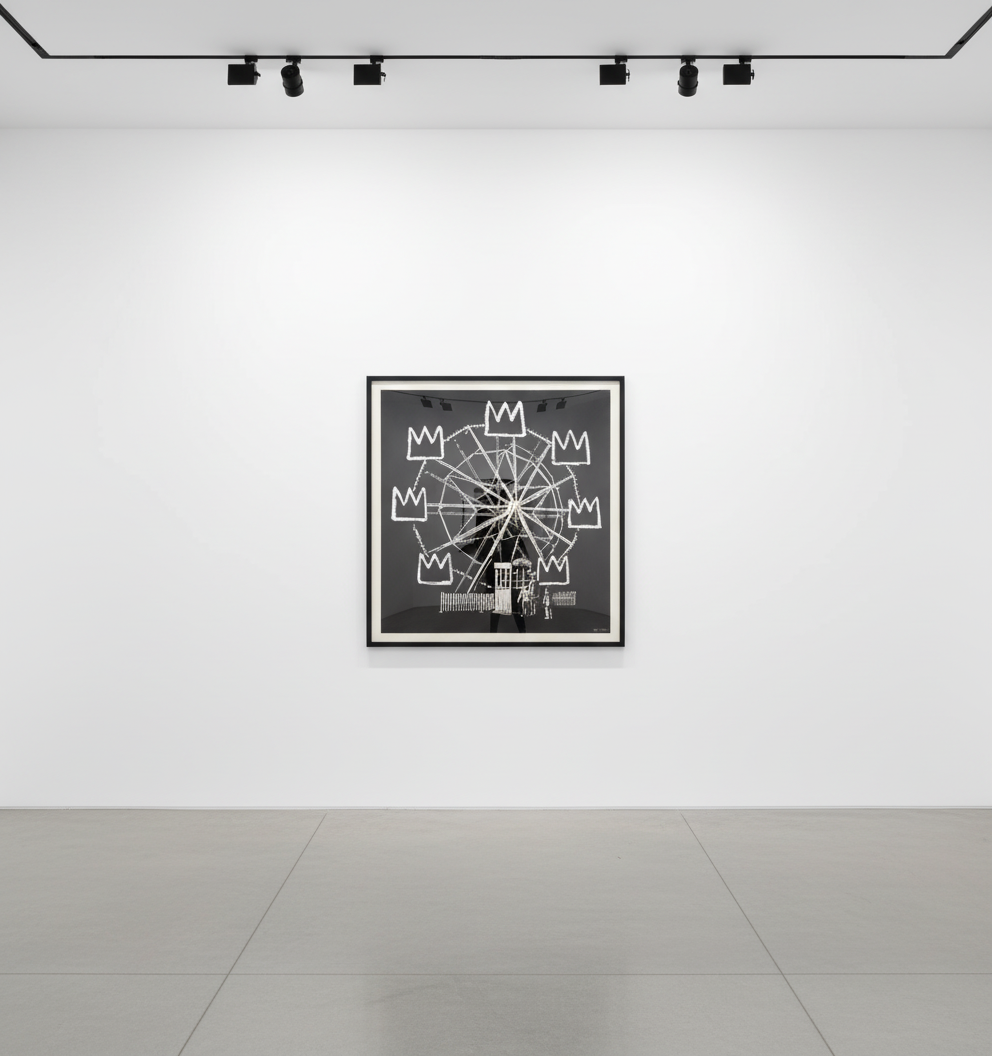
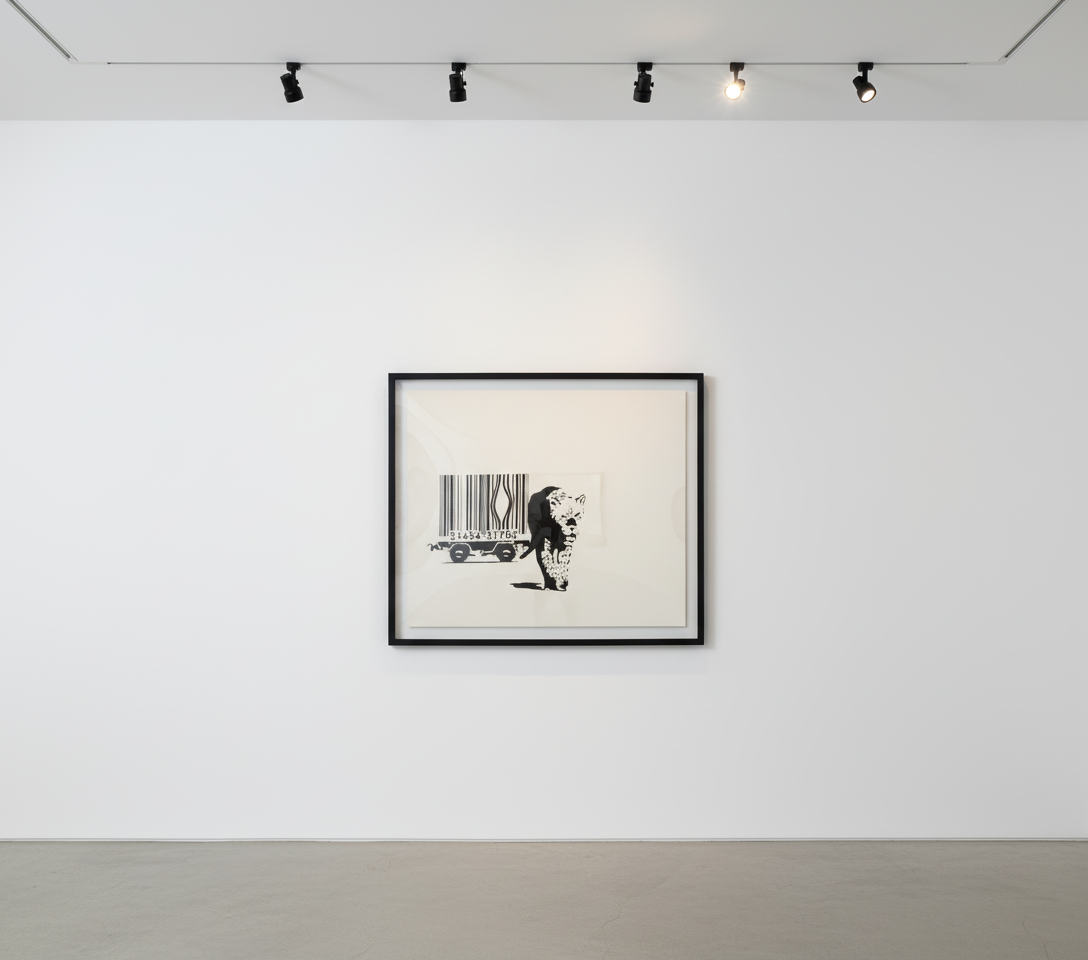
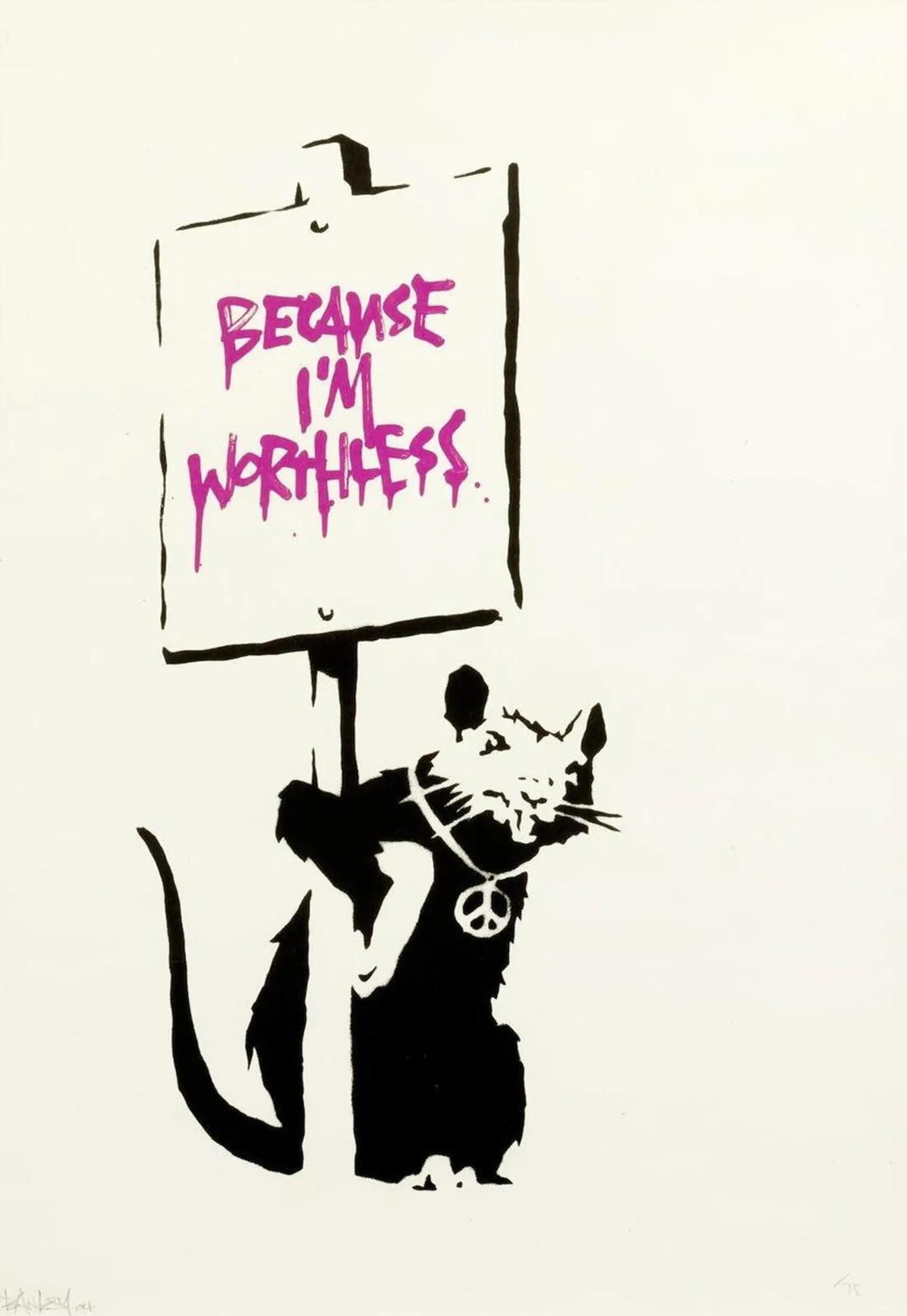
Explore Banksy prints for sale at Guy Hepner: (Fr)agile, Applause, Banksquiat, Barcode, Because I'm Worthless.
Related Series