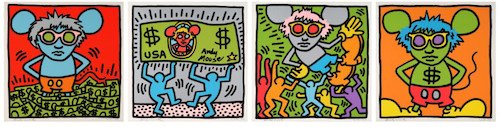
Andy Mouse

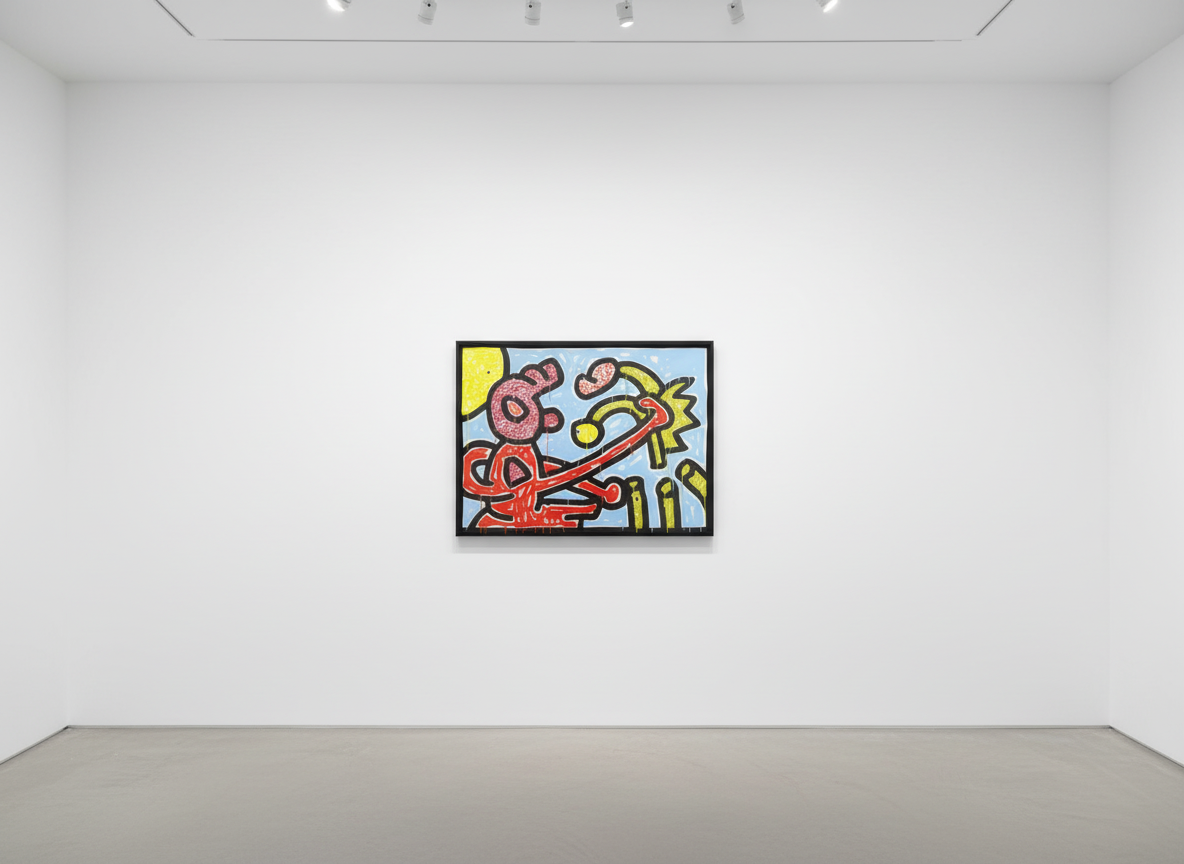
Keith Haring's name evokes a cascade of visual memories—radiant babies, barking dogs, dancing figures, and bold black lines. His work is universally recognizable, accessible, and deeply embedded in the fabric of popular culture. Yet beneath the vibrant surface of his iconic motifs lies a rich, politically charged, and historically significant body of work. Keith Haring is not just a pop culture icon; he is a pivotal figure in 20th-century art whose importance stems from his ability to democratize art, address pressing social issues, and shape visual language in a way few others have managed. More than three decades after his untimely death, the legacy of Keith Haring continues to resonate with collectors, institutions, and new generations of art enthusiasts worldwide.
At the heart of Keith Haring's importance is his unique visual language. His work broke away from traditional formats and fine art elitism by embracing simplicity and immediacy. Using line as a primary vehicle of communication, Haring developed an almost hieroglyphic visual vocabulary filled with recurring symbols: the Radiant Baby representing innocence and purity, the Barking Dog symbolizing authority and obedience, and the Flying Saucer suggesting unknown threats or higher powers. These motifs functioned like a universal language—accessible, repeatable, and immediately comprehensible across cultural and linguistic boundaries.
Haring's distinctive style emerged from the New York subway system, where he created hundreds of chalk drawings on unused advertising panels during the early 1980s. These ephemeral works established his commitment to public accessibility and demonstrated his belief that art should exist beyond the confines of galleries and museums. His bold outlines, kinetic energy, and flat areas of color drew from diverse influences including cartoon imagery, graffiti culture, and the work of artists such as Jean Dubuffet and Pierre Alechinsky. The result was a visual vocabulary that felt both ancient and urgently contemporary.
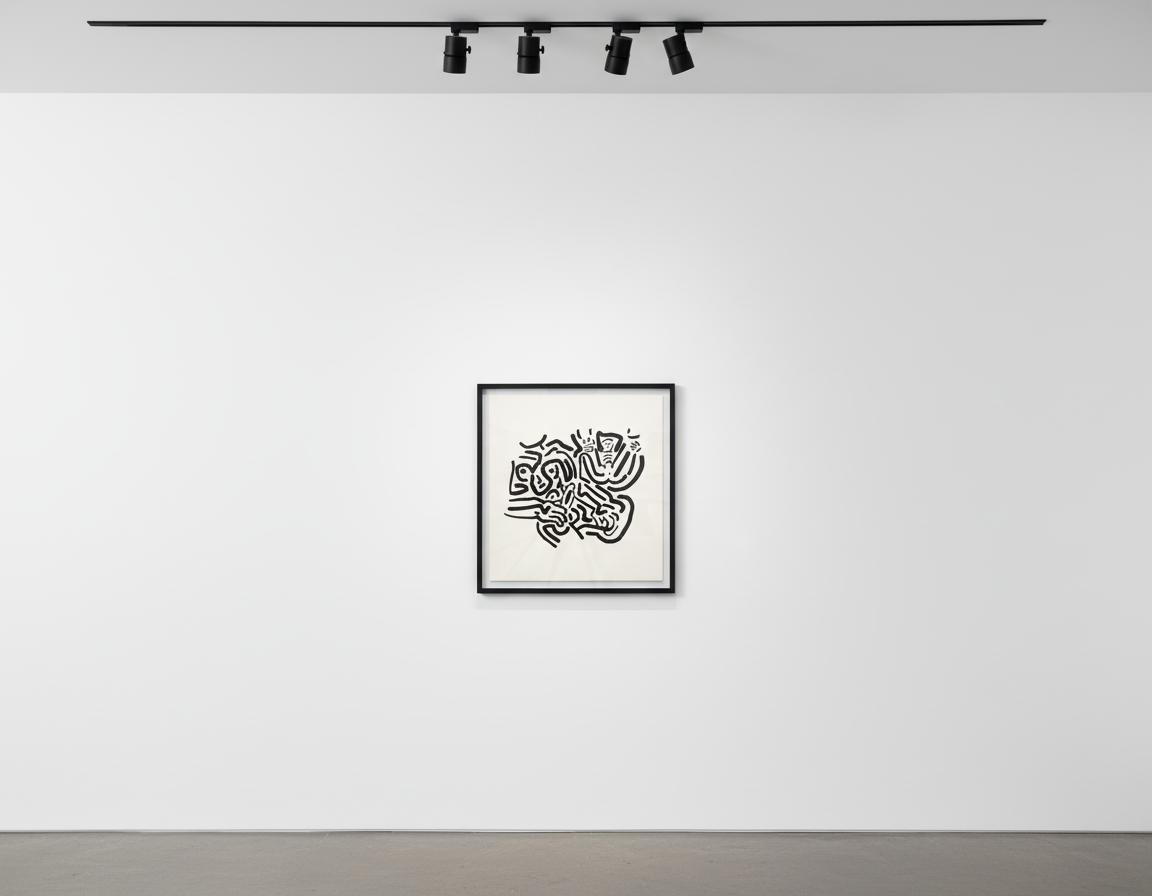
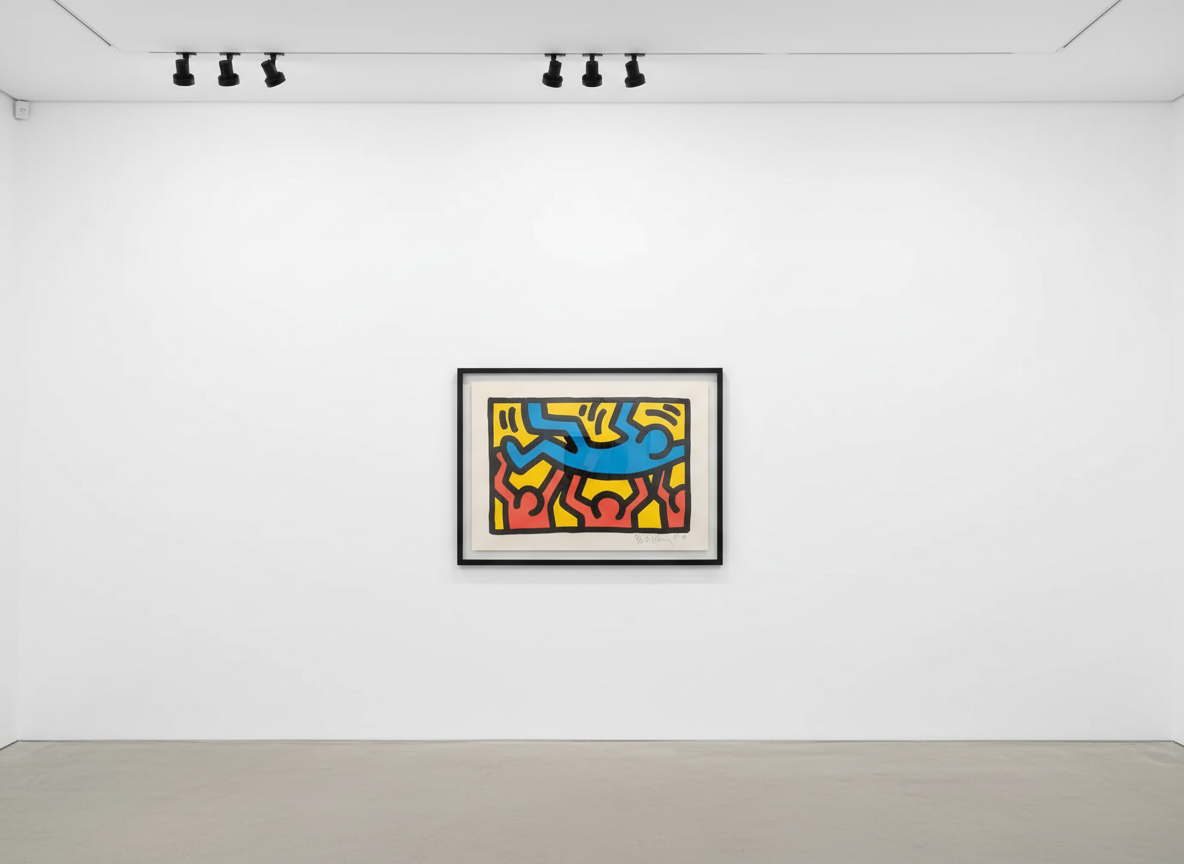
Untitled III (Littmann PP. 20) — Keith Haring. Available at Guy Hepner, New York.
The technical mastery underlying Haring's seemingly simple compositions often goes underappreciated. His ability to convey movement, emotion, and complex narratives through economical means reflects years of dedicated practice and an intuitive understanding of visual communication. Each line carries intention and energy, creating works that pulse with vitality and engage viewers on both conscious and subconscious levels.
The legacy of Keith Haring cannot be separated from his fierce commitment to social activism. Throughout his career, he used his platform and visual language to address the most pressing issues of his time, including the AIDS crisis, apartheid, nuclear proliferation, and drug addiction. His work served as both warning and rallying cry, transforming complex political messages into universally understandable imagery.
Haring's response to the AIDS epidemic—which would ultimately claim his own life in 1990 at age 31—stands as one of the most significant artistic engagements with a public health crisis in modern history. Works addressing safe sex practices, governmental inaction, and the human cost of the disease remain powerful documents of that era while continuing to resonate with contemporary audiences. His establishment of the Keith Haring Foundation in 1989, dedicated to supporting AIDS organizations and children's programs, ensured that his activist spirit would outlive him.
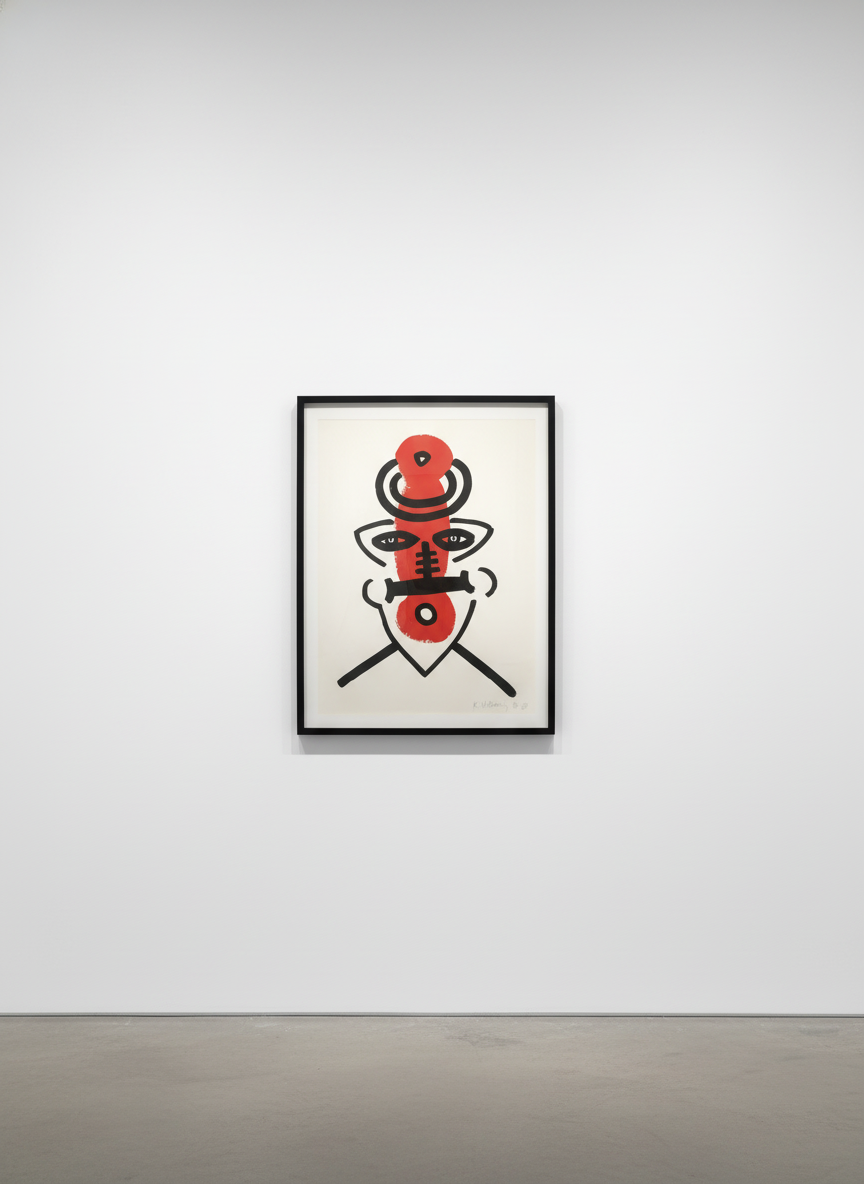
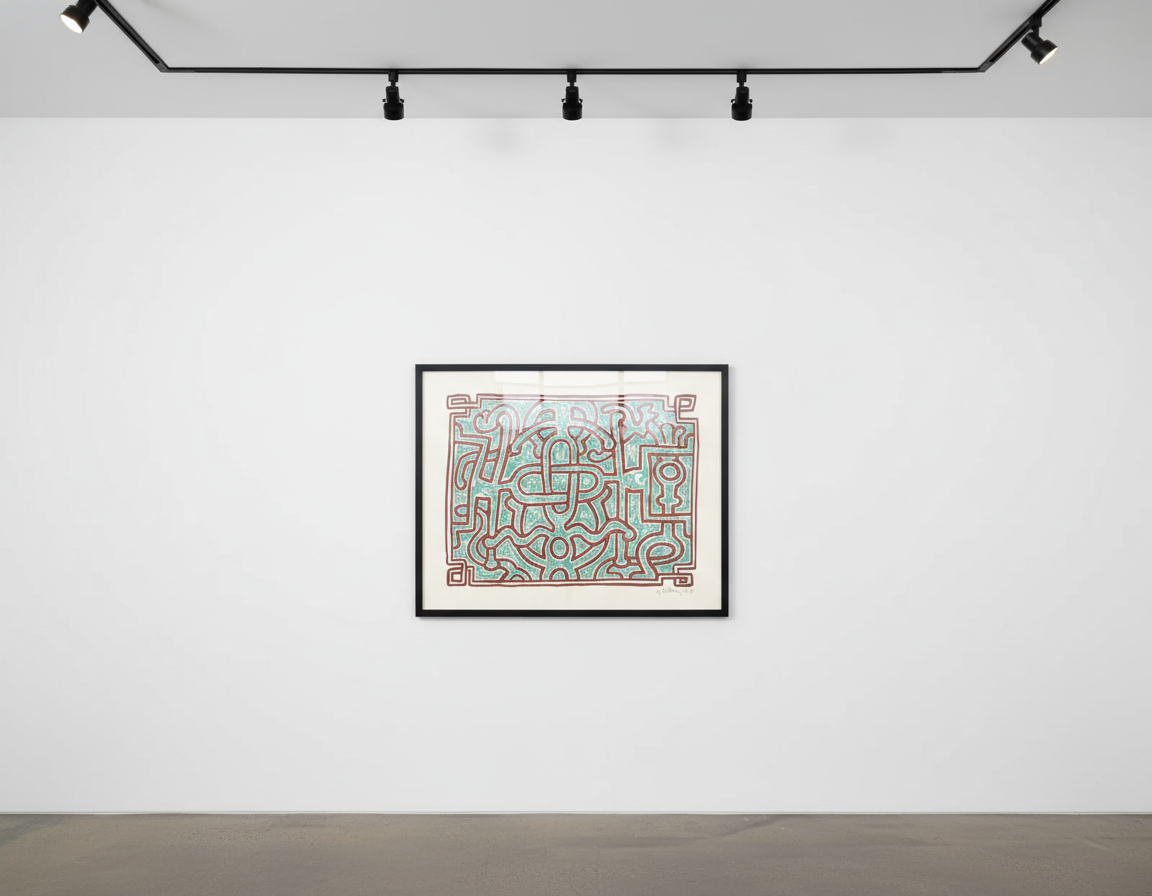
The Story of Red and Blue 9 (Littmann PP. 131) — Keith Haring. Available at Guy Hepner, New York.
His Pop Shop, opened in 1986 in Manhattan's SoHo district, represented another dimension of his democratic approach to art. By selling affordable merchandise featuring his designs, Haring challenged traditional art market structures and made his work accessible to people of all economic backgrounds. This venture was both celebrated and criticized, yet it anticipated the contemporary intersection of art and commerce that defines much of today's creative economy.
The market for Keith Haring's work has demonstrated remarkable strength and consistent growth over recent decades. According to data compiled by Art Basel and UBS in their annual art market reports, post-war and contemporary American artists with strong brand recognition and cultural significance continue to attract sustained collector interest across all price points. Haring exemplifies this category, with works appearing regularly in major auction seasons at Christie's and Sotheby's.
Major auction results have confirmed Haring's position among the most significant artists of his generation. Christie's and Sotheby's have both achieved record prices for important Haring works, with paintings, sculptures, and works on paper attracting competitive bidding from international collectors. The market spans from accessible multiples and prints to museum-quality paintings, offering entry points for new collectors while providing depth for established collections.
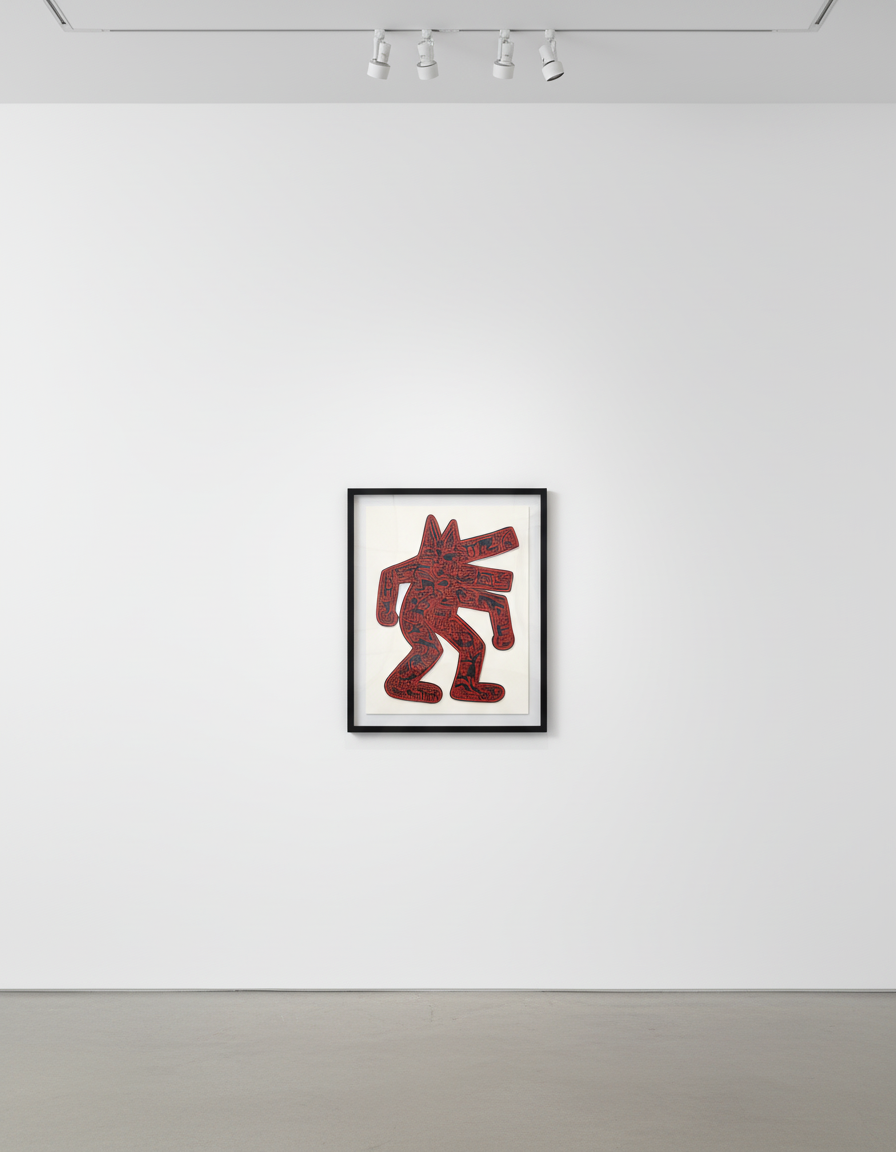
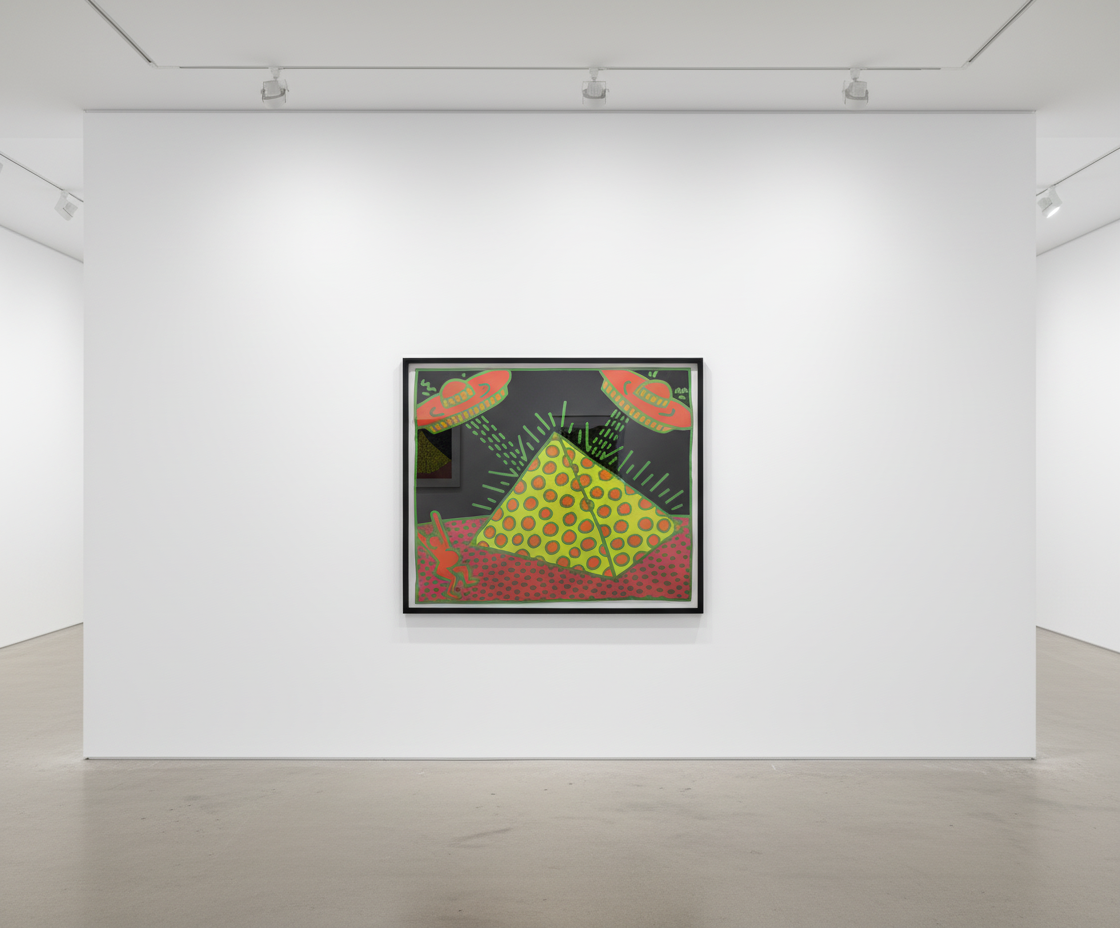
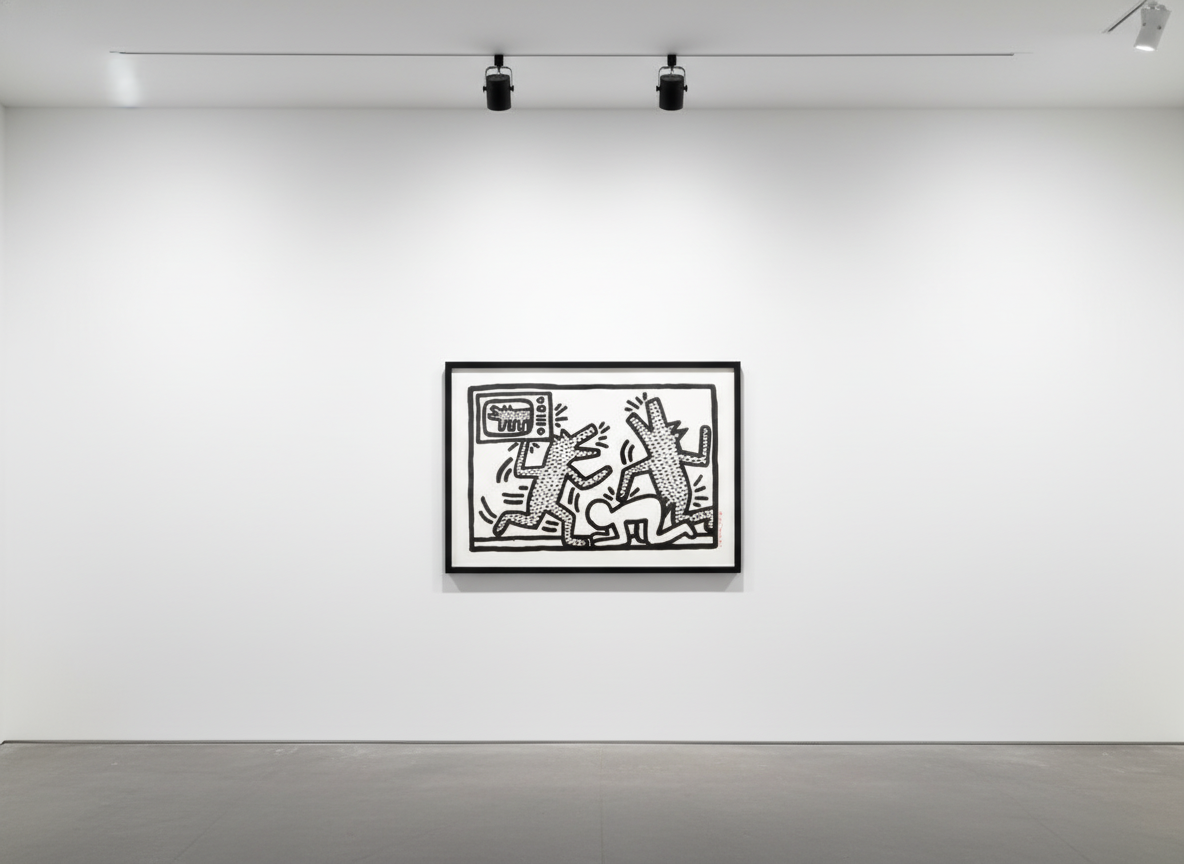
Dog — Keith Haring. Available at Guy Hepner, New York.
Collectors are drawn to Keith Haring's work for multiple reasons: the immediate visual impact, the historical significance, the connection to 1980s New York culture, and the enduring relevance of his social messages. Institutional acquisitions continue at major museums worldwide, further cementing his art historical importance and providing market validation. The Keith Haring Foundation's careful stewardship of his archive and intellectual property has ensured consistent quality standards and authentication practices that support collector confidence.
The legacy of Keith Haring extends far beyond the art market into broader visual culture. His influence can be traced through street art, graphic design, fashion, and contemporary painting. Artists working today continue to engage with questions he raised about accessibility, commerce, and social responsibility in art. His demonstration that popular appeal and serious artistic intent need not be mutually exclusive opened pathways that subsequent generations have followed.
As the art world increasingly values works that combine aesthetic power with social meaning, Keith Haring's position continues to strengthen. His ability to speak to universal human experiences while addressing specific historical moments creates works that reward both immediate viewing and sustained contemplation. For collectors seeking art that embodies cultural significance, visual distinction, and enduring relevance, Keith Haring remains an essential figure.
Guy Hepner is pleased to offer exceptional works by Keith Haring from various periods of his career. Our team provides expert guidance on acquisition, provenance research, and collection building for both emerging and established collectors. To inquire about available Keith Haring works or to discuss adding his art to your collection, please contact our gallery directly.
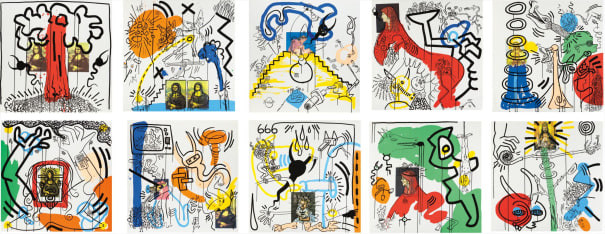
Explore Keith Haring prints for sale at Guy Hepner: Andy Mouse, Apocalypse, Bad Boys, Chocolate Buddha, Fertility.
Related Series