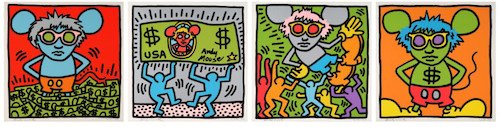
Andy Mouse

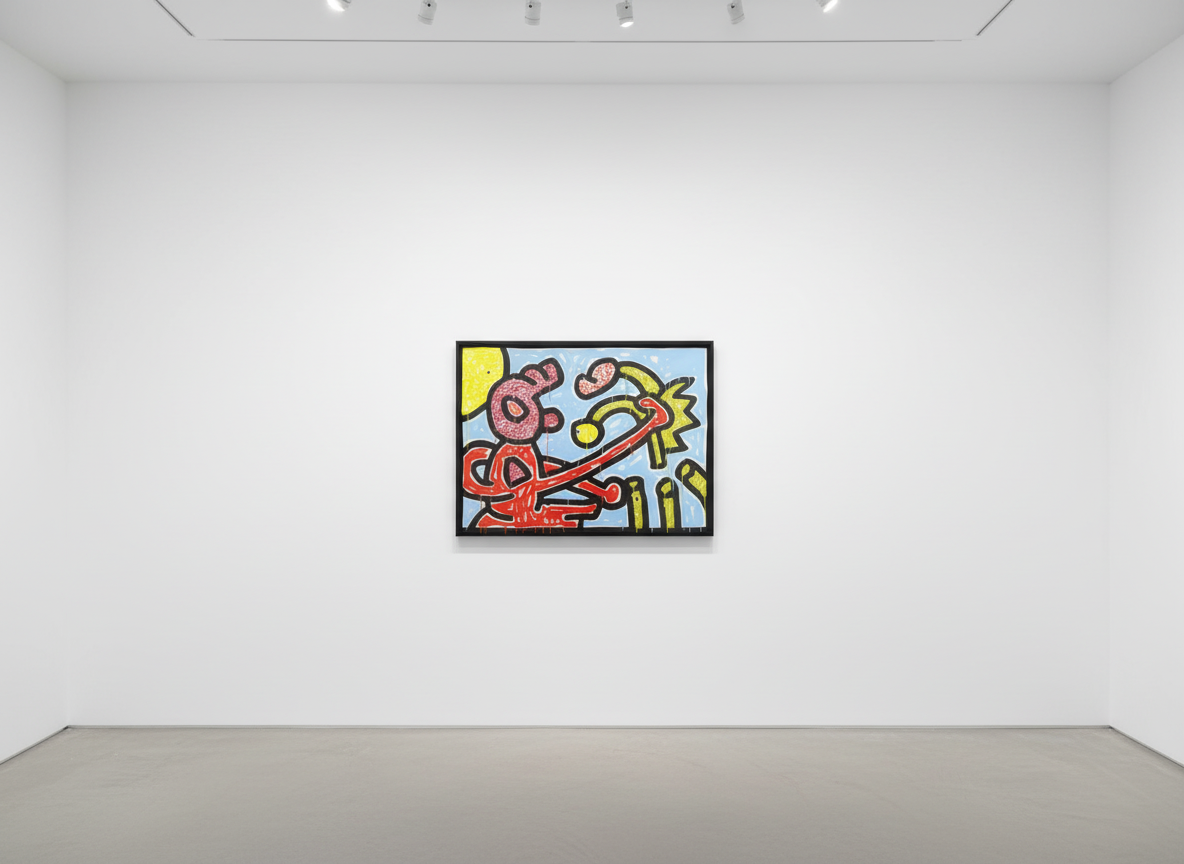
Few artists are as inextricably linked to the spirit and pulse of New York City in the 1980s as Keith Haring. An artist whose work burst from the subways and onto the global stage, Haring transformed the visual language of activism, identity, and street culture into a universally recognizable lexicon. His bold lines, kinetic figures, and radiant babies became synonymous with an era of creative revolution - a time when the boundaries between high art and street culture dissolved entirely. But beyond these iconic motifs lies a vivid map of the places in New York where Haring lived, worked, partied, and created. This is the story of a city that both inspired and absorbed his boundless energy, offering an urban pilgrimage for those interested in the intersections of art, culture, and history.
When Keith Haring moved to New York in 1978 to study at the School of Visual Arts, he settled in the East Village - a gritty, vibrant neighborhood teeming with artists, musicians, punks, and poets. It was a natural fit for Haring's raw and expressive visual language. He initially lived in a modest apartment at 325 East 12th Street, a building that became a creative hub for many emerging artists of the downtown scene.
The East Village of the late 1970s and early 1980s was a hotbed of experimental art and counterculture. Rent was affordable, spaces were plentiful, and the atmosphere crackled with collaborative energy. Haring immersed himself in this environment, forming connections with fellow artists including Jean-Michel Basquiat and Kenny Scharf. The neighborhood's streets, clubs, and alternative galleries became his extended studio - a place where the line between life and art became beautifully indistinct.
Throughout his career, Haring maintained deep roots in the East Village. His studio at 676 Broadway served as the epicenter of his prolific output, where he developed the visual vocabulary that would define a generation. The neighborhood's democratic spirit - its embrace of outsiders and its rejection of artistic hierarchies - fundamentally shaped Haring's belief that art should be accessible to everyone, not confined to elite institutions.
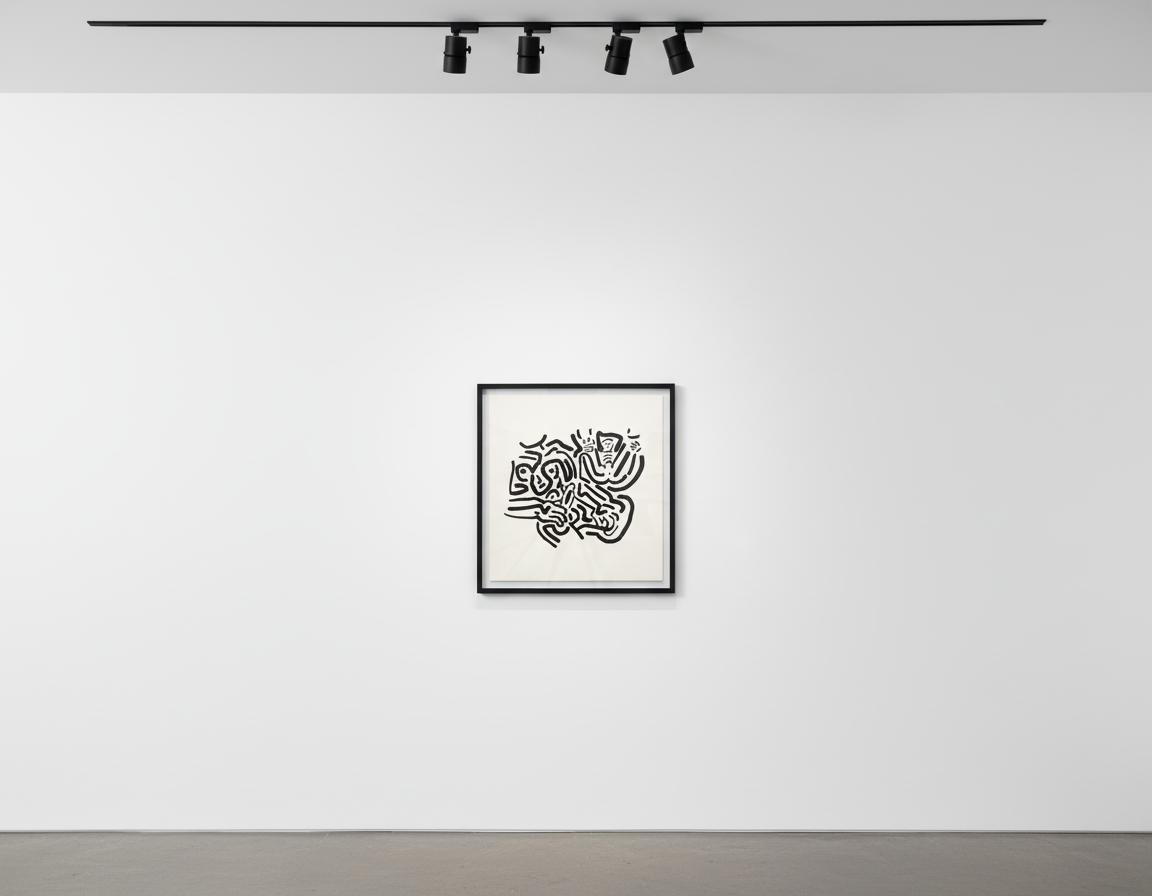
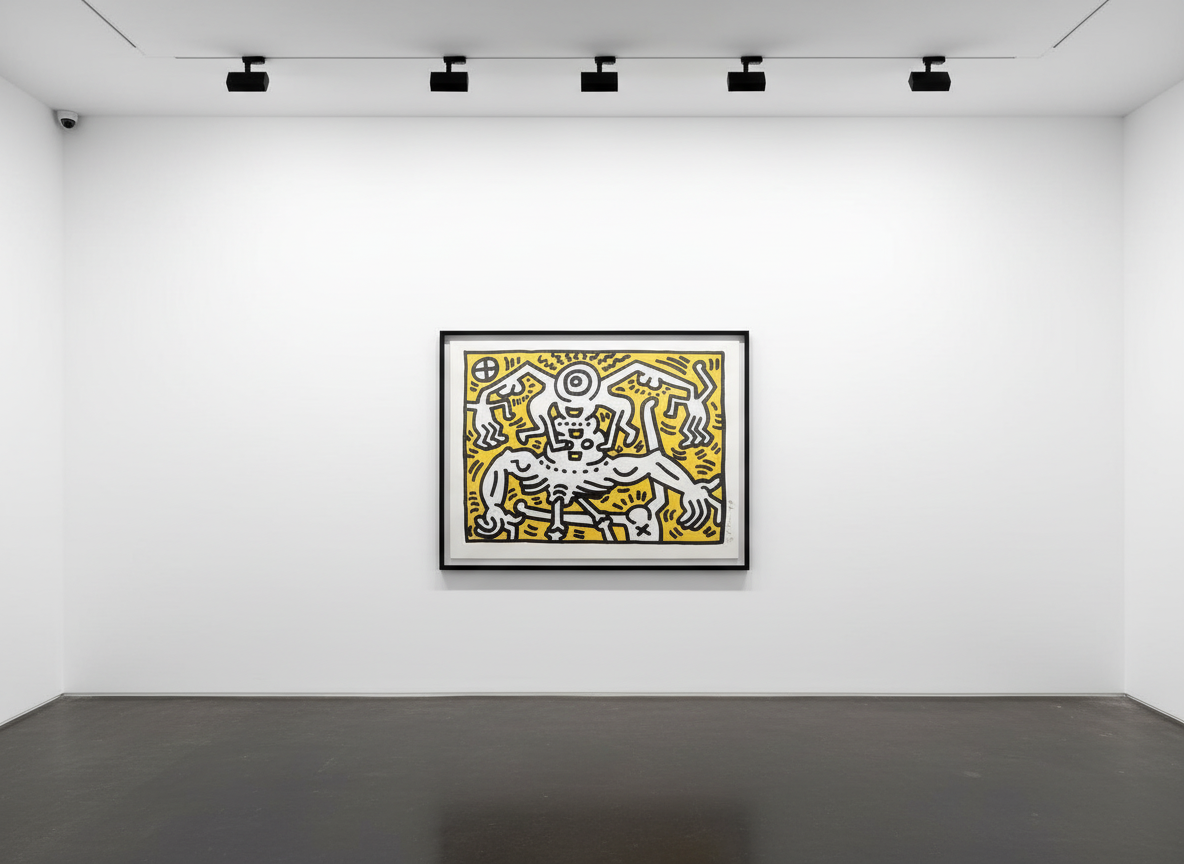
Growing 2 (Littmann PP. 90) — Keith Haring. Available at Guy Hepner, New York.
Perhaps no aspect of Haring's practice is more legendary than his Subway Drawings. Beginning in 1980, Haring noticed the blank black paper covering expired advertisements in New York subway stations. Armed with white chalk, he began creating his signature drawings directly on these surfaces - transforming the city's transit system into an ever-changing public gallery.
These subway works were deliberately ephemeral, often lasting only hours before being covered or removed. Yet their impact was profound. Commuters stopped to watch Haring work, children pointed at dancing figures, and the art world took notice of an artist who refused to wait for gallery representation. Haring reportedly created thousands of these drawings, sometimes completing as many as forty in a single day. The subway became his democratic exhibition space - a place where a Wall Street banker and a homeless person could experience the same artwork simultaneously.
The locations of these interventions spanned the entire transit network, from Times Square to the outer boroughs. Stations like Astor Place, near his East Village home, became particularly associated with his practice. This guerrilla approach to art-making established Haring as a pioneer of public art and cemented his reputation as an artist of the people.
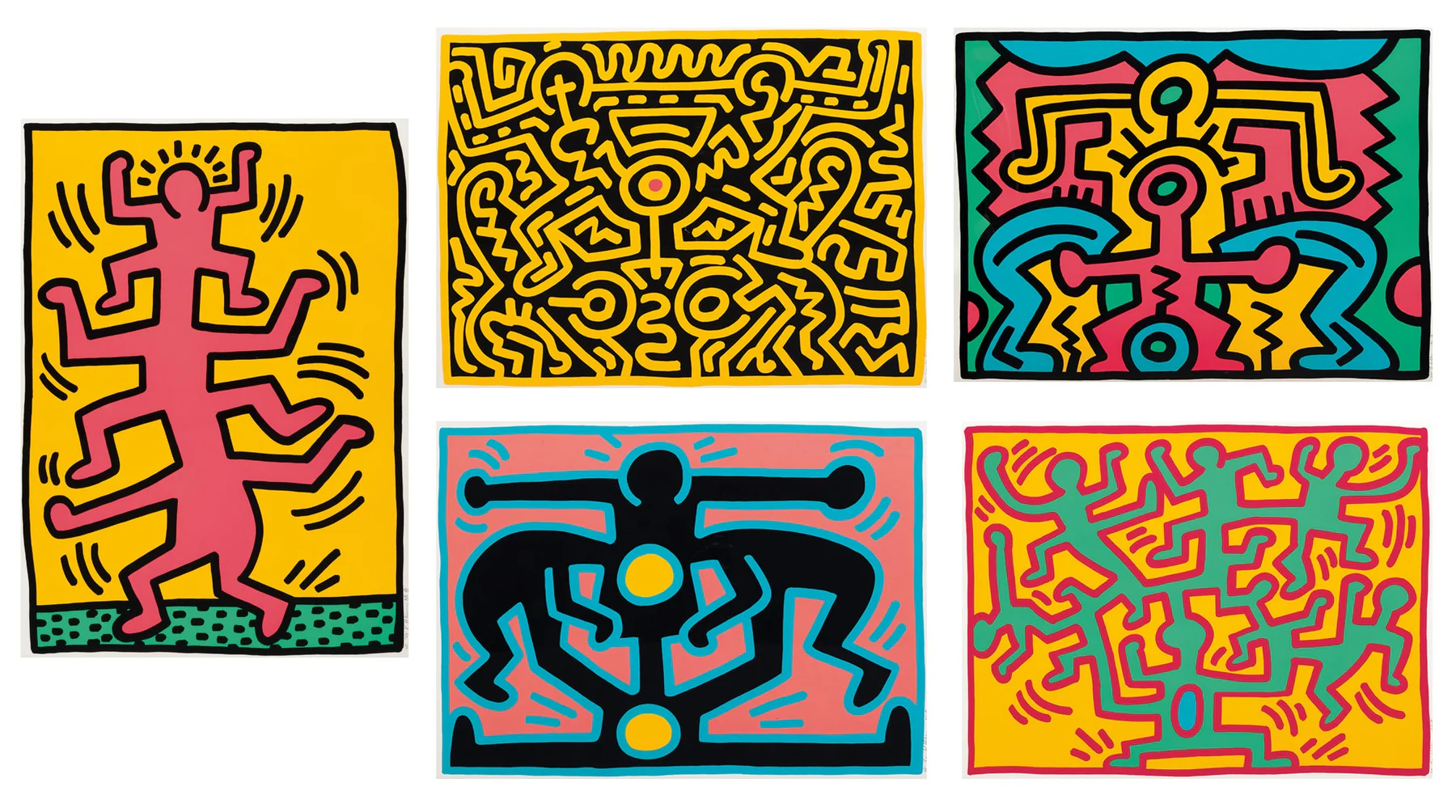
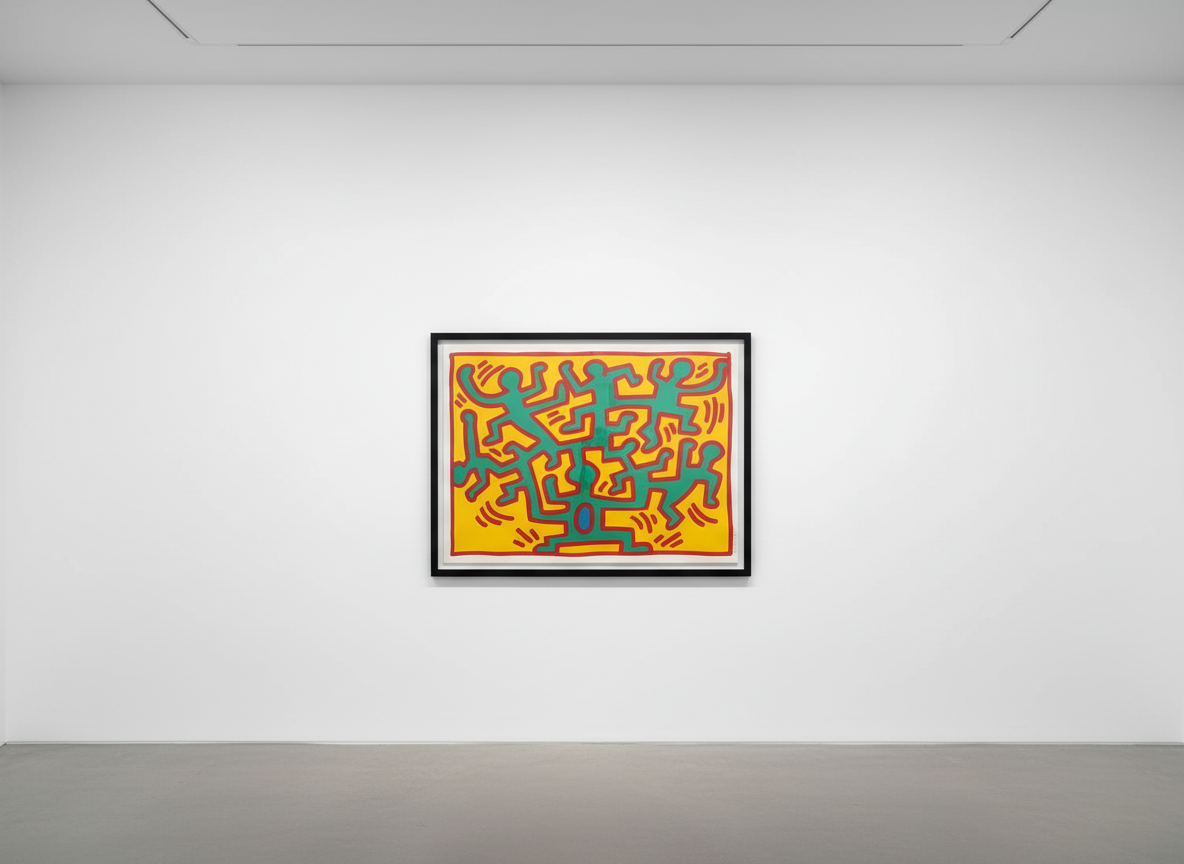
Growing 1-5 (Littmann PP. 88 -91) — Keith Haring. Available at Guy Hepner, New York.
No exploration of Keith Haring's New York would be complete without acknowledging the pivotal role of Club 57, located in the basement of a Polish church at 57 St. Mark's Place. This legendary venue served as the social and creative nucleus of the downtown art scene, hosting performances, film screenings, theme parties, and exhibitions that defied conventional categorization.
Haring was not merely a regular at Club 57 - he was instrumental in shaping its programming. He curated exhibitions, performed in events, and used the space to experiment with ideas that would later inform his gallery work. The club's anything-goes atmosphere encouraged cross-pollination between disciplines, bringing together visual artists, musicians, filmmakers, and performers in an environment of radical creative freedom.
The connections Haring forged at Club 57 extended throughout the downtown ecosystem. He frequented other legendary venues including the Mudd Club, Danceteria, and Paradise Garage - spaces where art, music, and nightlife intersected. These environments influenced Haring's visual rhythm, his embrace of popular culture, and his understanding of art as a communal experience rather than a solitary pursuit.
The Art Basel and UBS Global Art Market Report consistently demonstrates sustained demand for works by artists associated with the 1980s downtown New York scene, with Keith Haring occupying a position of particular prominence. Major auction houses including Christie's and Sotheby's regularly feature Haring's works in their contemporary sales, where pieces consistently achieve strong results that reflect both historical importance and enduring visual appeal.
Haring's market strength derives from multiple factors. His tragically short life - he died from AIDS-related complications in 1990 at age thirty-one - created a finite body of work. His prints and multiples, created with the explicit intention of making art affordable and accessible, now represent significant collectible categories. Works from his major print series demonstrate particular appeal to collectors seeking museum-quality pieces with clear provenance and established scholarship.
Collectors are drawn to Haring not only for the investment potential but for the cultural resonance his work carries. To own a Keith Haring is to possess a fragment of New York's most creatively explosive decade - a tangible connection to an artist who genuinely changed how we understand public art, activism, and visual communication. His influence extends to contemporary street art, graphic design, and fashion, ensuring continued relevance for new generations of collectors.
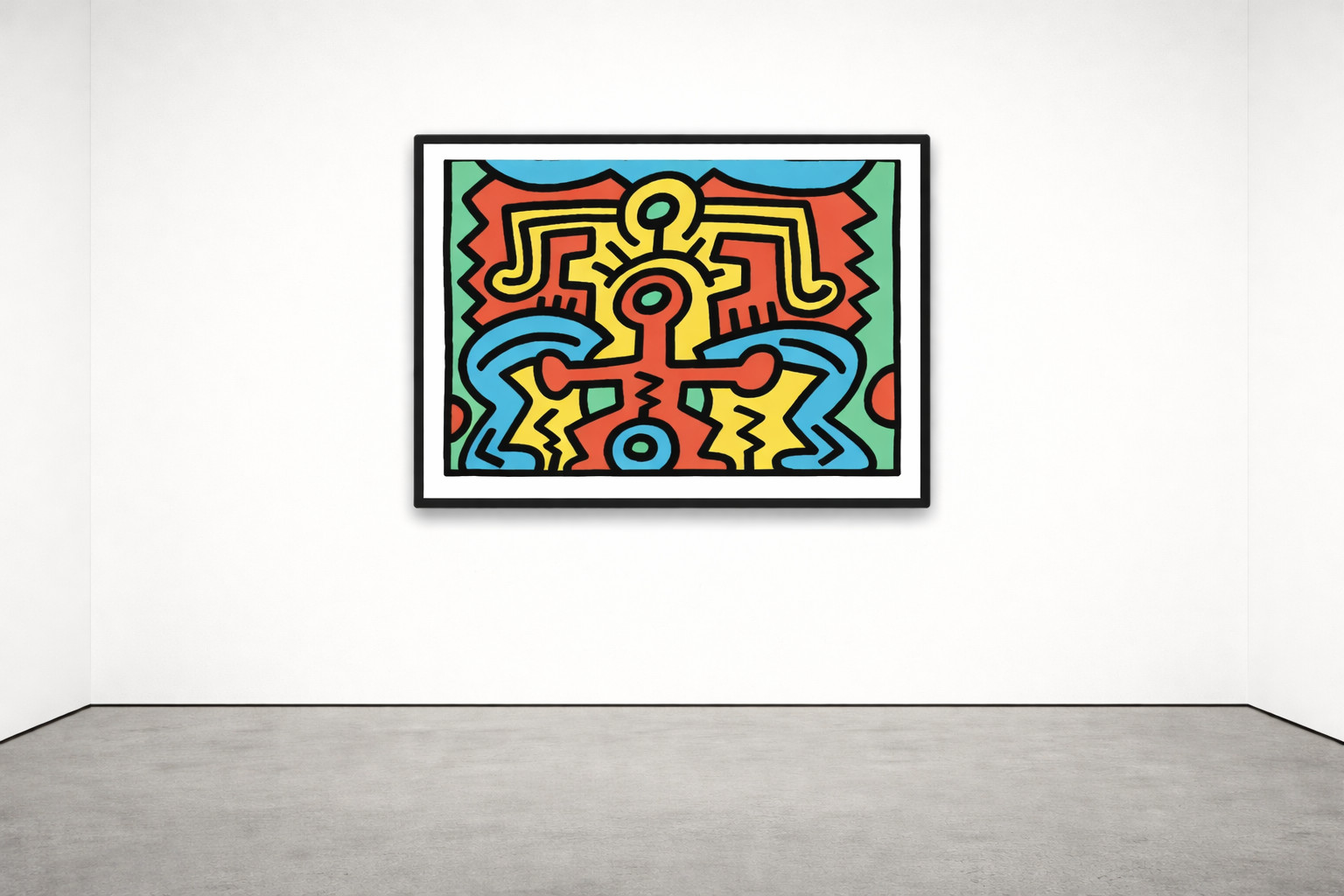
Growing 5 (Littmann PP. 91) — Keith Haring. Available at Guy Hepner, New York.
Guy Hepner is privileged to offer exceptional works by Keith Haring, including examples from his celebrated print editions that capture the artist's distinctive visual language at its most powerful. These works represent significant opportunities for collectors seeking to acquire pieces by one of the twentieth century's most influential American artists. Our team provides comprehensive guidance on provenance, condition, and collection placement, ensuring that each acquisition meets the highest standards of connoisseurship. We invite collectors to contact Guy Hepner to discuss available Keith Haring works and discover how these iconic pieces might enhance their collections.
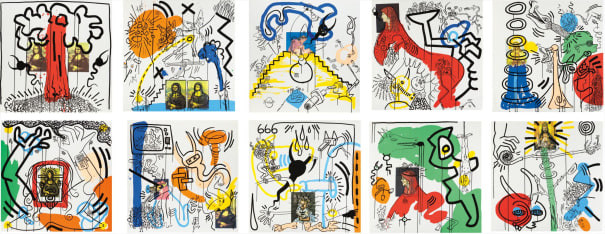
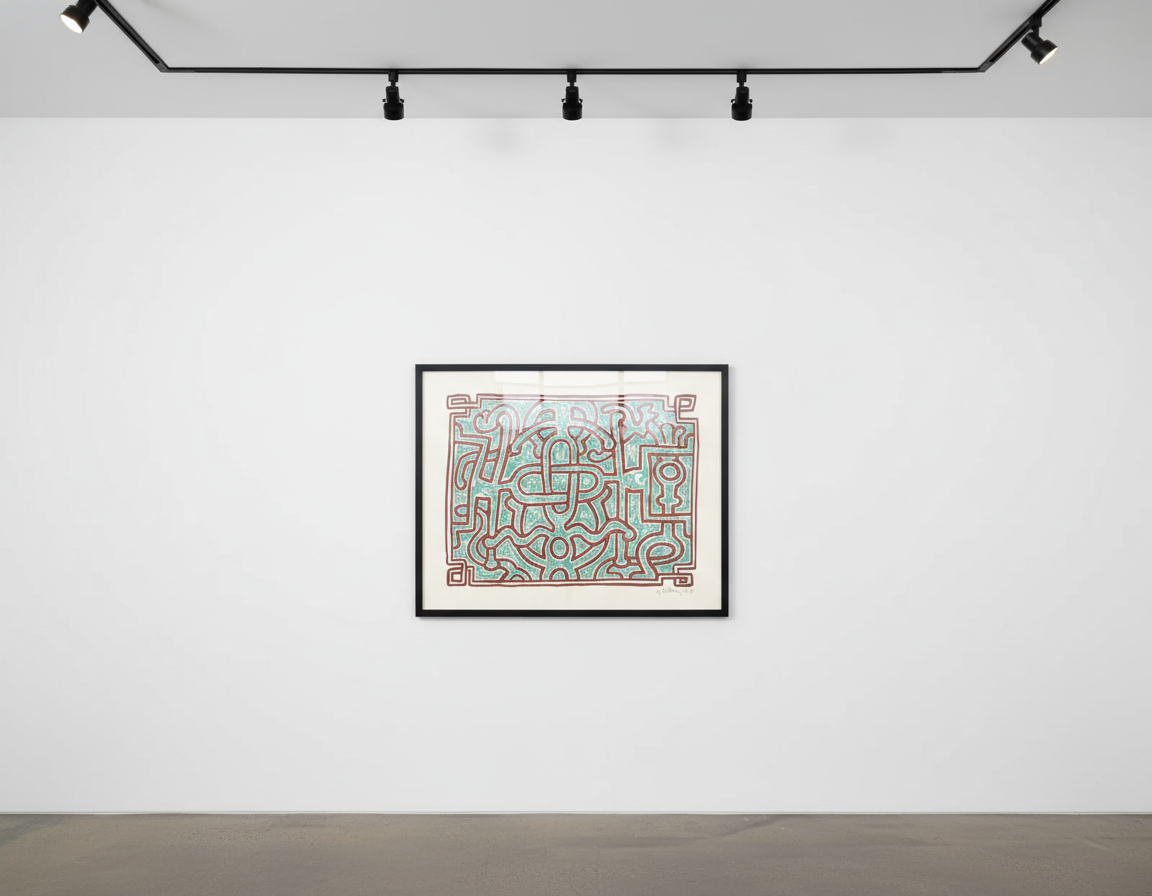
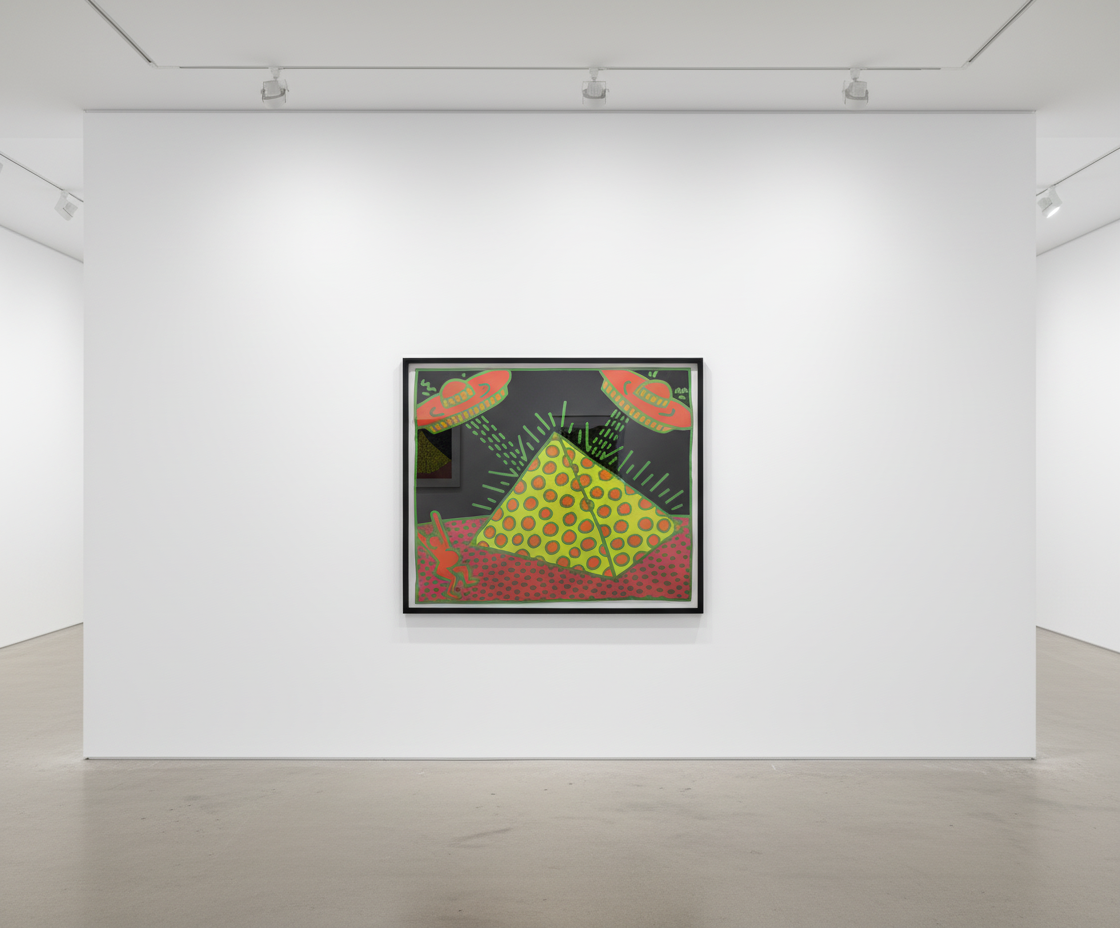
Explore Keith Haring prints for sale at Guy Hepner: Andy Mouse, Apocalypse, Bad Boys, Chocolate Buddha, Fertility.
Related Series