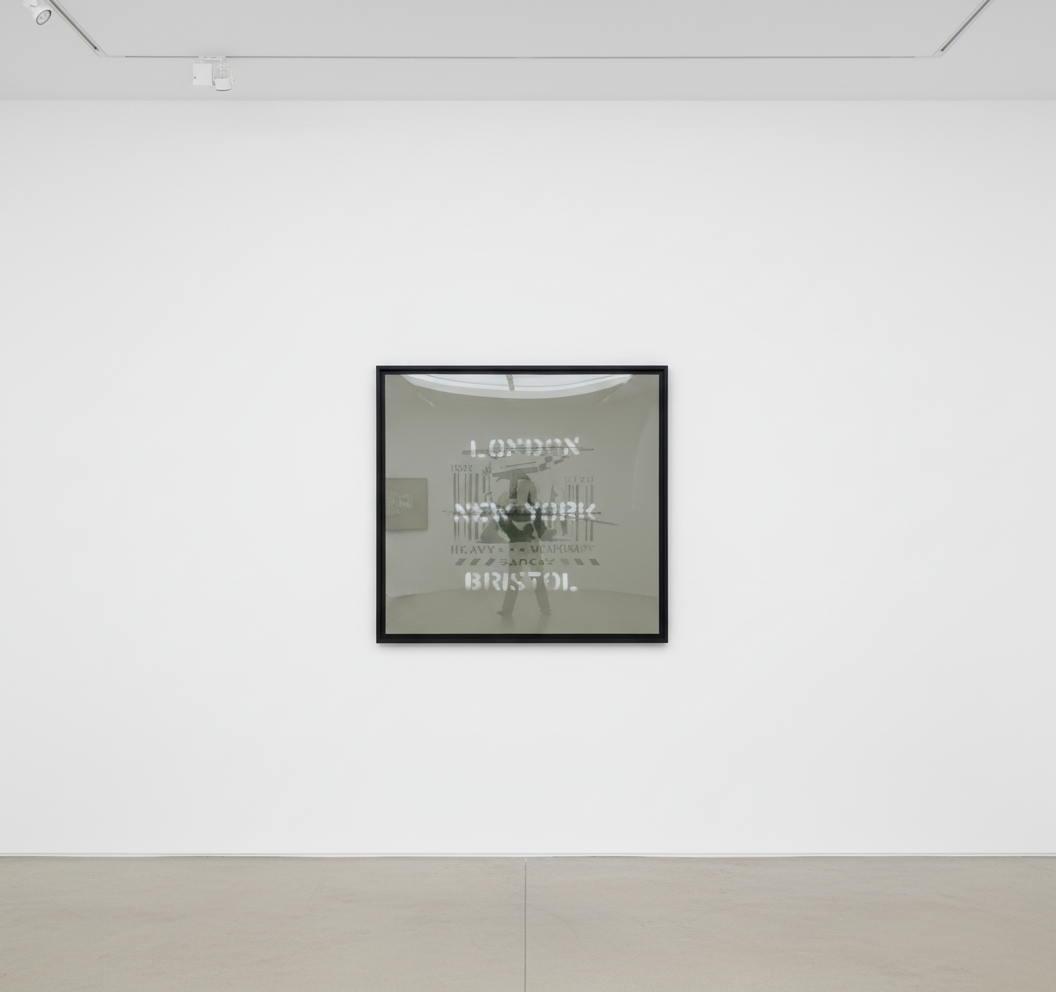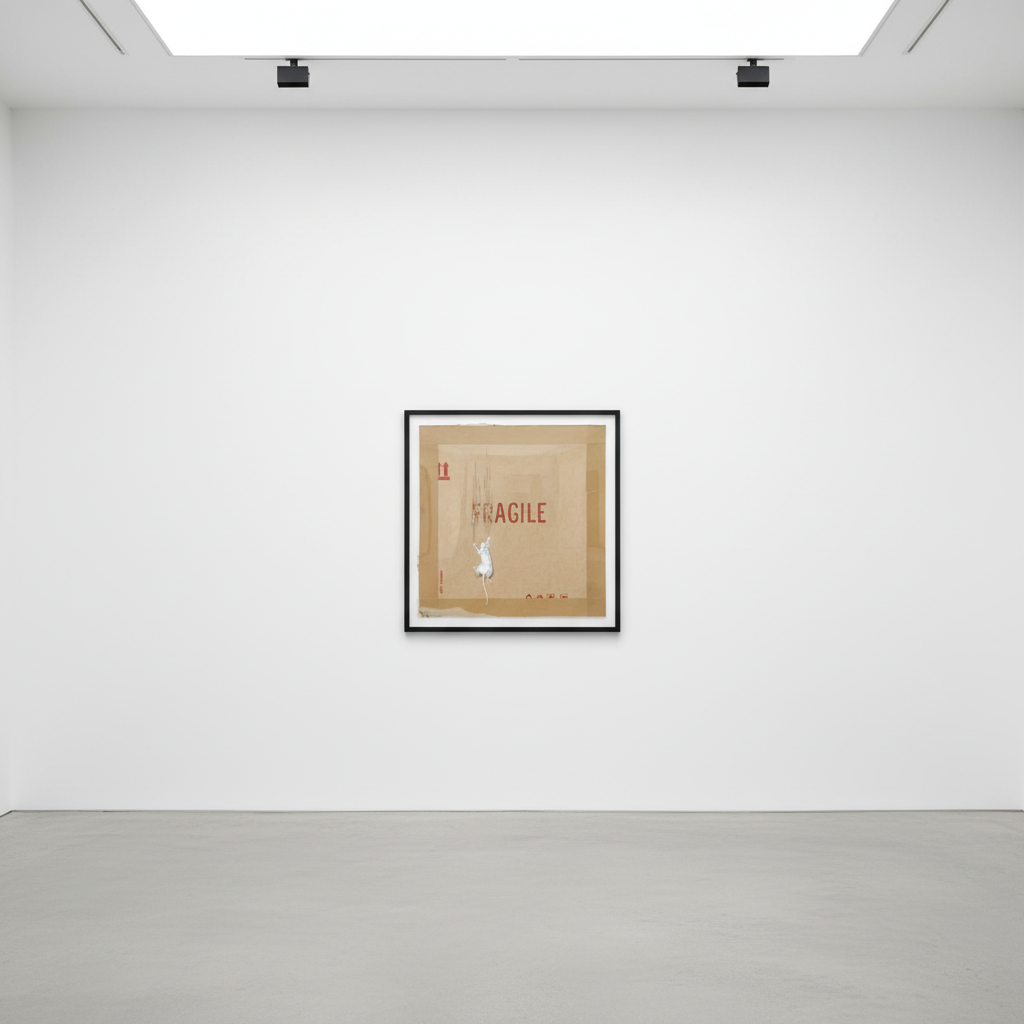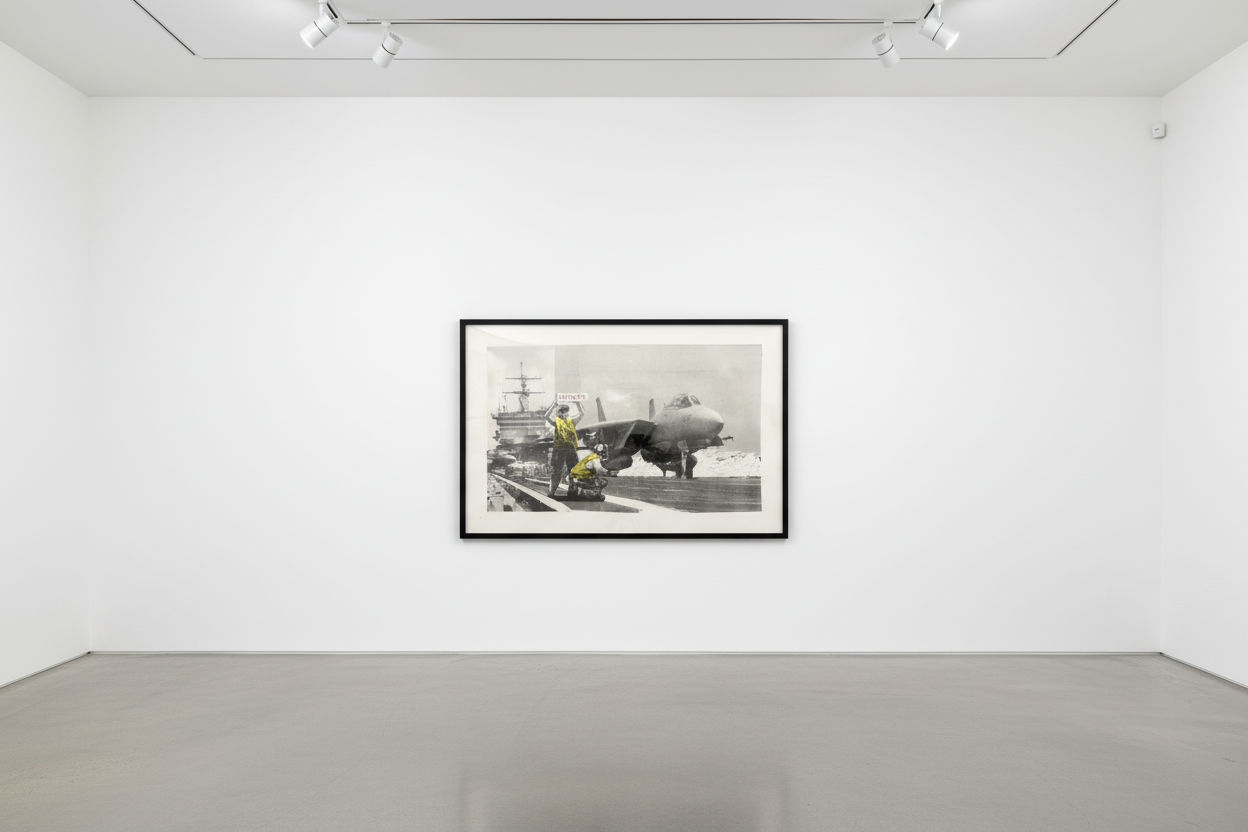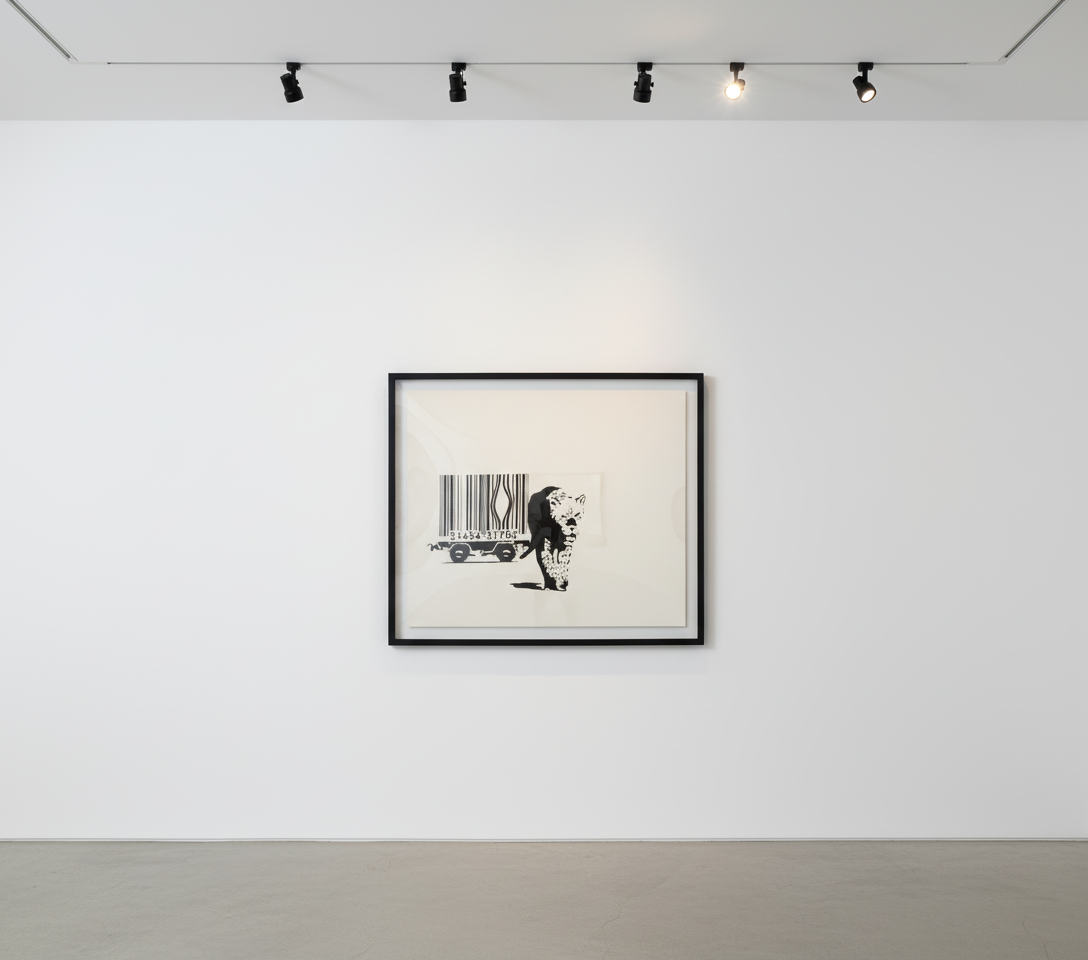
Choose Your Weapon

Banksy stands as the most influential and enigmatic artist of the twenty-first century, transforming street art from vandalism into a globally recognised form of political expression. Operating from the shadows of anonymity, this Bristol-born artist has weaponised visual culture to challenge authority, expose hypocrisy, and provoke uncomfortable conversations about capitalism, war, and social injustice. His work transcends traditional gallery boundaries, appearing on walls in war-torn territories, refugee camps, and urban landscapes across the globe - yet his prints and authenticated works now command extraordinary prices at the world's most prestigious auction houses.
What distinguishes Banksy from his contemporaries is not merely his technical mastery of stencil art or his sardonic wit, but his unwavering commitment to using art as a vehicle for political discourse. Each piece functions as a calculated intervention in public consciousness, designed to stop viewers in their tracks and force engagement with issues society often prefers to ignore. From his iconic "Girl with Balloon" to his audacious self-shredding artwork at Sotheby's in 2018, Banksy consistently demonstrates that art can simultaneously critique and participate in cultural systems - a paradox that has captivated collectors and institutions alike.
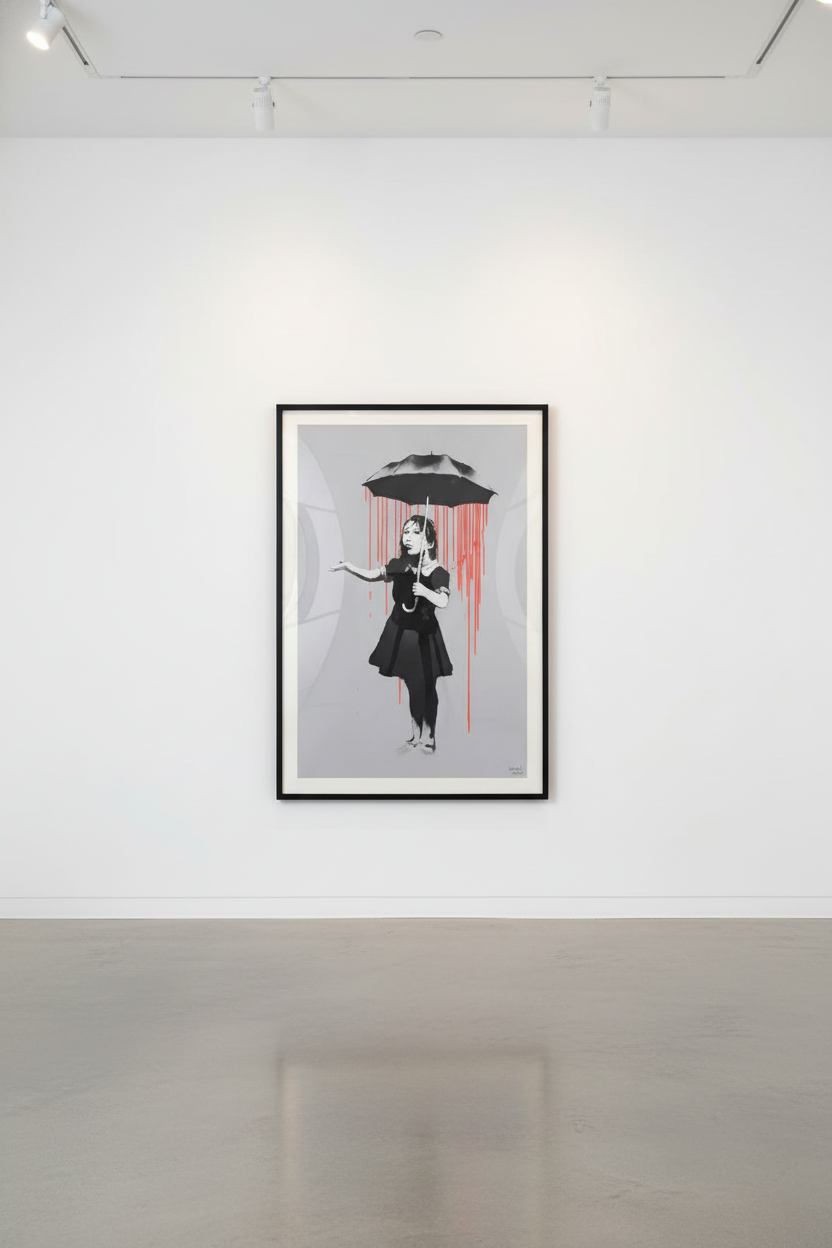
Nola Umbrella Girl Dark Orange Rain — Banksy. Available at Guy Hepner, New York.
Banksy's artistic vocabulary draws heavily from appropriation, juxtaposition, and subversion - techniques that transform familiar imagery into powerful political statements. His work frequently targets institutions of power, from governments and corporations to the art establishment itself. By placing provocative works in public spaces without permission, Banksy reclaims urban environments as sites of democratic expression, challenging who has the right to speak and be heard in contemporary society.
The NOLA series represents one of Banksy's most poignant political interventions. Created in response to Hurricane Katrina and the catastrophic governmental failures that followed, these works appeared throughout New Orleans in 2008, three years after the disaster that exposed deep racial and economic inequalities in American society. The Umbrella Girl motif - depicting a young girl reaching upward as coloured rain pours down upon her - serves as a devastating commentary on abandonment and resilience. The umbrella offers inadequate protection against the deluge, mirroring how vulnerable communities were left exposed by institutional neglect. In variations featuring dark orange, white, and green rain, Banksy explores different emotional registers while maintaining the work's central critique of systemic failure.
This capacity to address specific political moments while creating imagery that resonates universally explains Banksy's enduring market strength. According to Art Basel and UBS's annual art market reports, works addressing social and political themes have shown remarkable resilience during periods of economic uncertainty, with collectors increasingly seeking art that carries cultural weight beyond aesthetic appeal.
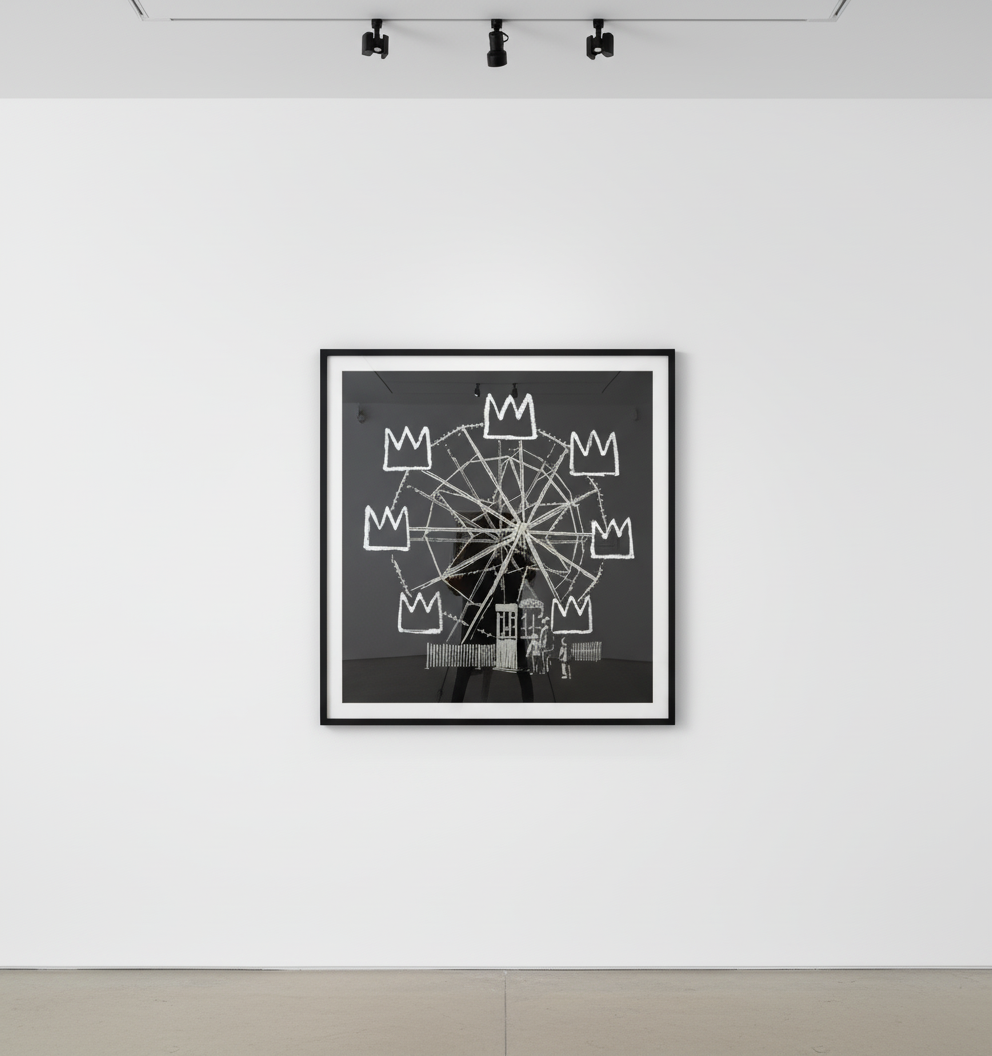
Banksquiat Black — Banksy. Available at Guy Hepner, New York.
Banksy's engagement with art history demonstrates sophisticated understanding of how meaning is constructed through visual reference. His Banksquiat series exemplifies this approach, creating a direct conversation between contemporary street art and the neo-expressionist legacy of Jean-Michel Basquiat. Both artists emerged from outsider positions - Basquiat from the New York graffiti scene of the late 1970s, Banksy from Bristol's underground street art movement - and both leveraged their marginal status to critique mainstream art world conventions.
The Banksquiat works, available in black and grey variations, appropriate Basquiat's crowned figure motif while filtering it through Banksy's distinctive stencil aesthetic. This visual dialogue raises provocative questions about authenticity, commodification, and the absorption of radical artistic practices into commercial frameworks. Basquiat, who died at twenty-seven, watched his work transition from subway cars and abandoned buildings to blue-chip galleries within his short lifetime. Banksy, through strategic anonymity and carefully controlled scarcity, has managed to maintain outsider credibility while achieving even greater commercial success.
Christie's and Sotheby's have both recorded significant results for works that demonstrate this kind of art historical self-awareness. Collectors recognise that pieces engaging critically with artistic predecessors offer layered significance - they function simultaneously as aesthetic objects, historical commentaries, and investments in ongoing cultural conversations.
The secondary market for Banksy's authenticated prints and works on paper has demonstrated extraordinary strength over the past decade. Major auction results at both Christie's and Sotheby's confirm sustained institutional and private collector interest, with prices for significant works regularly exceeding estimates. This market performance reflects broader recognition that Banksy occupies a unique position in contemporary art - simultaneously insider and outsider, critic and participant, anonymous figure and global brand.
For discerning collectors, Banksy represents an opportunity to acquire works that carry genuine cultural currency. Unlike artists whose relevance depends on art world validation alone, Banksy's significance is continuously reinforced through public engagement, media attention, and ongoing interventions that keep his practice at the centre of cultural discourse. The political dimensions of his work ensure continued relevance as the issues he addresses - inequality, institutional failure, the commodification of dissent - remain urgent contemporary concerns.
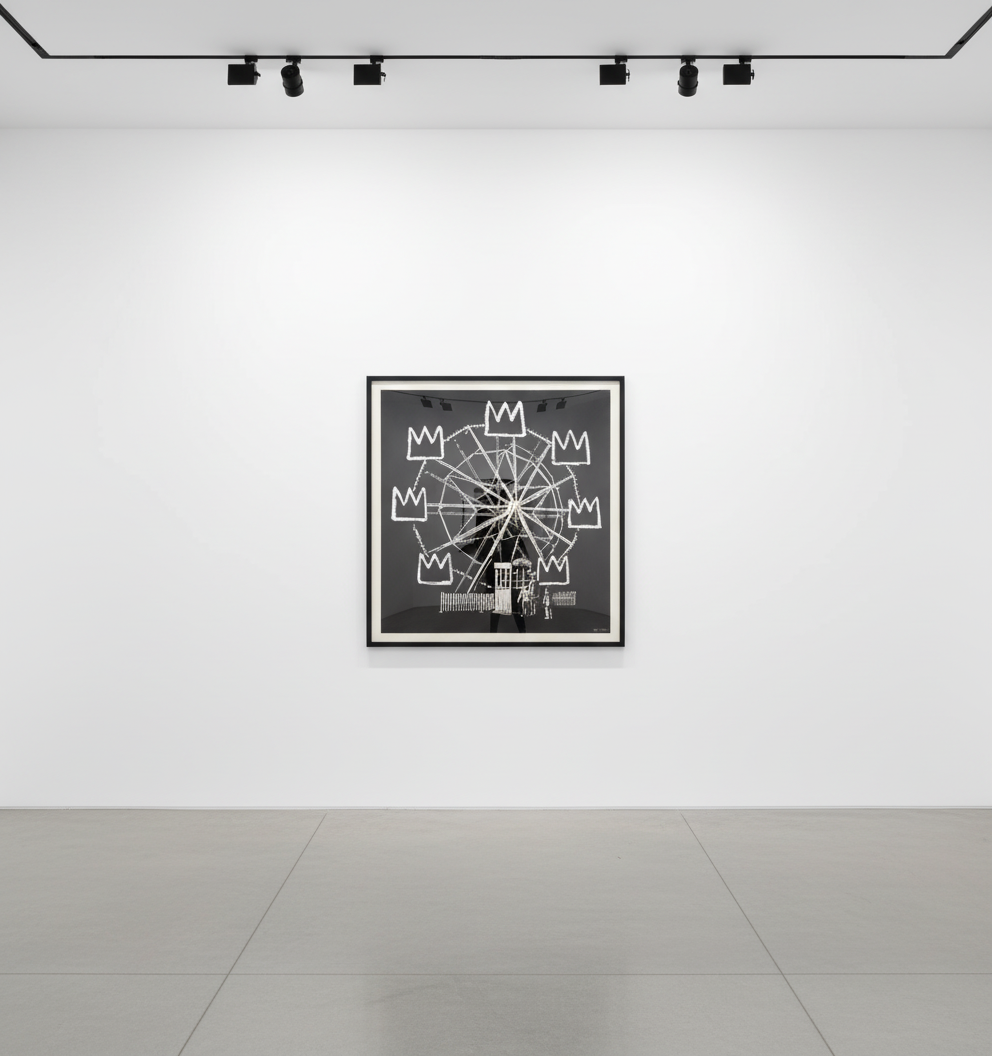
Banksquiat Grey — Banksy. Available at Guy Hepner, New York.
The scarcity of authenticated works further strengthens collector interest. Pest Control, the authentication body established by Banksy, maintains rigorous standards that provide market confidence while limiting supply. This controlled availability, combined with consistent demand from both emerging and established collectors, creates favourable conditions for long-term value appreciation.
Guy Hepner is proud to offer exceptional authenticated Banksy works, including pieces from the significant NOLA and Banksquiat series. Our gallery provides collectors with access to museum-quality prints accompanied by comprehensive provenance documentation and authentication verification. Whether you are building a focused collection of contemporary political art or seeking a singular statement work, our specialists offer personalised guidance throughout the acquisition process. We invite collectors to contact Guy Hepner directly to discuss available Banksy works and explore how these powerful pieces might enhance your collection.
--- ## Banksy Art For Sale at Guy Hepner Guy Hepner Gallery is a leading source for authenticated Banksy art for sale in New York. Our inventory includes Banksy prints for sale — signed and unsigned editions — spanning Girl with Balloon, Choose Your Weapon, Kate Moss, Cnd Soldiers, Trolley Hunters, Fragile, Tesco Soup Cans, and Radar Rat, all accompanied by Pest Control Certificates of Authenticity. [Browse Banksy art for sale →](/banksy) | [Buy Banksy Girl with Balloon →](/banksy/girl-with-balloon) | [Sell your Banksy →](/sell/banksy)Explore Banksy prints for sale at Guy Hepner: Choose Your Weapon, Heavy Weaponry, (Fr)agile, Applause, Banksquiat.
Related Series