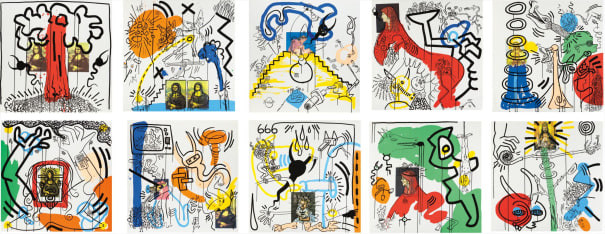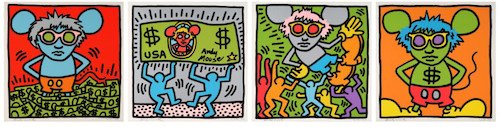
Andy Mouse

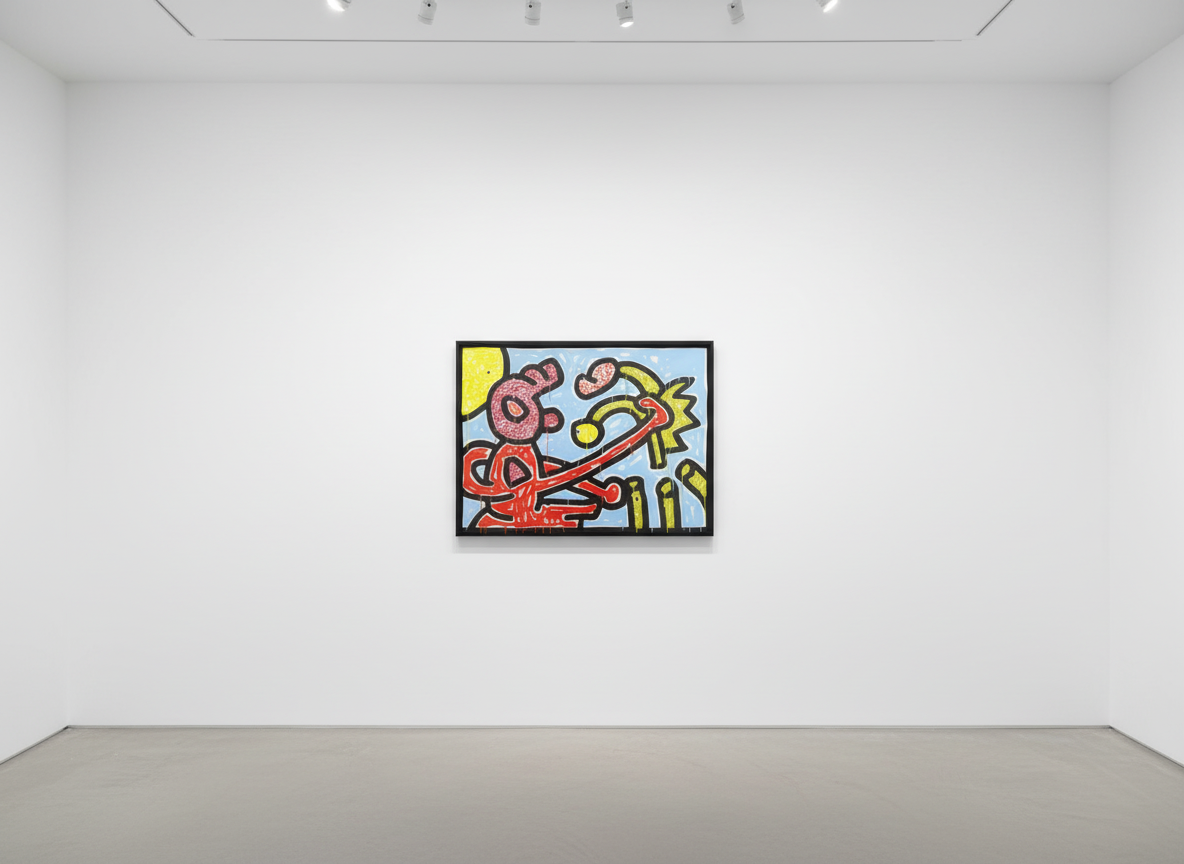
Keith Haring remains one of the most consequential artists of the twentieth century, a figure whose work transcended the boundaries between fine art, street culture, and social activism. Emerging from the vibrant underground scene of 1980s New York, Haring developed a visual language so distinctive and powerful that it continues to resonate with collectors, institutions, and new audiences decades after his untimely death in 1990. For discerning collectors, the question is not whether Keith Haring belongs in a serious collection but rather why his work represents such a compelling opportunity in today's art market.
Keith Haring was more than an artist - he was a cultural force who helped define the visual identity of an entire era. Arriving in New York in 1978 to study at the School of Visual Arts, Haring quickly immersed himself in the city's thriving alternative art scene, finding kinship with fellow artists Jean-Michel Basquiat and Kenny Scharf, as well as musicians, dancers, and performers who populated the downtown clubs and galleries. His earliest public works appeared in the subway system, where he created thousands of chalk drawings on unused advertising panels, transforming the daily commute into an encounter with art.
What distinguished Haring from his contemporaries was his remarkable ability to communicate complex ideas through deceptively simple imagery. His vocabulary of dancing figures, radiant babies, barking dogs, and crawling infants became instantly recognizable symbols that spoke across cultural and linguistic barriers. This accessibility was intentional - Haring believed deeply that art should be available to everyone, not sequestered in elite institutions. Yet this populist approach never diminished the sophistication or depth of his work.
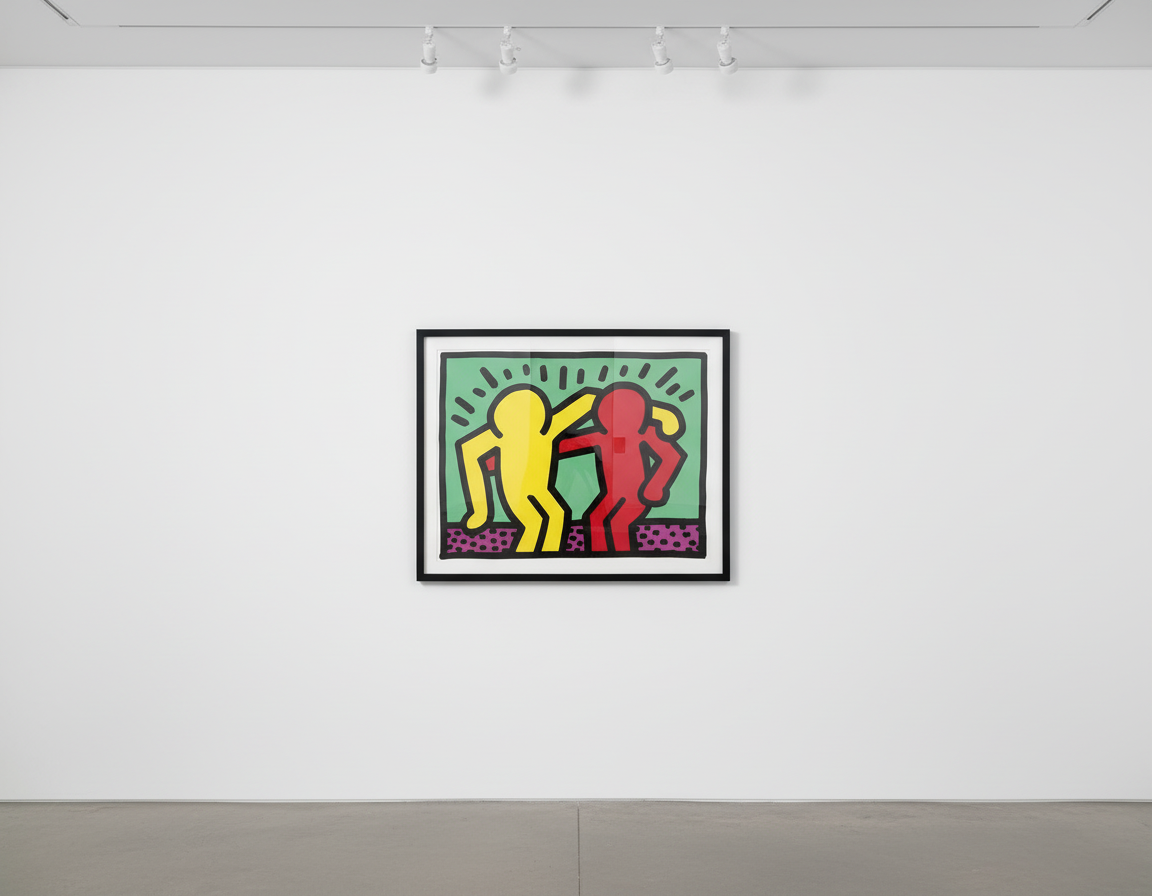
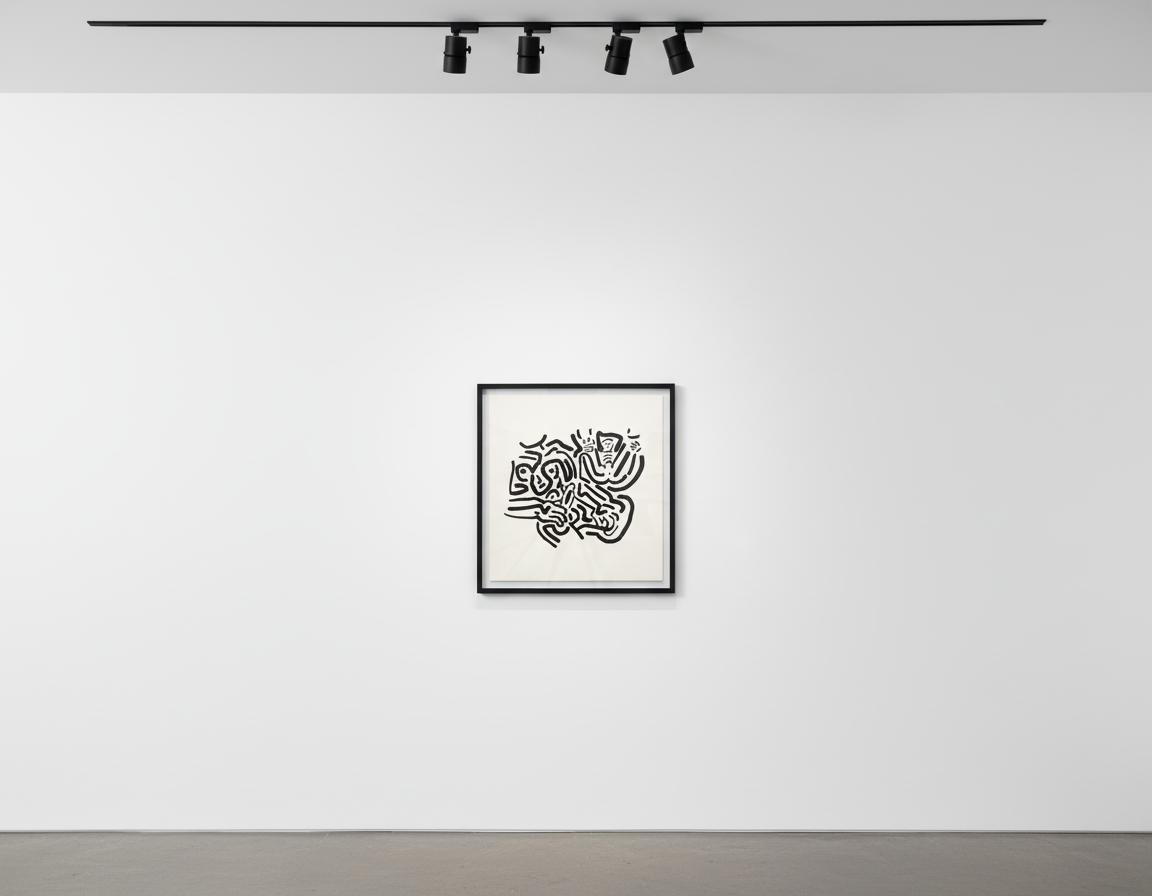
Pop Shop I (A) (Littmann PP. 82) — Keith Haring. Available at Guy Hepner, New York.
Haring's art addressed the most pressing concerns of his time with unflinching directness. He created powerful works responding to the AIDS epidemic, which would ultimately claim his own life, as well as pieces addressing apartheid, nuclear proliferation, LGBTQ+ rights, and the crack cocaine crisis devastating urban communities. These themes remain urgently relevant today, lending his work a timeless quality that continues to attract collectors who value art with substantial sociopolitical meaning.
The New York of the early 1980s provided the perfect crucible for Haring's artistic development. The city was raw, dangerous, and financially struggling, yet this environment fostered an unprecedented creative explosion. The boundaries between high and low culture, between gallery art and street art, between music and visual expression, became increasingly permeable. Haring moved fluidly through these worlds, exhibiting at prestigious venues like the Tony Shafrazi Gallery while simultaneously painting murals on the sides of buildings and creating designs for club flyers.
His decision to open the Pop Shop in 1986 represented a radical democratization of his work. Located in SoHo, the store sold T-shirts, posters, magnets, and other merchandise featuring his iconic imagery at accessible price points. Critics initially dismissed this venture as crass commercialism, but Haring understood something profound about art's potential reach. The Pop Shop allowed anyone to own a piece of his vision, regardless of their economic circumstances, while simultaneously generating funds for the charitable causes he supported throughout his career.
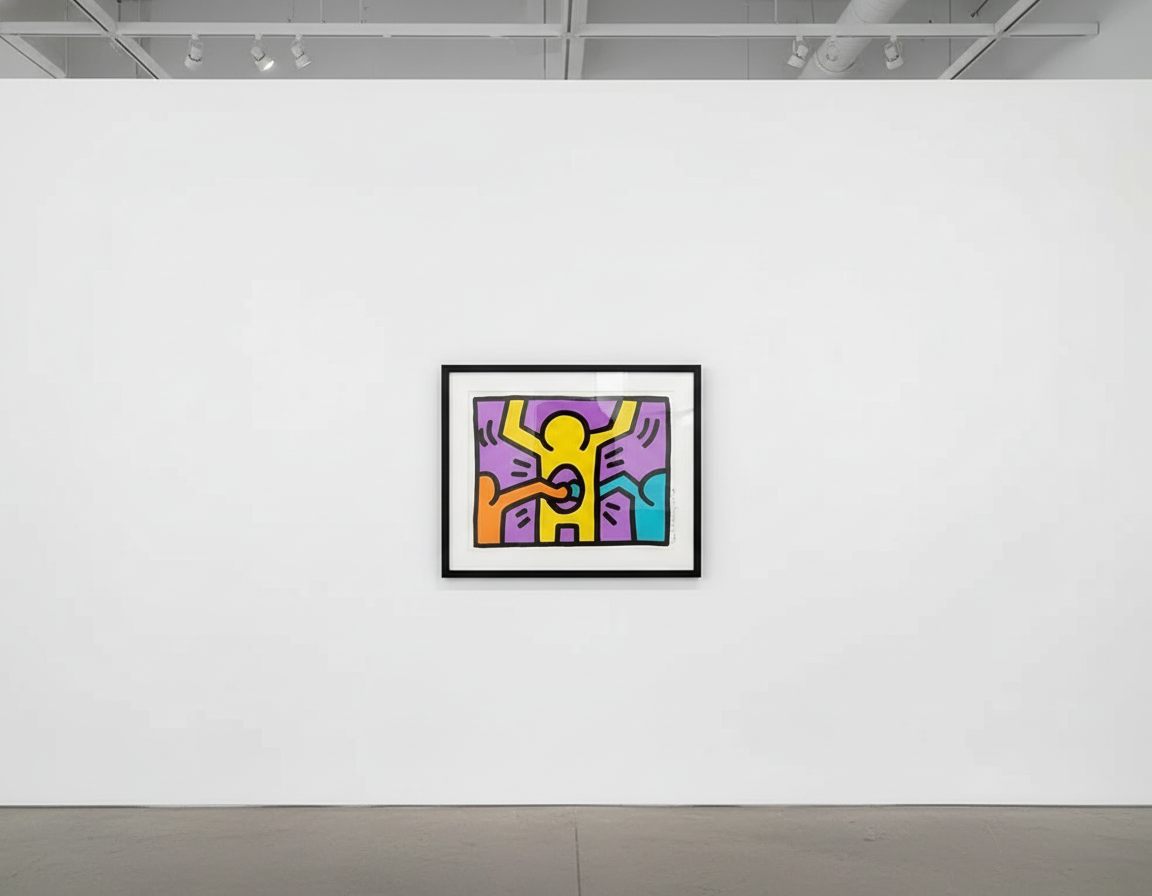
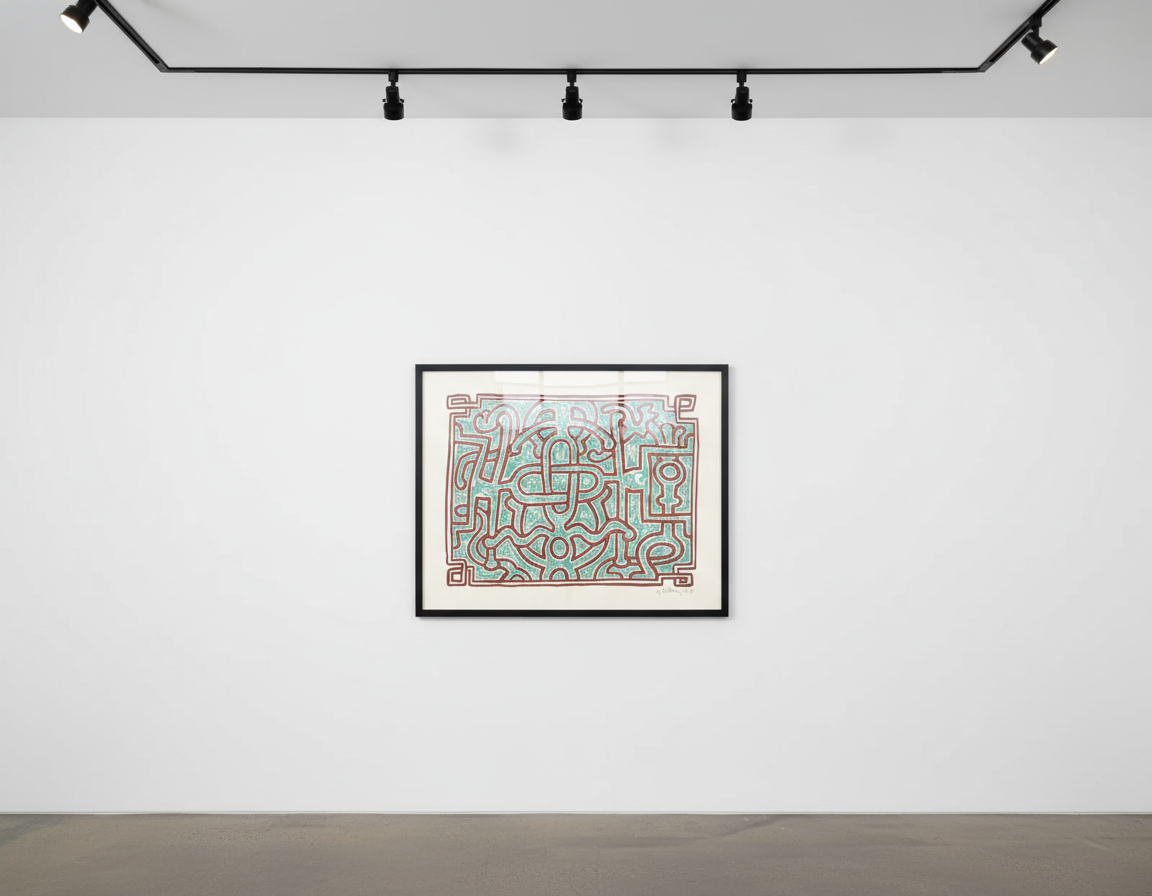
Pop Shop I (C) (Littmann PP. 83) — Keith Haring. Available at Guy Hepner, New York.
This period also saw Haring creating some of his most important editioned works, including the celebrated Pop Shop print series. These screenprints captured the energy and optimism of his visual language while demonstrating his sophisticated understanding of color, composition, and graphic impact. Today, these editions represent accessible entry points for collectors seeking museum-quality examples of Haring's mature artistic vision.
The market for Keith Haring's work has demonstrated remarkable strength and consistency over the past two decades. According to data analyzed by Art Basel and UBS in their annual art market reports, post-war and contemporary works with strong provenance and cultural significance continue to outperform broader market indices. Haring's pieces exemplify these qualities, combining impeccable art historical importance with enduring visual appeal.
At the major international auction houses, Haring's work regularly achieves impressive results. Christie's and Sotheby's have recorded numerous record-breaking sales for his paintings, sculptures, and works on paper. His editioned prints, particularly complete portfolios and individual sheets from significant series, have shown steady appreciation as collectors recognize their quality and relative accessibility compared to unique works. The artist's limited output - a consequence of his tragically shortened career - ensures that supply remains constrained even as institutional and private demand continues to grow.
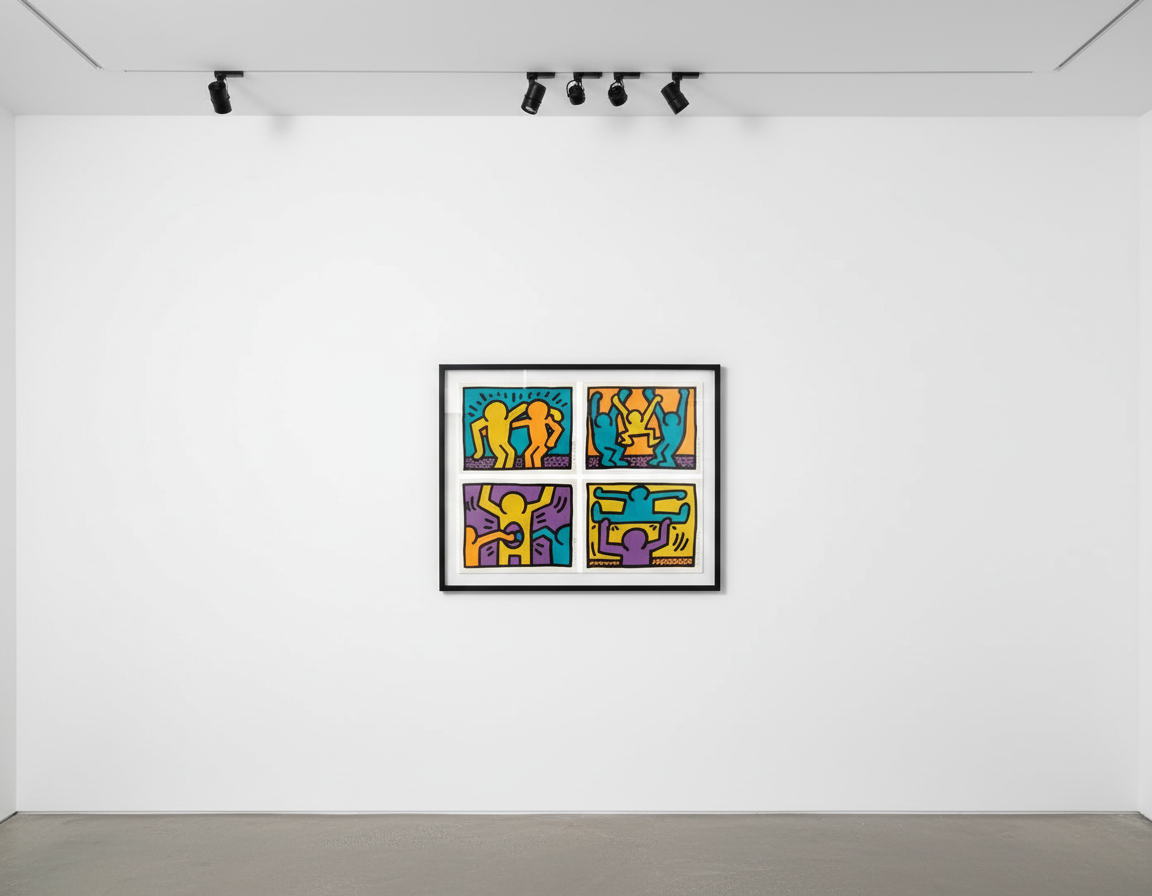
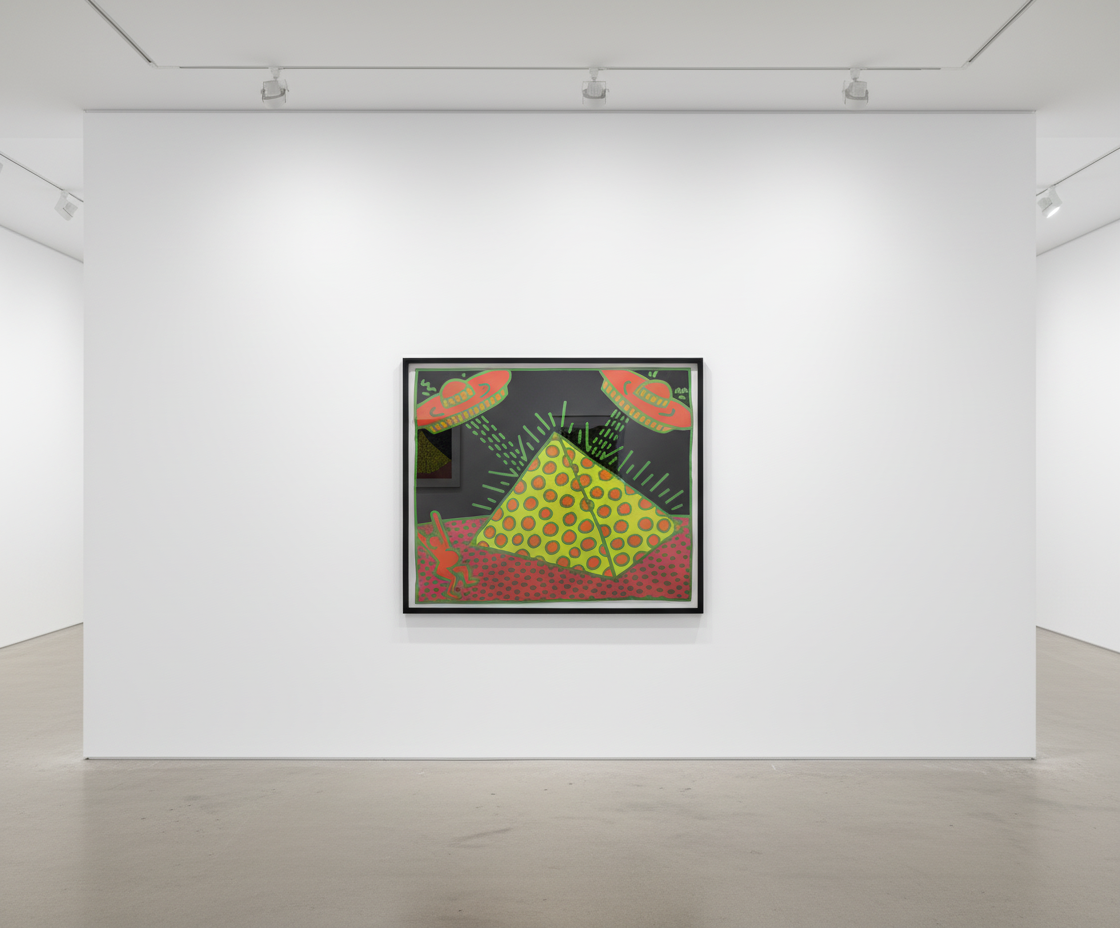
Pop Shop I (Littmann PP. 82 - 83) — Keith Haring. Available at Guy Hepner, New York.
Collectors are drawn to Haring for multiple reasons. His work offers immediate visual impact and joy, qualities increasingly valued in contemporary collecting. The strong documentary record surrounding his career, including extensive photography, film footage, and his own journals, provides exceptional provenance resources. Furthermore, his commitment to social justice and his pioneering openness about his identity as a gay man facing AIDS have made him an icon for collectors who see art acquisition as an expression of personal values.
The current moment presents a particularly compelling opportunity for Haring collectors. Museum exhibitions continue to introduce his work to new generations, most recently with major retrospectives that have traveled internationally. Scholarly attention to his career has deepened, with new publications examining his influences, techniques, and lasting impact on contemporary visual culture. This institutional validation typically precedes sustained market appreciation.
For collectors seeking works that combine aesthetic excellence, historical importance, and meaningful content, Keith Haring represents an essential consideration. His prints offer the opportunity to own fully realized examples of his artistic vision at various price points, while his unique works command the attention of the most serious collectors worldwide.
Guy Hepner is proud to offer exceptional examples of Keith Haring's celebrated Pop Shop editions and other significant works. Our expertise in post-war and contemporary art, combined with our commitment to providing collectors with thoroughly vetted works of impeccable provenance, makes us an ideal partner for those seeking to acquire pieces by this transformative artist. We invite you to contact our gallery to discuss available works and explore how Keith Haring might enhance your collection.
--- ## Keith Haring Paintings and Prints For Sale Guy Hepner Gallery represents an extensive inventory of authenticated Keith Haring paintings for sale, original works on paper, and screen print editions. Our collection spans the Icons series, Pop Shop editions, Blueprint Drawings, Lucky Strike, Andy Mouse, Retrospect, and major unique works. [Browse Keith Haring original art for sale →](/keith-haring) | [Keith Haring prints for sale →](/keith-haring) | [Sell your Keith Haring →](/sell/keith-haring)Explore Keith Haring prints for sale at Guy Hepner: Andy Mouse, Apocalypse, Bad Boys, Chocolate Buddha, Fertility.
Related Series