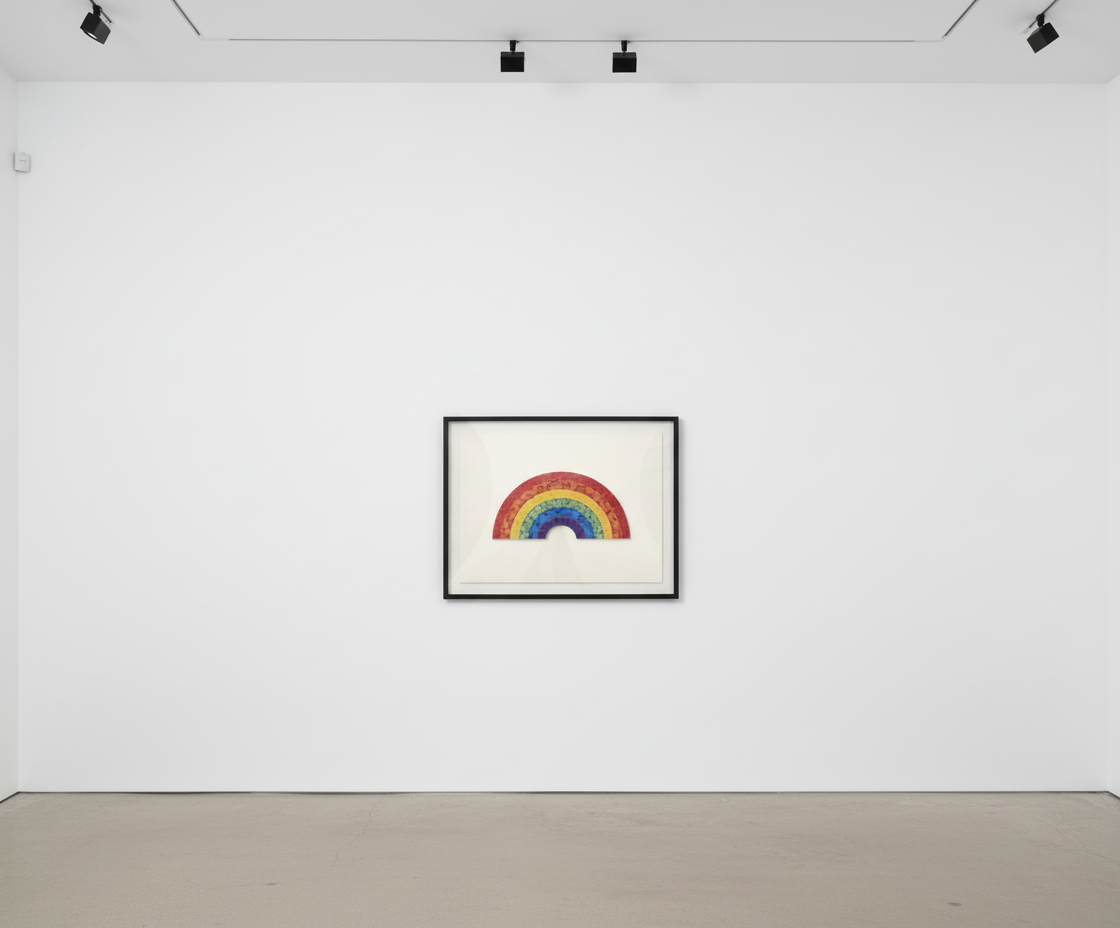
H7 - Heart and Rainbow Butterflies

May 23, 2026
No living artist has done more to place the butterfly at the centre of contemporary art than Damien Hirst. Over more than three decades, the butterfly has served as his most sustained and formally rich motif — appearing in monumental kaleidoscopic prints made from thousands of individual wings, canvases in which actual butterfly wings are set into household gloss, photogravure etchings depicting single specimens, and large-format giclée works on aluminium that deploy the butterfly's natural symmetry as a formal device of almost architectural authority.
What follows is a guide to the principal butterfly series, the formats available, and what distinguishes these works within Hirst's broader practice.
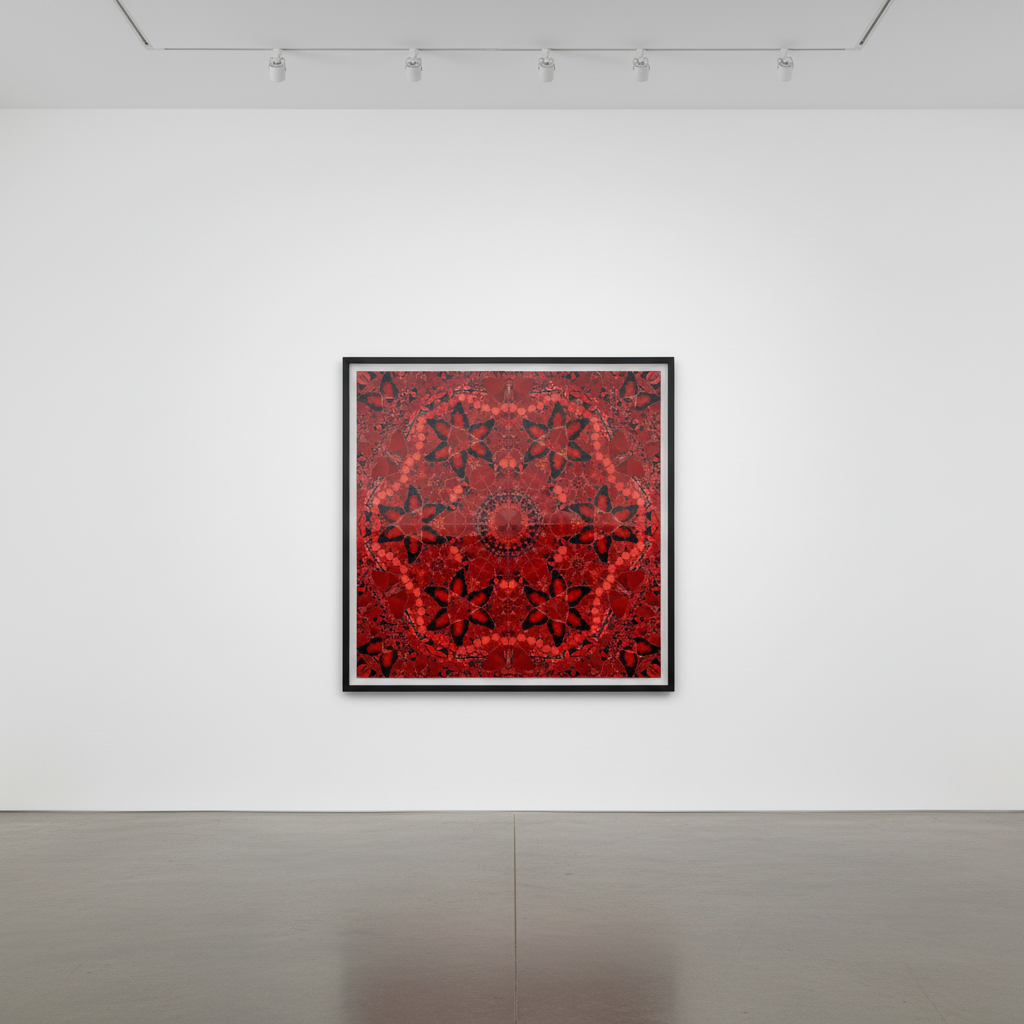
The Psalm series is among the most formally ambitious of Hirst's butterfly bodies of work. The works — screenprints with diamond dust, each titled after a Latin psalm — arrange butterfly wings into mandala compositions that draw a parallel between the symmetry of natural forms and the structure of religious thought. The diamond dust, a material Hirst has used across his practice since the early 1990s, adds a quality of the numinous to compositions already engaged with spiritual subject matter: the shimmer of scattered diamond powder on the butterfly wing patterns catches light in a way that shifts with every movement of the viewer or the room.
Works like Psalm: Ad Te, Domine, Levavi, Psalm: Confitebor Tibi, and Psalm: Benedictus Dominus are among the most technically complex prints Hirst has produced. The screenprinting process requires multiple passes to build the layered wing imagery; the diamond dust glaze as a finishing stage means that no two impressions are identical, as the distribution of the particles varies with each application.
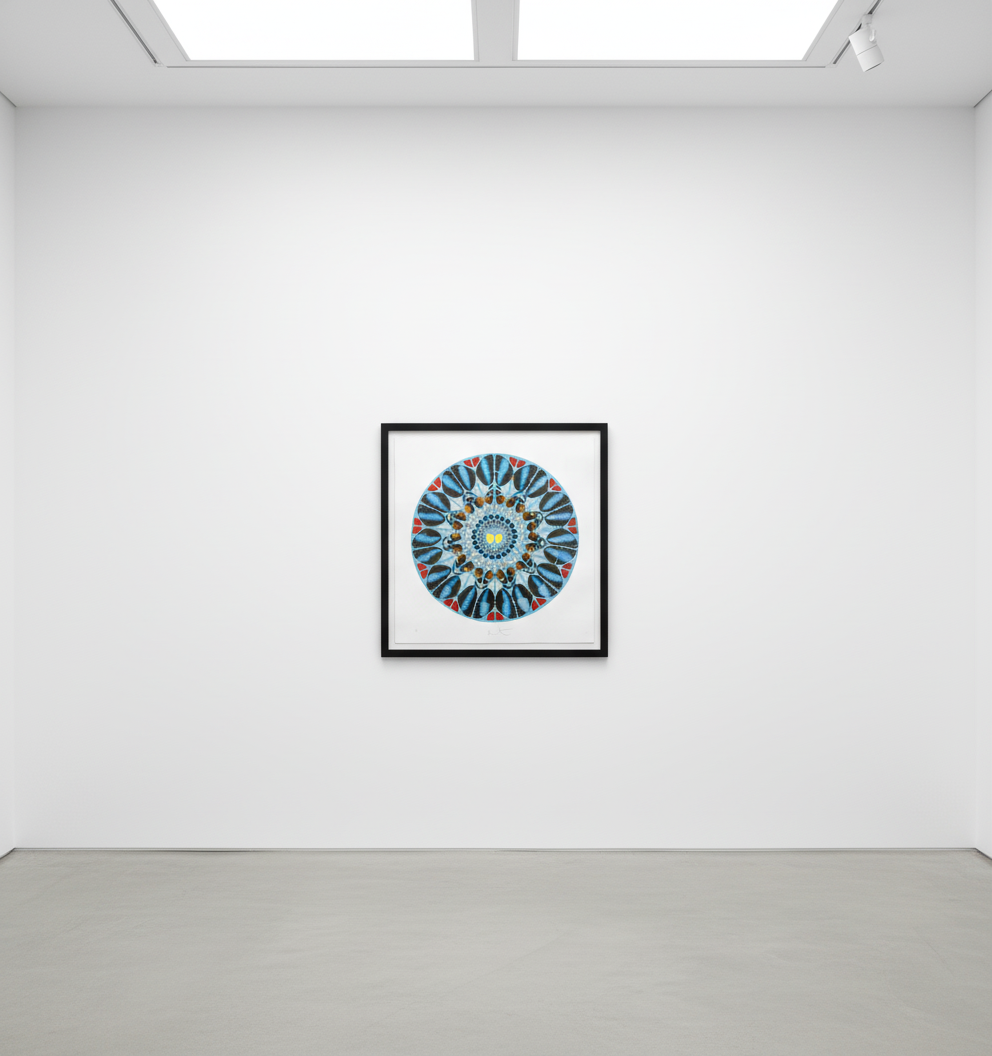
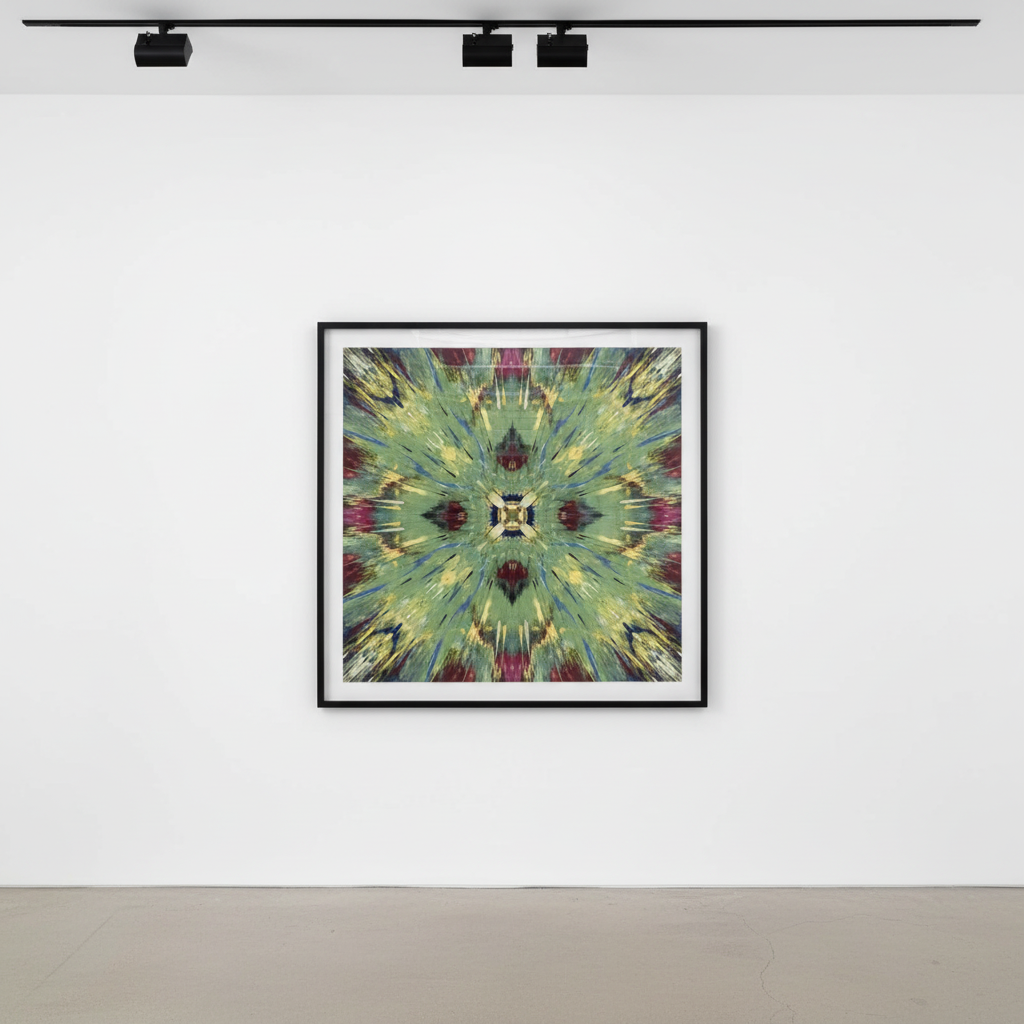
The H8 series — Fruitful and Forever — produces some of Hirst's most concentrated butterfly wing compositions. The wings are arranged into circular forms that carry a mandala-like completeness, each work balanced around a central axis with a formal rigour that makes the natural origin of the material all the more striking. Forever in particular has become one of the more sought-after of Hirst's butterfly print works: the title, applied to a composition made from ephemeral material, creates the tension between permanence and fragility that runs through the entirety of his butterfly practice.
Both works are available in multiple sizes, and the larger format versions — mounted on aluminium — demonstrate how effectively these compositions function at scale. At significant dimensions, the individual wing segments become visible as distinct units within the broader pattern, creating a different viewing experience than the smaller editions in which the composition reads as a unified whole.
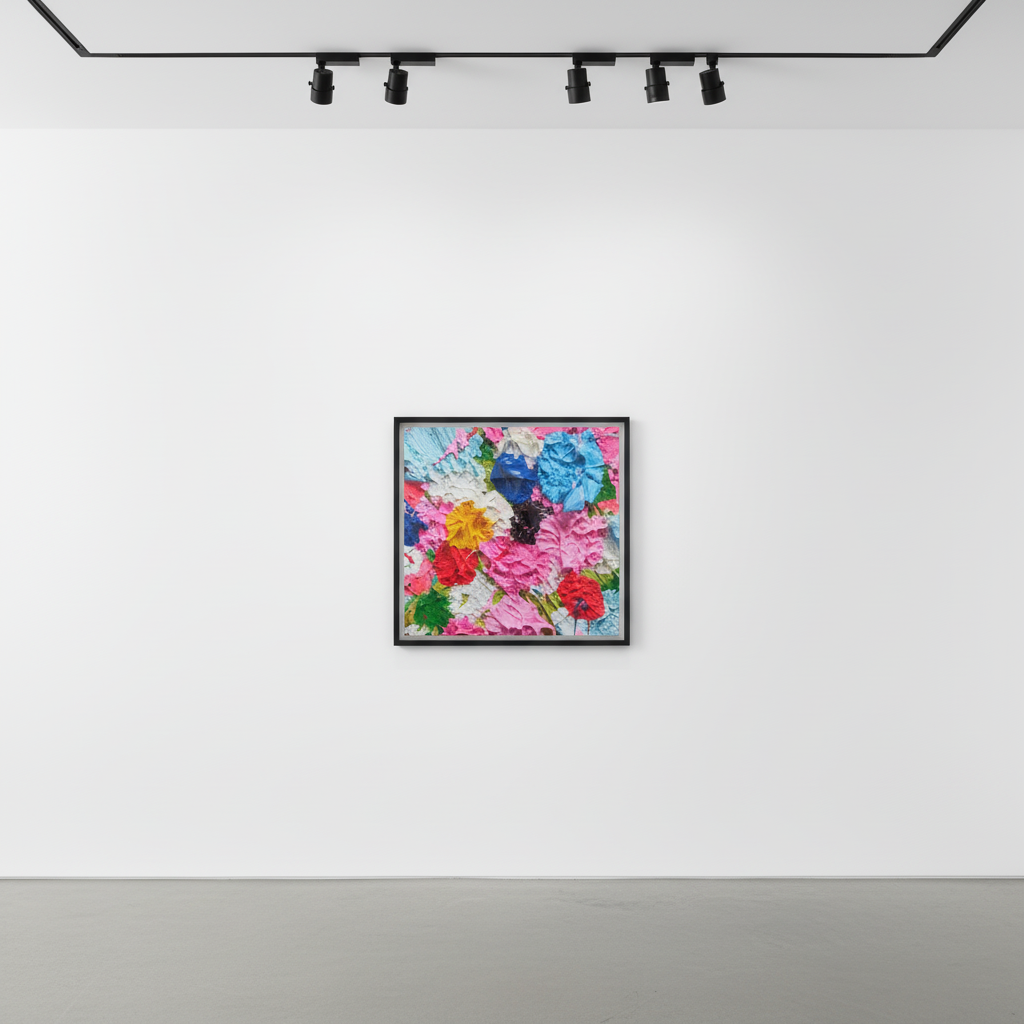
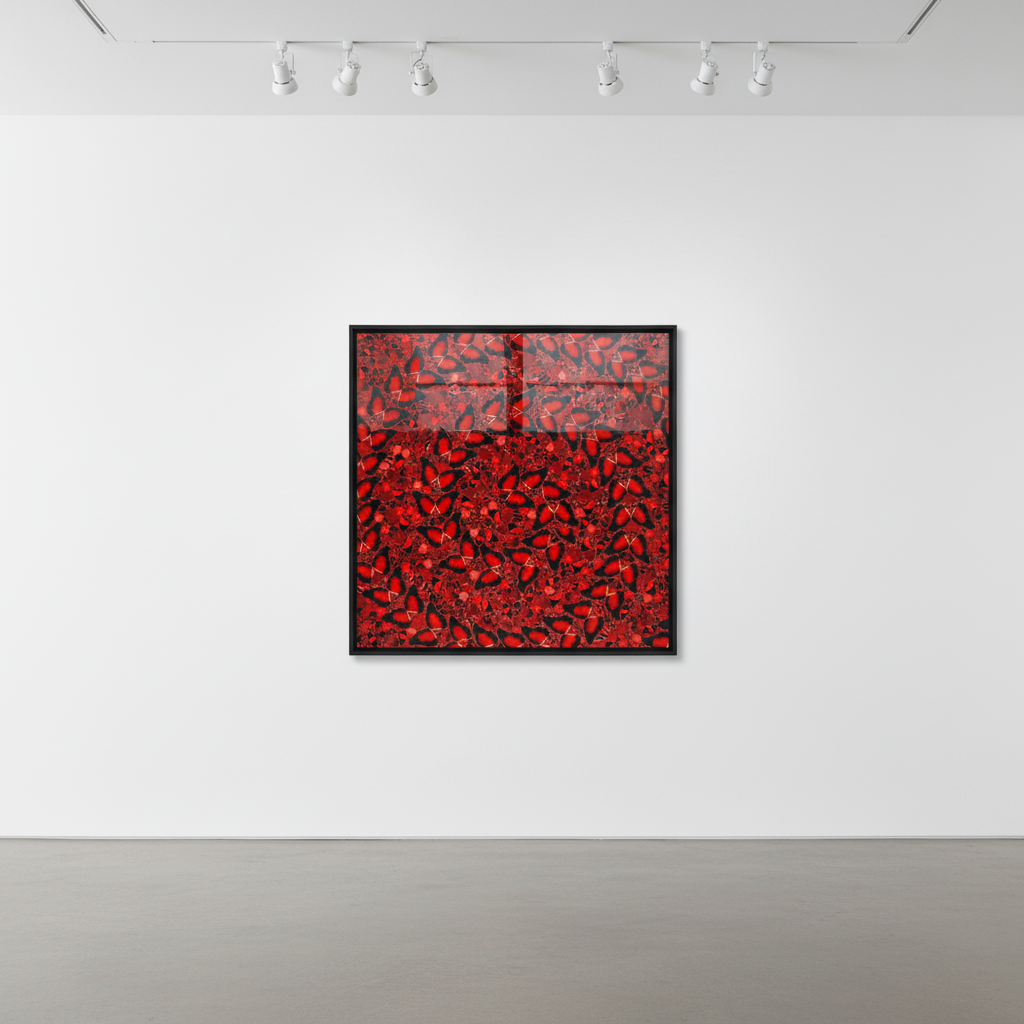
The Virtues series (H9) extends the butterfly wing mandala format into explicitly ethical territory. Eight laminated giclée prints on aluminium — each titled after a quality (Justice, Courage, Mercy, Politeness, Honesty, Honour, Loyalty, Control) — use butterfly wing arrangements to construct compositions whose chromatic density suggests the complexity and fragility of the qualities they name.
The Empresses series (H10) names its five works after historical female rulers: Wu Zetian, Nūr Jahān, Theodora, Suiko, Taytu Betul. These laminated giclée prints are screen-printed with glitter over the base butterfly wing image, adding a ceremonial quality that reinforces the imperial subject matter. The combination of the butterfly wing's natural iridescence and the glitter's artificial shimmer produces a surface that is simultaneously organic and opulent — nature in the service of power.
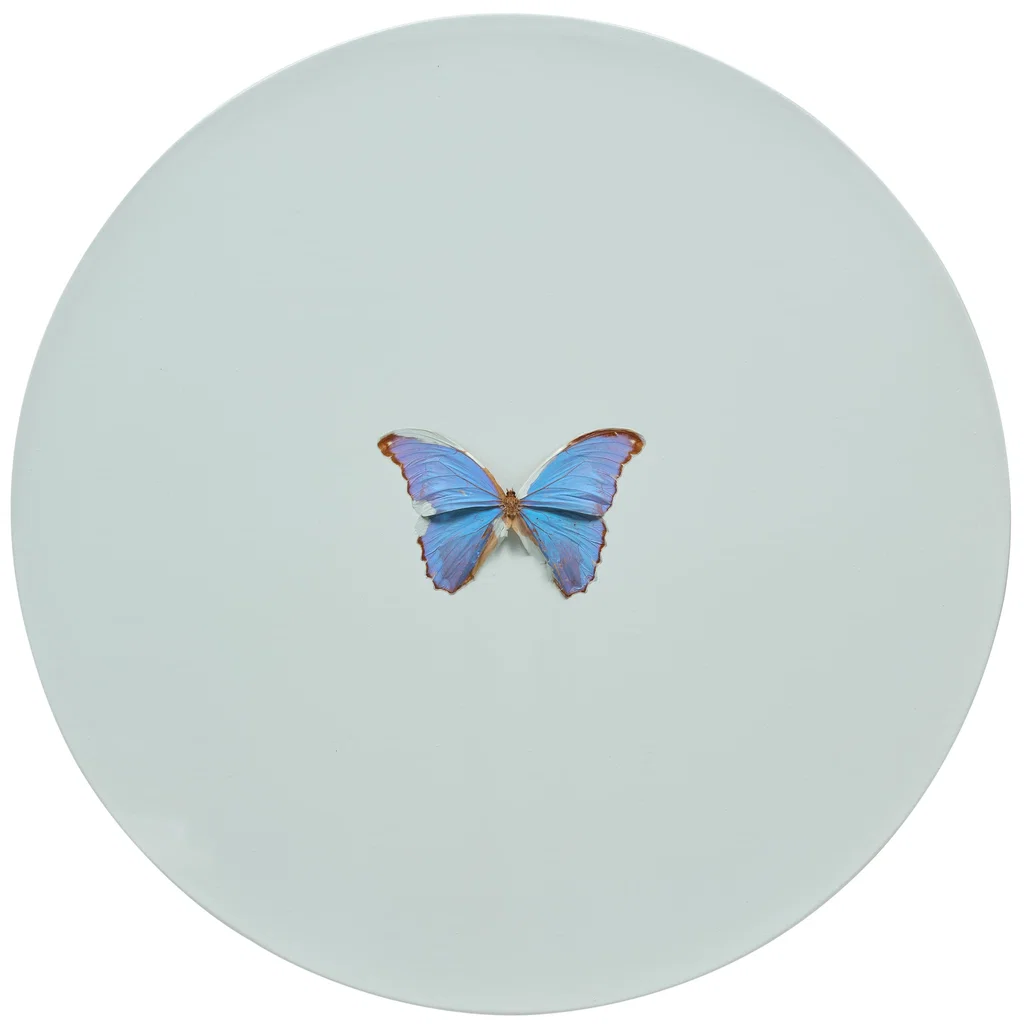
Alongside the print-based butterfly works, Hirst has produced a significant body of paintings in which actual butterfly wings are incorporated into the painted surface. Works like Capricorn — butterfly and household gloss on canvas — represent the most direct form of this approach: wings set directly into the paint layer, their natural pattern integrated into a composition that is simultaneously a painting and a natural history object. The household gloss medium, which Hirst has used across his practice as a deliberately unartistic material, provides a flat, industrial surface against which the wing's natural complexity asserts itself with particular force.
These unique works occupy a distinct category within the butterfly output. Where the prints work through reproduction — each impression a technically precise realisation of the same composition — the butterfly paintings are irreducible. The specific wings, the specific arrangement, the specific paint surface cannot be replicated. They carry a different kind of authority within a collection.
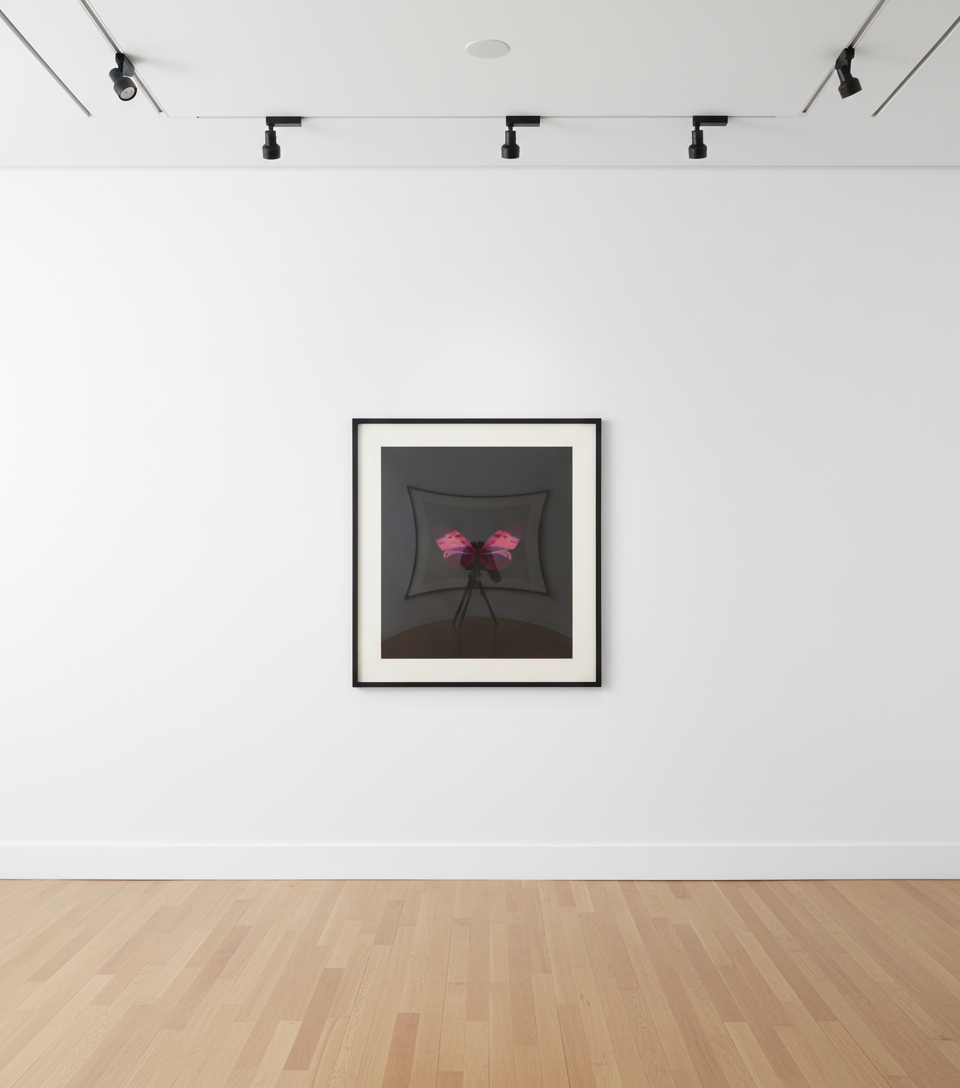
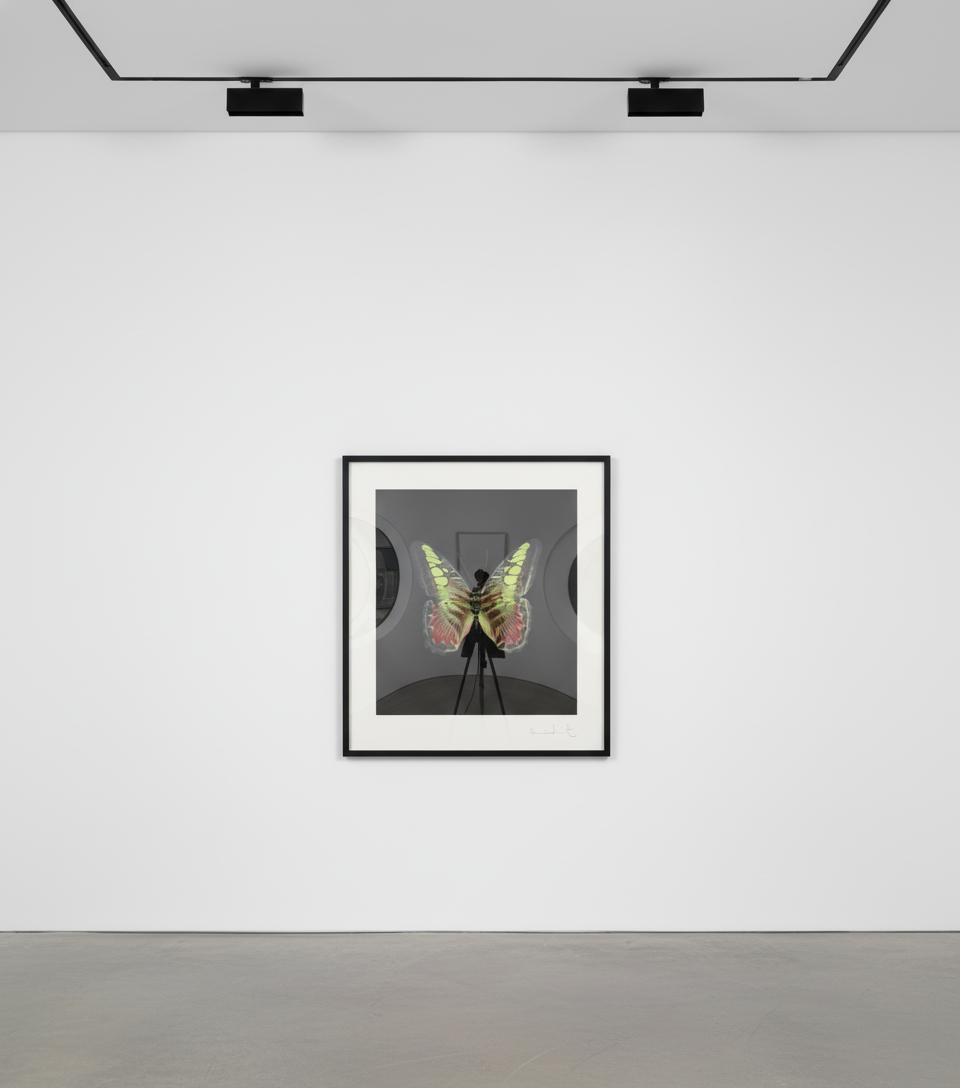
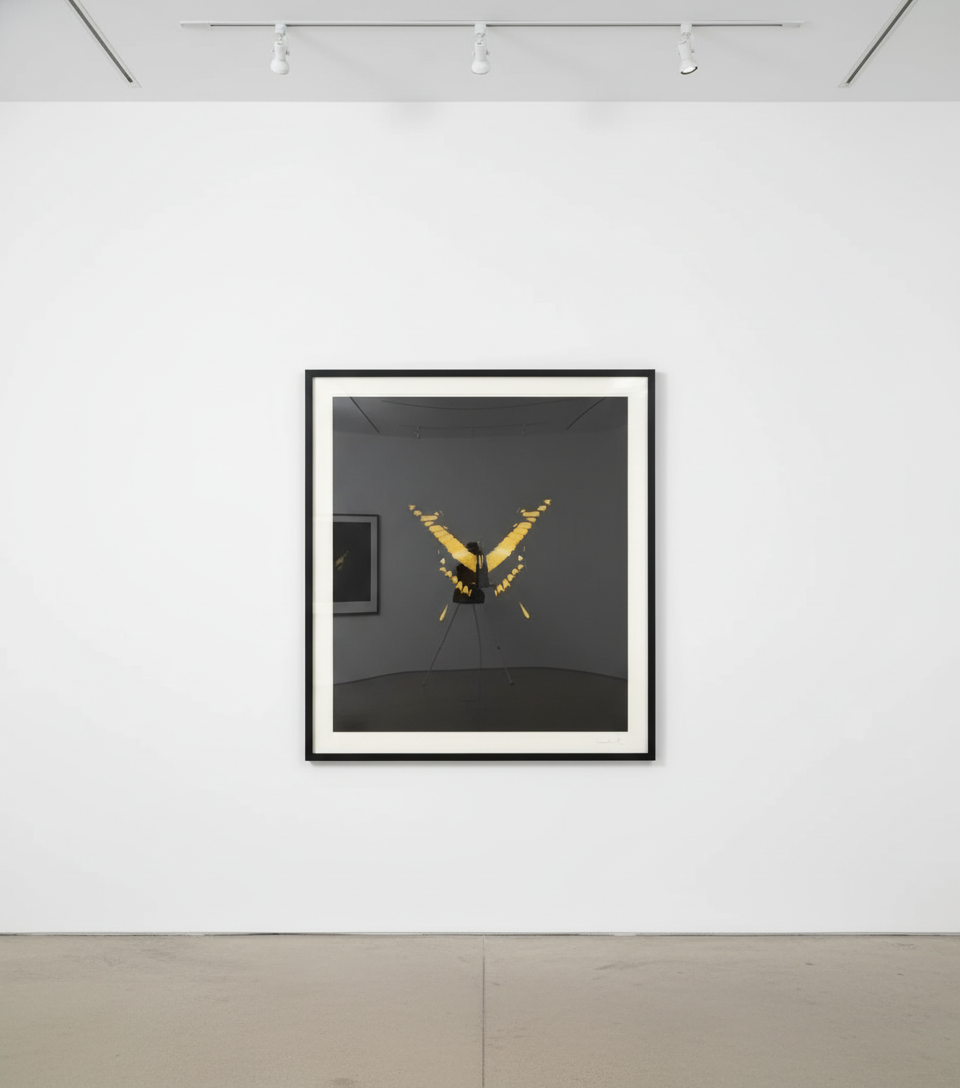
The Souls on Jacob's Ladder series applies the butterfly motif to Hirst's most persistent subject — mortality and what lies beyond it. The two butterfly-specific works — The Souls on Jacob's Ladder Take Their Flight (Large Red/Green Butterfly) and its smaller companion with Yellow/Black butterfly — are hand-inked photogravure etchings on heavyweight Velin d'Arches paper. The photogravure process gives these works a quality of aged document; the butterfly depicted belongs to a longer temporal register than the contemporary moment.
The hand-inking means that each impression is genuinely unique despite being an edition — each receives individual attention in the inking stage, producing tonal variations that make every copy distinctly its own.
The butterfly works occupy a specific position within the broader Hirst market. Unlike the Spot Paintings — which exist in enormous edition sizes and whose market is accordingly liquid — the butterfly series prints were produced in smaller editions, and the unique butterfly paintings are singular. The mandala formats (Psalms, H8, H9, H10) have sustained consistent collector interest: their visual impact in domestic and corporate spaces is immediate, and the formal complexity holds up under prolonged exposure in a way that simpler compositions do not.
The aluminium substrate works — laminated and diasec-mounted giclée pieces — are durable, require no glazing, and perform differently across the day as light conditions change. For collectors placing significant works in spaces where they will live with them daily, these are practical considerations alongside the aesthetic ones.
Hirst's butterfly output spans several distinct series: the Psalms screenprints with diamond dust; H8 Fruitful and Forever; the Virtues (H9) and Empresses (H10) laminated giclée series; unique butterfly paintings on canvas such as Capricorn; and the photogravure Souls on Jacob's Ladder butterfly works. Medium across series includes laminated giclée on aluminium, screenprint with diamond dust, household gloss on canvas, and hand-inked photogravure etching.
In the butterfly paintings — such as Capricorn and the cabinet works — actual butterfly wings are incorporated directly into the painted surface, set in household gloss on canvas. In the print series (Psalms, H8, H9, H10), the butterfly wing imagery is photographically reproduced as giclée or screenprint output. The paintings with actual wings are unique works; the prints are editions.
The Spot Paintings are among the most widely produced works in Hirst's output. The butterfly series prints were produced in smaller, more controlled editions. The formal complexity of the butterfly mandala compositions — the visual density, the play of natural and artificial light across the aluminium substrate — rewards sustained attention in a way that the Spot Paintings, intentionally, do not.
Guy Hepner Gallery in New York holds butterfly works across several series, including Psalms, H8, H9 Virtues, H10 Empresses, and the Souls on Jacob's Ladder butterfly etchings. Contact the gallery at 177 Tenth Avenue, New York to discuss available works and current inventory.
Guy Hepner Gallery presents Damien Hirst butterfly works alongside an established programme of post-war and contemporary art. For collectors interested in specific works or the full range of available butterfly series, contact the gallery at 177 Tenth Avenue, New York.
View Damien Hirst works at Guy Hepner →
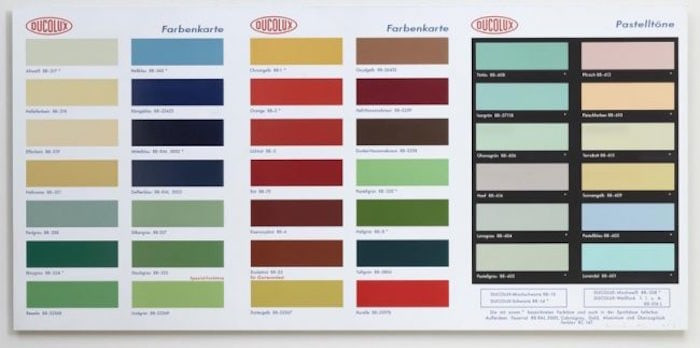
Explore Damien Hirst prints for sale at Guy Hepner: H7 - Heart and Rainbow Butterflies, Blossoms, Colour Chart, H1 - Enter the Infinite, H10 - the Empresses.
Related Series