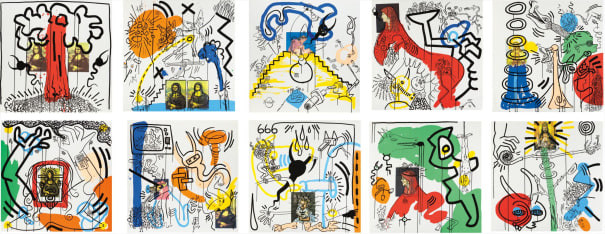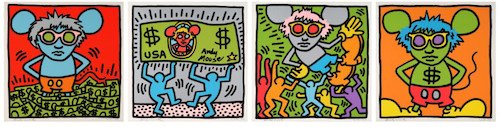
Andy Mouse

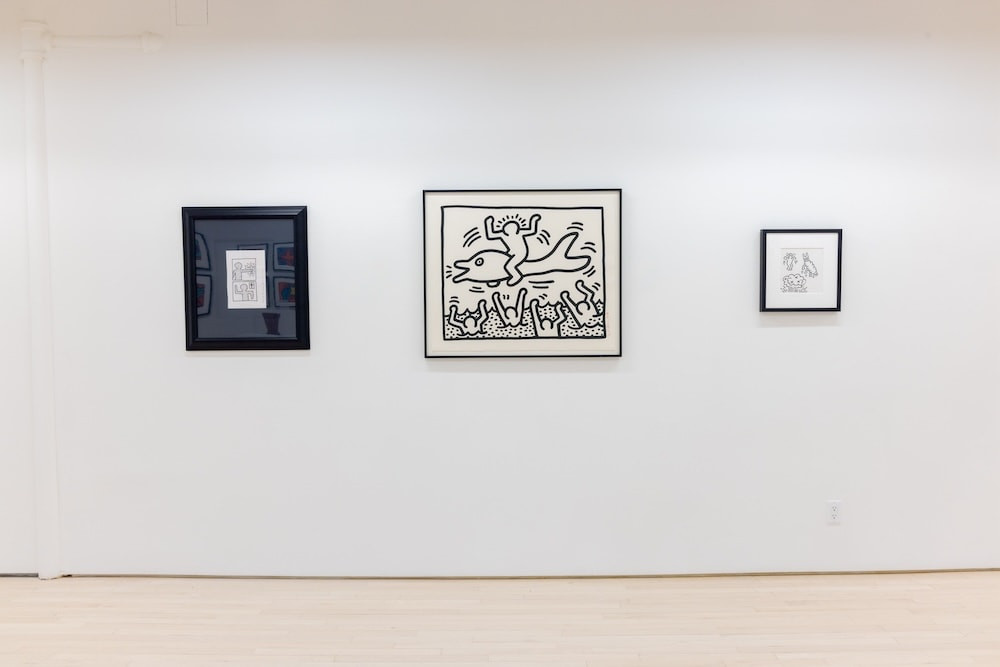
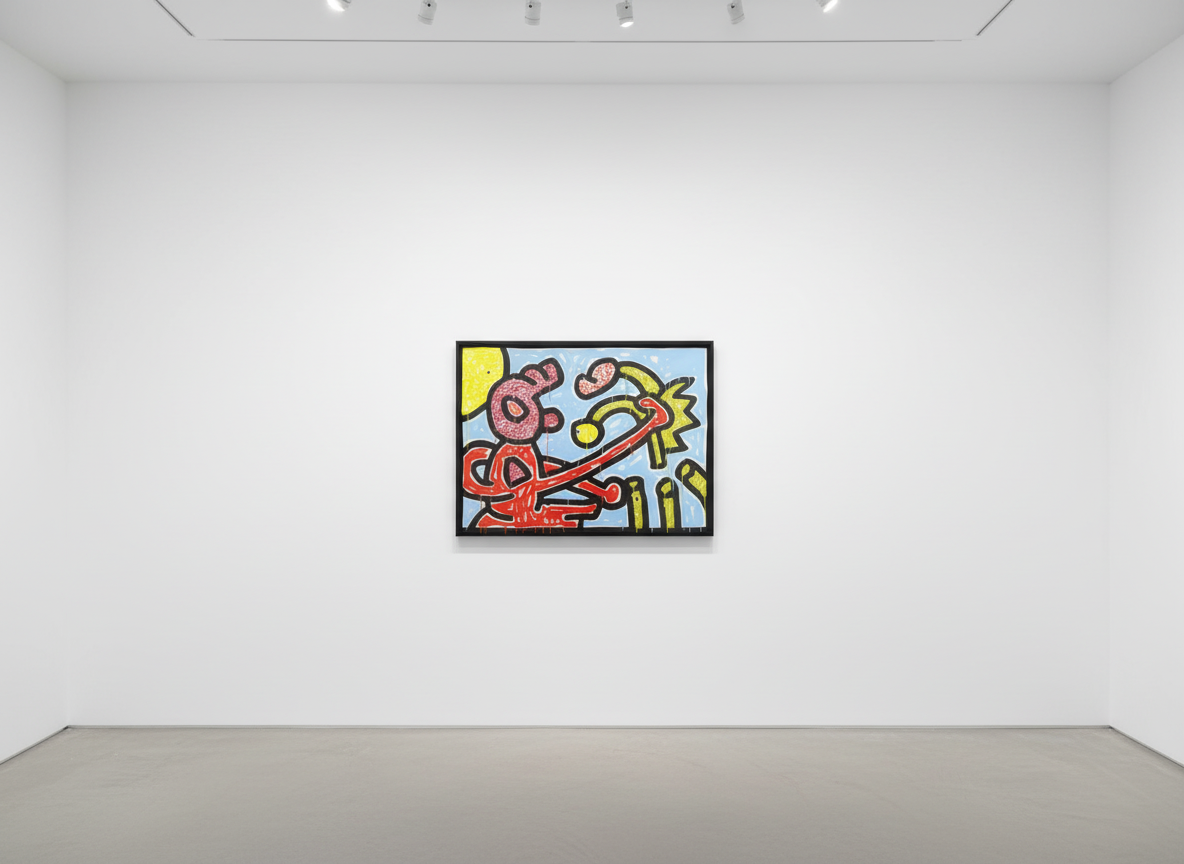
Keith Haring emerged from the vibrant downtown New York art scene of the early 1980s to become one of the most influential and recognizable artists of the twentieth century. His bold lines, dynamic figures, and unmistakable visual vocabulary transcended the boundaries between high art and popular culture, creating a universal language that continues to resonate with audiences worldwide. Haring's work exists quite literally in between the lines - in the spaces where street art meets fine art, where political activism meets joyful celebration, and where ancient symbolism meets contemporary urban expression.
Born in Reading, Pennsylvania in 1958, Keith Haring moved to New York City in 1978 to attend the School of Visual Arts. It was here, amid the explosive creative energy of the East Village, that Haring discovered his artistic calling. The city's subway stations became his first galleries, where he created hundreds of chalk drawings on unused advertising panels - ephemeral works that introduced his iconic imagery to millions of daily commuters.
Haring's artistic language developed with remarkable speed and clarity. His radiant babies, barking dogs, flying saucers, and dancing figures became instantly recognizable symbols that communicated across cultural and linguistic barriers. Unlike many of his contemporaries who embraced abstraction or conceptualism, Haring insisted on accessibility. He believed art should be available to everyone, not sequestered behind the imposing walls of elite institutions.
This democratic philosophy did not diminish his critical or commercial success. By the mid-1980s, Haring was exhibiting in major galleries and museums across the globe while simultaneously creating public murals, designing merchandise, and collaborating with performers and musicians. His 1986 Pop Shop in SoHo embodied this dual approach - a retail space where affordable Haring-designed products sat alongside documentation of his fine art practice.
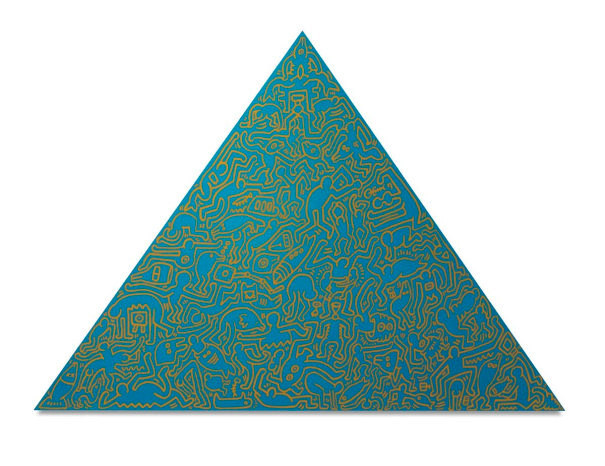
Pyramid Teal — Keith Haring. Available at Guy Hepner, New York.
Among the recurring motifs in Keith Haring's extensive body of work, the pyramid holds particular significance. This ancient geometric form appears throughout his oeuvre, serving as a powerful connector between contemporary urban culture and timeless human expression. Haring was deeply interested in how symbols functioned across civilizations and eras, and the pyramid represented precisely this kind of transcultural communication.
The Pyramid series exemplifies Haring's masterful approach to color and form. Works such as Pyramid Teal, Pyramid Blue, Pyramid Gold, and Pyramid Yellow demonstrate his understanding of how chromatic variation could transform identical compositions into entirely distinct emotional experiences. Each color choice carries its own psychological weight - the contemplative depth of blue, the luxurious warmth of gold, the refreshing vitality of teal, the optimistic brightness of yellow.
In these works, Haring's characteristic figures climb, support, and interact with the pyramid structure, suggesting themes of collective human endeavor, social hierarchy, and spiritual aspiration. The pyramid becomes both a literal architectural reference and a metaphor for human achievement - built through cooperation, reaching toward something greater than the individual. This layered meaning typifies Haring's ability to create images that function simultaneously as accessible visual pleasure and profound philosophical commentary.
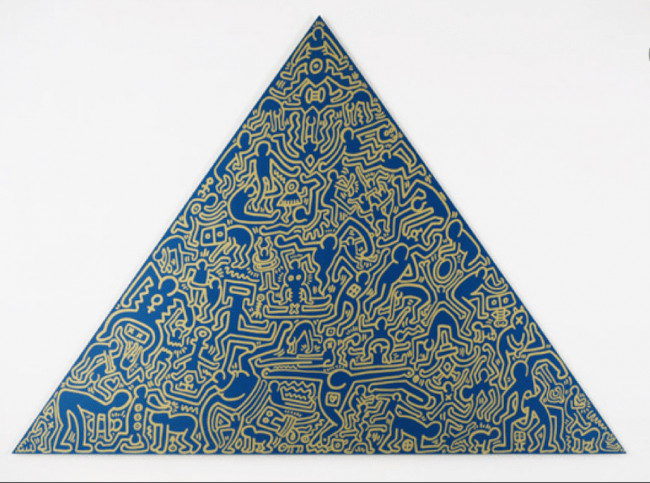
Pyramid Blue — Keith Haring. Available at Guy Hepner, New York.
The Pyramids composition, featuring Haring's signature interlocking figures arranged in triangular formation, further explores these themes. Human bodies become the building blocks themselves, their interconnection forming the sacred geometry that ancient civilizations believed held cosmic significance. Haring strips away historical specificity to reveal universal truths about human connection and collective purpose.
Keith Haring's position in the contemporary art market has strengthened considerably over the past two decades. According to data from Christie's and Sotheby's, demand for Haring's work spans from emerging collectors acquiring prints and multiples to established collectors competing for major paintings and sculptures. His auction records reflect this broad-based appeal - works regularly exceed estimates, driven by genuine passion rather than mere speculation.
The Art Basel and UBS Global Art Market Report consistently identifies Haring as one of the most sought-after post-war American artists, with particularly strong interest from collectors in Asia, Europe, and North America. This geographic diversity of demand provides stability to his market while reflecting the universal appeal of his visual language.
Haring's prints and multiples represent an especially compelling entry point for collectors. Created during his lifetime with his direct involvement, these works capture the essential energy of his practice while remaining accessible at price points below his unique works. The Pyramid series, with its variations in color and its potent symbolic content, offers collectors the opportunity to acquire historically significant Haring imagery with strong provenance.
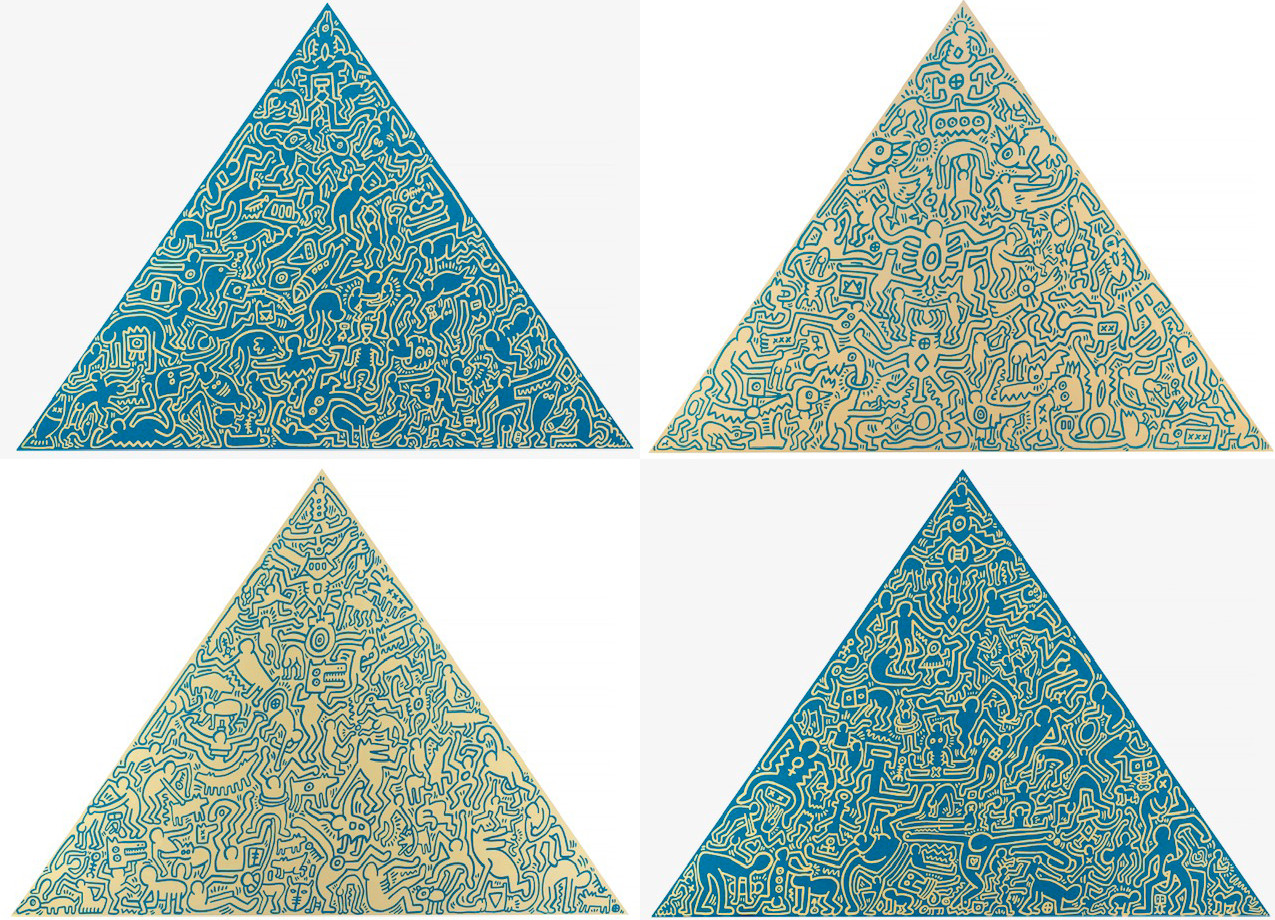
Pyramids — Keith Haring. Available at Guy Hepner, New York.
What distinguishes Haring in today's market is the authenticity of collector enthusiasm. Unlike artists whose prices are driven primarily by financial speculation, Haring's collectors typically demonstrate genuine emotional connection to his work. They respond to his message of hope, inclusion, and human dignity - themes that feel increasingly urgent in our current moment. This authentic demand creates a healthier, more sustainable market than one built purely on investment calculations.
Keith Haring's tragically brief career - he died from AIDS-related complications in 1990 at age thirty-one - produced an astonishing body of work that continues to influence artists, designers, and cultural practitioners worldwide. His commitment to using art as a tool for social change, particularly his activism around AIDS awareness, LGBTQ rights, and anti-apartheid causes, established a model for engaged artistic practice that remains relevant today.
The Keith Haring Foundation, established by the artist shortly before his death, continues his philanthropic vision by supporting AIDS organizations and children's programs while maintaining the integrity of his artistic legacy. This institutional stewardship ensures that Haring's work remains properly documented, exhibited, and understood.
Guy Hepner is pleased to offer exceptional works from Keith Haring's celebrated Pyramid series, including Pyramid Teal, Pyramid Blue, Pyramid Gold, Pyramid Yellow, and Pyramids. These works represent a significant opportunity to acquire iconic imagery from one of the most important American artists of the late twentieth century. Our gallery provides comprehensive provenance documentation, condition reporting, and advisory services to ensure collectors make informed acquisitions. For pricing, availability, and additional information regarding these Keith Haring works or other pieces in our inventory, we invite collectors to contact Guy Hepner directly.
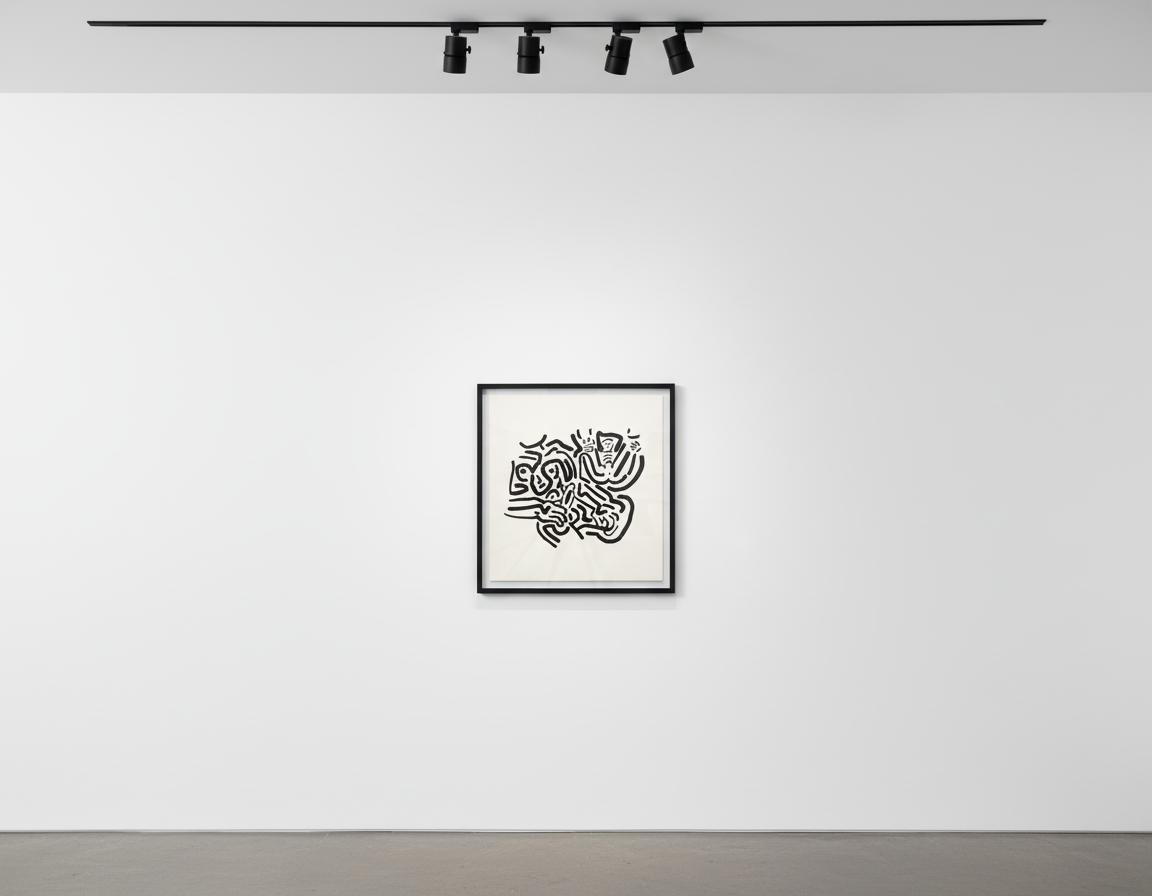
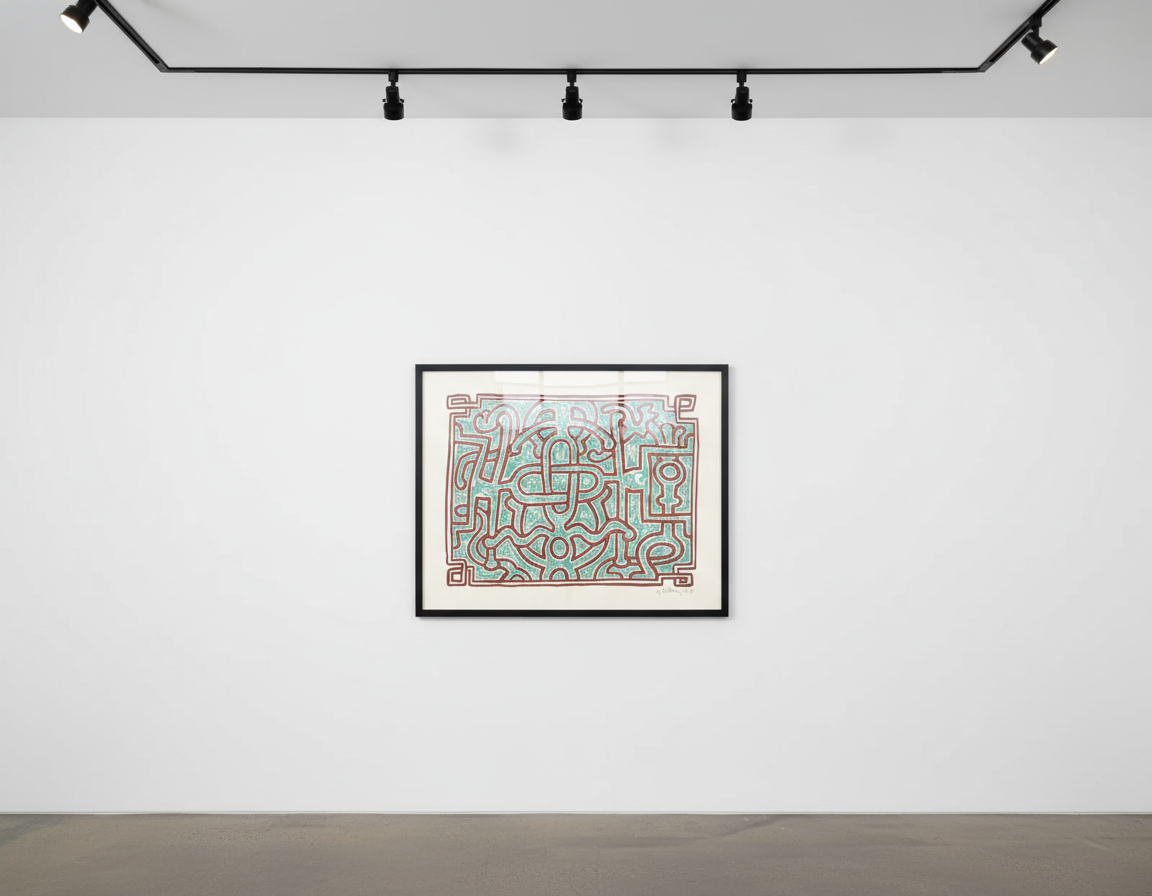
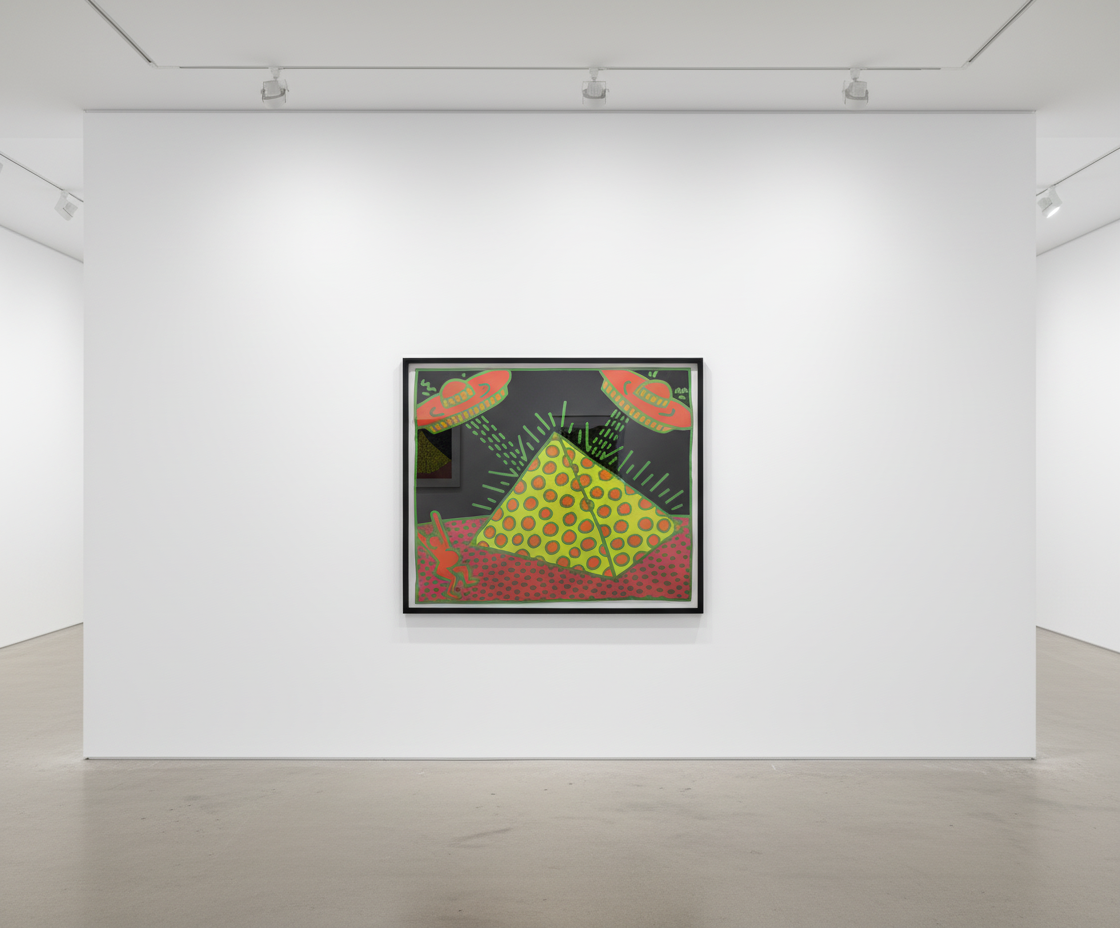
Explore Keith Haring prints for sale at Guy Hepner: Andy Mouse, Apocalypse, Bad Boys, Chocolate Buddha, Fertility.
Related Series