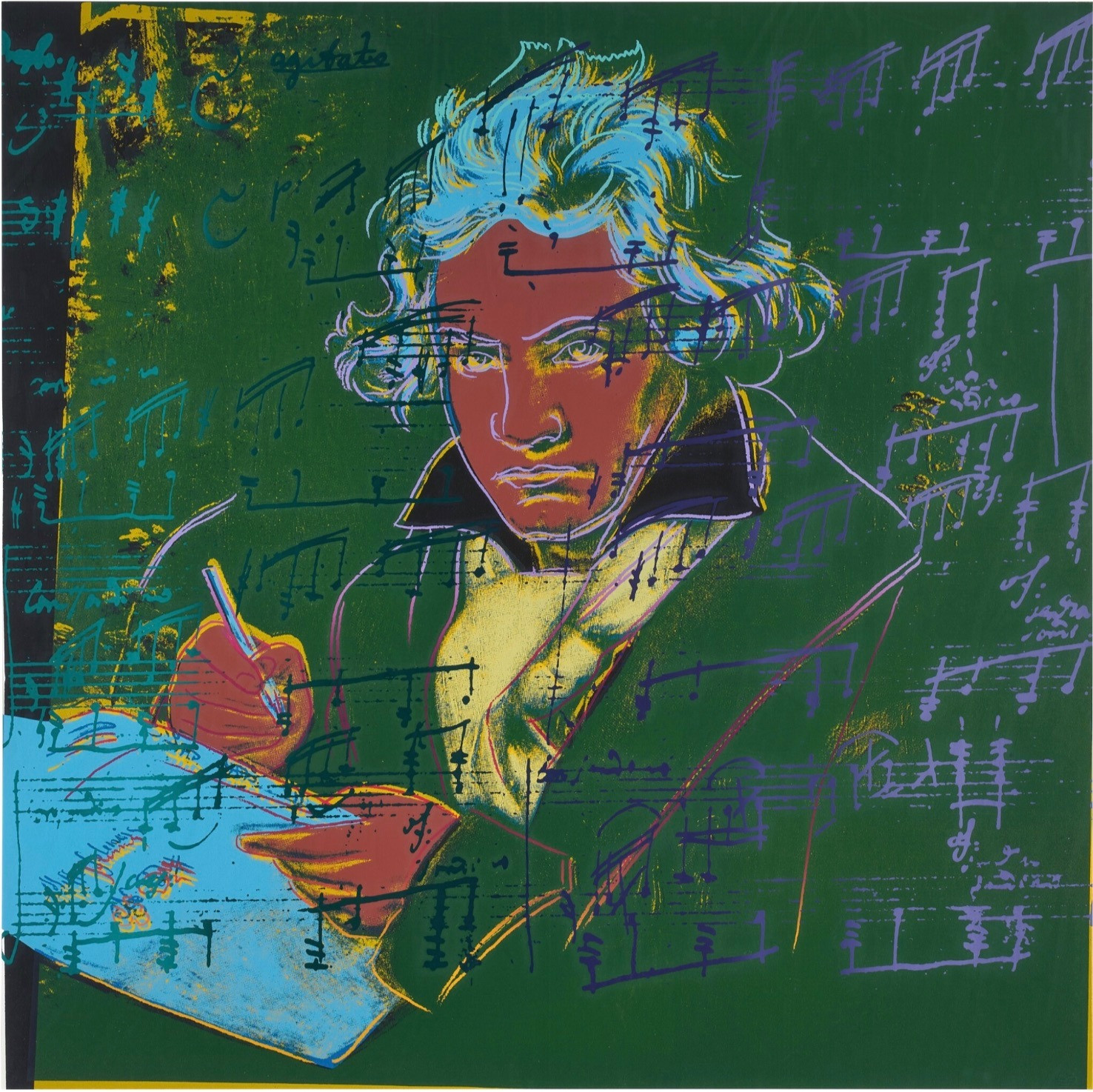
Beethoven

Andy Warhol remains one of the most influential and recognizable figures in contemporary art history, a visionary who fundamentally transformed how we perceive the relationship between high culture and popular imagery. While the artist is celebrated for his iconic depictions of Campbell's Soup cans, Marilyn Monroe, and Elvis Presley, his lesser-known works often reveal the most profound depths of his artistic philosophy. The Andy Warhol Beethoven series, created in 1987 during the final year of his life, stands as a remarkable testament to the artist's evolving vision and his willingness to bridge seemingly disparate cultural worlds. This collection of screenprints represents not merely a departure from his typical subject matter but a sophisticated meditation on genius, suffering, and the eternal nature of artistic legacy.
The Andy Warhol Beethoven series emerged from an unexpected commission that would become one of the artist's final significant bodies of work. German art dealer Hermann Wünsche approached Warhol to create a series celebrating the legendary composer Ludwig van Beethoven, a figure whose cultural stature transcended national boundaries and historical periods. For Warhol, this commission presented an intriguing challenge - to apply his signature Pop Art methodology to a subject rooted in classical European high culture rather than American consumer society.
Warhol drew his source imagery from the celebrated 1820 portrait of Beethoven painted by Joseph Karl Stieler, arguably the most recognizable depiction of the composer in existence. This notable portrait captures Beethoven in a moment of intense creative focus, clutching the score to his Missa Solemnis, his penetrating gaze and characteristically wild hair conveying both the torment and transcendence of artistic genius. By selecting this particular image, Warhol demonstrated his acute understanding of iconography - choosing a visual representation that had already achieved near-universal recognition, much like the celebrity photographs and commercial imagery he had transformed throughout his career.
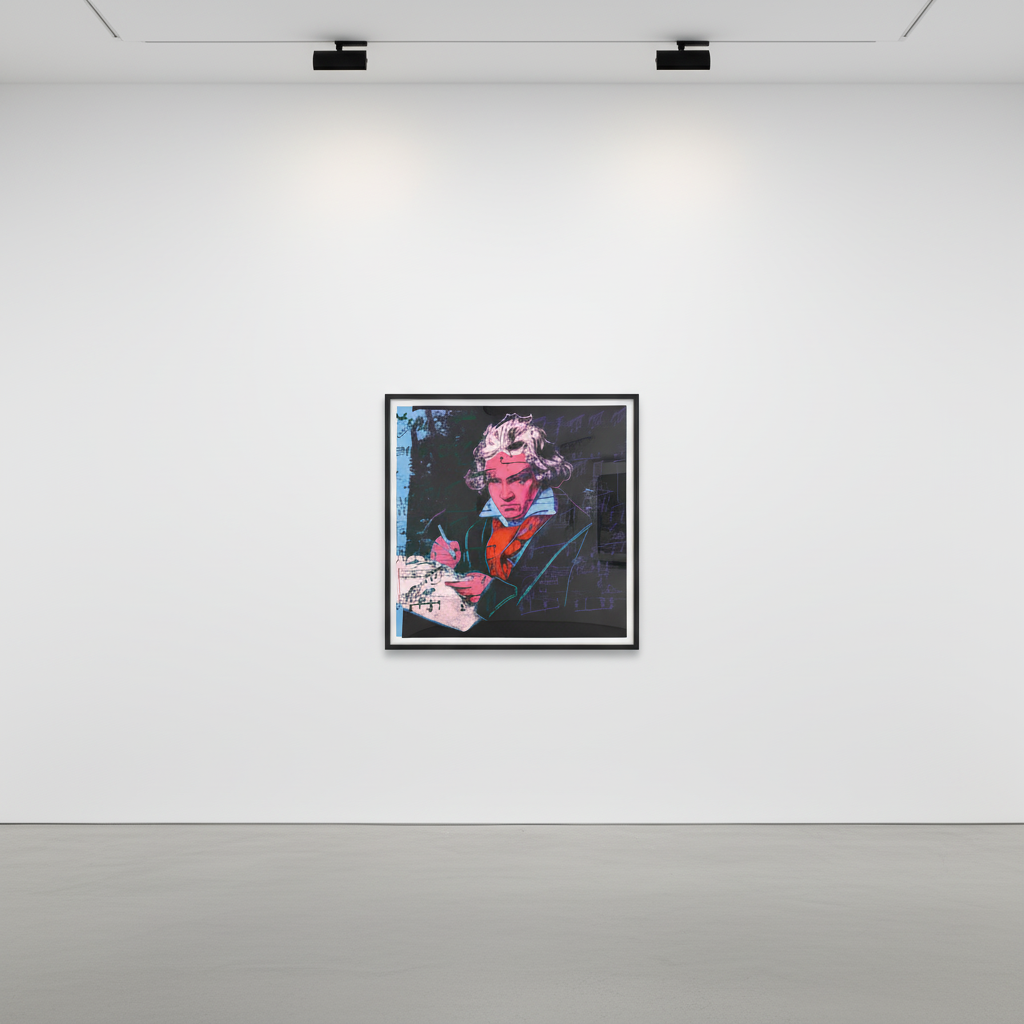
Beethoven F.S. II 392 — Andy Warhol. Available at Guy Hepner, New York.
The series comprises four distinct screenprints, each presenting the same foundational image of Beethoven rendered in dramatically different color variations. Through his manipulation of vibrant hues - ranging from electric blues and vivid yellows to deep reds and stark blacks - Warhol transformed the somber nineteenth-century portrait into something unmistakably contemporary. This chromatic experimentation aligned with his established practice of serial repetition with variation, a technique that simultaneously honored and subverted traditional notions of artistic originality.
The timing of the Andy Warhol Beethoven series carries profound significance when examined within the context of the artist's biography. Created just months before Warhol's unexpected death in February 1987, these works invite interpretation as a meditation on artistic immortality and the relationship between creative suffering and enduring fame. Beethoven, who composed some of his greatest works while battling progressive deafness, embodied the romantic ideal of the tortured genius - a figure whose personal anguish became inseparable from his artistic achievement.
Warhol, ever the observer of fame's mechanisms, recognized in Beethoven a kindred spirit of sorts - an artist whose image had transcended his actual work to become a free-floating cultural symbol. Just as Marilyn Monroe existed in the public consciousness as an icon divorced from the complexities of Norma Jeane Mortenson, Beethoven had become a shorthand for classical genius, his furrowed brow and disheveled appearance serving as immediately recognizable signifiers of creative intensity.
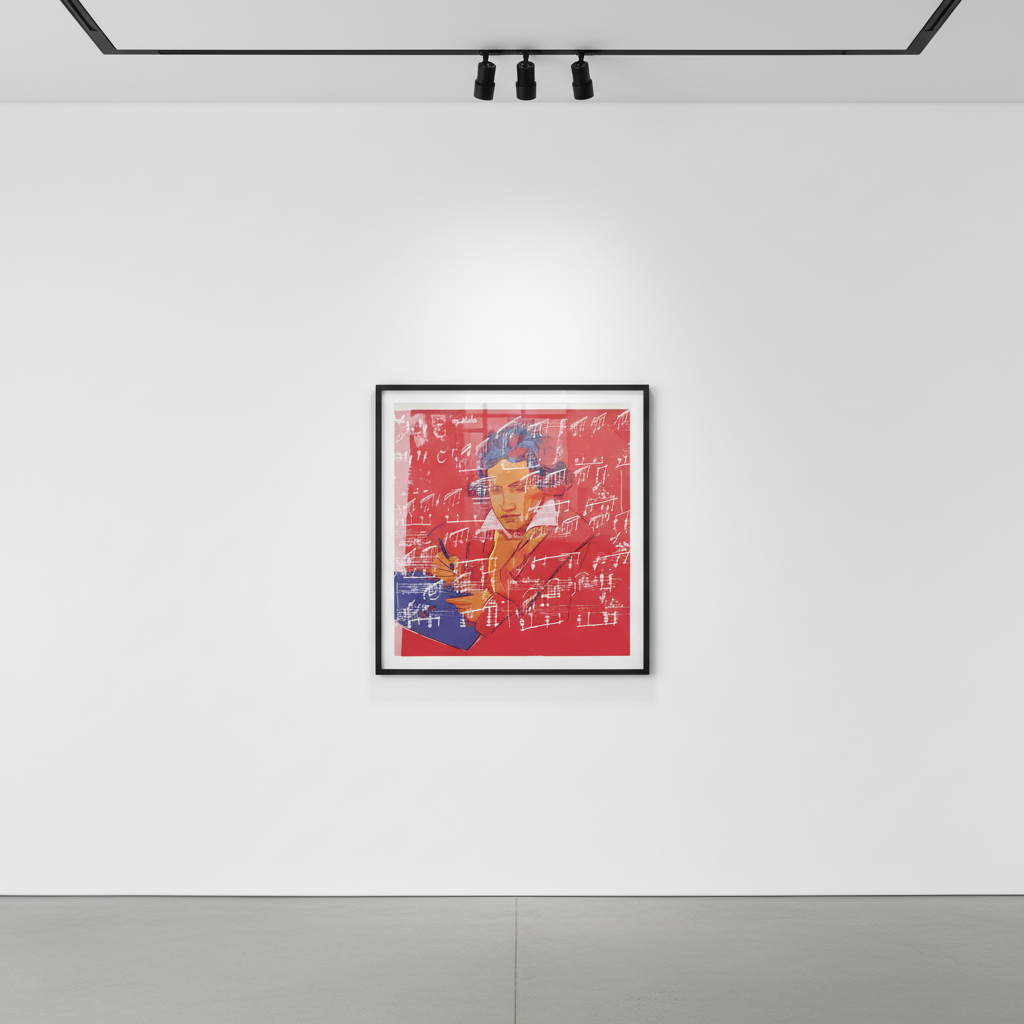
Beethoven Trial Proof TP 18/72 — Andy Warhol. Available at Guy Hepner, New York.
The decision to render Beethoven through the Pop Art lens also represented Warhol's characteristic democratization of culture. By subjecting a figure from the classical canon to the same treatment he applied to soup cans and celebrities, Warhol collapsed hierarchies between high and low culture, suggesting that all images ultimately function as commodities within the contemporary visual economy. This philosophical stance, radical when Warhol first articulated it in the 1960s, found renewed expression in the Beethoven series, proving that even in his final works, the artist remained committed to challenging cultural assumptions.
The Andy Warhol Beethoven prints occupy a distinctive position within the artist's extensive print oeuvre and the broader contemporary art market. According to the Art Basel and UBS Global Art Market Report, Warhol consistently ranks among the highest-selling artists at auction worldwide, with his prints representing a significant portion of market activity. The Beethoven series, given its creation during the artist's final year and its unusual subject matter, holds particular appeal for collectors seeking works that demonstrate the full scope of Warhol's artistic range.
Major auction houses including Christie's and Sotheby's have featured examples from the Beethoven series in significant sales, where they have attracted competitive bidding from collectors across multiple categories - those focused on Warhol's complete output, enthusiasts of classical music-related art, and investors recognizing the series' relative scarcity compared to the artist's more frequently reproduced subjects. The trial proofs from this series, which feature unique color combinations and experimental variations, command particular attention for their rarity and their insight into Warhol's creative process.
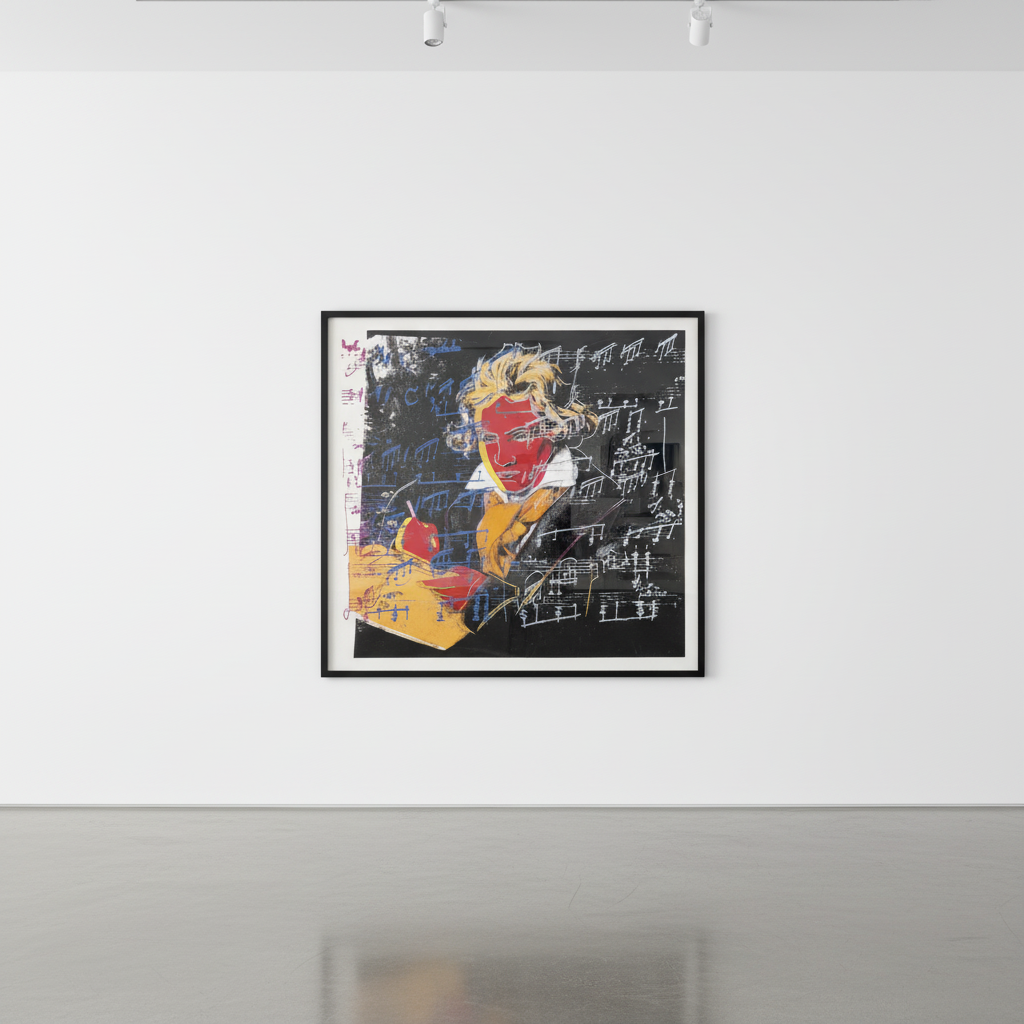
Beethoven Trial Proof TP 71/72 — Andy Warhol. Available at Guy Hepner, New York.
For discerning collectors, the Andy Warhol Beethoven series represents an opportunity to acquire works that combine blue-chip investment potential with genuine art historical significance. These prints demonstrate Warhol's continued relevance and innovation until the very end of his career, offering tangible evidence that his artistic vision remained vital and evolving. The series also appeals to collectors seeking to diversify their holdings beyond Warhol's most commonly encountered imagery, providing a sophisticated entry point into the artist's later production.
Guy Hepner is proud to offer exceptional examples from the Andy Warhol Beethoven series, including rare trial proofs that showcase the artist's experimental approach to this distinctive body of work. As a gallery specializing in blue-chip contemporary art, Guy Hepner provides collectors with access to museum-quality works accompanied by comprehensive provenance documentation and authentication. Our expert team offers personalized guidance for both emerging and established collectors seeking to acquire significant works from Warhol's celebrated print portfolio. To inquire about available Andy Warhol Beethoven prints or to discuss acquisition opportunities, please contact Guy Hepner directly.
Browse Andy Warhol prints at Guy Hepner: Andy Warhol art for sale | Sell your Warhol
Explore Andy Warhol prints for sale at Guy Hepner: Beethoven, 25 Cats Named Sam, A Gold Book, A La Recherche Du Shoe Perdu, Alexander the Great.
Related Series