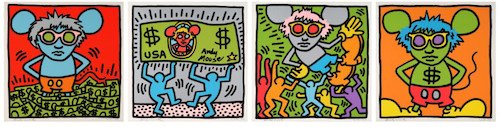
Andy Mouse

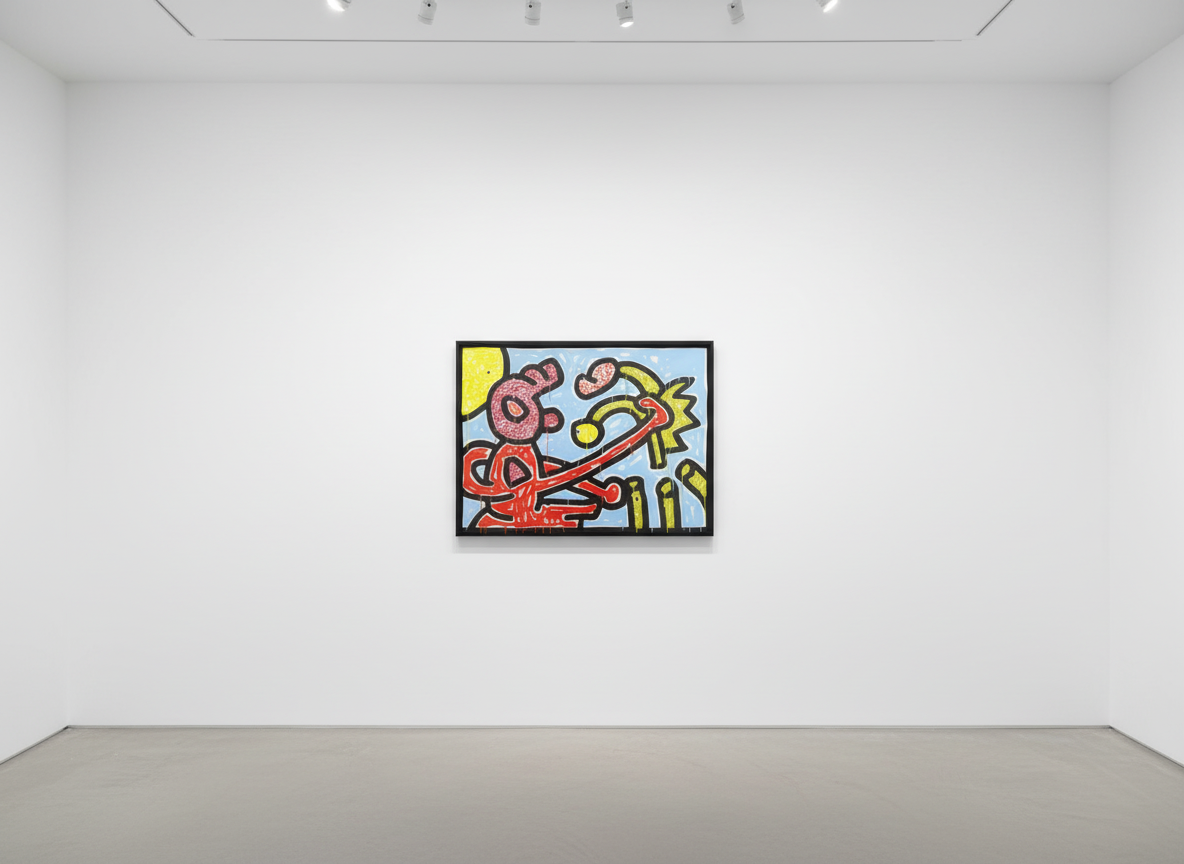
Keith Haring stands as one of the most influential American artists of the twentieth century, a creative force whose bold lines and pulsating figures transcended the boundaries between high art and popular culture. Born in Reading, Pennsylvania in 1958, Haring developed an early fascination with drawing, influenced by his father's amateur cartooning and the ubiquitous visual language of Walt Disney and Dr. Seuss. This foundational appreciation for accessible imagery would later define his revolutionary approach to art-making, democratizing contemporary art in ways that continue to resonate with collectors and institutions worldwide.
Haring's arrival in New York City in 1978 marked a pivotal turning point in both his career and the trajectory of contemporary art. Enrolling at the School of Visual Arts, he immersed himself in the city's thriving alternative art scene, forging connections with fellow artists Jean-Michel Basquiat, Kenny Scharf, and the burgeoning hip-hop and graffiti movements that were reshaping urban creative expression. His deep engagement with semiotics during his studies at the New School profoundly influenced his artistic development, leading him to create a visual vocabulary that communicated complex ideas through seemingly simple symbols and figures.
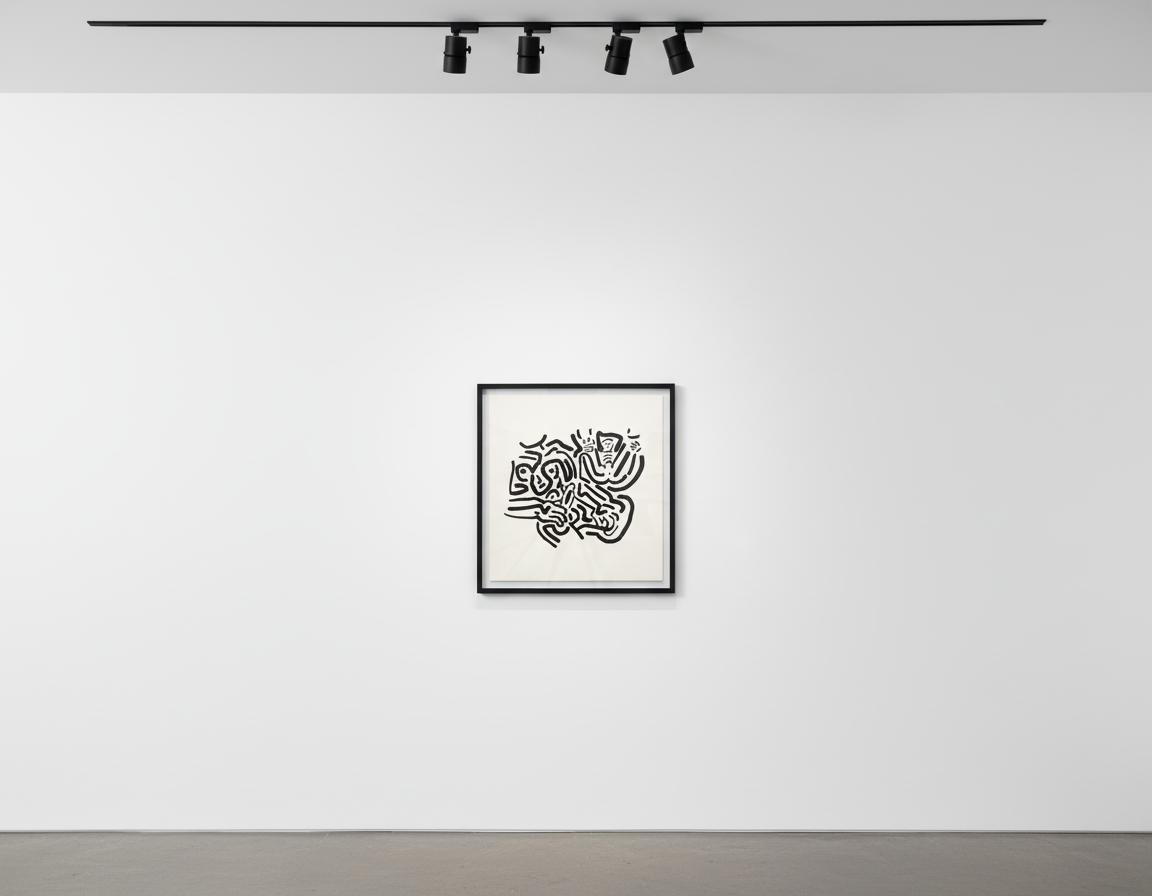
Pyramid Teal — Keith Haring. Available at Guy Hepner, New York.
The subway stations of New York City became Haring's first public gallery space, where he transformed blank advertising panels covered in matte black paper into canvases for his iconic chalk drawings. Between 1980 and 1985, he created hundreds of these ephemeral works, introducing commuters to his distinctive visual language and establishing an unprecedented dialogue between artist and public. These Subway Drawings, executed rapidly and often witnessed by curious onlookers, represented a radical democratization of art - making contemporary visual culture accessible to anyone who rode the train.
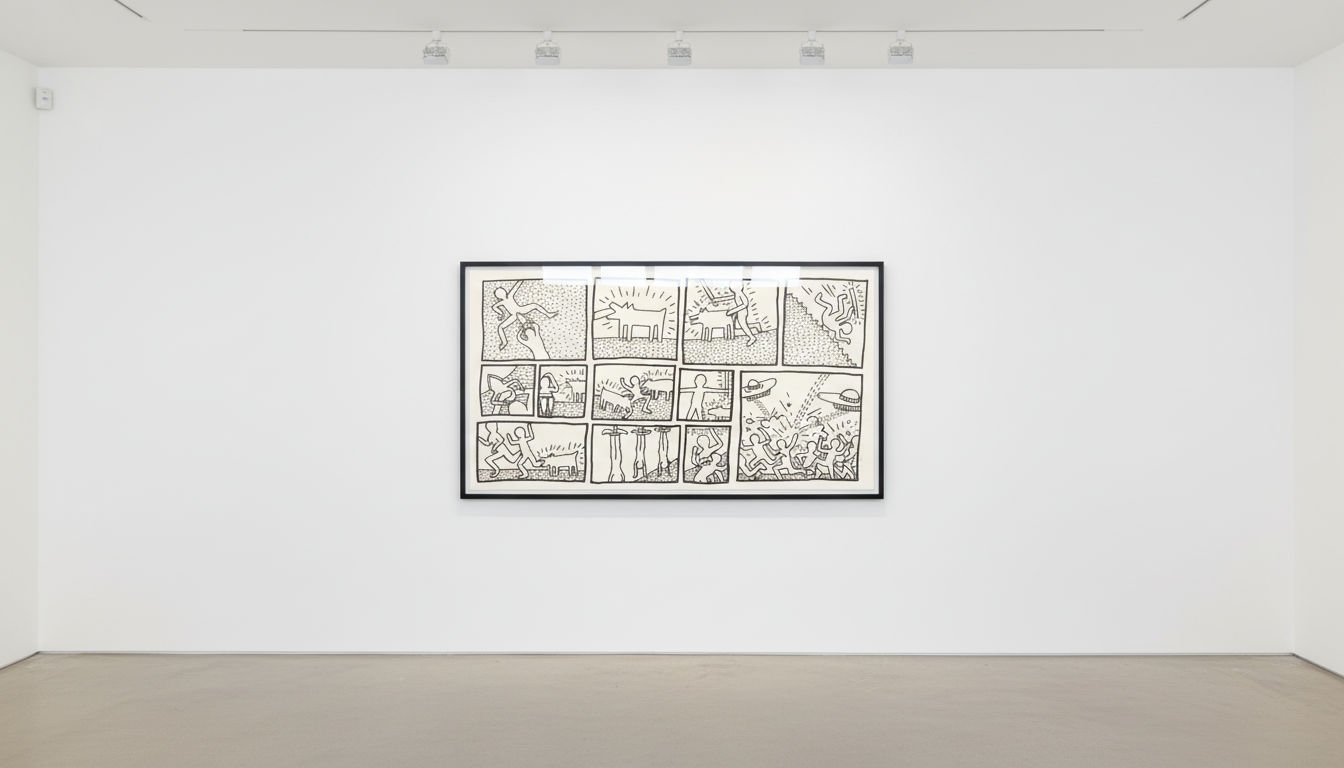
Keith Haring developed a lexicon of symbols that carried profound meaning beneath their deceptively simple surfaces. Among his most recognizable motifs is the barking dog, which he introduced in his subway drawings series in 1980. Contrary to conventional associations with loyalty and companionship, Haring imbued the barking dog with deeper significance, warning against the abuse of power in everyday life. This canine figure, depicted with angular lines radiating from its open mouth, served as a watchdog against authoritarianism, corruption, and social injustice. By subverting traditional interpretations, Haring prompted viewers to reevaluate structures of authority and influence that pervade modern society.
Similarly, Haring's radiant baby motif emerged as a poignant response to religious iconography, reflecting the concerns and hopes of his generation. Symbolizing innocence, purity, and the potential for human renewal, the radiant baby stood in deliberate contrast to conventional depictions of divinity. The crawling infant, surrounded by lines suggesting energy and life force, became an emblem of optimism and possibility. However, as Haring's artistic journey progressed and he confronted his own HIV-positive diagnosis in 1988, the baby motif evolved to encompass more nuanced narratives, addressing themes of vulnerability, mortality, and the urgent need for AIDS awareness and activism.
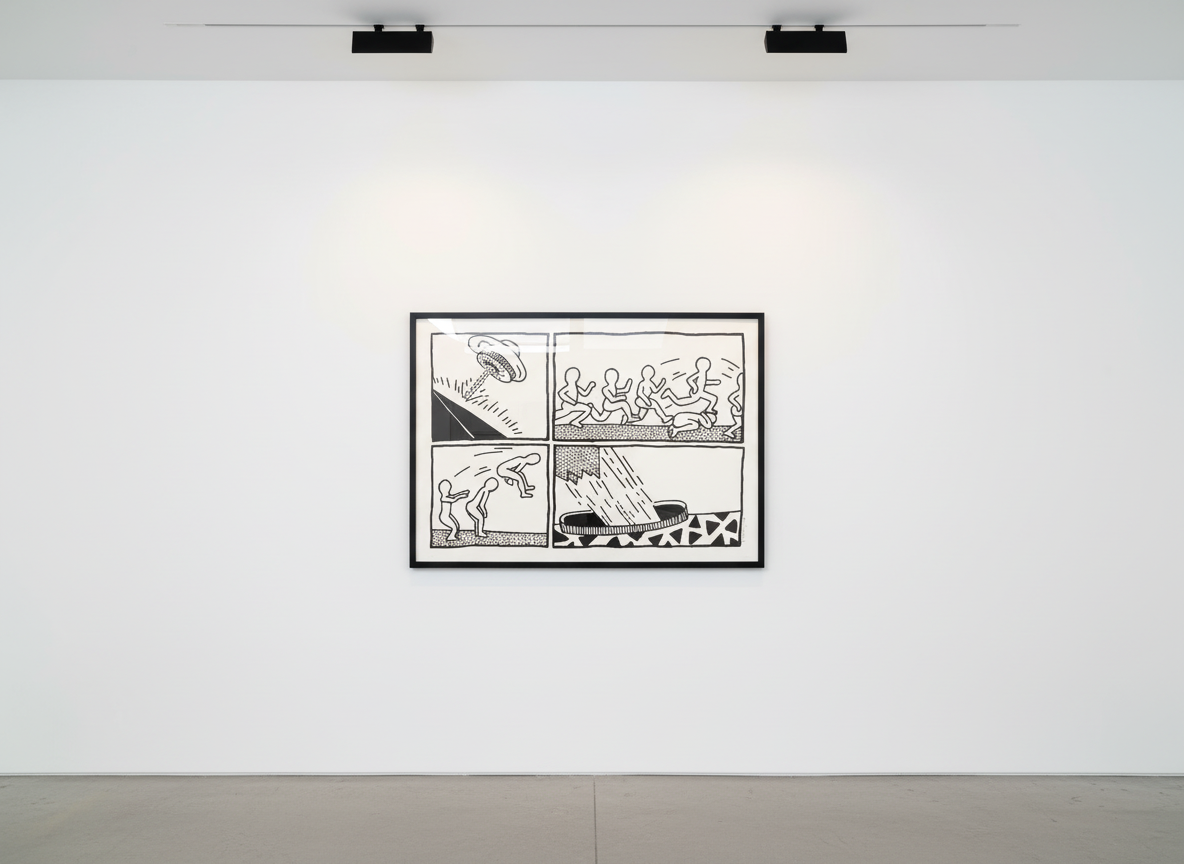
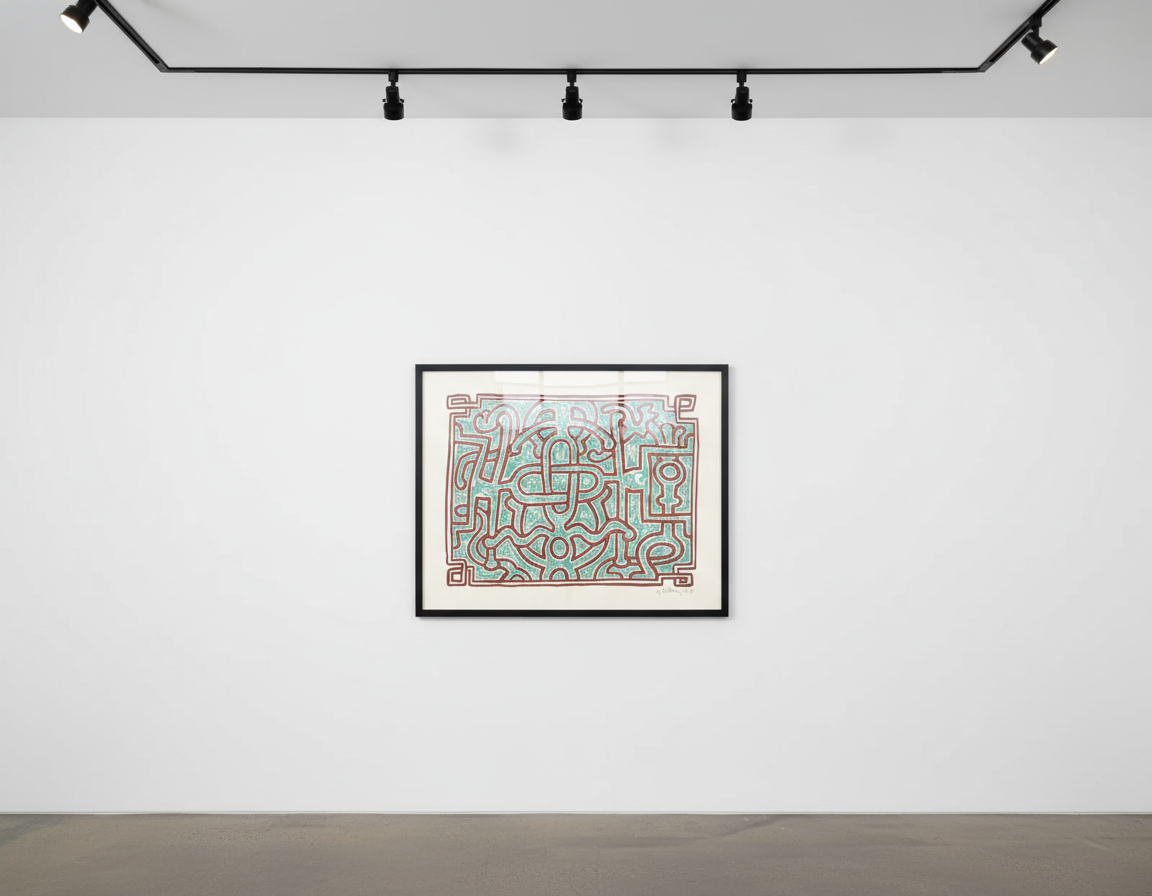
Pyramid Blue — Keith Haring. Available at Guy Hepner, New York.
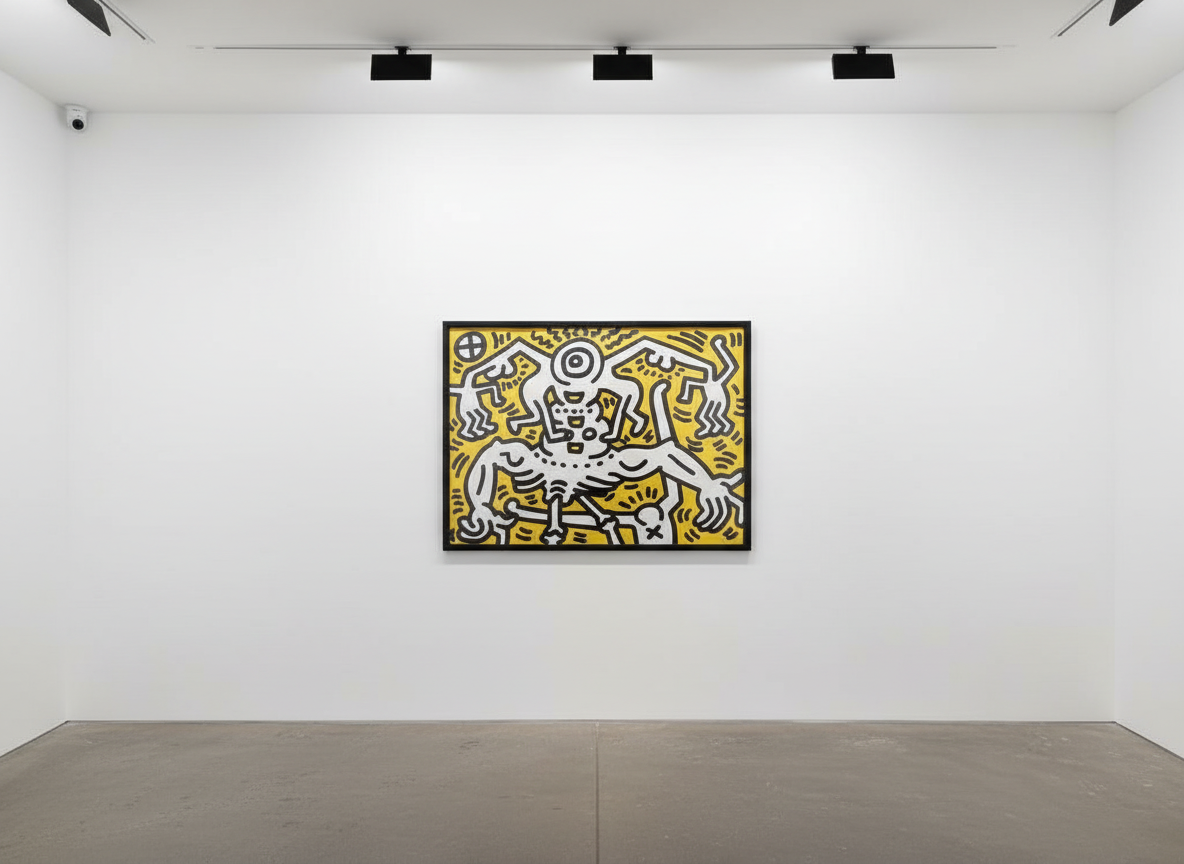
The pyramid represents another essential element within Haring's symbolic repertoire, connecting his contemporary visual language to ancient iconography and universal human experience. In works such as the Pyramid series, Haring employed this timeless geometric form to explore themes of power, spirituality, and collective human achievement. The pyramid's associations with ancient Egyptian civilization - representing both architectural triumph and spiritual transcendence - provided Haring with a vessel for examining how symbols of authority and mysticism persist across cultures and centuries. His pyramid compositions, rendered in his characteristic bold lines and vibrant colours, bridge the gap between ancient symbolism and contemporary Pop Art sensibilities.
Keith Haring's position within the contemporary art market reflects his enduring cultural relevance and the sustained demand for his distinctive visual contributions. According to data from major auction houses including Christie's and Sotheby's, Haring's works consistently achieve strong results across all categories, from major paintings to prints and drawings. The Art Basel and UBS Global Art Market Report has repeatedly highlighted the strength of the post-war and contemporary American art sector, within which Haring remains a cornerstone artist whose works attract both established collectors and new market participants.
The accessibility of Haring's artistic production - spanning monumental paintings, public murals, sculptures, and carefully editioned prints - creates multiple entry points for collectors at various levels of engagement. His print editions, produced with the same intentionality and visual impact as his unique works, offer collectors the opportunity to acquire museum-quality pieces that carry the full force of Haring's artistic vision. Works from series such as the Pyramid editions demonstrate his mastery of colour, composition, and symbolic communication while remaining attainable for discerning collectors building significant contemporary art holdings.
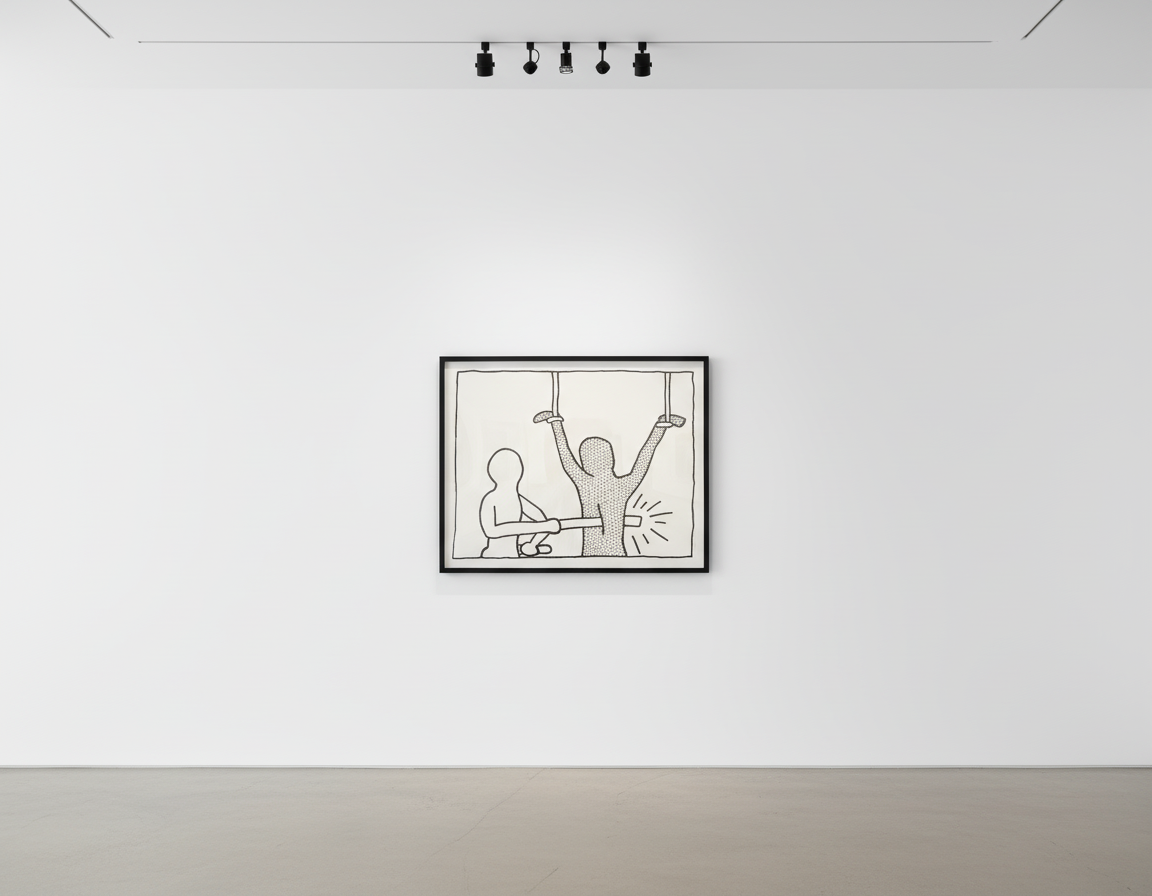
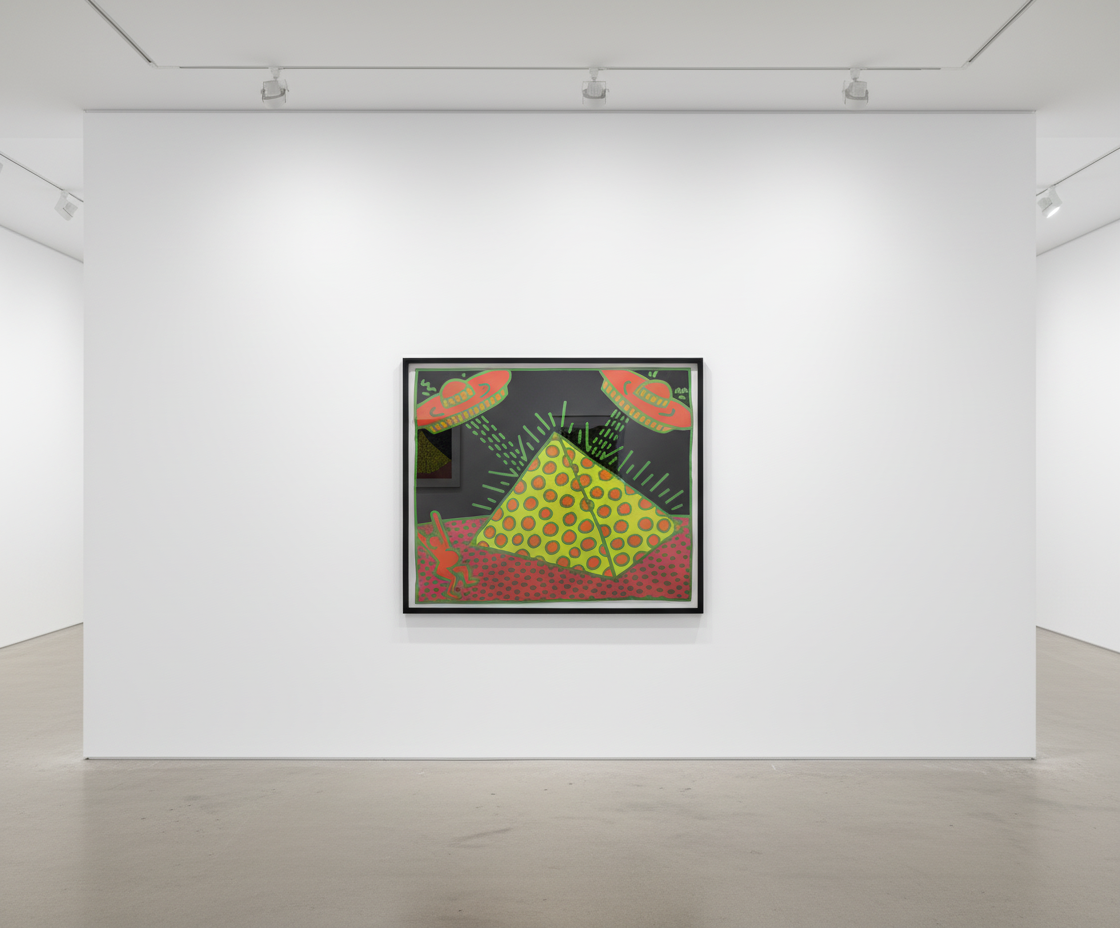
Pyramids — Keith Haring. Available at Guy Hepner, New York.
Haring's legacy extends far beyond market metrics, encompassing his profound influence on subsequent generations of artists, his pioneering approach to art accessibility through his Pop Shop concept, and his tireless activism on behalf of AIDS awareness, children's causes, and social justice. His establishment of the Keith Haring Foundation in 1989, shortly before his death from AIDS-related complications in 1990 at age thirty-one, ensured that his commitment to these causes would continue in perpetuity. For collectors, acquiring a Keith Haring work means participating in this legacy - owning not merely an object but a piece of cultural history that speaks to art's capacity for social engagement and universal communication.
Guy Hepner is proud to offer exceptional works by Keith Haring, including distinguished pieces from his celebrated Pyramid series. Our gallery's expertise in contemporary masters positions us uniquely to guide collectors through the acquisition of these significant works, providing comprehensive provenance documentation, condition reporting, and market analysis. We invite collectors to explore available Keith Haring editions and to contact our advisory team for private consultation regarding current inventory and acquisition opportunities. Whether you are establishing a new collection or adding to an existing holding of post-war and contemporary art, Guy Hepner offers the expertise and discretion that serious collectors require.
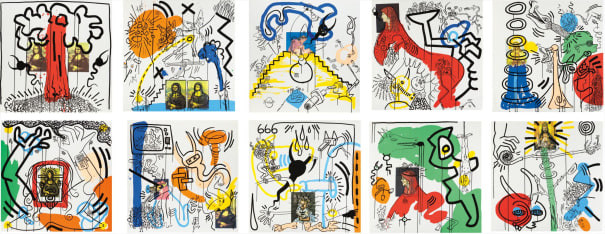
Explore Keith Haring prints for sale at Guy Hepner: Andy Mouse, Apocalypse, Bad Boys, Chocolate Buddha, Fertility.
Related Series