
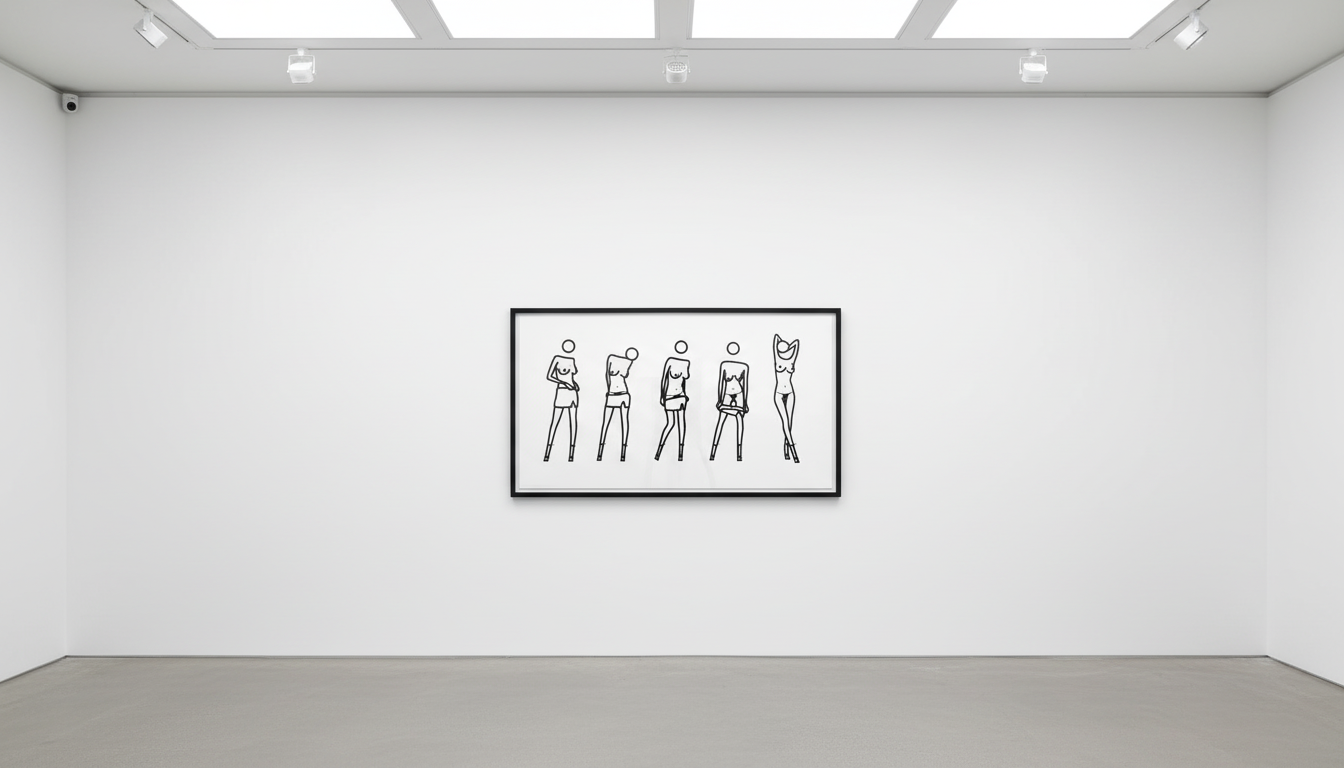
Bijou Gets Undressed
6 works

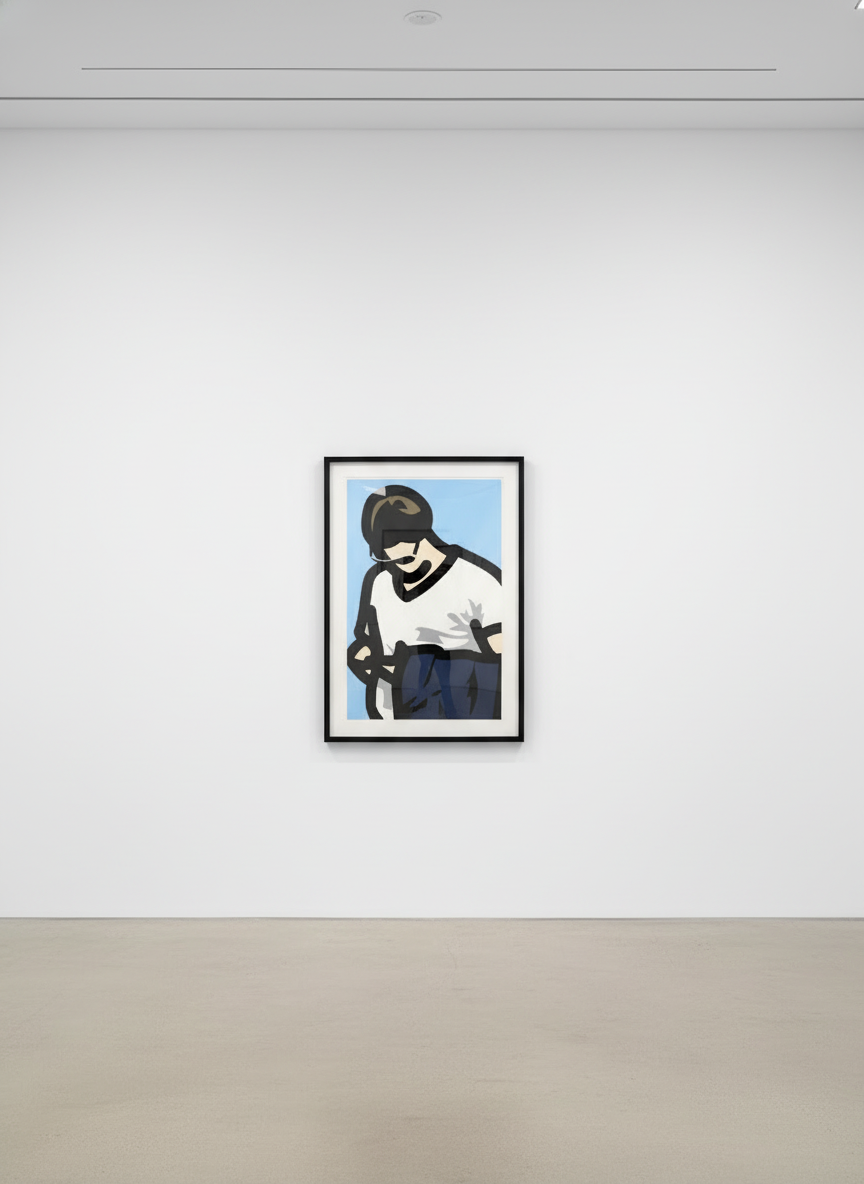
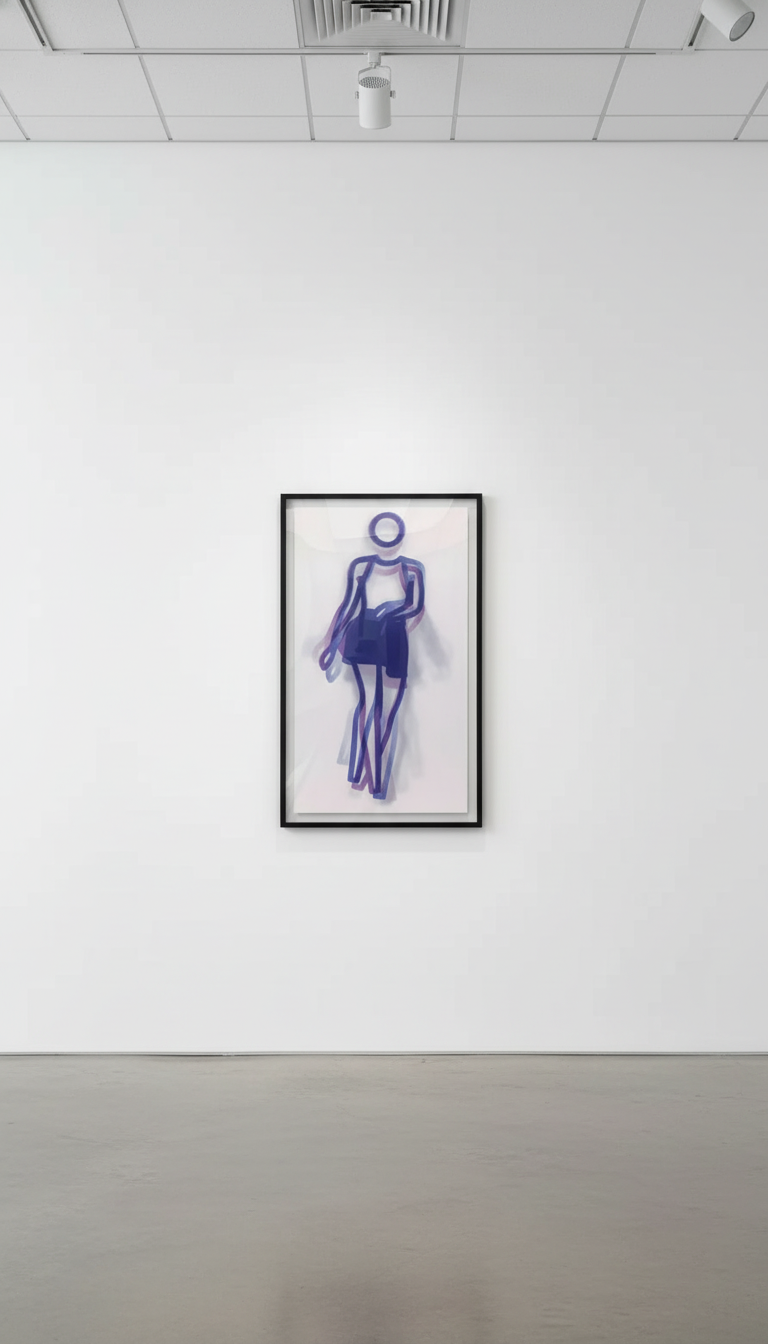
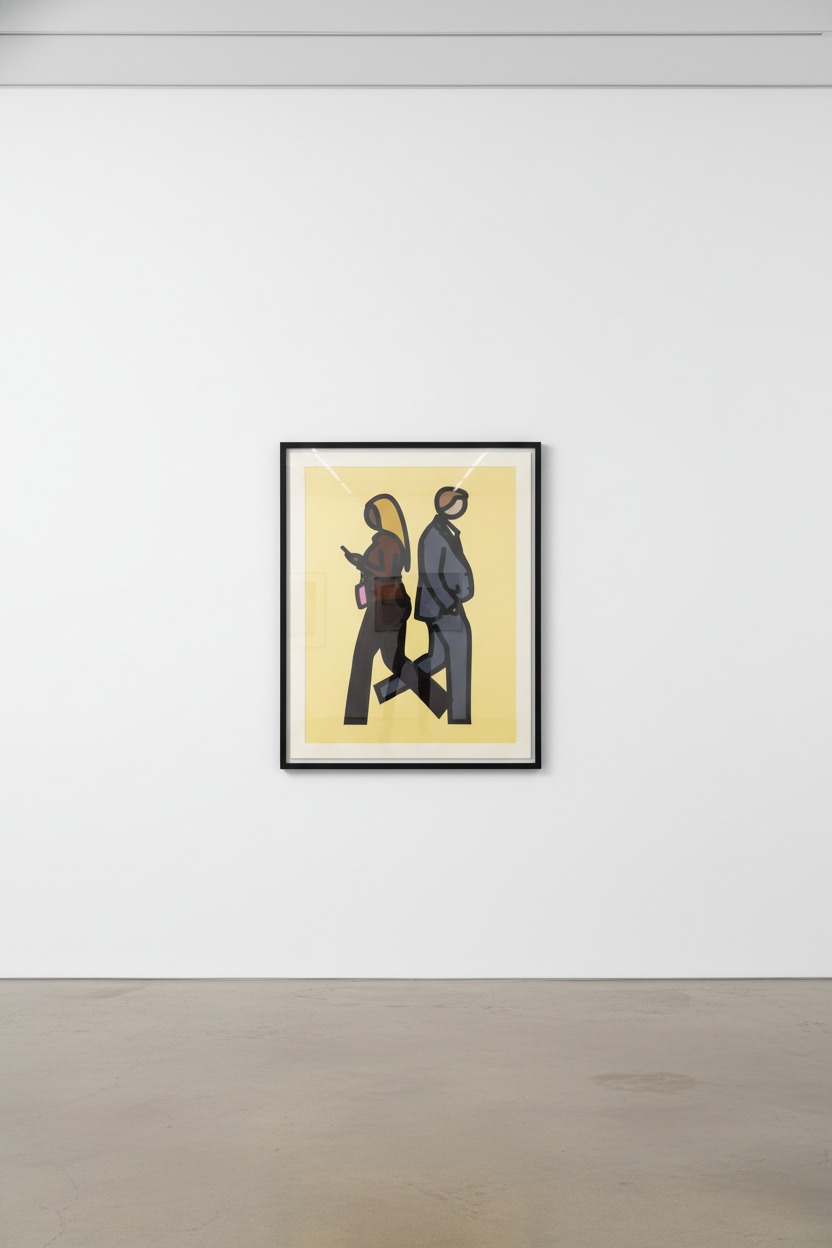
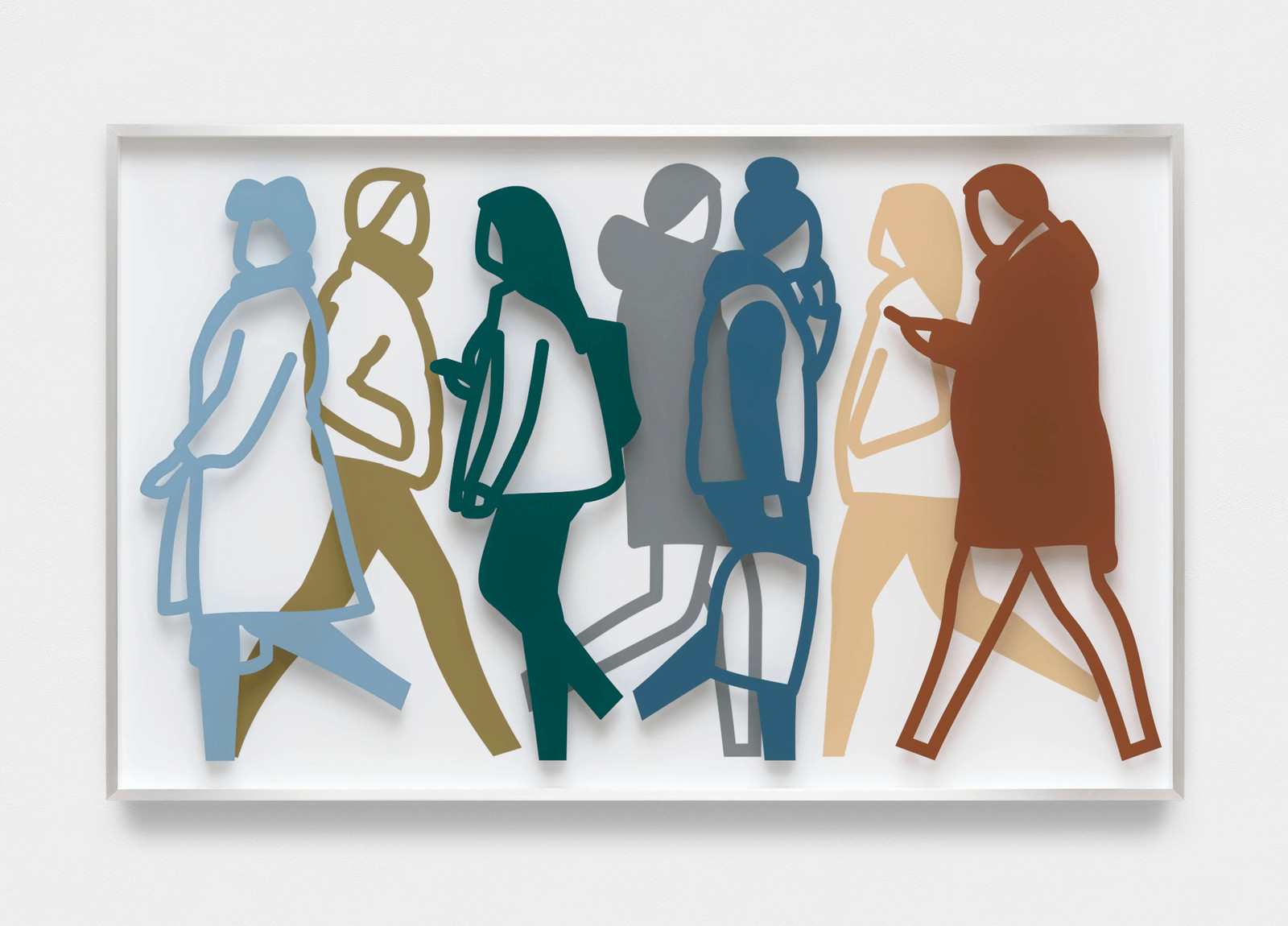
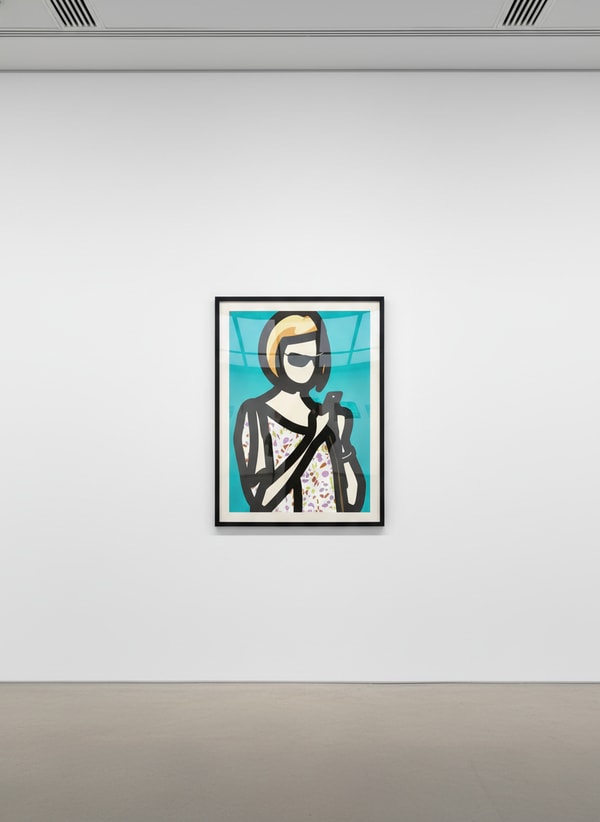
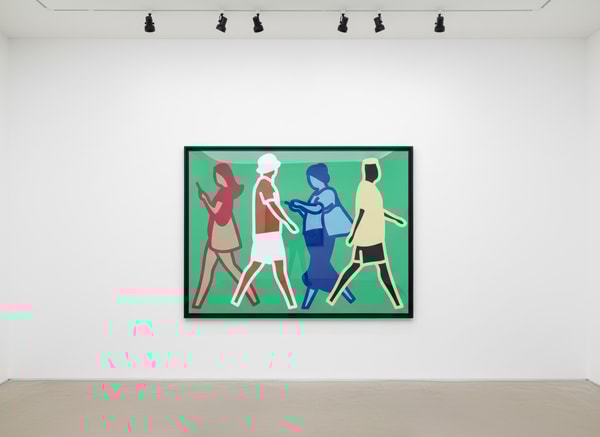
Tourist With Phone, 2014
Screen print
34 5/8 x 24 3/8 in 88 x 62 cm 40 1/8 x 29 3/4 in 102 x 75.5 cm
Edition of 20
Julian Opie's "Tourist Series" stands as a vibrant and incisive exploration of the theme of tourism, capturing the essence of travel and the ubiquitous figure of the tourist in contemporary culture. Created in the early 2000s, this series continues Opie's exploration of movement, identity, and the urban landscape, employing his signature style of simplified forms, bold outlines, and flat colors. Through the "Tourist Series," Opie delves into the experiences of global travelers, presenting them not just as observers of foreign landscapes but as integral components of the urban environments they traverse.The series is characterized by its depiction of figures equipped with cameras, maps, and backpacks, rendered in Opie's distinctive reductionist approach. These figures are often shown against the backdrop of iconic cityscapes or landscapes, distilled into their most recognizable elements. Opie's tourists are anonymous, defined by their posture and accessories rather than individual facial features, emphasizing the universality of the tourist experience. This anonymity invites viewers to project their own experiences and interpretations onto the figures, reflecting the shared nature of tourism as a global phenomenon.Opie's use of technology is central to the creation of the "Tourist Series." Drawing from photographs taken during his travels or sourced from public domains, Opie digitally manipulates these images to create compositions that straddle the line between representation and abstraction. This process highlights the mediated nature of tourism and the way in which our perceptions of places are shaped by photography and digital imagery. The series prompts viewers to consider how the act of tourism transforms both the observer and the observed, turning locations into landscapes to be consumed and documented.Color plays a crucial role in the "Tourist Series," with Opie employing a vivid palette to capture the excitement and vibrancy of travel. The contrast between the brightly colored figures and the often more subdued backgrounds underscores the transient presence of tourists within the spaces they visit. This use of color also serves to draw attention to the constructed nature of tourist experiences, which are often framed and filtered through the lens of cultural expectations and preconceptions.The "Tourist Series" also engages with themes of globalization and cultural exchange. By situating his generic tourist figures in various recognizable locales, Opie comments on the homogenizing effect of global tourism and the ways in which it shapes our understanding of place and identity. The series suggests a tension between the desire for authentic experiences and the often superficial nature of tourist encounters, highlighting the complexities of navigating cultural differences in a globalized world.Furthermore, the series reflects on the role of art in mediating our experiences of the world. Just as tourists seek to capture their travels through photographs and souvenirs, Opie captures the essence of tourism through his art, offering a critique of how we consume and represent landscapes and cultures. His work challenges viewers to think critically about the act of looking, whether as tourists in a foreign city or as observers of an artwork.In summary, Julian Opie's "Tourist Series" is a thought-provoking examination of the phenomenon of tourism, rendered in the artist's minimalist yet impactful style. Through this series, Opie offers insights into the nature of travel, the construction of identity, and the ways in which art can both reflect and critique cultural practices. The "Tourist Series" not only showcases Opie's technical skill and aesthetic sensibility but also underscores his ability to engage with complex social and cultural themes through his art.
Price on Application
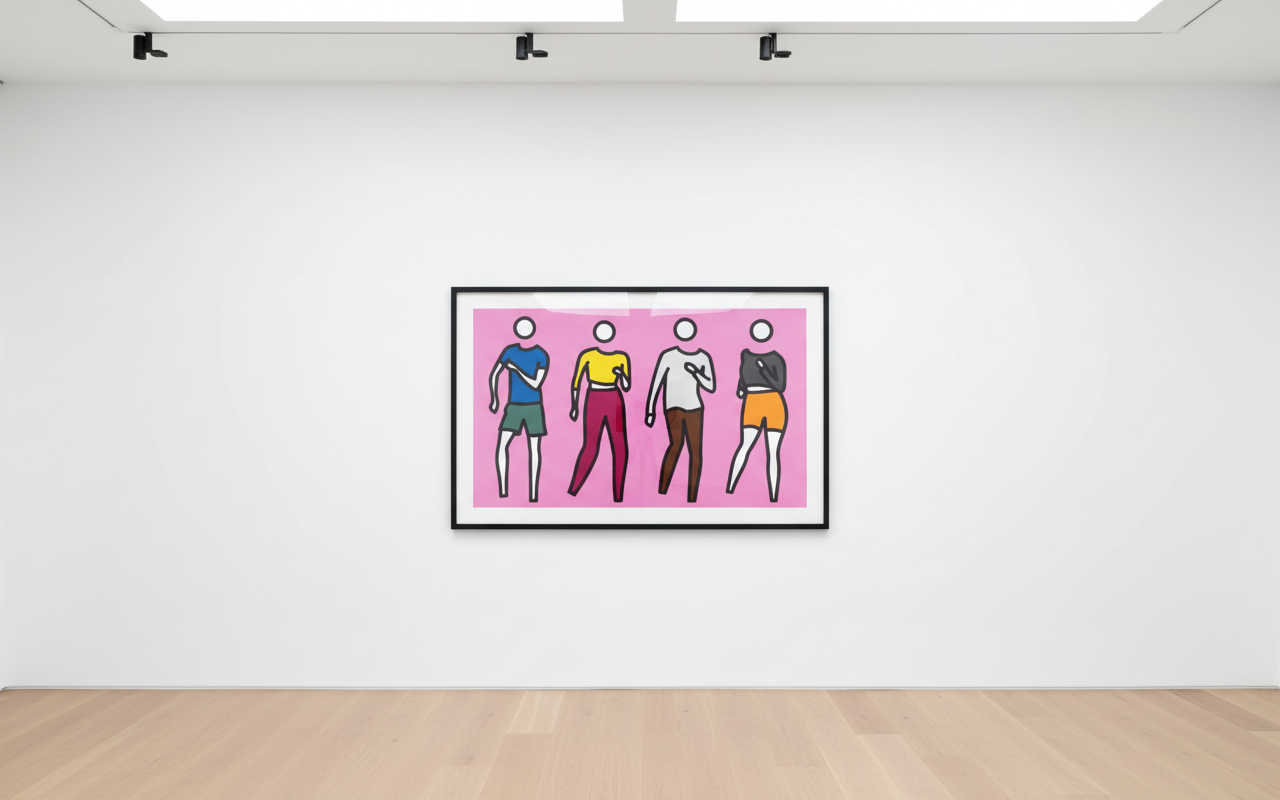
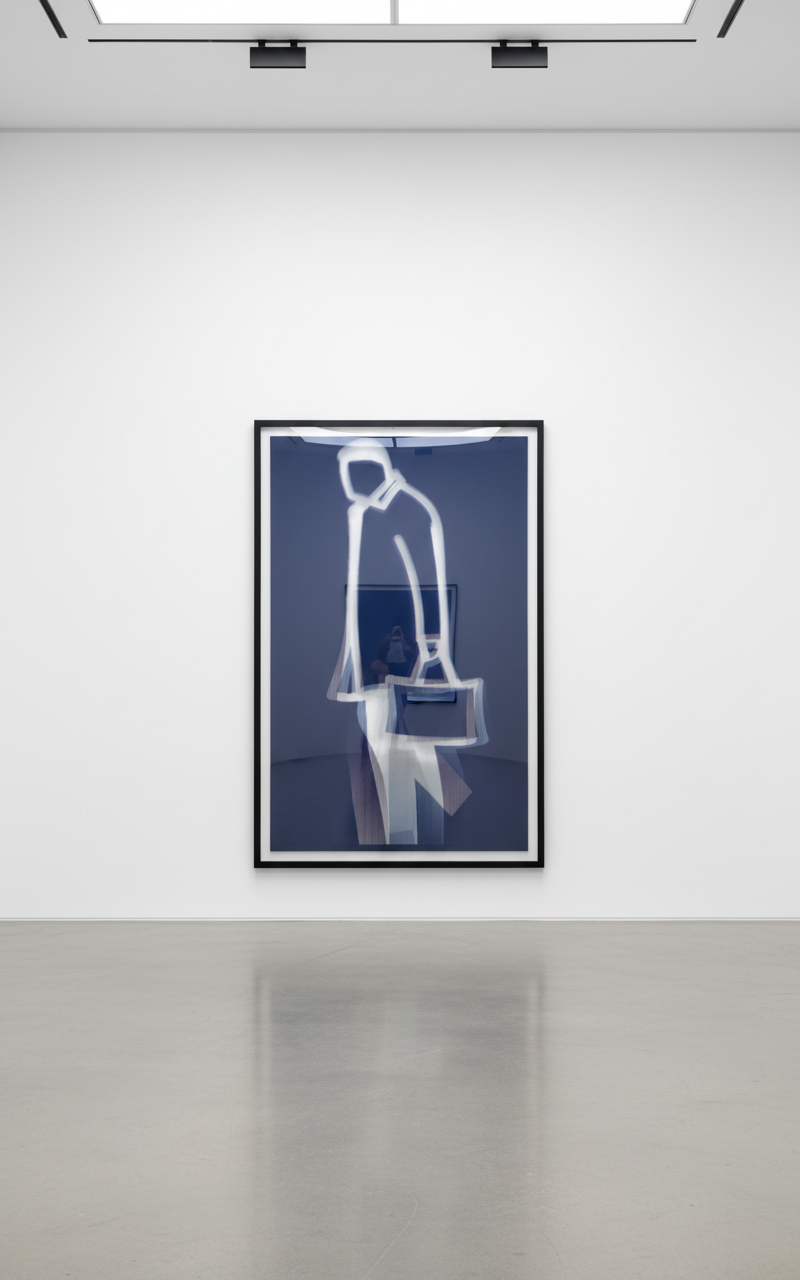
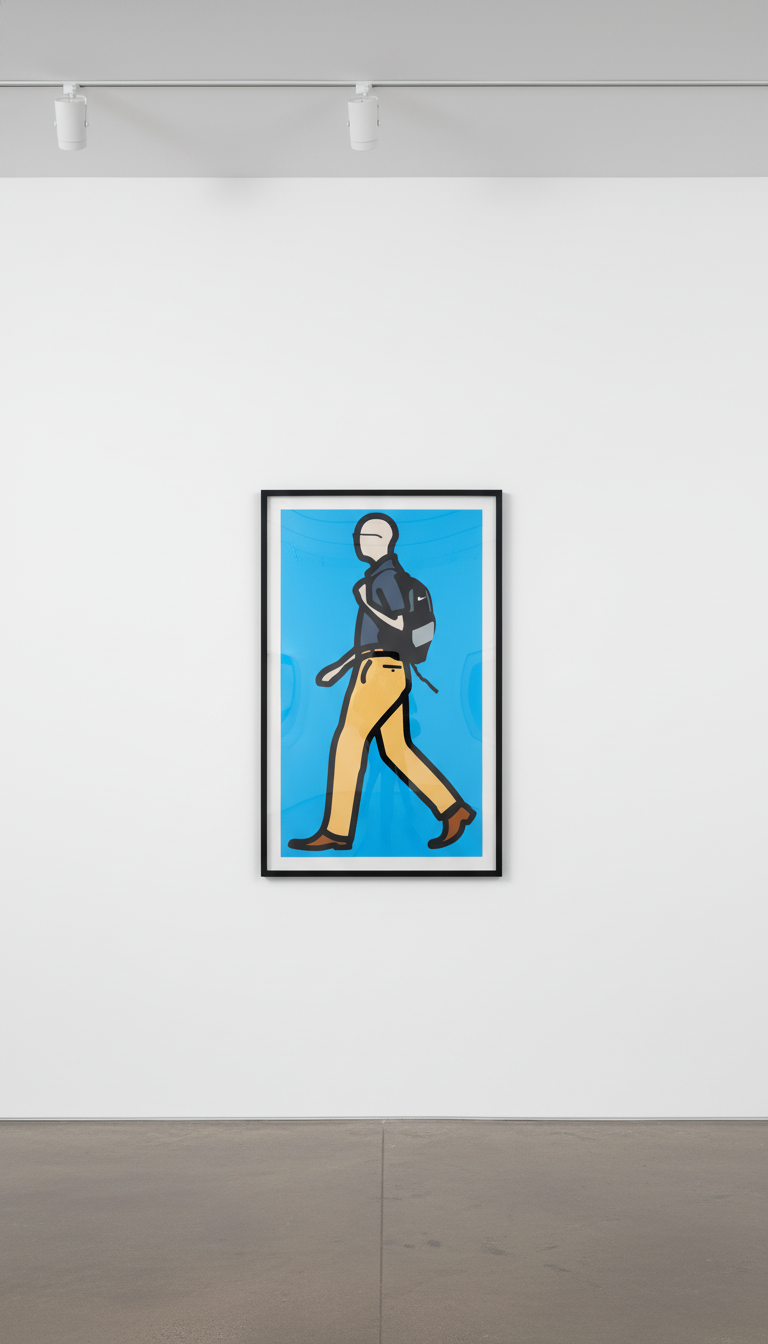
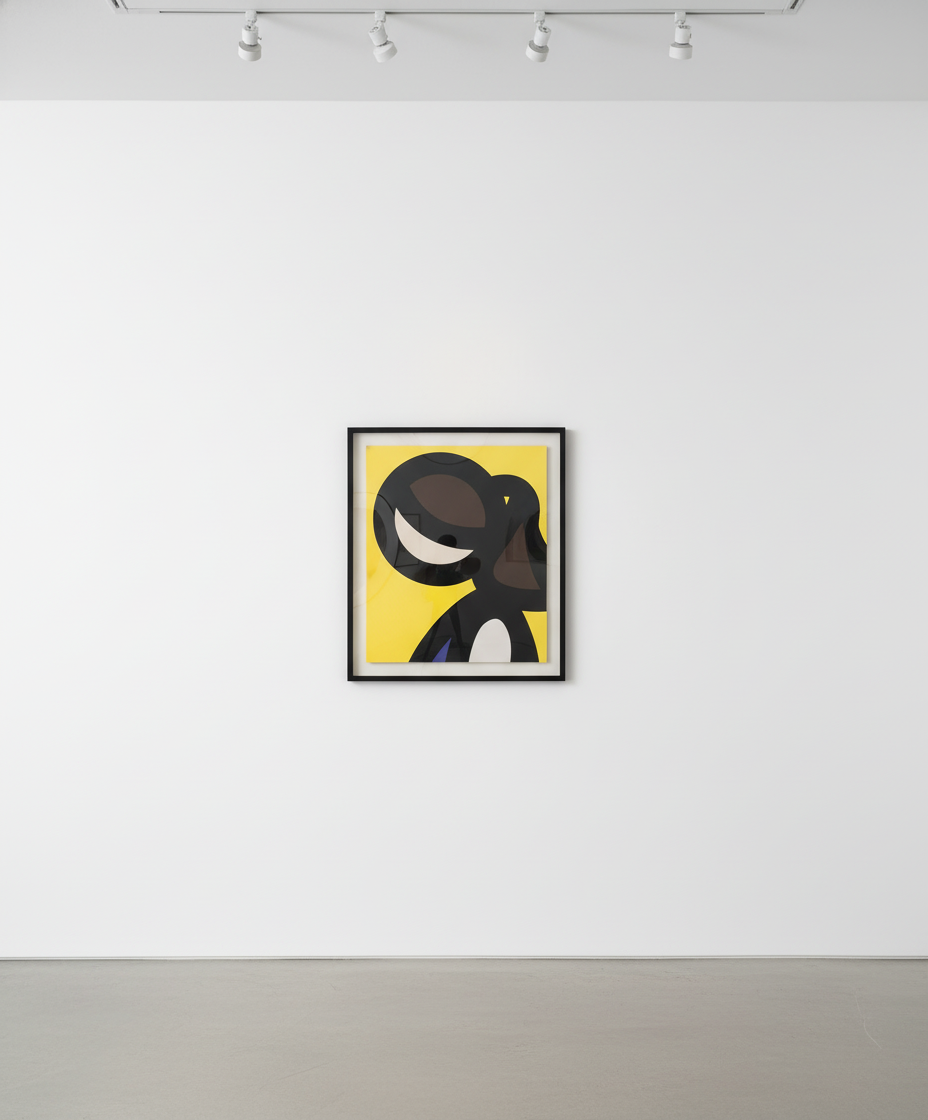
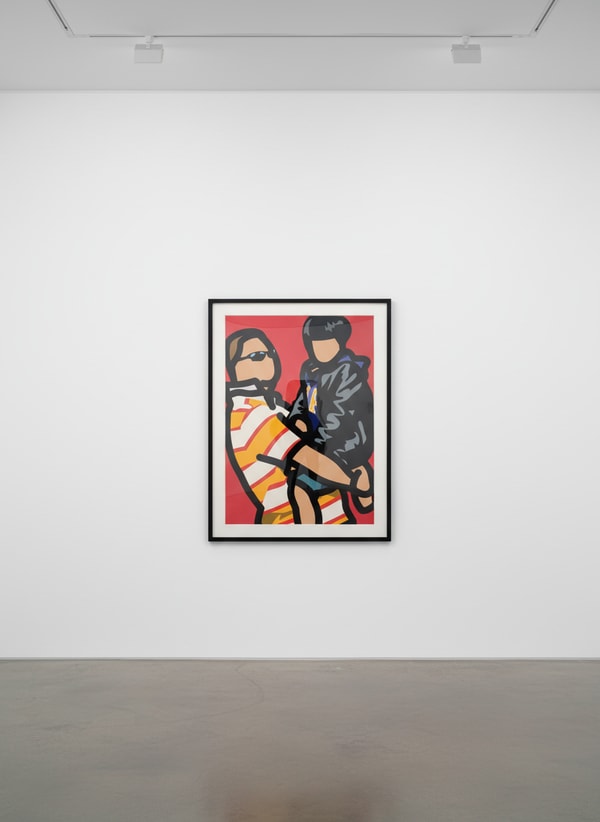
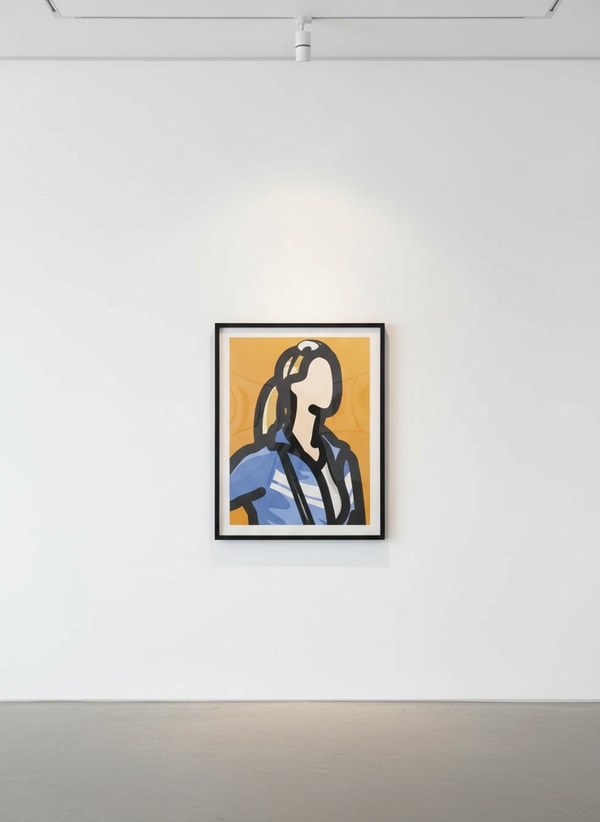
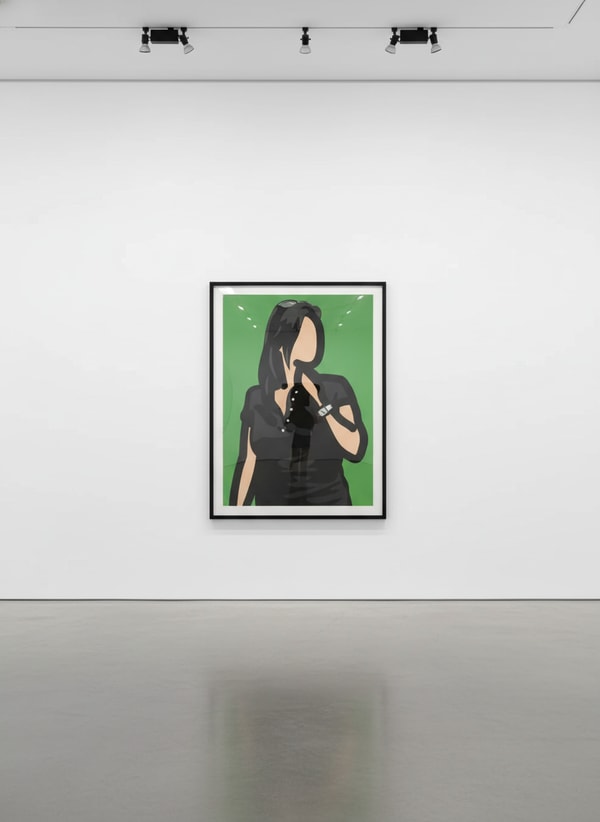
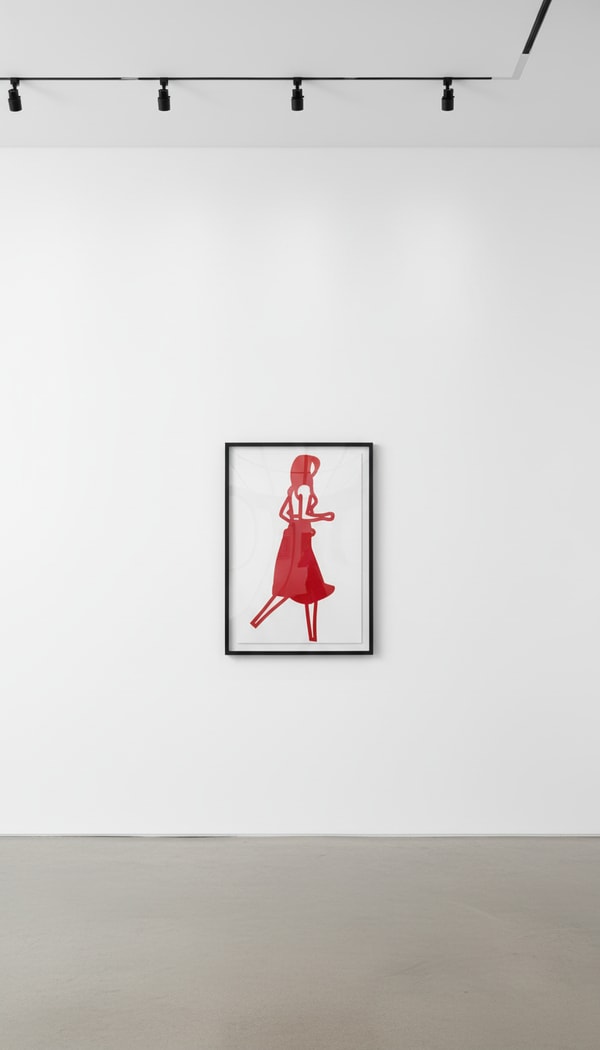
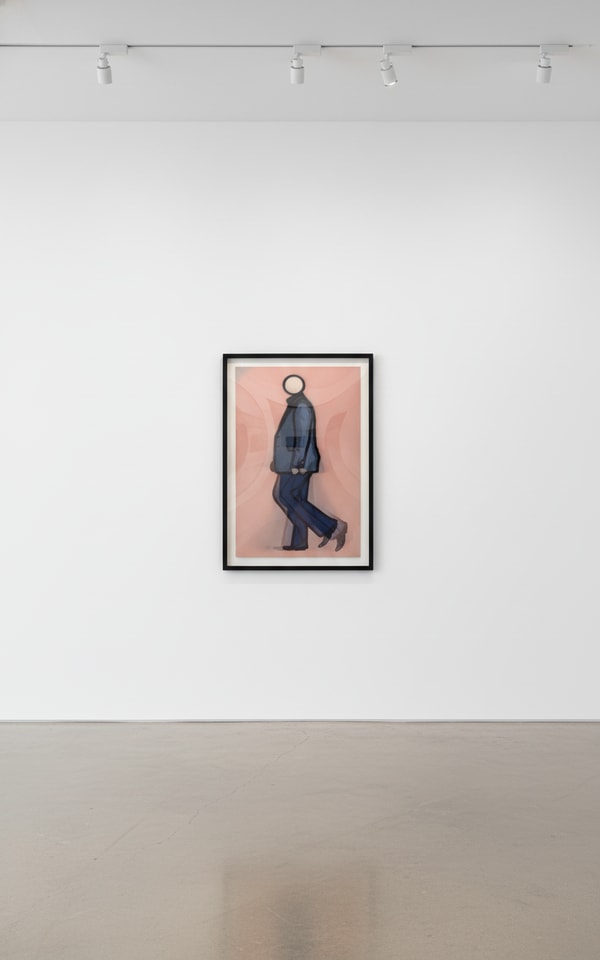
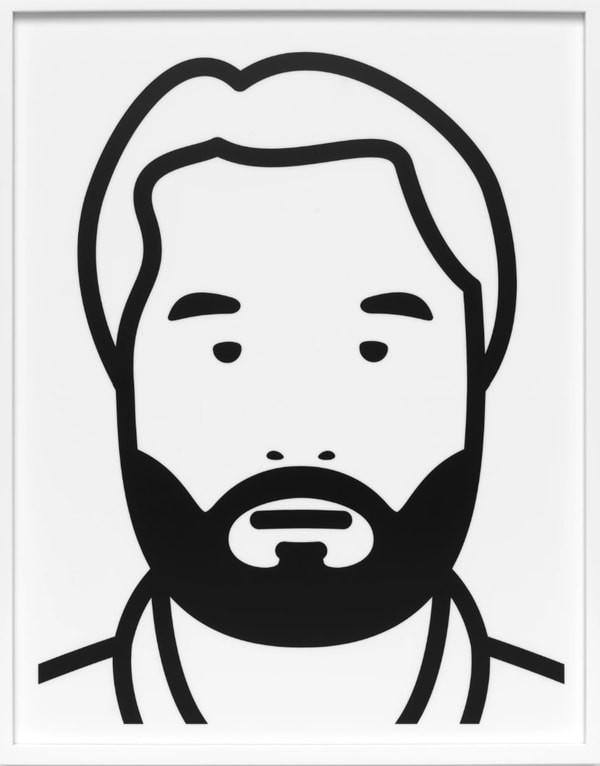
Julian Opie's "Tourists" series represents one of the artist's most incisive investigations into the nature of contemporary identity and the anonymous choreography of modern life. Created with the bold minimalist aesthetic that has become synonymous with Opie's practice, this collection of works examines the universal figure of the tourist—that quintessential character of our globalized age who exists simultaneously as individual and archetype, as specific person and cultural phenomenon. Through works including Tourist With Child, Tourist With Blouse, Tourist With Watch, Tourist With Beard, Tourist With Pony Tail, Tourists, and Tourist With Phone, Opie transforms fleeting observations of people in transit into enduring meditations on how we see and are seen in public space.
What distinguishes the "Tourists" series within Opie's broader practice is its precise focus on a particular social category rather than the generalized walking figures or portraits that characterize much of his other work. While Opie has long been celebrated for his iconic depictions of people in motion, the tourist represents a uniquely loaded subject—someone who is by definition out of place, observing rather than belonging, marked by subtle signifiers of their transient status. Opie captures these telling details with remarkable economy: a phone held aloft to capture a photograph, a watch consulted to track an itinerary, a child in tow, the casual informality of a blouse chosen for comfort over style. Each accessory and gesture becomes a form of identification, a visual shorthand that allows viewers to recognize not just a person but an entire mode of being in the world.
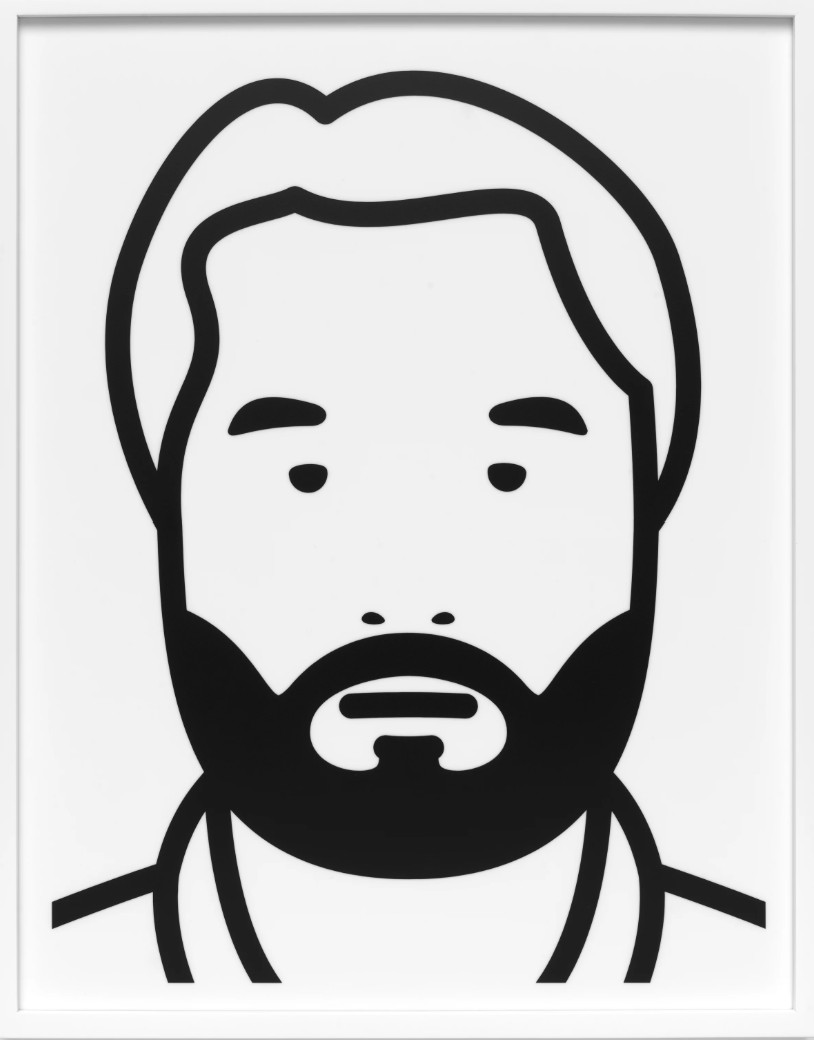
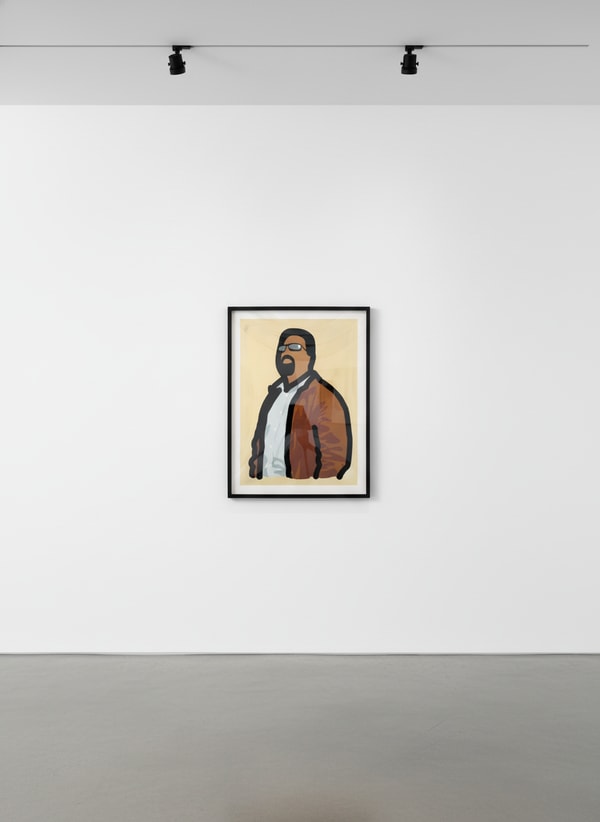
The formal language Opie employs in this series demonstrates his mastery of reduction without loss of meaning. His signature approach—bold black outlines containing flat, unmodulated planes of color—strips away the incidental to reveal the essential. Faces are rendered with minimal features, yet each figure possesses an unmistakable individuality. The tourist with a beard is not merely any bearded figure; through Opie's careful calibration of line and form, he becomes a specific type, recognizable from any city square or museum queue around the world. This tension between the generic and the particular lies at the heart of the series, inviting viewers to consider how identity is constructed through external signs and how we categorize the strangers who populate our shared spaces.
Opie's engagement with the figure of the tourist also reflects his longstanding interest in the relationship between art and everyday life. Unlike the heroic subjects of classical art or the tortured individuals of expressionism, tourists are radically ordinary. They are us, or they are the people we observe while going about our own business. By elevating these unremarkable figures to the status of art, Opie continues a tradition that stretches back through pop art to the democratic impulses of modern art itself. Yet his treatment avoids irony or condescension; there is a genuine affection in these portraits, a recognition that the tourist's desire to see and experience and document is a fundamentally human impulse deserving of attention and respect.
The compositional choices throughout the "Tourists" series reveal Opie's sophisticated understanding of how images function in contemporary visual culture. His figures exist without backgrounds, floating in undefined space much like the icons and avatars that populate our digital interfaces. This decontextualization serves multiple purposes: it universalizes the subjects, making them applicable to any tourist destination; it focuses attention entirely on the figure and their defining attributes; and it acknowledges the way we increasingly encounter images of people as isolated, extractable units of information. The tourist photographing with a phone becomes doubly resonant in this context, a figure engaged in the same act of visual capture and reduction that Opie himself performs.
The series also showcases Opie's remarkable ability to convey movement and presence through static images. Despite the economy of means, these figures possess a convincing physicality. We sense the weight of a child being carried, the gesture of consulting a watch, the particular posture of someone absorbed in their phone. This achievement reflects decades of careful observation and refinement on Opie's part, a commitment to understanding how the human form communicates through its simplest gestures and positions. The "Tourists" series benefits from this accumulated wisdom, presenting figures that feel both immediately legible and endlessly rewarding of sustained attention.
For collectors, the "Tourists" series offers an opportunity to acquire works that encapsulate the central preoccupations of one of Britain's most significant contemporary artists while addressing themes of particular relevance to our current moment. As global mobility continues to shape culture and identity, Opie's tourists stand as monuments to this condition—affectionate, clear-eyed, and possessed of the quiet authority that only genuine artistic vision can provide.
To inquire about acquiring works from Julian Opie's "Tourists" series, please contact Guy Hepner in New York.
Julian Opie (b. 1958, London) is one of the most recognisable and widely exhibited British artists of his generation, a painter, sculptor, and printmaker whose stripped-back figurative language has achieved both the commercial viability of design and the conceptual seriousness of fine art — a combination that few artists of any era have managed with equal confidence. Opie studied at Goldsmiths College under Michael Craig-Martin, graduating in 1982, and was representing by a major London gallery almost immediately. He has been a significant presence in the international art world for over four decades.
Opie's visual language is built from a small number of radical formal decisions: bold black outlines, flat unmodulated colour fields, the elimination of shadow, texture, and incidental detail, and a scale and graphic authority that draws openly on Egyptian hieroglyphics, Japanese woodblock printing, public signage, and the simplified conventions of digital interfaces. The result is a style of immediate recognisability — when you encounter a Julian Opie figure, you know it instantly — that nonetheless contains real formal thought about how images communicate, how representation functions, and what remains when almost everything is removed. His Walking Figures series, in which anonymous pedestrians in continuous motion are rendered in his signature distilled vocabulary and presented as both print editions and LED wall sculptures, has become one of the most compelling ongoing investigations in contemporary art into the relationship between the ancient idea of the frieze, the vernacular language of the public sign, and the aesthetic possibilities of the LED screen.
In 2000, Opie created the cover artwork for Blur's Best Of compilation — four simplified band portraits in his trademark style — bringing his visual language to an audience of millions and cementing his profile as an artist operating meaningfully across the boundary between fine art and popular culture. His portrait series, his landscape works, and his permanent public installations — including major commissions at Queen Elizabeth Olympic Park in London — extend the reach of his practice into civic and architectural contexts. At the major auction houses, significant Opie works have traded in the £200,000–£500,000 range at Christie's and Sotheby's, while his print editions range from thousands to tens of thousands of pounds, providing entry points across a wide spectrum of collector budgets. His work is held in the Tate Collection, among other public institutions.
His media range is notably broad: silkscreen prints, vinyl paintings, LED panels, lenticular works, and public sculptures are all produced with equal technical rigour and formal clarity.
Guy Hepner maintains strong inventory and expertise in Julian Opie's print editions and LED works. Our gallery at 177 Tenth Avenue, New York offers collectors expert guidance on acquisition and valuation. We provide free, confidential valuations for those looking to sell Opie works and active connections to buyers engaged with this market.