
Guy Hepner Gallery

Julian Opie Street 3 For Sale

Julian Opie
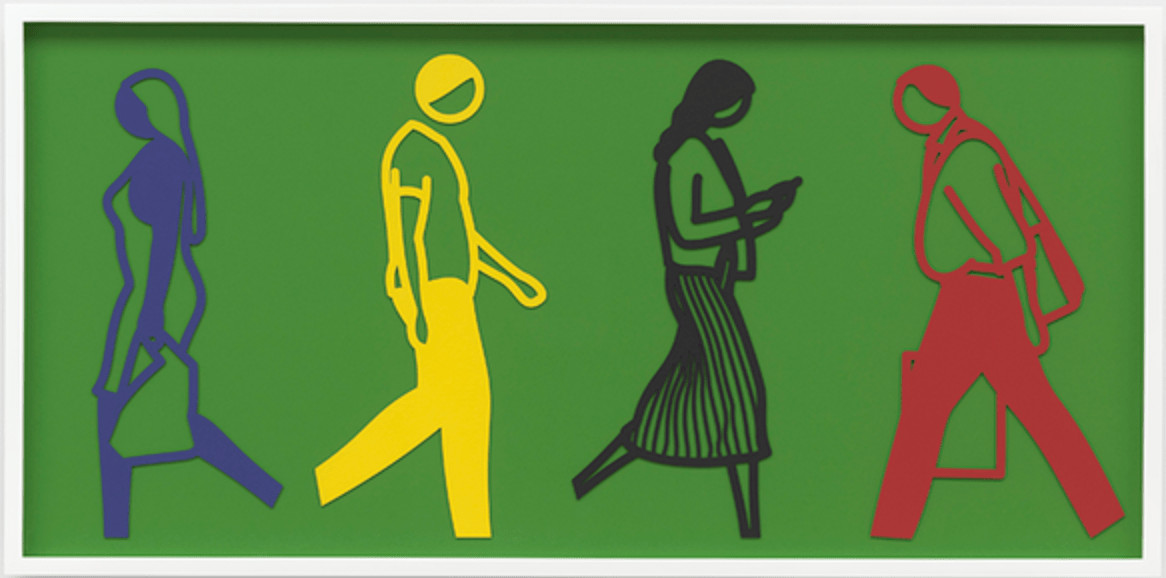
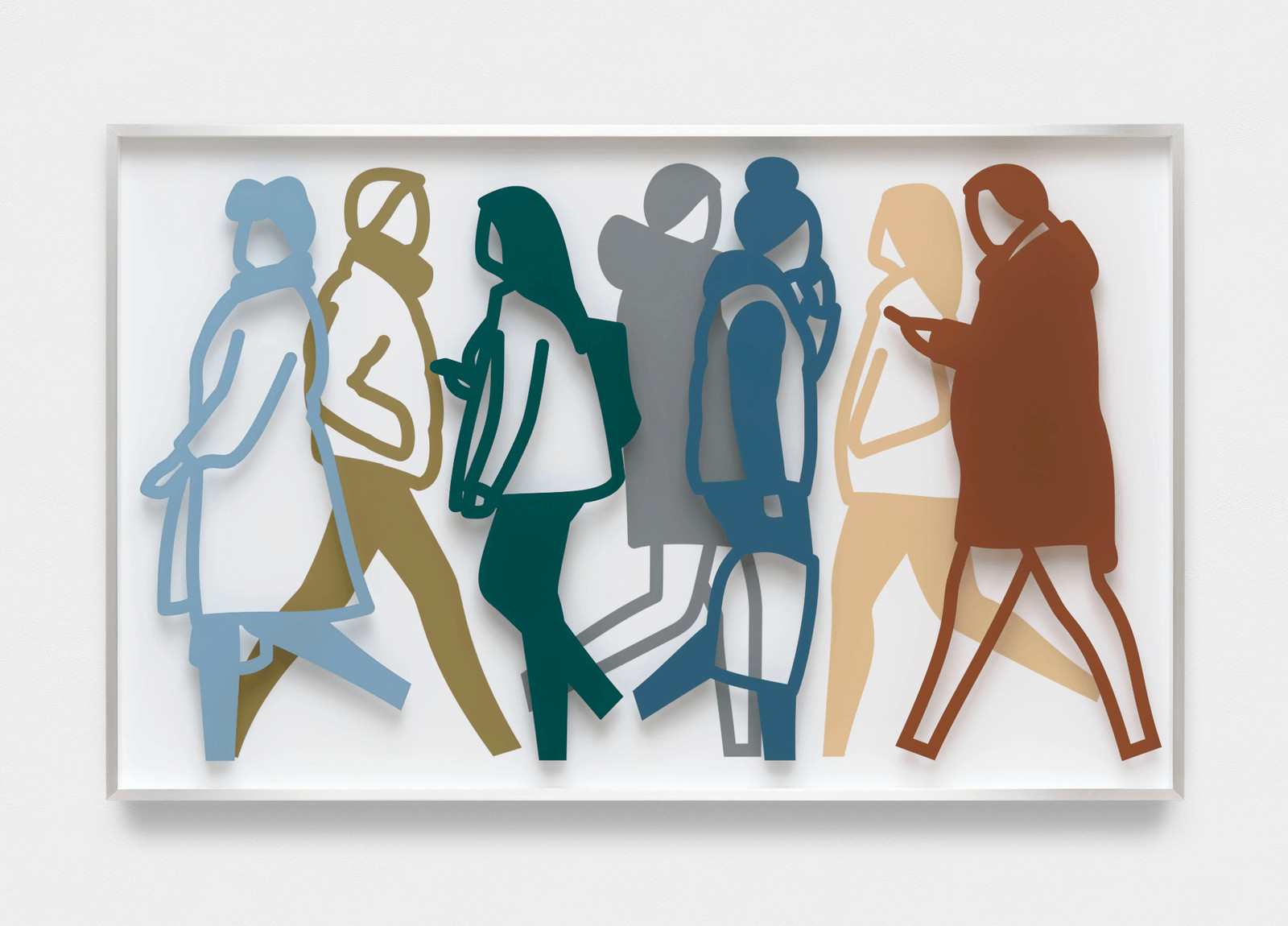
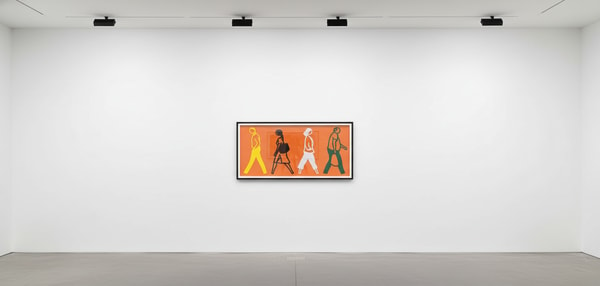
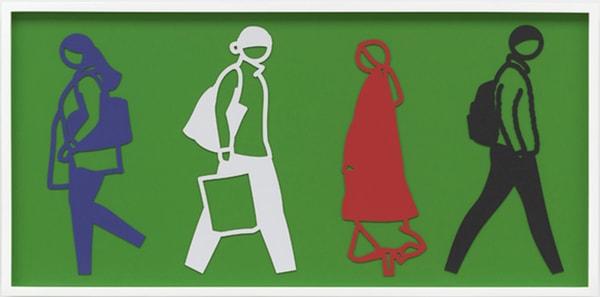
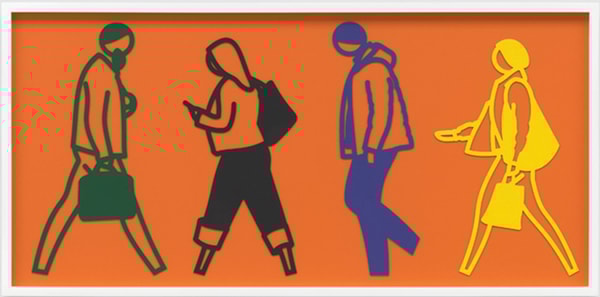
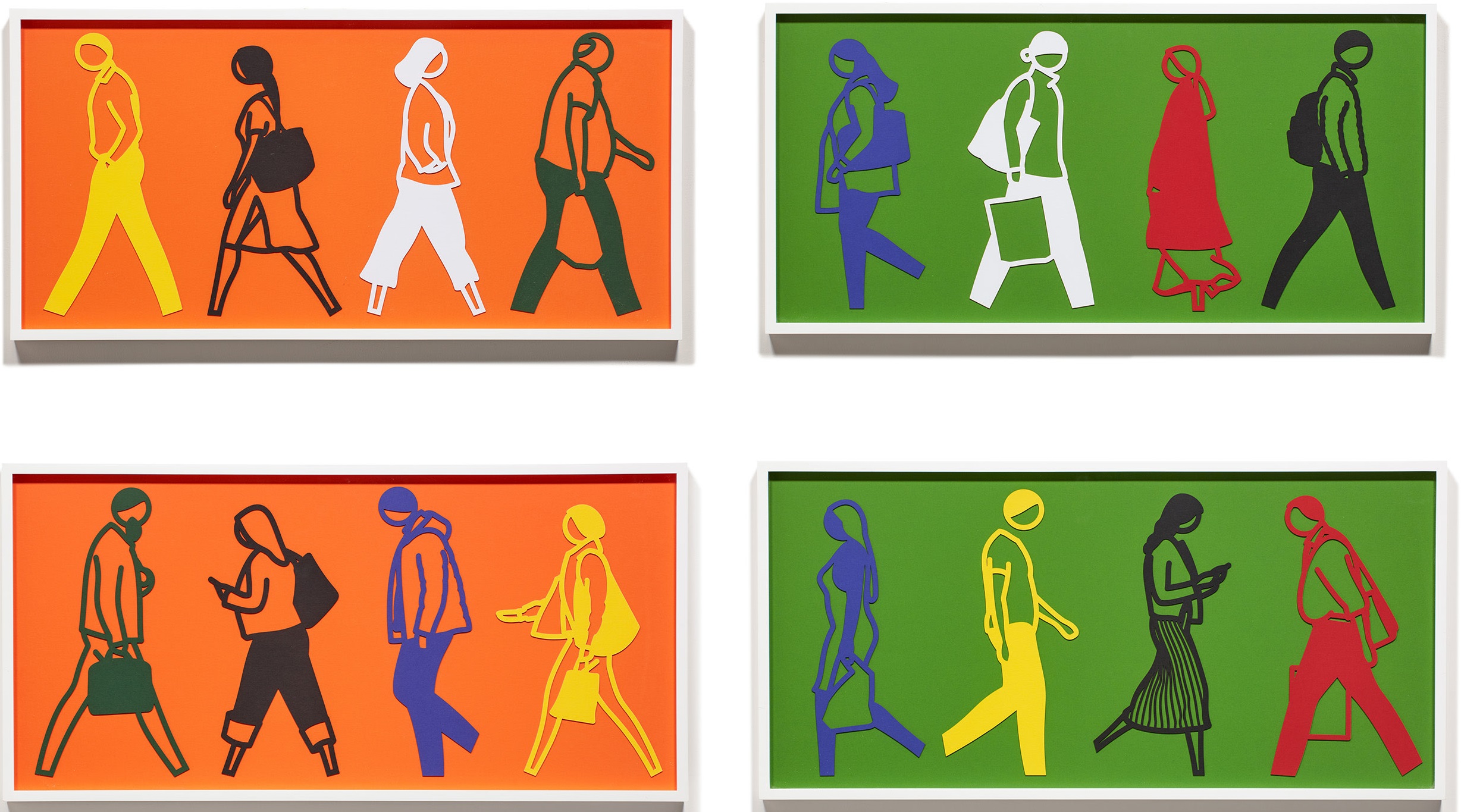
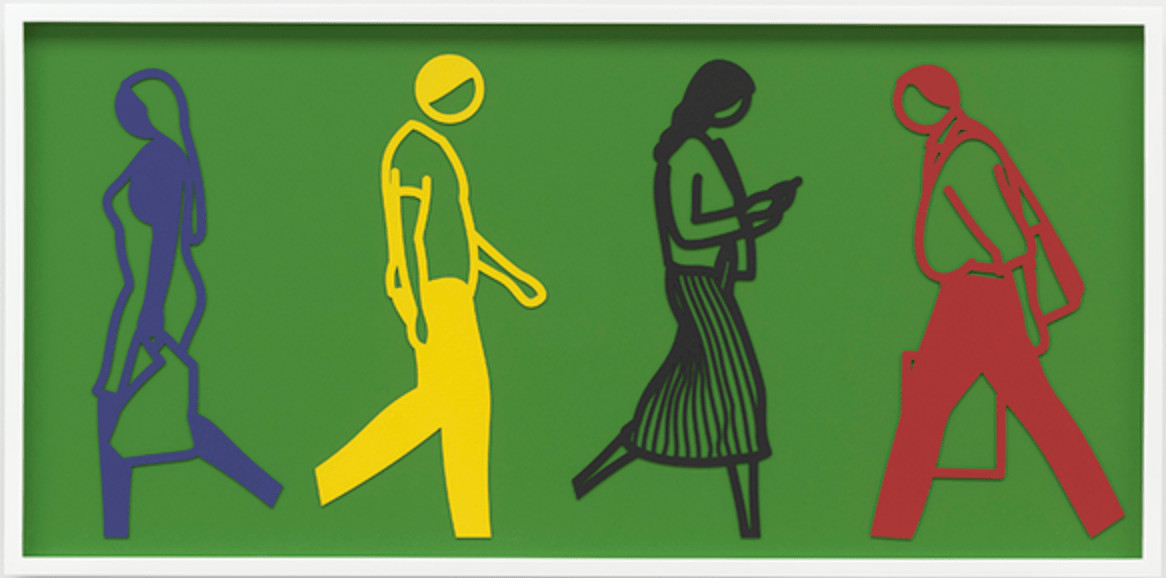
Julian Opie - Street 3, 2020, Laser - cut museum board relief , presented in a sprayed white frame specified by the artist

Street 3, 2020

Laser - cut museum board relief , presented in a sprayed white frame specified by the artist

18 x 36 1/2 in (framed) 45.7 x 92.7 cm (framed)

Edition

Edition of 55

About this work

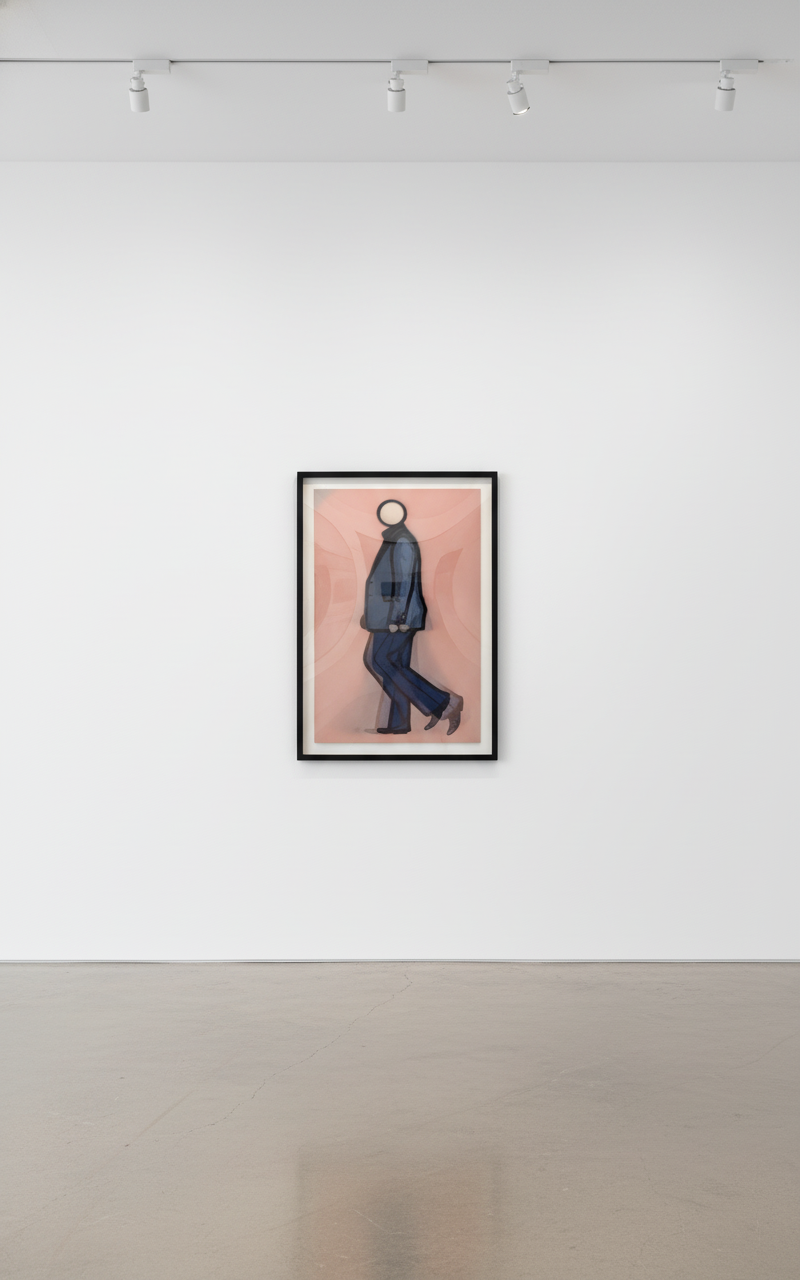
Julian Opie’s lenticular works occupy a distinctive and highly coveted position within his oeuvre, merging his iconic visual language with cutting-edge optical technology. By translating his minimalist portraits and walking figures into animated compositions, Opie transforms static imagery into dynamic, time-based experiences that engage the viewer through movement and perceptual shift. The lenticular medium heightens the conceptual core of his practice — an exploration of how identity, motion, and representation are constructed in the contemporary world — while offering an object that feels simultaneously technological and timeless.

Price on Application
Auction History

Julian Opie - Street 1; Street 2; Street 3; and Street 4

Street 1; Street 2; Street 3; and Street 4 · Julian Opie · Phillips · 2022-04 · $35,280
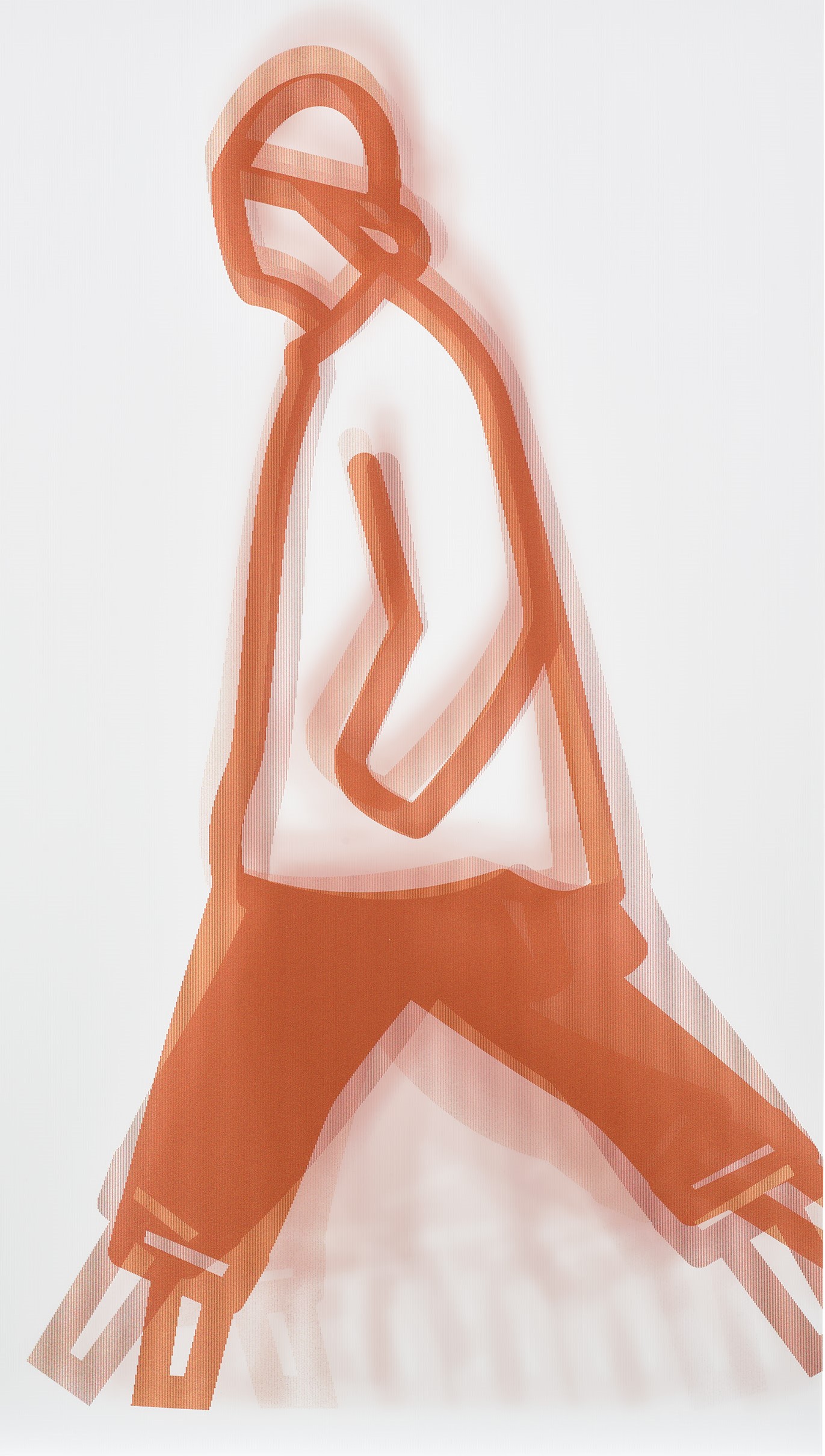
Julian Opie - Turn Ups, from Old Street Walkers

Turn Ups, from Old Street Walkers · Julian Opie · Phillips · 2024-06 · $20,718
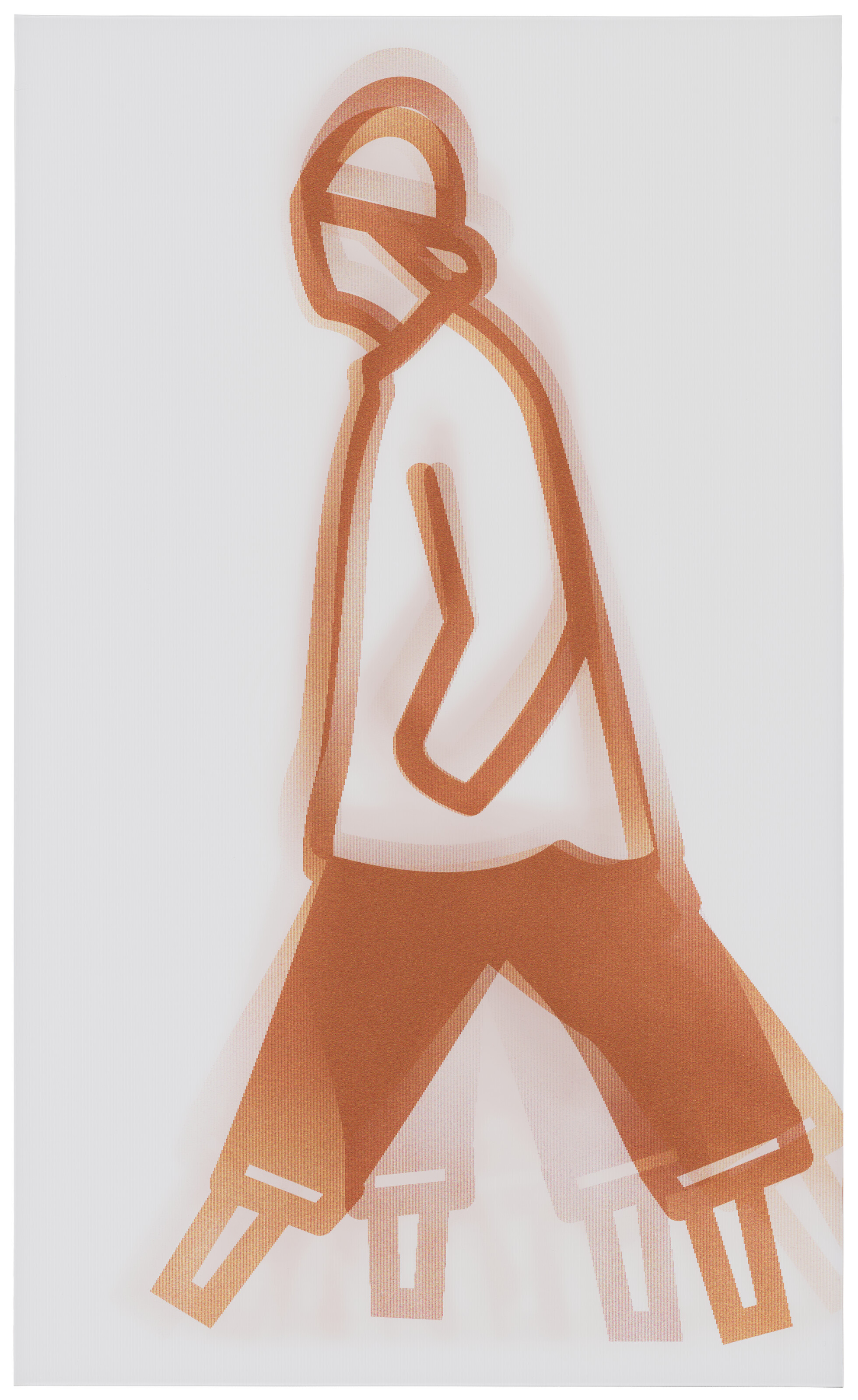
Julian Opie - Turn ups, from: Old Street Walkers

Turn ups, from: Old Street Walkers · Julian Opie · Christie's · 2026-03 · $20,348
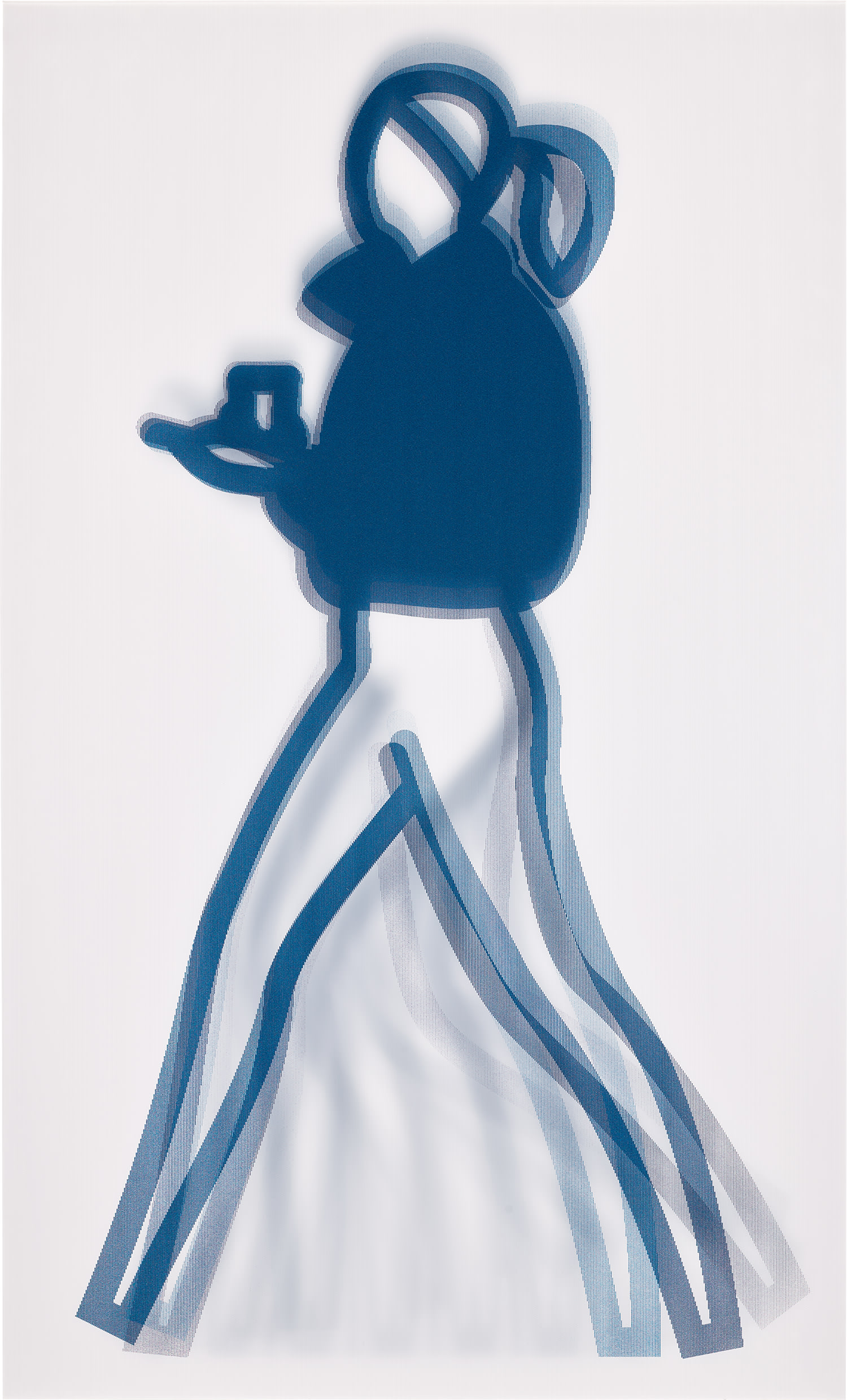
Julian Opie - Coffee, from Old Street Walkers

Coffee, from Old Street Walkers · Julian Opie · Phillips · 2024-06 · $19,050
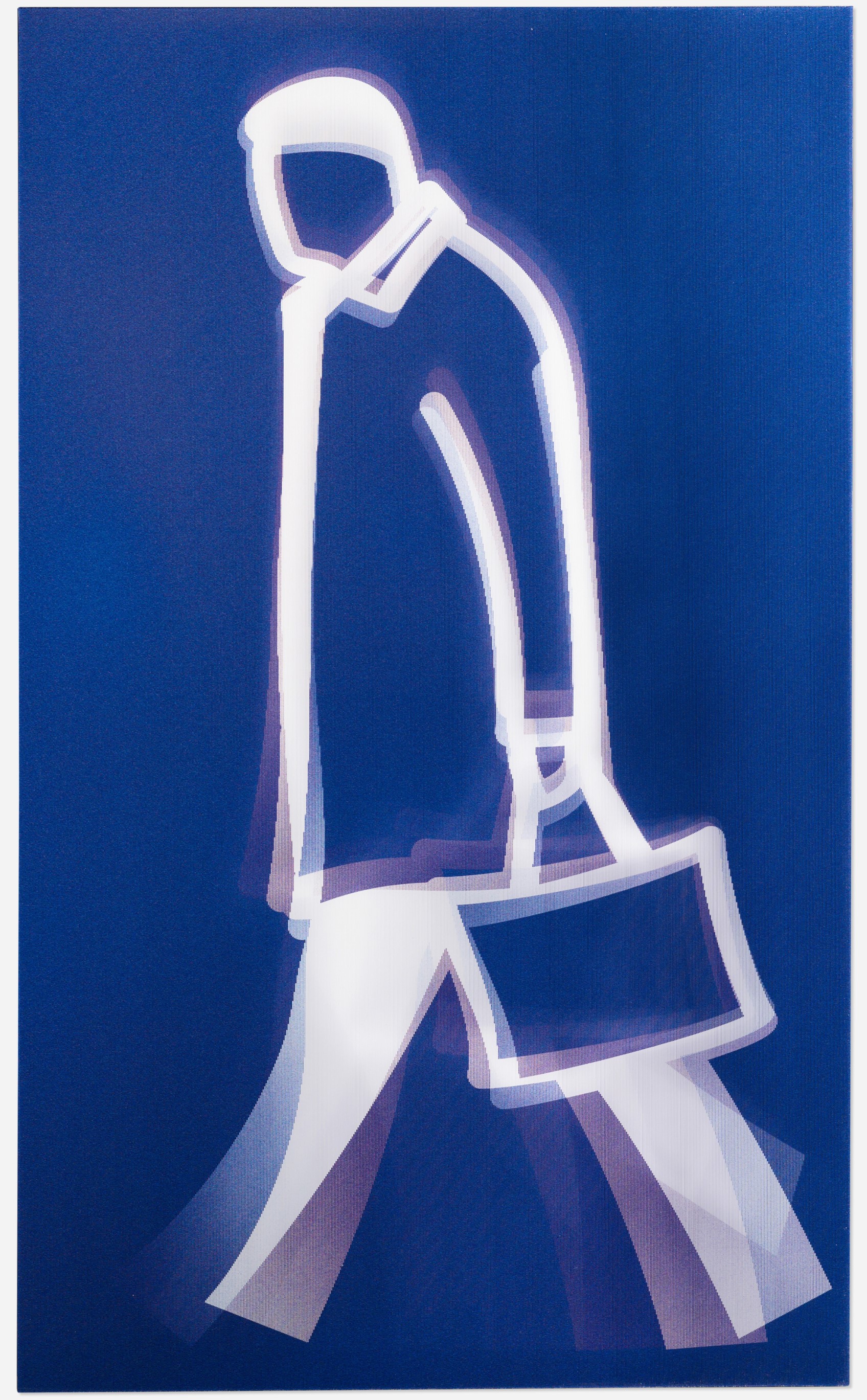
Julian Opie - Leather Bag (from the Old Street Walkers series)

Leather Bag (from the Old Street Walkers series) · Julian Opie · Rago · 2023-06 · $17,640
More from this series

More series by Julian Opie

About the Street Series

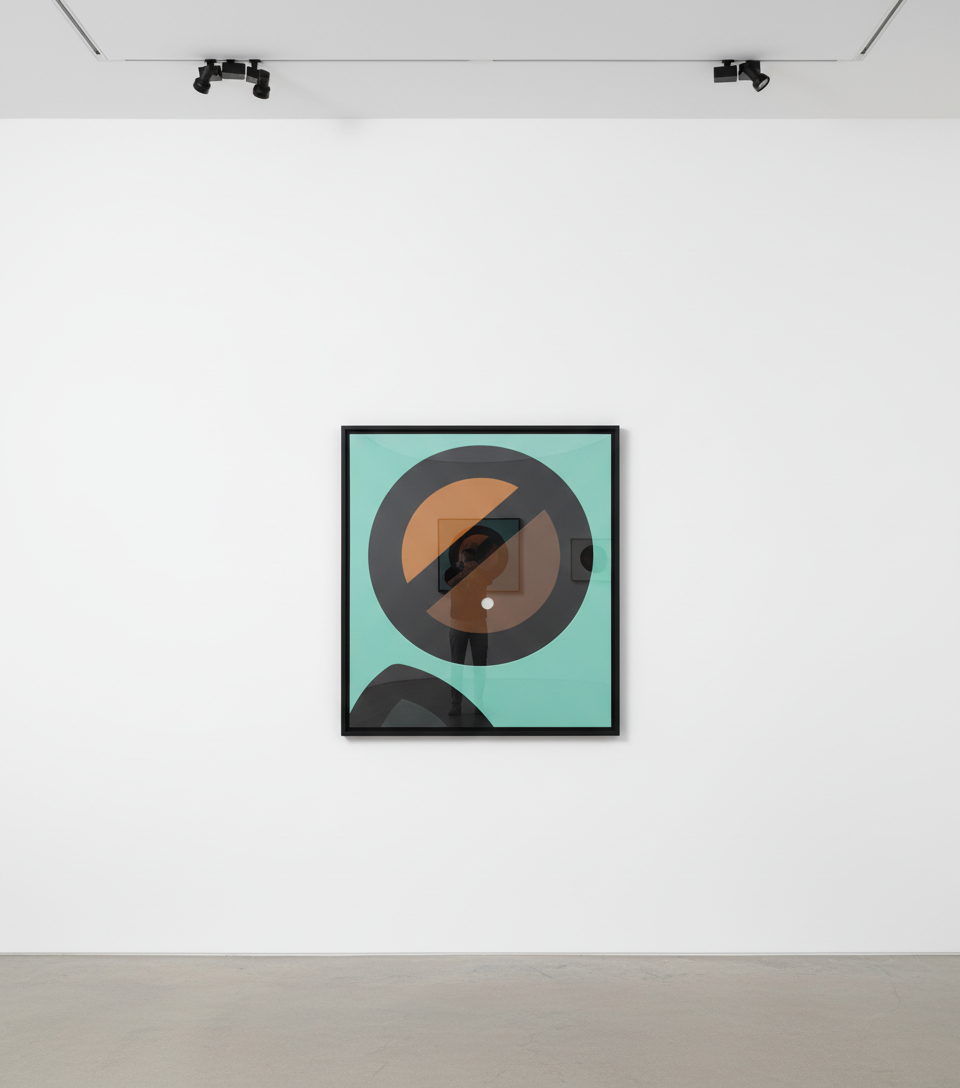
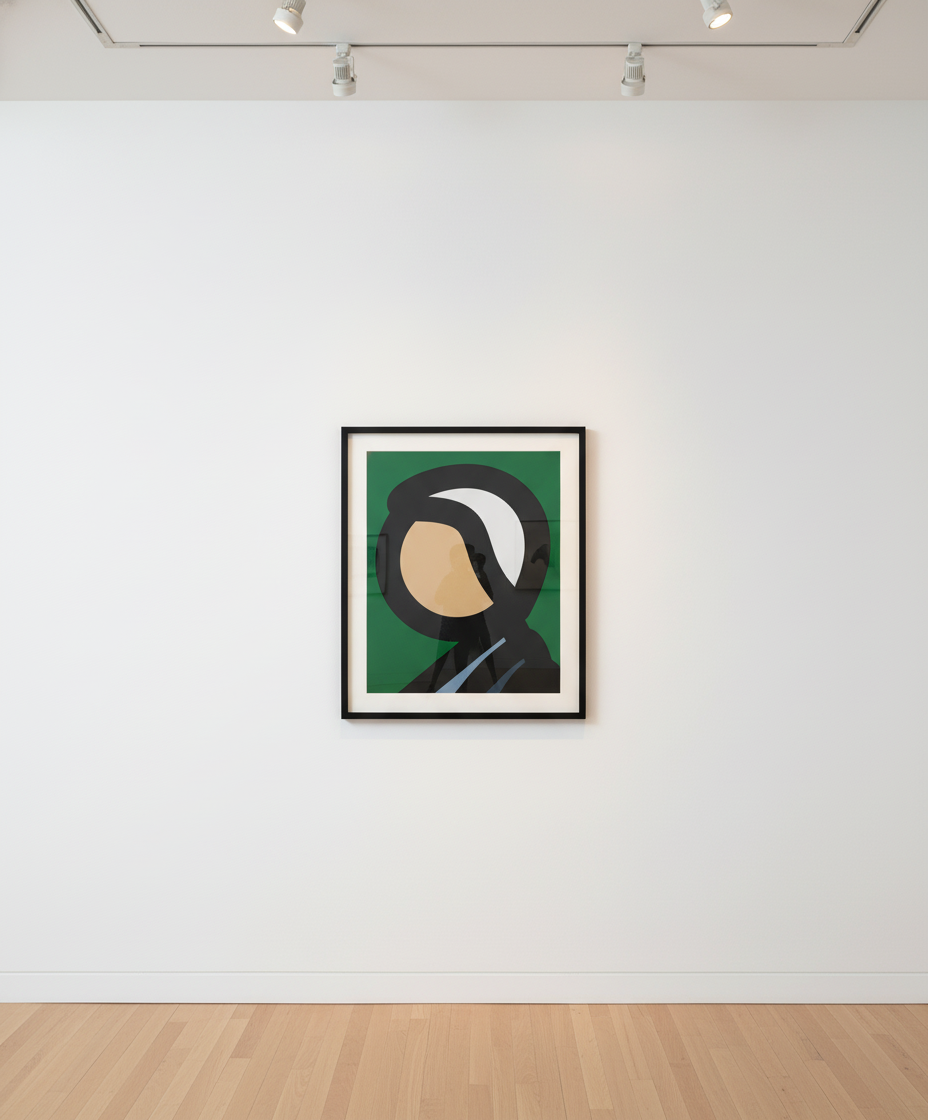
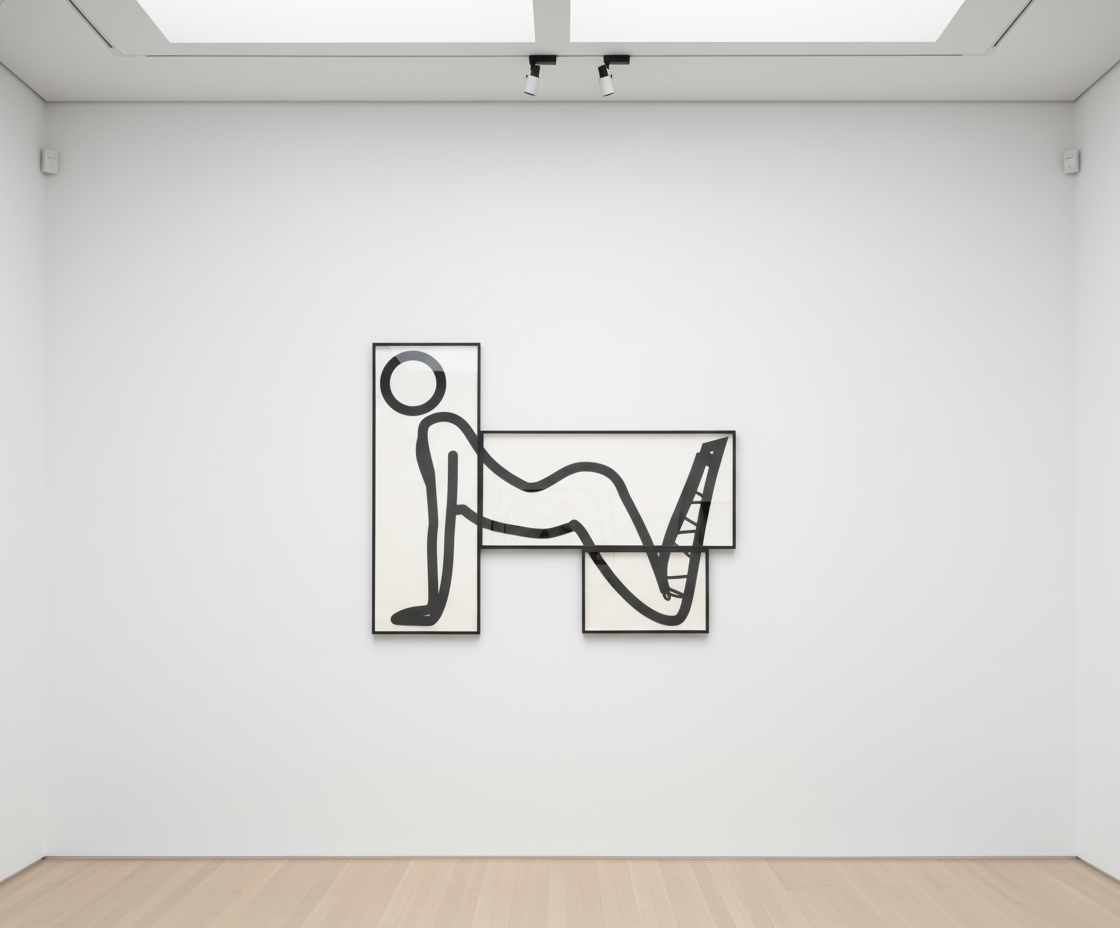
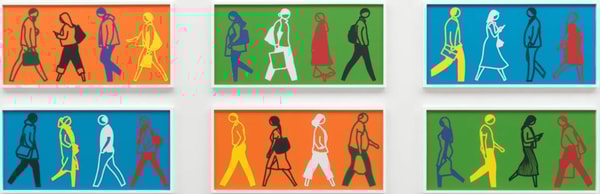
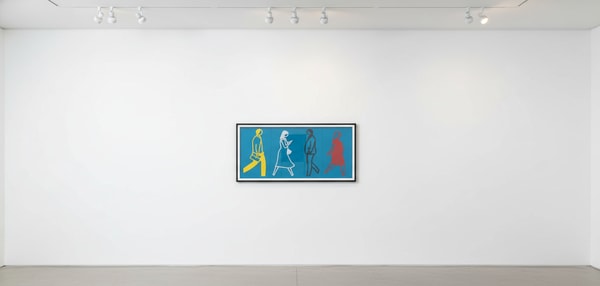
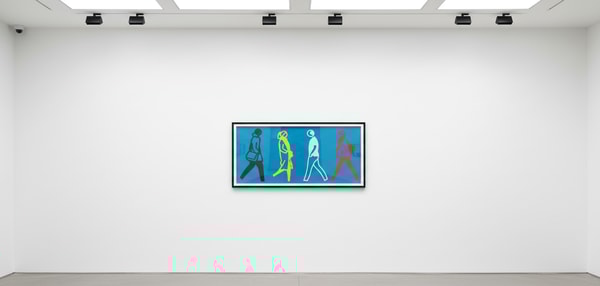
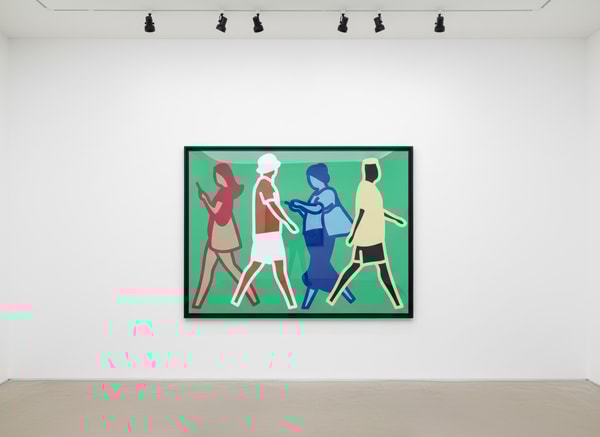
Julian Opie's "Street" series represents one of the most compelling explorations of urban observation within the artist's distinguished body of work. Comprising six individual works—Street 1 through Street 6—as well as the complete suite, this series distills the essence of contemporary city life into Opie's unmistakable visual language. Each composition captures the anonymous yet deeply familiar choreography of pedestrians navigating public space, rendered in the artist's signature style of bold outlines, flat planes of color, and a striking economy of form that paradoxically amplifies rather than diminishes the humanity of his subjects.

Born in London in 1958 and represented by Lisson Gallery, Julian Opie has spent decades refining an artistic vocabulary that bridges the gap between fine art and the visual vernacular of everyday existence. His work draws from sources as diverse as classical portraiture, Japanese woodblock prints, public signage, and digital interfaces, synthesizing these influences into something entirely his own. The "Street" series exemplifies this synthesis with particular clarity, presenting figures that feel simultaneously ancient and thoroughly contemporary—timeless archetypes of human movement frozen in the amber of Opie's precise, deliberate line work.

What distinguishes the "Street" series within Opie's broader practice is its focused meditation on the act of walking itself. While the artist has long been celebrated for his depictions of people in motion—runners, dancers, commuters—this series narrows its gaze to the most fundamental form of human locomotion through urban environments. The figures move with purpose yet without urgency, embodying the particular rhythm of city streets where thousands of individual journeys intersect and overlap without acknowledgment. Opie captures this paradox of collective isolation, presenting walkers who share space but not connection, each absorbed in their own trajectory through the metropolis.

The formal qualities of the series demonstrate Opie's mastery of reduction. Faces are rendered with minimal detail—sometimes merely dots for eyes, a simple line suggesting a mouth—yet each figure possesses an undeniable sense of individuality. This is achieved through careful attention to posture, gait, clothing, and the subtle particulars of how different bodies occupy space. A woman's confident stride differs markedly from a man's contemplative amble; a figure leaning slightly forward suggests different intention than one walking upright. These nuances, preserved despite the radical simplification of form, speak to Opie's profound understanding of human gesture and his ability to convey complex information through restrained means.

Color plays a crucial role in establishing the distinctive atmosphere of the "Street" series. Opie employs flat, unmodulated hues that recall both Pop Art's bold palette and the stark functionality of urban signage. Backgrounds are typically reduced to simple planes that suggest pavement, sky, or architectural elements without depicting them literally. This approach strips away the visual noise of actual streetscapes, allowing viewers to focus entirely on the figures themselves while simultaneously evoking the clean, designed quality of contemporary urban aesthetics. The effect is both documentary and iconic—these are specific people observed on specific streets, yet they also stand as universal symbols of urban existence.

The decision to present the works both individually and as a complete suite of six offers collectors different modes of engagement with the series. Each standalone piece functions as a meditation on a particular moment or figure, while the complete set creates a rhythmic visual narrative that captures the cumulative effect of passing pedestrians—the experience of sitting at a café or standing at a corner and watching the endless procession of urban life unfold. Together, the six works suggest the perpetual nature of this movement, the way streets are never empty, the way one figure replaces another in an unending cycle that defines city living.

Opie's influence on contemporary visual culture extends far beyond the gallery context. His iconic album cover for Blur's "Best Of" compilation and his public commissions in cities worldwide have embedded his aesthetic into popular consciousness. Yet within this accessible body of work, the "Street" series maintains a contemplative quality that rewards sustained attention. These are works that reveal their depth over time, inviting viewers to consider their own relationship to public space, anonymity, and the thousands of strangers we pass each day without truly seeing. In Opie's hands, these overlooked moments of quotidian life become subjects worthy of profound artistic consideration.

The prints and works from the "Street" series exemplify why Julian Opie remains one of the most significant figures in contemporary British art. His ability to transform the ordinary into the extraordinary, to find poetry in the prosaic rhythms of everyday existence, continues to resonate with collectors and institutions alike. The series stands as essential examples of his mature practice, demonstrating the sophistication and emotional resonance that can be achieved through apparent simplicity.

To inquire about acquiring works from Julian Opie's "Street" series, please contact Guy Hepner in New York.

View full series →
Street 3

About Julian Opie

Julian Opie (b. 1958, London) is one of the most recognisable and widely exhibited British artists of his generation, a painter, sculptor, and printmaker whose stripped-back figurative language has achieved both the commercial viability of design and the conceptual seriousness of fine art — a combination that few artists of any era have managed with equal confidence. Opie studied at Goldsmiths College under Michael Craig-Martin, graduating in 1982, and was representing by a major London gallery almost immediately. He has been a significant presence in the international art world for over four decades.

Opie's visual language is built from a small number of radical formal decisions: bold black outlines, flat unmodulated colour fields, the elimination of shadow, texture, and incidental detail, and a scale and graphic authority that draws openly on Egyptian hieroglyphics, Japanese woodblock printing, public signage, and the simplified conventions of digital interfaces. The result is a style of immediate recognisability — when you encounter a Julian Opie figure, you know it instantly — that nonetheless contains real formal thought about how images communicate, how representation functions, and what remains when almost everything is removed. His Walking Figures series, in which anonymous pedestrians in continuous motion are rendered in his signature distilled vocabulary and presented as both print editions and LED wall sculptures, has become one of the most compelling ongoing investigations in contemporary art into the relationship between the ancient idea of the frieze, the vernacular language of the public sign, and the aesthetic possibilities of the LED screen.

In 2000, Opie created the cover artwork for Blur's Best Of compilation — four simplified band portraits in his trademark style — bringing his visual language to an audience of millions and cementing his profile as an artist operating meaningfully across the boundary between fine art and popular culture. His portrait series, his landscape works, and his permanent public installations — including major commissions at Queen Elizabeth Olympic Park in London — extend the reach of his practice into civic and architectural contexts. At the major auction houses, significant Opie works have traded in the £200,000–£500,000 range at Christie's and Sotheby's, while his print editions range from thousands to tens of thousands of pounds, providing entry points across a wide spectrum of collector budgets. His work is held in the Tate Collection, among other public institutions.

His media range is notably broad: silkscreen prints, vinyl paintings, LED panels, lenticular works, and public sculptures are all produced with equal technical rigour and formal clarity.

Guy Hepner maintains strong inventory and expertise in Julian Opie's print editions and LED works. Our gallery at 177 Tenth Avenue, New York offers collectors expert guidance on acquisition and valuation. We provide free, confidential valuations for those looking to sell Opie works and active connections to buyers engaged with this market.
View all works →