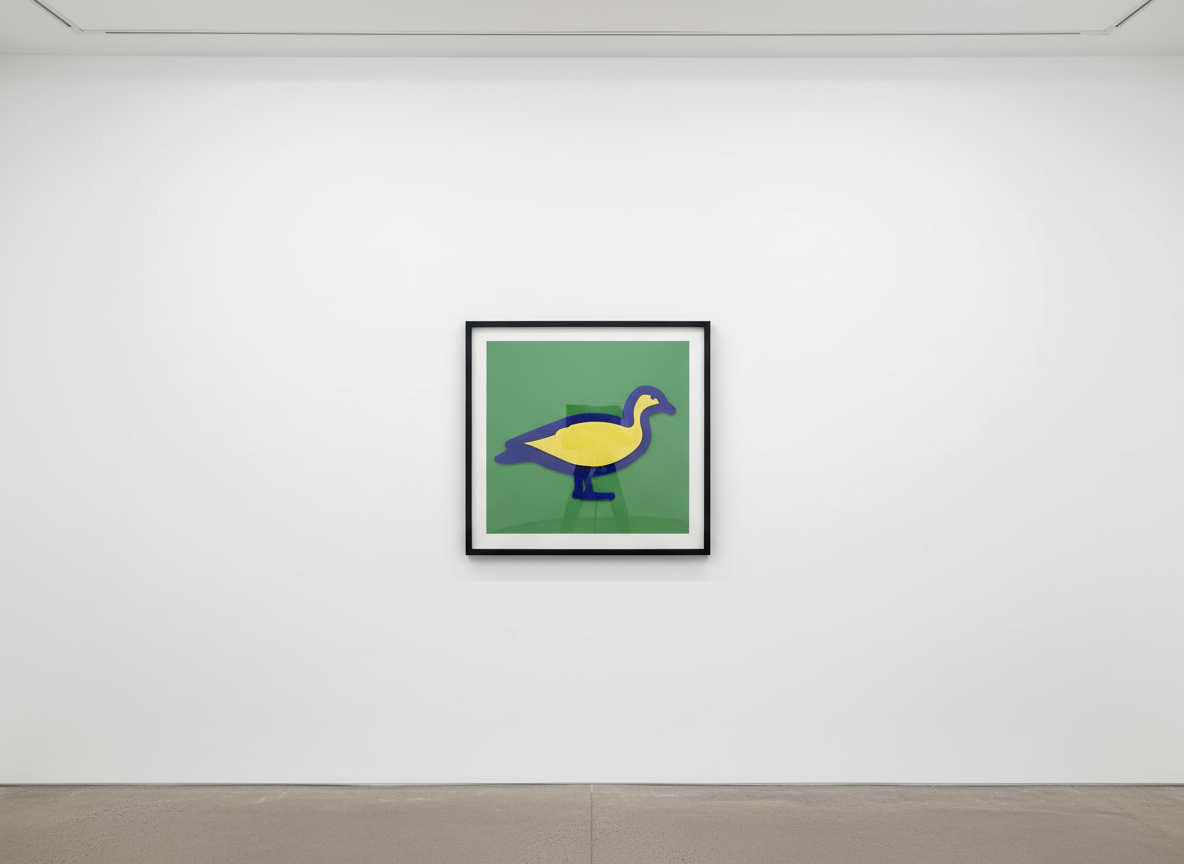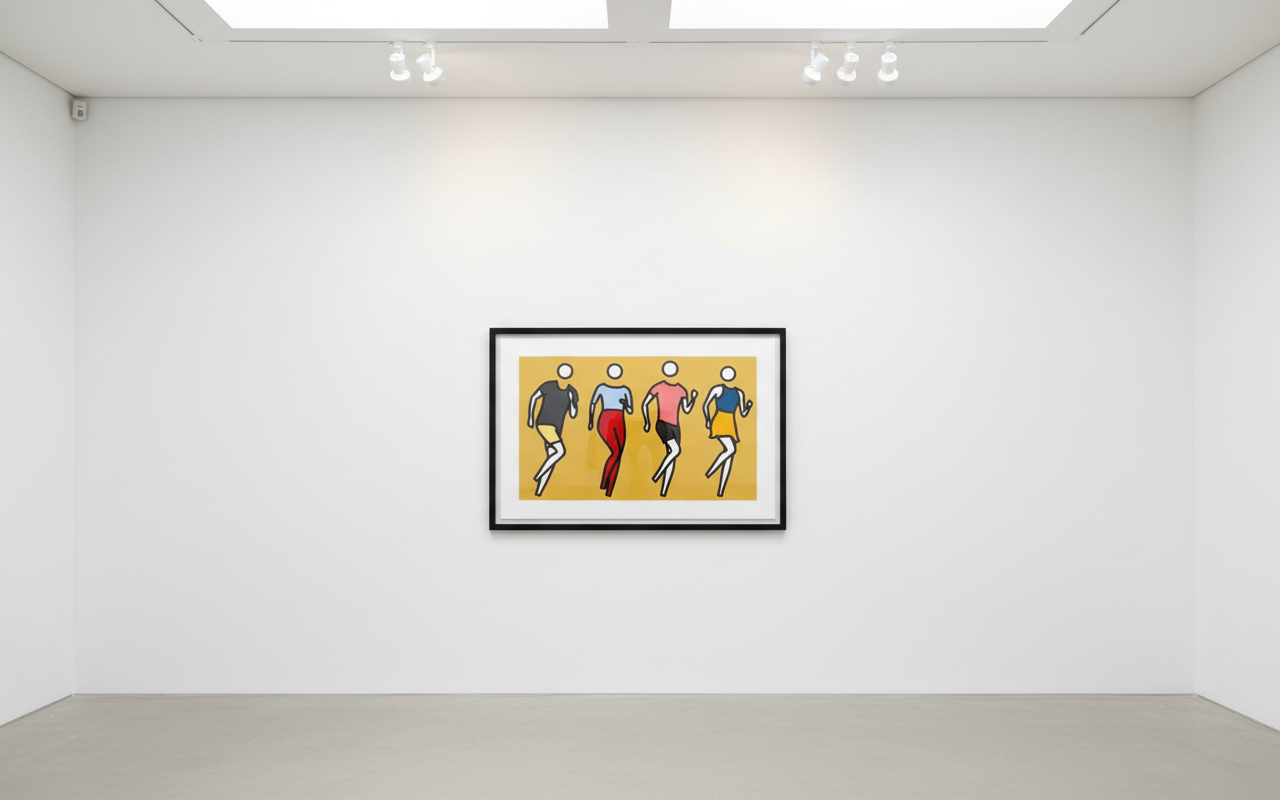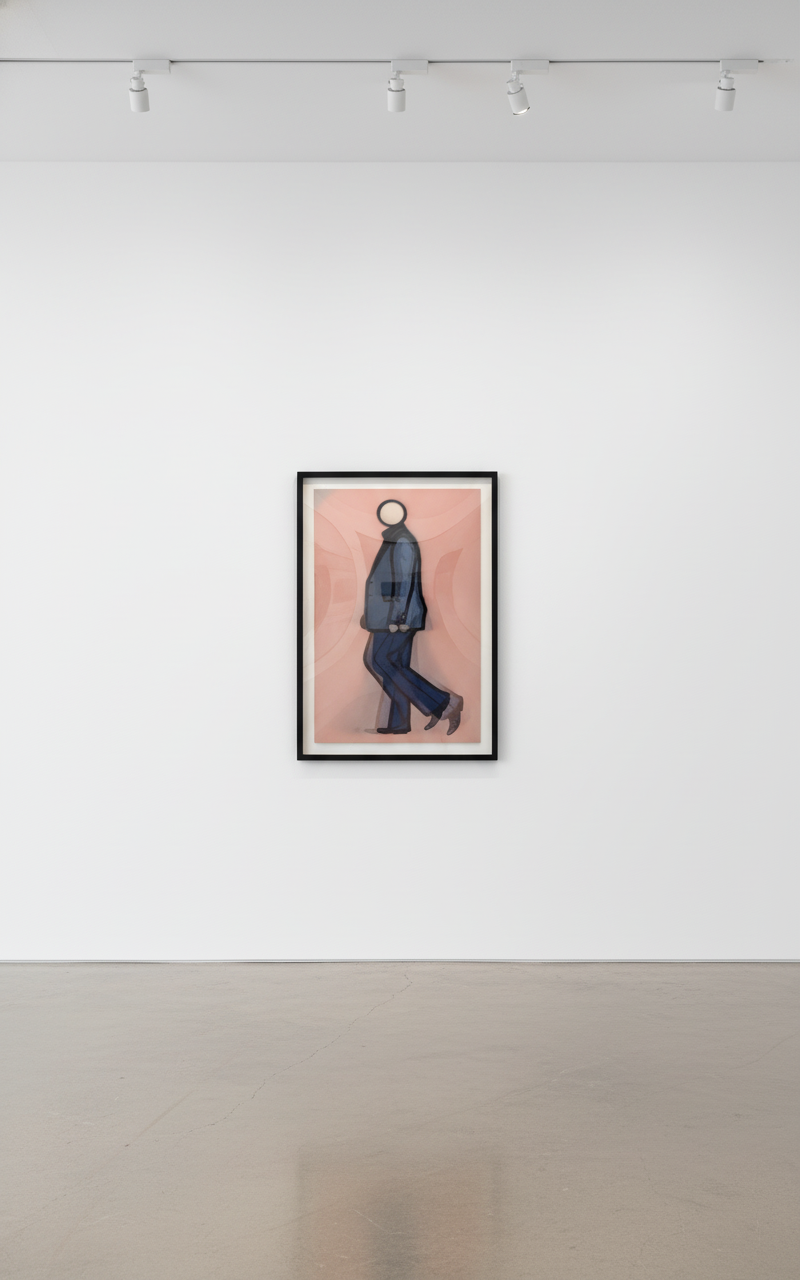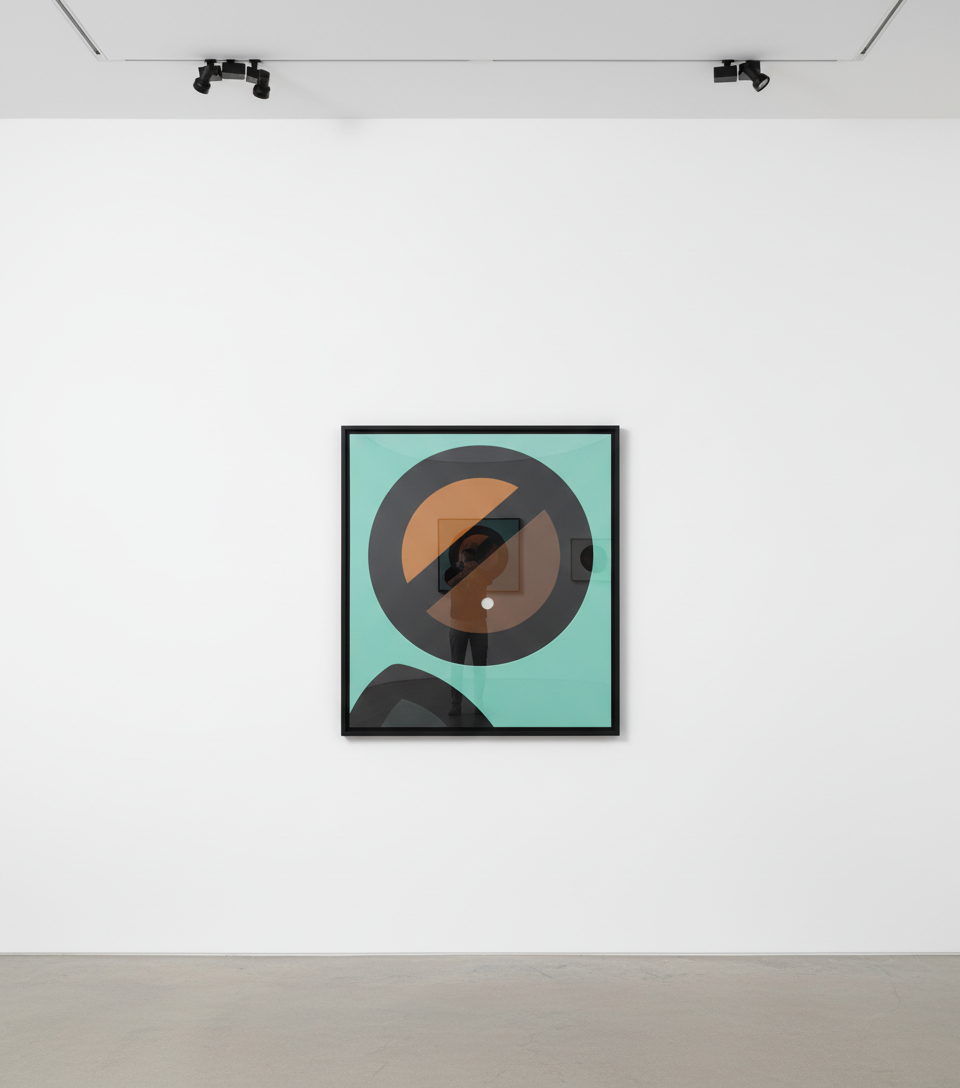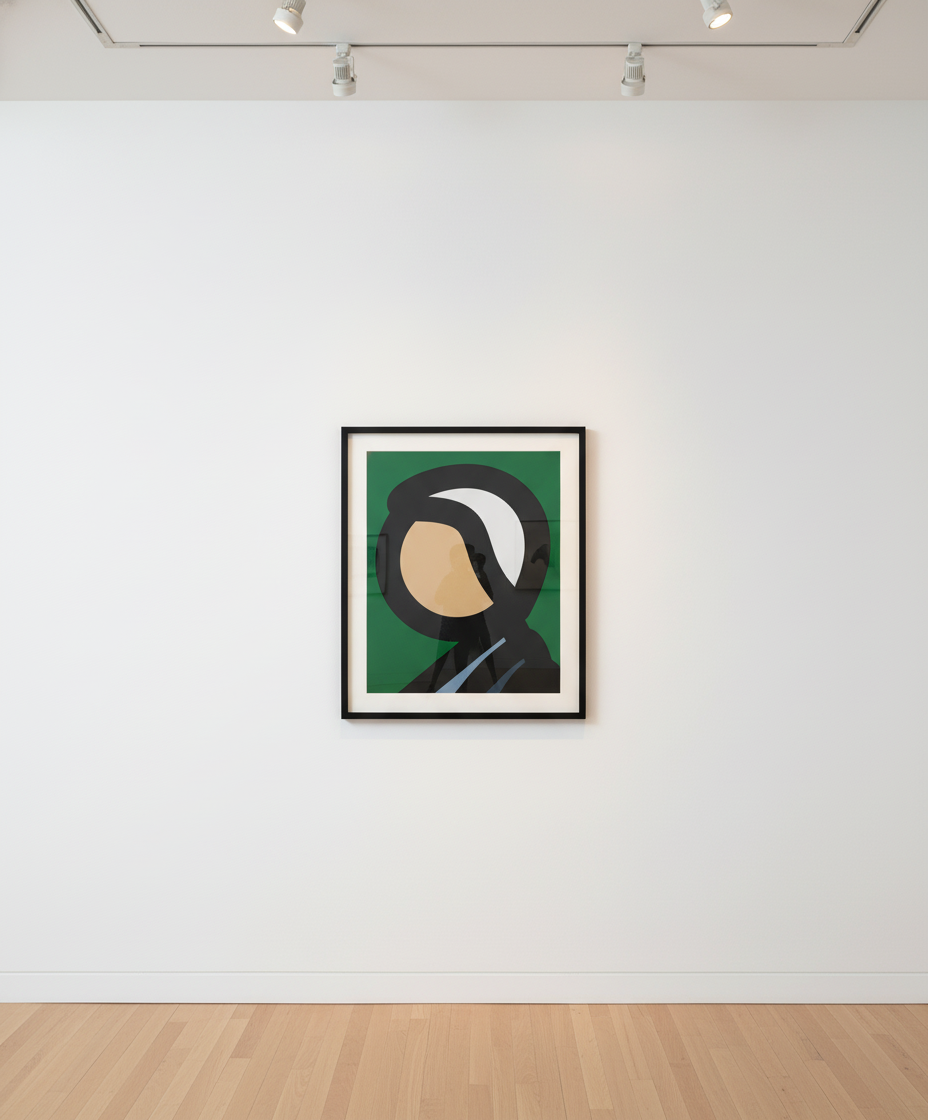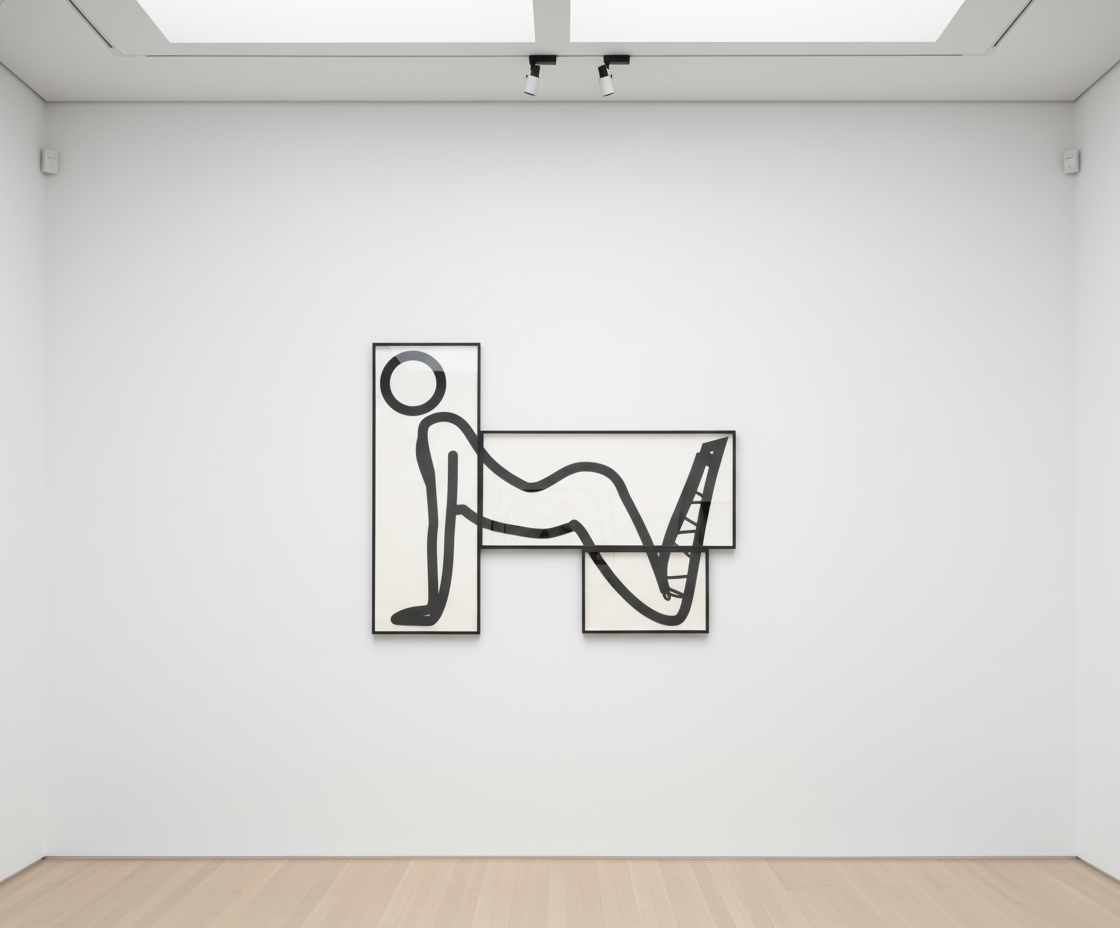

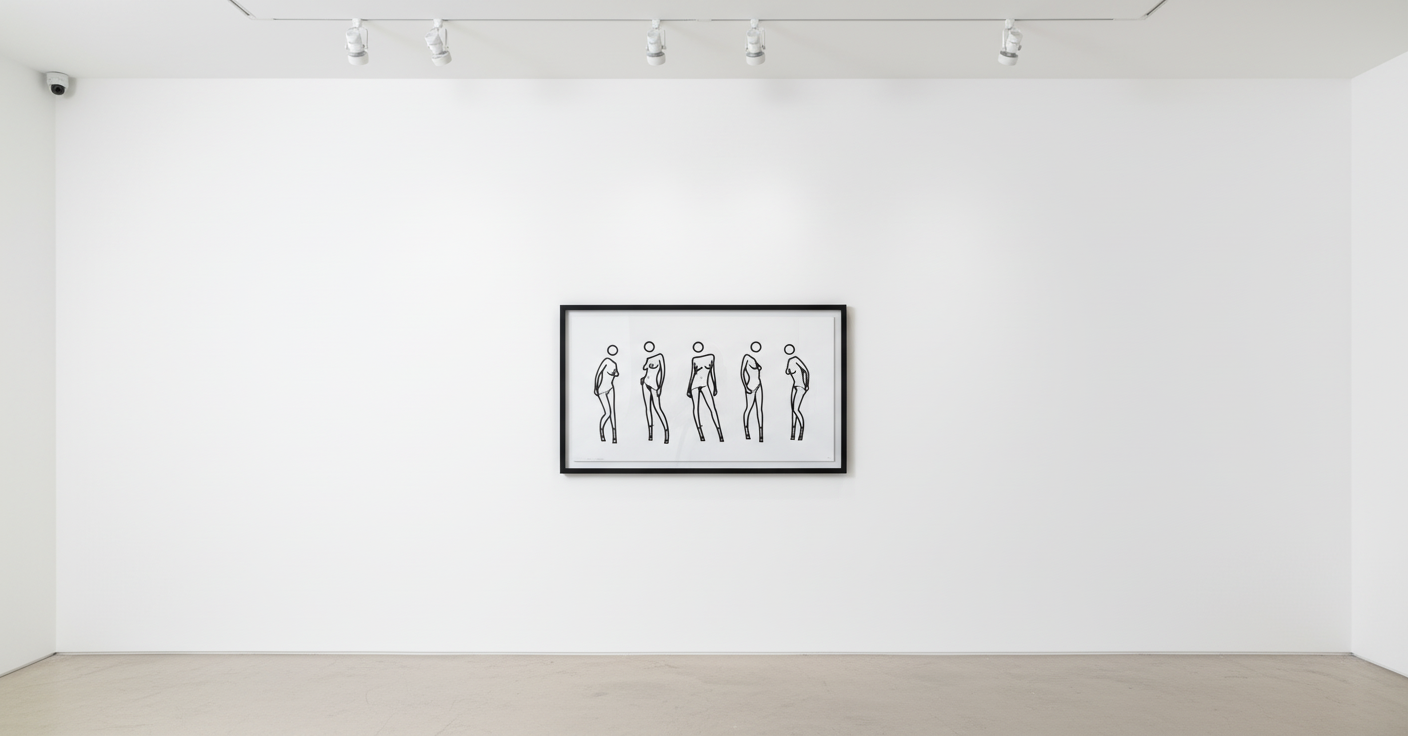
Bijou Gets Undressed
6 works

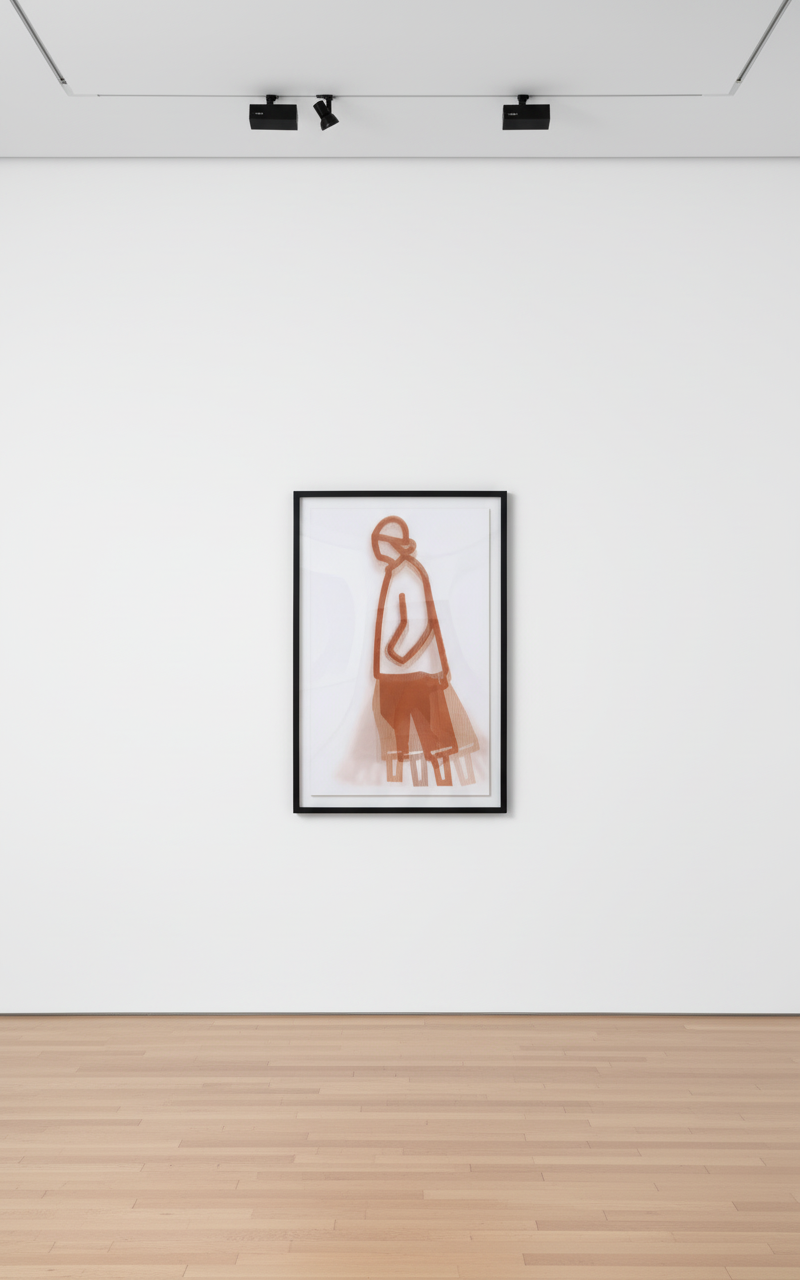
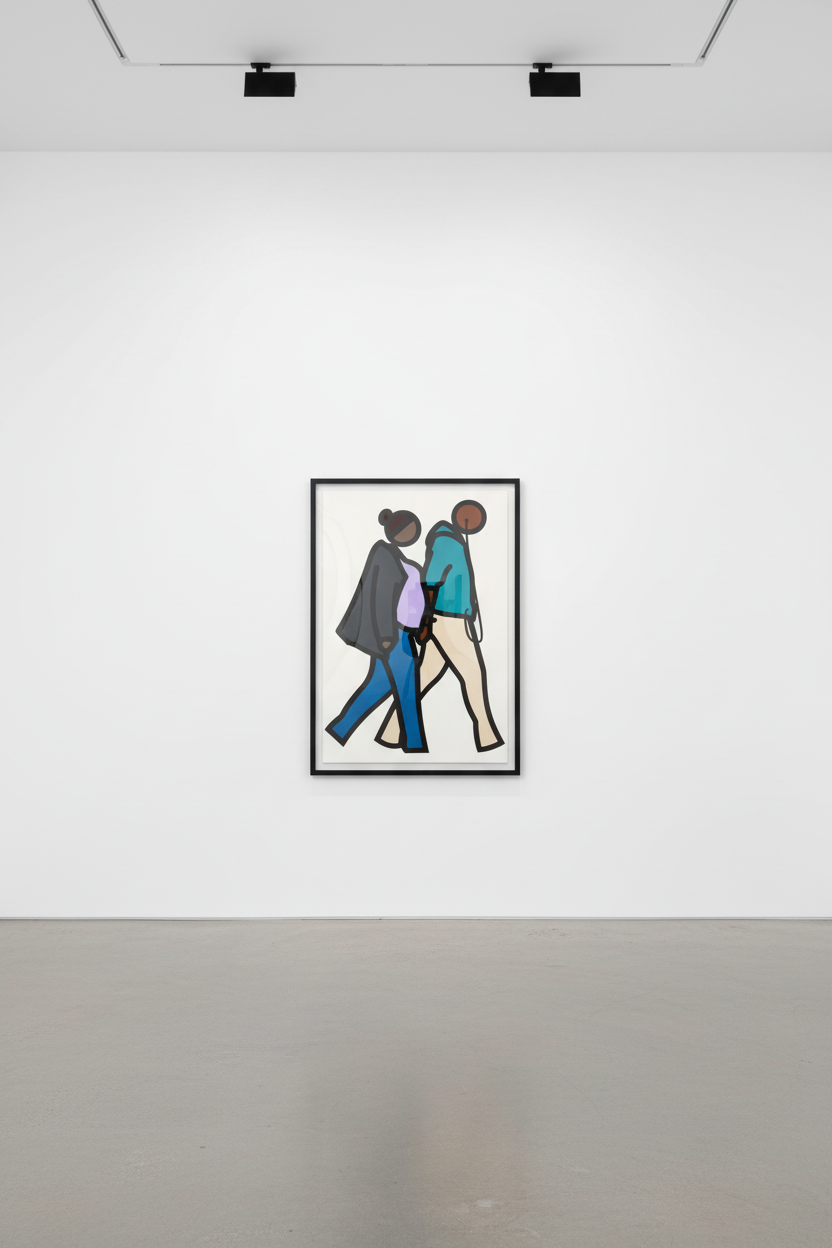
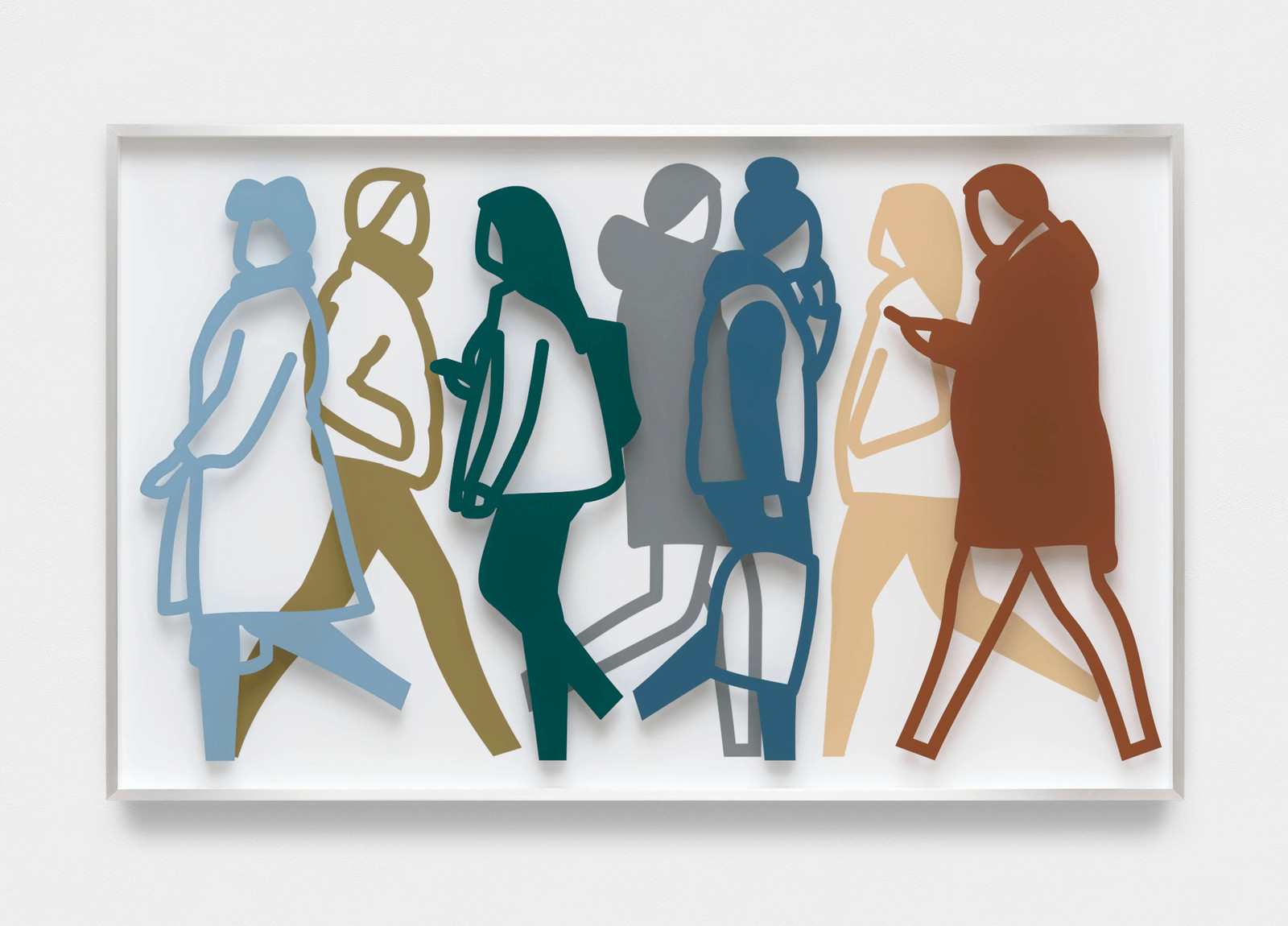
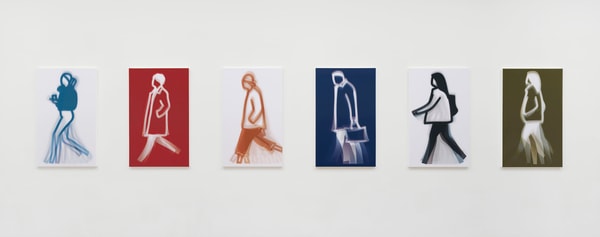
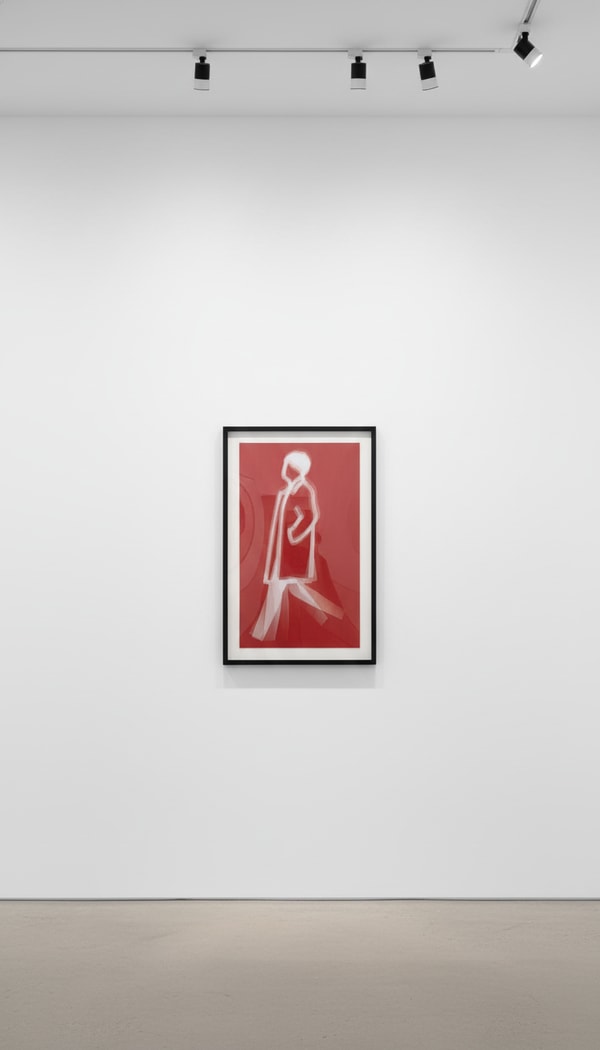
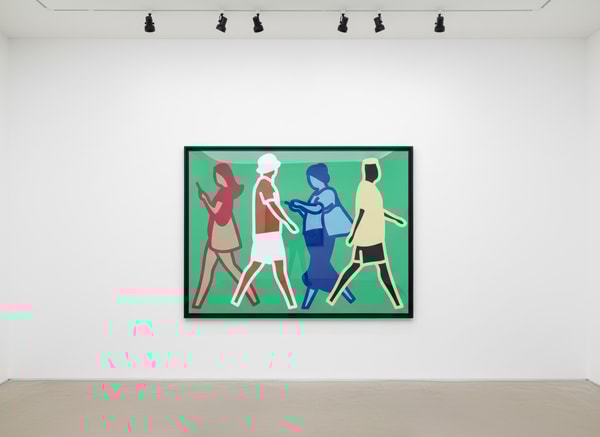
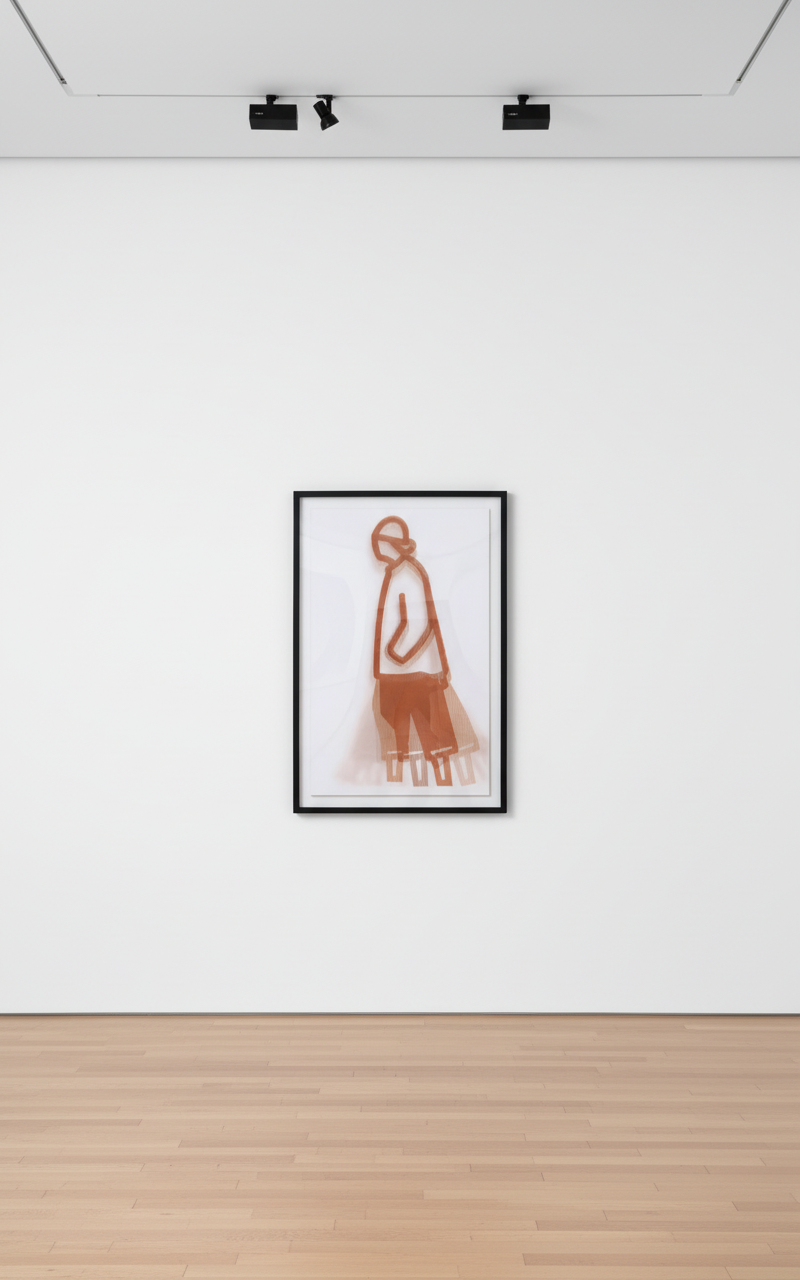
Old Street Walkers: Turned Up, 2022
Lenticular acrylic panel mounted onto white acrylic
47 1/4 x 28 1/2 in 120 x 72.4 cm
Edition of 50
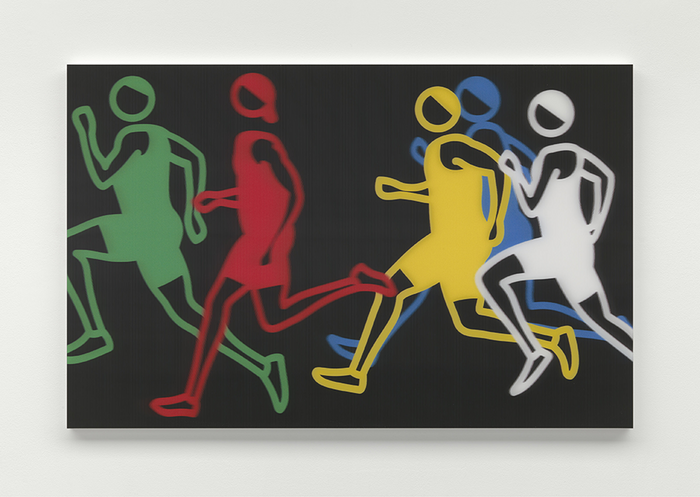
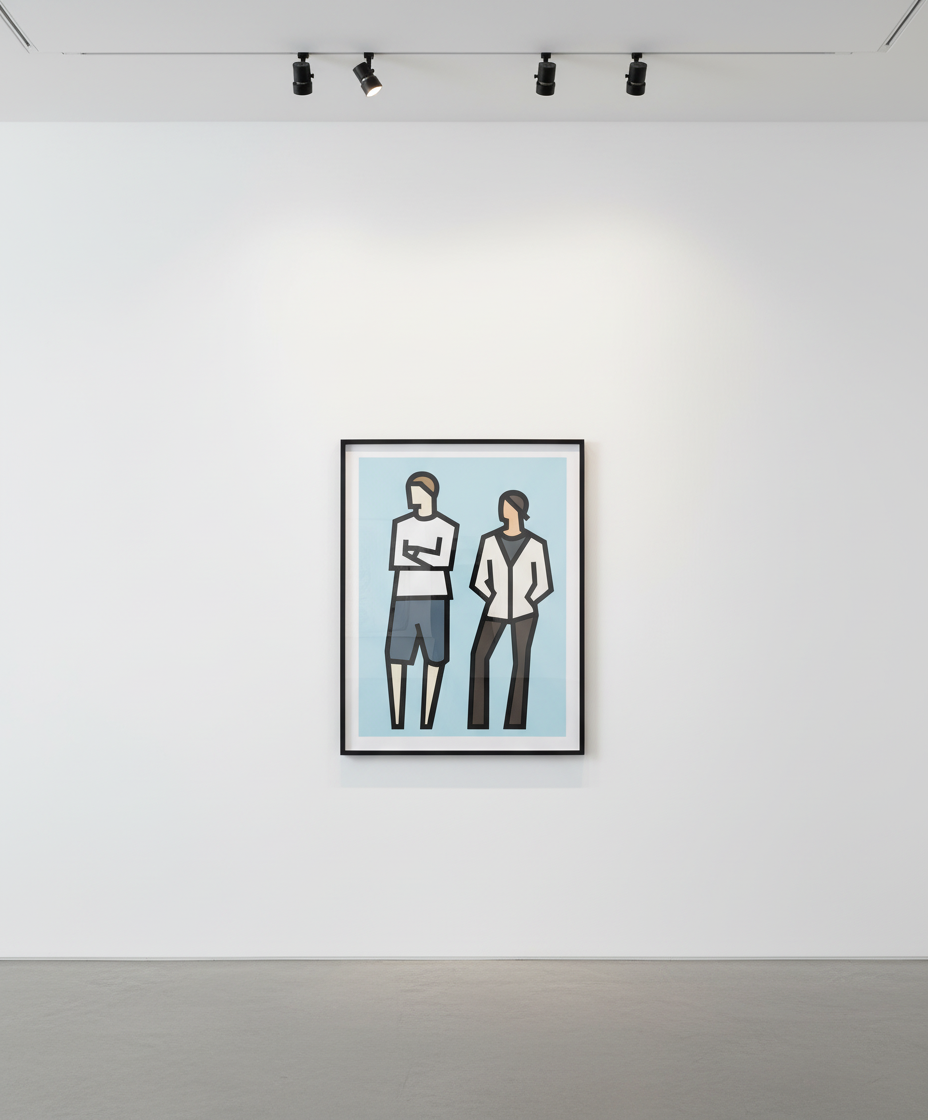
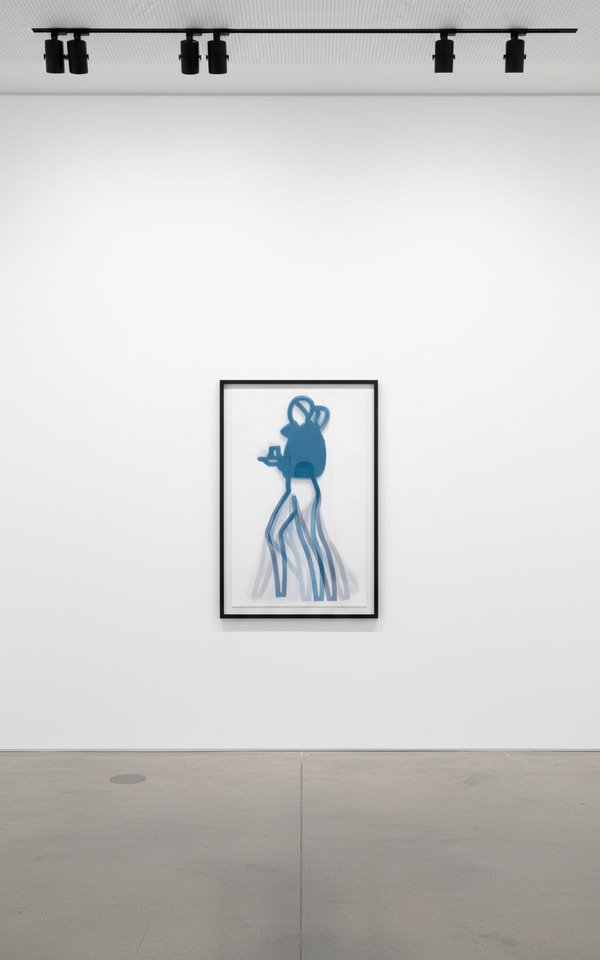
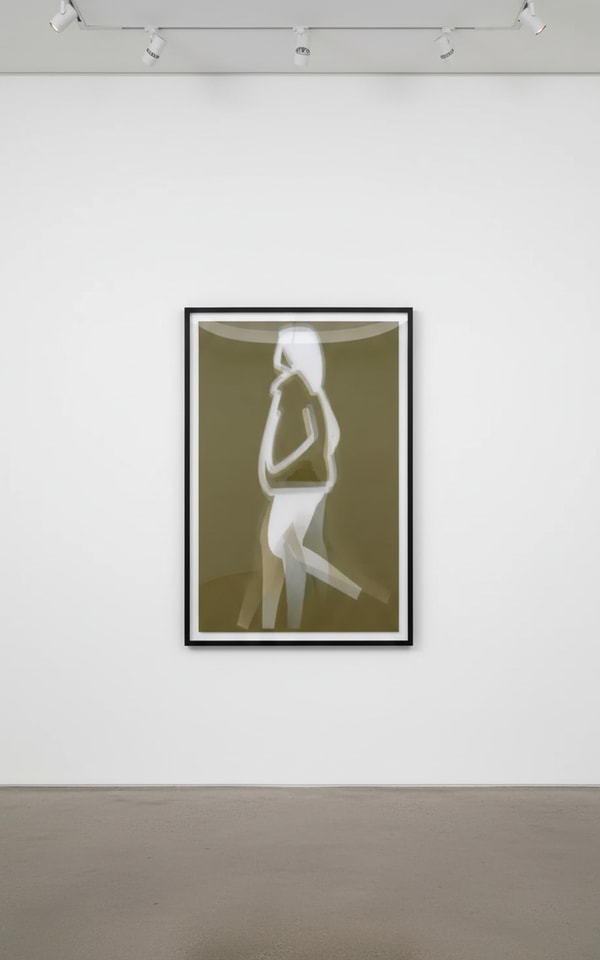
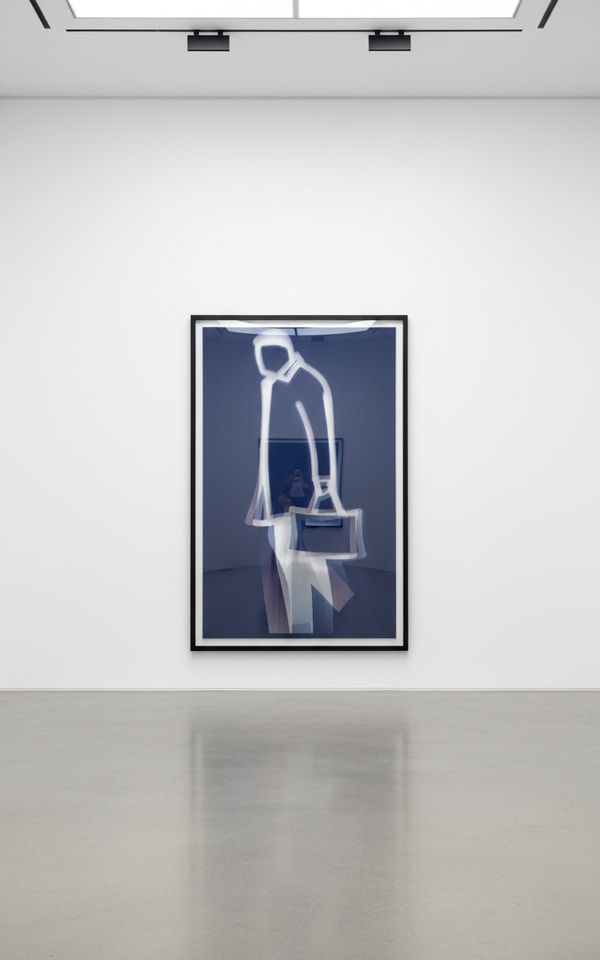
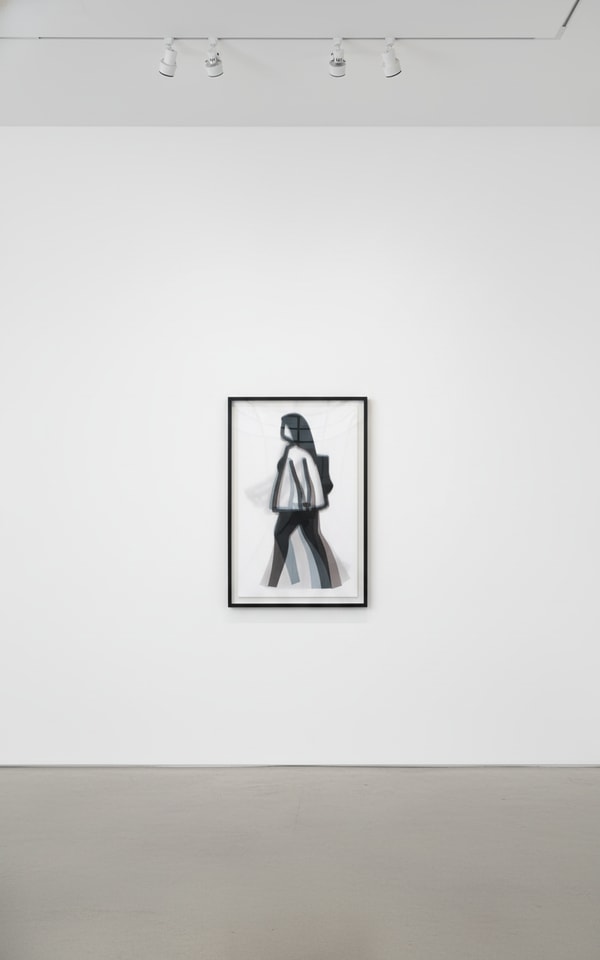
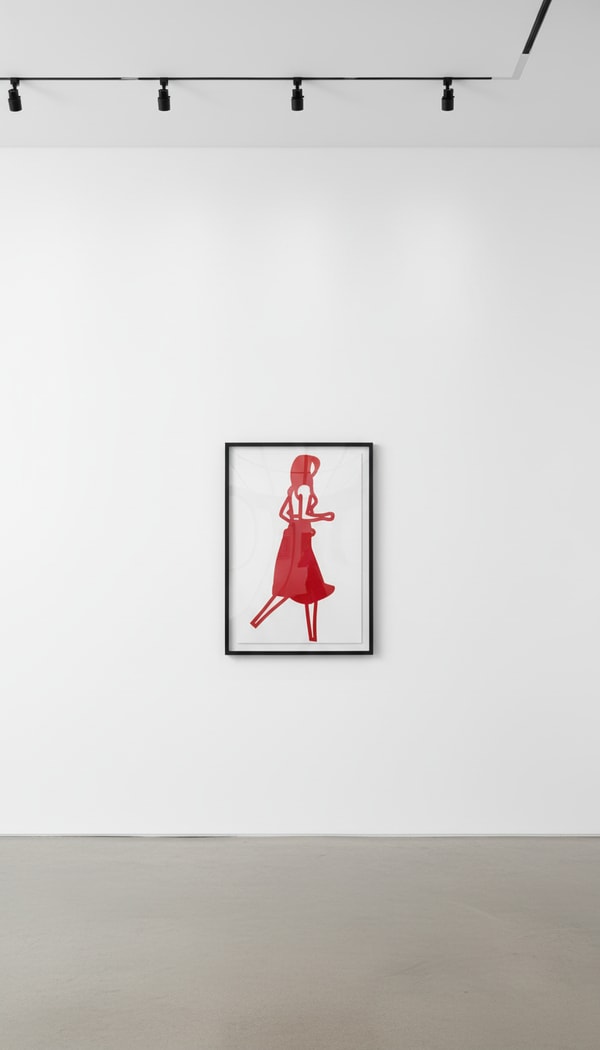
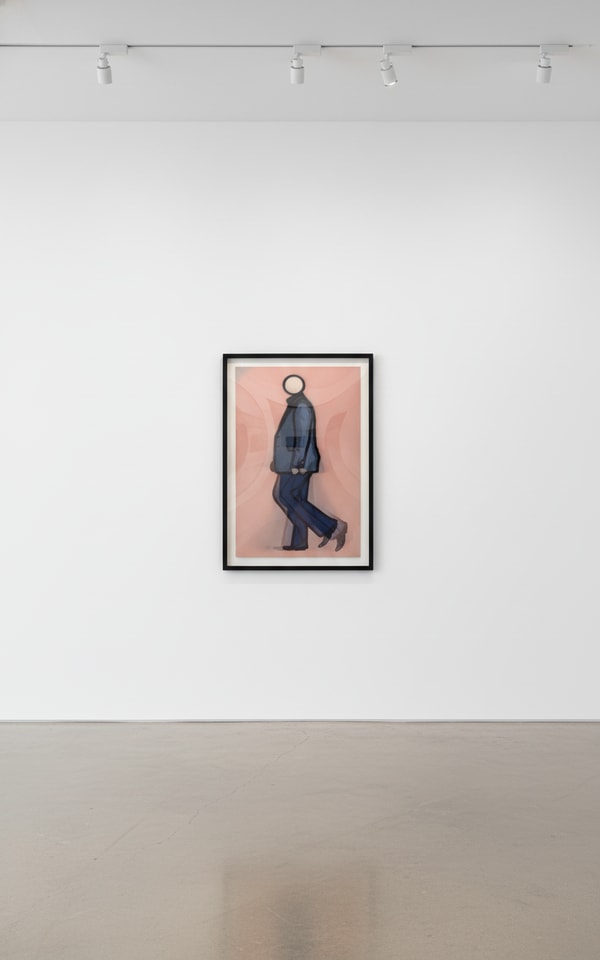
Julian Opie's "Old Street Walkers" portfolio is an evocative collection that vividly captures the rhythm and dynamism of urban life through his distinctive artistic lens. Created after the turn of the 21st century, this series takes its name from Old Street in London, a location known for its bustling activity and as a hub for creative and technological industries. Opie's work often reflects his interest in the patterns and flow of movement within cityscapes, and "Old Street Walkers" is a prime example of this fascination. In "Old Street Walkers," Opie distills the essence of pedestrians moving through the city into simplified, stylized forms. He employs his characteristic reductionist technique to strip down the complexity of human figures to their most basic elements—bold outlines and flat, uniform blocks of color. This minimalist approach is balanced by the subtle details that suggest individuality, such as variations in clothing, gait, and posture, allowing each figure to convey a sense of personal identity despite the abstraction. The portfolio showcases Opie's adept use of digital technology in art-making. Starting with photographs or video footage of city dwellers in motion, Opie uses computer software to edit and refine these images into graphic representations. This process highlights his interest in how movement can be captured and represented in static and digital forms, exploring the intersection between traditional modes of portraiture and contemporary digital media. "Old Street Walkers" stands out not only for its aesthetic appeal but also for its commentary on the urban experience. The figures are depicted against a nondescript or entirely absent background, focusing the viewer's attention on the subjects themselves and the act of walking. This choice emphasizes the universality and anonymity of urban life, where individuals are part of a larger flow of humanity, yet each retains a unique presence. The series also engages with themes of observation and surveillance in modern society. By presenting pedestrians as subjects observed in their everyday routines, Opie raises questions about privacy, visibility, and the ways in which people navigate public spaces. The viewer becomes an unseen observer, invited to reflect on the nature of watching and being watched in a world where public and private spheres increasingly intersect. "Old Street Walkers" contributes to the broader dialogue about the role of art in documenting and interpreting contemporary life. Through his innovative techniques and thoughtful exploration of subject matter, Julian Opie offers a fresh perspective on the familiar scenes of urban existence. His work encourages viewers to reconsider the beauty and complexity of mundane activities and to appreciate the artistry in the patterns of daily life. Overall, Julian Opie's "Old Street Walkers" portfolio is a testament to his skill in merging traditional artistic themes with modern technology and sensibilities. It captures the essence of city life, offering insights into the human condition while pushing the boundaries of how movement and identity are expressed in art.
Price on Application
Julian Opie (b. 1958, London) is one of the most recognisable and widely exhibited British artists of his generation, a painter, sculptor, and printmaker whose stripped-back figurative language has achieved both the commercial viability of design and the conceptual seriousness of fine art — a combination that few artists of any era have managed with equal confidence. Opie studied at Goldsmiths College under Michael Craig-Martin, graduating in 1982, and was representing by a major London gallery almost immediately. He has been a significant presence in the international art world for over four decades.
Opie's visual language is built from a small number of radical formal decisions: bold black outlines, flat unmodulated colour fields, the elimination of shadow, texture, and incidental detail, and a scale and graphic authority that draws openly on Egyptian hieroglyphics, Japanese woodblock printing, public signage, and the simplified conventions of digital interfaces. The result is a style of immediate recognisability — when you encounter a Julian Opie figure, you know it instantly — that nonetheless contains real formal thought about how images communicate, how representation functions, and what remains when almost everything is removed. His Walking Figures series, in which anonymous pedestrians in continuous motion are rendered in his signature distilled vocabulary and presented as both print editions and LED wall sculptures, has become one of the most compelling ongoing investigations in contemporary art into the relationship between the ancient idea of the frieze, the vernacular language of the public sign, and the aesthetic possibilities of the LED screen.
In 2000, Opie created the cover artwork for Blur's Best Of compilation — four simplified band portraits in his trademark style — bringing his visual language to an audience of millions and cementing his profile as an artist operating meaningfully across the boundary between fine art and popular culture. His portrait series, his landscape works, and his permanent public installations — including major commissions at Queen Elizabeth Olympic Park in London — extend the reach of his practice into civic and architectural contexts. At the major auction houses, significant Opie works have traded in the £200,000–£500,000 range at Christie's and Sotheby's, while his print editions range from thousands to tens of thousands of pounds, providing entry points across a wide spectrum of collector budgets. His work is held in the Tate Collection, among other public institutions.
His media range is notably broad: silkscreen prints, vinyl paintings, LED panels, lenticular works, and public sculptures are all produced with equal technical rigour and formal clarity.
Guy Hepner maintains strong inventory and expertise in Julian Opie's print editions and LED works. Our gallery at 177 Tenth Avenue, New York offers collectors expert guidance on acquisition and valuation. We provide free, confidential valuations for those looking to sell Opie works and active connections to buyers engaged with this market.