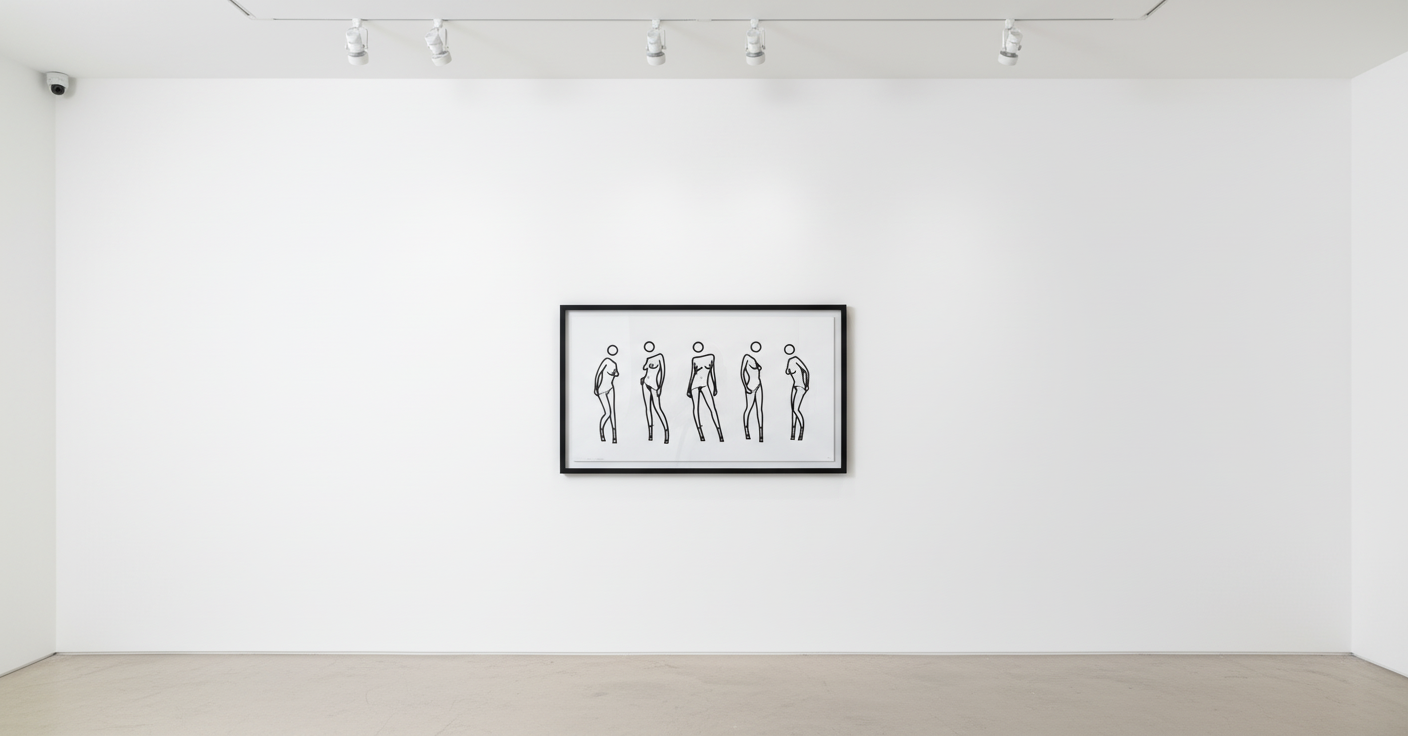
Bijou Gets Undressed
6 works

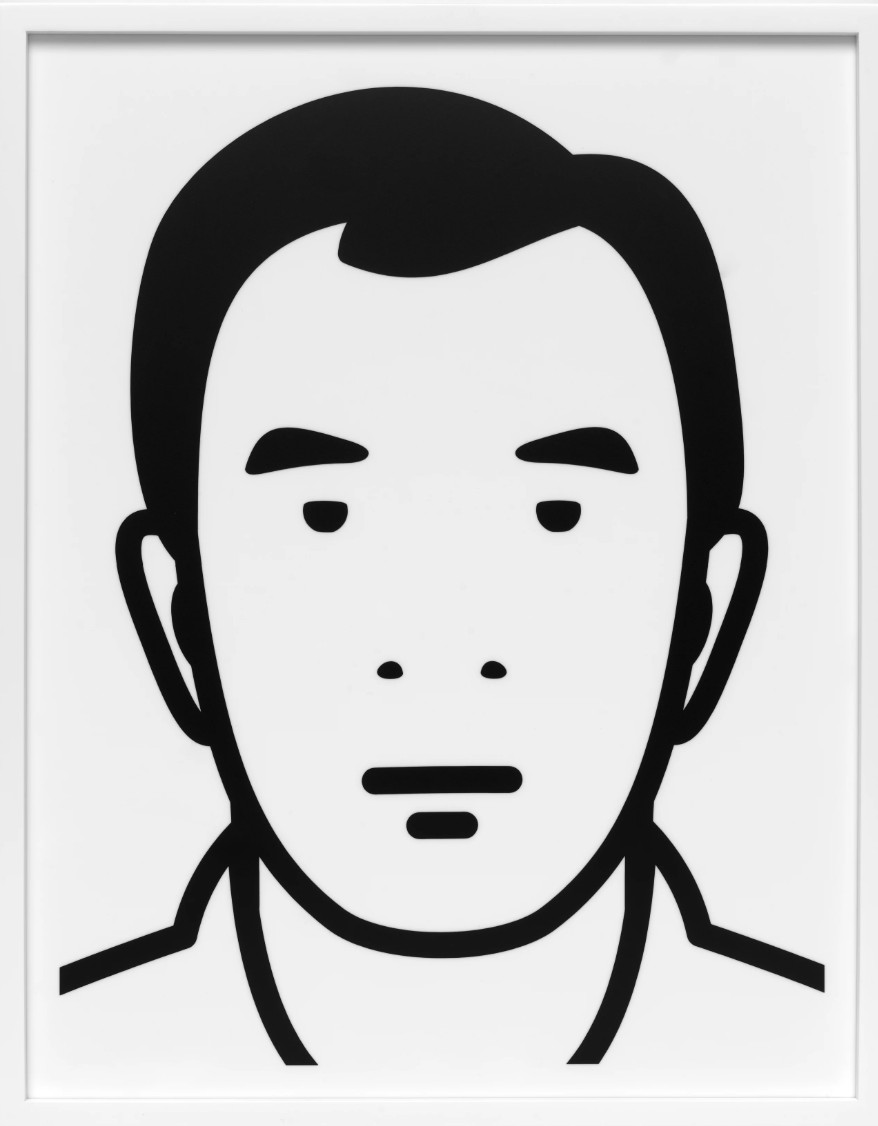
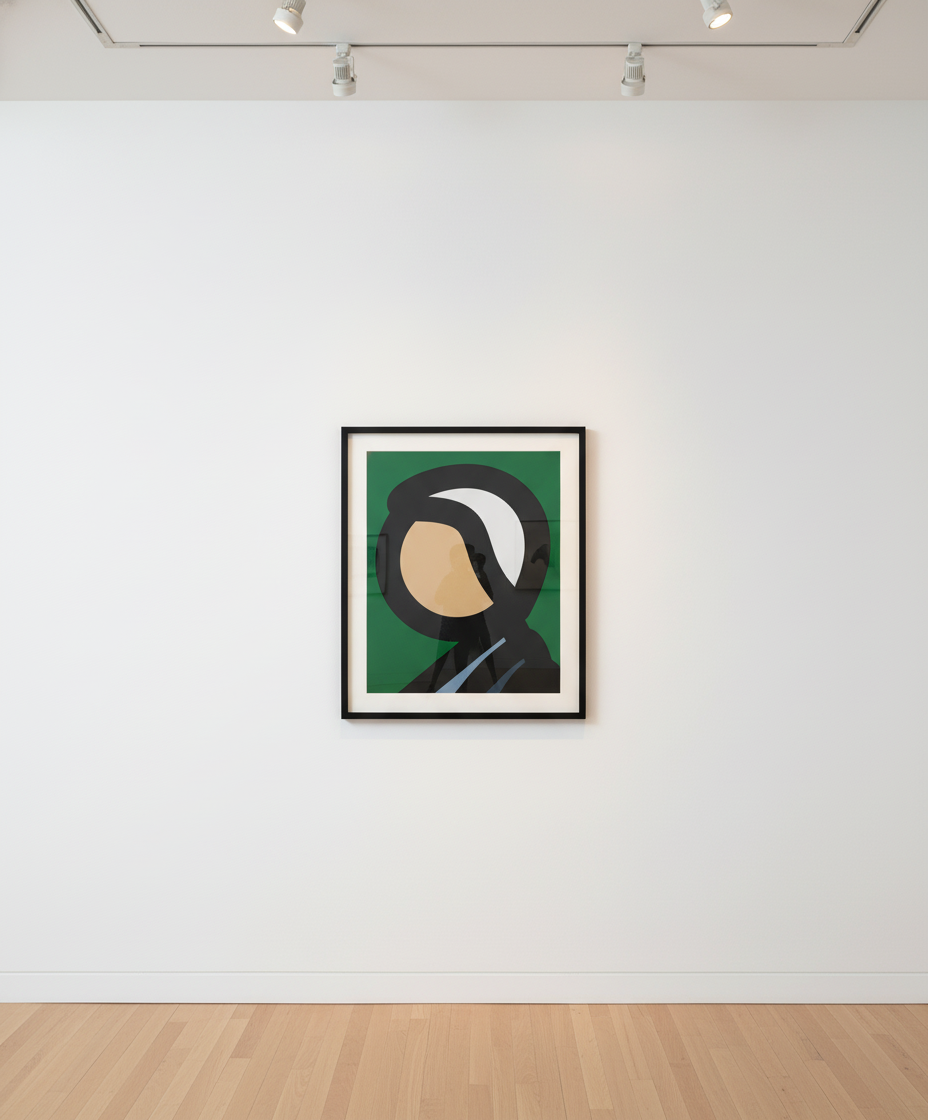
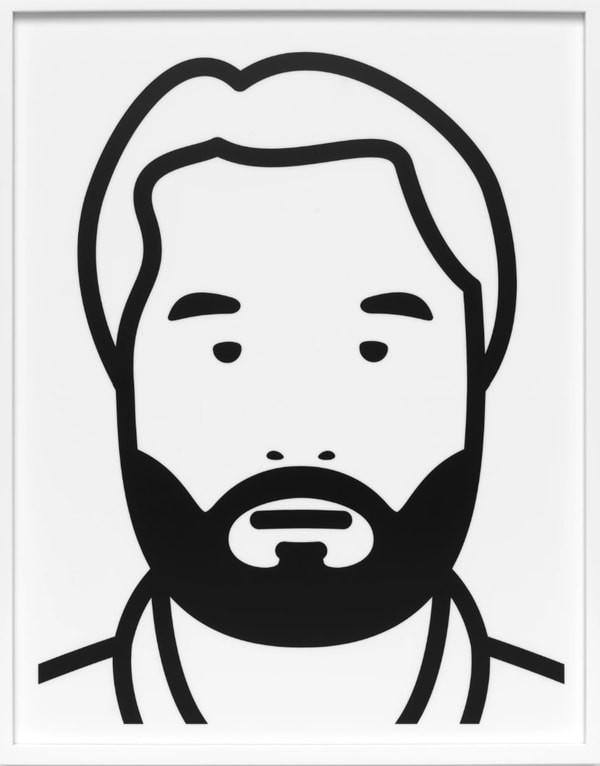
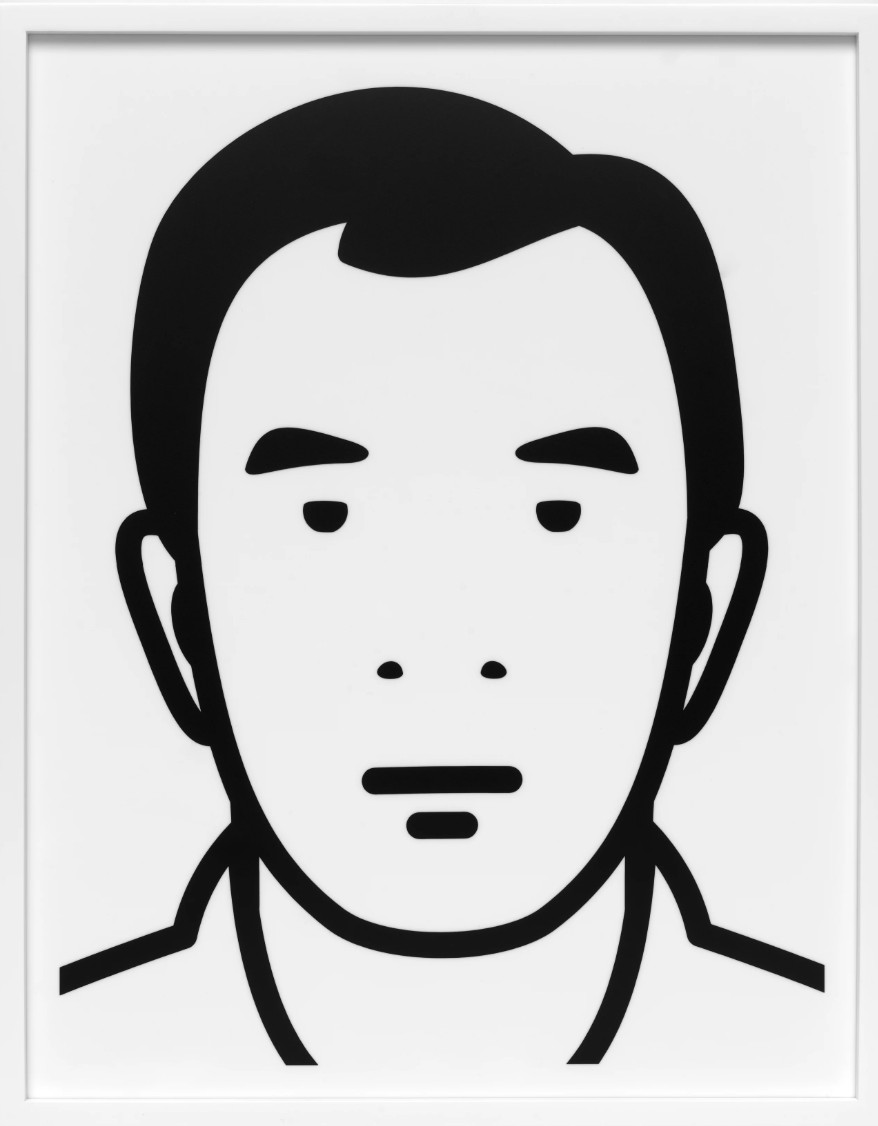
Everyone: Alan, 2023
Vinyl on white acrylic presented in a wooden frame specified by the artist
Framed: 37.4 x 29.7 x 3.0 cm - 14 3/4 x 11 3/4 x 1 1/8 in Image: 33.2 x 25.5 cm - 13 1/8 x 10 in
Edition of 10
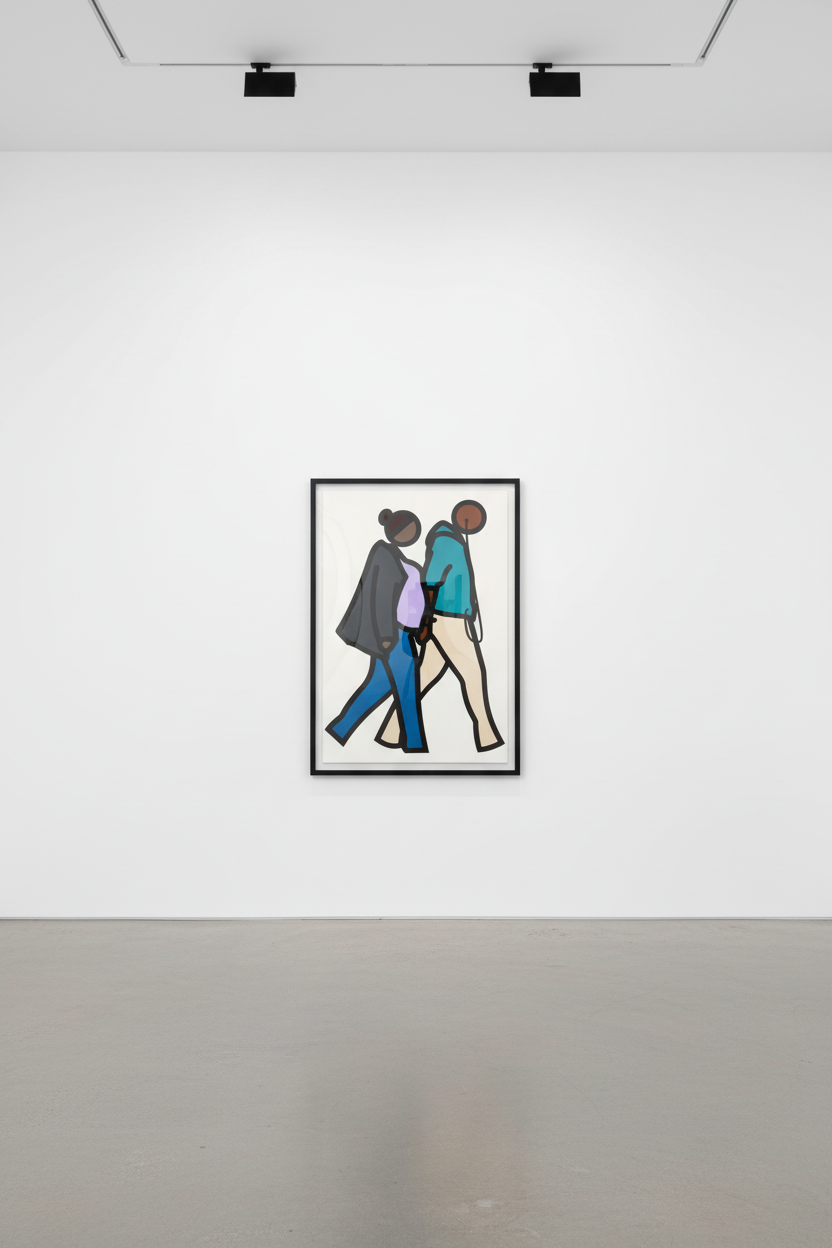
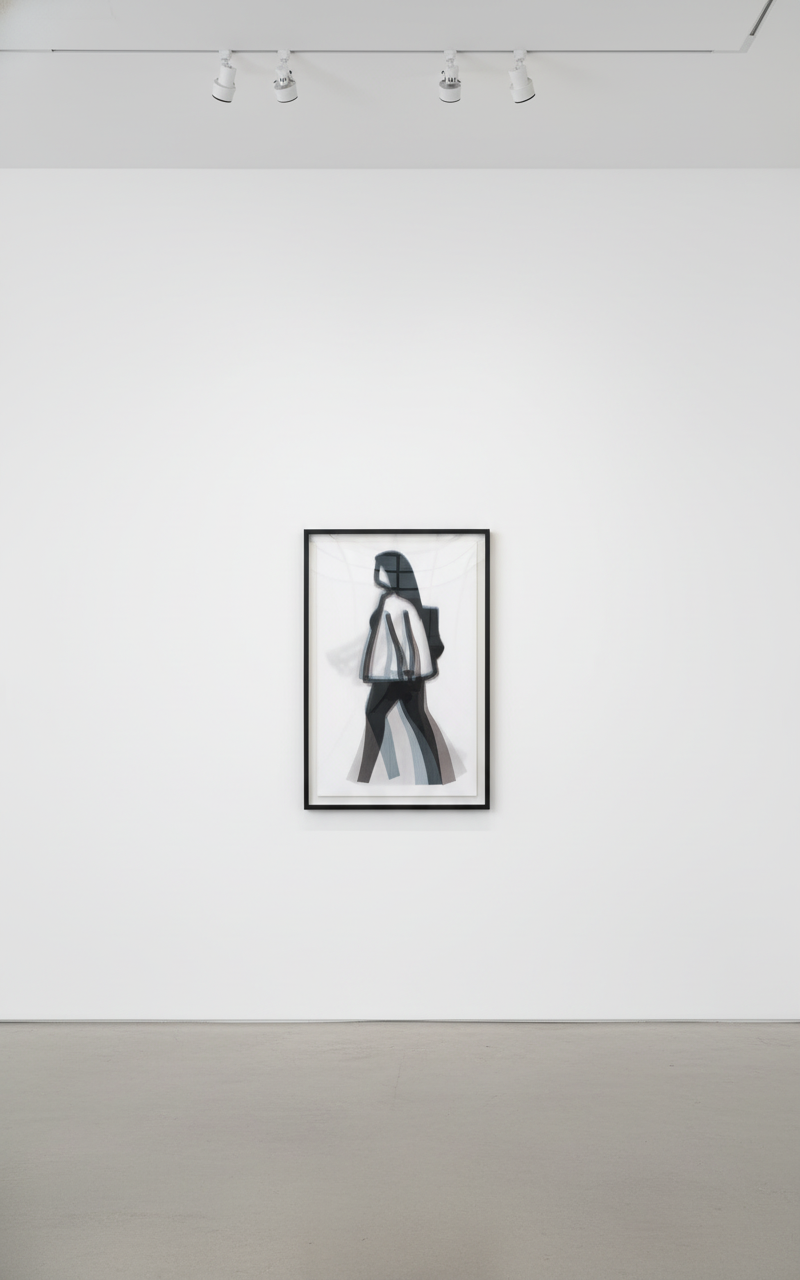
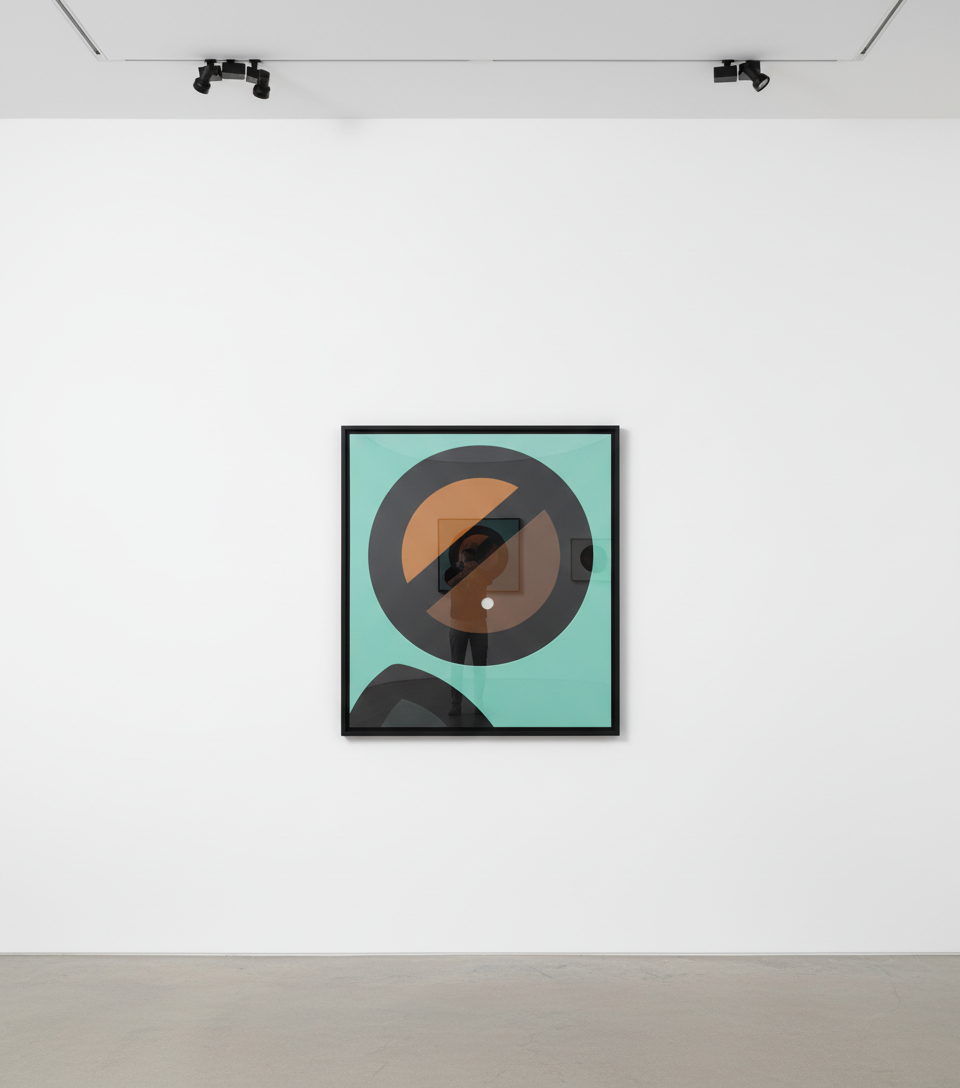
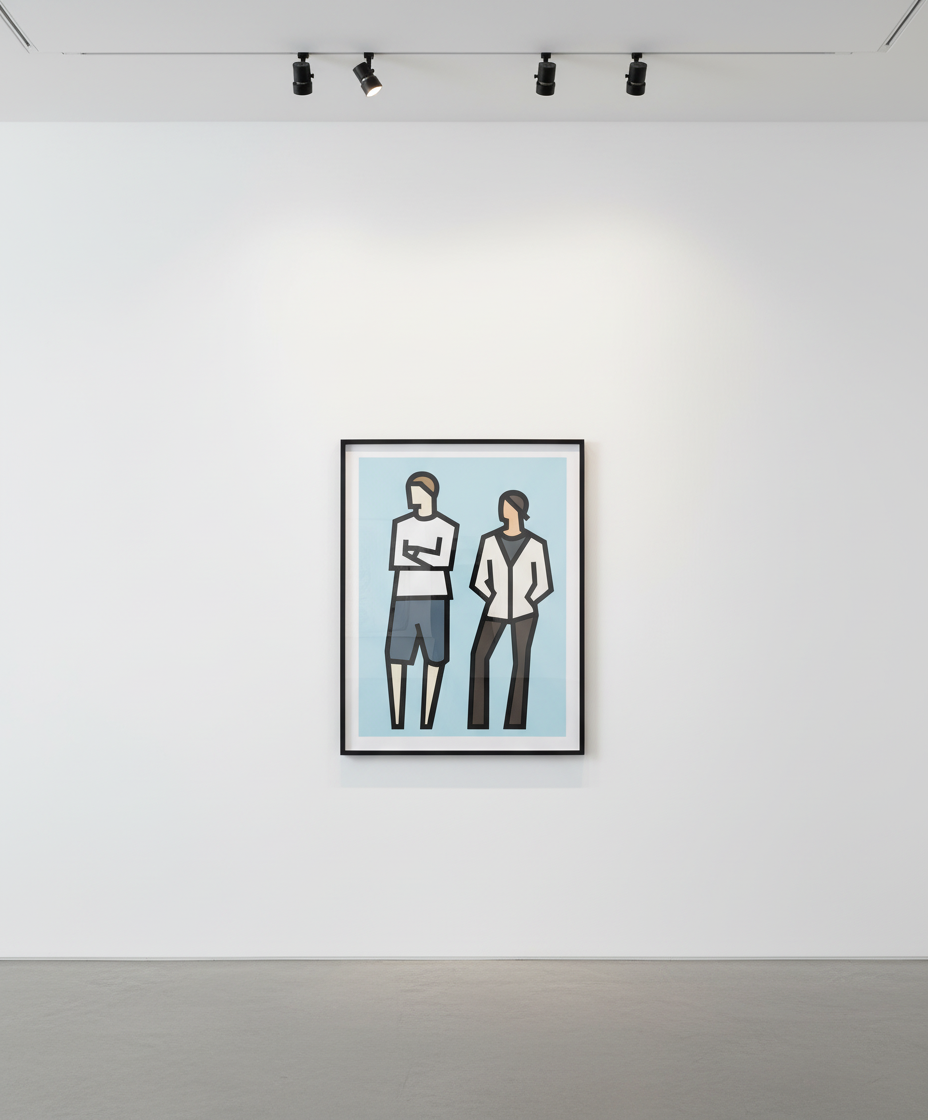
This work presents a male portrait rendered in Julian Opie's signature reductive style. The figure of Alan emerges through bold black outlines and minimal detail, with careful attention given to the essential features that convey individual character. Created in vinyl on white acrylic, the piece demonstrates Opie's masterful economy of line, distilling human physiognomy to its most fundamental elements while maintaining a distinctive personality and presence within the composition. Part of the acclaimed Everyone series from 2023, this portrait exemplifies Opie's ongoing exploration of contemporary portraiture and universal human representation. His work bridges fine art and popular culture, drawing inspiration from public signage and digital iconography to create instantly recognizable yet timeless imagery. The specified wooden frame enhances the work's presentation, elevating the piece as a collectible object. This edition represents an accessible entry point into Opie's celebrated practice, which is held in major international collections including Tate and MoMA. Available for purchase — enquire for price and availability.
Price on Application
Julian Opie's "Everyone" series represents one of the most quietly profound bodies of work within the artist's expansive practice, distilling his decades-long fascination with human representation into portraits of striking intimacy and universal resonance. Where much of Opie's celebrated oeuvre captures figures in motion—walking, running, dancing through urban landscapes—the "Everyone" series invites a moment of stillness, presenting individual subjects with a directness that feels both deeply personal and remarkably democratic. Each work in the series carries a simple first name as its title, such as "Everyone: David" and "Everyone: Alan," a naming convention that speaks to the fundamental equality Opie perceives in human experience while simultaneously honoring the irreducible individuality of each person depicted.
The formal language Opie employs in the "Everyone" series showcases his signature aesthetic at its most refined. His characteristic bold outlines define each figure with an economy of means that recalls traditions as varied as Japanese woodblock prints, medieval portraiture, and contemporary digital iconography. Flat planes of carefully selected color fill these contours, eschewing conventional modeling, shadow, and the illusionistic tricks that have dominated Western portraiture since the Renaissance. Yet within this apparent simplicity lies tremendous sophistication. Opie's reduction of the human face to its essential components—the precise curve of a jawline, the specific angle of a nose, the particular set of eyes—requires an acute understanding of what makes each individual recognizable. He must identify and preserve precisely those features that constitute identity while stripping away everything extraneous. The result occupies a fascinating territory between abstraction and representation, between the generic and the specific, between the anonymous and the intimately known.
What distinguishes the "Everyone" series from Opie's other portrait work is its deliberate emphasis on ordinary people rather than celebrities or commissioned subjects. While Opie has created memorable portraits of musicians, athletes, and cultural figures throughout his career, the "Everyone" series turns its attention to individuals who might pass unnoticed on any street corner. This democratic impulse transforms each portrait into something approaching philosophical inquiry. By presenting these everyday figures with the same formal rigor and visual presence typically reserved for the famous or powerful, Opie challenges hierarchies of attention and worth that structure so much of contemporary visual culture. The series title itself carries this meaning: everyone, regardless of status or recognition, possesses a face worthy of contemplation, a presence deserving of artistic attention.
The visual impact of works like "Everyone: David" and "Everyone: Alan" derives significantly from Opie's masterful handling of color and line. Each portrait presents a face that feels simultaneously familiar and slightly estranged, as though we are seeing someone we might know rendered through a visual language just different enough to make us look again. The colors Opie selects—whether for skin tones, hair, clothing, or backgrounds—avoid naturalistic accuracy in favor of chromatic relationships that heighten visual presence and emotional resonance. His lines possess a confidence and clarity that comes only from an artist who has spent decades refining his visual vocabulary, knowing precisely how much information to include and how much to omit. This balance between presence and absence, between what is shown and what is implied, gives the "Everyone" portraits their distinctive power to engage viewers across extended contemplation.
Opie's working process for the series involves an intricate translation from photographic source material through digital manipulation to final artistic output. He photographs his subjects, then works extensively with computer software to progressively simplify and stylize the image, making countless decisions about which details to preserve and which to eliminate. This process might seem mechanical, but it is in fact deeply intuitive, requiring the artist to continually assess what constitutes the essence of a particular face. The final works, whether realized as prints, paintings, or other media, carry the authority of this extended consideration. They are not quick sketches but carefully calibrated distillations that have passed through multiple stages of artistic judgment.
The "Everyone" series also connects to broader currents in contemporary art's engagement with identity, representation, and the ubiquity of images in digital culture. Opie's simplified figures recall the avatars and icons that populate our screens, yet they resist the anonymity of purely functional imagery. Each portrait insists on particularity even as it employs a visual language associated with generality. This tension makes the series especially relevant to contemporary viewers who navigate daily between highly personalized digital identities and the standardizing forces of technological platforms. Opie neither celebrates nor critiques this condition; instead, he offers images that allow us to reflect on what it means to see and be seen in an age of unprecedented image proliferation.
Guy Hepner is pleased to offer works from Julian Opie's "Everyone" series, and collectors interested in acquiring pieces from this significant body of work are invited to inquire with our New York team for availability, pricing, and additional information.

Julian Opie (b. 1958, London) is one of the most recognisable and widely exhibited British artists of his generation, a painter, sculptor, and printmaker whose stripped-back figurative language has achieved both the commercial viability of design and the conceptual seriousness of fine art — a combination that few artists of any era have managed with equal confidence. Opie studied at Goldsmiths College under Michael Craig-Martin, graduating in 1982, and was representing by a major London gallery almost immediately. He has been a significant presence in the international art world for over four decades.
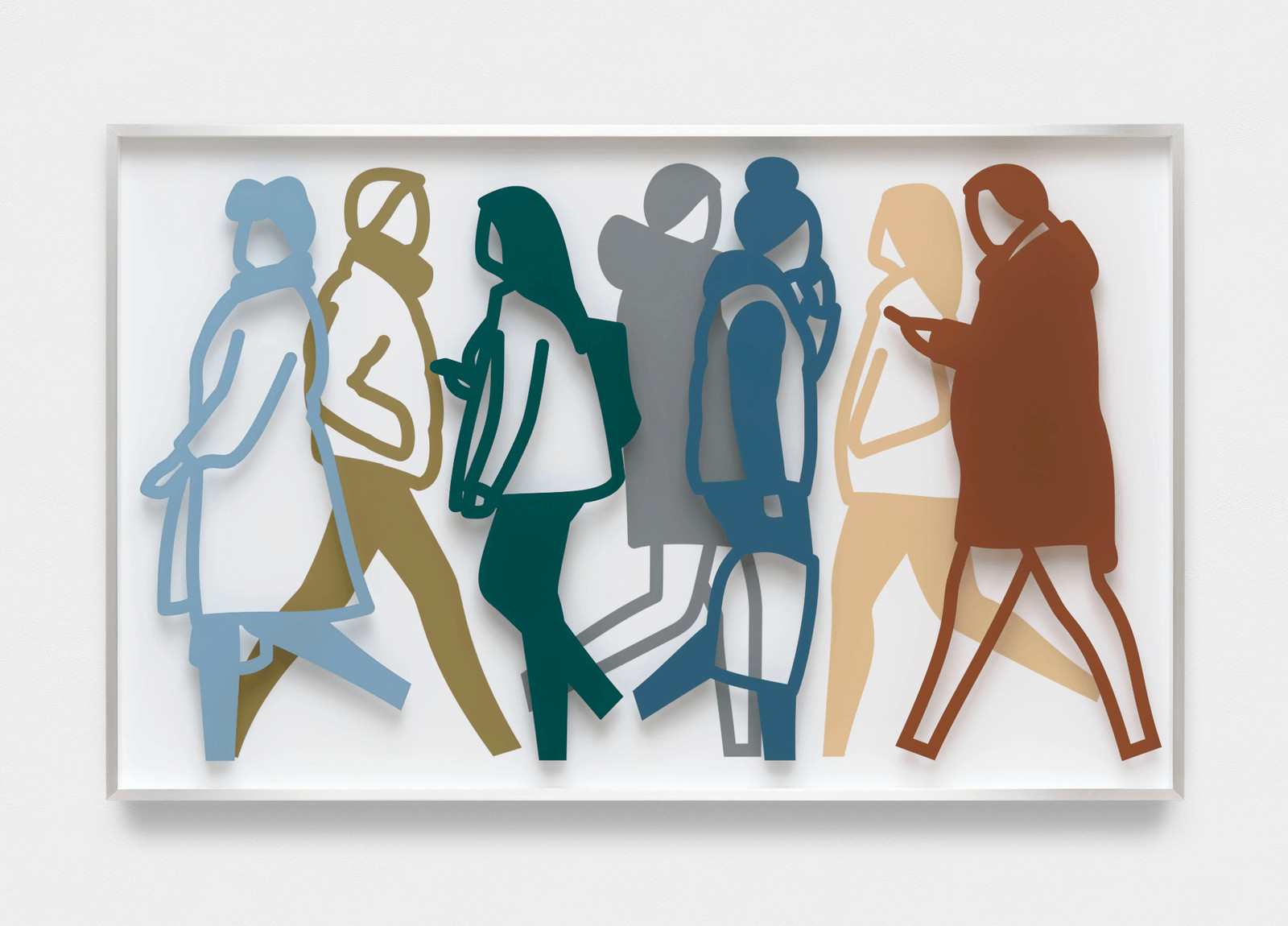
Opie's visual language is built from a small number of radical formal decisions: bold black outlines, flat unmodulated colour fields, the elimination of shadow, texture, and incidental detail, and a scale and graphic authority that draws openly on Egyptian hieroglyphics, Japanese woodblock printing, public signage, and the simplified conventions of digital interfaces. The result is a style of immediate recognisability — when you encounter a Julian Opie figure, you know it instantly — that nonetheless contains real formal thought about how images communicate, how representation functions, and what remains when almost everything is removed. His Walking Figures series, in which anonymous pedestrians in continuous motion are rendered in his signature distilled vocabulary and presented as both print editions and LED wall sculptures, has become one of the most compelling ongoing investigations in contemporary art into the relationship between the ancient idea of the frieze, the vernacular language of the public sign, and the aesthetic possibilities of the LED screen.
In 2000, Opie created the cover artwork for Blur's Best Of compilation — four simplified band portraits in his trademark style — bringing his visual language to an audience of millions and cementing his profile as an artist operating meaningfully across the boundary between fine art and popular culture. His portrait series, his landscape works, and his permanent public installations — including major commissions at Queen Elizabeth Olympic Park in London — extend the reach of his practice into civic and architectural contexts. At the major auction houses, significant Opie works have traded in the £200,000–£500,000 range at Christie's and Sotheby's, while his print editions range from thousands to tens of thousands of pounds, providing entry points across a wide spectrum of collector budgets. His work is held in the Tate Collection, among other public institutions.
His media range is notably broad: silkscreen prints, vinyl paintings, LED panels, lenticular works, and public sculptures are all produced with equal technical rigour and formal clarity.
Guy Hepner maintains strong inventory and expertise in Julian Opie's print editions and LED works. Our gallery at 177 Tenth Avenue, New York offers collectors expert guidance on acquisition and valuation. We provide free, confidential valuations for those looking to sell Opie works and active connections to buyers engaged with this market.