Paintings
14 works

Hunt Slonem has established himself as one of the most distinctive American Neo-Expressionist painters working today, recognized internationally for his exuberant explorations of nature, spirituality, and historical architecture. Born in 1951 in Kittery, Maine, Slonem spent his formative years moving across the globe due to his father's naval career, living in Hawaii, Nicaragua, and various locations throughout the United States. This peripatetic childhood cultivated an early appreciation fo
1 series total
Hunt Slonem
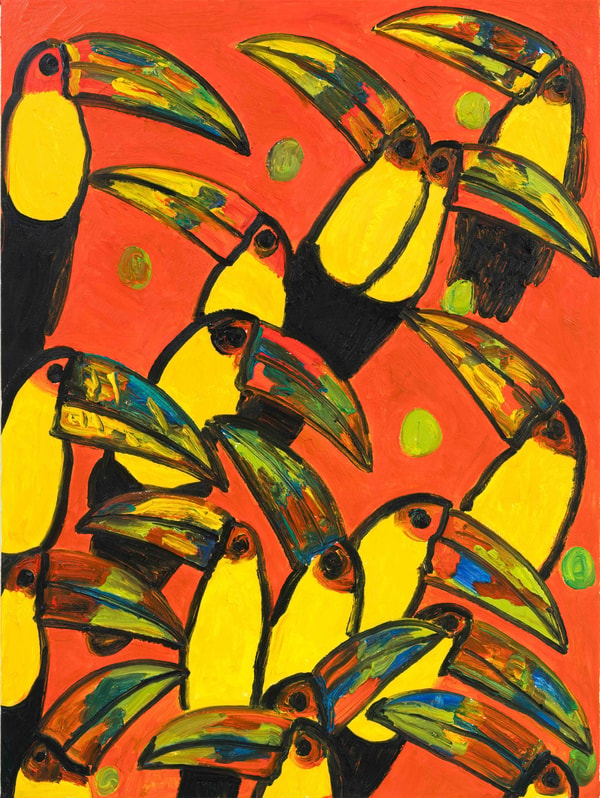
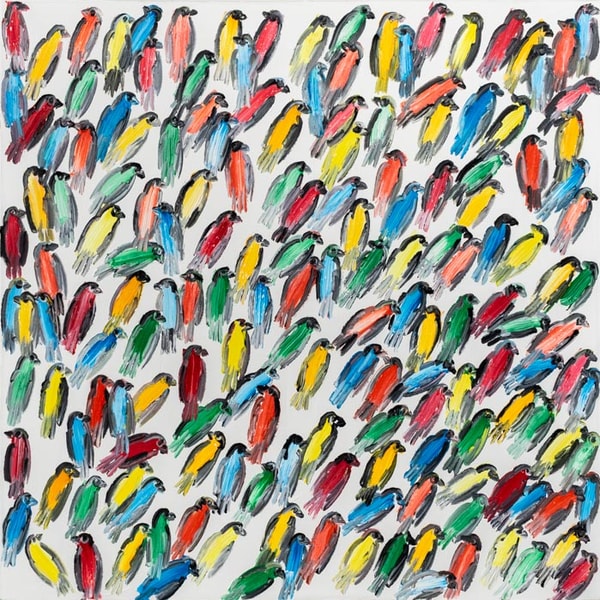
Toucans Honduras
2025
Hunt Slonem
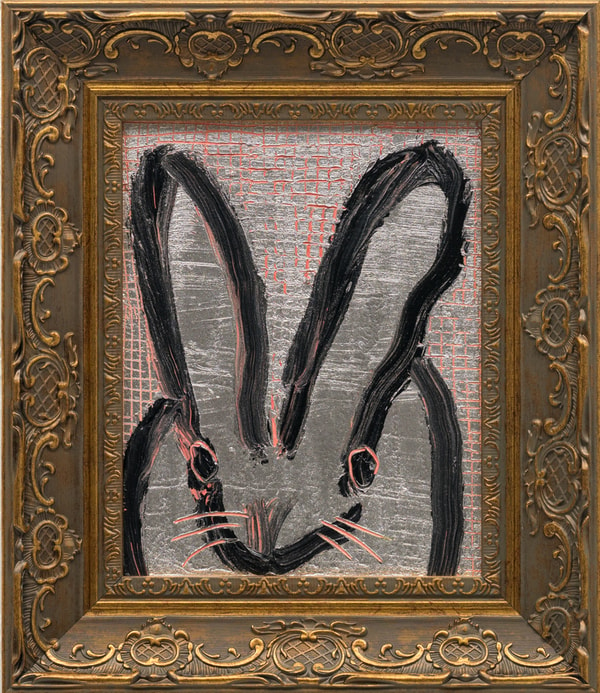
Finches Thurs
2021
Hunt Slonem
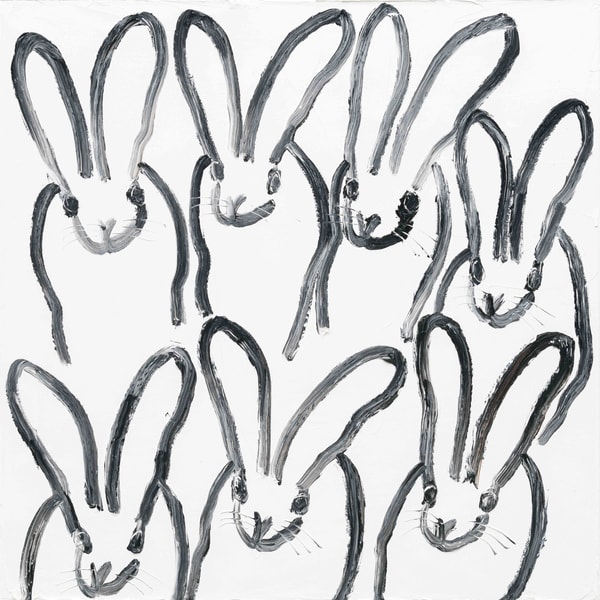
Cross Hatch Anthony
2026
Hunt Slonem
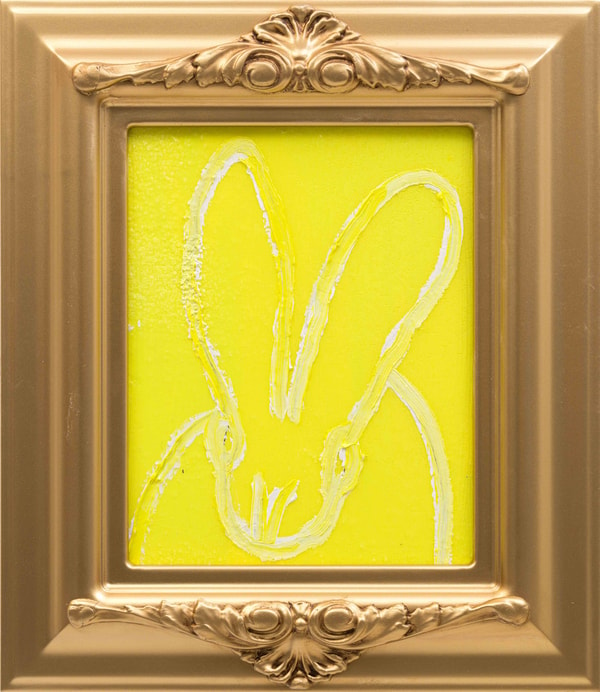
Hutch Monday
2025
Hunt Slonem
Yellow Dream
2026
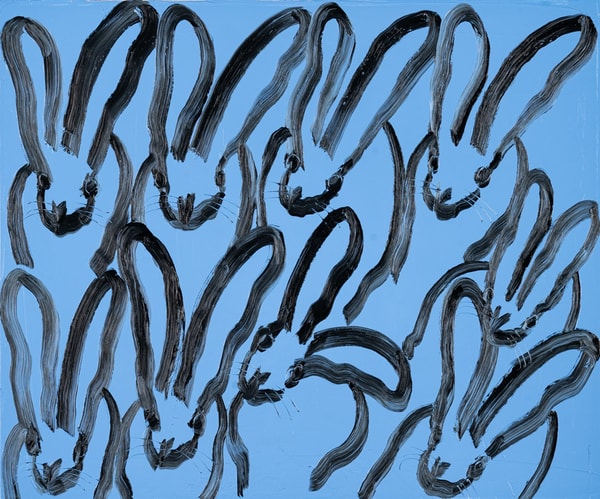
Hunt Slonem
Symphony Winter Days
2024
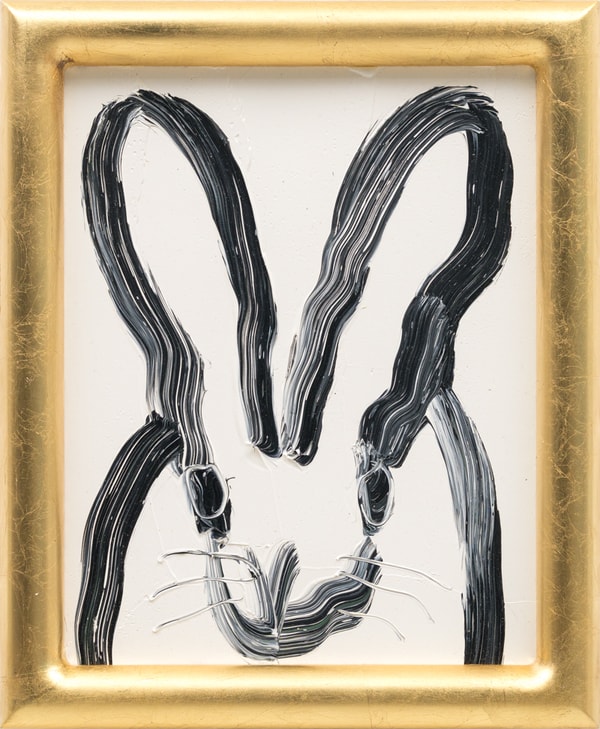
Hunt Slonem
Tatianna II
2026
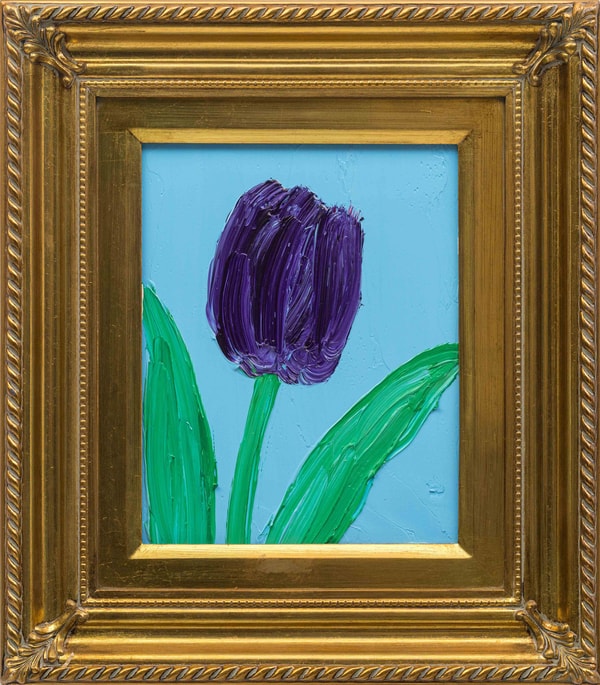
Hunt Slonem
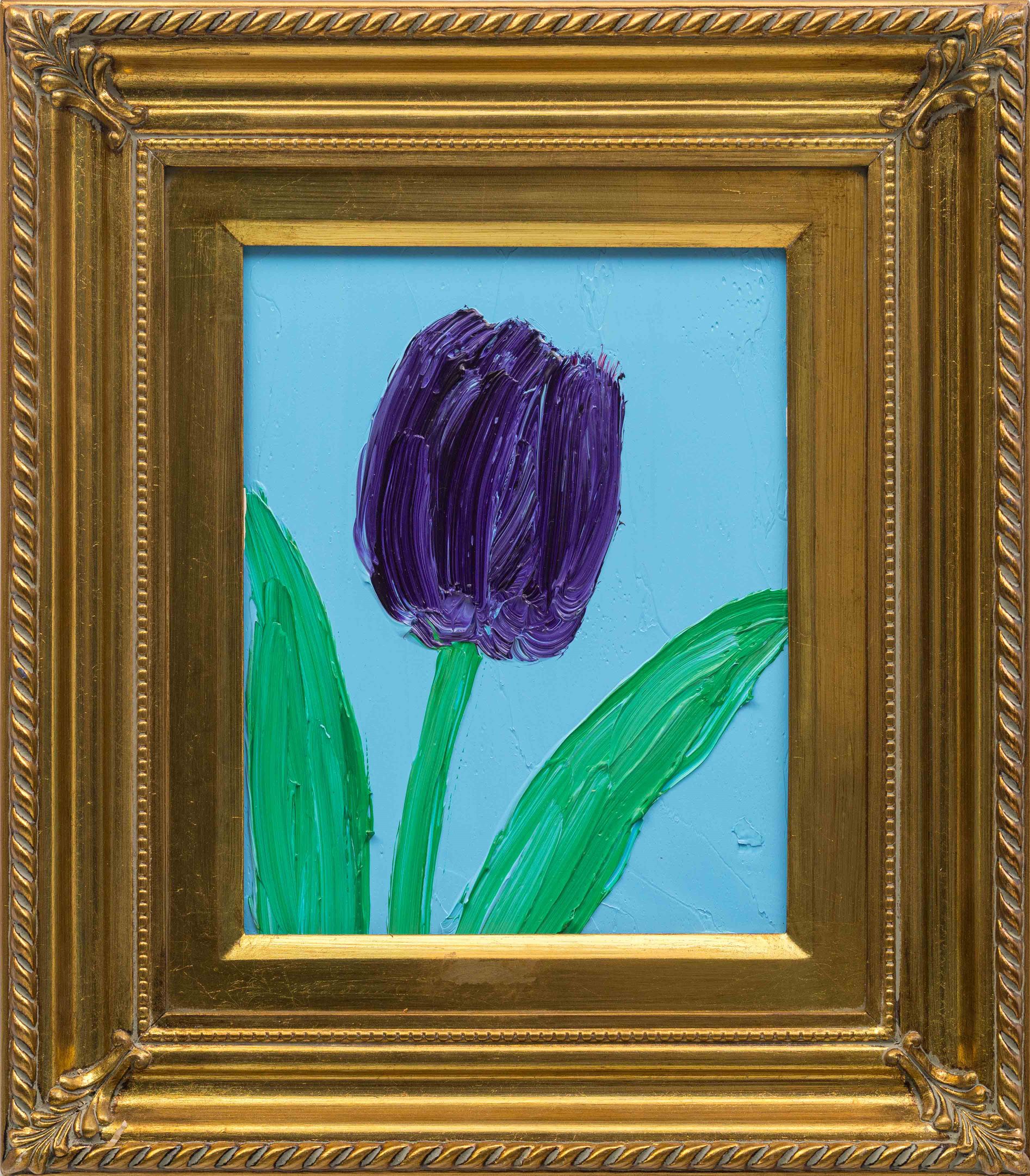
Tulip Purple
2026
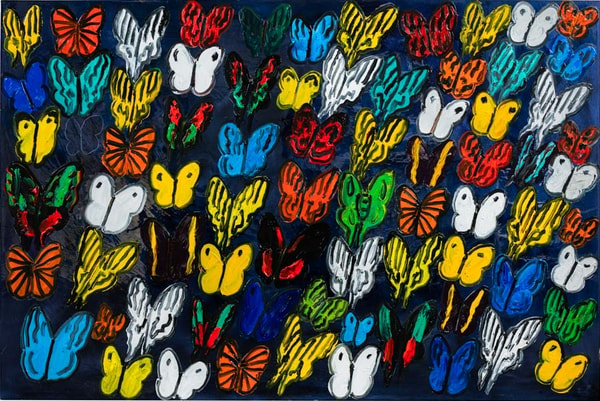
Hunt Slonem
Butterflys Stream
2023
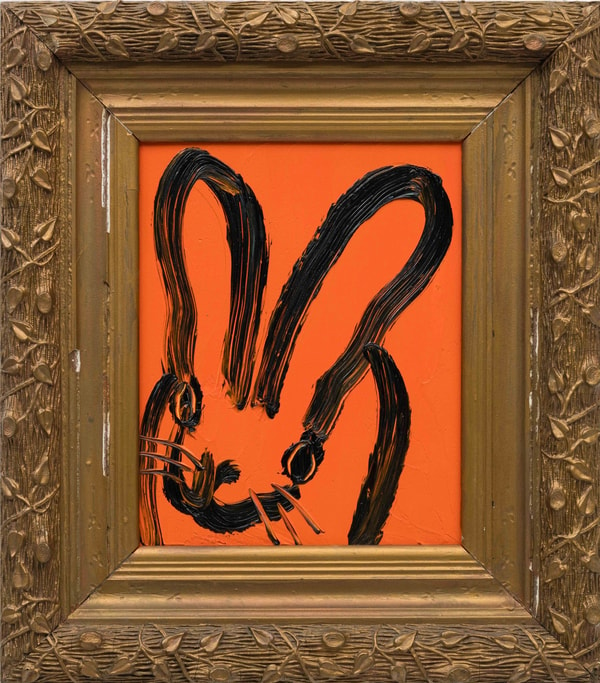
Hunt Slonem
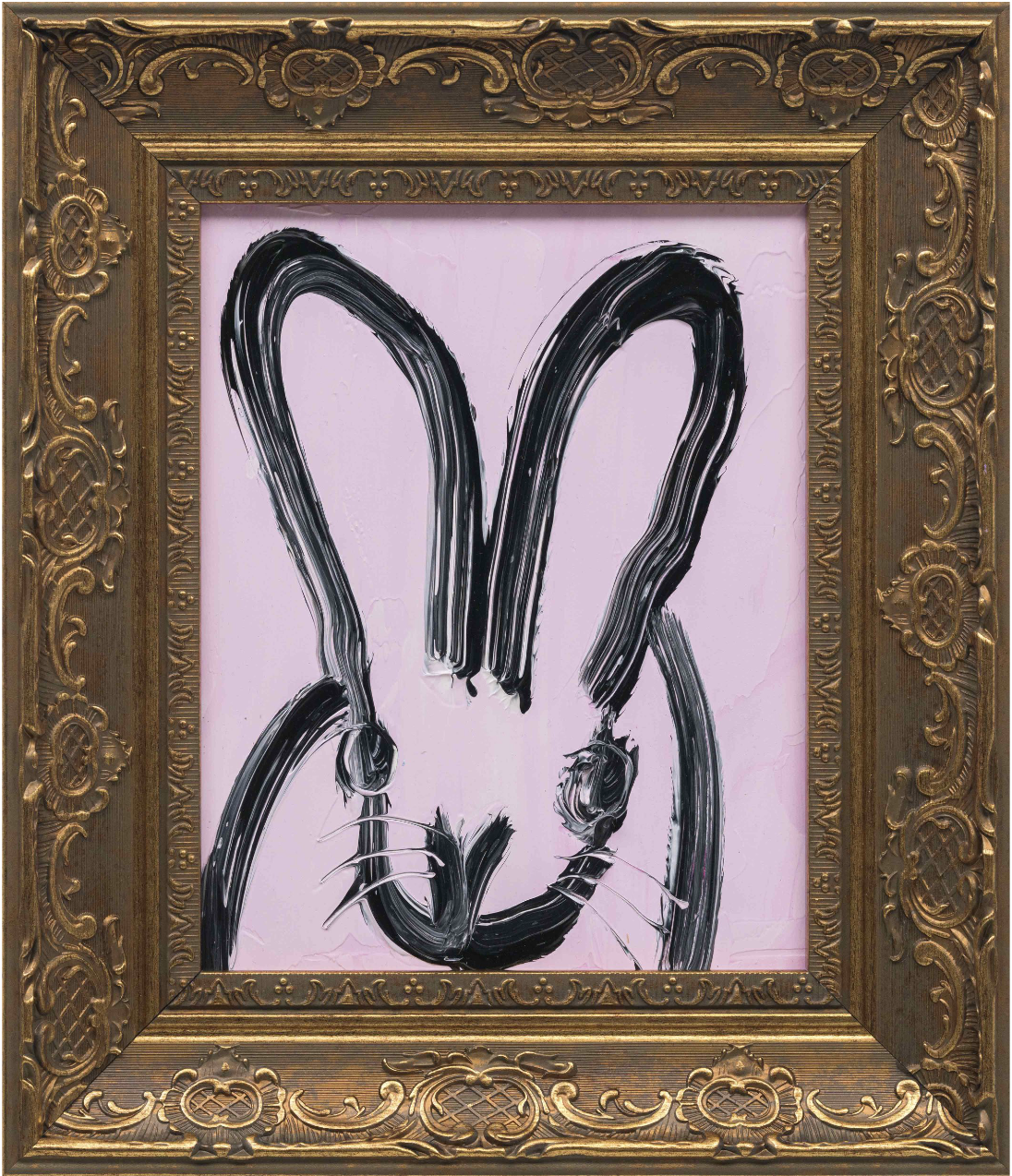
Orange Bunny
2026
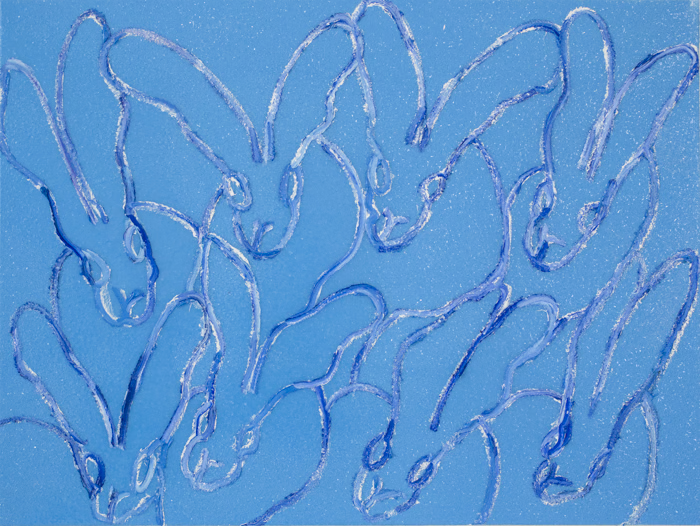
Hunt Slonem
Untitled
2018
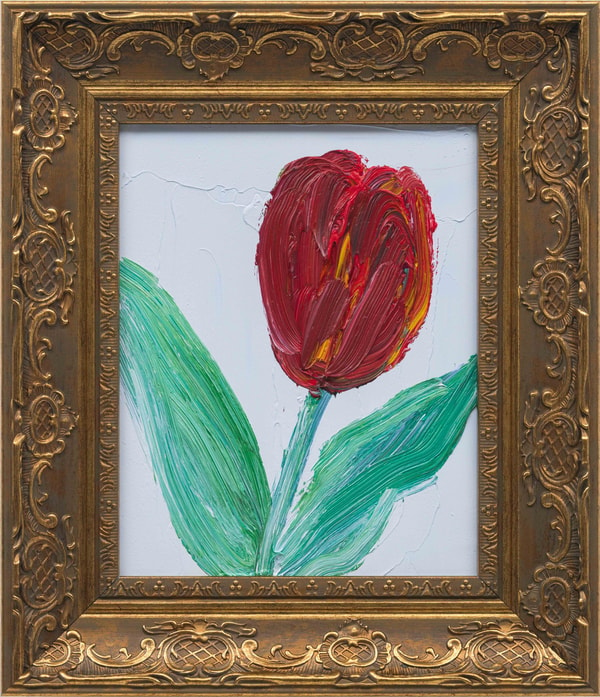
Hunt Slonem
Red Tulip
2026
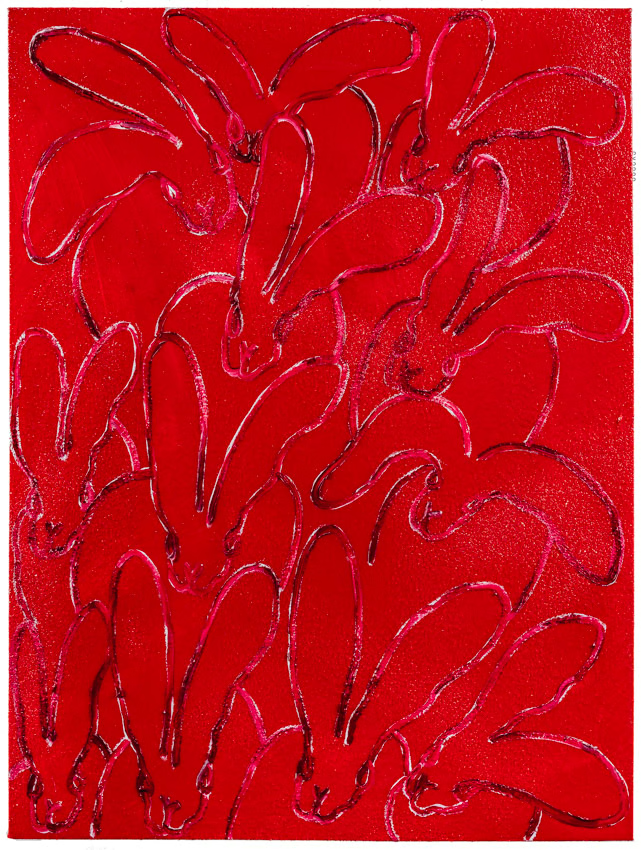
Hunt Slonem
Red Diamond
2023
Hunt Slonem
Pandora
2026
Inquire
Guy Hepner represents Hunt Slonem in New York. Contact us to discuss available inventory, upcoming releases, or to request further information on a specific work.
Hunt Slonem is one of the most distinctive American Neo-Expressionist painters working today. Born in 1951 in Kittery, Maine, into a naval family that moved between Hawaii, Nicaragua, and the continental United States, Slonem developed an early fascination with the exotic — the tropical birds, the lush foliage, the charged spiritual atmosphere of Caribbean and Central American life. That formative restlessness would eventually crystallize into the three subject matters for which he is universally known: rabbits, birds, and butterflies. Available through Guy Hepner, his works include the luminous Michael (2026, Oil on Wood), the iridescent Morning Light (2026, Oil & Acrylic with Diamond Dust on Wood), and the arresting Cardinals Migration South (2026, Oil on Canvas).
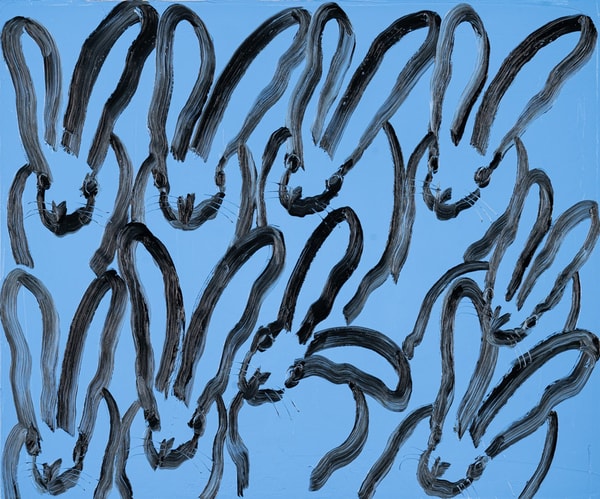
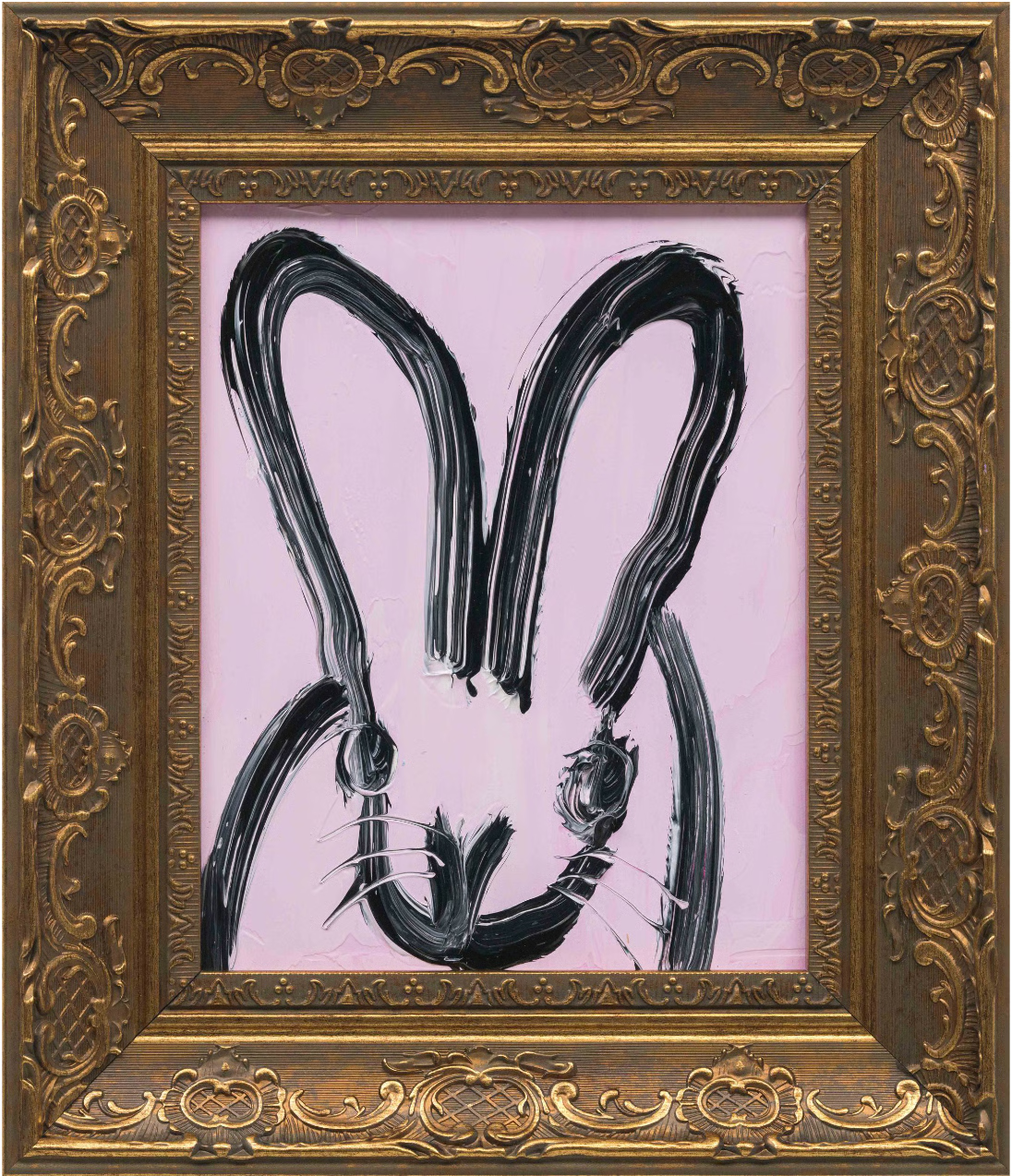
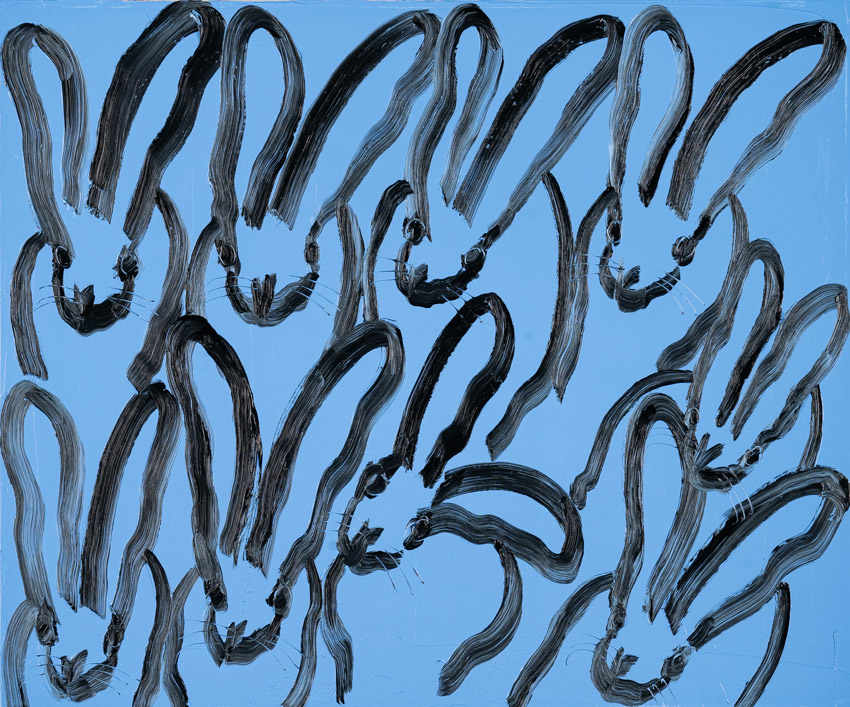
No subject in contemporary painting is more immediately associated with a living artist than the rabbit is with Hunt Slonem. He began painting rabbits in the early 1980s, and the series has never stopped. The origin is partly autobiographical: Slonem was born in 1951, the Year of the Rabbit in the Chinese zodiac, and the animal carries for him a persistent personal significance. But the paintings transcend autobiography. Executed in gestural oil on wood panels or canvas — works like Michael, Orange Bunny, and Red Tulip (all 2026) demonstrate his current fluency — the rabbits are rendered in dense, repetitive strokes that build into fields of trembling form. Slonem has spoken of repetition as a meditative act, a form of prayer or mantra: each rabbit is both unique in gesture and part of a larger visual chant. The backgrounds shift between flat washes of saturated colour and architectural gilded grounds, giving each work an icon-like gravity. Collectors prize the rabbit paintings for their accessibility as entry points into the market and their extraordinary consistency: whether a small panel or a monumental canvas, the authority of the image never wavers.
The avian works arise from direct observation. For decades, Slonem has maintained a working aviary in his studio — at various points housing between forty and seventy exotic birds including cockatiels, parakeets, macaws, and other tropical species. The birds sing while he paints. The Cardinals series, exemplified here by Cardinals Migration South (2026), captures flocks in flight or clustered in patterns that read almost as textile — decorative yet alive with movement. Red Ascension III (2025, Oil on Canvas) pushes further into abstraction, the crimson forms ascending through a dark field with an almost liturgical energy. Chinensis (2018, Oil on Canvas) is among his butterfly works: wings rendered with a stained-glass luminosity, the bodies suggested more than described. Slonem employs a wet-on-wet technique across these series — pigment worked into still-wet ground — which produces the slightly blurred, trembling edges that characterise his surfaces at close range and give his compositions their distinctive pulsing quality from a distance. The spiritual dimension is intentional. Slonem is deeply invested in Vedanta philosophy, and the birds and butterflies carry for him connotations of the soul in transition, of consciousness moving through material form.
A substantial strand of Slonem's output adds diamond dust to the oil and acrylic matrix, producing surfaces that shift under different light conditions from luminous warmth to glittering brilliance. Red Diamond (2023, Oil & Acrylic with Diamond Dust on Wood), Untitled (2018, Oil & Acrylic with Diamond Dust on Canvas), and Morning Light (2026, Oil & Acrylic with Diamond Dust on Wood) each demonstrate how the industrial additive transforms an already gestural surface into something closer to mosaic or fresco. The reference to Warhol's diamond dust silkscreens is unavoidable — Slonem was a figure on the periphery of the Factory milieu — but the application here is more integrated, the dust folded into the paint layer rather than applied to a photographic ground. In the right light, a diamond dust rabbit painting by Hunt Slonem carries a reverence that is entirely its own.
With works in over 250 museum and institutional collections — including the Solomon R. Guggenheim Museum, the Metropolitan Museum of Art, the Whitney Museum of American Art, the New Orleans Museum of Art, and collections in Europe, Asia, and Latin America — Hunt Slonem's critical standing is long established. At auction, his works have performed consistently across the primary and secondary markets for four decades, with the rabbit paintings and large-format bird canvases attracting sustained collector attention. The diamond dust works command a premium for their technical complexity and visual impact. Guy Hepner is proud to represent Hunt Slonem and offers a curated selection of available works across all his principal series. Contact the gallery at 177 Tenth Avenue, New York, NY 10011 to inquire.
Frequently Asked Questions
Hunt Slonem prints and original works for sale are available at Guy Hepner Gallery, 529 West 20th Street, New York (by appointment). Our gallery specialises in authenticated Hunt Slonem editions with full provenance documentation sourced from the secondary market.
Hunt Slonem artwork prices vary significantly by medium, edition size, date, and condition. Signed and numbered prints from key series are the most accessible entry point. Contact Guy Hepner Gallery for a free valuation and current market pricing on specific works.
Authenticating Hunt Slonem art requires catalogue raisonné references, provenance documentation, and where applicable, foundation authentication records. Guy Hepner Gallery provides full provenance for every work we offer for sale.