
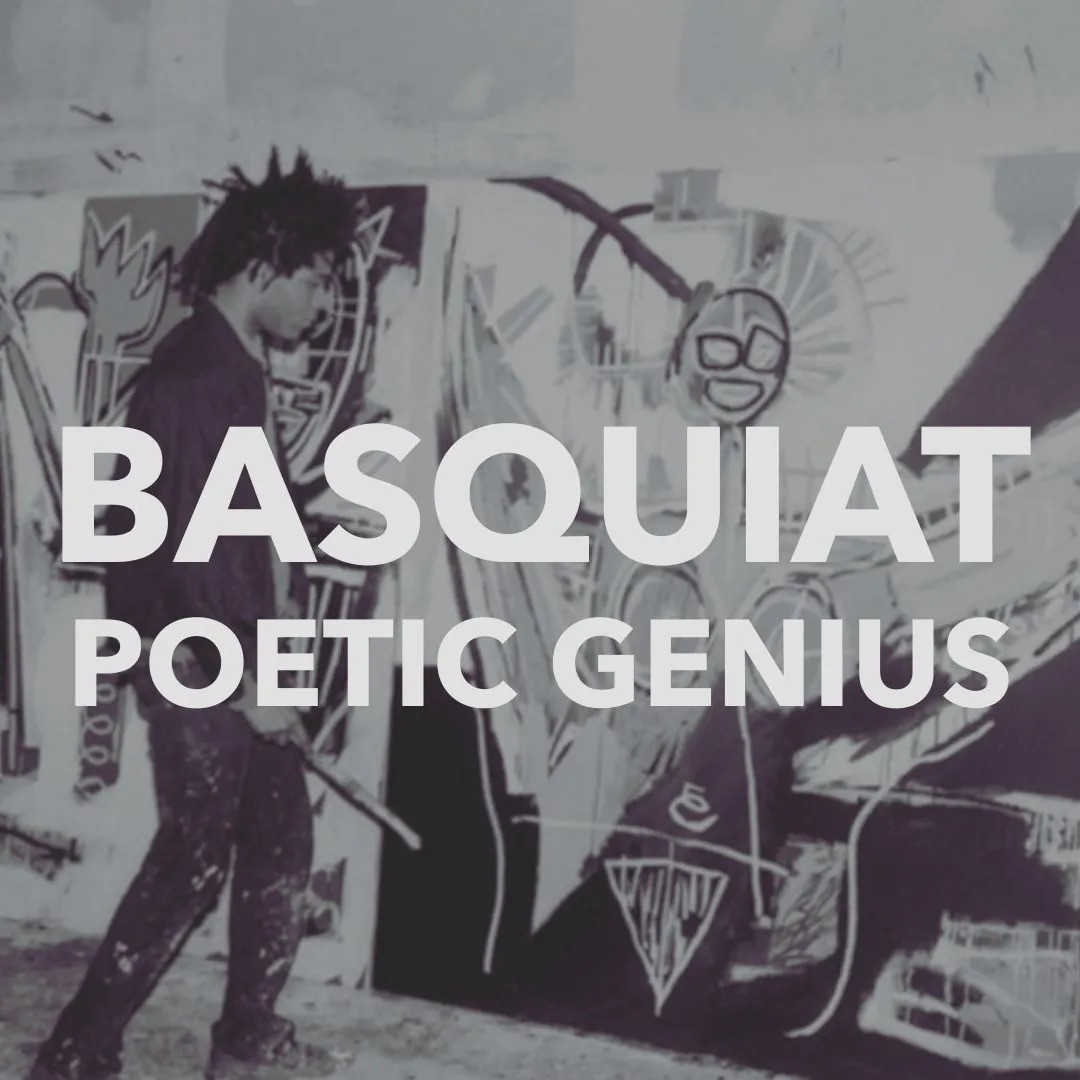
Jean-Michel Basquiat: Poetic Genius
September 4 – November 7, 2025 · Guy Hepner, New York
About this Exhibition
Jean-Michel Basquiat: Poetic Genius presents an exceptional selection of the artist's most celebrated prints, highlighting the enduring brilliance of his visual language. While Basquiat's paintings command much of the art world's attention, his editioned works carry the same urgency, intensity, and cultural resonance that define his practice. This exhibition brings together key examples such as Phooey and Flexible, alongside select pieces from the Figures portfolio, offering collectors and audiences alike the opportunity to encounter Basquiat's genius through his prints. Opening the evening of September 4th, 2025, at Guy Hepner's New York, this presentation invites viewers into the distinctive universe of an artist whose influence continues to shape contemporary art and culture.
Jean-Michel Basquiat emerged from the vibrant streets of late 1970s New York, initially gaining recognition through the cryptic graffiti poetry he created under the tag SAMO alongside collaborator Al Diaz. Born in Brooklyn in 1960 to a Haitian father and Puerto Rican mother, Basquiat drew upon his Caribbean heritage, African American history, and the pulsating energy of downtown Manhattan to forge a visual vocabulary entirely his own. By the early 1980s, he had transitioned from the subways and sidewalks to the galleries and auction houses, becoming one of the youngest artists to exhibit at Documenta in Kassel and the Whitney Biennial. His meteoric rise was matched only by the profound depth of his work, which engaged with themes of race, class, colonialism, and the complexities of Black identity in America. Despite his tragically short life, Basquiat produced an extraordinary body of work that continues to command record-breaking prices at auction and inspire generations of artists, musicians, and cultural practitioners worldwide.
The exhibition underscores the poetic dimension of Basquiat's vision, an aspect that distinguished him from his neo-expressionist contemporaries and established him as a singular voice in postwar American art. His works were never just images; they were charged with rhythm and cadence, evoking the improvisational flow of jazz or the raw lyricism of spoken word. Basquiat's canvases and prints function as visual poems, layering fragments of text, anatomical diagrams, historical references, and recurring symbols into compositions that demand active engagement from the viewer. He drew inspiration from sources as diverse as Gray's Anatomy, Leonardo da Vinci's notebooks, African art, bebop jazz, and the writing of William S. Burroughs, synthesising these influences into a language that felt both ancient and urgently contemporary. This poetic sensibility is precisely what makes his prints so compelling, as they distil the essence of his larger paintings into concentrated statements of creative power.
Prints like Phooey encapsulate this energy, where fractured figures and scattered text echo the tensions of identity and memory. The work exemplifies Basquiat's characteristic approach of building up and breaking down imagery simultaneously, creating surfaces that feel archaeological in their layered complexity. Words appear crossed out, only to be rendered more prominent by their erasure, a technique the artist employed to draw attention to what society sought to suppress or ignore. Meanwhile, Flexible stands as a striking emblem of strength and resilience, distilling Basquiat's exploration of the human condition into one of his most recognized images. The athletic figure captured mid-motion speaks to the artist's ongoing celebration of Black excellence and his critique of how Black bodies have been simultaneously celebrated and commodified throughout history. The Figures portfolio extends these investigations further, presenting a series of works that examine the human form through Basquiat's distinctive lens of fragmentation and reconstitution.
The cultural impact of Jean-Michel Basquiat cannot be overstated. He brought the energy of street art into the sanctified spaces of the gallery world, challenging established hierarchies and expanding the boundaries of what contemporary art could be. His collaborations with Andy Warhol bridged generational and aesthetic divides, while his friendships with musicians, writers, and filmmakers positioned him at the centre of a creative community that continues to influence global culture. Today, Basquiat's imagery appears in fashion collections, album artwork, and museum retrospectives alike, testament to the universal resonance of his vision.
Visitors to Jean-Michel Basquiat: Poetic Genius can expect an intimate encounter with works that reveal the full scope of the artist's intellectual and aesthetic ambitions. The exhibition offers a rare opportunity to experience museum-quality prints in a gallery setting conducive to close looking and contemplation. Whether approaching Basquiat's work for the first time or returning with renewed appreciation, audiences will discover why this self-taught master remains one of the most important artists of the twentieth century. Guy Hepner is located at