Archi-Props
8 works

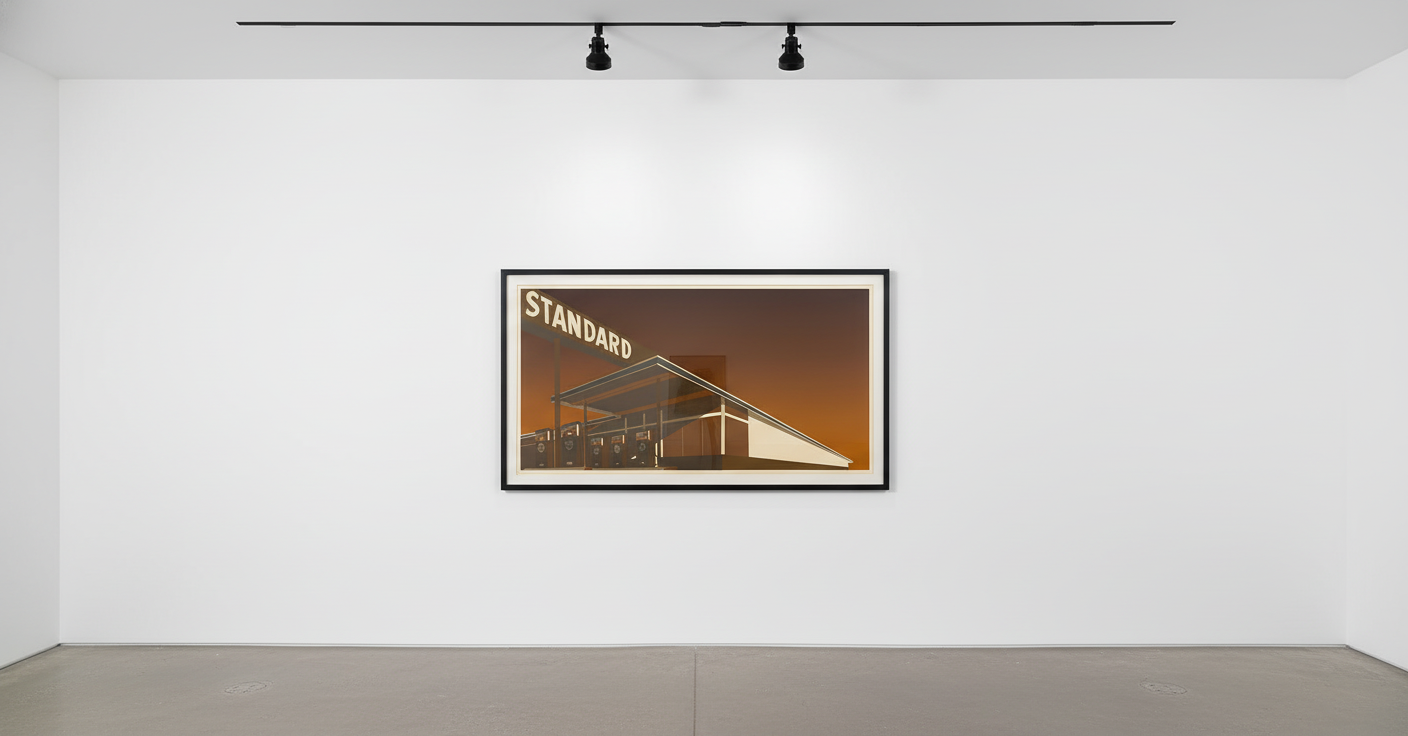
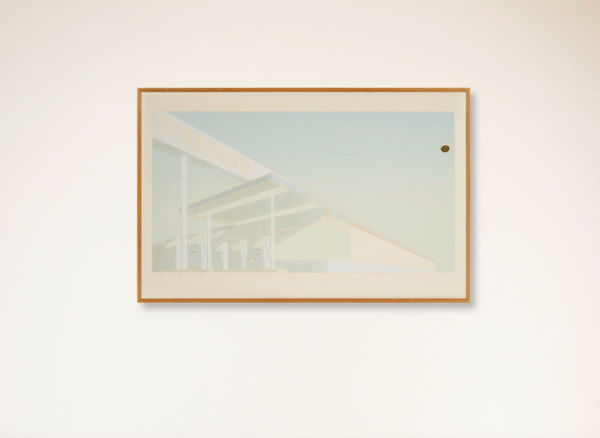
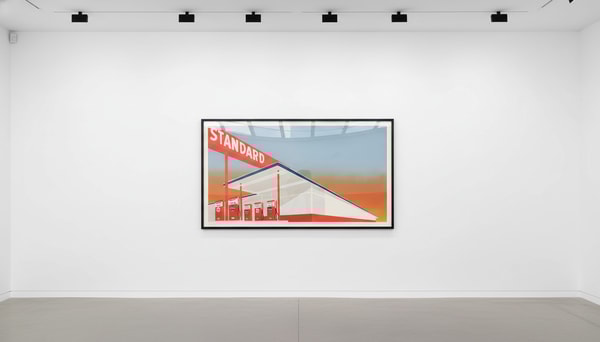
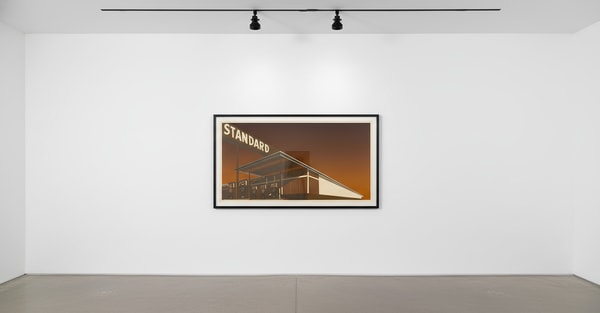
Standard Station Mocha, 1969
Screenprint in colors
26 x 40 in 66 x 101.6 cm
Edition of 100
Ed Ruscha, known for his unique blend of pop art and conceptualism, has left an indelible mark on the contemporary art world with his iconic representations of American culture. Among his most celebrated works is the Standard Station, Mocha print, a captivating exploration of the intersection between art, commerce, and the American landscape.Originally created in 1966, Standard Station, Mocha is part of Ruscha's ongoing exploration of gas stations as symbols of American consumerism and mobility. The print depicts a stylized gas station facade, rendered in Ruscha's signature blend of bold colors and crisp lines, against a backdrop of mocha-colored sky and mountains.At first glance, Standard Station, Mocha appears to be a straightforward representation of a gas station, a ubiquitous sight on American highways. However, upon closer inspection, the print reveals deeper layers of meaning and symbolism. The juxtaposition of the word "Standard" with the unexpected descriptor "Mocha" challenges conventional notions of branding and identity, hinting at Ruscha's fascination with language and its ability to shape perception. The use of vibrant colors and geometric shapes imbues the gas station with a sense of dynamism and surrealism, blurring the line between reality and abstraction.Ruscha's meticulous attention to detail is evident in every aspect of Standard Station, Mocha, from the precise rendering of the gas station architecture to the subtle gradations of color in the sky and landscape. The use of screen printing, a technique favored by Ruscha for its ability to replicate the clean lines and bold colors of commercial signage, lends the print a graphic quality reminiscent of advertising imagery. The deliberate choice of mocha as the dominant color palette further underscores Ruscha's interest in blurring the boundaries between art and commerce. By appropriating the visual language of advertising, Ruscha challenges viewers to confront their preconceived notions of value and authenticity in the realm of art.Since its creation, Standard Station, Mocha has become one of Ruscha's most iconic works, celebrated for its bold aesthetic and thought-provoking symbolism. Its enduring popularity speaks to Ruscha's ability to capture the essence of American culture in all its complexity and contradiction. Moreover, Standard Station, Mocha continues to inspire contemporary artists who grapple with themes of consumerism, identity, and the American landscape. Its status as a cultural touchstone reaffirms Ruscha's place as a visionary artist whose work transcends time and place.In conclusion, Ed Ruscha's Standard Station, Mocha print stands as a testament to the power of art to challenge our perceptions and provoke thought. Through his bold aesthetic and innovative approach to subject matter, Ruscha invites viewers to reconsider the familiar sights and symbols of American culture in new and unexpected ways. As a master of blending art and Americana, Ruscha continues to inspire generations of artists and art lovers alike with his timeless exploration of the American experience.
Price on Application
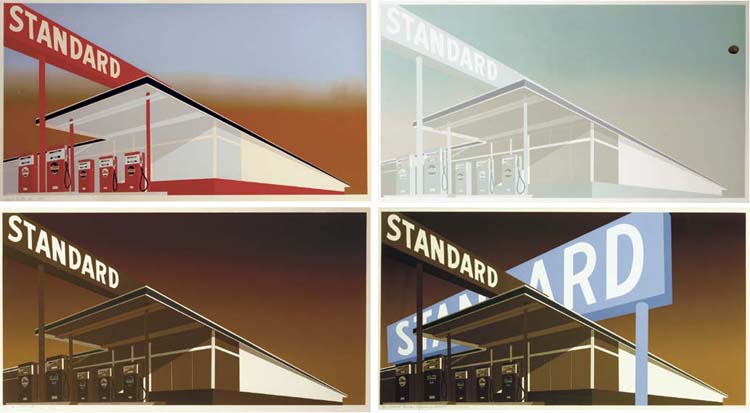
Standard Station, Mocha Standard, Cheese Mold Standard with Olive, and Double Standard (E. 5; and 30-2) · Ed Ruscha · Christie's · 2006-11 · $228,000
Ed Ruscha (b. 1937, Omaha, Nebraska) is one of the most significant and enduring figures in American art, a defining voice of the West Coast avant-garde whose influence reaches from Pop Art and Conceptualism through to contemporary painting and photography. Raised in Oklahoma City, Ruscha moved to Los Angeles in 1956 to study at the Chouinard Art Institute — later reborn as CalArts — and never left, making the city's peculiar light, architecture, and vernacular culture the permanent subject matter of his art. Where New York's Pop artists turned to consumer packaging and celebrity, Ruscha turned to the American road: the gas station, the parking lot, the Strip, the Hollywood sign, the word itself rendered monumental against desert sky.
Ruscha's practice resists easy categorisation. He emerged in the early 1960s simultaneously as a painter, photographer, printmaker, and book artist, and has never relinquished any of these disciplines. His word paintings — single terms or deadpan phrases set against vast Californian landscapes in impossibly smooth, commercial-feeling typefaces — are among the most immediately recognisable works in postwar American art. The words float in those expanses like hallucinations, stripped of narrative but dense with implication: Hollywood, OOF, Annie, Brave Men Run in My Family. Alongside the paintings, Ruscha produced a series of artist books beginning in 1963 with Twentysix Gasoline Stations, followed by Every Building on the Sunset Strip (1966), Thirtyfour Parking Lots (1967), Nine Swimming Pools and a Broken Glass (1968), and others — works that are now regarded as foundational to both the history of Conceptual Art and the modern artist book. Shot in a flat, documentary style with no compositional drama, they transformed the photographically ordinary into something philosophically charged.
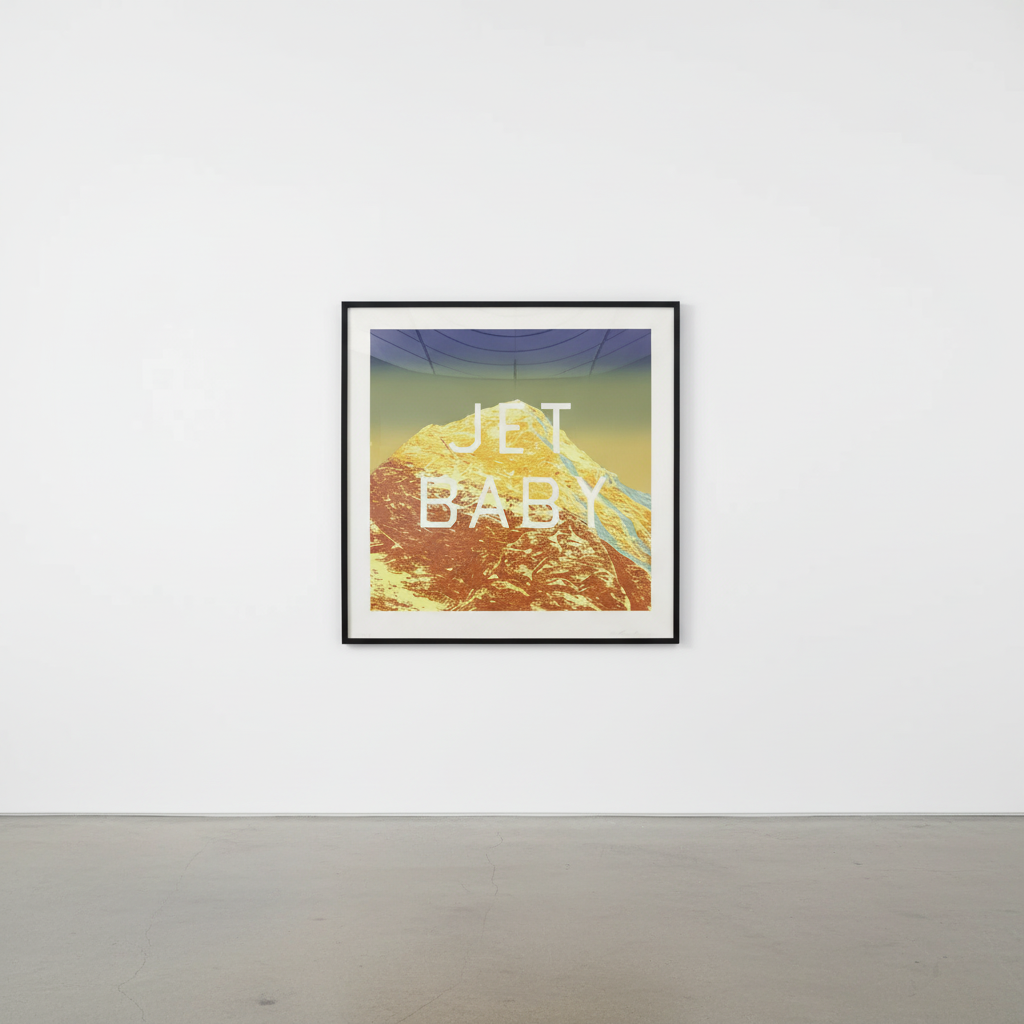
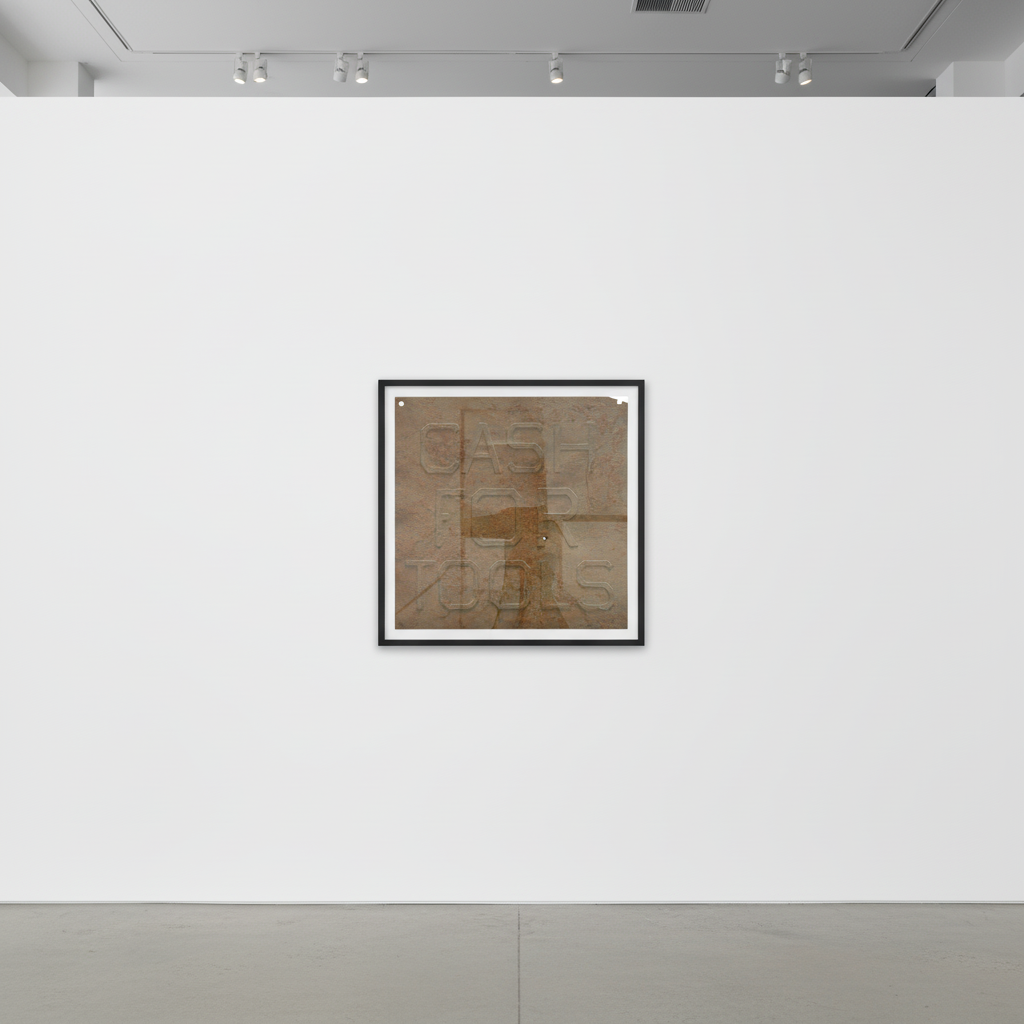
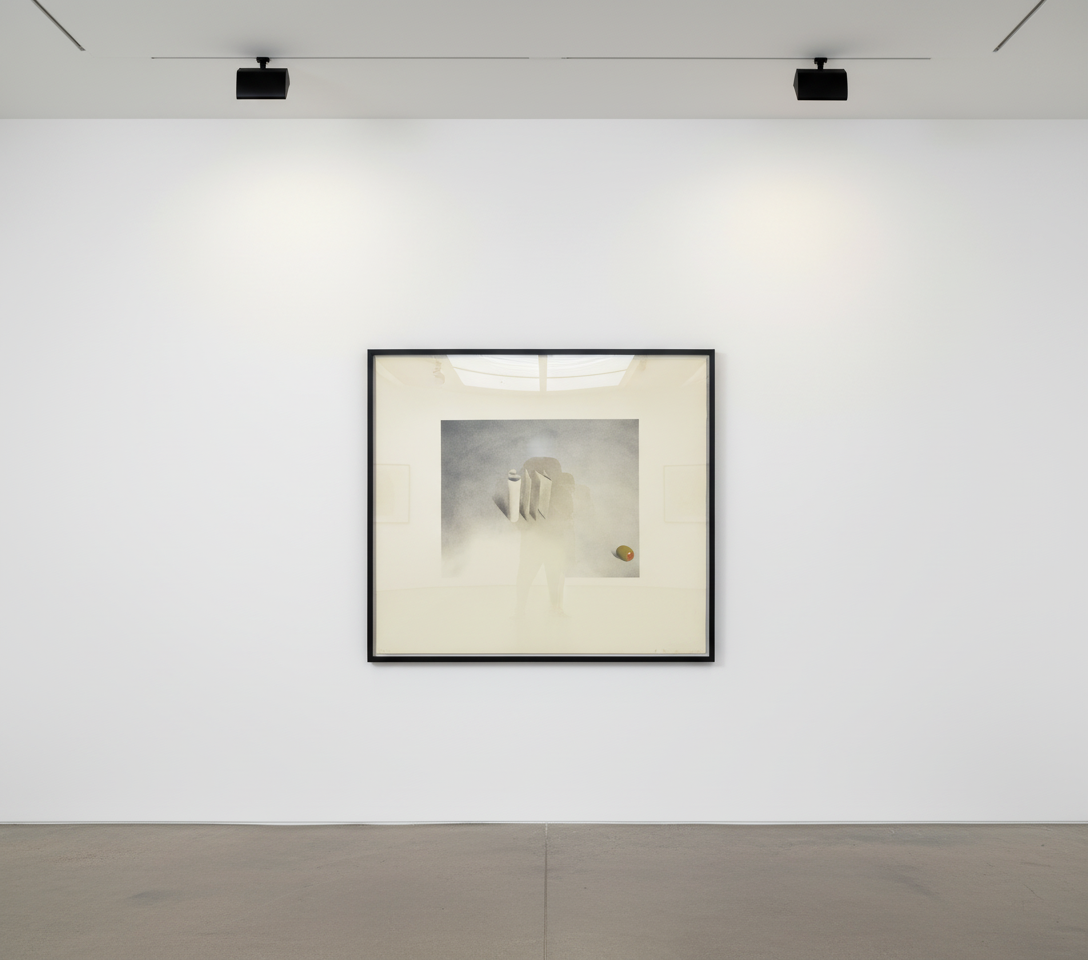
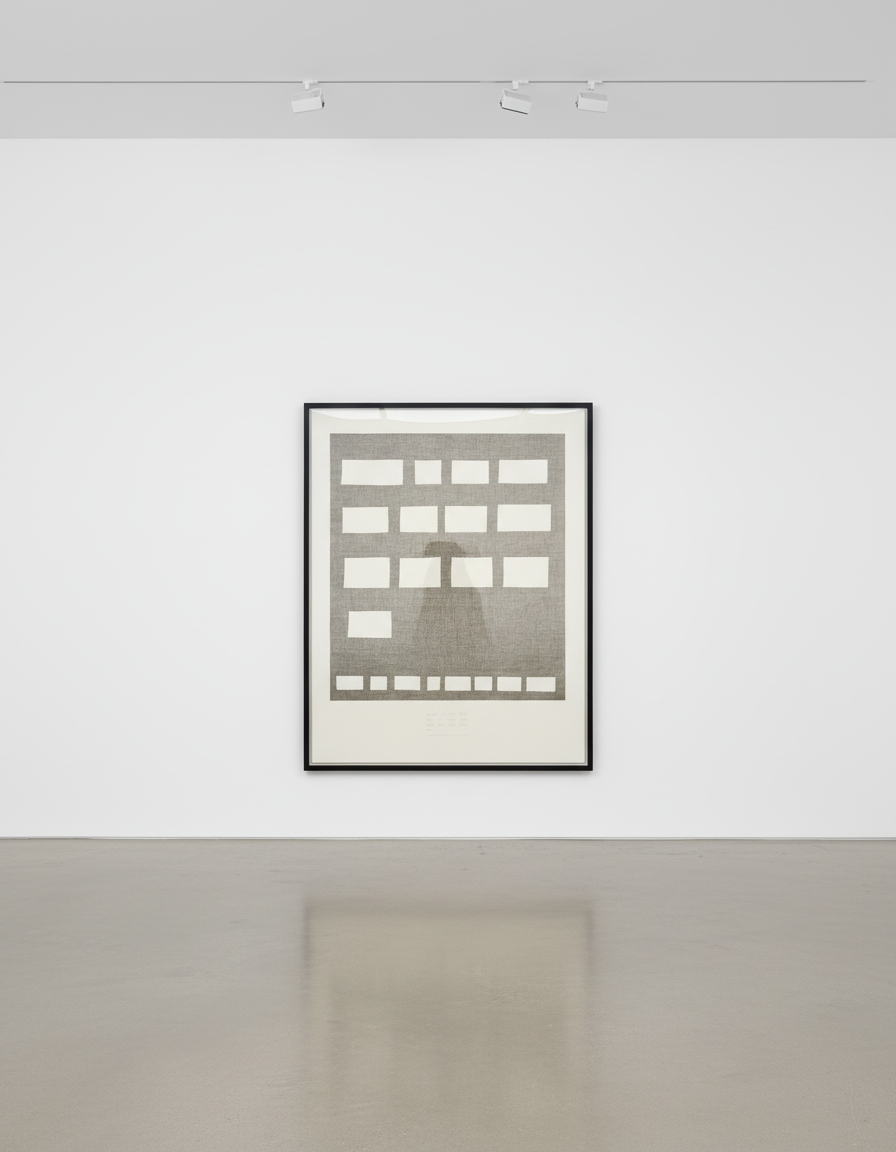
His print and edition output is among the most substantial and actively traded of any American artist of his generation. Working across screenprint, aquatint, lithograph, etching, and photogravure, Ruscha produced major print series throughout his career: the Standard Station screenprints, Hollywood, Mountain Series, Book Covers, Bow-Tie Landscapes, various word and phrase prints. The breadth of this body of work allows collectors to engage meaningfully with his practice at a wide range of price points, from modest works on paper to landmark edition prints that have achieved significant results at the major auction houses. His auction record was set in November 2024 when Standard Station, Ten-Cent Western Being Torn in Half achieved $68,260,000 at Christie's — a figure that confirms his standing among the top tier of American postwar artists.
Ruscha represented the United States at the Venice Biennale in 2005, a singular honour that reflected his international standing. His work is held in permanent collections at the Museum of Modern Art, the Whitney Museum of American Art, the Metropolitan Museum of Art, LACMA, SFMOMA, Tate Modern, the Centre Pompidou, and over a hundred other institutions worldwide. The range and consistency of his output — spanning more than six decades without a diminution of inventiveness — makes him one of the few artists of the 1960s generation whose market and critical reputation has only deepened with time.
Guy Hepner brings deep expertise to the Ed Ruscha print and edition market, with inventory spanning all of his major series and a thorough understanding of condition, provenance, and relative rarity across his print output. Our gallery at 177 Tenth Avenue, New York offers collectors authentic Ruscha works with expert guidance on acquisition and valuation. For those looking to sell or appraise Ruscha prints and editions, we provide free, confidential valuations and connections to a global network of serious collectors.