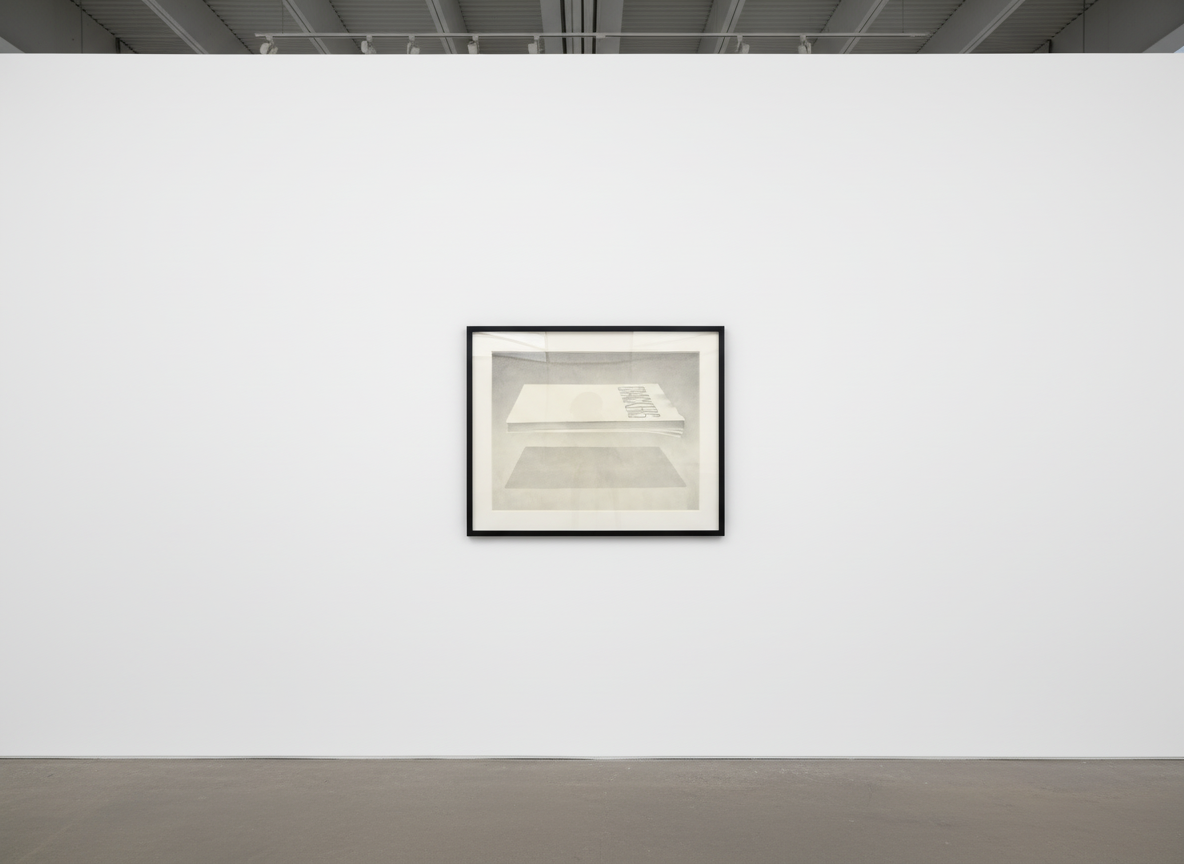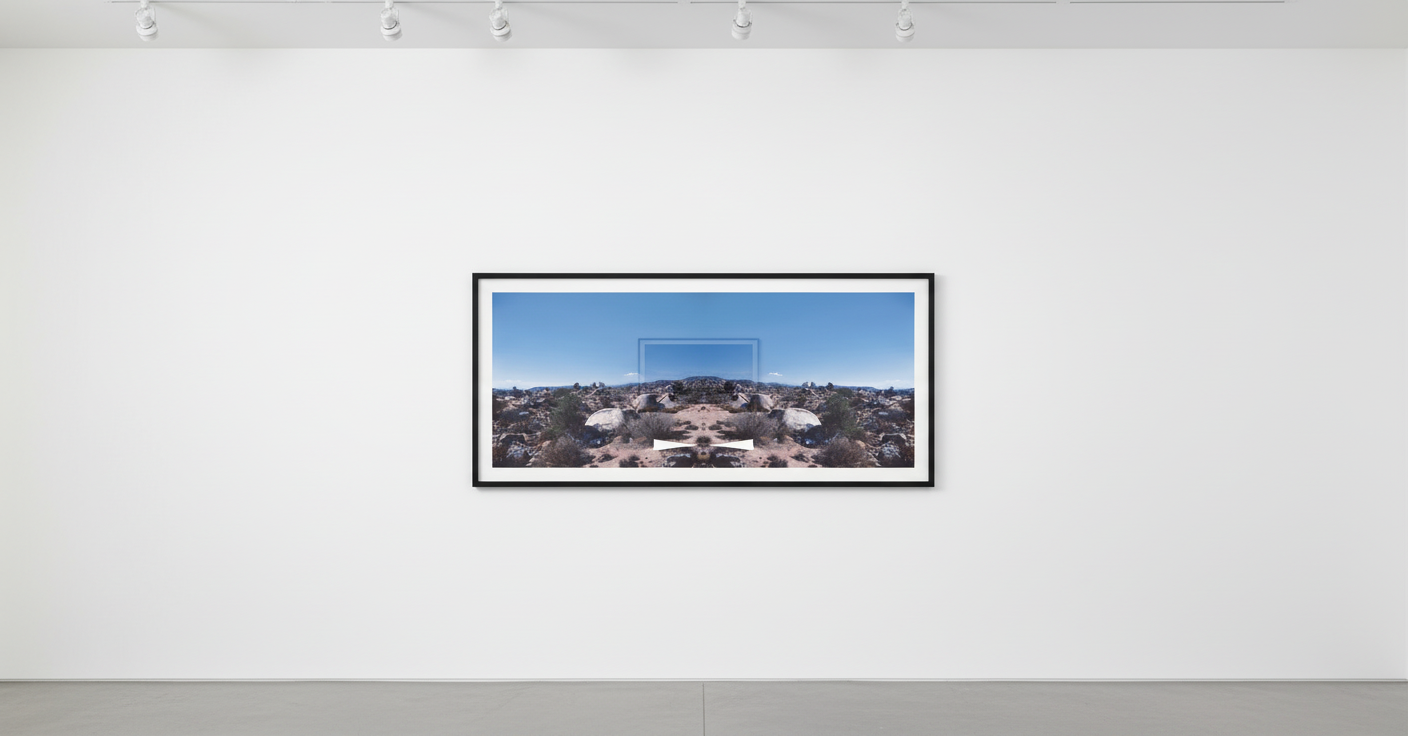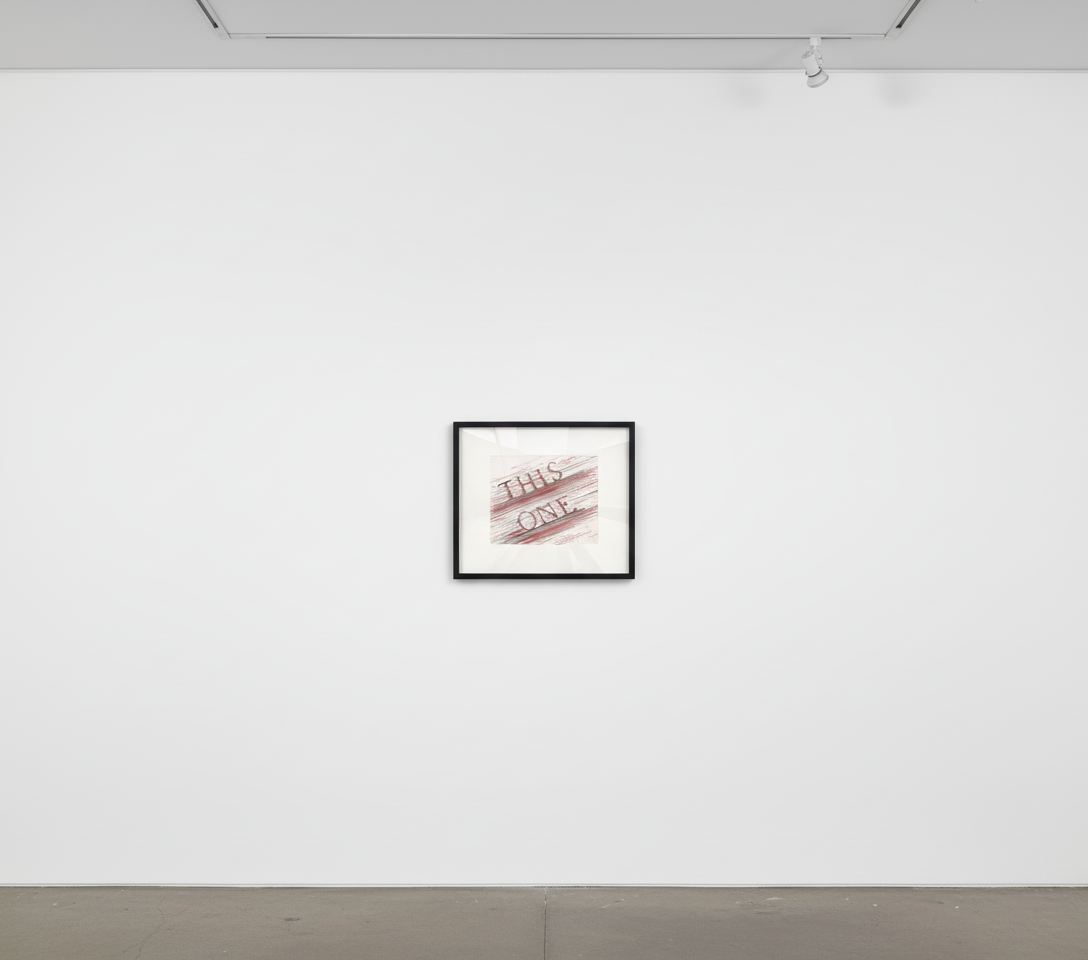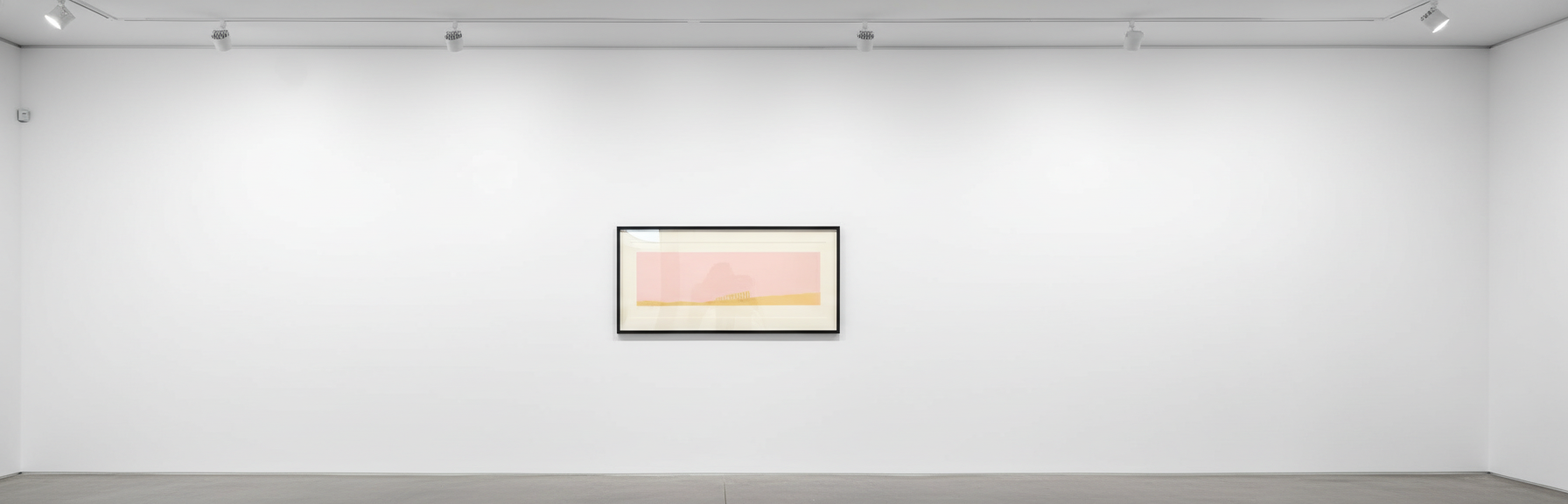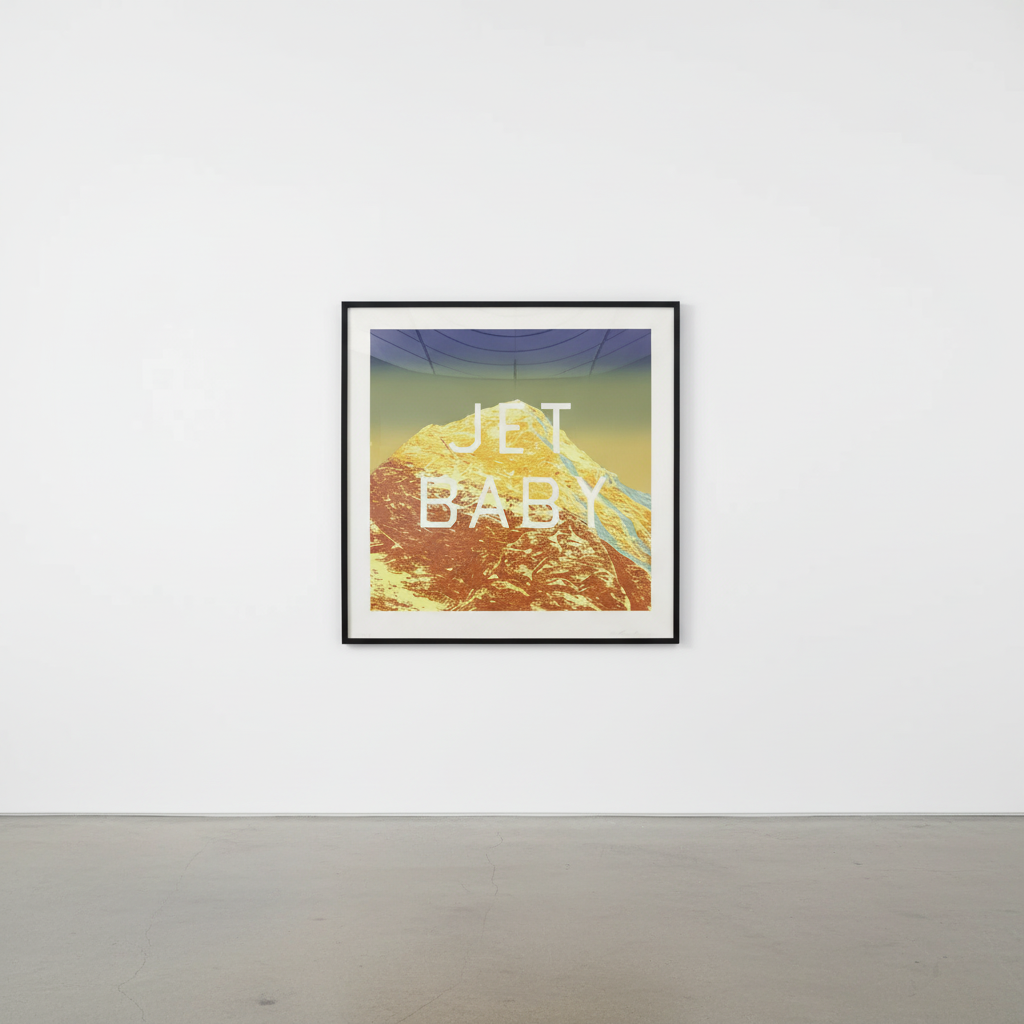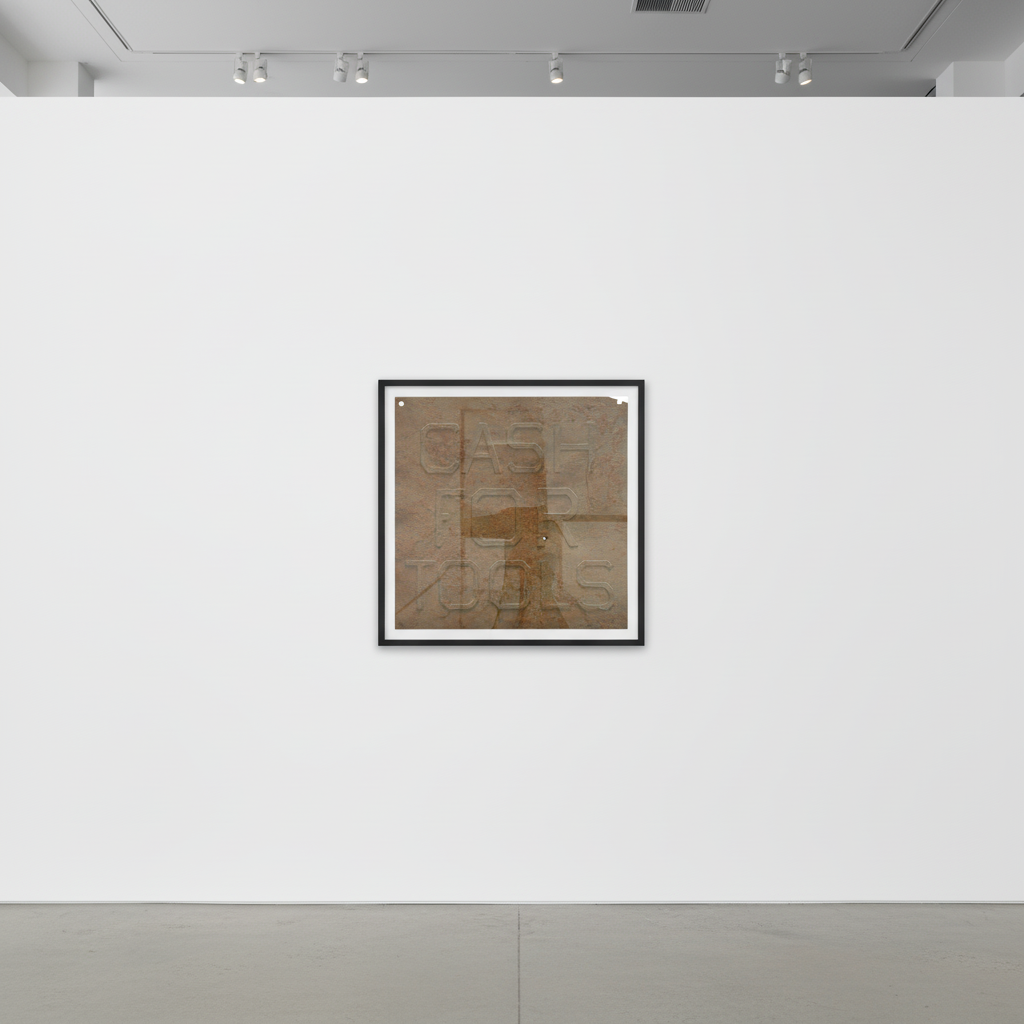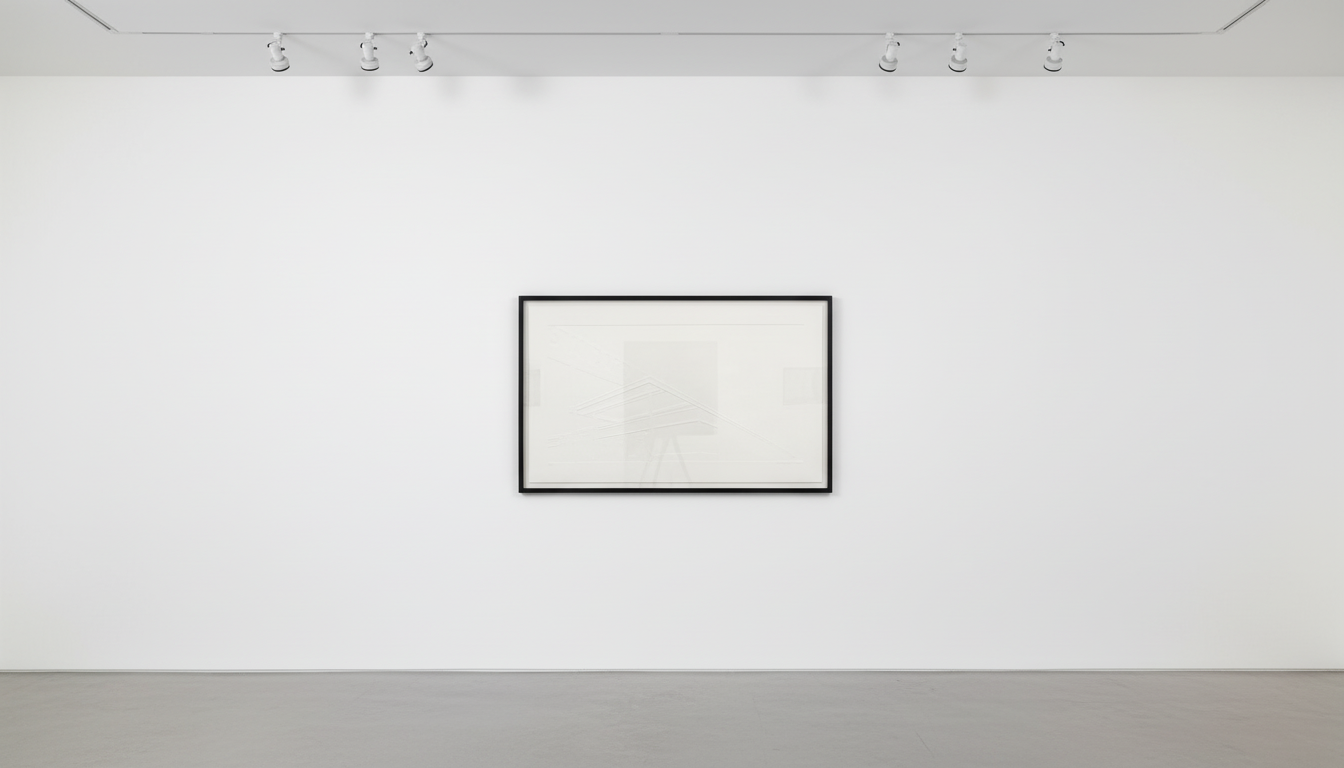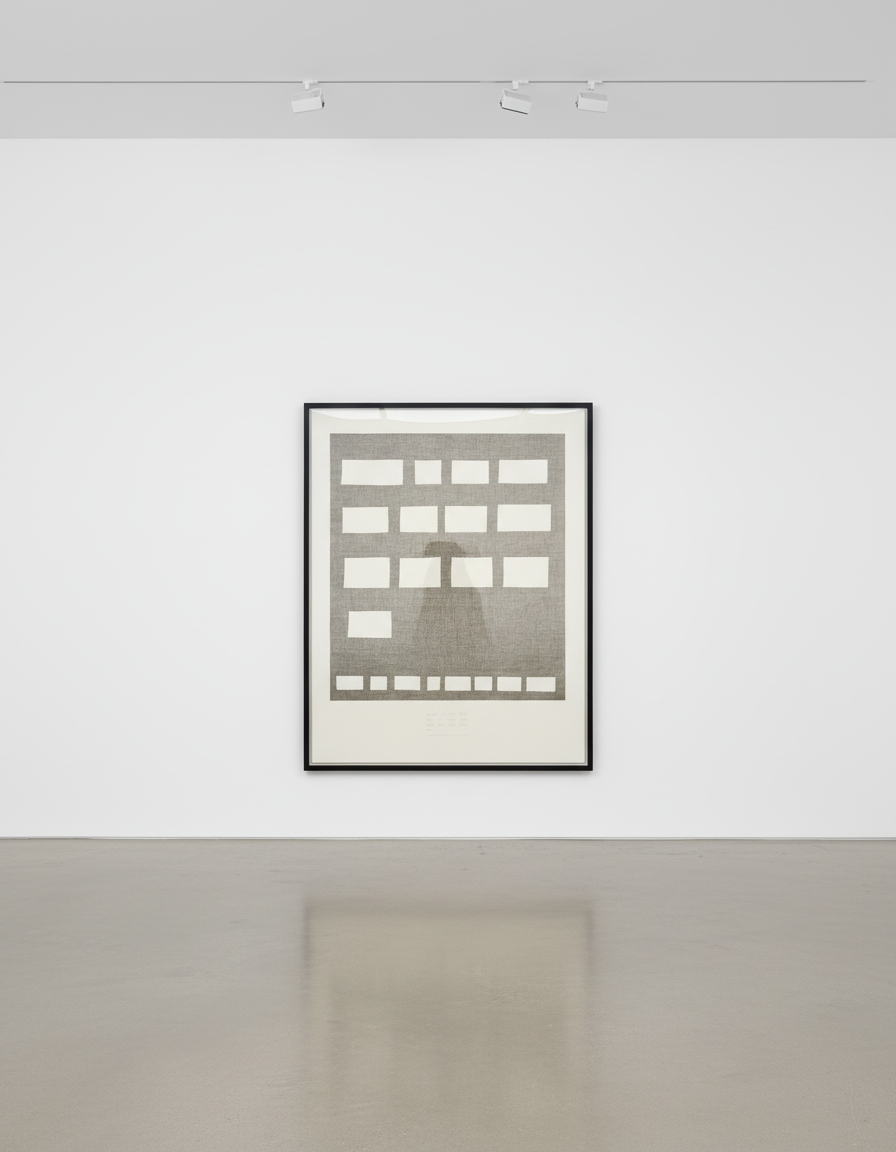
Archi-Props
8 works

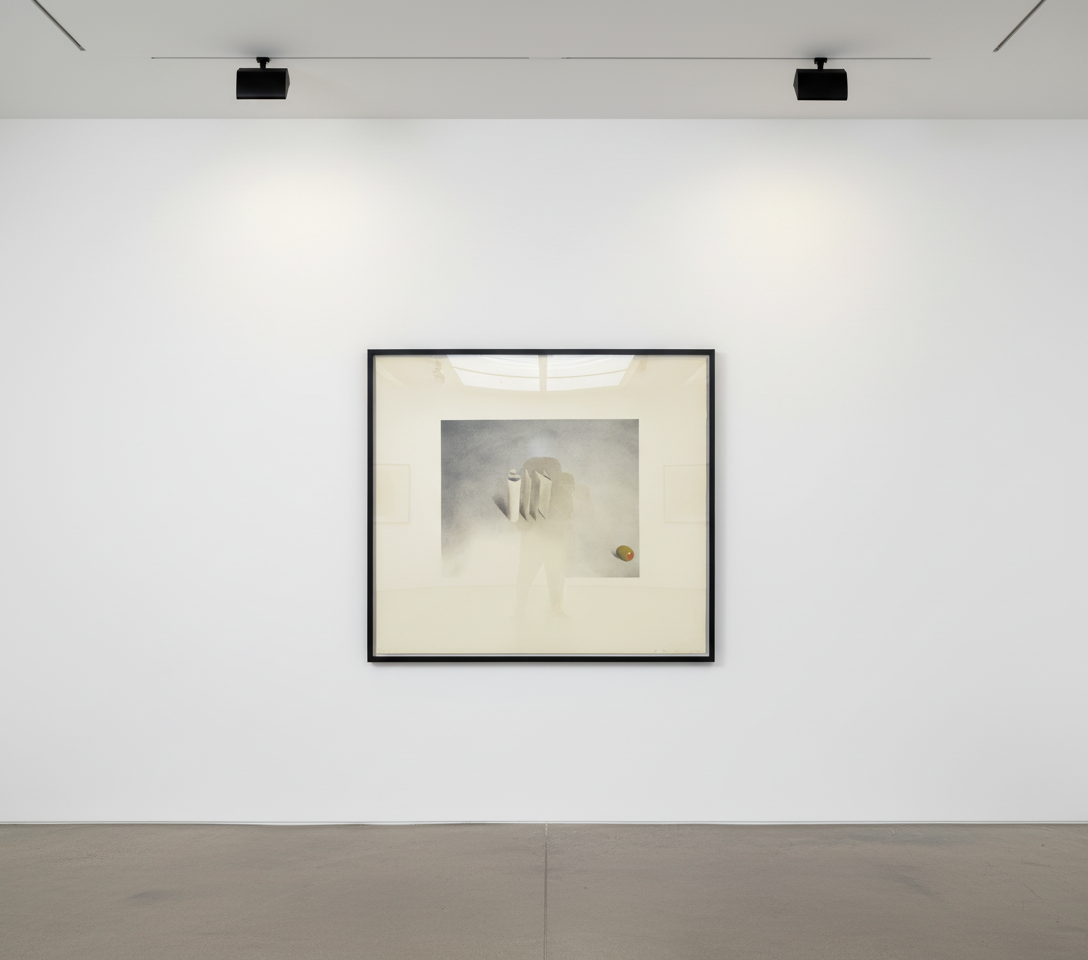
Sin, 1969
Lithograph in colors on white Arches paper
7 1/4 x 9 1/4 in 18.4 x 23.5 cm
Edition of 20
Ed Ruscha, renowned for his enigmatic and thought-provoking artworks, has continually pushed the boundaries of artistic expression. One of his most intriguing pieces, the Sin print, encapsulates Ruscha's penchant for challenging societal norms and exploring complex themes through minimalist aesthetics. In this exploration, we delve into the conceptual depth of Ruscha's Sin print, unraveling its layers of meaning and inviting contemplation on the nature of sin in contemporary society.Sin, a lithograph print created by Ruscha in 1969, immediately captivates with its stark simplicity. The word Sin is emblazoned boldly across the center of the print in capitalized letters, rendered in Ruscha's characteristic font. Against a plain background, devoid of any accompanying imagery, the word commands attention, inviting viewers to ponder its significance and implications.At first glance, Sin appears as a straightforward proclamation, confronting viewers with a morally charged term stripped of context or explanation. Yet, Ruscha's artistic intent transcends mere provocation, delving into the complexities of human behavior, morality, and societal norms. The stark minimalism of the print serves as a canvas for contemplation, prompting viewers to reflect on their own interpretations and associations with the concept of sin. By presenting Sin in isolation, Ruscha invites us to question the subjective nature of morality and the ways in which societal constructs shape our understanding of right and wrong.What makes Ruscha's Sin print particularly intriguing is its interpretive ambiguity. By omitting any visual cues or contextual clues, Ruscha leaves the meaning of Sin open to individual interpretation. Is it a condemnation of specific actions or behaviors deemed morally reprehensible? Or does it serve as a commentary on the universality of human frailty and fallibility? Furthermore, the absence of religious iconography or symbolism allows Sin to transcend specific religious contexts, resonating with viewers across diverse cultural and spiritual backgrounds. In this way, Ruscha's print becomes a catalyst for introspection and dialogue, sparking conversations about ethics, conscience, and the nature of sin itself.In the tumultuous cultural landscape of the late 1960s, Ruscha's Sin print emerged as a reflection of societal upheaval and moral ambiguity. Against the backdrop of political unrest, social change, and shifting values, the concept of sin took on new dimensions, challenging traditional norms and prompting reevaluation of ethical frameworks. Ruscha's choice to confront viewers with the stark simplicity of Sin resonated with audiences grappling with existential questions and moral uncertainty. In an era marked by disillusionment and disillusionment, the print served as a bold assertion of artistic autonomy and intellectual inquiry.Ed Ruscha's Sin print stands as a testament to the power of art to provoke thought, stimulate dialogue, and confront existential questions. Through its minimalist aesthetics and conceptual depth, Ruscha invites viewers to confront their own beliefs, biases, and assumptions about morality and sin. In an age of increasing complexity and moral ambiguity, Sin continues to resonate as a poignant reminder of the enduring relevance of art in exploring the human condition.
Price on Application
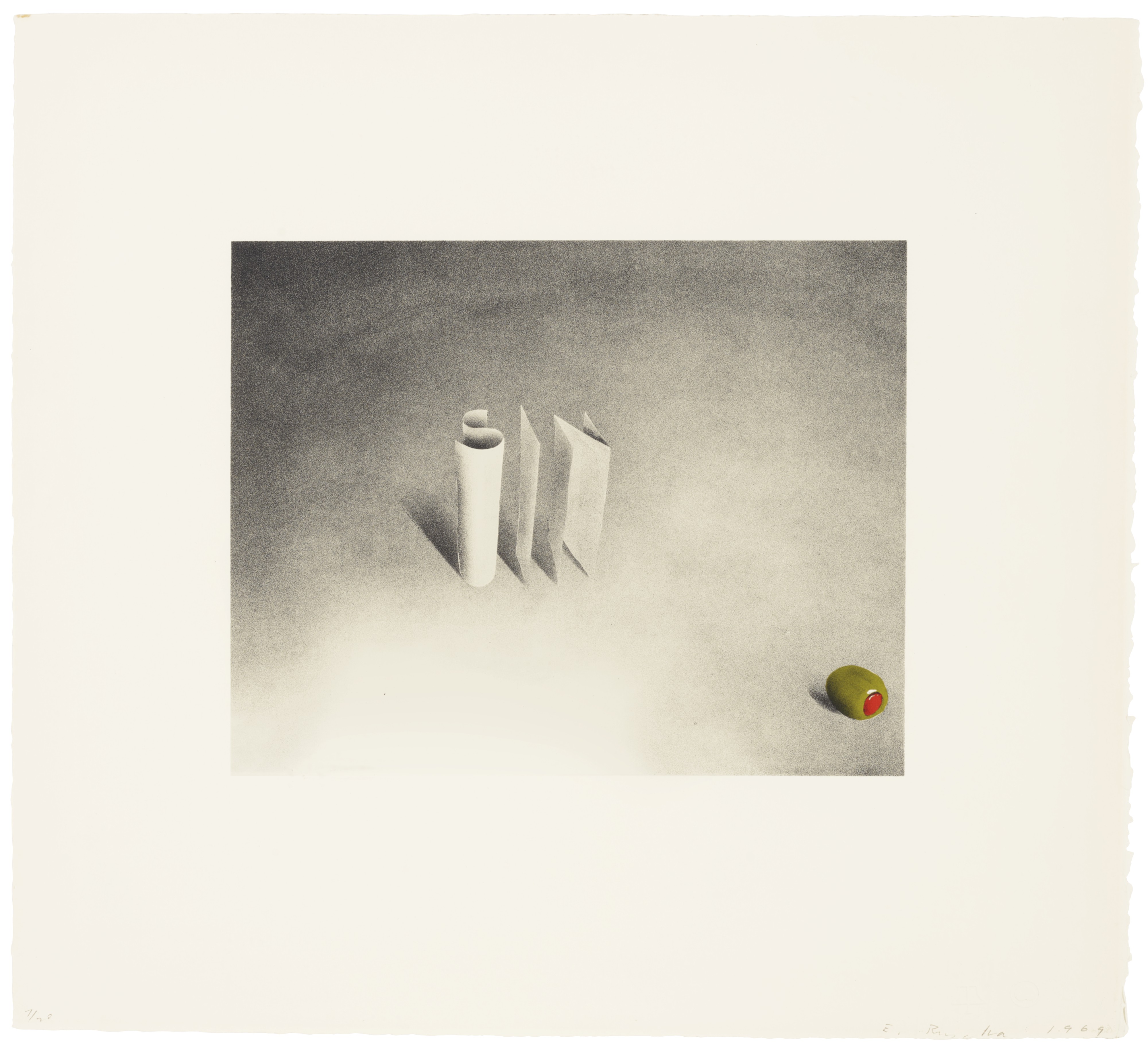
Sin · Ed Ruscha · Christie's · 2019-09 · $43,750
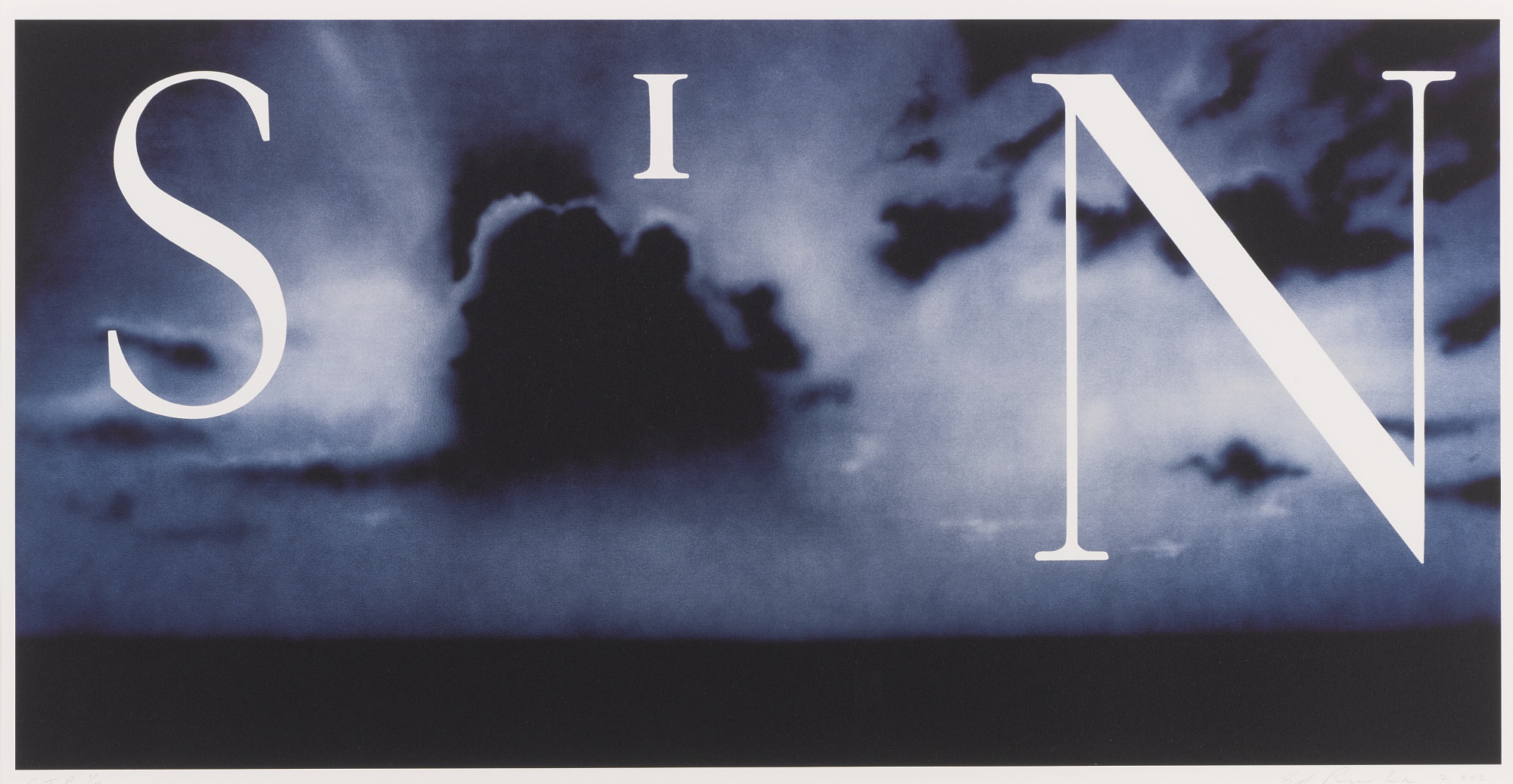
SIN-WITHOUT · Ed Ruscha · Sotheby's · 2016-04 · $42,500
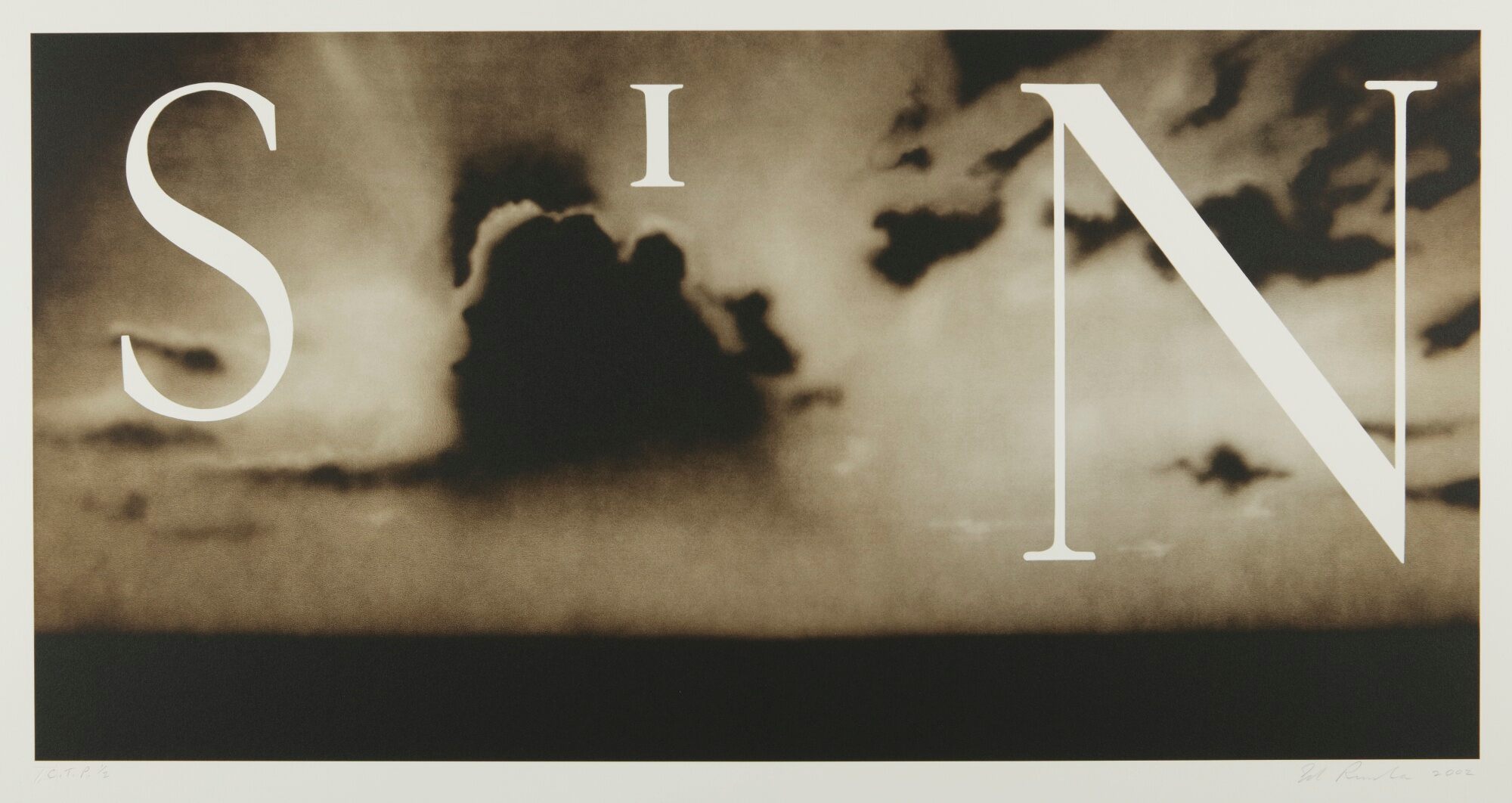
Sin-Without · Ed Ruscha · Sotheby's · 2017-10 · $40,000
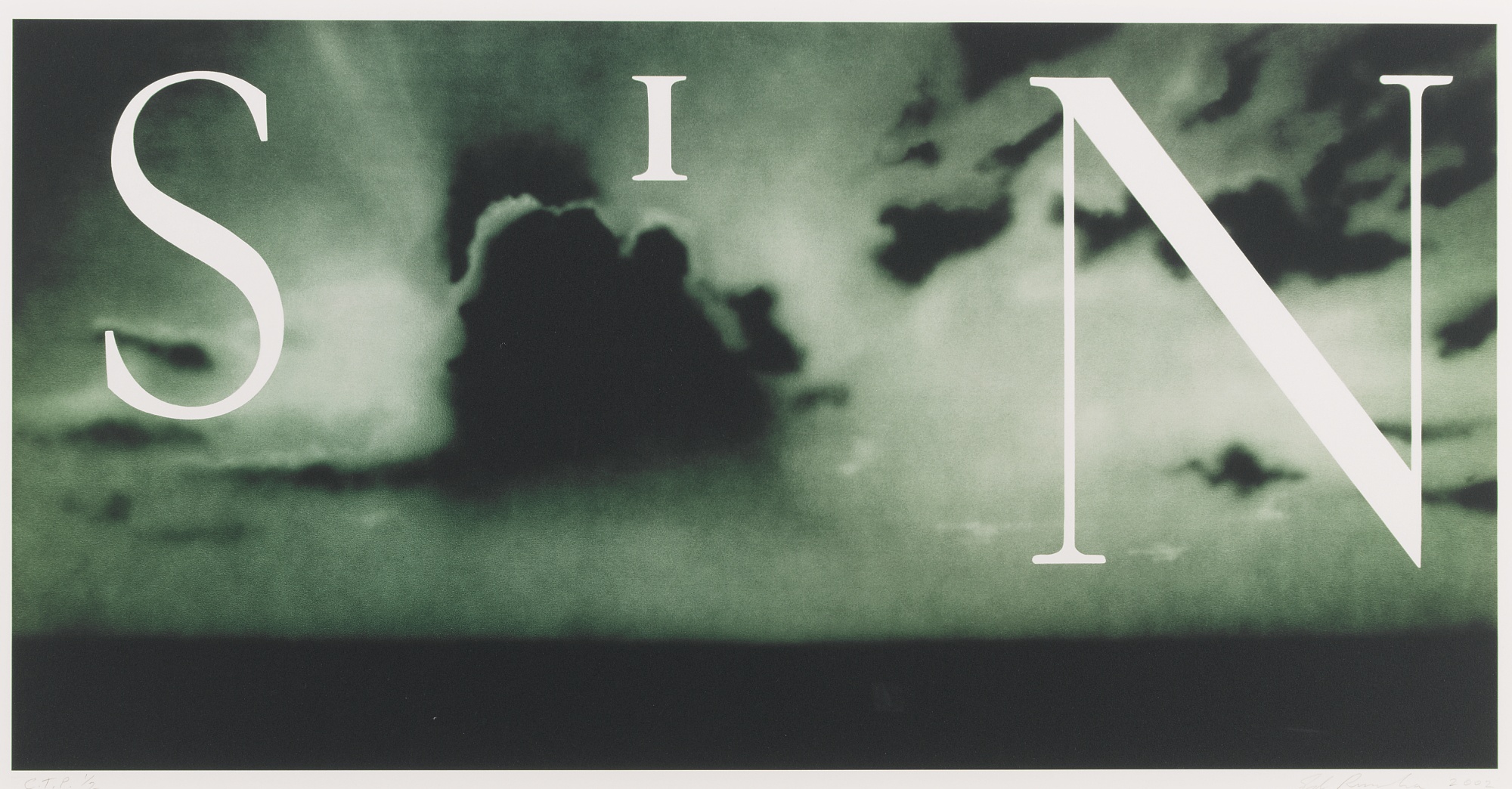
Sin-Without · Ed Ruscha · Sotheby's · 2016-04 · $40,000
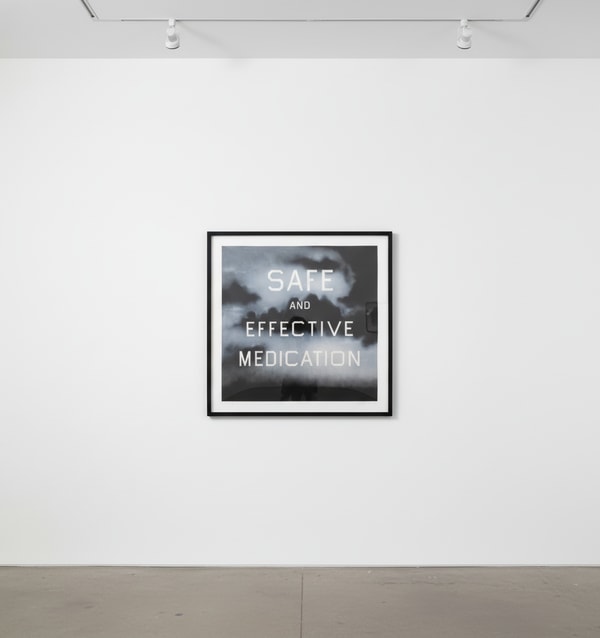
Ed Ruscha (b. 1937, Omaha, Nebraska) is one of the most significant and enduring figures in American art, a defining voice of the West Coast avant-garde whose influence reaches from Pop Art and Conceptualism through to contemporary painting and photography. Raised in Oklahoma City, Ruscha moved to Los Angeles in 1956 to study at the Chouinard Art Institute — later reborn as CalArts — and never left, making the city's peculiar light, architecture, and vernacular culture the permanent subject matter of his art. Where New York's Pop artists turned to consumer packaging and celebrity, Ruscha turned to the American road: the gas station, the parking lot, the Strip, the Hollywood sign, the word itself rendered monumental against desert sky.
Ruscha's practice resists easy categorisation. He emerged in the early 1960s simultaneously as a painter, photographer, printmaker, and book artist, and has never relinquished any of these disciplines. His word paintings — single terms or deadpan phrases set against vast Californian landscapes in impossibly smooth, commercial-feeling typefaces — are among the most immediately recognisable works in postwar American art. The words float in those expanses like hallucinations, stripped of narrative but dense with implication: Hollywood, OOF, Annie, Brave Men Run in My Family. Alongside the paintings, Ruscha produced a series of artist books beginning in 1963 with Twentysix Gasoline Stations, followed by Every Building on the Sunset Strip (1966), Thirtyfour Parking Lots (1967), Nine Swimming Pools and a Broken Glass (1968), and others — works that are now regarded as foundational to both the history of Conceptual Art and the modern artist book. Shot in a flat, documentary style with no compositional drama, they transformed the photographically ordinary into something philosophically charged.
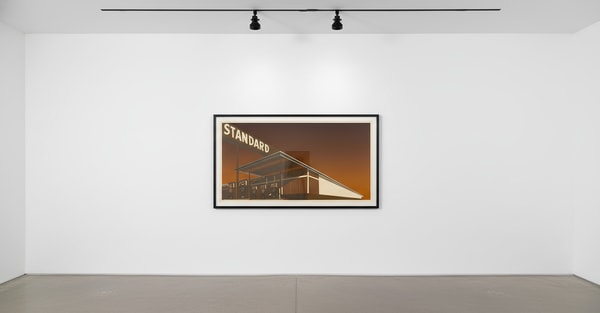
His print and edition output is among the most substantial and actively traded of any American artist of his generation. Working across screenprint, aquatint, lithograph, etching, and photogravure, Ruscha produced major print series throughout his career: the Standard Station screenprints, Hollywood, Mountain Series, Book Covers, Bow-Tie Landscapes, various word and phrase prints. The breadth of this body of work allows collectors to engage meaningfully with his practice at a wide range of price points, from modest works on paper to landmark edition prints that have achieved significant results at the major auction houses. His auction record was set in November 2024 when Standard Station, Ten-Cent Western Being Torn in Half achieved $68,260,000 at Christie's — a figure that confirms his standing among the top tier of American postwar artists.
Ruscha represented the United States at the Venice Biennale in 2005, a singular honour that reflected his international standing. His work is held in permanent collections at the Museum of Modern Art, the Whitney Museum of American Art, the Metropolitan Museum of Art, LACMA, SFMOMA, Tate Modern, the Centre Pompidou, and over a hundred other institutions worldwide. The range and consistency of his output — spanning more than six decades without a diminution of inventiveness — makes him one of the few artists of the 1960s generation whose market and critical reputation has only deepened with time.
Guy Hepner brings deep expertise to the Ed Ruscha print and edition market, with inventory spanning all of his major series and a thorough understanding of condition, provenance, and relative rarity across his print output. Our gallery at 177 Tenth Avenue, New York offers collectors authentic Ruscha works with expert guidance on acquisition and valuation. For those looking to sell or appraise Ruscha prints and editions, we provide free, confidential valuations and connections to a global network of serious collectors.