Flowers
16 works
Robert Mapplethorpe’s photography commands a robust and consistently strong presence in the global auction market, reflecting his indelible impact on 20th-century art and culture. His works are highly sought after by private collectors and institutions alike, demonstrating enduring investment value.
Robert Mapplethorpe’s photography commands a robust and consistently strong presence in the global auction market, reflecting his indelible impact on 20th-century art and culture. His works are highly sought after by private collectors and institutions alike, demonstrating enduring investment value. Christie's, Sotheby's, and Phillips regularly feature Mapplethorpe's iconic photographs, with significant results observed across his diverse oeuvre. Prices can range from tens of thousands for smaller or less common prints to several hundred thousand for rare, large-format, or platinum prints of his most iconic images. For instance, a seminal piece such as 'Man in Polyester Suit' (1980) or a particularly striking floral still life like 'Irises' (1978) can fetch well into the six figures, underscoring the demand for masterworks that define his aesthetic.
The market for Mapplethorpe’s work is driven by several factors: the finite nature of his editions, the unparalleled quality of his photographic prints, and the historical and cultural significance of his subjects. Collectors are particularly drawn to his early, intimate Polaroids for their raw immediacy, his celebrated black and white gelatin silver prints for their exquisite tonal range and classical composition, and his rarer platinum prints for their unparalleled archival stability and lustrous depth. The consistent appearance of his work at major auction houses globally, coupled with a steady appreciation for his most iconic images, solidifies Mapplethorpe's position as a blue-chip artist in the photography market, offering compelling long-term investment prospects. His provocative yet refined aesthetic ensures sustained collector interest, whether in his delicate flowers, powerful portraits, or challenging nudes.
Born in Floral Park, New York, in 1946, Robert Mapplethorpe embarked on a tumultuous yet profoundly influential artistic journey that reshaped the landscape of contemporary photography. He briefly attended the Pratt Institute in Brooklyn, studying graphic arts, though he largely considered himself self-taught in the photographic medium. Mapplethorpe's early artistic exploration began in the late 1960s, experimenting with mixed media and collage, often incorporating found images and his own intimate photographs taken with a Polaroid camera. His move to Chelsea, New York, and his pivotal relationship with artist and musician Patti Smith, provided a crucible for his burgeoning artistic identity, fostering an environment of radical creativity and self-discovery.
By the mid-1970s, Mapplethorpe had transitioned to using a medium-format Hasselblad camera, a choice that marked a significant turning point in his practice. This shift allowed him to achieve the meticulous control over composition, light, and shadow that would become his hallmark. His signature style is characterised by a profound classicism, even when depicting overtly modern or transgressive subjects. Mapplethorpe’s technique emphasised stark black and white contrasts, precise framing, and an almost sculptural quality in his portrayal of the human form, flowers, and objects. His works are distinguished by their elegant, almost austere aesthetic, meticulously rendered with a formal perfection that belies their often challenging content.
Major themes throughout Mapplethorpe’s oeuvre include the exploration of beauty, sexuality, and the human condition. He challenged societal norms by elevating subjects from subcultures and the queer community to the realm of high art, imbuing them with a classical dignity. His artistic philosophy centred on finding beauty in all forms, regardless of perceived conventionality, and presenting his subjects with an uncompromising honesty and formal grace. He was deeply influenced by classical sculpture, Renaissance painting, and the work of photographers like Edward Weston and August Sander, absorbing their formal rigour while injecting his own contemporary sensibility and radical perspective.
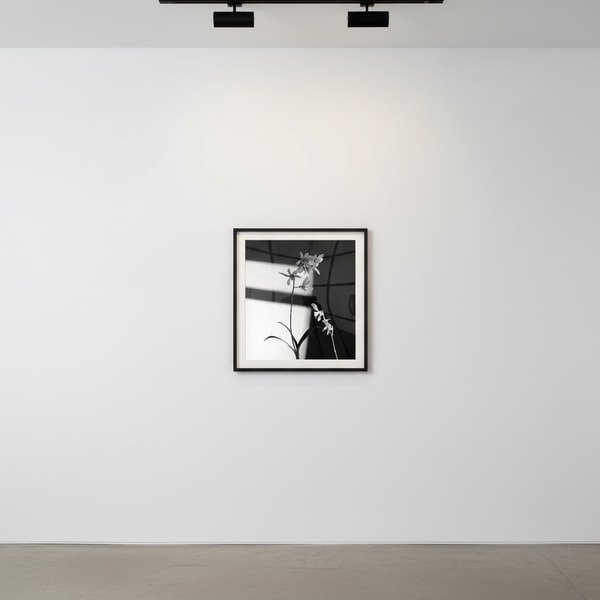
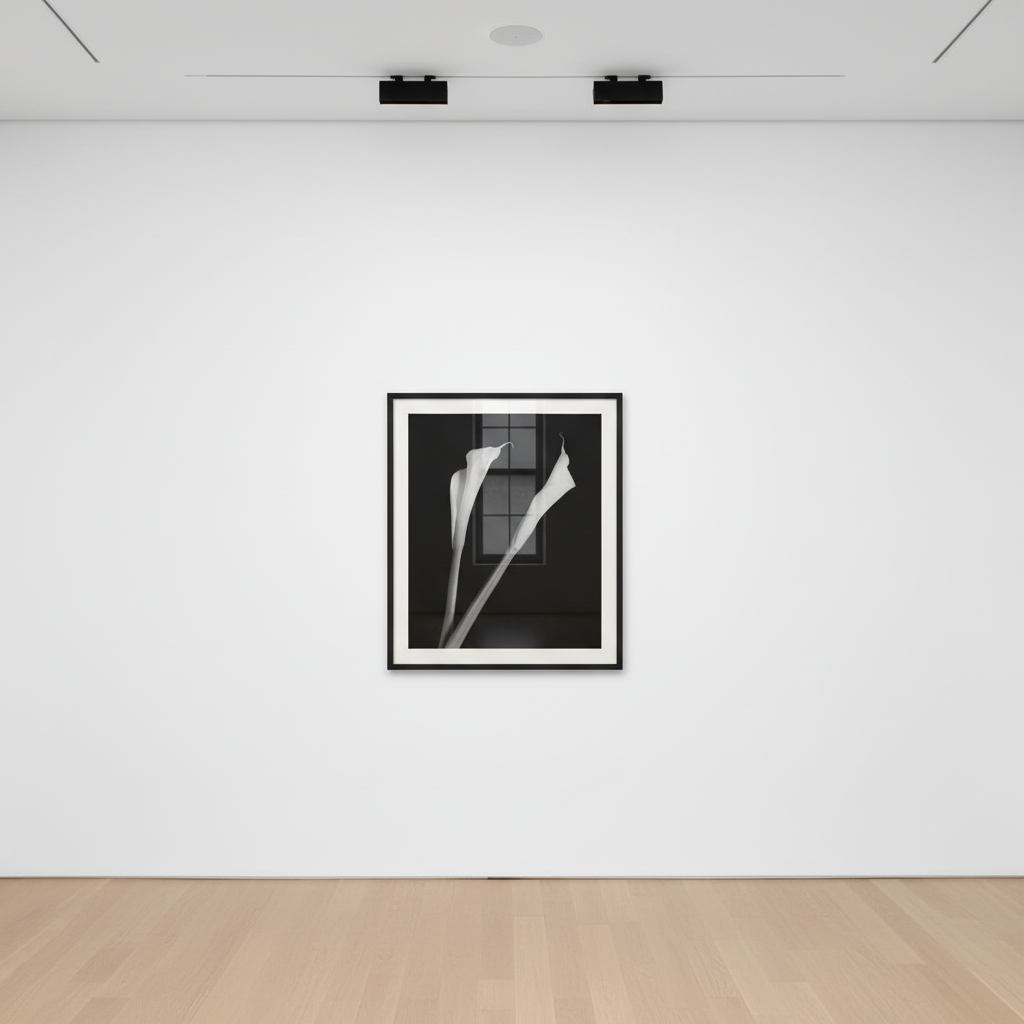
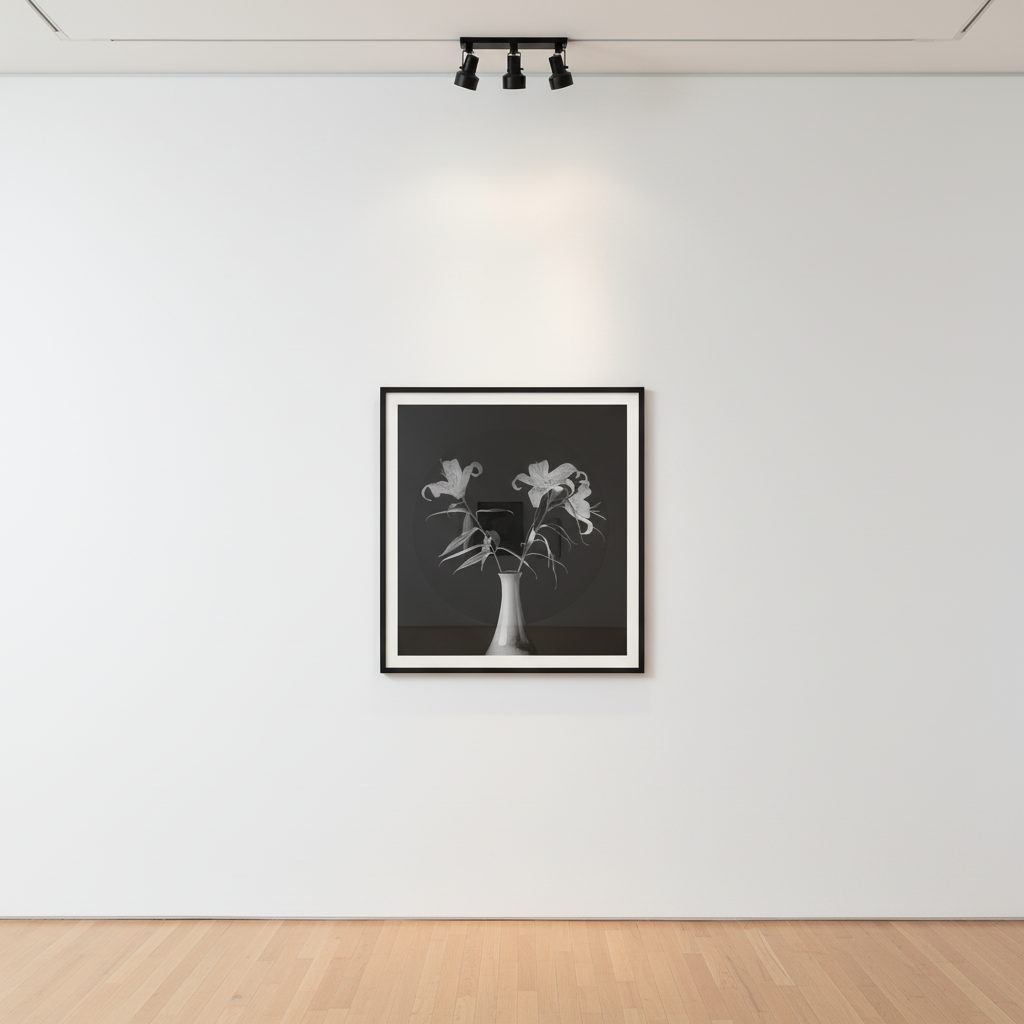
Robert Mapplethorpe’s extensive body of work is renowned for its distinct series, each exploring specific thematic concerns with his characteristic formal precision and provocative sensibility, making them highly collectible. One of his most celebrated and aesthetically accessible series focuses on Flowers. These still lifes, often depicting tulips, irises, and orchids, transform botanical subjects into sculptural forms, rendered with exquisite lighting and composition that evoke a classical timelessness. These works are highly sought after for their beauty, formal perfection, and the way they distill Mapplethorpe's aesthetic rigour into a universally appreciated subject.
Parallel to his floral studies, Mapplethorpe’s Portraits form a cornerstone of his legacy. This series includes iconic images of artists, celebrities, and cultural figures of his era—such as Patti Smith, Andy Warhol, and Louise Bourgeois—alongside members of the S&M subculture. Each portrait is executed with psychological intensity and formal elegance, capturing the essence of his subjects while maintaining a detached, almost clinical gaze. His Nudes, particularly the male nudes, are perhaps his most emblematic and controversial works. These photographs elevate the human body to a classical ideal, often presented in sculptural poses that reference ancient Greek and Roman art, yet imbued with a raw, confrontational sexuality. Both his portraits and nudes are prized for their historical significance, their mastery of form, and their powerful commentary on identity and desire.
Robert Mapplethorpe's work is held in the permanent collections of numerous prestigious institutions worldwide, underscoring his enduring art historical importance and critical acclaim. Significant holdings can be found at The Museum of Modern Art (MoMA) in New York, The Metropolitan Museum of Art, and the Solomon R. Guggenheim Museum. In Los Angeles, his photographs are housed at the J. Paul Getty Museum and the Los Angeles County Museum of Art (LACMA). Other prominent North American institutions include the Whitney Museum of American Art in New York, the Museum of Fine Arts, Boston, and the Art Institute of Chicago. Internationally, Mapplethorpe’s works are represented in collections such as the Tate Modern in London, the Victoria and Albert Museum, and the Centre Pompidou in Paris. These extensive institutional acquisitions attest to the profound impact and lasting legacy of his photographic vision.
Guy Hepner Gallery offers unparalleled expertise for collectors seeking to acquire or divest works by Robert Mapplethorpe. Our established relationships within the global art market provide access to a curated selection of his iconic photographs, from rare early Polaroids to celebrated large-format black and white prints and exquisite platinum editions. We guide both nascent and seasoned collectors through the intricacies of the Mapplethorpe market, ensuring informed decisions aligned with investment goals and aesthetic preferences.
For those looking to sell works by Robert Mapplethorpe, Guy Hepner provides discreet and professional consignment services. Leveraging our extensive network of discerning collectors and deep market insight, we facilitate optimal placement and realise strong returns. Our gallery stands as a trusted resource, ensuring transparency and expertise whether you are looking to expand your collection with a definitive Mapplethorpe masterwork or divest a significant piece from your holdings.