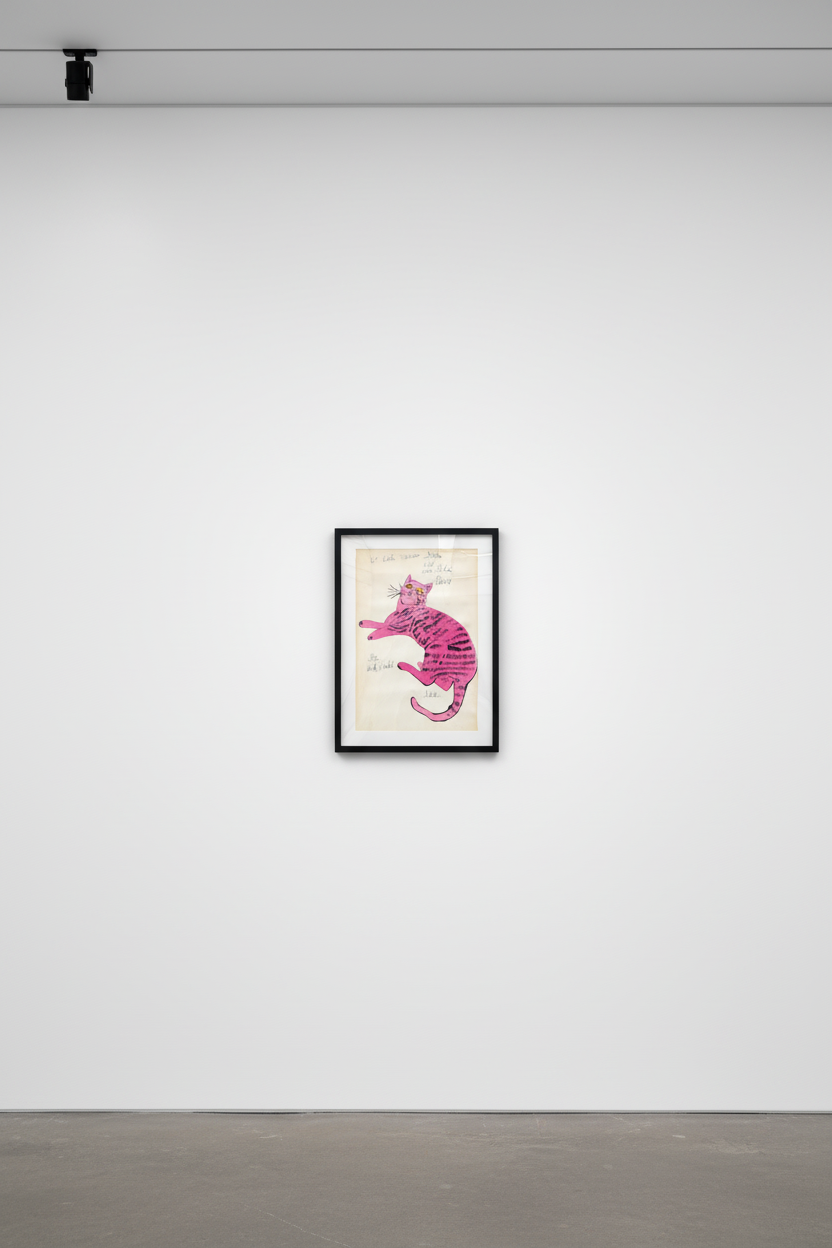
25 Cats Named Sam
20 works

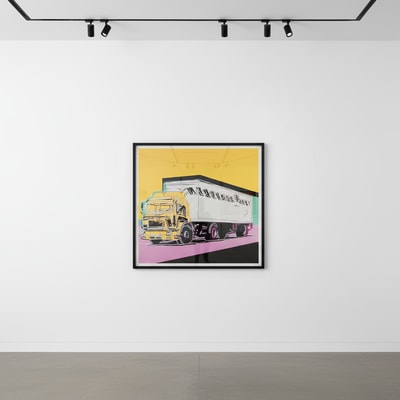
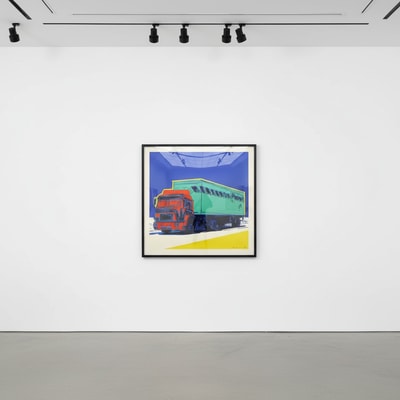
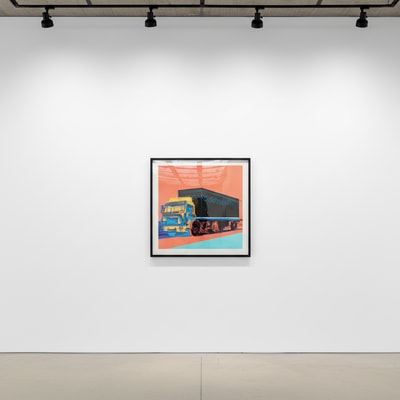
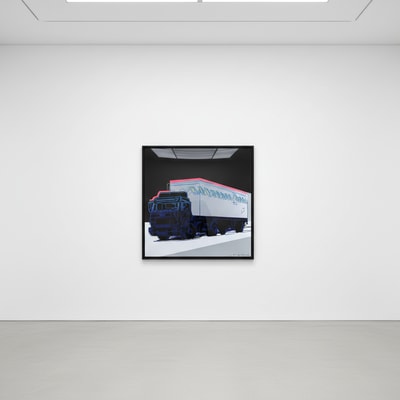
Andy Warhol's Trucks (1985) is one of the rarest and most unusual portfolios in his late career — a four-print series commissioned by Daimler-Benz AG that demonstrates, with characteristic Warhol wit, that commerce and art were never really separate concerns. The portfolio is among the most collectible of Warhol's corporate commission projects, prized both for its rarity and for the way it embodies the artist's philosophy of treating industrial objects with the same seriousness as celebrities or consumer goods.
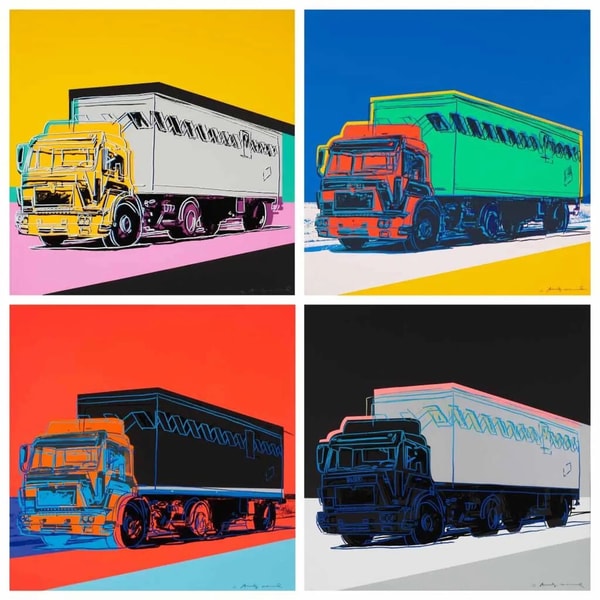
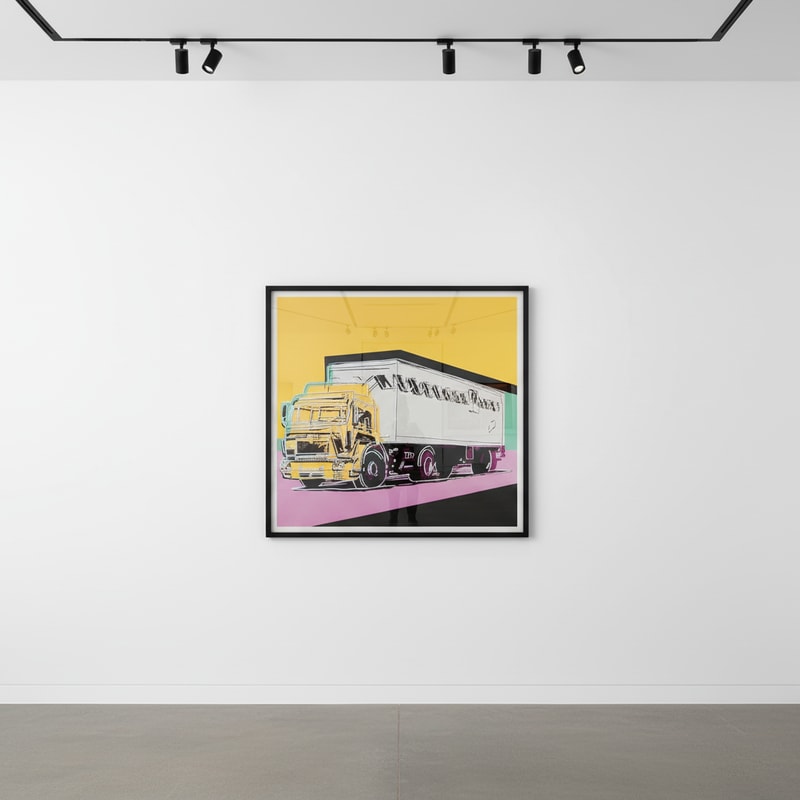
The four prints each depict a Mercedes-Benz truck — rendered in Warhol's trademark flat, high-contrast palette with bold, non-naturalistic colour. The trucks are cropped, stylised, and transformed: what might have been a commercial brochure becomes something closer to a monument. The commission was a natural extension of Warhol's longstanding interest in cars, machines, and the aesthetic of American and European industry.
Published in an edition of 30 per image, with additional artist's proofs and printer's proofs. Each print measures 30 × 40 inches, printed on Lenox Museum Board. Published by Daimler-Benz AG and printed by Rupert Jasen Smith, New York, 1985.
The Trucks portfolio is significantly rarer than most Warhol series, with an edition size of just 30. This scarcity, combined with the portfolio's distinctive subject matter, makes it highly attractive to specialist collectors. Works appear infrequently on the open market, and when they do, they tend to attract competitive bidding from both Warhol collectors and collectors focused on automotive or industrial design imagery.
For collectors seeking a Warhol portfolio that stands genuinely apart from his mainstream output, Trucks is an exceptional choice — rare, unusual, and quintessentially Warholian in its elevation of the ordinary to the iconic. Guy Hepner Gallery can source Trucks prints on request. Contact us to discuss availability.
5 works available
The Colourways
Commissioned directly by Daimler-Benz in 1985, these four prints depict Mercedes-Benz trucks in Warhol's flattened style — one of his rare corporate commissions, limited to an edition of 30 per image.
Other Trucks Works
Five Facts About Andy Warhol Trucks
Trucks is a portfolio of four screenprints (F.S. II.367-370) created by Warhol in 1985 and printed by his longtime collaborator Rupert Jasen Smith in New York.
The series was commissioned by the German Federal Road Haulage Association (Bundesverband des Deutschen Güterfernverkehrs, BDF) to mark the 20th World Congress of the International Road Transportation Union (IRU).
Each of the four screenprints depicts the same German cargo truck rendered in different colourways.
The prints are executed on Lenox Museum Board, consistent with the majority of Warhol's late-career print production.
The complete portfolio was published in an edition of 60, plus 15 artist's proofs, 10 printer's proofs, 15 hors commerce, and 5 impressions numbered in Roman numerals for each print.
Market Data
See real auction history, estimate ranges and price benchmarks for individual Trucks prints, sourced from Christie's, Sotheby's and other major auction houses.
Frequently Asked Questions
Andy Warhol Trucks prints for sale are available at Guy Hepner Gallery, 529 West 20th Street, New York (by appointment). We offer authenticated editions with full provenance documentation sourced from the secondary market and directly from publishers.
Andy Warhol Trucks works — 5 available — are typically produced as limited editions, individually signed and numbered by the artist. Contact Guy Hepner Gallery for edition details on specific works.
Pricing for Andy Warhol Trucks prints varies by edition size, date, and condition. Contact Guy Hepner Gallery for current market pricing and availability.
More Andy Warhol Series
View all Andy Warhol works →