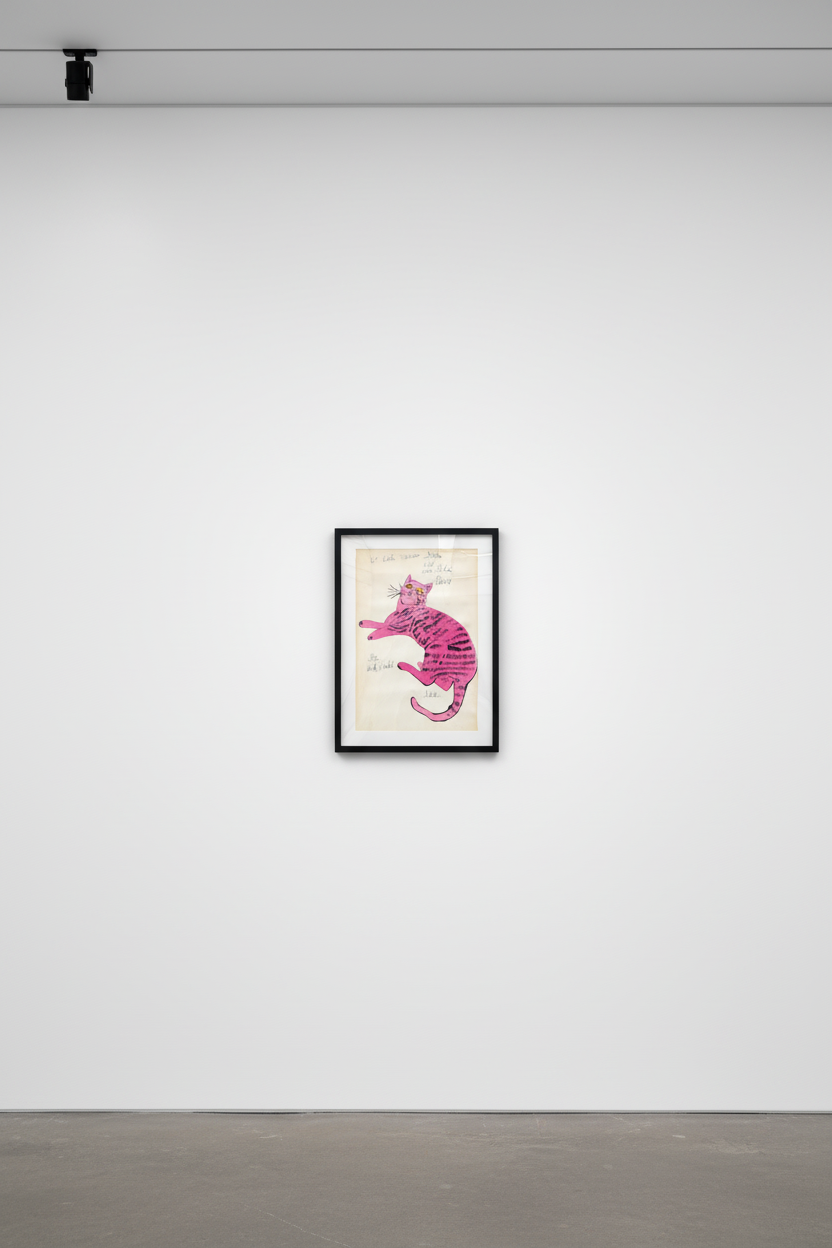
25 Cats Named Sam
20 works

The Wonderful World of Fleming-Joffe occupies a singular position within Warhol's commercial illustration period—works created during the artist's transition from Madison Avenue illustrator to Pop Art pioneer. Auction records from July 2022 show individual works from this series realising $5,292 each—modest figures that belie their historical importance. These results reflect the market's current undervaluation of Warhol's commercial period relative to his canonical screen prints. For context, Warhol's market demonstrates extraordinary depth: Shot Sage Blue Marilyn achieved $195,040,000 at Christie's in May 2022, establishing the highest price ever paid for a twentieth-century artwork at auction. Mao F.S. II.96 and II.97 each brought $4,648,000 at Christie's in May 2025, while Flowers examples achieved $4,076,000 and $3,832,000 at Sotheby's that same month.
The Fleming-Joffe works represent acquisition opportunities at entry-level pricing for collectors seeking documented Warhol output with legitimate scholarly interest and room for market reappraisal.
Commissioned in 1960 by Fleming-Joffe, a Los Angeles-based exotic leather goods manufacturer, this series demonstrates Warhol's virtuosity in commercial illustration during the final years before his decisive break into fine art. The works were created as promotional materials showcasing the company's range of exotic skins—alligator, water buffalo, and other materials central to their luxury product line.
Executed as photo-lithographed illustrations, several works incorporate actual leather appliqué elements, creating hybrid objects that blur distinctions between advertising ephemera and art object. The technique anticipates Warhol's later interest in combining mechanical reproduction with tactile, handmade elements. Dimensions vary, with most works measuring 20 x 13¾ inches, though Makassar exists in a larger 40 x 27½ inch format.
These illustrations emerged precisely as Warhol was developing the visual language—commercial imagery, mechanical reproduction, ironic distance—that would define Pop Art. Scholars increasingly recognise the Fleming-Joffe commission as a crucial transitional document.
The series comprises distinct compositions, each celebrating different exotic materials with Warhol's characteristic wit and graphic precision.
Sequin Serpent remains the most sought-after image within the series. The combination of the photo-lithographed illustration with genuine leather appliqué creates an object that transcends typical commercial illustration. We consistently observe collector preference for the appliqué variants, which command stronger secondary market interest due to their material complexity.
The New Eden presents an Edenic fantasy filtered through commercial sensibility—paradise reimagined as a luxury goods advertisement. The image's ironic layering of innocence and commerce anticipates Warhol's later explorations of American consumer mythology.
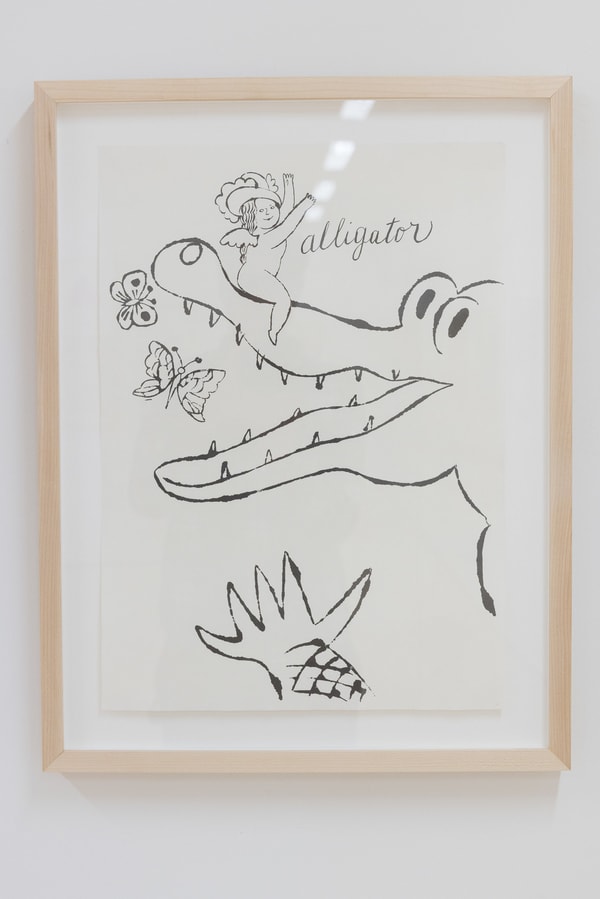
Alligator and Water Buffalo offer straightforward celebrations of exotic materials, executed with the clean graphic sensibility Warhol perfected during his I. Miller shoe advertisement years.
Makassar, at 40 x 27½ inches, provides the largest format within the series and consequently generates particular interest from collectors seeking more substantial wall presence.
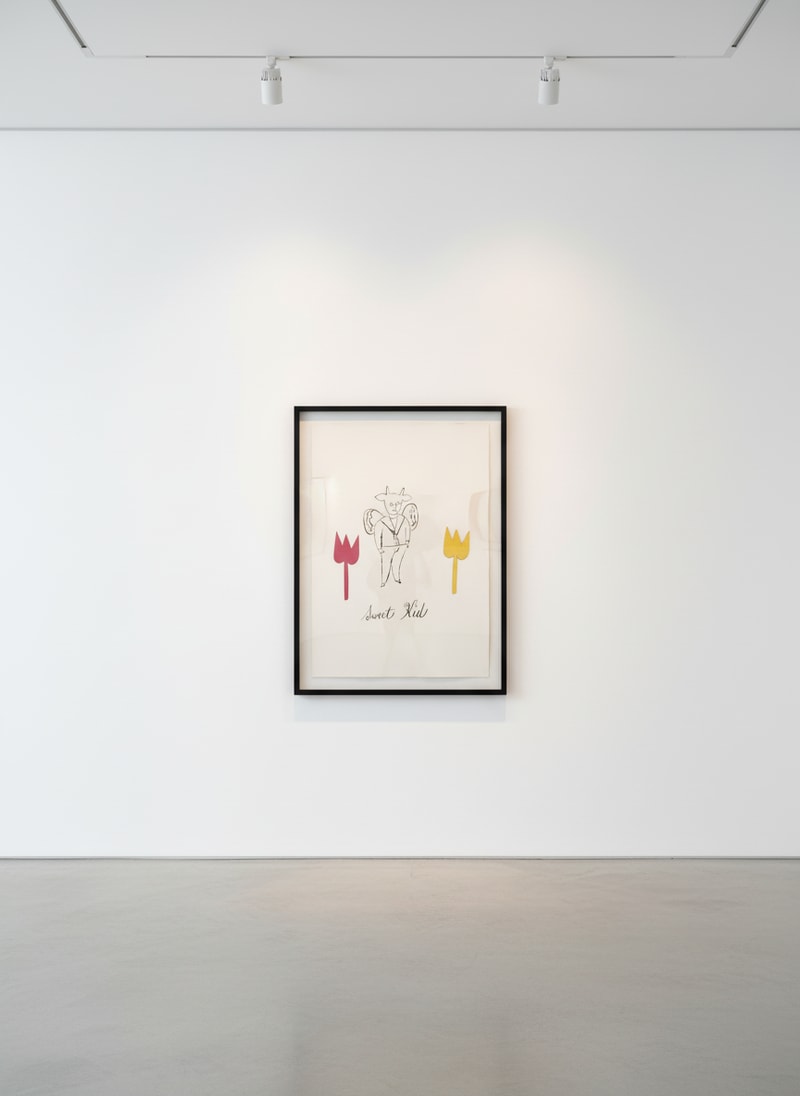
Sweet Kid rounds out available inventory, featuring leather appliqué and the playful visual punning characteristic of Warhol's commercial work.
From our direct market experience, collectors acquiring these works typically fall into two categories: Warhol specialists building comprehensive holdings across all periods, and design-focused collectors attracted to the midcentury commercial aesthetic.
Authentication of Fleming-Joffe works requires examination of several series-specific markers. The photo-lithographic process produces consistent tonal qualities and registration that distinguish original prints from later reproductions. Works incorporating leather appliqué present additional authentication points—the attachment method, leather quality, and aging characteristics all factor into verification.
The Andy Warhol Foundation's authentication board, though no longer accepting submissions, established provenance standards that remain operative in the secondary market. Works with documented exhibition history or inclusion in the original Fleming-Joffe promotional distribution carry stronger authentication credentials.
Condition assessment focuses on paper stability, tonal consistency, and—for appliqué works—the integrity of leather elements. These pieces were produced as commercial materials rather than fine art editions, meaning survival in excellent condition is relatively uncommon. Works exhibiting minimal foxing, clean margins, and secure appliqué attachment represent the strongest acquisition targets.
Guy Hepner provides comprehensive condition reporting and authentication documentation for all works in inventory.
Guy Hepner maintains active inventory in The Wonderful World of Fleming-Joffe series and welcomes enquiries from serious collectors. Our New York team provides detailed condition reports, provenance documentation, and strategic acquisition guidance tailored to individual collection objectives.
Contact us directly to discuss available works, pricing, and acquisition timing.
This series belongs to the vast and varied body of print and painted work Warhol produced across five decades, during which he moved fluidly between celebrity portraiture, consumer product imagery, historical appropriation, and personal or commissioned subject matter — all filtered through the same signature screenprint process that flattened the distinction between mechanical reproduction and fine art. Warhol's insistence on treating commercial printing techniques as a primary artistic medium, rather than a secondary reproductive tool, remains one of the most influential positions in postwar American art.
Warhol's work is held in the permanent collections of major museums worldwide, including the Museum of Modern Art, the Whitney Museum of American Art, Tate Modern, and the Andy Warhol Museum in Pittsburgh, which maintains the most complete public archive of his output across all periods and subjects.
20 works available
Andy Warhol
From The Wonderful World of Fleming-Joffe, Alligator
1960
Andy Warhol
From The Wonderful World of Fleming-Joffe, Alligator
1960
Andy Warhol
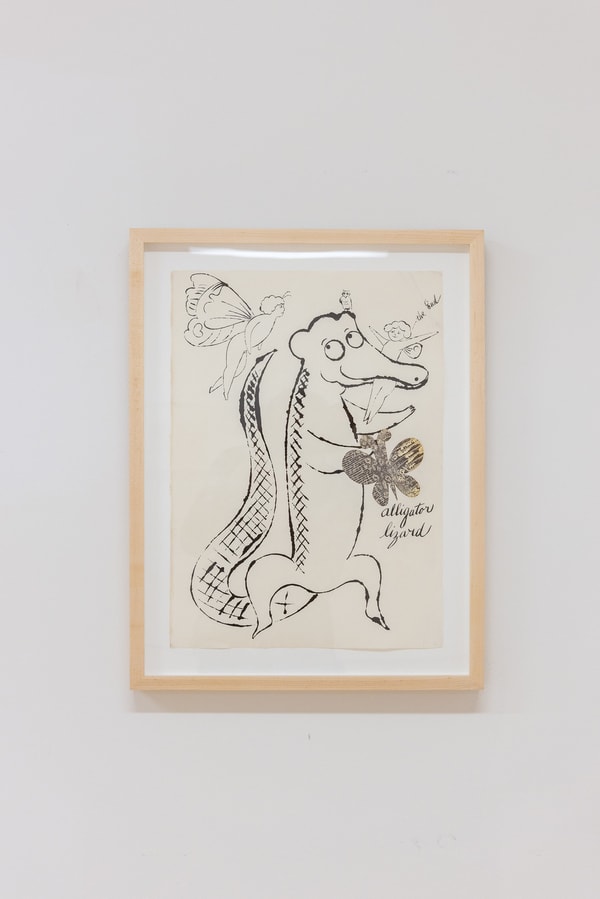
From The Wonderful World of Fleming-Joffe, Alligator Lizard
1960
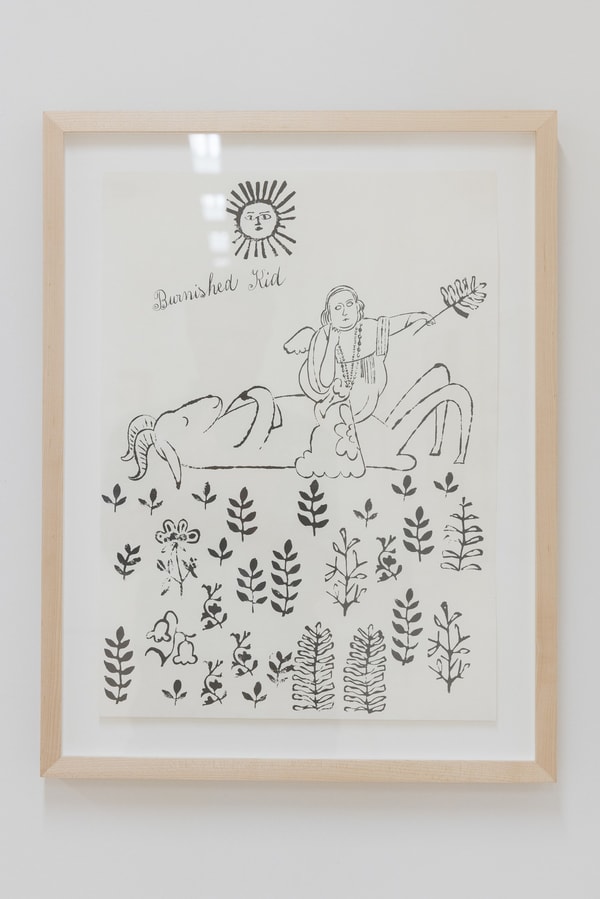
Andy Warhol
From The Wonderful World of Fleming-Joffe, Banished Kid
1960
Andy Warhol
From The Wonderful World of Fleming-Joffe, Banished Kid
1960
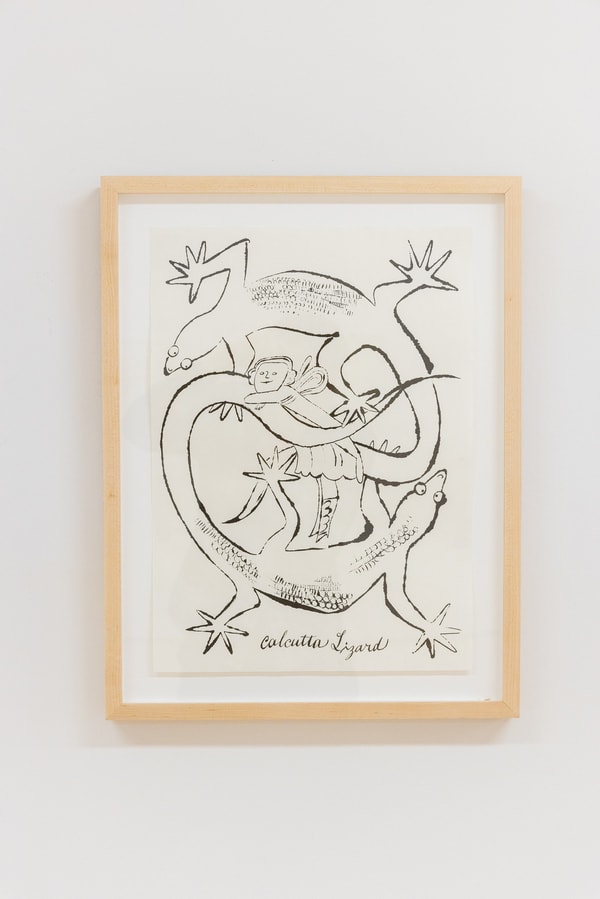
Andy Warhol
From The Wonderful World of Fleming-Joffe, Calcutta Lizard
1960
Andy Warhol
From The Wonderful World of Fleming-Joffe, Calcutta Lizard
1960
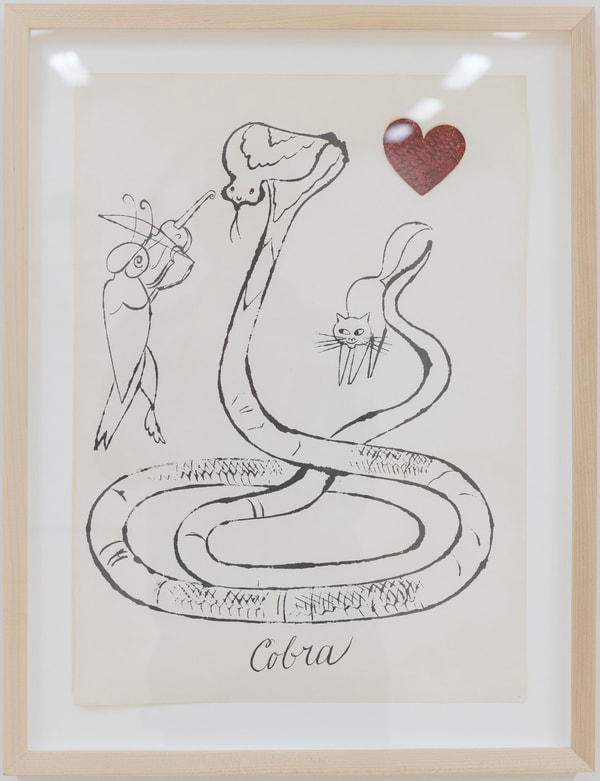
Andy Warhol
From The Wonderful World of Fleming-Joffe, Cobra
1960
Andy Warhol
From The Wonderful World of Fleming-Joffe, Cobra
1960
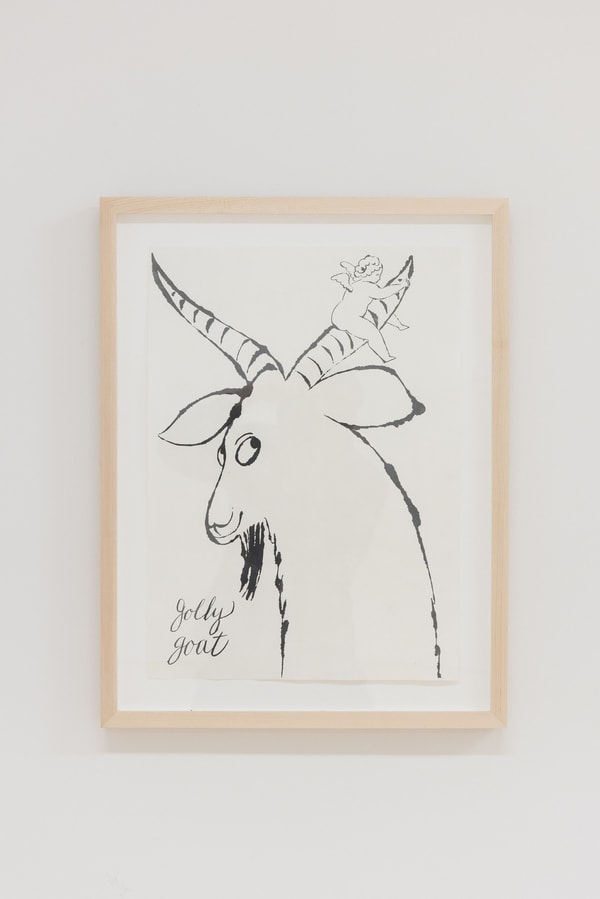
Andy Warhol
From The Wonderful World of Fleming-Joffe, Golly Goat
1960
Andy Warhol
From The Wonderful World of Fleming-Joffe, Golly Goat
1960
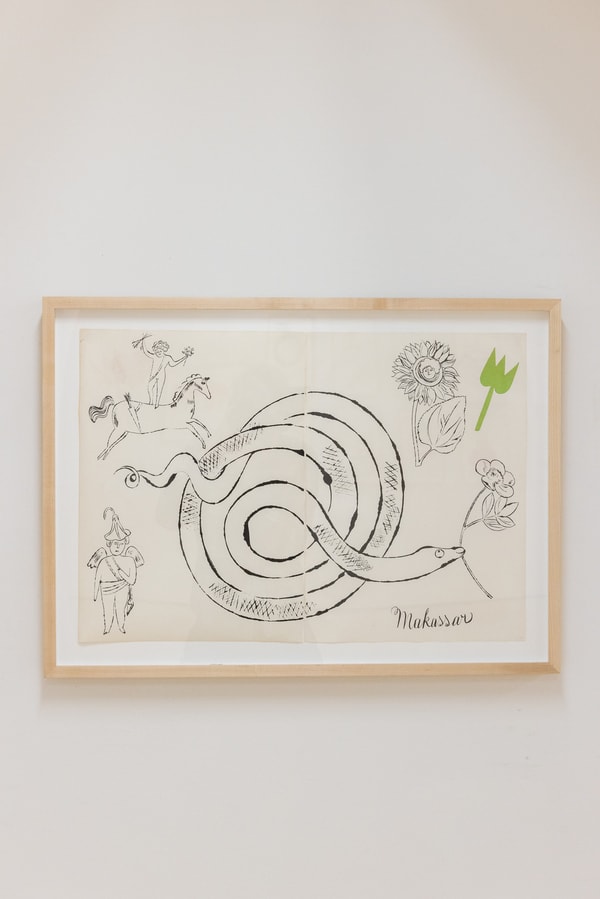
Andy Warhol
From The Wonderful World of Fleming-Joffe, Makassar
1960
Andy Warhol
From The Wonderful World of Fleming-Joffe, Makassar
1960
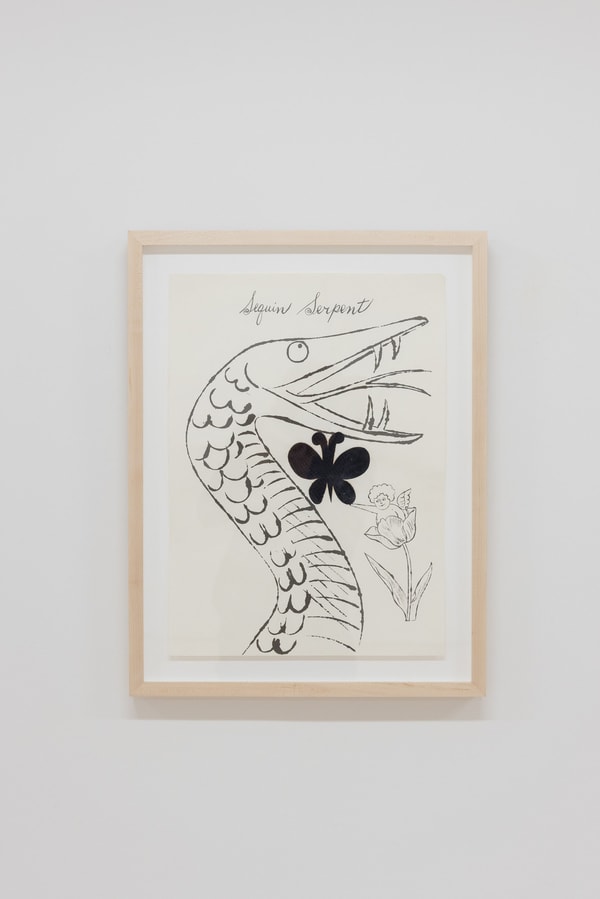
Andy Warhol
From The Wonderful World of Fleming-Joffe, Sequin Serpent
1960
Andy Warhol
From The Wonderful World of Fleming-Joffe, Sequin Serpent
1960
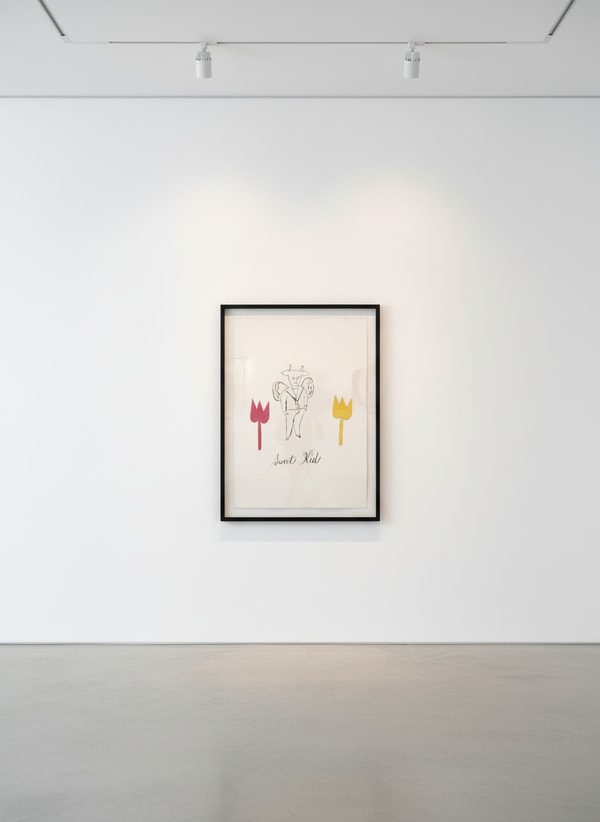
Andy Warhol
From The Wonderful World of Fleming-Joffe, Sweet Kid
1960
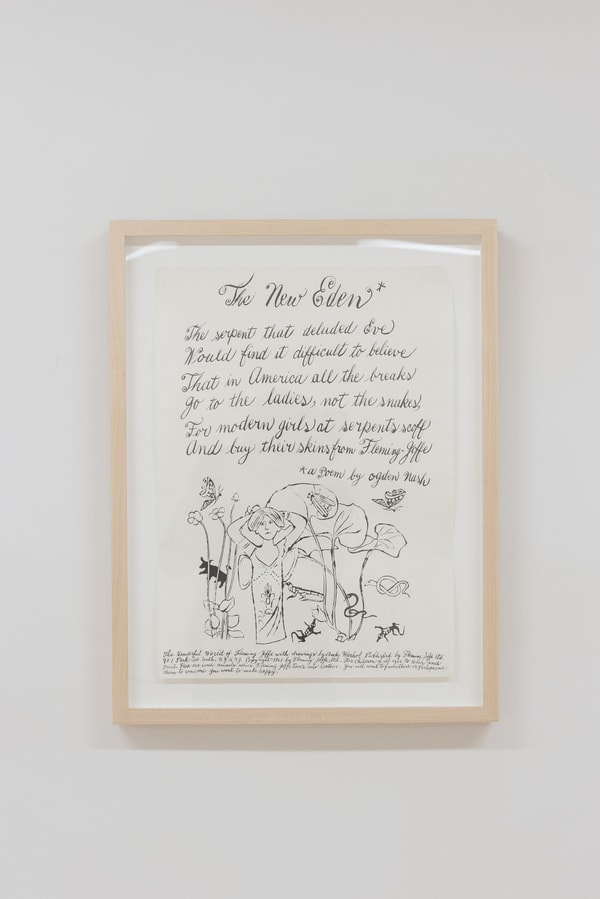
Andy Warhol
From The Wonderful World of Fleming-Joffe, The New Eden
1960
Andy Warhol
From The Wonderful World of Fleming-Joffe, The New Eden
1960
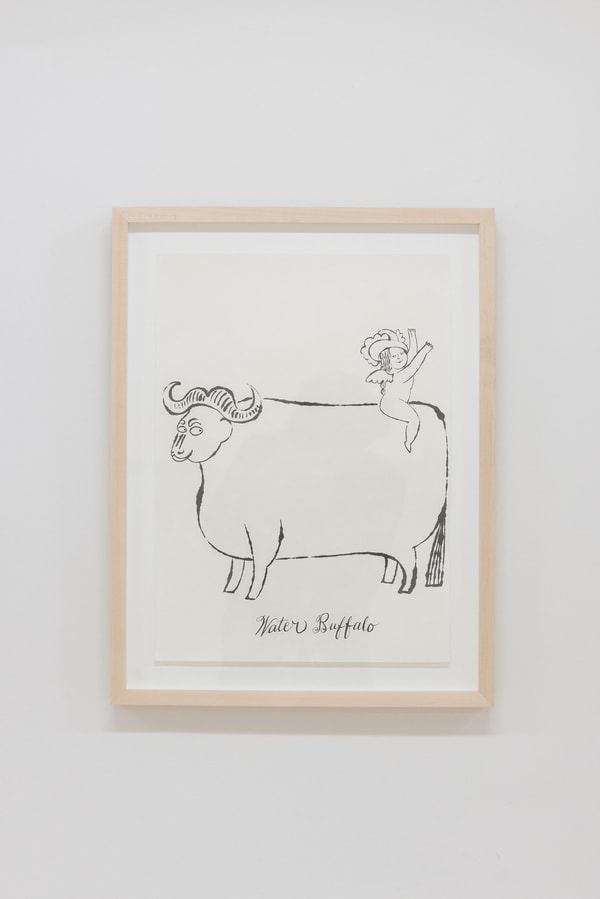
Andy Warhol
From The Wonderful World of Fleming-Joffe, Water Buffalo
1960
Andy Warhol
From The Wonderful World of Fleming-Joffe, Water Buffalo
1960
Five Facts About Andy Warhol The Wonderful World of Fleming Joffe
The series was commissioned around 1960 by Fleming-Joffe, an exotic leather-goods company for whom Warhol produced illustration work from the late 1950s into the early 1960s.
One of the company's owners, Teddy Edelman, recalled hiring Warhol directly after seeing his work.
Each piece combines a photolithographed illustration with an applied leather appliqué, tying the printed image directly to the exotic skins the company sold.
Subjects depicted include exotic and imaginative animals such as a cobra, a water buffalo, and a golly goat, reflecting the whimsical advertising aesthetic of the period.
Work from the series is held in the collection of the National Galleries of Scotland.
Market Data
See real auction history, estimate ranges and price benchmarks for individual The Wonderful World of Fleming Joffe prints, sourced from Christie's, Sotheby's and other major auction houses.
Frequently Asked Questions
Andy Warhol The Wonderful World of Fleming Joffe prints for sale are available at Guy Hepner Gallery, 529 West 20th Street, New York (by appointment). We offer authenticated editions with full provenance documentation sourced from the secondary market and directly from publishers.
Andy Warhol The Wonderful World of Fleming Joffe works — 20 available — are typically produced as limited editions, individually signed and numbered by the artist. Contact Guy Hepner Gallery for edition details on specific works.
Pricing for Andy Warhol The Wonderful World of Fleming Joffe prints varies by edition size, date, and condition. Contact Guy Hepner Gallery for current market pricing and availability.
From the Journal
More Andy Warhol Series
View all Andy Warhol works →