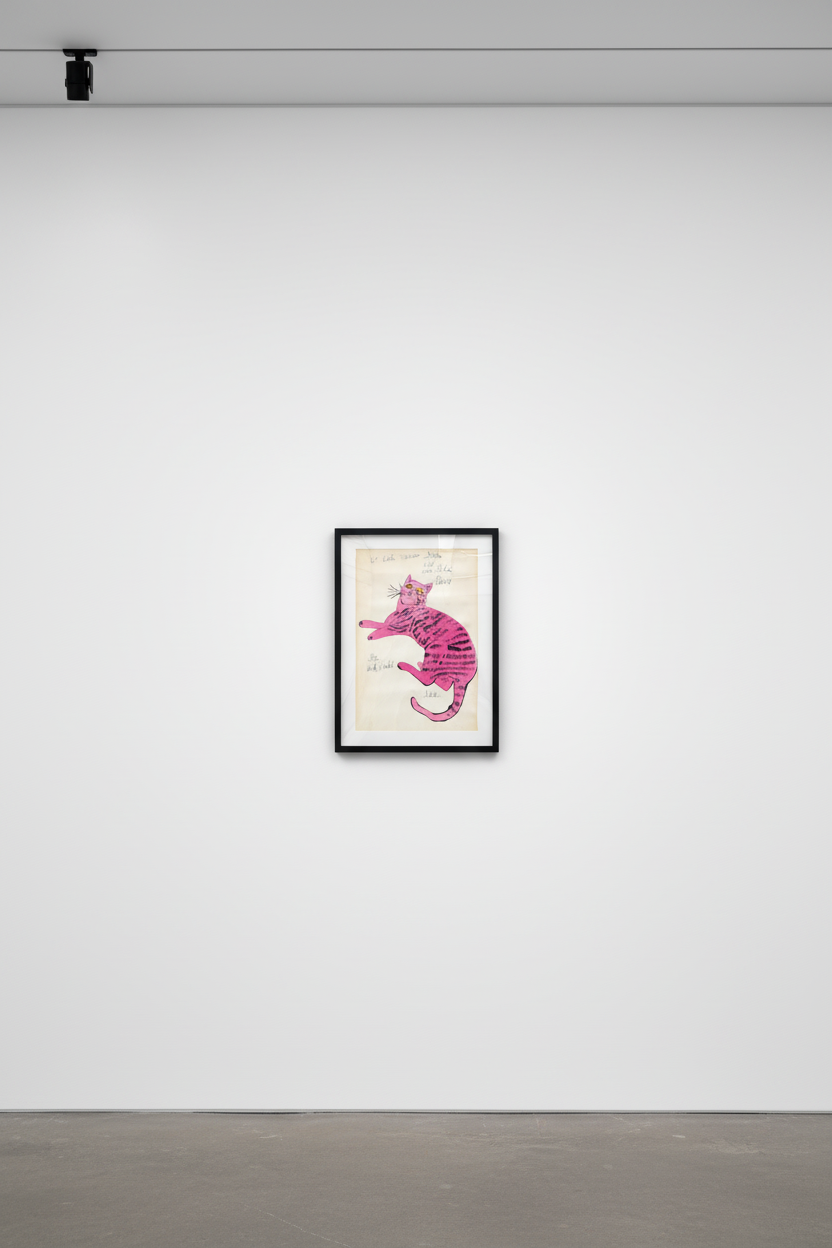
25 Cats Named Sam
20 works

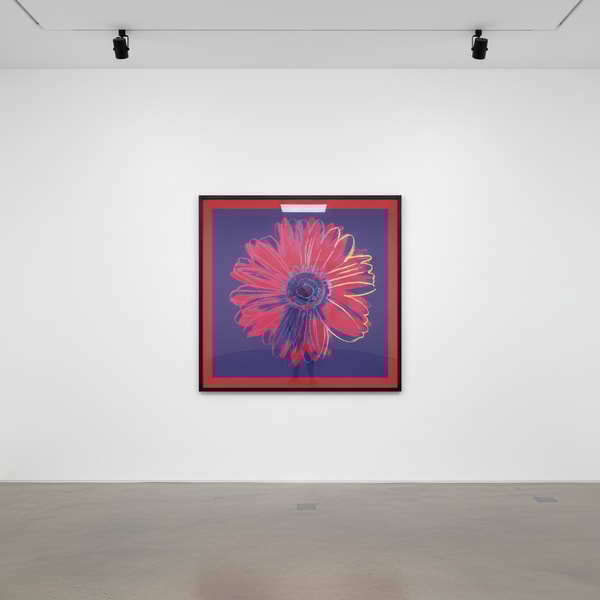
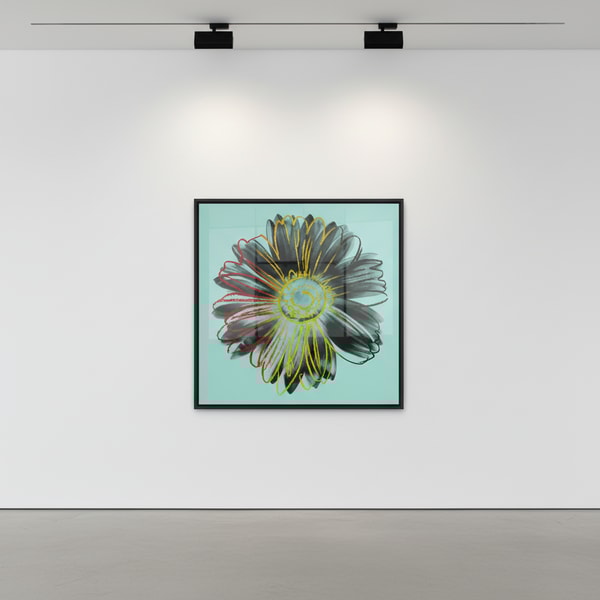
Andy Warhol's Daisy series represents one of the artist's most distinctive explorations of botanical imagery, created during a pivotal period in 1982 when Warhol was actively expanding his graphic vocabulary beyond the iconic subjects that defined his earlier career. Within the broader Warhol market—where Shot Sage Blue Marilyn achieved $195,040,000 at Christie's in May 2022, establishing the record for any 20th-century artwork at auction—the Daisy prints occupy a strategic position for collectors seeking authenticated Warhol works with genuine acquisition potential.
Recent auction activity confirms sustained institutional and private interest in this series. This work achieved £57,150 at auction in June 2024, a result that demonstrates the market's continued appetite for Warhol's lesser-exhibited botanical subjects. This pricing positions the Daisy works as accessible entry points relative to the artist's trophy-level pieces, while maintaining the authentication standards and provenance depth that institutional collectors require.
What we observe consistently is that collectors who acquire works from the artist's more contemplative subjects—botanical studies, still lifes, and nature-based imagery—tend to hold longer and experience appreciation patterns that reward patience over speculative flipping.
The Daisy series emerged in 1982, executed as screen prints on Lenox Museum Board—a substrate Warhol favoured for its archival stability and capacity to hold the saturated colour fields central to his aesthetic. The prints exist in multiple dimensions, with documented sizes including 40 x 60 inches, 38 x 38 inches, and 30 x 30 inches, suggesting Warhol's characteristic interest in seriality and scale variation within unified thematic programmes.
Catalogued in the Feldman/Schellmann catalogue raisonné, these works arrived during Warhol's commercially prolific early 1980s period, when he balanced commissioned portraits with self-directed projects that revisited natural subjects first explored in his legendary Flowers series of 1964. The Daisy prints share DNA with those earlier works—the flattened pictorial space, the tension between organic form and mechanical reproduction—while demonstrating the refined technical control Warhol had developed over two decades of printmaking mastery.
The cultural resonance here extends beyond mere decoration. Warhol's botanical subjects consistently interrogate the boundary between natural beauty and manufactured image, a conversation that feels increasingly urgent in our current visual environment.
The series includes several key variants that appeal to distinct collector profiles. The 40 x 60 inch impression commands wall presence suitable for significant residential or corporate installations—these larger impressions attract collectors building statement pieces for specific architectural contexts.
The 38 x 38 inch square-format prints, documented in multiple iterations, offer the compositional balance many collectors prefer when integrating Warhol into existing collections. We find this dimension particularly popular among those acquiring their second or third Warhol work, as the square format dialogues effectively with both his earlier Pop material and his later commodity-based subjects.
The 30 x 30 inch variant provides accessibility without sacrificing visual impact. Collectors entering the Warhol market often begin here, establishing authentication relationships and developing connoisseurship before scaling into larger or rarer impressions.
Daisy works tend to attract collectors who already own Flowers prints and seek thematic expansion, as well as those specifically interested in Warhol's 1980s output—a period receiving significant scholarly and curatorial reassessment.
Authentication for Daisy series works follows established protocols for Warhol's 1980s printed editions. Collectors should expect full documentation traceable to the Andy Warhol Foundation or established provenance chains from original publishers and primary dealers. The Feldman/Schellmann catalogue raisonné provides the standard reference for scholarly and market verification.
Condition assessment centres on several series-specific factors. Lenox Museum Board, while archival, remains susceptible to environmental damage if improperly stored or displayed. Collectors should examine for toning, foxing, or colour shift—particularly in the vibrant hues central to these compositions. Surface abrasions, handling creases, and mat burns from previous framing affect value materially.
We recommend UV-filtering glazing and climate-controlled display environments for any Daisy acquisition. Works maintaining original colour saturation and paper integrity command premiums that justify investment in professional conservation framing from acquisition forward.
Guy Hepner maintains active inventory and sourcing capability for Warhol's Daisy series across all documented dimensions. Our New York team provides acquisition consultation, condition assessment, and authentication verification for collectors at every level of market experience.
Contact us to discuss current availability and strategic acquisition planning for your Warhol collection.
This series belongs to the vast and varied body of print and painted work Warhol produced across five decades, during which he moved fluidly between celebrity portraiture, consumer product imagery, historical appropriation, and personal or commissioned subject matter — all filtered through the same signature screenprint process that flattened the distinction between mechanical reproduction and fine art. Warhol's insistence on treating commercial printing techniques as a primary artistic medium, rather than a secondary reproductive tool, remains one of the most influential positions in postwar American art.
Warhol's work is held in the permanent collections of major museums worldwide, including the Museum of Modern Art, the Whitney Museum of American Art, Tate Modern, and the Andy Warhol Museum in Pittsburgh, which maintains the most complete public archive of his output across all periods and subjects.
2 works available
Five Facts About Andy Warhol Daisy
Daisy is a series of unique silkscreens created by Warhol in 1982, returning to the floral subject matter of his 1964-65 and 1970 Flowers series nearly two decades later.
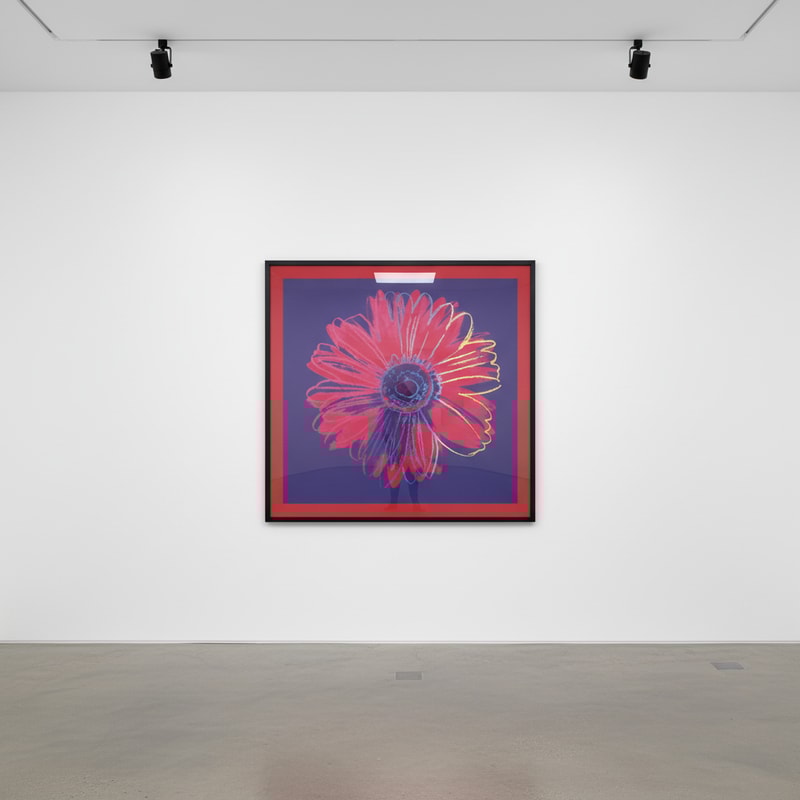
The works depict a single daisy rendered in flat, blocky colour outlines set against a bed of grass, a simplified graphic treatment distinct from the more photographic Flowers works.
Individual Daisy silkscreens on Lenox Museum Board were produced in varying sizes, including 38 x 38 inches, with larger double-image compositions such as Double Daisy measuring 40 x 60 inches.
Each work in the series is unique rather than part of a standard numbered print edition, meaning no two Daisy silkscreens share an identical colour combination.
The series was exhibited at the Leo Castelli Gallery in New York, the same gallery associated with Warhol's earlier Flowers exhibitions.
Market Data
See real auction history, estimate ranges and price benchmarks for individual Daisy prints, sourced from Christie's, Sotheby's and other major auction houses.
Frequently Asked Questions
Andy Warhol Daisy prints for sale are available at Guy Hepner Gallery, 529 West 20th Street, New York (by appointment). We offer authenticated editions with full provenance documentation sourced from the secondary market and directly from publishers.
Andy Warhol Daisy works — 2 available — are typically produced as limited editions, individually signed and numbered by the artist. Contact Guy Hepner Gallery for edition details on specific works.
Pricing for Andy Warhol Daisy prints varies by edition size, date, and condition. Contact Guy Hepner Gallery for current market pricing and availability.
More Andy Warhol Series
View all Andy Warhol works →