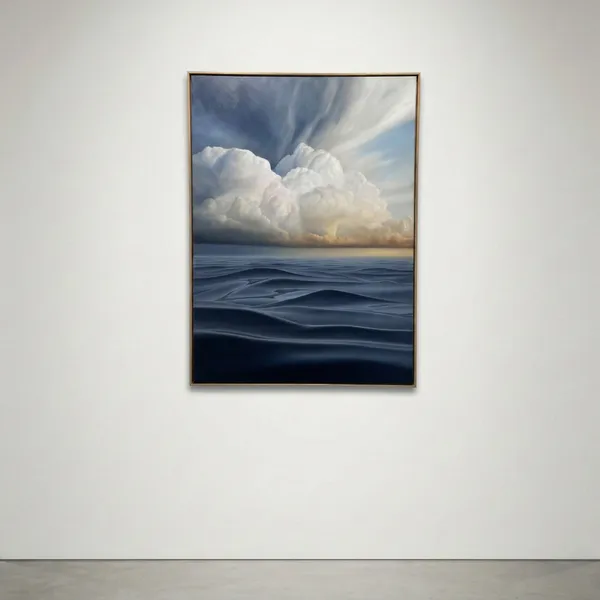
What does it mean to be completely alone with the horizon?
Derek Macara’s paintings immerse us in the quiet, expansive beauty of the North East American coastline—where open water, shifting light, and vast skies become spaces for reflection rather than spectacle. His work is less about narrative and more about atmosphere, capturing fleeting moments that feel both deeply personal and universally familiar.
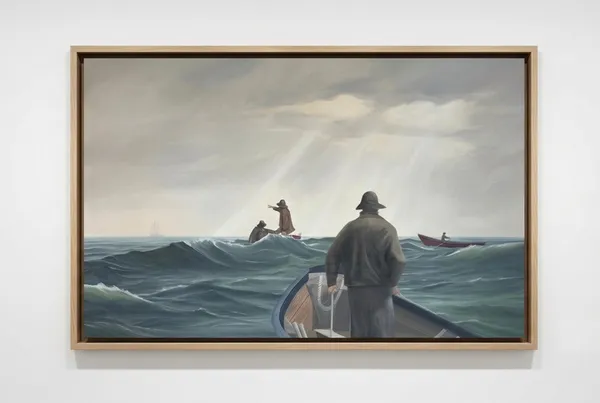
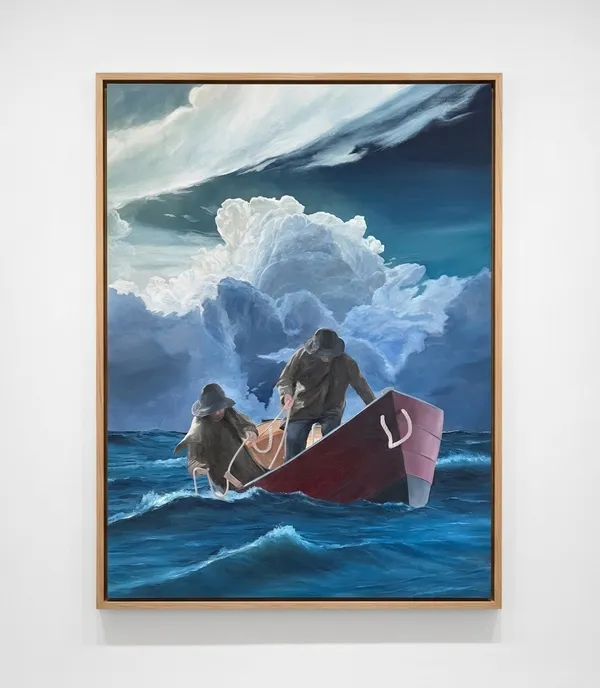
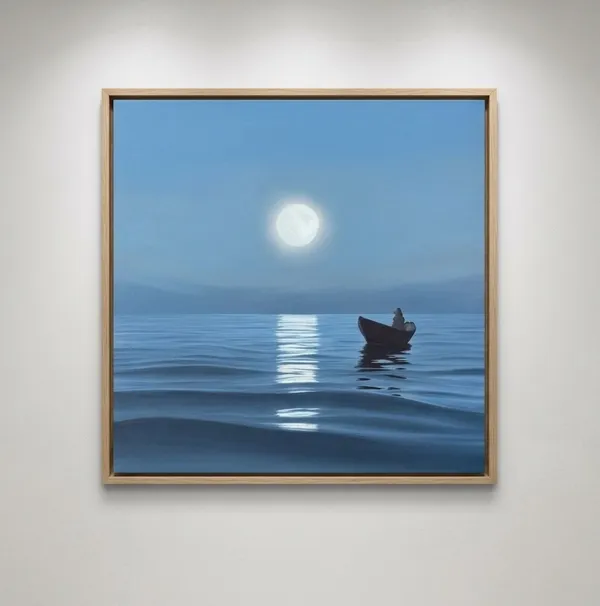
Throughout the paintings, the ocean dominates. It stretches endlessly, often uninterrupted, acting as both subject and setting. Boats appear, sometimes occupied, sometimes empty—small, human traces within an overwhelming natural expanse. These vessels are not the focus, but rather points of entry, guiding the viewer into the composition and anchoring an otherwise boundless space.
Figures, when present, are intentionally anonymous—turned away, obscured by shadow, or reduced to silhouette. This removes any sense of fixed identity and instead invites projection. The viewer is not observing the scene—they are placed within it.
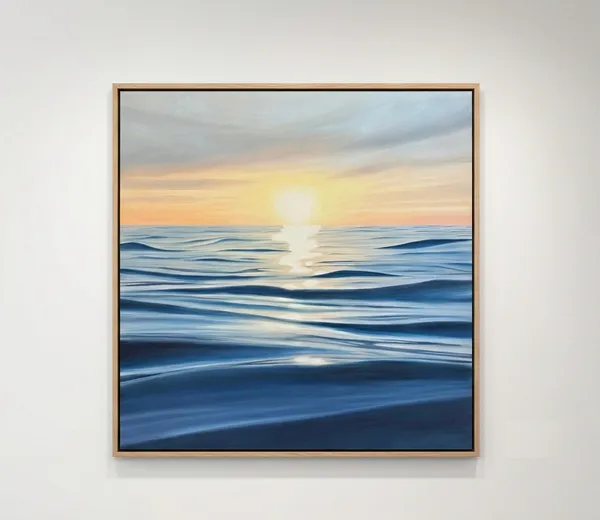
Macara’s command of light is central to the work. Whether it’s the soft diffusion of early morning, the sharp reflection of a setting sun, or the cool glow of moonlight stretching across water, each painting is structured around how light interacts with surface. The ocean becomes a mirror, a rhythm, a quiet force that carries the emotional weight of the scene.