
Andy Warhol Toy Paintings represent one of Pop Art's most playful yet profound explorations of consumer culture and childhood imagery. Created during the height of Warhol's career, these works transformed simple toys—robots, space guns, and wind-up figures—into sophisticated commentaries on mass production, global manufacturing, and the commodification of play itself.
The Andy Warhol Toy Paintings emerged from Warhol's extensive personal collection of tin and wind-up toys gathered from around the world. His collection featured toys from Japan, Hungary, China, Germany, Russia, Korea, and the United States, reflecting the global nature of toy manufacturing during the Cold War era. These seemingly innocent objects became vehicles for examining complex themes of childhood, technology, and cultural exchange across international boundaries.
Warhol's approach to the Andy Warhol Toy Paintings demonstrates his mastery of multiple techniques that defined his artistic practice. Using his signature silkscreen process, he reproduced toy imagery with the same mechanical precision he applied to Campbell's Soup cans and celebrity portraits. The artist employed vibrant color palettes—electric blues, hot pinks, and brilliant yellows—that transformed these commonplace objects into monumental icons of contemporary culture.
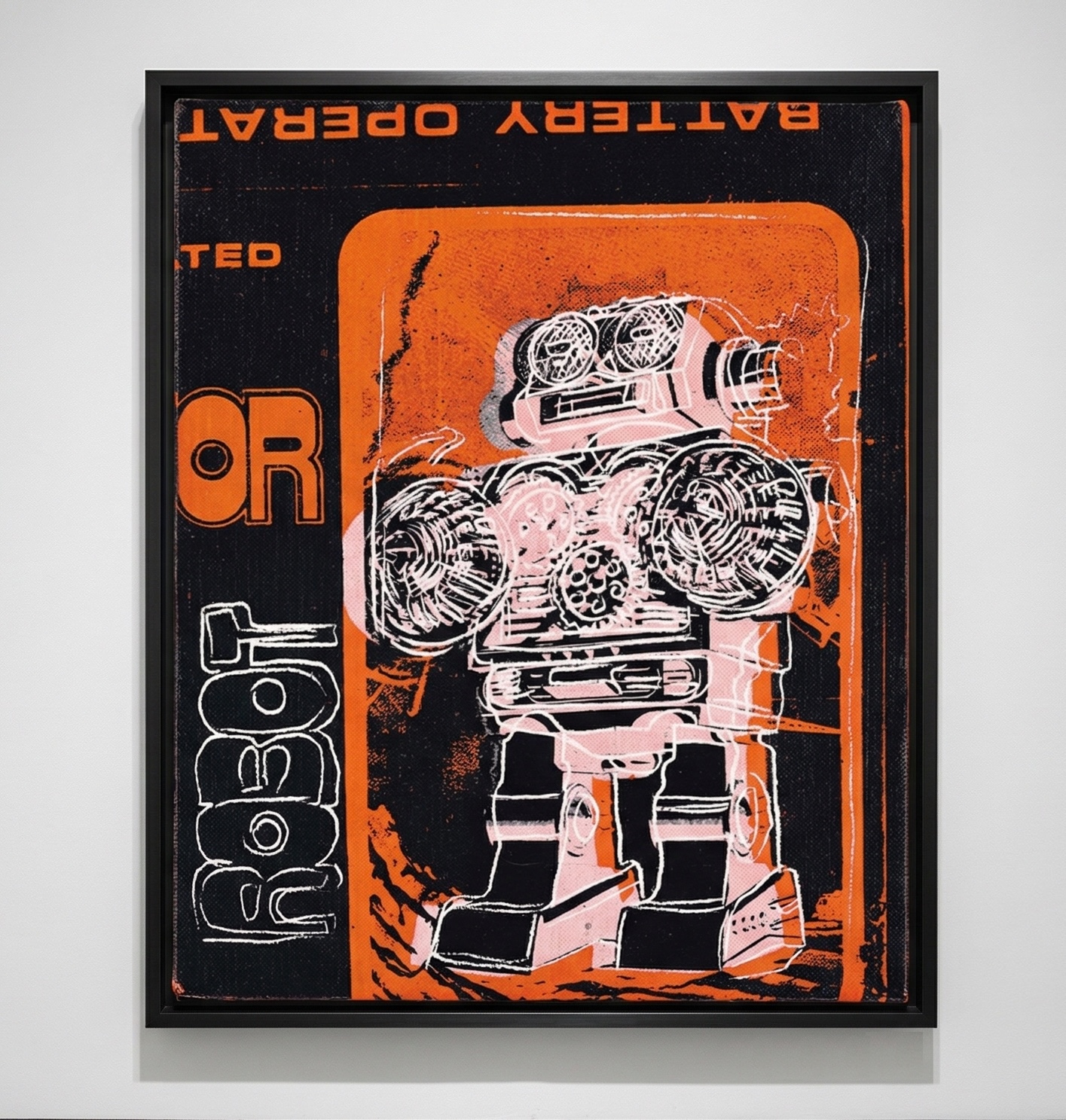
The Visual Language of Andy Warhol Toy Paintings
The artistic significance of Andy Warhol Toy Paintings lies in their sophisticated engagement with serialization and repetition. Warhol often presented the same toy image multiple times within a single composition, each iteration slightly different through color variations or registration shifts. This technique, fundamental to his aesthetic philosophy, emphasized the mechanical nature of both toy production and artistic reproduction.
The toys themselves—robots, ray guns, and mechanical figures—carried particular resonance during the 1950s and 1960s Space Age. These objects embodied America's fascination with technology and the future while simultaneously revealing anxieties about automation and mass production. Warhol's treatment of these subjects mirrors his approach to consumer goods, presenting them with the same cool detachment that characterized his soup cans and Brillo boxes.
Diamond dust, another signature Warhol technique, appears in several Andy Warhol Toy Paintings, adding a luxurious shimmer that transforms humble tin toys into precious art objects. This material choice exemplifies Warhol's ability to elevate the mundane through artistic intervention, creating works that exist simultaneously as nostalgic childhood memories and sophisticated cultural critiques.
Cultural Context and Artistic Innovation
The Andy Warhol Toy Paintings reflect broader cultural shifts occurring during their creation. The post-war boom in toy manufacturing, particularly the rise of Japanese tin toys, coincided with America's complex relationship with international production and emerging global markets. Warhol's selection of toys from multiple countries suggests an awareness of these economic and cultural exchanges.
These works also demonstrate Warhol's prescient understanding of how childhood experiences were becoming increasingly commercialized. The toys he chose to immortalize—often featuring space themes and robotic imagery—captured a generation's relationship with technology and mass media. His treatment of packaging elements, visible brand names, and commercial graphics within the Andy Warhol Toy Paintings prefigured contemporary discussions about brand consciousness and consumer identity formation.
The series showcases Warhol's ability to work across multiple mediums while maintaining conceptual coherence. Beyond traditional canvas works, the Andy Warhol Toy Paintings encompass prints, unique paintings, and experimental combinations of painting and printmaking techniques. This medium diversity reflects Warhol's Factory approach to art production, where ideas could be expressed through whatever technical means best served the concept.
Collecting Andy Warhol Toy Paintings: Authentication and Market Considerations
For collectors interested in Andy Warhol Toy Paintings, understanding authentication is crucial. The Andy Warhol Foundation for the Visual Arts maintains the official catalogue raisonné, which serves as the definitive resource for confirming authenticity. Works from this series exist in various formats—unique paintings, limited edition prints, and experimental combinations—each requiring different authentication approaches.
The condition of Andy Warhol Toy Paintings requires careful consideration, particularly regarding the diamond dust elements that appear in certain works. This material can be vulnerable to handling and environmental factors, making professional conservation assessment important for serious collectors. The silkscreen elements, while generally stable, benefit from proper storage and display conditions to maintain their vibrant colors.
Provenance documentation carries particular significance for Andy Warhol Toy Paintings, as these works have attracted sustained collector interest since their creation. Museum collections worldwide include examples from this series, demonstrating their continued institutional recognition and scholarly importance. The combination of playful subject matter, technical innovation, and cultural significance makes these works compelling for collectors seeking pieces that represent Warhol's mature artistic vision.
Frequently Asked Questions
What makes Andy Warhol Toy Paintings significant in his body of work?
Andy Warhol Toy Paintings demonstrate the artist's ability to find profound meaning in everyday objects, transforming childhood toys into sophisticated commentaries on consumer culture, mass production, and global manufacturing. These works showcase his signature techniques—silkscreen printing, color variation, and serialization—while addressing themes of technology, childhood, and commercialization that remain relevant today.
What techniques did Warhol use in creating these toy paintings?
Warhol employed his signature silkscreen process for the Andy Warhol Toy Paintings, often incorporating vibrant color variations and registration shifts to create multiple iterations of the same image. He also used diamond dust in certain works to add textural interest and transform humble toys into luxurious art objects. The combination of mechanical reproduction techniques with hand-applied elements reflects his Factory approach to art-making.
How do collectors authenticate Andy Warhol Toy Paintings?
Authentication of Andy Warhol Toy Paintings requires consultation with the Andy Warhol Foundation for the Visual Arts, which maintains the official catalogue raisonné. Collectors should seek works with clear provenance documentation and consider condition factors, particularly regarding diamond dust elements and silkscreen stability. Professional conservation assessment can provide additional insight into a work's authenticity and condition.
The enduring appeal of Andy Warhol Toy Paintings lies in their ability to operate simultaneously as nostalgic childhood memories and sophisticated cultural critiques. These works capture a pivotal moment in American culture when toys became globally manufactured commodities, while demonstrating Warhol's genius for finding artistic significance in the most unexpected places. The series continues to resonate with contemporary audiences, offering insights into our relationship with technology, childhood, and consumer culture that remain remarkably prescient.
Guy Hepner in New York and London has extensive experience with Andy Warhol works and can assist collectors seeking pieces from this series.
