
How Much Does an Andy Warhol Cost? A 2026 Price Guide for Collectors
Few artists have shaped both art history and the art market as profoundly as Andy Warhol. More than three decades after his death in 1987, Warhol remains one of the most widely traded and recognizable artists in the world. His work exists simultaneously as cultural iconography and as a cornerstone of the global contemporary art market.
Collectors frequently ask a deceptively simple question: how much does an Andy Warhol cost today?
The answer spans an extraordinary range. Entry-level works can begin around ten thousand dollars, while the most important paintings sell for well over one hundred million. This wide spectrum reflects the breadth of Warhol’s production, which includes paintings, drawings, sculptures, films, photographs, and, perhaps most significantly, silkscreen prints.
What makes Warhol unique among blue-chip artists is the accessibility of his market. Few artists allow collectors to enter at relatively modest levels while also offering museum-quality works that command some of the highest prices ever achieved at auction. For new buyers, Warhol provides a gateway into serious collecting. For seasoned collectors, he represents one of the most stable and recognizable markets in modern art.
Understanding how Warhol’s prices are structured—across different mediums, subjects, and tiers—offers valuable insight into how collectors navigate this enduring market.
Browse available Warhol works at Guy Hepner.
The Warhol Market in 2026
The market for Andy Warhol remains one of the most active sectors of the global art market. Works appear consistently at auction houses, private galleries, art fairs, and online platforms, creating an unusually transparent and liquid market for a blue-chip artist.
Warhol’s position is supported by both cultural recognition and institutional demand. His work appears in virtually every major museum collection worldwide, and exhibitions devoted to Pop Art continue to place Warhol at the center of twentieth-century art history. As a result, collectors often view Warhol as one of the most stable long-term holdings within the post-war market.
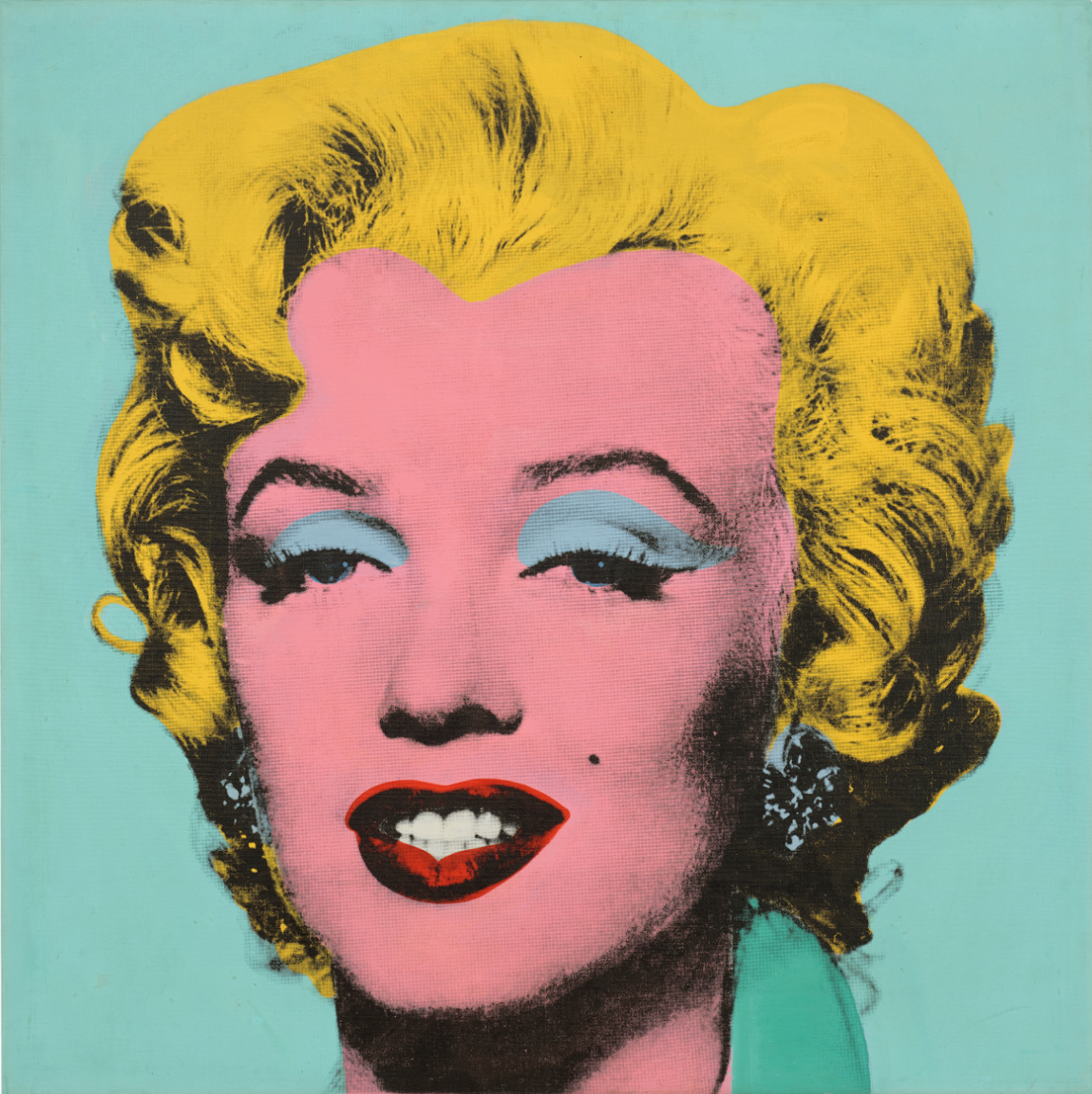
At the highest level, Warhol continues to achieve extraordinary prices. The sale of Shot Sage Blue Marilyn in 2022 for approximately $195 million remains one of the defining moments of the modern art market. The work’s sale confirmed Warhol’s position among the most valuable artists in history, alongside figures such as Pablo Picasso and Jean‑Michel Basquiat.
While these headline results dominate media coverage, they represent only a small segment of the Warhol market. The majority of transactions occur within the print market, where collectors buy and sell signed editions ranging from tens of thousands to several hundred thousand dollars.
This layered structure—iconic paintings at the top, important prints in the middle, and accessible editions at the entry level—creates a broad ecosystem of collectors participating in the Warhol market.
Browse available Warhol works at Guy Hepner.
The Entry Level: First Steps into the Warhol Market
For new collectors, the Warhol market typically begins around the ten-thousand-dollar range. At this level, buyers may encounter smaller prints, later works from the 1980s, or editions that are less widely known than Warhol’s most iconic imagery.
Although these works may not carry the same recognition as Warhol’s most famous subjects, they still represent authentic examples of the artist’s production and often serve as an important introduction to the market.
Collectors purchasing at this level are often motivated by two factors. The first is accessibility: acquiring a signed work by one of the most influential artists of the twentieth century is achievable without the financial commitment required for major paintings. The second is education. Entry-level works such as Cow, Self-Portrait and Flowers allow collectors to familiarize themselves with Warhol’s techniques, his use of color, and the dynamics of the print market before making larger acquisitions.
Even within this price range, collectors should pay careful attention to condition, signature placement, and provenance. Warhol prints are widely traded, and subtle differences between examples can influence their long-term desirability.

Browse available Warhol works at Guy Hepner.
The Core Warhol Market
The most active segment of the Warhol market typically falls between thirty thousand and one hundred thousand dollars. This is where many of Warhol’s most recognizable print series appear, and it is often considered the heart of the Warhol collecting landscape.
Works in this range frequently include prints from series such as Campbell’s Soup, Electric Chairs, Mao and single works such as Brooklyn Bridge. These series embody the Pop Art principles that made Warhol famous: the transformation of commercial imagery, celebrity culture, and mass-produced objects into fine art.
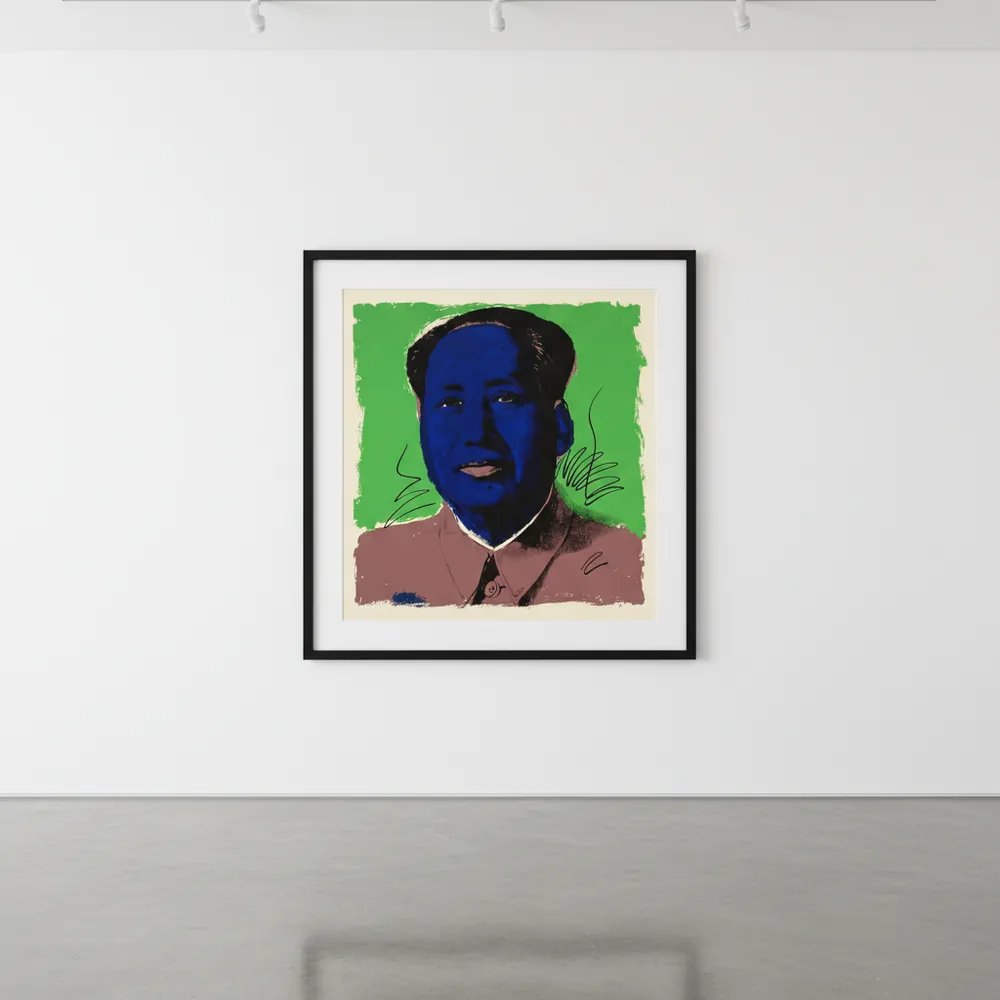
The imagery in these prints is instantly recognizable, and their visual impact often appeals to both experienced collectors and those new to contemporary art. Because these works were produced in editions, they circulate frequently on the secondary market, providing collectors with a clear understanding of pricing trends.
For many buyers, this tier represents the ideal balance between cultural significance and financial accessibility. These works capture the essence of Warhol’s Pop Art aesthetic while remaining within reach for collectors building serious contemporary art collections.

High-End Prints and Iconic Series
As collectors move deeper into the Warhol market, prices increase significantly for works featuring his most iconic imagery. Prints depicting figures such as Marilyn Monroe, Myths, Ads, and Endangered Species occupy the higher end of the print market, often reaching prices well into the six-figure range.
These images represent some of Warhol’s most celebrated explorations of celebrity, power, and mass media. Warhol’s portrait of Marilyn Monroe, created shortly after the actress’s death in 1962, became one of the defining images of Pop Art. The repeated screen-printed portraits reflect both the fascination with celebrity culture and the commodification of fame in the modern world.
These works transformed powerful cultural icons and figures into a brightly colored symbol of mass reproduction, highlighting Warhol’s fascination with the intersection of politics, propaganda, and media.
Because these images are among Warhol’s most recognizable works, collectors often compete strongly for them. Individual prints from these series can reach several hundred thousand dollars depending on color variation, condition, and provenance.
Complete portfolios—sets containing multiple prints from the same series—can achieve even higher prices. These portfolios represent the full conceptual scope of Warhol’s project and are often acquired by collectors seeking historically significant works.

Browse available Warhol works at Guy Hepner.
Warhol Paintings and the Top of the Market
At the very highest level of the market are Warhol’s unique paintings. These works represent the pinnacle of his artistic output and frequently command prices ranging from several million to well over one hundred million dollars.
The paintings that achieve the strongest results typically belong to Warhol’s most celebrated series. Works from the Marilyn, Elvis, Dollar Sign, and Disaster series have all achieved record prices in recent decades.
These paintings often share several characteristics. They feature bold, recognizable imagery; they date from the most important periods of Warhol’s career; and they possess strong provenance, often having been included in major exhibitions or prominent collections.
For collectors operating at this level, Warhol paintings represent not only cultural icons but also significant financial assets. They are often acquired by major private collectors, museums, and art investment funds seeking historically important works.

What Determines the Price of a Warhol?
Although Warhol’s market appears broad and accessible, pricing is influenced by a number of critical factors. One of the most important is subject matter. Certain images, particularly those associated with celebrity culture or iconic consumer products, consistently command higher prices than lesser-known subjects.
Edition size also plays an important role in the print market. Smaller editions tend to generate stronger demand because they offer greater rarity. Conversely, works produced in larger editions may remain more accessible but generally trade at lower price points.
Condition is another essential consideration. Warhol prints are often displayed without protective glazing for long periods, and exposure to light or improper storage can lead to fading or creasing. Collectors typically pay significant premiums for examples that remain in pristine condition.
Color variation can also affect value. Warhol frequently experimented with different color combinations within the same print series, and certain palettes may prove more desirable than others.
What This Means for New Collectors
For those entering the Warhol market for the first time, the most important principle is to focus on strong imagery rather than simply the lowest available price.
Warhol’s market tends to reward works that capture the visual language of Pop Art. Bold colors, recognizable subjects, and clear examples of Warhol’s silkscreen technique often perform best over time.
New collectors should also consider the long-term narrative of their collection. Purchasing a Warhol print can serve as the foundation for a broader engagement with contemporary art, connecting naturally with artists influenced by Pop Art and the cultural transformations of the late twentieth century.
What This Means for Experienced Collectors
For seasoned collectors, the Warhol market continues to offer opportunities for strategic acquisitions. The liquidity of the print market allows collectors to upgrade their holdings over time, moving from entry-level works to more historically significant pieces.
Collectors who already own Warhol prints often focus on acquiring stronger examples within the same series or pursuing complete portfolios that represent the artist’s full conceptual vision.
Additionally, as new collectors continue to enter the market, demand for recognizable Warhol imagery remains strong. This sustained interest contributes to the long-term stability of Warhol’s market and reinforces his position as one of the most reliable artists in contemporary collecting.
The Enduring Appeal of Andy Warhol
More than thirty years after his death, Andy Warhol continues to shape both visual culture and the global art market. His work captured the essence of modern consumer society, transforming everyday objects and famous faces into enduring symbols of contemporary life.
This cultural relevance is one reason why Warhol’s market remains so resilient. His imagery is instantly recognizable, his influence spans generations of artists, and his works continue to appear in major exhibitions and collections around the world.
As a result, the answer to the question of how much an Andy Warhol costs is both simple and complex. A Warhol may cost ten thousand dollars or two hundred million, depending on the work. Yet regardless of price, each example represents a piece of one of the most influential artistic legacies of the twentieth century.
For collectors—whether just beginning or deeply experienced—Warhol remains not only accessible but essential.
Discover Signed Warhol prints for sale and contact our New York and London galleries via info@guyhepner.com. Looking to sell? Sell your Warhol prints with ease and contact our specialists.
