
The $110.5 Million Basquiat — A Market-Defining Moment
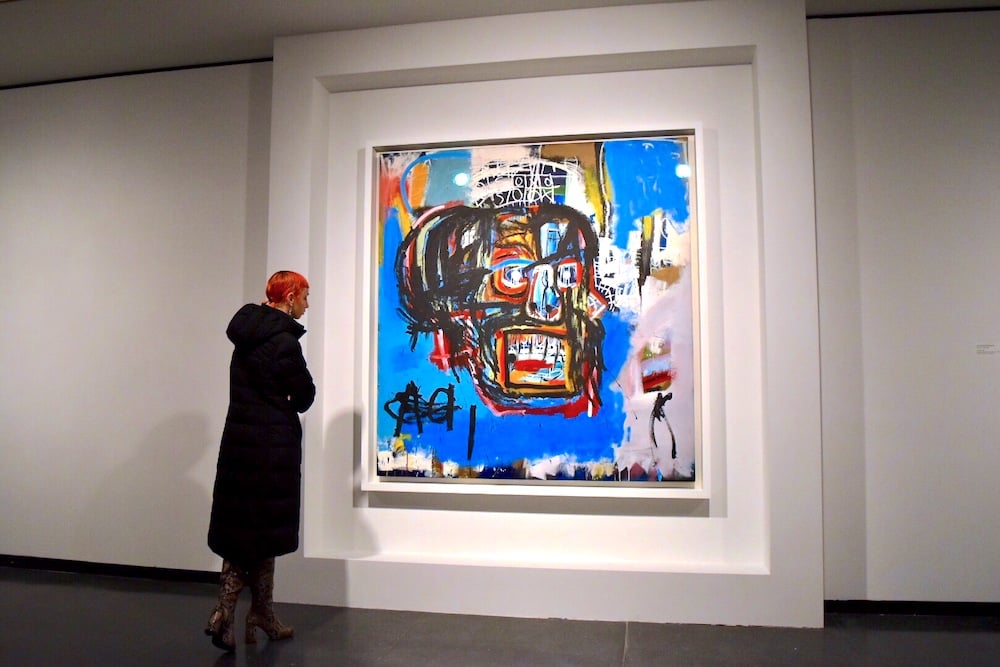
In May 2017, Untitled (1982) by Jean-Michel Basquiat sold at Sotheby's in New York for $110.5 million. The result was not merely a record; it was a structural shift. With that sale, Basquiat formally entered the highest echelon of postwar masters, competing directly with canonical figures whose markets function as generational asset classes rather than cyclical trends.
For collectors, the importance of that moment lies less in the number and more in the pattern it confirmed. The painting distilled the attributes the most sophisticated buyers consistently reward: peak-year execution, intellectual density, iconic imagery, monumentality, and institutional validation. When studied carefully, Untitled (1982) becomes not a headline, but a blueprint.

Why 1982 Functions as a Quality Benchmark
The record-setting painting was created in 1982 — a year that dominates Basquiat’s highest auction results. This dominance is not anecdotal; it reflects a broad market consensus that 1982 represents the full articulation of his visual language.
During this period, Basquiat fused street energy with art-historical literacy at a scale and intensity that feels resolved rather than exploratory. Text, anatomy, abstraction, and symbolism are layered with deliberate control. The skull in Untitled is both expressive and architecturally structured. It references classical anatomical illustration, African mask traditions, and modernist distortion simultaneously.
For collectors, 1982 operates as a filter. The lesson is not simply to acquire works from that year, but to evaluate whether any Basquiat under consideration exhibits the same characteristics associated with his peak: clarity, compositional confidence, iconographic strength, and conceptual cohesion.
Monumentality and Museum Presence
Scale matters at the summit of the Basquiat market. Untitled (1982) is monumental in both size and psychological presence. It defines space rather than inhabits it.
The highest tier of collectors gravitates toward works capable of anchoring museum galleries and major private collections. Monumentality signals ambition, but it also signals rarity. There are only a limited number of museum-scale Basquiat canvases from his most decisive years, and many are already held institutionally.
For collectors operating at any level, the key principle is presence. A smaller work can still project authority if it feels concentrated and structurally complete. The market repeatedly rewards Basquiats that feel declarative rather than tentative.
Iconography: The Power of the Skull
The skull motif in Untitled is not decorative; it is intellectual architecture. It condenses Basquiat’s central concerns — mortality, identity, race, authorship, and history — into a single, potent form.
The recurrence of skull paintings among Basquiat’s highest-selling works reveals how strongly the market favors compositions that crystallize his core vocabulary. Crowns, skeletal heads, heroic figures, and layered text form the symbolic backbone of his practice. The apex of the market consistently validates works that feel essential to that language.
For collectors, this suggests prioritizing thematic clarity. Works that contain and integrate Basquiat’s defining motifs tend to demonstrate stronger long-term resilience than peripheral or diluted examples.
Institutional Validation and Structural Scarcity
The $110.5 million sale was supported by decades of institutional reinforcement. Major retrospectives and scholarly engagement repositioned Basquiat as a central figure in late twentieth-century art history. At the top of the market, buyers think curatorially and generationally. They acquire works they believe will endure within the canon.
Scarcity further amplifies this dynamic. Basquiat’s career lasted less than ten years. The supply of museum-grade paintings from 1982 and 1983 is finite and increasingly absorbed into permanent collections. Liquidity at the top compresses as time passes, and when a major work surfaces, it represents a rare opportunity rather than routine supply.
Collectors can interpret this as a reminder that quality, not volume, drives durability. The market distinguishes sharply between strong works and definitive ones.
What This Means for the Basquiat Print Market
The logic that drives nine-figure paintings cascades into Basquiat’s print market. As major canvases become increasingly inaccessible, collectors often look to prints as a way to acquire direct engagement with the artist’s imagery and hand.
Basquiat’s print market is not homogeneous. It is stratified. Lifetime prints — those created during his lifetime — carry particular weight because they reflect direct artistic involvement. Within this category, certain series stand out for both iconographic clarity and historical importance.
The Anatomy Series
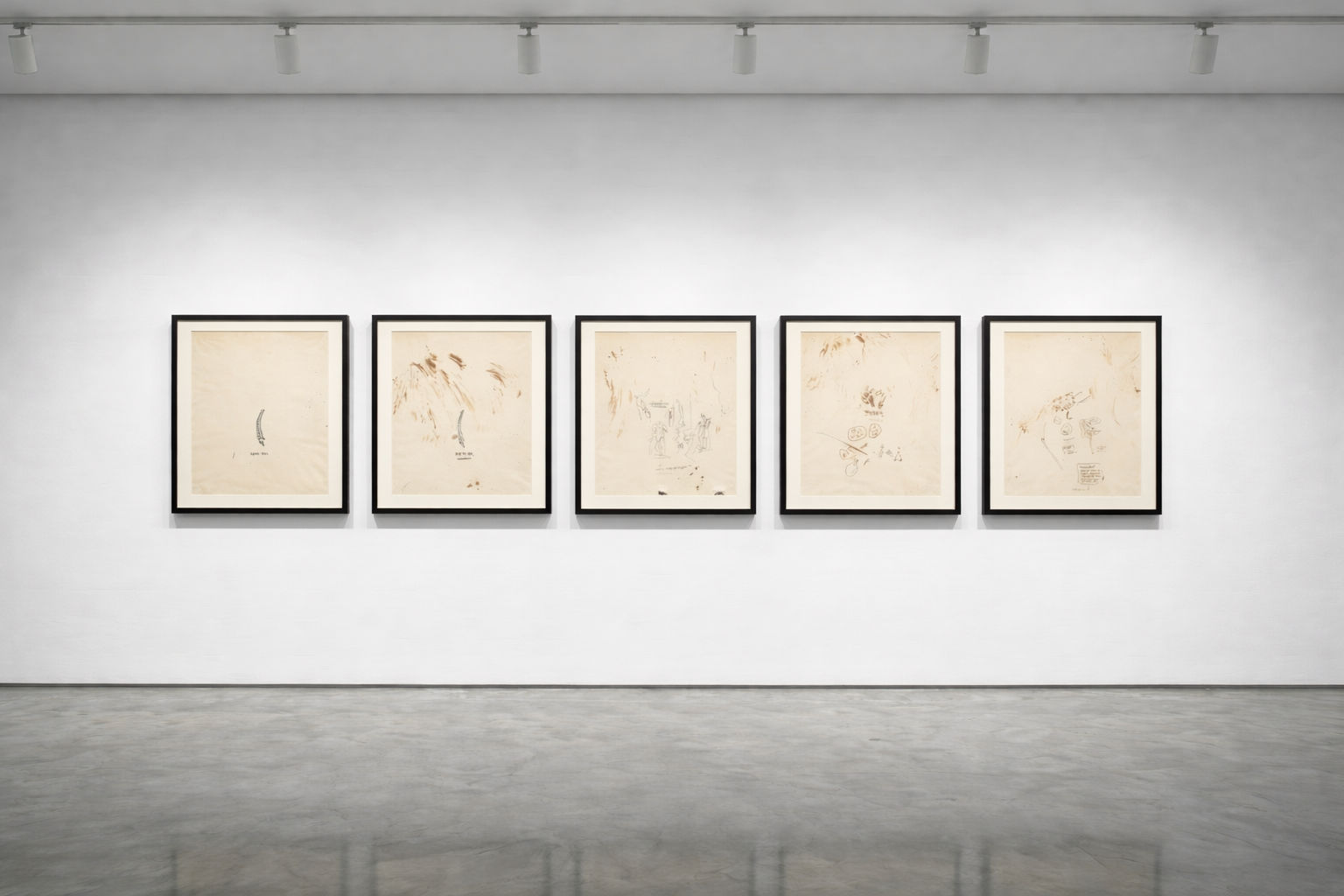
The Anatomy prints draw directly from Basquiat’s lifelong fascination with medical illustration, influenced by the Gray’s Anatomy textbook he encountered as a child. These works echo the intellectual density seen in his strongest paintings. They combine diagrammatic precision with expressive distortion, reinforcing themes of vulnerability, structure, and identity.
For collectors, the Anatomy series aligns closely with the attributes validated at the apex of the painting market. The subject matter is central to Basquiat’s vocabulary, the imagery is unmistakable, and the conceptual layering is evident. These qualities position the series as one of the more compelling entry points into his lifetime print oeuvre.
Untitled (Leonardo)
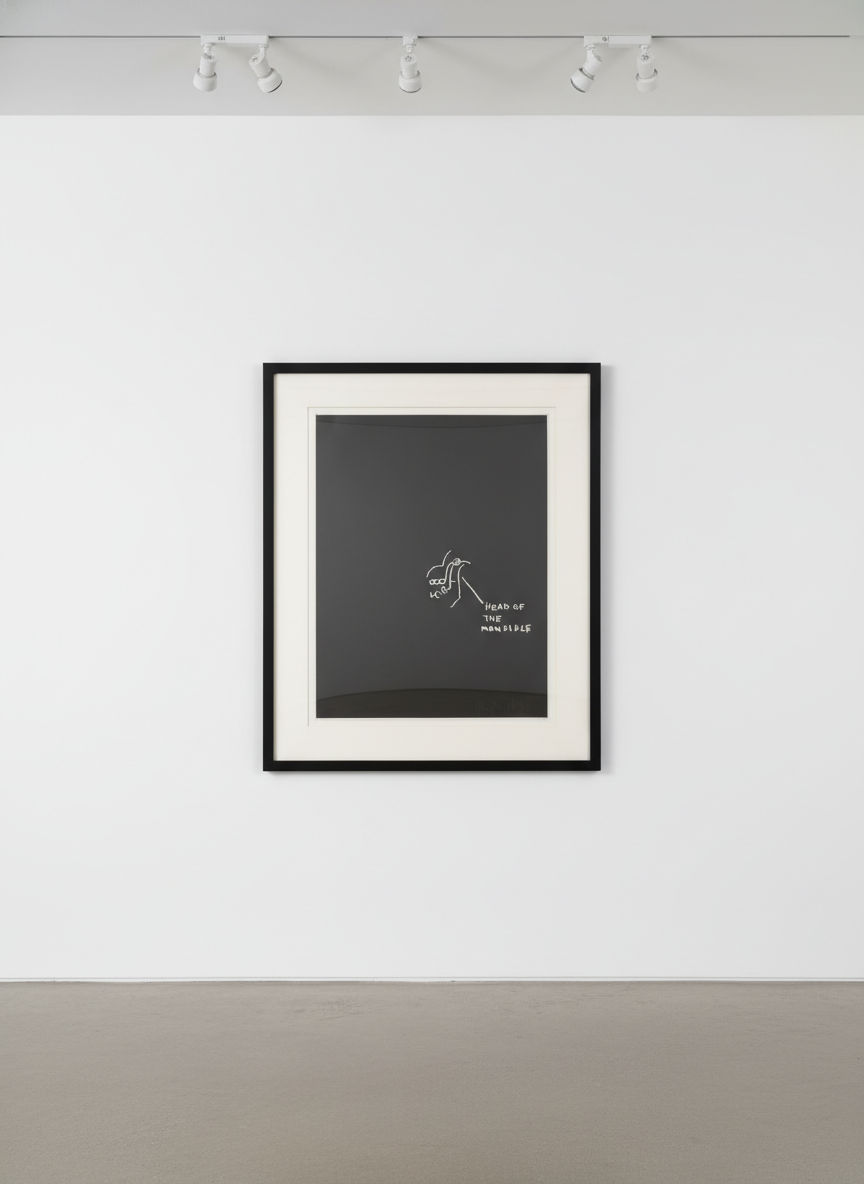
Untitled (Leonardo) represents another critical lifetime print. Referencing Leonardo da Vinci’s anatomical and scientific studies, the work encapsulates Basquiat’s dialogue with Western art history while asserting his own authorship within that lineage. The integration of text and diagrammatic imagery echoes the structural confidence seen in his strongest canvases.
For collectors, Untitled (Leonardo) offers thematic clarity and historical anchoring. It reflects the same intellectual ambition that characterizes the paintings most prized at the top of the market.
Estate Prints and Market Positioning
Estate prints, produced posthumously under the supervision of the Basquiat estate, occupy a different but important position. While they do not carry the same immediacy as lifetime prints, they provide access to iconic imagery and are often produced with strong technical standards.
Collectors approaching estate prints should focus on image strength and edition size. Works that reproduce Basquiat’s most definitive motifs — skulls, crowns, powerful heads — tend to maintain stronger demand than more peripheral compositions. As the painting market continues to solidify at higher levels, high-quality estate prints that reflect central imagery may benefit from the broader reinforcement of Basquiat’s canonical status.

Translating Apex Logic into Collecting Strategy
The $110.5 million sale of Untitled (1982) clarified what the highest tier of Basquiat’s market values: synthesis over spontaneity, thematic concentration over diffusion, structural confidence over experimentation, and institutional validation over trend.
For collectors building around Basquiat — whether through paintings, works on paper, lifetime prints, or estate editions — the strategic approach remains consistent. Prioritize clarity of iconography. Evaluate compositional strength. Confirm documentation and provenance. Think long term.
The summit of the Basquiat market is not driven by hype; it is driven by conviction. The record-setting painting serves not as a target to replicate, but as a framework to understand. It reveals where Basquiat’s genius is most concentrated — and offers collectors a roadmap for building collections that align with that enduring standard.
Discover Basquiat art for sale and contact our galleries for latest availabilities. Looking to sell? We can help. Find out how to sell Basquiat art with our expert teams.
What does Jean Michel Basquiat What can we learn from the 110m USD sale of Untitled 1982 teach us about art valuation?
The sale demonstrates that exceptional works by culturally significant artists achieve premium valuations when they combine artistic innovation, historical importance, impeccable provenance, and institutional recognition. It shows how the art market recognizes transformative artistic vision that redefined contemporary art discourse.
What techniques made Basquiat's work so distinctive and valuable?
Basquiat's revolutionary approach included layering techniques that created depth and complexity, experimental use of found materials like doors and windows, integration of text and symbolic elements, and a unique visual vocabulary combining street culture with fine art traditions. His thick textures and bold lines conveyed powerful emotional content.
How should collectors approach acquiring Basquiat works?
Collectors should prioritize authentication through the official Basquiat Authentication Committee, verify provenance documentation, understand conservation requirements for his experimental materials, and seek works with institutional validation. The combination of artistic quality, proper documentation, and historical significance remains crucial for serious collectors.
The lessons from Jean Michel Basquiat What can we learn from the 110m USD sale of Untitled 1982 extend beyond market analysis to encompass the recognition of truly transformative artistic vision. This historic achievement validates Basquiat's position as an artist who fundamentally changed how we understand contemporary art's relationship to culture, identity, and social commentary.
