
A Collector’s Guide to Tracey Emin’s Neon Works
History, Meaning, Legacy, and Market Context
‘I grew up with neons. They were everywhere in Margate […] Real neon contains argon and neon gases which actually make people feel good. They emanate, they radiate an energy. That’s why you used to have neons in casinos, brothels, bars and clubs, etcetera. Neon is a pulsing energy of electricity, so it’s alive, it’s a live thing and that makes me feel good.’
Tracey Emin’s neon works occupy a singular position in contemporary art. Instantly recognizable, emotionally charged, and conceptually rigorous, they transform handwritten confession into luminous sculpture. At once intimate and public, fragile and declarative, these works have become central not only to Emin’s own practice but to the visual language of late twentieth- and early twenty-first-century art.
For collectors, Emin’s neons represent far more than attractive text-based works. They are the crystallization of autobiography as form. They sit at the intersection of sculpture, language, performance, and memory. This guide examines the historical emergence of the neon works, their formal qualities, emotional architecture, sculptural context, institutional legacy, and long-term collecting considerations—while situating them within the broader ecosystem of Emin’s paintings, bronzes, monoprints, and installations.
Origins: From Disclosure to Illumination
Tracey Emin’s practice has always been rooted in lived experience. From the beginning of her career, she positioned her own biography—love affairs, trauma, abortions, depression, grief—not as subject matter but as primary material. Her early installations such as My Bed and Everyone I Have Ever Slept With 1963–1995 did not merely represent intimacy; they staged it. They collapsed the boundary between art object and personal relic.
Neon emerged in the 1990s as a natural evolution of this radical honesty. Words had already appeared in her appliqué blankets and embroidered textiles—stitched phrases that pierced the soft domestic surface of fabric with confession. The transition to neon represented a material intensification. Language was no longer sewn into cloth; it was electrified.
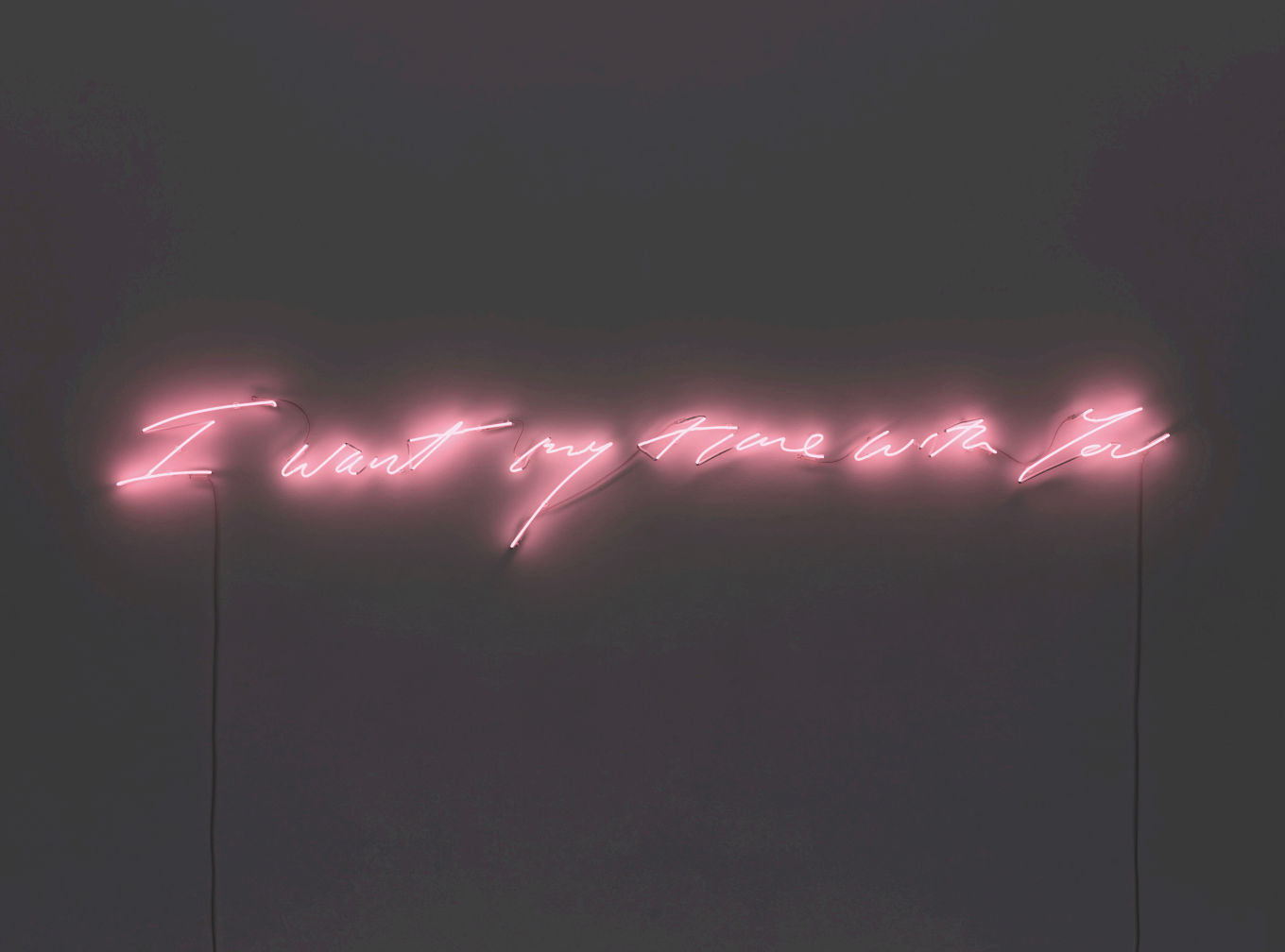
The choice of neon was not arbitrary. Emin grew up in Margate, a British seaside town defined by arcades, fairgrounds, and glowing signage. Neon lights were part of her visual memory—associated with dusk, faded glamour, and the bittersweet atmosphere of pleasure and transience. By adopting neon, she reclaimed that commercial, often kitsch material and infused it with emotional gravity. The medium itself carries autobiography.
Neon also allowed Emin to stage vulnerability in public space. Unlike embroidery or works on paper, neon commands attention. It occupies walls architecturally. It transforms interior space into psychological space. In doing so, Emin shifted confession from the private domain into a shared environment.
The Handwriting: Gesture as Identity
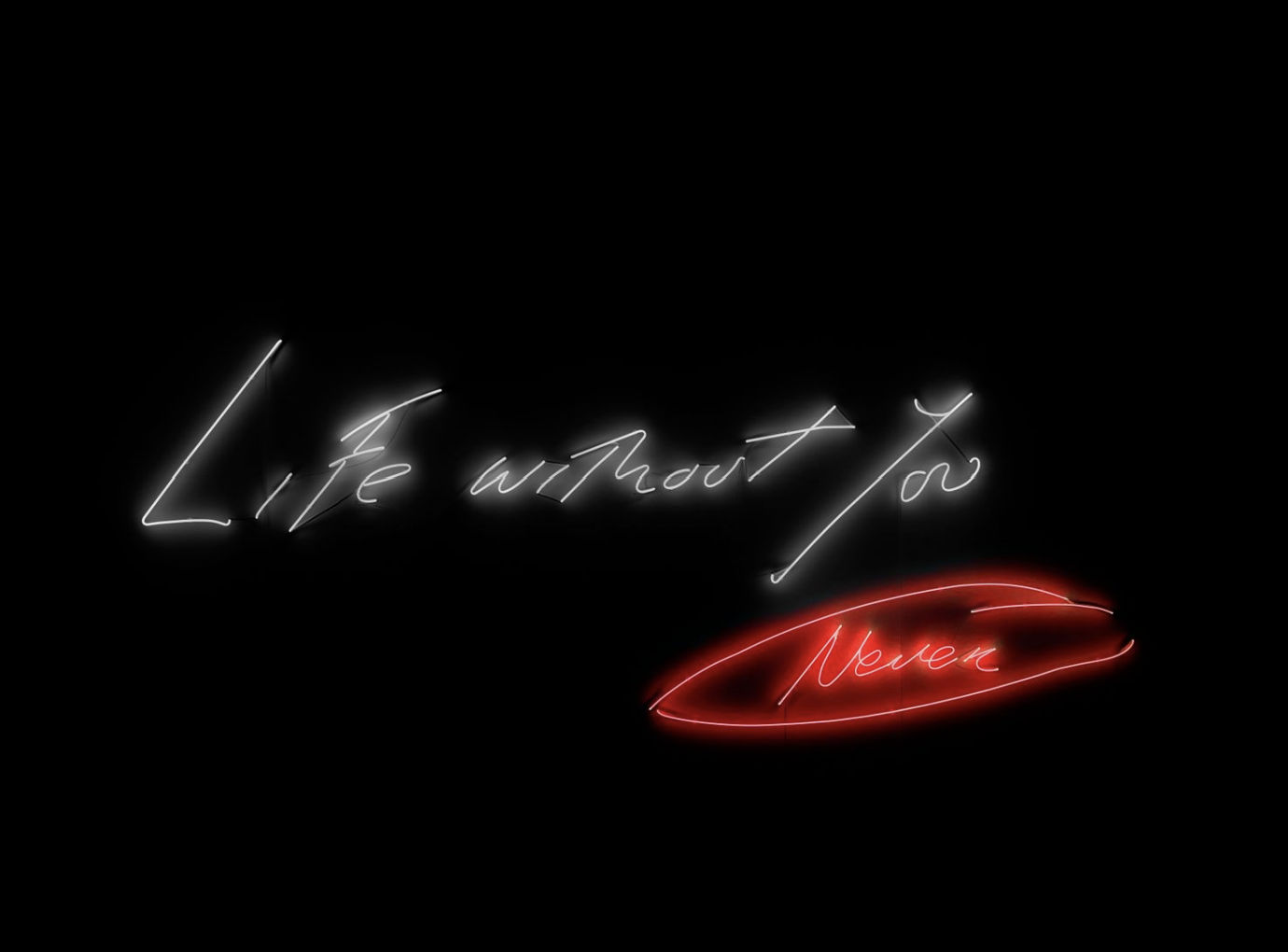
Central to Emin’s neon works is the preservation of her own handwriting. The letters are not typographically standardized; they loop, lean, stretch, and compress. This is crucial. The work does not present language as neutral information—it presents it as trace.
The handwriting functions as a direct index of the artist’s body. It retains the irregular rhythm of human movement. The slant of the script suggests speed and urgency. The uneven spacing reflects emotional fluctuation. The result is a sculptural line that carries the intimacy of drawing.
This insistence on handwriting differentiates Emin from earlier conceptual text artists. Where others deploy language with detachment or irony, Emin embeds her physical presence into every phrase. The viewer is not confronted with a slogan but with a note—something written in a moment of intensity.
For collectors, this gestural authenticity is fundamental. The most compelling neons often preserve a palpable sense of immediacy. The energy of the line should feel alive, not overly refined. The tension between vulnerability and control is what gives the works their enduring psychological charge.
Language as Encounter: The Second Person
One of the defining characteristics of Emin’s neon works is her use of direct address. Many of her phrases are constructed in the second person—“you” becomes the focal point. This device collapses the distance between artwork and viewer. The neon does not merely describe an emotion; it implicates the person standing before it.
This strategy creates an ambiguous but potent relational dynamic. Who is being addressed? A lover? The artist herself? The viewer? All three simultaneously? The work refuses to resolve this question. Instead, it activates the viewer’s own memory and emotional history.
The second-person construction also generates intimacy without narrative explanation. Emin rarely contextualizes her phrases. There is no backstory provided. This absence invites projection. The viewer completes the meaning.
For collectors, this universality is significant. Works that retain interpretive openness tend to endure beyond the specific biographical moment that may have inspired them. The most successful neons balance personal specificity with collective resonance.
Scale: From Whisper to Monument
Emin’s neon works operate across scales—from domestic-sized pieces suitable for private interiors to monumental installations embedded in public infrastructure. At large scale, her handwriting transforms architecture into emotional theater.
When installed in public settings, the phrases assume civic presence. They become part of daily life. Commuters pass beneath declarations of love or longing; urban space becomes psychologically charged. This monumentalization of vulnerability is central to her legacy.
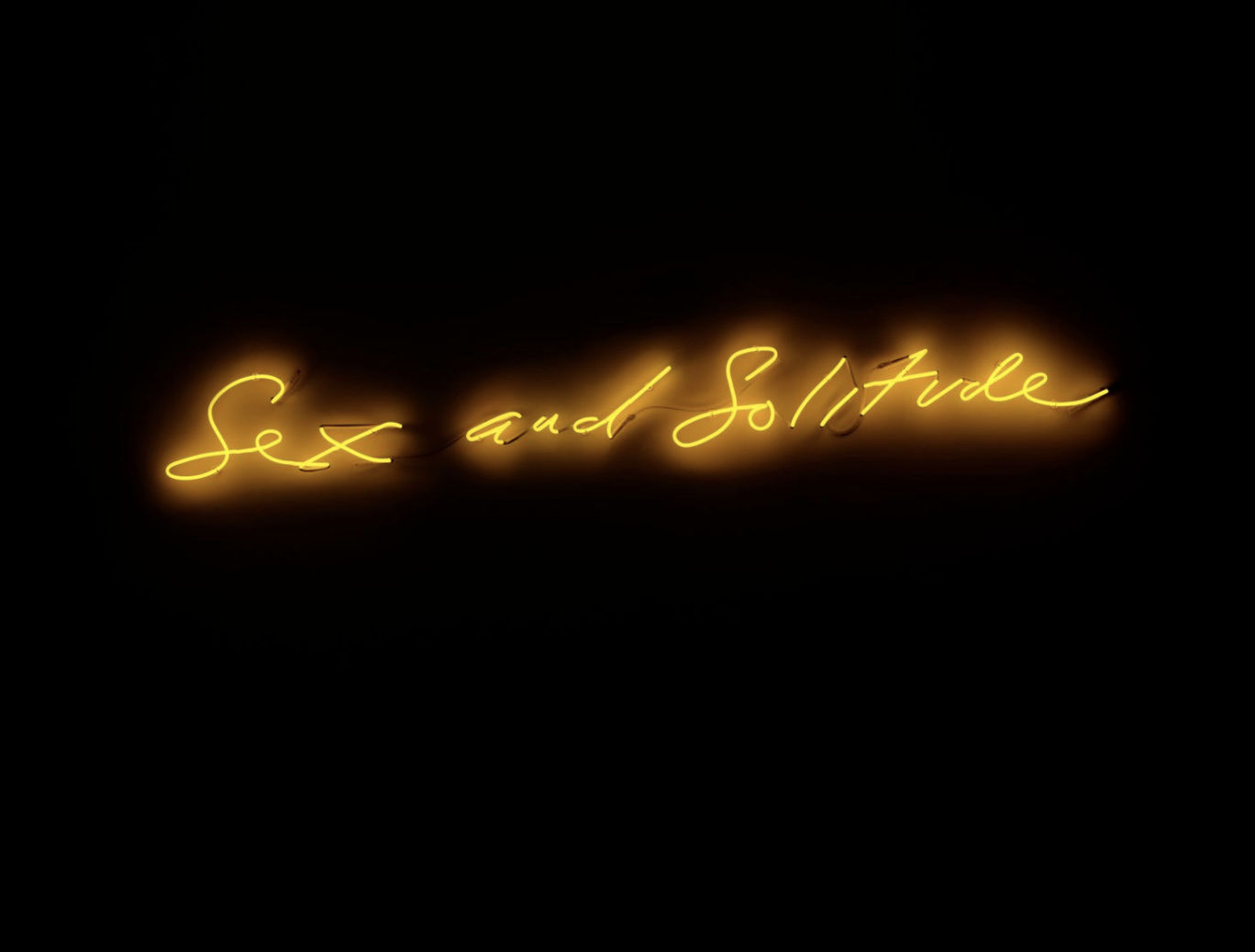
Yet even smaller-scale works retain sculptural authority. Neon has inherent spatial power. It projects light outward, creating aura. It defines the surrounding wall through glow and shadow. Emin’s lines often float slightly off the surface, emphasizing the objecthood of the piece.
Collectors should consider how scale affects both impact and context. Large neons can anchor significant interior spaces or institutional settings. Smaller works may operate more intimately but still carry conceptual weight. In all cases, scale should feel proportionate to the phrase itself. The emotional intensity must align with the physical footprint.
Color and Emotional Temperature
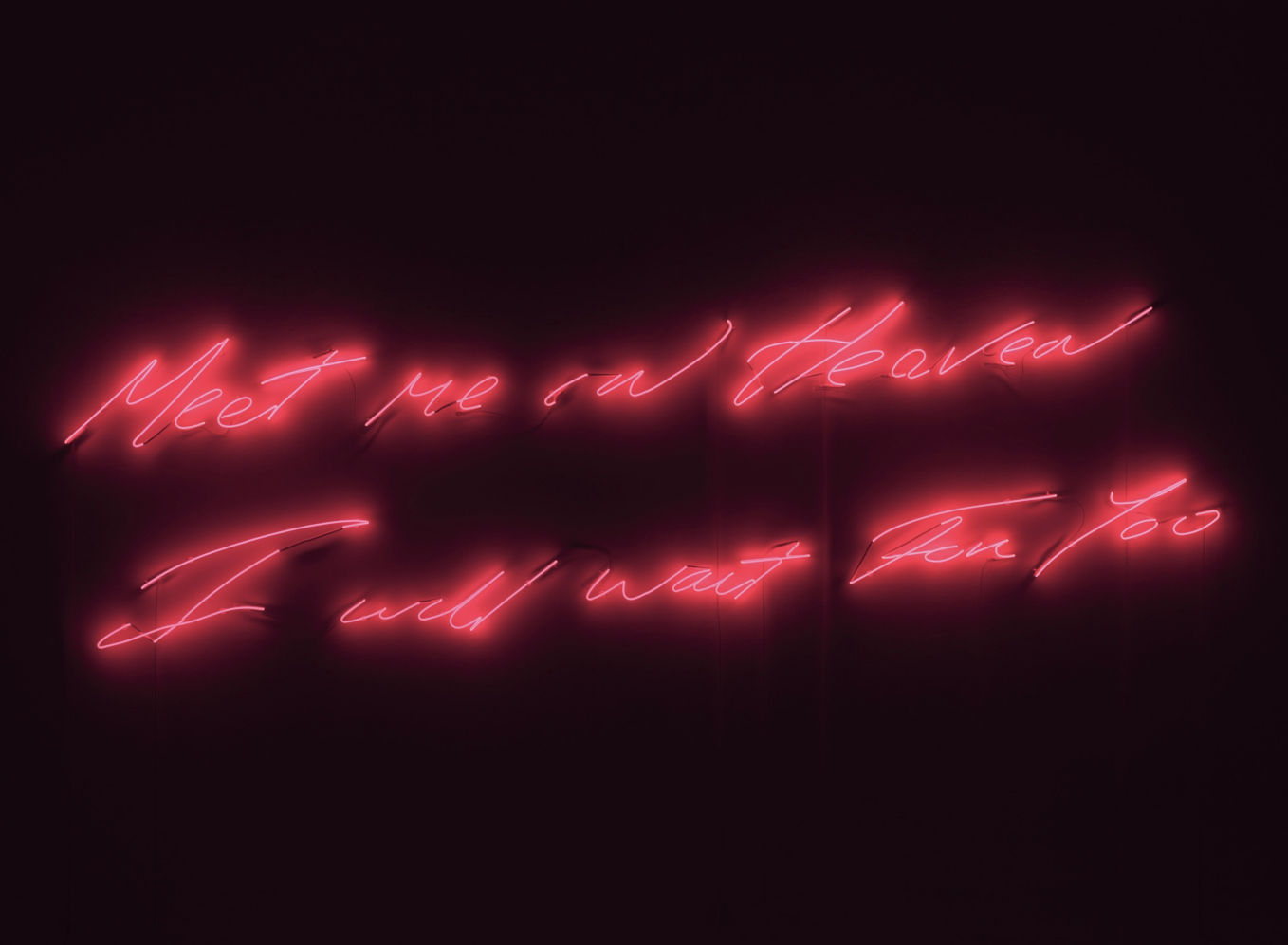
Color in Emin’s neon works is never incidental. White neon often suggests purity, memory, or ghostliness. Red frequently signals passion, danger, or emphasis. Blue can evoke melancholy or distance.
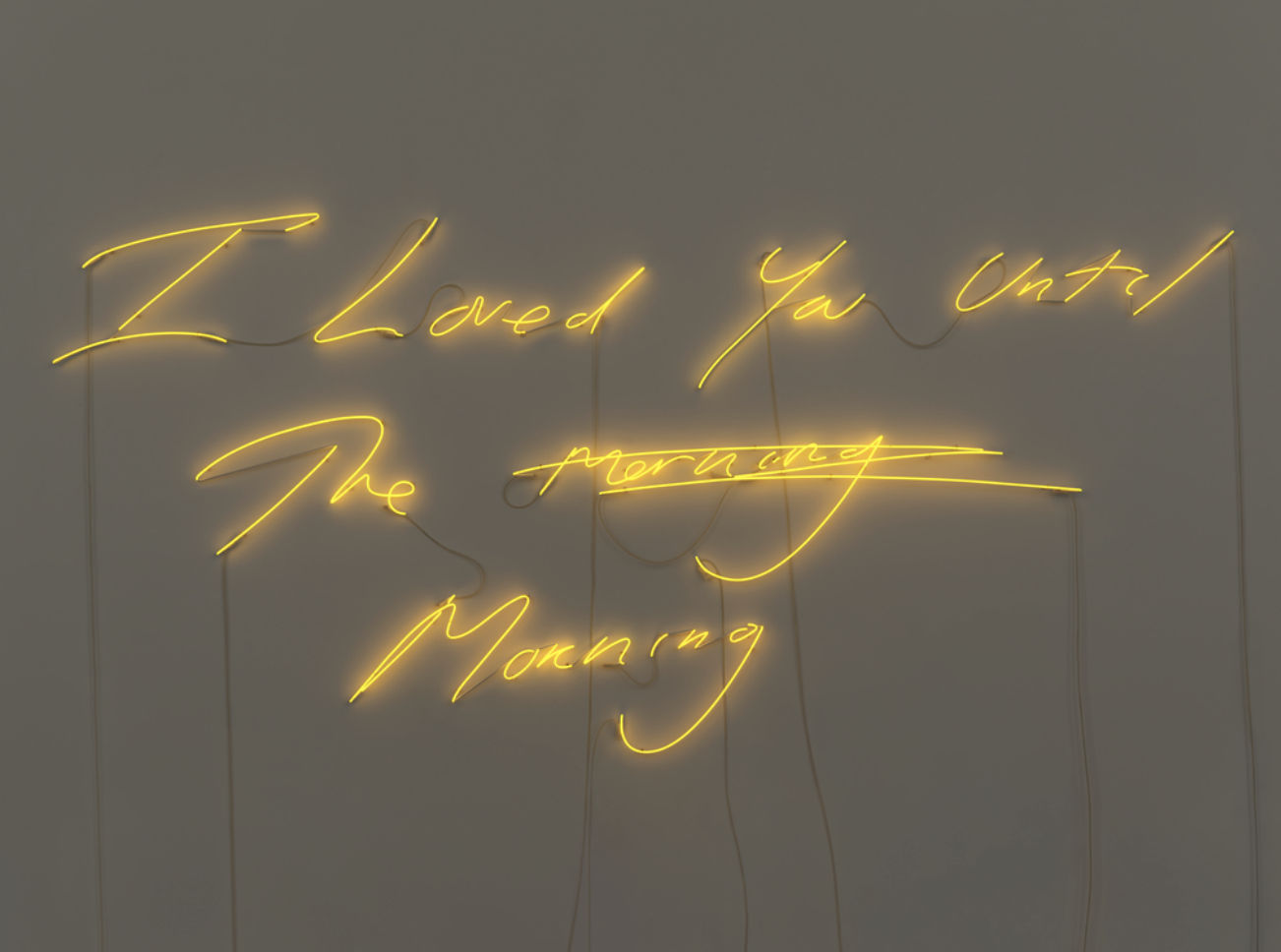
Multi-color works introduce visual hierarchy. Underlining in red, for example, can isolate a word and amplify its emotional charge. The choice of color becomes an extension of tone.
Unlike commercial signage, Emin’s color palette is restrained. She avoids visual clutter. The minimalism allows the emotional content to remain primary.
For collectors, color should be evaluated both aesthetically and conceptually. Does the hue reinforce the phrase’s emotional tenor? Does it enhance legibility without overpowering subtlety? The strongest works achieve harmony between text and chromatic atmosphere.
Neon as Sculpture
Although often categorized as text art, Emin’s neon works are fundamentally sculptural. They exist in three dimensions. Glass tubes are heated, bent, and fixed to armatures. Electrical components are integrated into the structure. The work is not printed; it is constructed.
This fabrication process introduces fragility and resilience simultaneously. Neon is delicate—glass can break. Yet it is also durable when properly maintained. The material tension mirrors the thematic tension in her work: vulnerability held within structure.
Emin’s broader sculptural practice reinforces this reading. Works in bronze, including intimate figurative sculptures and monumental public commissions, share a concern with embodiment and permanence. Neon becomes part of a continuum in which personal memory is cast—whether in light or metal.
Collectors should view neon acquisitions within this sculptural lineage. They are not decorative light features; they are materially rigorous works requiring specialized installation and conservation considerations.
Relationship to Paintings and Works on Paper
While the neon works distill language into illuminated script, Emin’s paintings and monoprints reveal the gestural underpinnings of that language. Her works on paper often depict reclining nudes rendered in swift, trembling lines. Titles such as I Kept Feeling You or For A Long Time It Felt Good echo the emotional cadence of her neon phrases.
These works demonstrate that the handwriting in neon originates in drawing. The line that forms a letter is the same line that outlines a body. Both are traces of lived sensation.
For collectors building a focused Emin collection, pairing neon with works on paper can create powerful curatorial dialogue. The neon declares; the drawing reveals. Together, they articulate the full emotional architecture of her practice.
Monoprints from series such as Suffer Love are particularly instructive. They capture the immediacy of mark-making and the fragility of romantic memory. Though materially distinct from neon, they share its emotional DNA.
Editions, Fabrication, and Rarity
Emin’s neon works are typically produced in small editions. This scarcity is essential to their market resilience. Unlike mass-produced prints, each neon is individually fabricated by skilled artisans working from the artist’s original script.
Edition size, year of production, and provenance are critical factors for collectors. Early neons from the 1990s and early 2000s carry historical proximity to her breakthrough period. Later works may reflect thematic shifts associated with maturity, illness, or reflection.
Collectors should also consider condition. Neon requires appropriate maintenance and sometimes transformer replacement. Ensuring professional installation and long-term servicing arrangements is essential.
Rarity extends beyond edition number. Some phrases have become culturally iconic through public installations or major exhibitions. These works carry added symbolic capital.
Institutional Validation and Canonical Status
Tracey Emin’s career has been marked by sustained institutional recognition. She represented Great Britain at the Venice Biennale and has exhibited at major museums across Europe, North America, and beyond. Her work is held in leading public collections.
Such institutional saturation reinforces the long-term stability of her market. Neon works that have been exhibited in museum contexts or included in significant retrospectives carry enhanced art-historical importance.
Her appointment as Professor of Drawing at the Royal Academy and her Damehood further consolidate her status within British cultural history. This national recognition strengthens her canonical position.
For collectors, institutional validation is not merely symbolic. It contributes to historical anchoring. Works associated with major exhibitions often retain enhanced desirability in secondary markets.
Themes: Love, Solitude, Survival
At the heart of Emin’s neon works lie interwoven themes:
Love – romantic desire, attachment, longing
Solitude – the inevitability of individual isolation
Survival – endurance through illness, loss, and time
Her language oscillates between hope and despair. A phrase may suggest devotion while simultaneously acknowledging fragility. This duality is central to her power.
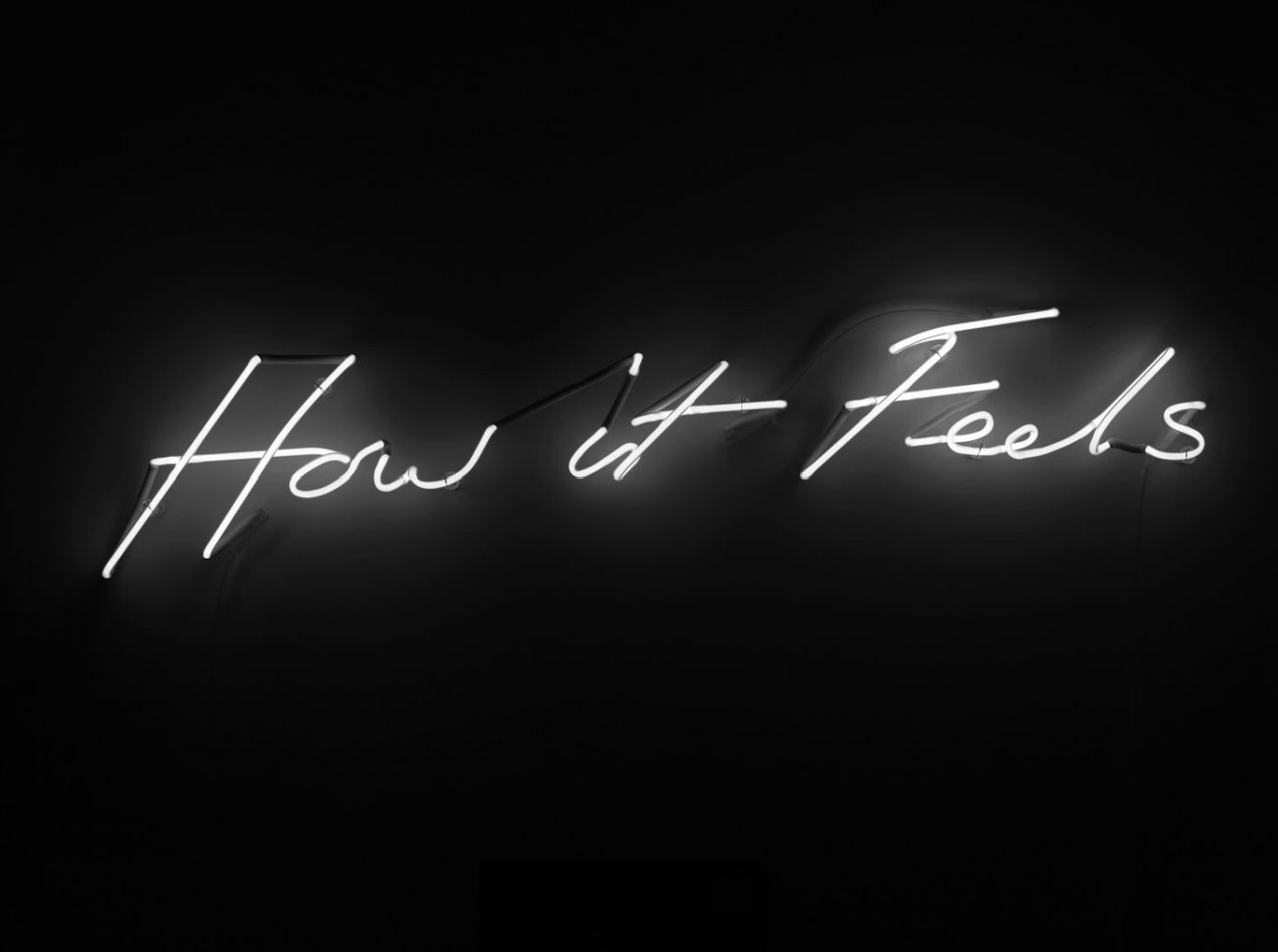
Following her experience with serious illness, mortality has entered her work with renewed intensity. Earlier declarations take on retrospective depth. The glow of neon begins to resemble a vigil light—a reminder of life’s brevity.
Yet Emin resists sentimentality. Her honesty can be bracing, even confrontational. This refusal to aestheticize suffering distinguishes her from artists who romanticize confession.
For collectors, thematic clarity is important. Works that encapsulate her core concerns tend to possess enduring resonance.
Market Position and Long-Term Outlook
Within the broader context of post-YBA contemporary art, Emin’s neon works occupy a unique space. They combine conceptual rigor with emotional accessibility. This dual appeal expands her collector base beyond strictly academic audiences.
Key strengths include strong primary gallery representation, consistent institutional exhibition history, cross-medium relevance across painting and sculpture, cultural recognizability, and limited editions with controlled production.
Collectors should prioritize works that feel definitive rather than peripheral. Phrases that encapsulate time, belief, love, or existential reflection tend to maintain broader appeal.
As Emin’s career continues to evolve—with increasing emphasis on painting and bronze sculpture—the neon works remain foundational. They are unlikely to diminish in importance. Instead, they function as touchstones within her larger narrative.

Light as Testament
Tracey Emin transformed neon from commercial signage into a vessel for vulnerability. Her illuminated handwriting suspends confession in space, allowing viewers to inhabit the emotional afterglow.
To collect an Emin neon is to acquire a distilled moment of human exposure. It is to participate in a lineage of radical honesty that reshaped contemporary art. These works are not decorative objects; they are sculptural declarations of being.
Fragile yet defiant, intimate yet public, her neon sculptures continue to assert that sincerity—when illuminated—can be revolutionary.
