
Across contemporary fine art, nostalgia has emerged as one of the most effective ways artists create immediate emotional connection while still engaging with complex cultural ideas. Rather than functioning as a purely sentimental gesture, retro revival has become a framework for examining memory, technology, and identity in an era shaped by rapid digital change. Working across painting and sculpture, Connor Gottfried, Arlo Sinclair, and Dylan Martinez each draw from familiar visual language to anchor their work in recognition, comfort, and shared experience. Together, they demonstrate how nostalgia can operate not as escapism, but as a sophisticated lens through which contemporary life is interpreted and preserved.
Each Artist’s Perspective on Nostalgia
Although united by their engagement with retro imagery, Gottfried, Sinclair, and Martinez approach nostalgia from distinctly personal and material perspectives. Gottfried’s work is rooted in cartoon imagery, gaming culture, and pop references that feel instantly legible. His paintings use humor and visual energy as an entry point, allowing viewers to connect intuitively before encountering a sharper, contemporary sensibility beneath the surface. The work acknowledges how deeply embedded these visual cues are in collective memory, particularly for generations raised alongside early digital media.
Sinclair’s paintings take a markedly quieter approach. Using muted palettes and cinematic framing, his works resemble fragments of half-remembered scenes, like stills pulled from an old film or faded photograph. Nostalgia in Sinclair’s practice is not driven by overt references, but by mood and atmosphere. His paintings suggest emotional familiarity rather than specific narratives, positioning memory as something felt rather than recalled with precision.
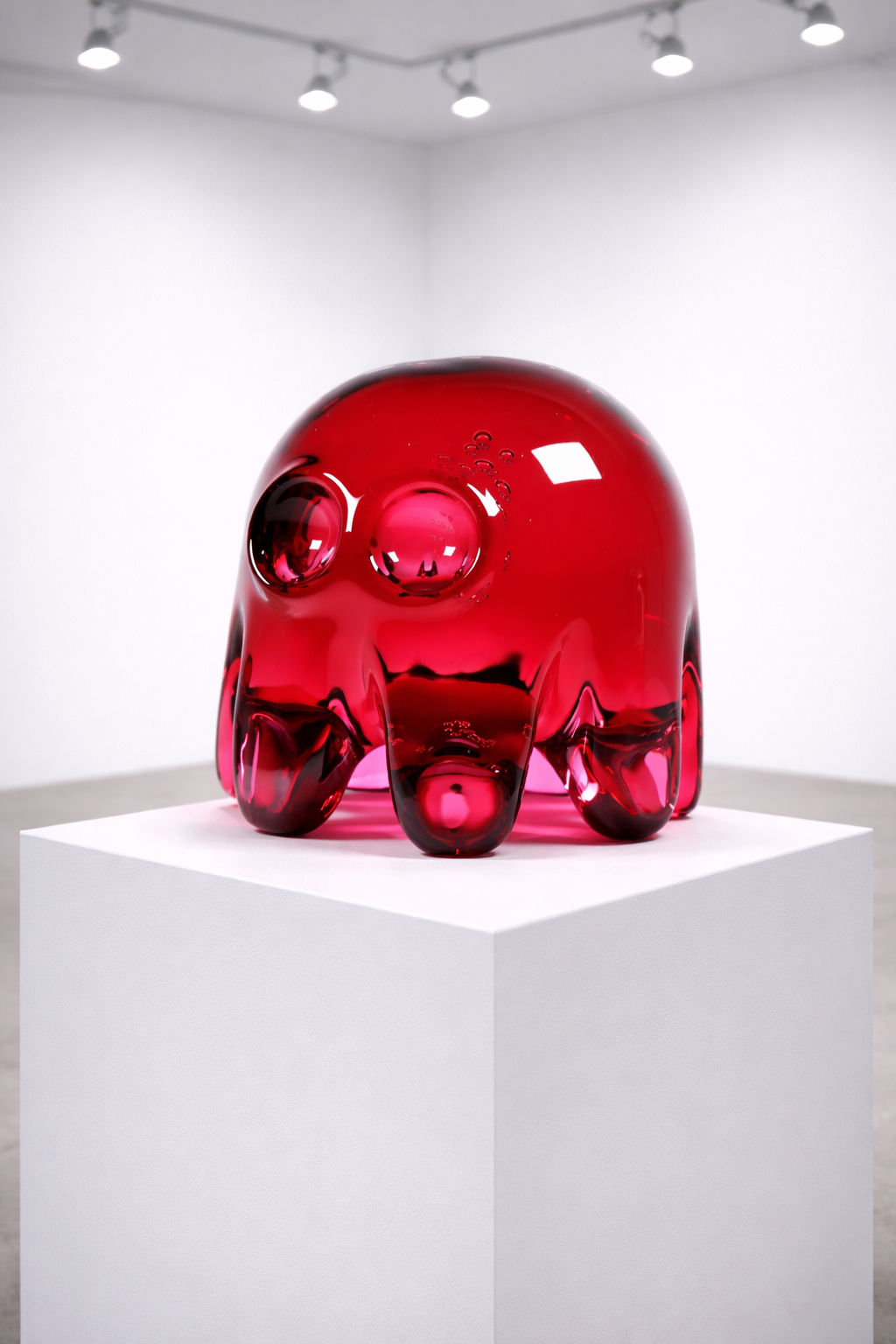
Martinez approaches nostalgia through transformation of form. By reimagining iconic Pac-Man ghosts as hand-blown glass sculptures, he takes a universally recognized video game symbol and gives it physical presence and permanence. What was once ephemeral and digital becomes tactile and refined. His broader practice, including works that reference childhood play such as water balloons, continues this elevation of fleeting joy into carefully crafted objects that balance playfulness with technical rigor.

The Visual Language of Nostalgia
The visual language shared across these practices relies on recognition as a point of access, but not as an end goal. Gottfried’s paintings elevate cartoon and gaming imagery to the status of fine art subjects, treating them with the compositional seriousness historically reserved for traditional motifs. The result is work that feels energetic and contemporary while functioning as a form of cultural documentation.
Sinclair’s visual language is built through restraint. Soft color transitions, controlled lighting, and sparse compositions create a sense of emotional pause. His works resist spectacle, instead offering viewers space to project their own memories and associations. This openness allows nostalgia to operate as a collective experience rather than a fixed reference.
Martinez’s use of glass introduces a material counterpoint to painted nostalgia. The precision and fragility of glassmaking contrast with the simplicity of his chosen forms, underscoring the tension between childhood memory and adult craftsmanship. His sculptures feel playful yet deliberate, reinforcing the idea that nostalgic imagery can sustain conceptual and material depth.
Cultural Significance and Artistic Impact
The cultural relevance of this retro revival extends beyond aesthetic appeal. Gottfried, Sinclair, and Martinez are collectively engaging with a generation shaped by the transition from analog to digital culture. Their works reflect on how early interactions with media, games, and visual storytelling continue to shape identity and emotional memory.
Rather than documenting nostalgia as a static past, these artists treat it as a living, evolving force. Their practices acknowledge how memory is continually reshaped by time, technology, and context. In doing so, they position nostalgia as an active participant in contemporary cultural discourse rather than a retreat from it.

Collecting Nostalgia-Driven Contemporary Works
For collectors, works by Gottfried, Sinclair, and Martinez offer both accessibility and longevity. Familiar imagery provides immediate visual connection, while each artist’s distinct approach ensures depth beyond surface recognition. The diversity of media, from painting to sculpture, allows collectors to engage with shared themes through different material experiences.
Each artist maintains clear stylistic and technical signatures, which is essential for provenance and long-term collectability. While their works often resonate emotionally, they are grounded in disciplined practices that support sustained institutional and market interest.
Market Context and Institutional Recognition
The growing interest in nostalgia-driven contemporary art reflects a broader shift within the market toward work that balances emotional resonance with cultural relevance. Institutions and collectors alike are increasingly attentive to artists who document recent cultural history through refined artistic practices. The work of Gottfried, Sinclair, and Martinez aligns with this trend, positioning them within ongoing conversations about memory, technology, and collective experience.
Their shared engagement with retro imagery also reflects a wider acceptance of collaboration and parallel practice as meaningful modes of artistic dialogue. While each artist operates independently, their works collectively reinforce the legitimacy of nostalgia as a serious contemporary subject.
The enduring appeal of retro revival within fine art lies in its ability to transform shared memory into something both personal and universal. Through humor, restraint, and material transformation, Connor Gottfried, Arlo Sinclair, and Dylan Martinez demonstrate how familiar imagery can be recontextualized into works of lasting artistic value. Their practices offer comfort and recognition while remaining critically engaged with the present.
Frequently Asked Questions


