
For sculpture collectors seeking work that bridges historical gravitas with contemporary energy, Daniele Fortuna has become an increasingly compelling figure. Born in Milan in 1981 and trained at the Brera Academy of Fine Arts, Fortuna brings a classical education into direct conversation with a distinctly modern visual language. His work draws from the canon of Greek and Roman sculpture—gods, heroes, and idealized busts—yet reframes these archetypes through color, material innovation, and a highly refined studio process that feels both reverent and disruptive.
Fortuna’s artistic background is central to his appeal. At Brera, he developed rigorous technical skills in modeling, carving, and sculptural composition, grounding his practice in the traditions of academic sculpture. Rather than rejecting this foundation, he uses it as a platform for reinvention. Early in his career, Fortuna explored painting and mixed media, and that painterly sensibility remains integral to his sculptural output today. This hybrid training—part sculptor, part colorist—distinguishes his work from more conventional contemporary figurative sculpture and situates it in a lineage that includes both classical ateliers and postmodern material experimentation.
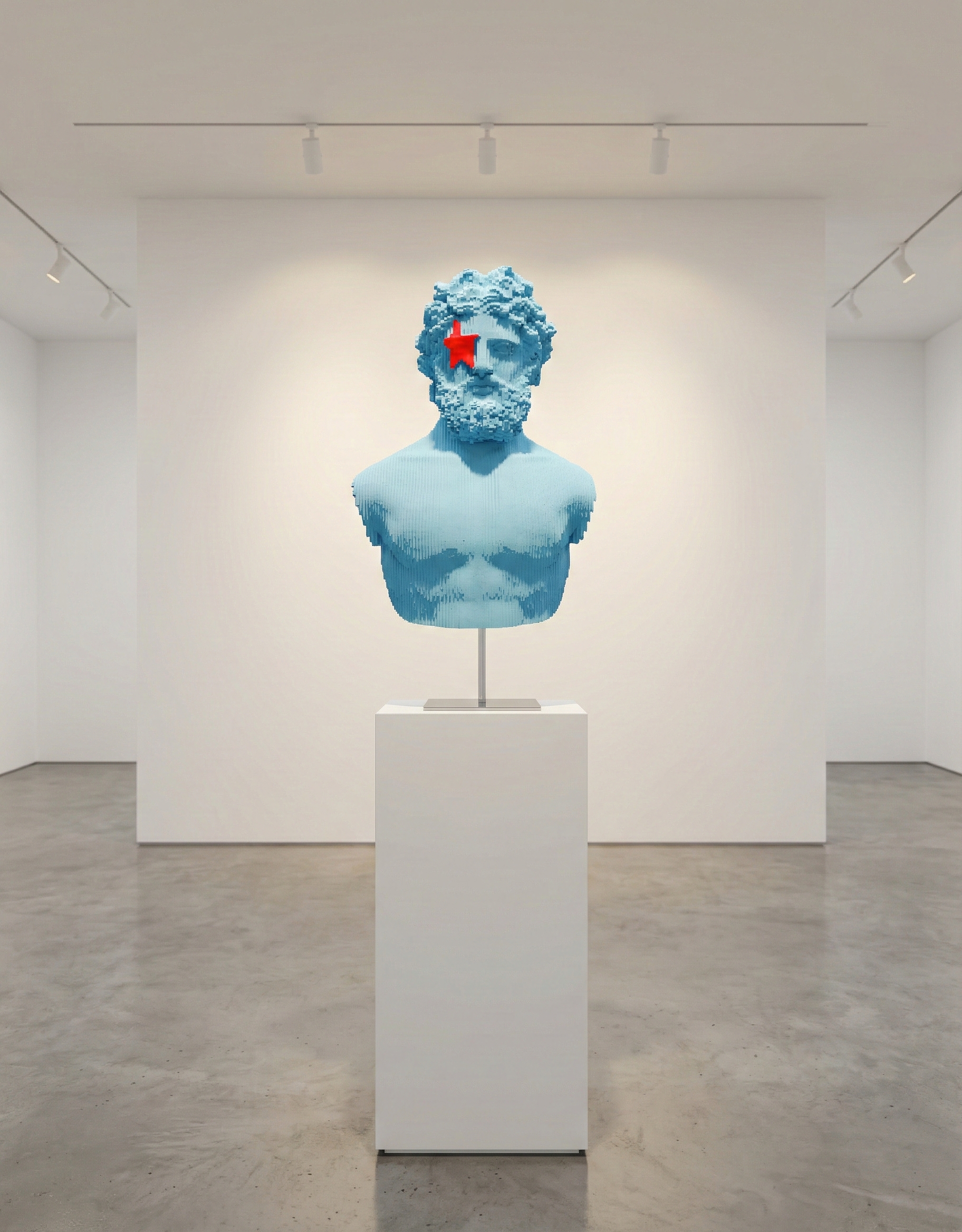
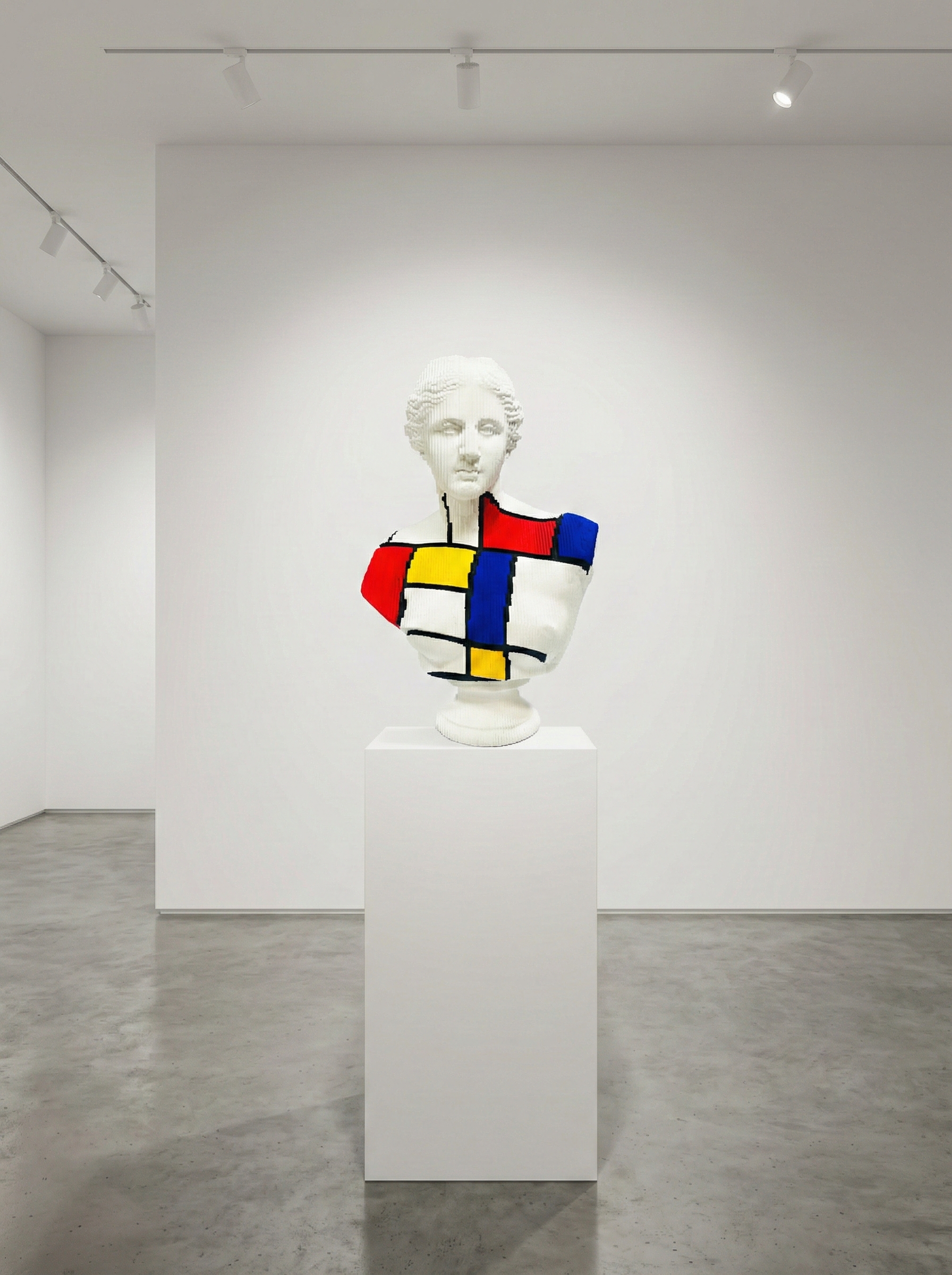
His best-known works are his busts inspired by Greek and Roman antiquity, often carved from wood and layered with resin and hand-applied pigments. At first glance, these sculptures recall familiar museum icons—Apollo, Venus, Hermes, Medusa—yet their surfaces immediately disrupt expectations. Fortuna builds up his forms in stratified layers of color, then carves back into them, revealing bands of electric blues, greens, pinks, reds, and metallic tones that cut through the figure like geological cross-sections. This method produces objects that feel simultaneously ancient and futuristic: the weight and authority of classical sculpture fused with the visual intensity of contemporary abstraction.
From a collector’s perspective, this material and technical complexity is key. Each work is labor-intensive and resolutely handmade, with visible evidence of process embedded in the surface. The sculptures are not merely painted; they are constructed chromatically from the inside out, making each piece a unique object rather than a simple variation on a theme. This emphasis on craftsmanship, combined with Fortuna’s relatively controlled output, reinforces a sense of scarcity and authenticity that is increasingly prized in a market saturated with digitally fabricated forms.
Conceptually, Fortuna’s practice resonates strongly with collectors interested in art-historical continuity. His work does not parody antiquity, nor does it treat classical form as a hollow aesthetic. Instead, he approaches the past as a living archive—one that can be sampled, remixed, and reactivated for the present. By preserving classical proportions and compositional balance while radically altering surface and material, Fortuna invites viewers to reconsider what cultural inheritance looks like in an era defined by visual overload and remix culture. His sculptures become meditations on permanence and impermanence: solid, weighty forms that nonetheless shimmer with contemporary chromatic volatility.
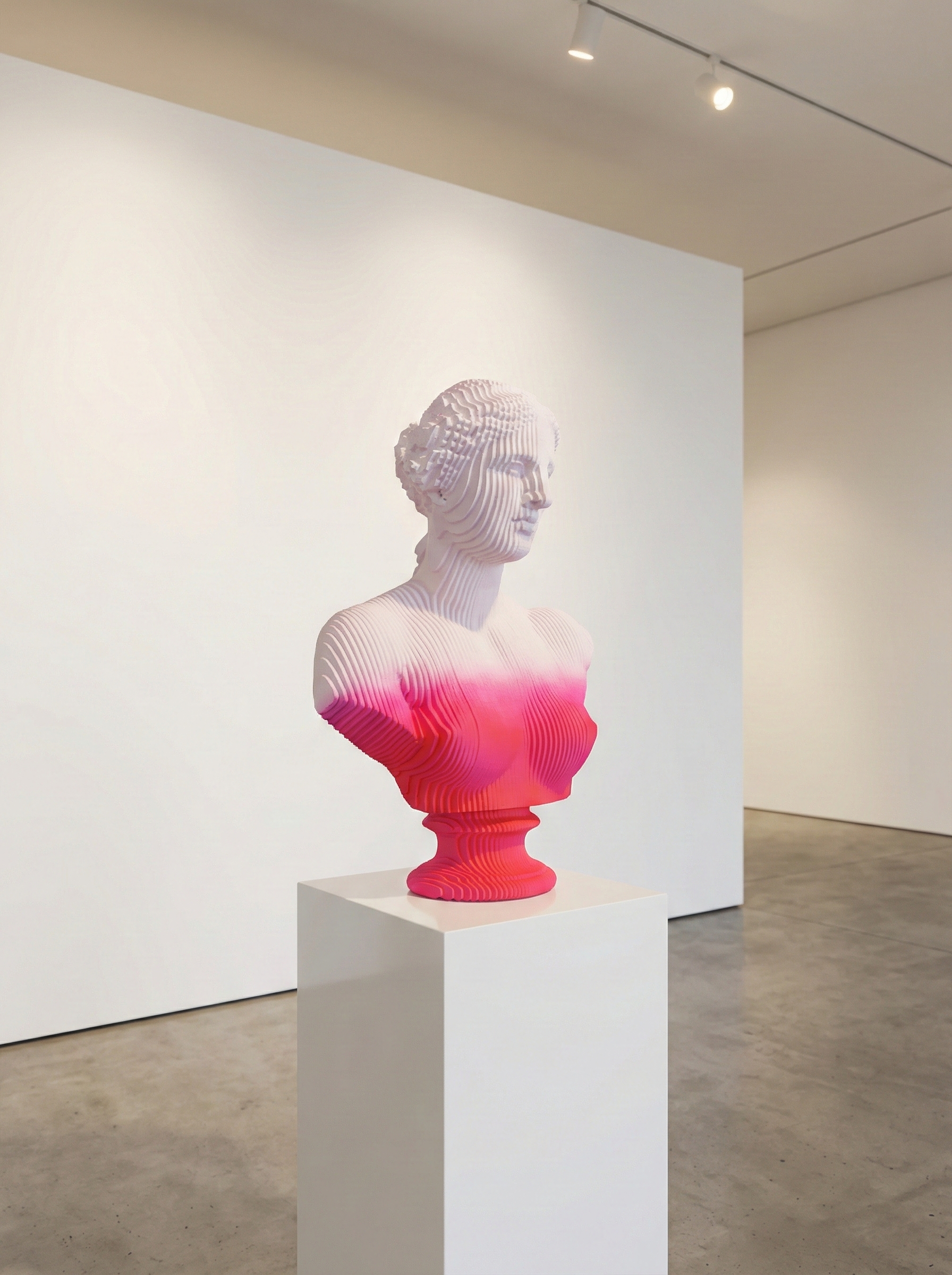
What makes Fortuna’s work continuously appealing—beyond its immediate visual impact—is its ability to operate on multiple registers. On one level, the sculptures are undeniably seductive objects: bold, graphic, and instantly recognizable, with a strong decorative presence that translates well into both private collections and architectural interiors. On another level, they carry a deeper conceptual charge, engaging with questions of beauty, idealization, and historical memory. For collectors, this duality offers both aesthetic pleasure and intellectual depth—an increasingly rare combination in a market that often privileges one over the other.
Fortuna’s growing international visibility further strengthens his profile as a long-term acquisition. His work has been exhibited across Europe and internationally, and it has begun to enter significant private collections that value both figurative tradition and contemporary innovation. As interest in reimagined classicism continues to gain traction among collectors—particularly those drawn to artists who reconcile craft, color, and concept—Fortuna is well positioned within this broader movement. His sculptures speak to a renewed appetite for figurative work that is neither nostalgic nor ironic, but confidently hybrid.
Looking ahead to 2026 and beyond, Daniele Fortuna’s practice offers several qualities that sophisticated sculpture collectors tend to prioritize: a clearly identifiable visual signature, a technically demanding and materially rich process, and a conceptual framework grounded in art history yet open to reinvention. His work rewards close looking, holds its own in dialogue with both ancient and contemporary sculpture, and carries the kind of narrative depth that sustains long-term interest.
In a cultural moment where many contemporary objects are designed for instant impact and rapid obsolescence, Fortuna’s sculptures stand apart. They feel built to last—physically, visually, and conceptually. For collectors seeking works that combine the authority of classical form with the vitality of contemporary color and craft, Daniele Fortuna represents not just an artist to watch in 2026, but a sculptor whose trajectory suggests enduring relevance in the evolving landscape of contemporary sculpture.
Are Fortuna’s sculptures unique works or editions?
Most of his busts are unique works rather than editions. While he may revisit the same classical subject multiple times, each sculpture differs in scale, color palette, and surface treatment, ensuring that no two works are identical.
How labor-intensive is his process?
Highly. Each sculpture is constructed through multiple stages of layering, curing, carving, and finishing. This slow, hands-on method contributes to both the tactile richness of the surface and the relatively limited number of works he produces each year.
What makes his work a strong long-term acquisition?
Historically, collectors have been drawn to Fortuna for his consistent visual identity, deep engagement with art history, and technically demanding process. His controlled production, growing international profile, and ability to bridge classical form with contemporary aesthetics all support sustained long-term interest.
How does his work fit into a broader collection?
Fortuna’s sculptures pair well with both historical works and contemporary pieces. They can serve as focal points within figurative collections or as dynamic contrasts within modern and minimalist interiors, offering both visual impact and conceptual depth.