
The Damien Hirst Spot series represents one of the most recognizable and philosophically complex bodies of work in contemporary art. These deceptively simple arrangements of colored circles, each bearing pharmaceutical drug names, transform the gallery into a meditation on life, death, and the promise of modern medicine. Since their inception in the late 1980s, the Damien Hirst Spot series has become synonymous with the artist's broader investigation into mortality and humanity's relationship with science.

Key Takeaways
- The spots explore themes of mortality through pharmaceutical naming conventions
- Each work follows strict compositional rules with no color repetition
- The series spans multiple mediums from paintings to prints.
The Visual Language of the Damien Hirst Spot Series
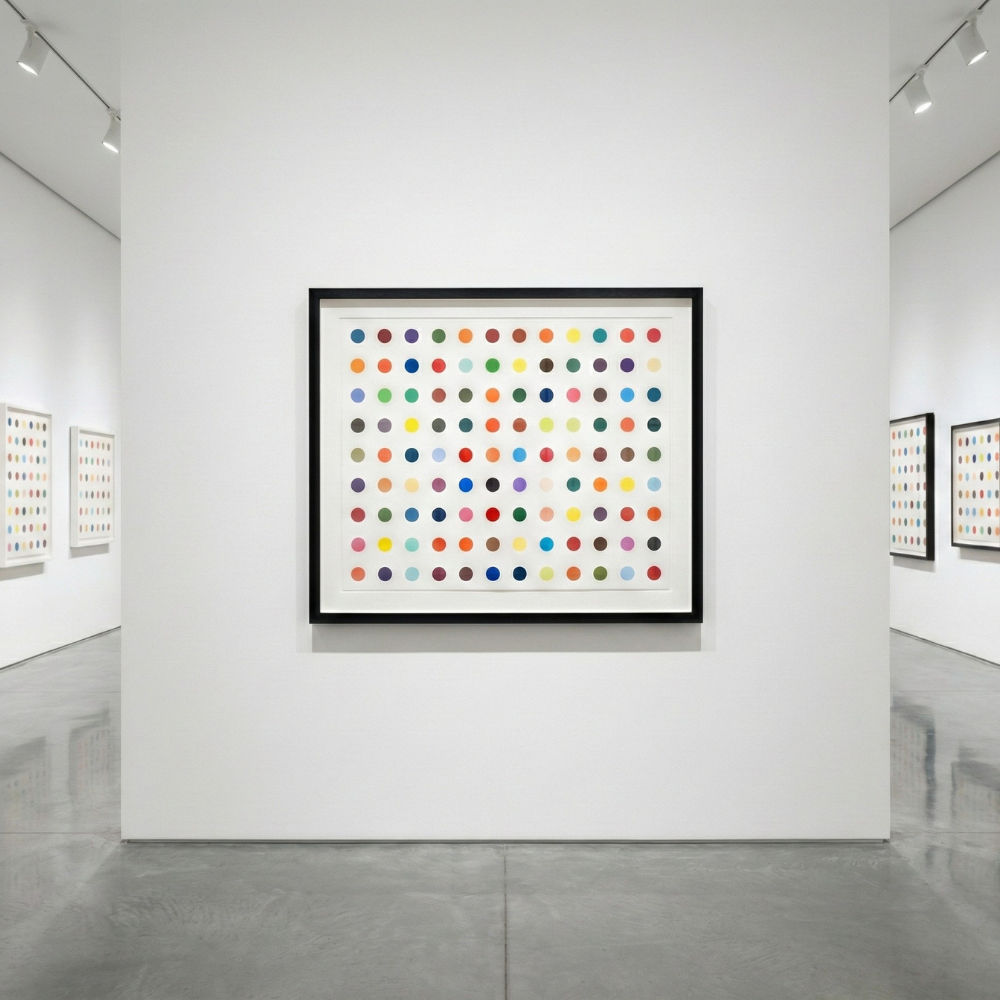
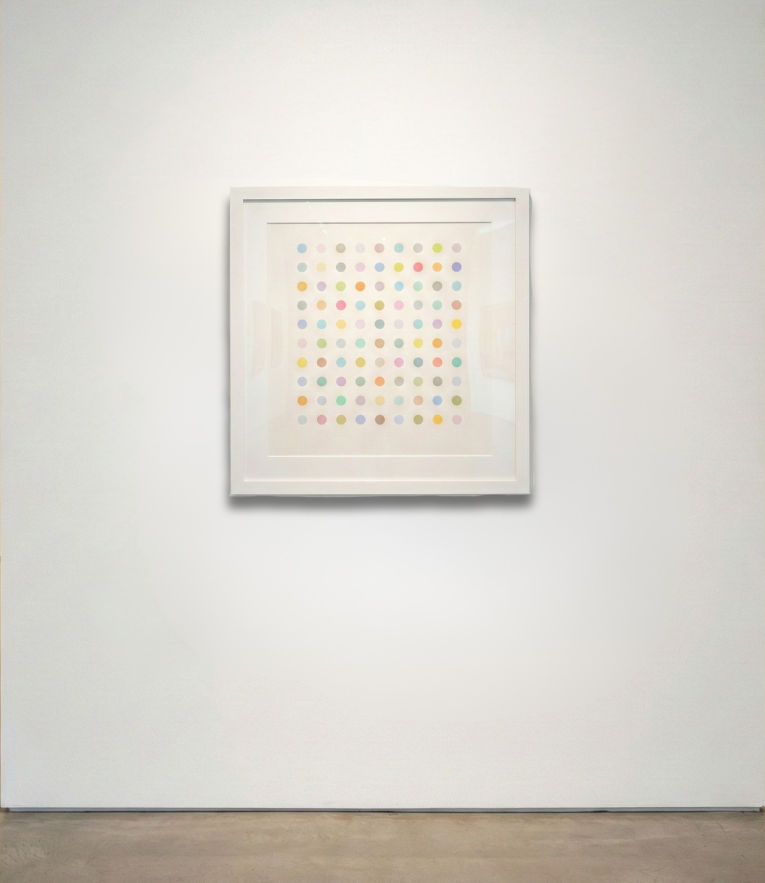
Hirst's technique in creating the Damien Hirst Spot series follows a rigorous set of self-imposed rules. Each composition features perfectly circular dots arranged in grid formations, with no two colors repeated within a single work. This systematic approach reflects the artist's fascination with pharmaceutical precision and scientific methodology. The colors themselves are chosen for their vibrancy and emotional resonance, creating works that pulse with life while simultaneously evoking the sterile environment of medical facilities.
The pharmaceutical titles—drawn from actual drug names like "Oleoyl Sarcosine" or "Phenylpropanolamine"—transform each work into a commentary on contemporary society's dependence on medication. These clinical names juxtaposed against joyful, carnival-like colors create a tension that defines much of Hirst's artistic practice.
Cultural Significance and Art Historical Context
The Damien Hirst Spot series emerged during the height of the Young British Artists movement, positioning Hirst as a leading voice in contemporary art's engagement with mortality and consumer culture. The works function simultaneously as abstract paintings and conceptual statements, bridging the gap between traditional formalist concerns and contemporary conceptual practice.
These pieces reflect influences ranging from color field painting to pharmaceutical packaging design, creating a unique visual language that speaks to both art historical traditions and contemporary anxieties. The repetitive nature of the spots recalls both minimal art strategies and the mechanized production methods that fascinated Pop artists like Andy Warhol.
Collecting the Damien Hirst Spot Series
For collectors, the Damien Hirst Spot series offers remarkable diversity across multiple mediums and scales. The works range from intimate cabinet-sized pieces to large-scale museum-quality canvases, with editions available in screenprint, etching, and unique paintings. Authentication remains crucial, as the popularity of the series has led to various unauthorized reproductions in the market.
Original paintings from the series are distinguished by their hand-painted surfaces and unique pharmaceutical titles, while authorized prints bear specific edition information and proper documentation. Collectors should seek works with clear provenance and official authentication from recognized sources. The series' institutional presence—with works held in major collections including the Tate Modern and MoMA—underscores its significance within Hirst's broader oeuvre.
Market Position and Collector Interest
The sustained collector interest in the Damien Hirst Spot series reflects both the works' visual appeal and their conceptual sophistication. These pieces have demonstrated consistent performance across various market segments, from emerging collectors drawn to smaller prints to institutions acquiring major paintings. The series' accessibility across different price points has contributed to its broad collector base.
The combination of recognizable imagery, philosophical depth, and technical precision makes the Damien Hirst Spot series a compelling area of the artist's practice for collectors. Their presence in major museum collections and continued relevance to contemporary discussions about health, mortality, and consumer culture ensures their enduring significance.
Frequently Asked Questions
What makes the Damien Hirst Spot series conceptually significant?
The series transforms pharmaceutical drug names into vibrant abstract compositions, creating a dialogue between life-affirming color and the clinical reality of modern medicine. This juxtaposition reflects broader themes about mortality, hope, and society's relationship with pharmaceutical intervention.
How can collectors authenticate works from the Spot series?
Authentic works should include proper documentation, edition information for prints, and verification of pharmaceutical titles. Original paintings feature hand-applied paint and unique compositions, while authorized prints bear specific publisher markings and edition numbers.
What different mediums exist within the Spot series?
The series spans paintings, screenprints, etchings, and installations. Each medium offers different collecting opportunities, from unique hand-painted canvases to limited edition prints that make the series accessible to various collector segments.
The enduring appeal of the Damien Hirst Spot series lies in its ability to transform simple visual elements into profound statements about contemporary life. These works continue to resonate with collectors and institutions worldwide, cementing their position as essential examples of British contemporary art and conceptual practice.
Guy Hepner in New York and London has extensive experience with Damien Hirst works and can assist collectors seeking pieces from this series.
For more information on available Damien Hirst works please contact us at info@guyhepner.com
