
In 2025, the markets for Pablo Picasso, Andy Warhol, Jean-Michel Basquiat, and Keith Haring remain not only resilient, but structurally essential to the global art ecosystem. These artists are more than historic figures or blue-chip names; they function as the backbone of serious collections, anchoring museum holdings, private estates, and investment-grade portfolios across generations. Their dominance across both original works and editions reflects a rare convergence of cultural significance, historical importance, and sustained market liquidity.
For seasoned collectors, these artists represent stability, legacy, and benchmark value. For newer buyers, they provide a clear entry point into post-war and contemporary art, offering recognisable imagery, deep scholarship, and well-established price transparency. Together, Picasso, Warhol, Basquiat, and Haring form a lineage that defines the modern canon and continues to shape how value is established in the art market today.
Cultural Authority and Market Confidence
One of the defining characteristics of these four artists is their unrivalled cultural authority. Each fundamentally altered the visual language of their time, and that historical importance continues to underpin demand in 2025. Unlike trend-driven markets that fluctuate with taste or speculation, works by these artists benefit from decades of institutional validation, scholarly attention, and sustained collector demand.
This authority translates directly into market confidence. At auction, their names consistently anchor evening sales, often providing the strongest guarantees and most competitive bidding environments. In private transactions, they serve as reference points for valuation and quality, frequently used by collectors to balance risk across more speculative acquisitions. In an era where buyers are increasingly selective, works by these artists are viewed as dependable, long-term assets rather than short-term opportunities.
Picasso: The Foundation of Modern Collecting
Pablo Picasso remains the essential foundation of 20th-century art collecting. His unparalleled ability to reinvent his style across decades — from Cubism and Surrealism to Neo-Classicism and late abstraction — ensures that collectors can engage with his work across a wide range of aesthetics, formats, and price points.
In 2025, Picasso’s market is defined by depth rather than volatility. Major paintings continue to command headline results, but the strength of the market extends well beyond top-tier masterpieces. Works on paper, ceramics, and especially prints play a crucial role in sustaining broad collector engagement. His printmaking practice, which spans linocuts, etchings, and lithographs, is widely regarded as one of the most innovative in art history, offering collectors access to Picasso’s hand and imagination at comparatively accessible levels.
For both new and established collectors, Picasso functions as a cornerstone holding. His works are frequently among the first acquisitions in major collections and often among the last to be sold, underscoring his enduring relevance and unmatched historical weight. Explore Picasso prints for sale.

Warhol: Liquidity, Recognition, and the Power of Editions
Andy Warhol’s market in 2025 remains one of the most liquid and transparent in the art world. Few artists have achieved such universal recognition while maintaining such consistent demand across originals, unique works, and editions. Warhol’s genius lay not only in his imagery, but in his understanding of repetition, branding, and mass production — qualities that align seamlessly with contemporary collecting habits.
Prints remain a central pillar of Warhol’s market. Iconic series such as Marilyn, Flowers, Campbell’s Soup Cans, Endangered Species, and Ads continue to dominate auction sales, with strong results across a wide range of editions and colourways. For collectors, Warhol prints offer a balance of recognisability, historical importance, and relative affordability, making them ideal both as entry points and as anchors within more advanced collections.
At the top end, unique works and paintings continue to set records and draw global attention, reinforcing Warhol’s position as a cultural and financial heavyweight. His market benefits from exceptional scholarship, extensive catalogue raisonnés, and decades of institutional support, making him one of the most secure and widely collected artists of the post-war period. Discover Andy Warhol prints for sale.

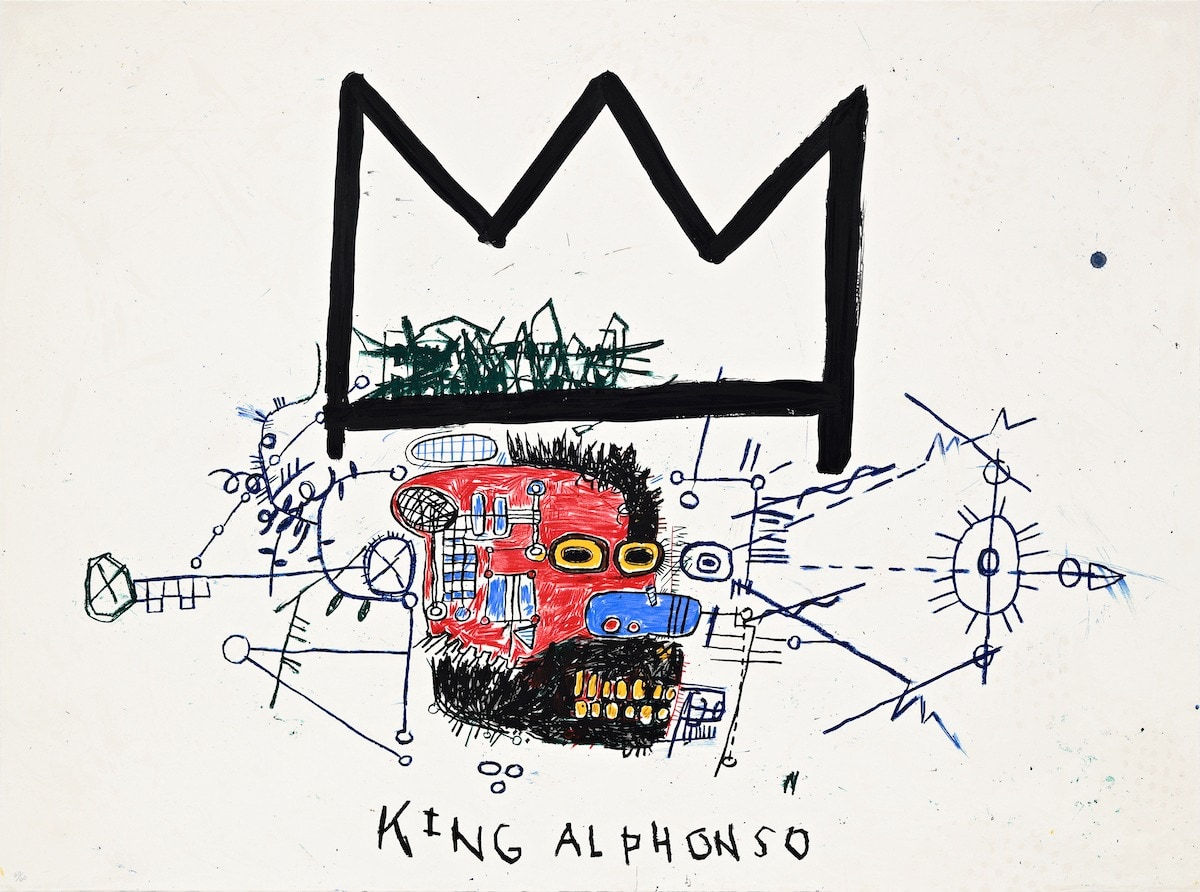
Basquiat: Scarcity, Symbolism, and Generational Demand
Jean-Michel Basquiat’s market has matured significantly over the past decade, and in 2025 it occupies a unique position defined by scarcity, symbolism, and cross-generational appeal. His paintings are among the most coveted works in contemporary art, regularly achieving eight- and nine-figure results, but the depth of his market extends far beyond headline sales.
Basquiat’s works resonate powerfully with collectors because they combine raw visual impact with intellectual and historical depth. His exploration of identity, power, race, and art history continues to feel urgent and relevant, particularly to younger collectors who see his work as both culturally authentic and emotionally direct. This sustained relevance has translated into strong demand across all market segments.
Prints and works on paper, while comparatively limited in number, play an increasingly important role in the Basquiat market. As paintings become ever more tightly held by institutions and long-term collectors, editions provide a vital access point for those seeking exposure to his work. In 2025, competition for high-quality Basquiat prints remains intense, reflecting both limited supply and growing global demand. Browse Basquiat prints for sale.
Haring: Accessibility, Global Reach, and Institutional Recognition
Keith Haring’s market occupies a distinctive position defined by accessibility, visual immediacy, and global recognition. While his imagery is widely known and instantly legible, his market has evolved considerably, with increasing institutional validation and scholarly reassessment driving renewed collector interest.
Haring’s commitment to public art and social engagement has made his work particularly appealing to collectors who value cultural impact alongside aesthetic clarity. In 2025, his prints remain among the most actively traded segments of the post-war market, offering strong liquidity and broad appeal. Editions from key series continue to perform consistently at auction, often attracting competitive bidding from both established collectors and first-time buyers.
At the same time, unique works and early pieces have seen growing interest as collectors seek to deepen their engagement with his practice. Museums and foundations continue to expand their holdings, reinforcing Haring’s position not merely as a Pop icon, but as a serious and historically significant artist whose influence extends well beyond the 1980s. Explore Keith Haring prints for sale.

Prints Versus Originals: A Shared Market Ecosystem
Across all four artists, the relationship between prints and originals is central to understanding their markets. Unlike many artists for whom editions are secondary, prints play a foundational role in sustaining long-term demand and collector participation. They provide accessibility, visibility, and continuity, ensuring that these artists remain present in both private and institutional collections worldwide.
For newer collectors, prints offer an opportunity to engage meaningfully with museum-level artists while benefiting from established scholarship and market transparency. For experienced collectors, editions function as strategic holdings that complement higher-value works, enhance thematic depth, and offer flexibility within a collection.
In 2025, this dual-market structure continues to strengthen the overall resilience of Picasso, Warhol, Basquiat, and Haring. Demand at the top reinforces interest at the entry and mid-levels, creating a virtuous cycle that few other artists can replicate.
Auction Dominance and Global Reach
One of the clearest indicators of these artists’ market strength is their consistent dominance at auction. Across New York, London, Paris, and Hong Kong, works by Picasso, Warhol, Basquiat, and Haring appear regularly in headline sales, often serving as focal points around which entire auctions are built.
Their global reach cannot be overstated. Collectors from Europe, North America, Asia, and the Middle East actively compete for works, reinforcing price stability and international demand. This breadth of participation reduces reliance on any single market and ensures long-term resilience even during periods of broader economic uncertainty.
Why These Artists Remain Essential in 2026
For collectors navigating the art market in 2026, Picasso, Warhol, Basquiat, and Haring offer clarity in an increasingly complex landscape. Their markets are underpinned by history, scholarship, and cultural relevance rather than speculation. They provide confidence to experienced buyers and reassurance to those entering the market for the first time.
More importantly, they continue to matter. Their works do not feel remote or purely historical; they remain embedded in contemporary culture, influencing art, fashion, music, design, and visual language worldwide. This enduring relevance is what ultimately sustains their markets and secures their position at the centre of serious collecting.
Whether acquired as foundational holdings, strategic additions, or first major purchases, works by these four artists remain among the most meaningful and enduring acquisitions a collector can make. In 2025, they are not only market leaders, but cultural constants — artists whose impact continues to define both the history and future of modern art.
For current availabilities, contact info@guyhepner.com


