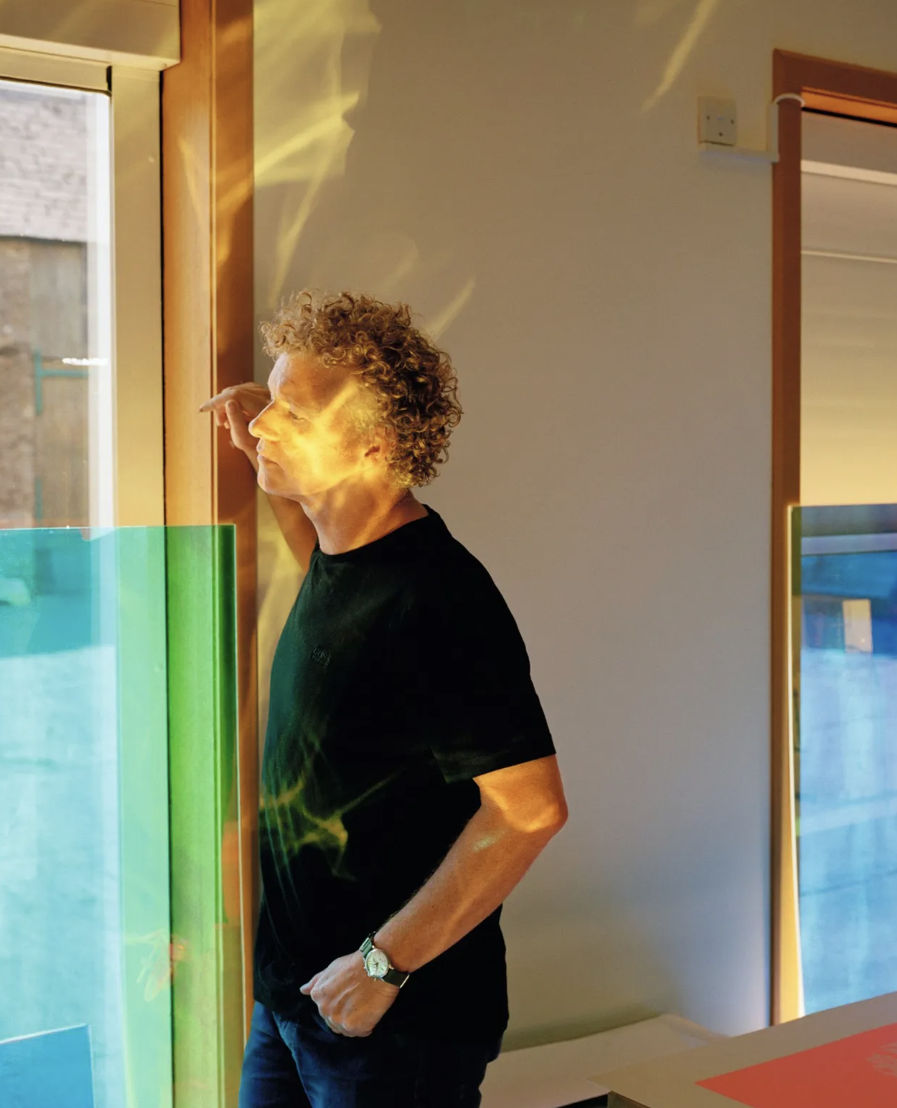
Chris Levine (b. 1960) occupies a unique place in contemporary portraiture. Known internationally as a pioneer of light-based art, lenticular imagery, and laser-driven visual experiments, Levine has redefined what it means to depict a subject in the 21st century. His portraits of Kate Moss and Queen Elizabeth II - two of the most recognizable female figures of the modern era - stand as some of the most celebrated and culturally resonant images in contemporary British art.
Rather than relying on traditional painterly or photographic conventions, Levine constructs portraits that feel meditative, otherworldly, and almost holographic. His subjects appear suspended between presence and transcendence, captured not in states of spectacle but in states of stillness. This quiet, almost spiritual atmosphere has become his signature, and it is nowhere more evident than in the works highlighted below.
Kate Moss
Few artists have captured Kate Moss with the clarity, reverence, and chromatic daring that Chris Levine brings to the model’s image. Their collaboration has resulted in some of Levine’s most visually striking works - portraits that hover between glamour and transcendence.
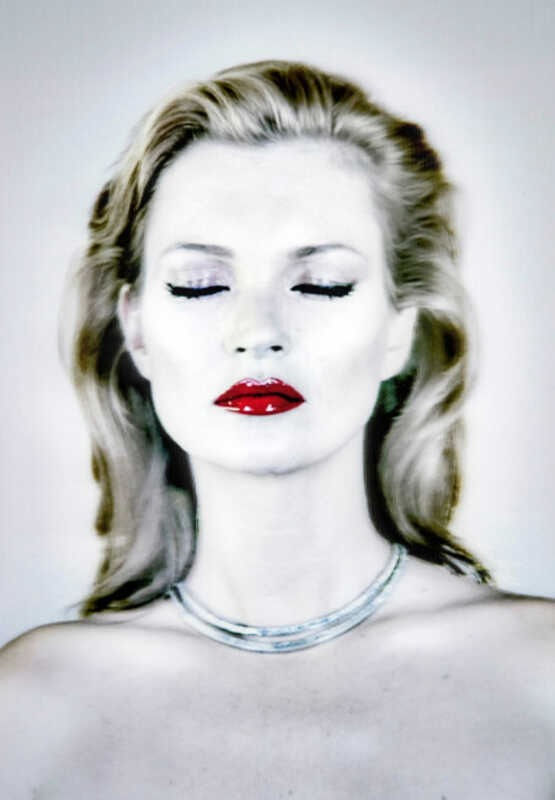
The lenticular print She’s Light (Pure) distills Moss’s face into an icon of calm. With her eyes closed, lips luminous, and skin rendered in cool, ethereal tones, Moss becomes not a celebrity but a symbol an embodiment of inner stillness. The lenticular medium allows the image to shimmer and subtly shift as the viewer moves, creating the sensation of breath or energy. Moss appears illuminated from within, echoing Levine’s guiding fascination with light as a spiritual force.
In She’s Light, Levine transforms Moss into a Pop-art constellation of color variations, evoking the reproducibility and seriality of Warhol while preserving the serenity of Levine’s vision. Despite the electric palette - acid greens, violets, reds, blues - the closed eyes remain the anchor, suggesting inner peace amid visual intensity. This duality is central to Levine’s practice: the subject is recognizable, yet the tone is meditative, encouraging a deeper connection beyond surface allure.
Together, these two Moss portraits reveal Levine’s ability to elevate a cultural icon into a figure of pure presence, situated somewhere between fashion imagery, sacred art, and technological innovation.
Queen Elizabeth II
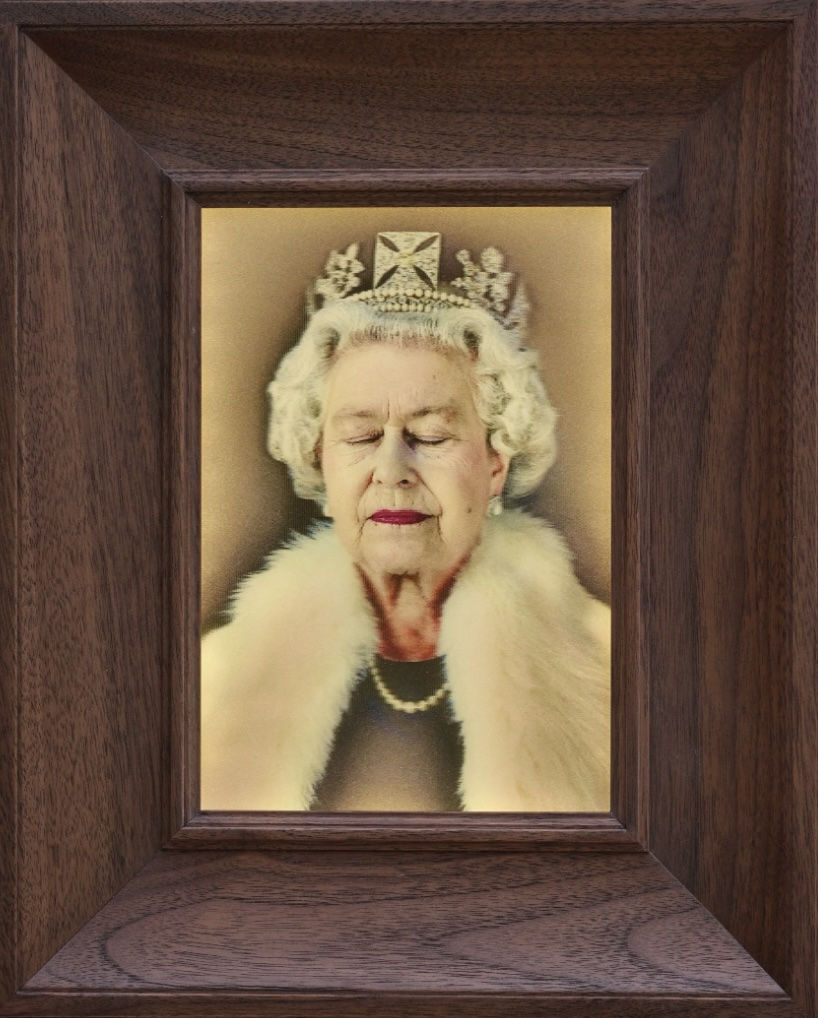
Levine’s portraits of Queen Elizabeth II are among the most iconic royal images of the last century. In a context historically defined by formality, armor, and symbolism, Levine introduced a radical shift: he asked the monarch to close her eyes.
The result was historic. Through this simple act, Levine captured not a public figure but a human being in a moment of serenity.
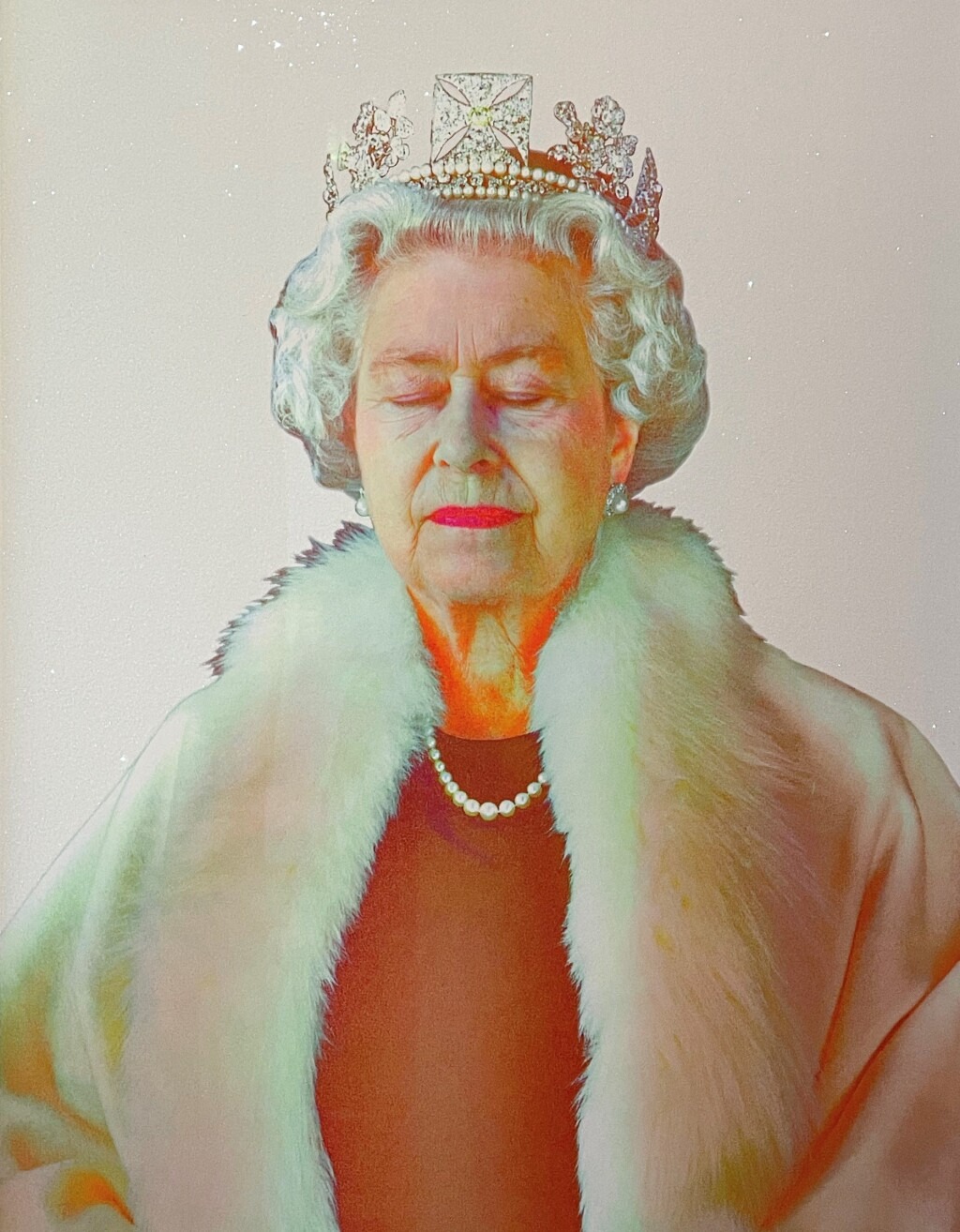
Rendered in soft, luminous tones, Lightness of Being (Series 3 No. 1) presents the Queen with her eyes gently closed, surrounded by the pale fur of her coronation robe. The image feels both intimate and grand - a portrait of power softened by vulnerability. Levine’s subtle use of fluorescent pigments gives the work a quiet radiance, as if the Queen is enveloped in spiritual light.
The Crystal Edition reframes the monarch in vibrant purple, a color historically linked to royalty, mysticism, and transformation. Here, the Queen becomes an almost mythic figure - calm, centered, luminous. The monochrome treatment heightens the emotional resonance of the closed-eye gesture, reaffirming the image’s status as one of the most poetic and innovative royal portraits ever created.
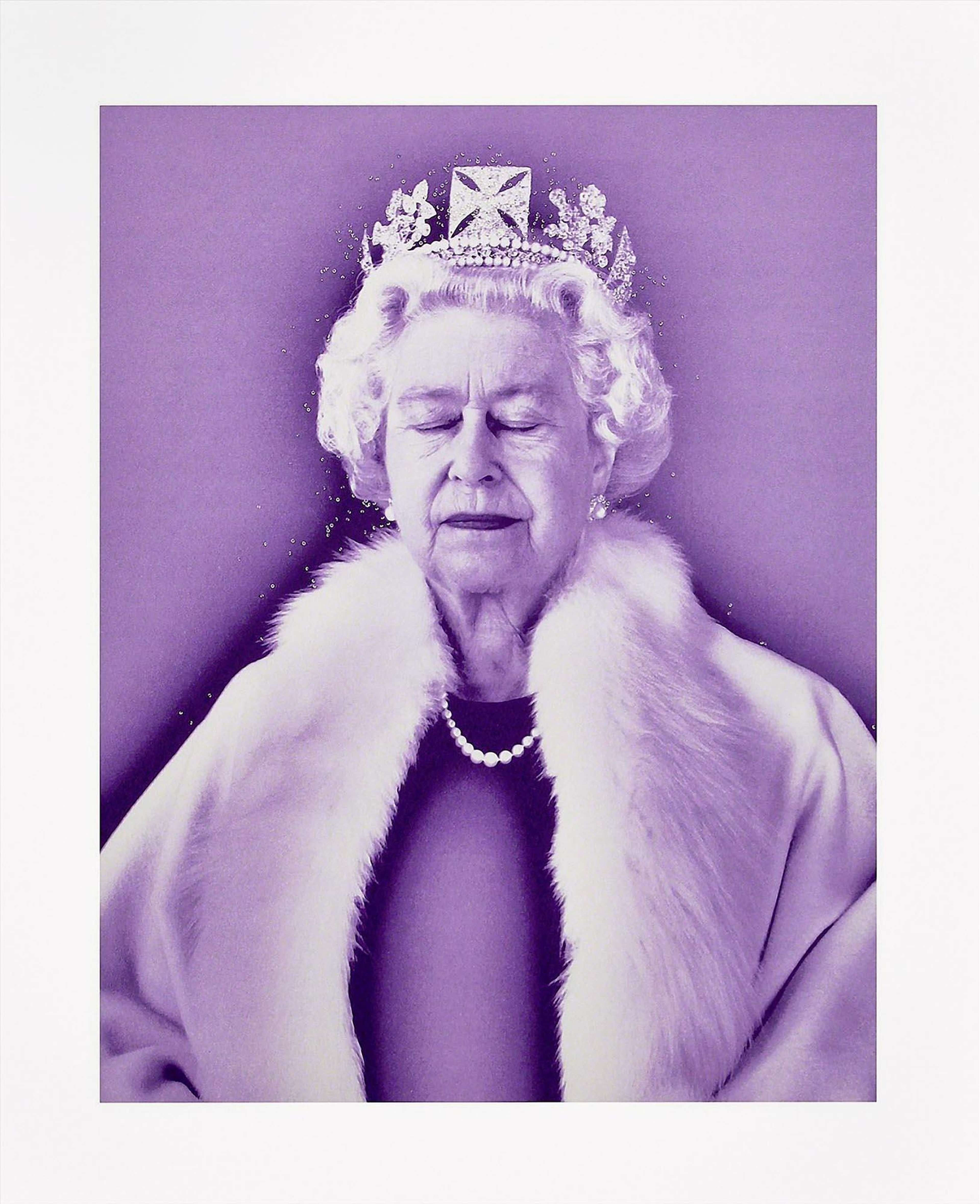
Levine’s portraits of Queen Elizabeth II broke longstanding conventions by capturing her not as a ruler in command, but as a woman at rest—revealing the inner world of a figure almost never seen without composure and poise.
Across both the Moss and Queen Elizabeth portraits, Levine uses closed eyes to shift the viewer’s relationship to the subject. They are not performing, posing, or projecting. They are being. This state of contemplative presence is rare in portraiture, and it gives Levine’s images a timeless, near-sacred quality.

Whether working with lenticular prints, laser technology, or silkscreen, Levine treats light not merely as illumination but as subject. His artworks appear to glow, shift, or breathe, offering viewers a dynamic visual experience.
Moss and Queen Elizabeth II sit at opposite ends of the cultural spectrum - one a fashion icon, the other a symbol of monarchy - yet Levine unites them through an aesthetic of transcendence. Both women become vessels of calm, quiet radiance.
Levine’s practice pushes beyond photography into a realm where technology, meditation, and pop iconography converge. His portraits are not merely images; they are experiences, inviting viewers to slow down, reflect, and connect in a deeper way.
Chris Levine’s works occupy a highly desirable position in the contemporary art market:
-
His portraits of Queen Elizabeth II are considered some of the most important royal images of the modern era, collected worldwide and exhibited in major institutions.
-
His collaborations with Kate Moss have positioned him at the intersection of fine art, fashion, and celebrity culture.
-
His editions - especially lenticulars and limited silkscreens - are prized for their innovation, rarity, and cross-disciplinary appeal.
Chris Levine transforms the familiar into the transcendent. His portrayals of Kate Moss and Queen Elizabeth II reveal two of the most photographed women in history not through spectacle, but through a quiet, luminous stillness that feels both intimate and monumental. Through light, color, and technological experimentation, he creates portraits that are as much meditations as they are visual statements.
Levine shows us that true presence - whether in a monarch or a supermodel - is not found in performance, but in stillness. And in doing so, he creates some of the most striking and spiritually resonant images in contemporary art today.


