
George Condo has become one of the defining painters of his generation: a bridge between the Neo-Expressionist energy of the 1980s and the psychologically fraught figuration that dominates today’s blue-chip contemporary painting. For a collector in 2025–2026, his work—especially his prints and editions—offers a way into a market that now ranges from mid–five figures for strong works on paper to multi-million-dollar paintings.
What follows is a practical, collector-focused guide: a brief overview of his life and influences, an explanation of his “movement” and ideas, key examples in both prints and paintings, and finally, what to look for in 2026 if you are serious about building a Condo collection with staying power.
1. Early life, influences and the making of “Artificial Realism”
George Condo was born in 1957 in Concord, New Hampshire, and studied art history and music theory at the University of Massachusetts Lowell. From the start, he split his attention between painting and music. As a teenager he studied classical guitar and absorbed Bach and other classical composers; later he played in a proto-punk band in Boston while working in a silkscreen shop.That parallel training is important for collectors, because Condo himself has often said that music taught him how to structure a painting: rhythm, dissonance, sudden shifts of tone and tempo.
In Boston he met Jean-Michel Basquiat, who encouraged him to move to New York.By the early 1980s Condo was part of the East Village scene that also produced Basquiat and Keith Haring. During this period he briefly worked in Andy Warhol’s Factory, in the silkscreen studio, applying diamond dust to Warhol’s “Myths” series—an experience that gave him a first-hand understanding of how editions, print studios and the mechanics of production could be used creatively, not just mechanically.
Condo coined the term “Artificial Realism” to describe what he was doing: the realistic representation of the artificial. His paintings borrow the visual language of European Old Masters—Cézanne, Picasso, Chardin—but populate that world with fractured, cartoonish, often grotesque figures that feel closer to comics, advertising or animation.In recent years he has also popularised the phrase “psychological cubism” to describe his multi-angled heads and faces, where multiple mental states coexist in one figure.
For collectors, this means that Condo’s work is never purely formal or purely narrative. His figures are “characters” that carry art-historical memory, pop culture and private neurosis all at once. Works that clearly embody this synthesis—where you feel both the Old Master echo and the raw psychological fracture—tend to be the most desirable.

2. Condo’s movement: from East Village to global blue-chip
By the mid-1980s Condo was showing in New York, Los Angeles and then Paris, where he developed friendships with philosophers like Félix Guattari, who wrote about the destabilising, open-ended nature of Condo’s imagery. Throughout the 1990s and early 2000s, his reputation was cemented via institutional shows and the influence he exerted on younger painters such as John Currin, Lisa Yuskavage and Glenn Brown.
Today he is firmly in the blue-chip canon. His work is held by major museums such as The Broad in Los Angeles and has been the subject of significant retrospective attention; in 2025, for example, a large show at the Musée d’Art Moderne de Paris re-asserted his importance across five decades of practice. At fairs like Frieze London and Paris+ par Art Basel, large paintings continue to sell in the low-seven figures—works like Smiling Profile (2025) and No Direction Home (2024) reported at roughly $1.8 million and $1.2 million through Sprüth Magers.
Alongside this museum and fair presence runs a robust auction market. Paintings such as Force Field (2010) and Laughing Clown (2013) have made between roughly $4.2 million and $6.85 million at auction in recent years, while a 2018 canvas, Green and Purple Head Composition, exceeded £1 million (about $1.28 million) at Phillips in London in 2024.
For a print-focused collector, these painting benchmarks matter, because they anchor the entire price structure of the edition market beneath them.
3. Key themes and motifs: what really drives demand
Whether you are looking at a print or a canvas, Condo’s value is tied to a core group of motifs and ideas. Understanding these helps you evaluate both prints and paintings.
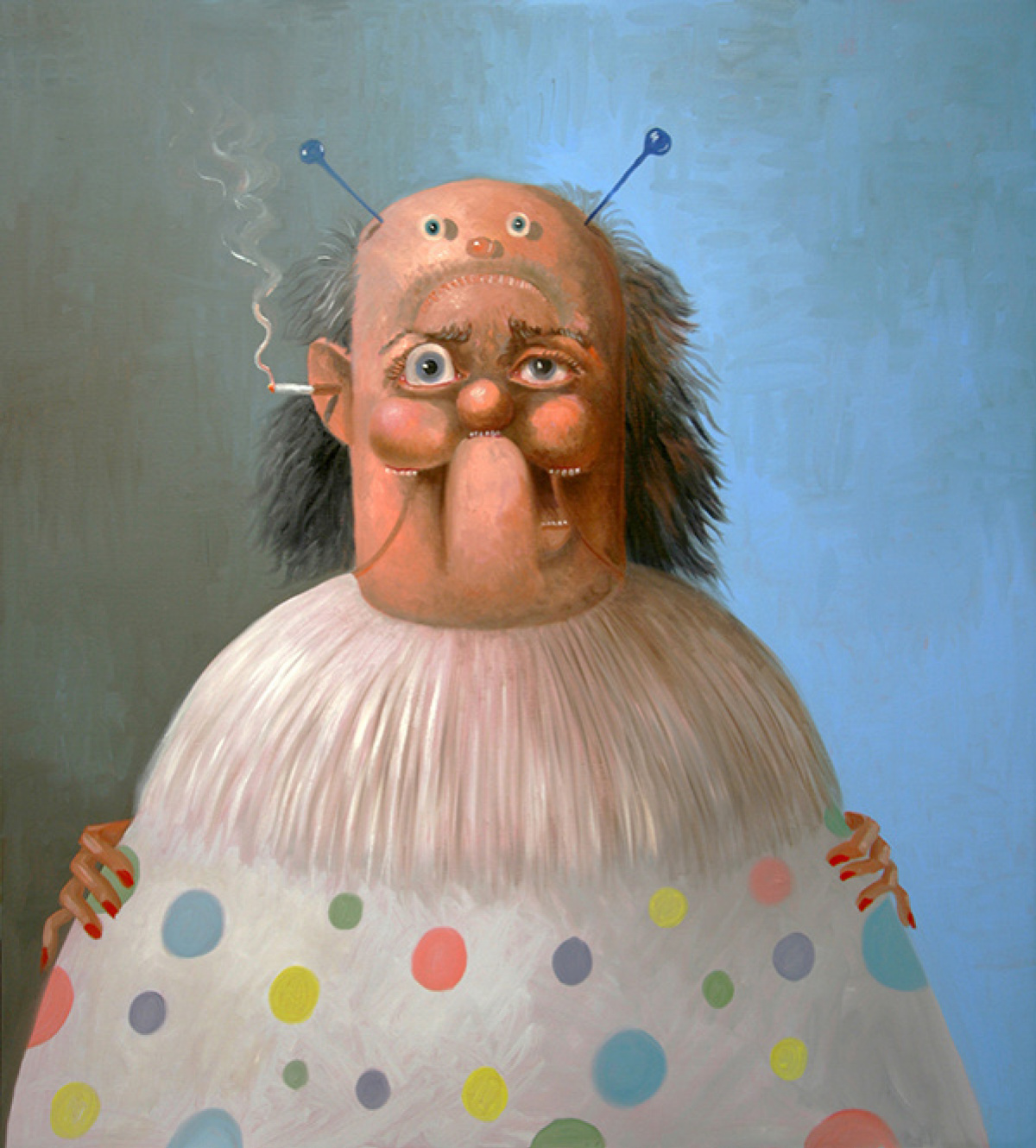
First, there are the heads and “psychological portraits”: exaggerated, multi-eyed, twisted faces with toothy grins or anguished grimaces. Works like The Insane Clown (2006) and Smiling Girl with Black Hair (2002) are exemplary, combining fractured planes with emotional intensity. In prints, this translates into portraits where the head fills the sheet, often with bold outlines and high contrast.
Second, Condo’s “fake Old Masters” and surreal, hybrid figures—court jesters, aristocrats, mythic creatures—rework historical portraiture as if refracted through Cubism and cartoons. His Surrealist landscapes, begun in the early 1980s, present believable space populated by impossible, mutated forms.
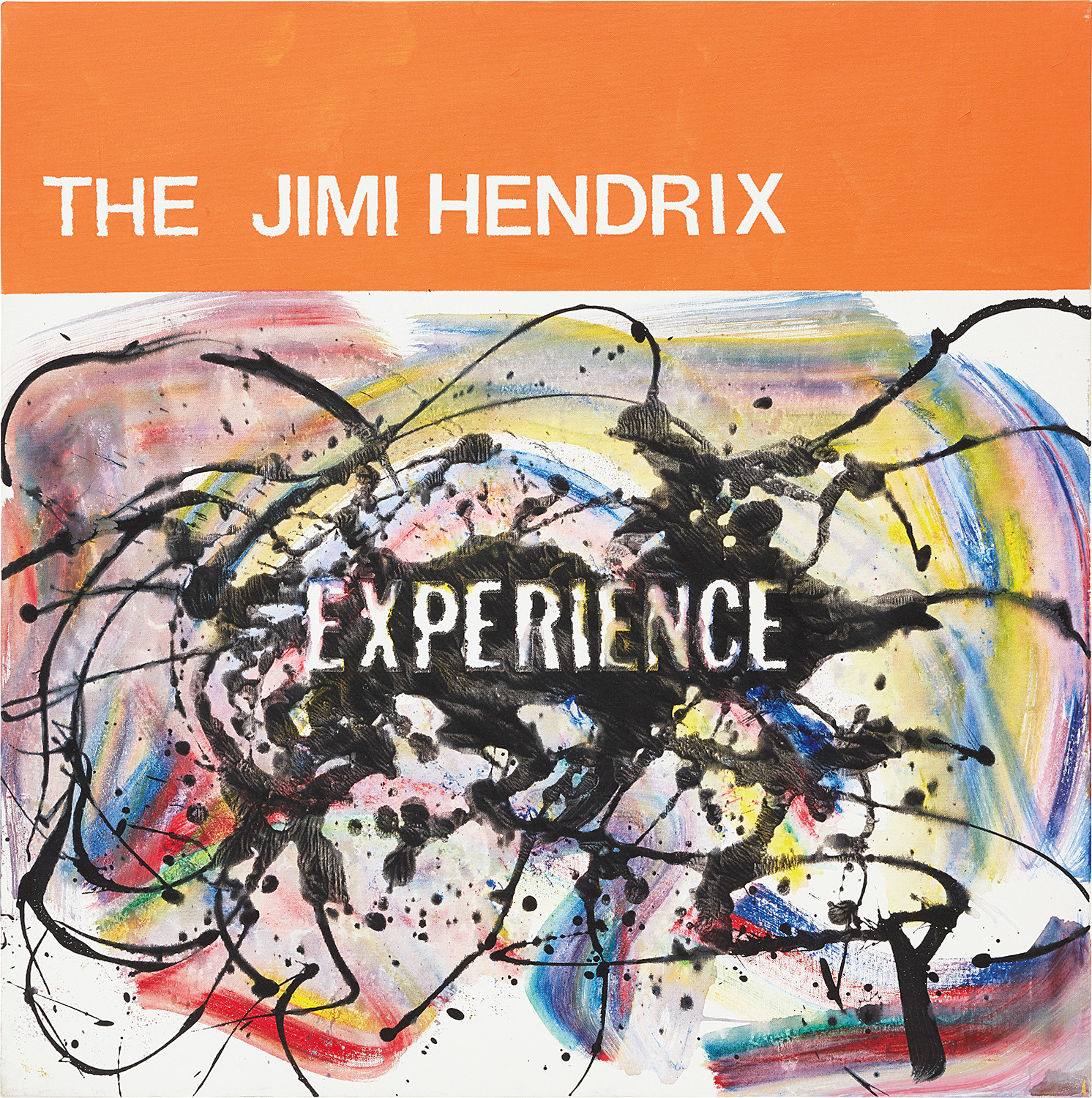
Third, music and literature sit in the background of many works. Condo has made album art for Phish, Kanye West and Travis Scott, and he frequently likens his painting to improvisational jazz or a Jimi Hendrix solo. For prints, this shows up explicitly in pieces like The Jimi Hendrix Experience and The Beatles, which tap into pop-cultural nostalgia as well as formal experimentation.
Collectors tend to favour works where these elements converge: a recognisable Condo “head,” a link to broader culture, and a sense of virtuoso drawing or painterly handling even in an editioned format.

4. Focus on prints: media, key examples and value drivers
Although Condo is best known for his paintings, he has been an active printmaker for decades, producing etchings, screenprints, lithographs and offset lithographs. For the serious collector, these are not an afterthought but a parallel, coherent body of work—a way to own strong images at a more accessible level, and often an area where experimentation is particularly evident.
Media and format
You will encounter several broad categories:
-
Traditional intaglio prints such as etchings and drypoints, often smaller and more intimate, emphasising line and detail.
-
Screenprints and lithographs that push colour, flat planes and graphic punch.
-
Offset lithographs in larger edition sizes, sometimes published by galleries such as Skarstedt; these are typically at a lower price point and more “decorative,” but certain examples have strong collector demand.
Key print images
Market analyses highlight a cluster of standout prints that have achieved strong prices and consistent demand. Guides focusing on Condo’s editions typically cite works like Watching Television (1988), The Jimi Hendrix Experience (1999), The Beatles, Radiant Person and Laughing Clown Composition among the most sought-after and expensive prints.
These works share several traits. They tend to:
-
Feature a bold, central figure or head with strong psychological expression.
-
Be part of relatively small editions (often under 100), frequently signed and numbered.
-
Date from periods that are seen as pivotal in Condo’s development, such as the late 1980s and 1990s, or align with major stylistic shifts.
A work like Watching Television combines Condo’s absurdist domestic narrative with his fractured figuration, while The Jimi Hendrix Experience connects directly to his lifelong engagement with music and the cultural aura of Hendrix. That dual resonance—formal plus cultural—helps explain why such prints command a premium.
What affects print value?
Specialist guides on Condo’s prints point to the usual edition-market fundamentals: rarity (edition size), condition, subject, and commercial appeal. For Condo, add a few more filters:
-
Face-based vs. more abstract: Collectors overwhelmingly prefer works with clear, compelling faces or full figures over more abstract or decorative compositions, even when the latter are technically impressive.
-
Connection to iconography in major paintings: If a print clearly relates to a painting or body of work that has performed well at auction, it tends to be more desirable.
-
Publisher and provenance: Editions produced in collaboration with respected galleries or printers, and works with clean provenance and, ideally, original documentation, carry an advantage.
-
Hand-finishing and atypical formats: Prints with hand-colouring, unique variants, large scale or unusual supports can blur the line between print and unique work and are increasingly sought after by sophisticated collectors.
5. Paintings and works on paper: why they still matter if you focus on prints
Even if you intend to build a collection primarily of prints, you should track the painting market closely, because it sets the tone for the entire Condo ecosystem.
As noted earlier, top paintings now sit in the mid- to high-seven-figure range at auction, with Force Field and Laughing Clown providing important benchmarks. Primary-market prices for large, fresh works from top galleries can be similar to or higher than these public results, particularly for museum-quality canvases aligned with current exhibitions.
Between prints and big paintings is a crucial mid-tier: unique works on paper and smaller canvases. Works on paper often feature the same psychologically fractured heads but in a looser, more improvisational mode, and they are usually more accessible in price. For collectors who start with prints, graduating into a strong drawing or small painting is a logical step and can significantly deepen a Condo-focused collection.
A 2025 article in the Financial Times emphasised how Condo now seeks a balance between highly charged, “amped up” images and a quieter, more serene mood as he ages.That shift is visible in some of the recent paintings and is likely to ripple into his print output as well. Works that register this late-career, reflective tone—often with slightly calmer palettes and more contemplative faces—may become increasingly important as markers of a new phase in his oeuvre.
6. Market context up to 2025: momentum and depth
Data aggregators such as Artnet, MutualArt and Artsy all show a large and active Condo market, with nearly two thousand works having appeared at auction by late 2025. The top of the market has clearly accelerated over the past decade, with the record prices mentioned earlier and continued strong results for major paintings in Hong Kong, London and New York.
The print market has followed suit but remains comparatively underpriced relative to the paintings. Recent analysis of Condo’s prints highlights that the most expensive examples have pushed into the mid-five-figure range (in pounds or dollars), while a long tail of lesser-known prints and larger editions continues to trade in the low-thousands.
Institutionally, Condo’s profile has been buoyed by retrospectives, major group exhibitions and high-visibility collaborations with musicians such as Kanye West and Travis Scott, which keep him in the cultural conversation beyond the art world alone. This mix of institutional rigour and pop-cultural reach typically supports long-term collector confidence.
7. What to look for in 2026: a collector’s roadmap
Looking ahead to 2026, the key for a Condo collector—especially one focused on prints—is to be selective rather than simply chasing any work with a recognisable face. The supply is broad; the art is to isolate quality and relevance.
a) Prioritise strong heads and psychological portraits
The market has consistently rewarded works where Condo’s “psychological cubism” is front and centre. In prints, that means portraits where the head dominates the composition, the eyes and mouth are strongly articulated, and you can sense multiple emotional registers at once.
In 2026, prioritise editions whose imagery clearly sits within this core iconography. If you can trace a relationship to a well-known painting or exhibition—through catalogues, gallery documentation or auction catalogues—so much the better.

b) Focus on earlier, rare and signed editions
While later prints can be powerful, many collectors will continue to place a premium on late-1980s and 1990s works, when Condo was crystallising his mature language. Pieces like Watching Television (1988) or music-related works from the 1990s often come in relatively small editions and have already demonstrated strong auction demand.
In 2026, it makes sense to:
-
Look for edition sizes under 100 where possible.
-
Prefer signed, numbered impressions with clear documentation.
-
Pay attention to proofs (APs, PPs) with good provenance, which can be especially desirable when linked to significant exhibitions or publishers.
c) Track works related to museum shows and recent bodies of work
The 2025 Musée d’Art Moderne retrospective and other institutional projects are not just prestige events; they reframe certain bodies of work as central. Catalogues from these shows often highlight particular motifs, series or periods that curators deem historically important.
For 2026, consider aligning your acquisitions with this curatorial narrative. If a catalogue essay dwells on a certain type of head, a run of “fake Old Master” portraits, or a group of serene late landscapes, prints that reflect the same imagery may benefit from that critical endorsement.

d) Watch the middle market: hand-finished and hybrid works
There is growing interest in works that sit between pure print and pure painting—etchings with unique hand-colouring, mixed-media works on paper or small, painterly monotypes. While still more expensive than standard prints, these works offer a unique image at a price far below that of a large canvas.
In 2026, it may be wise to target a small number of these hybrid works rather than accumulate many lower-tier reproductions or large, heavily subscribed offset editions. Their scarcity and uniqueness make them more resilient in both taste and value terms.
e) Be cautious but opportunistic with collaborator and pop-culture pieces
Condo’s collaborations with musicians and designers—Kanye West’s My Beautiful Dark Twisted Fantasy, Travis Scott’s single artwork, fashion capsules—occupy a special niche.Some are more collectible than others. For 2026, the safest strategy is to treat them as satellites to a core Condo collection rather than its foundation.
Choose examples that still read as strong, autonomous works of art rather than mere merchandising. A screenprinted scarf or poster with a powerful Condo image and a limited edition can be a savvy purchase, particularly if it is historically tied to a major cultural moment, but it should complement, not replace, the acquisition of more canonical portraits or compositional prints.

8. Practical due diligence and buying strategies
Beyond taste and iconography, several practical checks are essential in 2026:
-
Condition: Many Condo prints are now several decades old. Check for fading, handling creases, staining, over-trimming and any evidence of restoration. Marginal issues are one thing; compromised colour or paper strength will materially affect value.
-
Documentation: Aim to obtain invoices, gallery labels, certificates of authenticity where applicable, and catalogue references. These matter more as prices rise and as the secondary market globalises.
-
Comparables: Use price databases and auction aggregators to benchmark any asking price against recent sales of the same edition and of similar works. Sites like Artsy, MutualArt and specialist dealers’ guides provide useful context.
A final strategic point for 2026: think in terms of building a coherent group rather than buying isolated trophies. A set of three or four prints that span different decades but share a strong head motif, or a cluster of works that show Condo’s evolution from manic, “amped-up” psychological portraits to more serene late images, will tell a richer story and may be more attractive to future buyers or institutions.
9. Putting it all together
Collecting George Condo in 2026 means engaging with one of the central narratives of late-20th- and early-21st-century painting: the reconfiguration of art history through the lens of psychological and cultural fragmentation. His best works fuse Old Master gravitas with cartoon vulgarity, music with philosophy, private anxiety with public spectacle.
For most collectors, prints offer the most agile way into this universe. They are numerous enough to allow for selectivity, yet the best examples are scarce, fiercely collected and increasingly visible at auction.Well-chosen prints can stand alone as significant works, but they also provide a foundation for later acquisitions of drawings, hybrid works on paper and, ultimately, paintings.
If you keep a close eye on the core motifs, respect the hierarchy of rarity and condition, and follow the curatorial framing of recent retrospectives, 2026 should offer strong opportunities. The trajectory of Condo’s painting market, the depth of his print output and his ongoing cultural relevance all point in the same direction: this is an artist whose importance is now firmly established, and whose editioned work still offers genuine value for the collector willing to do the homework.
Discover George Condo original prints for sale and contact our galleries via info@guyhepner.com for latest availabilities.